



GLUT2
GLUT2 is a facilitative glucose transporter encoded by SLC2A2 and expressed in liver, intestine, kidney, pancreatic islet β cells, and the central nervous system[1]. Mechanistically, GLUT2 supports glucose sensing and glucose homeostasis by enabling low-affinity, high-capacity bidirectional glucose flux across the plasma membrane[1][2]. In β cells, GLUT2 is required for glucose-stimulated insulin secretion, while in hepatocytes it regulates hepatic glucose uptake and glucose-sensitive gene control[1][3]. In disease models, GLUT2 inactivation or variation links this transporter to Fanconi-Bickel syndrome, transient neonatal diabetes, fasting hyperglycaemia, type 2 diabetes transition, and altered metformin response[1][4]. Compared with related isoforms, GLUT2 differs from GLUT4, which mainly mediates insulin- and contraction-stimulated glucose uptake in skeletal muscle, and from human islet GLUT1/GLUT3, which may perform major β-cell glucose uptake roles in humans[5][6]. For experimental applications, streptozotocin enters cells through GLUT2, and renal GLUT2 loss in mouse models increased glucosuria and reversed hyperglycaemia, supporting GLUT2-focused diabetes model design[7][8].
Referencias:
- [1]. Thorens B. GLUT2, et al. GLUT2, glucose sensing and glucose homeostasis. Diabetologia. 2015 Feb;58(2):221-32. [Content Brief]
- [2]. Mueckler M, et al. The SLC2 (GLUT) family of membrane transporters. Mol Aspects Med. 2013 Apr-Jun;34(2-3):121-38. [Content Brief]
- [3]. Matsuzaka T, et al. New liver-β-cell axis that controls insulin secretory capacity. J Diabetes Investig. 2014 May 4;5(3):276-7. [Content Brief]
- [4]. Rathmann W, et al. A variant of the glucose transporter gene SLC2A2 modifies the glycaemic response to metformin therapy in recently diagnosed type 2 diabetes. Diabetologia. 2019 Feb;62(2):286-291. [Content Brief]
- [5]. Chadt A, et al. Glucose transporters in adipose tissue, liver, and skeletal muscle in metabolic health and disease. Pflugers Arch. 2020 Sep;472(9):1273-1298. [Content Brief]
- [6]. Berger C, et al. Glucose transporters in pancreatic islets. Pflugers Arch. 2020 Sep;472(9):1249-1272. [Content Brief]
- [7]. Kahraman S, et al. Diabetes-resistant NOR mice are more severely affected by streptozotocin compared to the diabetes-prone NOD mice: correlations with liver and kidney GLUT2 expressions. J Diabetes Res. 2015;2015:450128. [Content Brief]
- [8]. de Souza Cordeiro LM, et al. Loss of function of renal Glut2 reverses hyperglycaemia and normalises body weight in mouse models of diabetes and obesity. Diabetologia. 2022 Jun;65(6):1032-1047. [Content Brief]
All Product Categories
-
Productos relacionados con GLUT2 (10)
Productos relacionados con (10)

-
Antibodies (1)
-
BAY-876
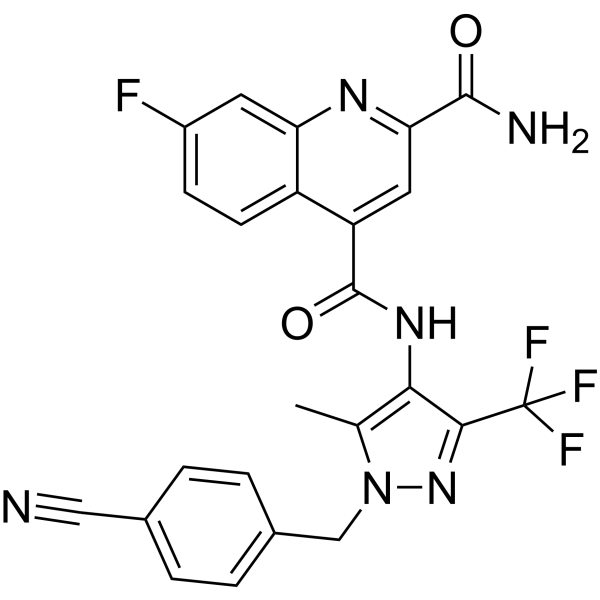 0 ImagesBAY-876, a chemical probe, is an orally active and selective glucose transporter 1 (GLUT1) inhibitor with an IC50 of 2 nM. BAY-876 is >130-fold more selective for GLUT1 than GLUT2, GLUT3, and GLUT4. BAY-876 is also a potent blocker of glycolytic metabolism and ovarian cancer growth. In addition, BAY-876 can induce the formation of disulfide bonds in actin cytoskeletal proteins, leading to the occurrence of cellular disulfidptosis.
-
Phloretin
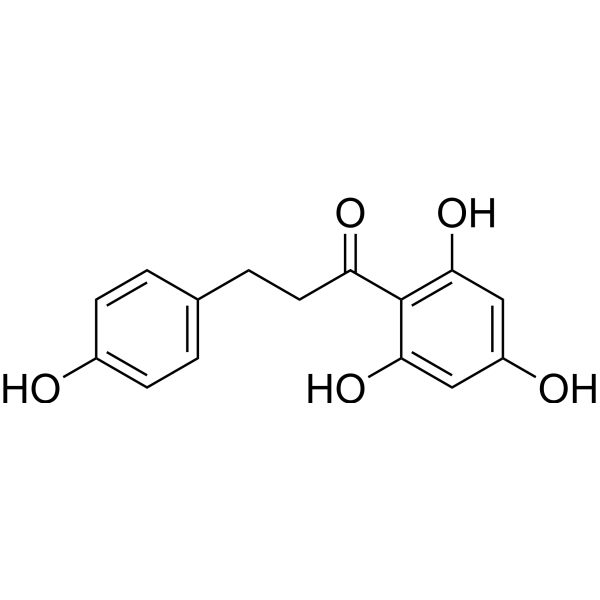 0 ImagesPhloretin (NSC 407292; RJC 02792) is a flavonoid extracted from Malus pumila Mill.,has anti-inflammatory activities. Phloridzin is a specific,competitive and orally active inhibitor of sodium/glucose cotransporters in the intestine (SGLT1) and kidney (SGLT2). Phloretin inhibits Yeast-made GLUT1 as well as Human erythrocyte GLUT1 with IC50values of 49 μM and 61 μM,respectively.Phloretin has the potential for the treatment of rheumatoid arthritis (RA) and allergic airway inflammation.
-
KL-11743
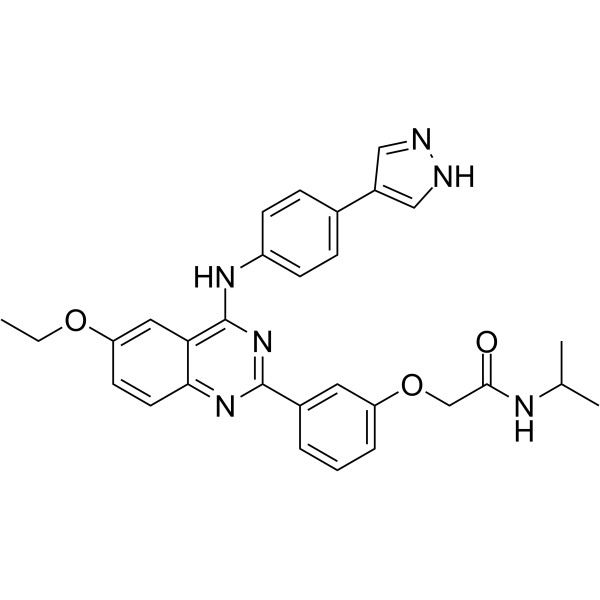 0 ImagesKL-11743 is a potent, orally active, and glucose-competitive inhibitor of the class I glucose transporters, with IC50s of 115, 137, 90, and 68 nM for GLUT1, GLUT2, GLUT3, and GLUT4, respectively. KL-11743 specifically blocks glucose metabolism. KL-11743 can synergize with electron transport inhibitors to induce cell death. In addition, KL-11743 can induce the formation of disulfide bonds in actin cytoskeletal proteins, leading to the occurrence of cellular disulfidptosis.
-
Allyl methyl sulfide
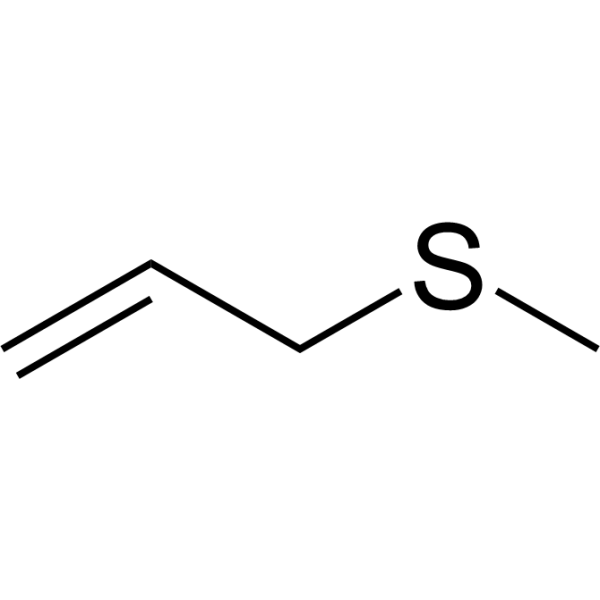 0 ImagesAllyl methyl sulfide is an orally active organic sulfide. Allyl methyl sulfide is one of the main active ingredients in garlic volatile metabolites. Allyl methyl sulfide can be extracted from garlic. Allyl methyl sulfide enhances SOD activity, inhibits NF-κB signaling pathway, and upregulates pancreatic GLUT2 expression. Allyl methyl sulfide has significant antioxidant, anti-inflammatory and hypoglycemic activities. Allyl methyl sulfide can be used in the research of diabetes and its complications.
-
Phloretin (Standard)
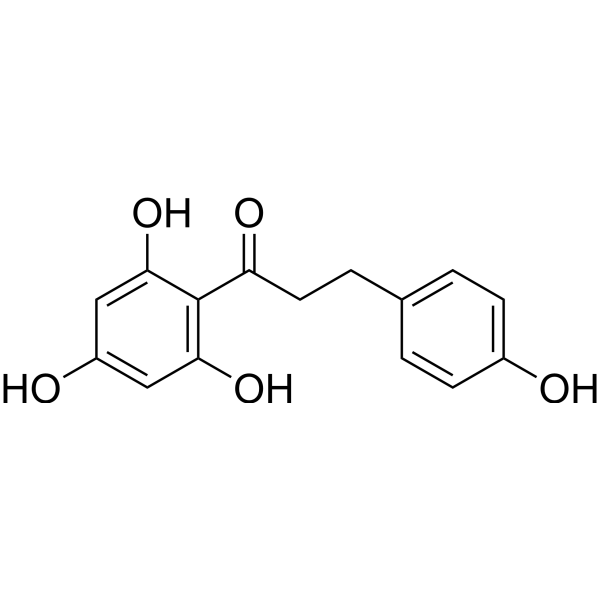 0 ImagesSynonyms: NSC 407292 (Standard); RJC 02792 (Standard)Phloretin (Standard) is the analytical standard of Phloretin. This product is intended for research and analytical applications. Phloretin (NSC 407292; RJC 02792) is a flavonoid extracted from Malus pumila Mill., has anti-inflammatory activities. Phloridzin is a specific, competitive and orally active inhibitor of sodium/glucose cotransporters in the intestine (SGLT1) and kidney (SGLT2). Phloretin inhibits Yeast-made GLUT1 as well as Human erythrocyte GLUT1 with IC50values of 49 μM and 61 μM, respectively.Phloretin has the potential for the treatment of rheumatoid arthritis (RA) and allergic airway inflammation.
-
G2iA
 0 ImagesReferencia número: HY-189099No. CAS: 536702-12-2
-
Hypoglycemic agent 4
 0 ImagesReferencia número: HY-180784Hypoglycemic agent 4 (Compound 5b) is a tetrahydroacridine derivative with orally active hypoglycemic activity. Hypoglycemic agent 4 has a good binding affinity for the key diabetic targets: DPP-IV, SGLT1, and GLUT2. Hypoglycemic agent 4 can inhibit glucose diffusion. Hypoglycemic agent 4 can reduce fasting blood sugar in Streptozotocin (HY-13753)-induced diabetic rats and its effect is comparable to Gliclazide (HY-B0753). Hypoglycemic agent 4 can be used for research of type 2 diabetes.
-
Allyl methyl sulfide (Standard)
 0 ImagesReferencia número: HY-128447RNo. CAS: 10152-76-8Allyl methyl sulfide (Standard) is the analytical standard of Allyl methyl sulfide (HY-128447). This product is intended for research and analytical applications. Allyl methyl sulfide is an orally active organic sulfide. Allyl methyl sulfide is one of the main active ingredients in garlic volatile metabolites. Allyl methyl sulfide can be extracted from garlic. Allyl methyl sulfide enhances SOD activity, inhibits NF-κB signaling pathway, and upregulates pancreatic GLUT2 expression. Allyl methyl sulfide has significant antioxidant, anti-inflammatory and hypoglycemic activities. Allyl methyl sulfide can be used in the research of diabetes and its complications.
-
NIR‐fluorescent glucose
 0 ImagesReferencia número: HY-D3199No. CAS: 2364376-61-2NIR-fluorescent glucose is a functional glucose-based fluorescent imaging agent. Conjugated with the nitrobenzoselenadiazole-based SCOTfluor (compound 9), NIR-fluorescent glucose acts as a substrate for GLUT4 and GLUT2 transporters. NIR-fluorescent glucose enables the visualization of glucose uptake in live cells and in vivo.
-
NV-5440
 0 ImagesReferencia número: HY-138976No. CAS: 2226614-88-4NV-5440 (Compound I-120) is an mTORC1 inhibitor and glucose transporter inhibitor. NV-5440 targets GLUT-1, -2, -3, and -4, and shows no activity against GLUT-5. NV-5440 inhibits glucose uptake.




