



Pegloxenatide

Based on 1 Customer Validation
Pegloxenatide (Polyethylene glycol loxenatide) is a long-acting glucagon-like peptide-1 receptor (GLP-1RA) agonist. Pegloxenatide has various activities such as lowering blood glucose, lowering blood lipids, improving body weight, anti-inflammation, promoting wound healing, protecting the liver, and protecting the heart. Pegloxenatide can be used in the research of type 2 diabetes and its multiple complications.
Nur für Forschungszwecke. Wir verkaufen nicht an Patienten.
- Reinheit : 90.00%
- CAS. Nr.: 2420483-82-3
- Formel: (C₂H₄O)n(C₂H₄O)nC₂₀₆H₃₁₇N₅₅O₆₇S
-
Speicherung:
Please store the product under the recommended conditions in the Certificate of Analysis.


To place orders, for customer services and technical support, please contact: MedChemExpress USA
Tel: 609-228-6898 E-mail: [email protected] [email protected]


-
 Biologische Aktivität
-
Chemical Information
- Protokoll
- Reinheit & Dokumentation
- Verweise
-
 Help & FAQs


-

HY-P0014
LiraglutideGLP-1R Agonist -
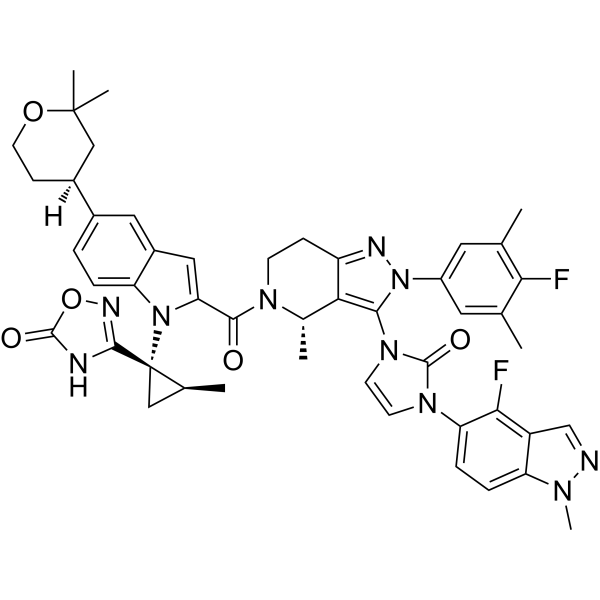
HY-112185
OrforglipronGLP-1R Agonist -

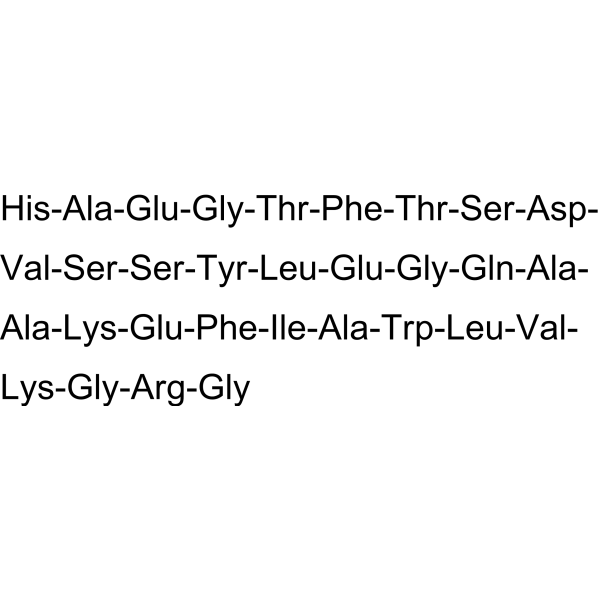
HY-P0054A
GLP-1(7-36), amideGCGR Agonist -
HY-P0055
GLP-1(7-37)Intestinal Insulinotropic Hormone -
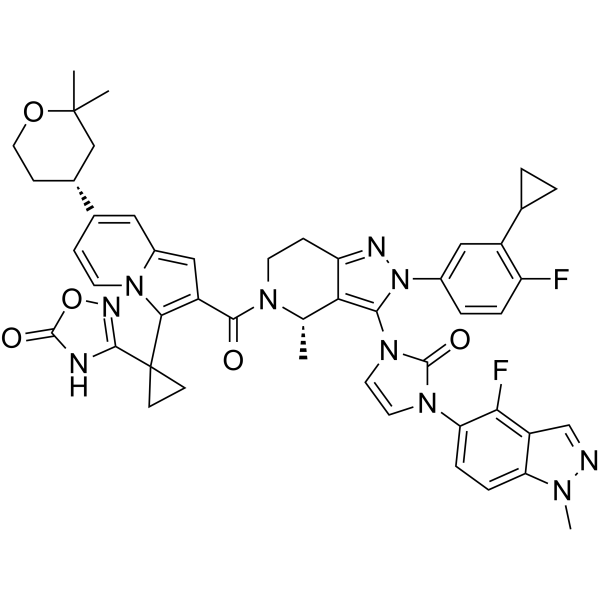
HY-156968
GLP-1 receptor agonist 14GLP-1 Receptor Agonist -
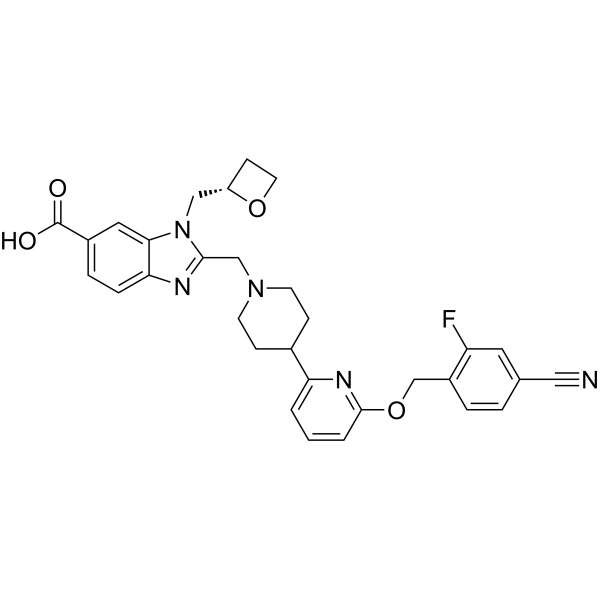
HY-125824
DanuglipronGLP-1R Agonist -

HY-P0120
DulaglutideGLP-1 Receptor Agonist -

HY-P0119
LixisenatideGLP-1 Agonist -
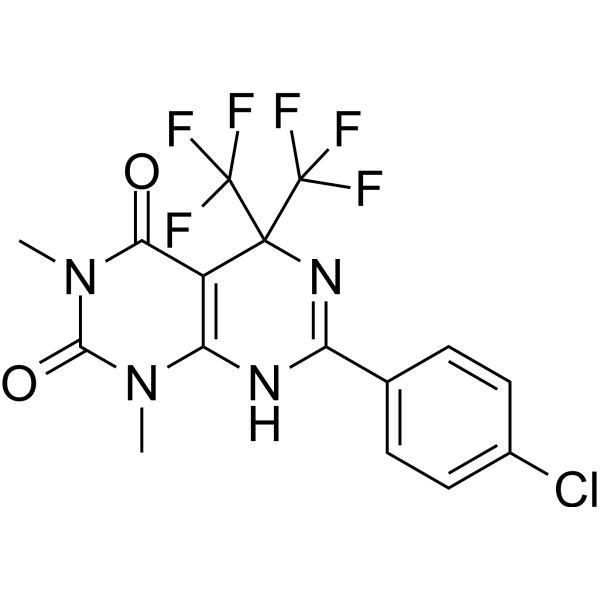
HY-101116
GLP-1R Antagonist 1GLP-1R Antagonist -

HY-P3463
BeinaglutideAnti-obesity Agent -

HY-P5311
AlbiglutideGLP-1 Receptor Agonist -
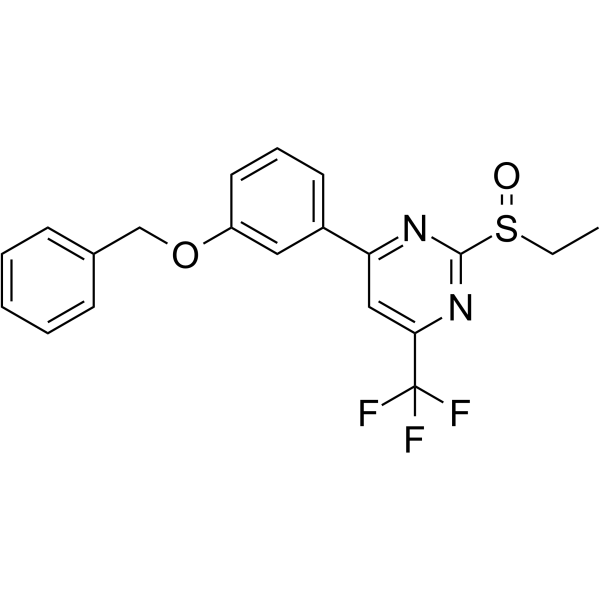
HY-103546
BETPGLP-1 Agonist
Alle AMPK Isoform-spezifische Produkte anzeigen
More

Biologische Aktivität
Beschreibung
In Vitro
Pegloxenatide (100-200 nM; 24 h) can activate the PI3K/AKT pathway in high glucose-treated HepG2 cells, while the PI3K inhibitor LY294002 (HY-10108) can inhibit its activation[1].
Pegloxenatide (250 nM; 24 h) can restore tube formation and migratory capacity, increase NO production, reduce mitochondrial ROS generation, improve mitochondrial membrane potential and respiratory function, and restore autophagic flux in human endothelial progenitor cells treated with high glucose and Palmitic acid (HY-N0830)[2].
MedChemExpress (MCE) has not independently confirmed the accuracy of these methods. They are for reference only. Further protocols information, click here.
-
Cell Line:High glucose-treated HepG2 cells
-
Concentration:100 and 200 nM
-
Incubation Time:24 h
-
Result:Significantly increased the levels of p-PI3K and p-AKT.
In Vivo
Pegloxenatide (0.03 mg/kg/week; intraperitoneal injection; 12 weeks) has activities of improving glucose metabolism, anti-inflammation and accelerating wound healing in db/db mice[2].
MedChemExpress (MCE) has not independently confirmed the accuracy of these methods. They are for reference only.
-
Animal Model:C57BL/6-db/db male mice[1]
-
Dosage:0.3 and 1 mg/kg
-
Administration:Subcutaneous injection; once every 3 days; 4 weeks
-
Result:Significantly reduced body weight and fasting glucose, mincreased glucose tolerance, improved serum and liver biochemical parameters, and attenuated hepatic steatosis and liver and pancreatic tissue damages in db/db mice.
Considerably inhibited oxidative stress, decreased pro-inflammatory factor (TNF-α, IL-6, and MCP-1) levels, increased anti-inflammatory factor IL-10 levels, upregulated Sirt1, p-AMPK, and p-ACC expressions in the Sirt1/AMPK/ACC pathway, promoted GLP-1R expression by inhibiting β-cell apoptosis, and activated the insulin PI3K/AKT pathway to exert hypoglycemic and hepatoprotective effects.
Clinical Trial
| NCT Number | Sponsor | Condition | Start Date |
Phase

|
|---|---|---|---|---|
| NCT01329991 | Plexxikon| | 2011-05 | PHASE1 |


Chemical Information
-
CAS. Nr. 2420483-82-3
-
Appearance Liquid
-
Formel (C₂H₄O)n(C₂H₄O)nC₂₀₆H₃₁₇N₅₅O₆₇S
-
Color Colorless to light yellow
-
Synonyms
Polyethylene glycol loxenatide; PEX 168
-
Sequence
PEGn-His-{d-Ala}-Glu-Gly-Thr-Phe-Thr-Ser-Asp-Leu-Ser-Lys-Gln-{Nle}-Glu-Glu-Glu-Ala-Val-Arg-Leu-Phe-Ile-Glu-Trp-Leu-Lys-Gln-Gly-Gly-Pro-Ser-Ser-Gly-Ala-Pro-Pro-Pro-Cys-NH2
-
Sequence Shortening
PEGn-H-{d-Ala}-EGTFTSDLSKQ-{Nle}-EEEAVRLFIEWLKQGGPSSGAPPPC-NH2
-
Versand
Room temperature in continental US; may vary elsewhere.
-
Speicherung
Please store the product under the recommended conditions in the Certificate of Analysis.

Protokoll
-
Cell migration
Cell migration is a method that plays an important role in wound healing, cell differentiation, embryonic development, etc.
-
Research Protocol for Inflammation-related Diseases
The NLRP3 inflammasome is a cytosolic innate immune signaling platform that integrates priming signals and danger-signal activation to promote caspase-1 activation, maturation of IL-1β and IL-18, and gasdermin D-mediated pyroptotic cell death. The core experimental logic is to determine whether inflammatory disease phenotypes are driven by increased NLRP3 expression, ASC-containing inflammasome assembly, caspase-1 cleavage, GSDMD cleavage, and extracellular release of IL-1β/IL-18 rather than by nonspecific cell injury alone. The pathway is strongly linked to inflammation-related disease phenotypes because monosodium urate crystals activate NALP3/NLRP3 inflammasome signaling in gout-like crystal inflammation, cholesterol crystals activate NLRP3 inflammasomes in atherogenesis models, and DSS-induced intestinal inflammation has been reported to involve NLRP3 inflammasome activity. However, experimental colitis studies also show context-dependent protective effects of NLRP3 inflammasome co
-
Cell-Exclusion Zone Migration Assay
The Cell-Exclusion Zone (CEZ) migration assay is an in vitro 2D cell migration method in which a defined cell-free area is created using removable physical barriers such as silicone stoppers, allowing cells to be seeded around the barrier and subsequently migrate into the cleared zone after barrier removal. This approach enables quantification of collective cell migration by monitoring repopulation of the initially cell-free region over time using microscopy-based imaging. Compared with scratch-based wound healing assays, barrier-based exclusion methods are designed to avoid mechanical damage to the extracellular matrix and reduce injury-induced effects on boundary cells, thereby improving interpretability of migration behavior in vitro. The assay readout is typically the progressive reduction in the cell-free area or the number of cells invading the exclusion zone, reflecting coordinated cell motility relevant to physiological processes such as wound healing, epithelial repair, and ca
-
Research Protocol for Metabolic Diseases
AMP-activated protein kinase, AMPK, is a conserved cellular energy sensor that responds to reduced cellular energy status and coordinates metabolism by increasing ATP-generating catabolic pathways while suppressing ATP-consuming anabolic processes. In metabolic disease research, the AMPK pathway is experimentally relevant because it regulates hepatic lipid synthesis, fatty acid oxidation, glucose production, skeletal-muscle glucose disposal, mTORC1-linked biosynthesis, autophagy, mitochondrial homeostasis, and whole-body energy balance. The central pathway logic is that energy stress, metformin, exercise-like stimulation, or direct AMPK activators increase AMPKα Thr172 phosphorylation and downstream substrate phosphorylation, including ACC and RAPTOR. Phosphorylation of ACC suppresses lipogenesis and supports fatty acid oxidation, whereas phosphorylation of RAPTOR suppresses mTORC1 signaling and links cellular energy status to growth and protein synthesis control. The pathway is linked


Reinheit & Dokumentation
-
Data Sheet (270 KB)
-
SDS (252 KB)
- English - EN (252 KB)
- Français - FR (252 KB)
- Deutsch - DE (252 KB)
- Norwegian - NO (252 KB)
- Español - ES (252 KB)
- Swedish - SV (252 KB)
- Italian - IT (252 KB)
- Korean - KR (252 KB)
- Portuguese - PT (252 KB)
-
Handling Instructions (2659 KB)
Verweise
[1]. Zhang Y, et al. Protective Effects and Mechanisms of Polyethylene Glycol Loxenatide Against Hyperglycemia and Liver Injury in db/db diabetic Mice. Front Pharmacol. 2021 Dec 6;12:781856. [Content Brief]
[2]. Ding Z, et al. Polyethylene Glycol Loxenatide Accelerates Diabetic Wound Healing by Downregulating Systemic Inflammation and Improving Endothelial Progenitor Cell Functions. Int J Mol Sci. 2025 Mar 6;26(5):2367. [Content Brief]
[3]. Wang J, et al. Polyethylene glycol loxenatide (PEX168) in subjects with renal impairment: A pharmacokinetic study. Br J Clin Pharmacol. 2019 Dec;85(12):2714-2720. [Content Brief]
[4]. Li XY, et al. Effect of polyethylene Glycol Loxenatide (long-acting GLP-1RA) on lipid, glucose levels and weight in type 2 diabetes mellitus patients with obesity. Eur Rev Med Pharmacol Sci. 2022 Nov;26(21):7996-8003. [Content Brief]

Calculators
Konzentration (Stammlösung) × Volumen (Stammlösung) = Konzentration (Ziellösung) × Volumen (Ziellösung)


Pegloxenatide Related Classifications
HY-P3491 Related Classifications
 Powered by Bioz
Keywords
- Pegloxenatide
- 2420483-82-3
- Polyethylene glycol loxenatide
- PEX 168
- PEX168
- PEX 168
- PEX-168
- GCGR
- PI3K
- Akt
- Reactive Oxygen Species (ROS)
- Autophagy
- Interleukin Related
- Sirtuin
- AMPK
- Apoptosis
- polyethylene glycol loxenatide
- long-acting
- glucagon-like peptide-1 receptor
- type 2 diabetes mellitus (T2DM)
- db/db male mice
- Inhibitor
- inhibitor
- inhibit