Delivery of temperature sensitive items including proteins and kits will be paused on 6/19 for the Juneteenth holiday. For urgent orders please contact customer service.
Humanserumalbumin (HSA) is the most abundant protein in plasma and is a major determinant of plasma oncotic pressure. Humanserumalbumin exhibits antioxidant, anticoagulant, anti-inflammatory, anti-platelet aggregation activities as well as colloid osmotic action. Humanserumalbumin can block the inhibitory effect of GML on human T cells, providing protective function for T cells. Humanserumalbumin is also associated with cardiovascular diseases and can partially prevent the LPS (HY-D1056) induced oxidative stress, as well as the upregulation of NF-κB, NF-κB, and peroxynitrite (ONOO −) in the vascular wall, contributing to the reduction of blood pressure . This product is recombinant HumanSerumAlbumin expressed in a microbial expression system.
Humanserumalbumin (Cell culture grade, Endotoxin<0.125 EU/mg) (HSA) is the most abundant protein in plasma and is a major determinant of plasma oncotic pressure. Humanserumalbumin (Cell culture grade, Endotoxin<0.125 EU/mg) exhibits antioxidant, anticoagulant, anti-inflammatory, anti-platelet aggregation activities as well as colloid osmotic action. Humanserumalbumin (Cell culture grade, Endotoxin<0.125 EU/mg) can block the inhibitory effect of GML on human T cells, providing protective function for T cells. Humanserumalbumin (Cell culture grade, Endotoxin<0.125 EU/mg) is also associated with cardiovascular diseases and can partially prevent the LPS (HY-D1056) induced oxidative stress, as well as the upregulation of NF-κB, iNOS, and peroxynitrite (ONOO −) in the vascular wall, contributing to the reduction of blood pressure. Humanserumalbumin (Cell culture grade, Endotoxin<0.125 EU/mg) can be used for in vitro cell culture . This product is humanserumalbumin recombinantly expressed in an Escherichia coli expression system.
Ozoralizumab (ATN-103) is an anti-TNFα humanized antibody. Ozoralizumab is a humanized trivalent nanobody compound that consists of two anti-human TNFα nanobodies and an anti-humanserumalbumin (HSA) nanobody. Ozoralizumab can be used in research of arthritis .
Donzakimig is a trispecific anti-IL-13/IL-22/HSA antibody. Donzakimig adopts a Fab-scFv-scFv structural format (without an Fc region), in which the Fab domain is linked to the scFv domains via a S (G4S)2 linker. Donzakimig binds to and inhibits the activities of IL-13 and IL-22, thereby blocking the signal transduction of these two cytokines. Donzakimig can extend its serum half-life by binding to humanserumalbumin, enhancing its in vivo stability and achieving long-acting efficacy. Donzakimig can be used in research on moderate-to-severe atopic dermatitis, moderate-to-severe asthma (especially eosinophilic type), psoriasis, inflammatory bowel disease, and other conditions .
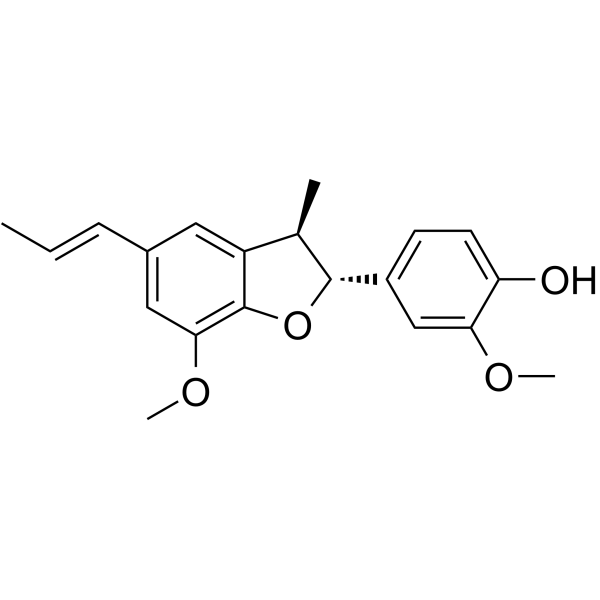
Licarin A ((+)-Licarin A), a neolignan, significantly and dose-dependently reduces TNF-α production (IC50=12.6 μM) in dinitrophenyl-humanserumalbumin (DNP-HSA)-stimulated RBL-2H3 cells. Anti-allergic effects. Licarin A reduces TNF-α and PGD2 production, and COX-2 expression .
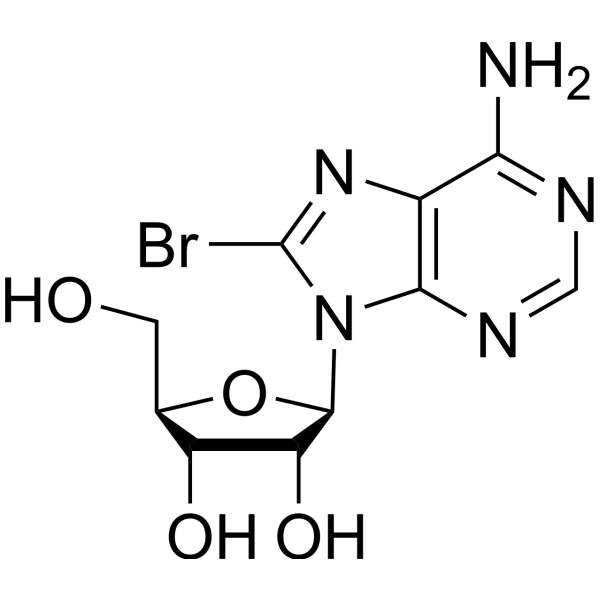
8-Bromoadenosine is an adenosine analog. Adenosine analogs mostly act as smooth muscle vasodilators and have also been shown to inhibit cancer progression. 8-Bromoadenosine can quench the intrinsic fluorescence of humanserumalbumin (HSA) through static quenching procedure. 8-Bromoadenosine can be used to synthesize adenosine phosphate, such as Acadesine (HY-13417), Clofarabine (HY-A0005), Fludarabine phosphate (HY-B0028) and Vidarabine (HY-B0277) .
BSPOTPE is the mixture of (E)-BSPOTPE (HY-W856375) and (Z)-BSPOTPE. BSPOTPE binds Humanserumalbumin (HSA) (HY-P1956), exhibits aggregation-induced emission (AIE) phenomenon. BSPOTPE shows selectivity for albumin (such as HSA and BSA), but has no obvious fluorescence response to other proteins and DNA. BSPOTPE can be used as fluorescent probe for HSA .
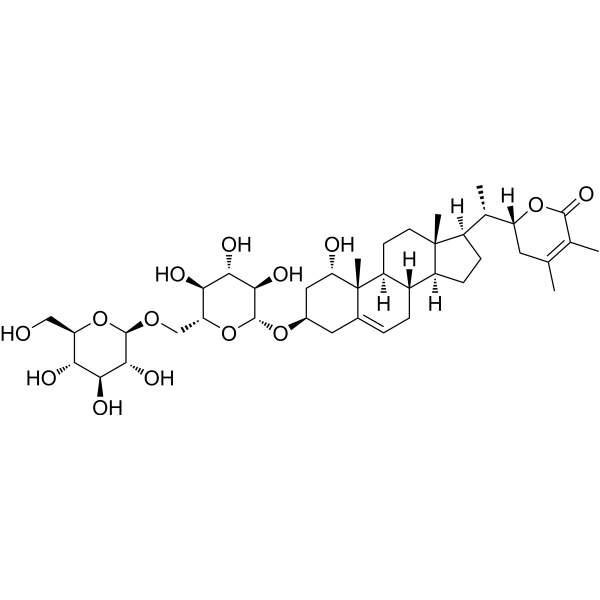
Withanoside V is a blood-brain barrier-permeable withanolide derivative . Withanoside V binds strongly to Sudlow I (domain IIA) of humanserumalbumin(HSA) to form a stable complex and alter the secondary structure of albumin, thereby increasing helix content and reducing β-sheet and random coil. Withanoside V binds to Aβ (1-42) to block the interaction between monomers and subsequent aggregation. Withanoside V inhibits the viability of neuroblastoma cells, reduces the number of apoptotic cells induced by Aβ (1-42), and decreases ROS production. Withanoside V inhibits SARS-CoV-2 Mpro. Withanoside V can be used for research on Alzheimer's disease and coronavirus disease 2019 .
HumanSerumAlbumin-HRP (HSA-HRP) is a HRP labeled serumalbumin. HumanSerumAlbumin-HRP (HSA-HRP) can be used for ELISA and Western blot detection of humanserumalbumin .
4,4,5,5,6,6,6-Heptafluorohexanoic acid (3:3 FTCA) is a polyfluoroalkyl substance (PFAS) that accumulate in the environment. 3:3 FTCA binds to many proteins, including the primary humanserum transport protein albumin (HSA) .
(E)-BSPOTPE is the E configuration of BSPOTPE (HY-W856375A). BSPOTPE binds Humanserumalbumin (HSA) (HY-P1956), exhibits aggregation-induced emission (AIE) phenomenon. BSPOTPE shows selectivity for albumin (such as HSA and BSA), but has no obvious fluorescence response to other proteins and DNA. BSPOTPE can be used as fluorescent probe for HSA .
Tetrazole-C15-(N-acetylsulfamoyl)butanoic acid (Ligand 1) improves the pharmacokinetic properties of therapeutic peptides and proteins through non-covalent binding with humanserumalbumin (HSA). Tetrazole-C15-(N-acetylsulfamoyl)butanoic acid can be used for synthesis of long-acting human growth hormone (HGH) analog somapacitan .
HumanSerumAlbumin-FITC (HSA-FITC) is a FITC (HY-66019) labeled serumalbumin. HumanSerumAlbumin-FITC plays an important role in fluorescent labeling, drug delivery research, and other fields (Ex/Em = 488/525 nm) .
HumanSerumAlbumin-Rhodamine (HSA-Rhodamine) is a Rhodamine B (HY-Y0016) labeled serumalbumin. HumanSerumAlbumin-Rhodamine plays an important role in fluorescent labeling, drug delivery research, and other fields (Ex/Em = 546/610 nm) .
HumanSerumAlbumin-ICG (HSA-ICG) is a Indocyanine green (ICG) (HY-D0711) labeled serumalbumin. HumanSerumAlbumin-ICG plays an important role in fluorescent labeling, drug delivery research, and other fields (Ex/Em = 785/813 nm) .
HumanSerumAlbumin-CY7 (HSA-CY7) is a CY7 (HY-D0825) labeled serumalbumin. HumanSerumAlbumin-CY7 plays an important role in fluorescent labeling, drug delivery research, and other fields (Ex/Em = 740/770 nm) .
HumanSerumAlbumin-CY5.5 (HSA-CY5.5) is a CY5.5 (HY-D0924) labeled serumalbumin. HumanSerumAlbumin-CY5.5 plays an important role in fluorescent labeling, drug delivery research, and other fields (Ex/Em = 680/710 nm) .
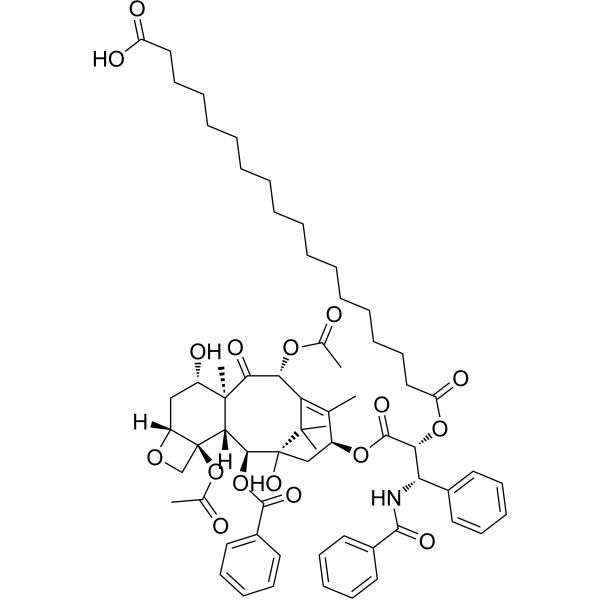
Paclitaxel octadecanedioate (compound PTX-FA18) is comprised of Paclitaxel (HY-B0015) conjugated to 1,18-octadecanedioic acid (HY-W005178). Paclitaxel octadecanedioate mixed with human serum albumin (HAS) is cytotoxic to HT-1080, PANC-1, HT-29 and Hela cells (IC50s = 12, 2.48, 8.62, and 64.42 nM, respectively) .
DX-236 is a macrocyclic peptide with a binding affinity of 1.9 µM to humanserumalbumin(HSA). DX-236 can fuse with HSV to prolong its circulation in vivo .
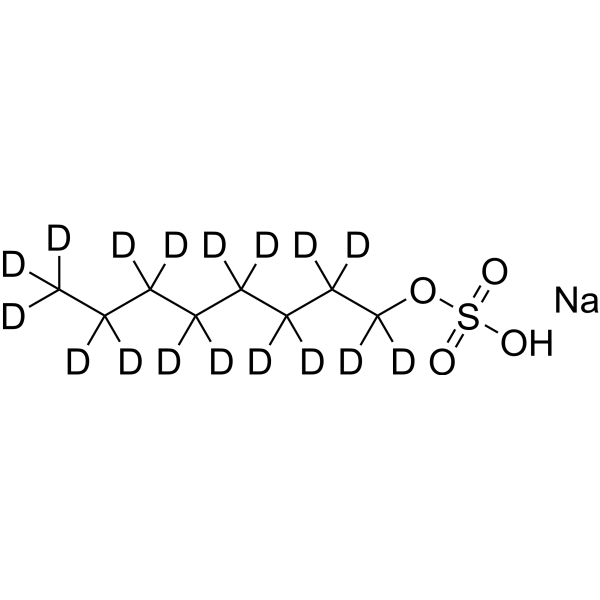
Sodium octyl sulfate (SOS)-d17 (Sodium capryl sulfate-d17) is the deuterated analogue of Sodium octyl sulfate (SOS). Sodium octyl sulfate (Sodium capryl sulfate; SOS) is a medium‑chain anionic surfactant. Sodium octyl sulfate (SOS) can undergo strong hydrophobic interactions with serumalbumins (such as humanserumalbumin (HSA) and bovine serumalbumin (BSA)), while exhibiting weak interactions with other proteins including myoglobin and hemoglobin. As an environmental pollutant in freshwater ecosystems, Sodium octyl sulfate (SOS) can mimic interspecific pheromones released by Daphnia magna and induce the formation of multicellular colonies in green algae.
Retinoic acid-HSA is a conjugate of Retinoic acid (HY-14649) and Humanserumalbumin (HSA). By conjugating the antigen with protein adjuvants, the production of antigen-specific antibodies in vaccine models can be enhanced. The conjugate does not affect protein folding or disrupt the primary epitopes, and it can enhance cross-presentation and the generation of antigen-specific T cells .
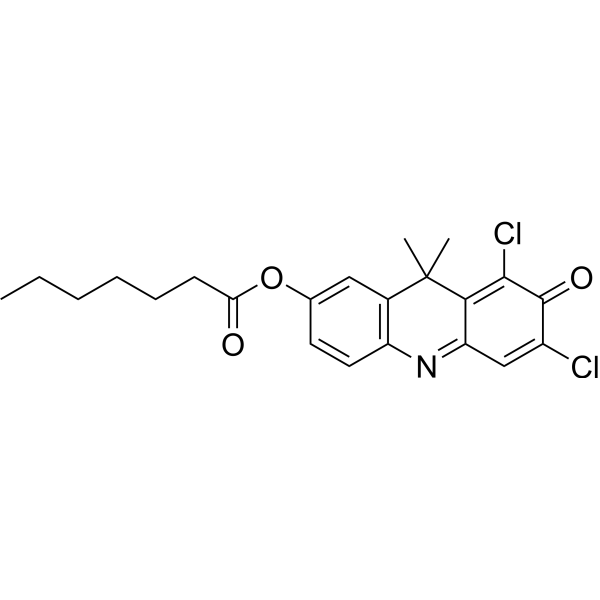
DDAO-C6 is a cridone ester derivative, highly specific fluorescence for detecting humanserumalbumin (HSA). DDAO-C6 acts as an enzymatic activatable near-infrared fluorescent probe in visually sensing endogenous lipase from gut microbes (Ex/Em=600/658 nm) .
Vamidothion is a polar organophosphorus insecticide and acaricide with biological activity against insects and mites. Vamidothion is degraded by humanserumalbumin (HSA) and promotes adduct formation with tyrosine residues. The phosphate amino acid adducts formed after the reaction of vamidothion with HSA are detected by liquid chromatography quadrupole-Orbitrap mass spectrometry. The metabolites of vamidothion can be used in forensic toxicology to help determine deaths caused by organophosphorus poisoning .
Levosemotiadil, an S-isomer of semotiadil, exhibits stronger binding affinity to humanserumalbumin (HSA) compared to its R-isomer counterpart. This study utilized high-performance frontal analysis (HPFA) to demonstrate that levosemotiadil binds approximately three times more strongly to HSA than semotiadil. The binding parameters were evaluated using Scatchard analysis, revealing specific interactions with the diazepam binding site on HSA. The presence of diazepam decreased the binding affinity of both enantiomers, while warfarin did not alter their binding characteristics. These findings highlight levosemotiadil's potential as a Ca- and Na-channel blocker with significant binding preferences for HSA, crucial for understanding its pharmacokinetics and therapeutic effects .
3,7-Dihydroxyflavone (Resogalangin) is a flavonoid phytoestrogen, which can be isolated from Adenophora species. 3,7-Dihydroxyflavone is a modulator of estrogen receptors and an inhibitor of human progesterone metabolizing enzyme AKR1C1 and fungal 17β-hydroxysteroid dehydrogenase and a redox inhibitor (IC50=0.6 and 6.0 μM, respectively). 3,7-Dihydroxyflavone is a fluorescent binding substrate for humanserumalbumin(HSA) with excitation wavelengths of 370 nm (pH 7.4) and 350 nm (pH 3.5), respectively, and emission wavelength of 515 nm .
BSPOTPE is the mixture of (E)-BSPOTPE (HY-W856375) and (Z)-BSPOTPE. BSPOTPE binds Humanserumalbumin (HSA) (HY-P1956), exhibits aggregation-induced emission (AIE) phenomenon. BSPOTPE shows selectivity for albumin (such as HSA and BSA), but has no obvious fluorescence response to other proteins and DNA. BSPOTPE can be used as fluorescent probe for HSA .
(E)-BSPOTPE is the E configuration of BSPOTPE (HY-W856375A). BSPOTPE binds Humanserumalbumin (HSA) (HY-P1956), exhibits aggregation-induced emission (AIE) phenomenon. BSPOTPE shows selectivity for albumin (such as HSA and BSA), but has no obvious fluorescence response to other proteins and DNA. BSPOTPE can be used as fluorescent probe for HSA .
HumanSerumAlbumin-FITC (HSA-FITC) is a FITC (HY-66019) labeled serumalbumin. HumanSerumAlbumin-FITC plays an important role in fluorescent labeling, drug delivery research, and other fields (Ex/Em = 488/525 nm) .
HumanSerumAlbumin-Rhodamine (HSA-Rhodamine) is a Rhodamine B (HY-Y0016) labeled serumalbumin. HumanSerumAlbumin-Rhodamine plays an important role in fluorescent labeling, drug delivery research, and other fields (Ex/Em = 546/610 nm) .
HumanSerumAlbumin-ICG (HSA-ICG) is a Indocyanine green (ICG) (HY-D0711) labeled serumalbumin. HumanSerumAlbumin-ICG plays an important role in fluorescent labeling, drug delivery research, and other fields (Ex/Em = 785/813 nm) .
HumanSerumAlbumin-CY7 (HSA-CY7) is a CY7 (HY-D0825) labeled serumalbumin. HumanSerumAlbumin-CY7 plays an important role in fluorescent labeling, drug delivery research, and other fields (Ex/Em = 740/770 nm) .
HumanSerumAlbumin-CY5.5 (HSA-CY5.5) is a CY5.5 (HY-D0924) labeled serumalbumin. HumanSerumAlbumin-CY5.5 plays an important role in fluorescent labeling, drug delivery research, and other fields (Ex/Em = 680/710 nm) .
DDAO-C6 is a cridone ester derivative, highly specific fluorescence for detecting humanserumalbumin (HSA). DDAO-C6 acts as an enzymatic activatable near-infrared fluorescent probe in visually sensing endogenous lipase from gut microbes (Ex/Em=600/658 nm) .
Humanserumalbumin (HSA) is the most abundant protein in plasma and is a major determinant of plasma oncotic pressure. Humanserumalbumin exhibits antioxidant, anticoagulant, anti-inflammatory, anti-platelet aggregation activities as well as colloid osmotic action. Humanserumalbumin can block the inhibitory effect of GML on human T cells, providing protective function for T cells. Humanserumalbumin is also associated with cardiovascular diseases and can partially prevent the LPS (HY-D1056) induced oxidative stress, as well as the upregulation of NF-κB, NF-κB, and peroxynitrite (ONOO −) in the vascular wall, contributing to the reduction of blood pressure . This product is recombinant HumanSerumAlbumin expressed in a microbial expression system.
Humanserumalbumin (Cell culture grade, Endotoxin<0.125 EU/mg) (HSA) is the most abundant protein in plasma and is a major determinant of plasma oncotic pressure. Humanserumalbumin (Cell culture grade, Endotoxin<0.125 EU/mg) exhibits antioxidant, anticoagulant, anti-inflammatory, anti-platelet aggregation activities as well as colloid osmotic action. Humanserumalbumin (Cell culture grade, Endotoxin<0.125 EU/mg) can block the inhibitory effect of GML on human T cells, providing protective function for T cells. Humanserumalbumin (Cell culture grade, Endotoxin<0.125 EU/mg) is also associated with cardiovascular diseases and can partially prevent the LPS (HY-D1056) induced oxidative stress, as well as the upregulation of NF-κB, iNOS, and peroxynitrite (ONOO −) in the vascular wall, contributing to the reduction of blood pressure. Humanserumalbumin (Cell culture grade, Endotoxin<0.125 EU/mg) can be used for in vitro cell culture . This product is humanserumalbumin recombinantly expressed in an Escherichia coli expression system.
HumanSerumAlbumin-HRP (HSA-HRP) is a HRP labeled serumalbumin. HumanSerumAlbumin-HRP (HSA-HRP) can be used for ELISA and Western blot detection of humanserumalbumin .
Retinoic acid-HSA is a conjugate of Retinoic acid (HY-14649) and Humanserumalbumin (HSA). By conjugating the antigen with protein adjuvants, the production of antigen-specific antibodies in vaccine models can be enhanced. The conjugate does not affect protein folding or disrupt the primary epitopes, and it can enhance cross-presentation and the generation of antigen-specific T cells .
DX-236 is a macrocyclic peptide with a binding affinity of 1.9 µM to humanserumalbumin(HSA). DX-236 can fuse with HSV to prolong its circulation in vivo .
Ozoralizumab (ATN-103) is an anti-TNFα humanized antibody. Ozoralizumab is a humanized trivalent nanobody compound that consists of two anti-human TNFα nanobodies and an anti-humanserumalbumin (HSA) nanobody. Ozoralizumab can be used in research of arthritis .
Donzakimig is a trispecific anti-IL-13/IL-22/HSA antibody. Donzakimig adopts a Fab-scFv-scFv structural format (without an Fc region), in which the Fab domain is linked to the scFv domains via a S (G4S)2 linker. Donzakimig binds to and inhibits the activities of IL-13 and IL-22, thereby blocking the signal transduction of these two cytokines. Donzakimig can extend its serum half-life by binding to humanserumalbumin, enhancing its in vivo stability and achieving long-acting efficacy. Donzakimig can be used in research on moderate-to-severe atopic dermatitis, moderate-to-severe asthma (especially eosinophilic type), psoriasis, inflammatory bowel disease, and other conditions .
Albipagrastim alfa is a long-acting granulocyte colony-stimulating factor (G-CSF), which is formed by the fusion of highly active recombinant G-CSF and humanserumalbumin (HSA). Albipagrastim alfa can significantly inhibit the clearance pathway mediated by the G-CSF receptor. Albipagrastim alfa can be used in tumor-related research .
Licarin A ((+)-Licarin A), a neolignan, significantly and dose-dependently reduces TNF-α production (IC50=12.6 μM) in dinitrophenyl-humanserumalbumin (DNP-HSA)-stimulated RBL-2H3 cells. Anti-allergic effects. Licarin A reduces TNF-α and PGD2 production, and COX-2 expression .
Withanoside V is a blood-brain barrier-permeable withanolide derivative . Withanoside V binds strongly to Sudlow I (domain IIA) of humanserumalbumin(HSA) to form a stable complex and alter the secondary structure of albumin, thereby increasing helix content and reducing β-sheet and random coil. Withanoside V binds to Aβ (1-42) to block the interaction between monomers and subsequent aggregation. Withanoside V inhibits the viability of neuroblastoma cells, reduces the number of apoptotic cells induced by Aβ (1-42), and decreases ROS production. Withanoside V inhibits SARS-CoV-2 Mpro. Withanoside V can be used for research on Alzheimer's disease and coronavirus disease 2019 .
3,7-Dihydroxyflavone (Resogalangin) is a flavonoid phytoestrogen, which can be isolated from Adenophora species. 3,7-Dihydroxyflavone is a modulator of estrogen receptors and an inhibitor of human progesterone metabolizing enzyme AKR1C1 and fungal 17β-hydroxysteroid dehydrogenase and a redox inhibitor (IC50=0.6 and 6.0 μM, respectively). 3,7-Dihydroxyflavone is a fluorescent binding substrate for humanserumalbumin(HSA) with excitation wavelengths of 370 nm (pH 7.4) and 350 nm (pH 3.5), respectively, and emission wavelength of 515 nm .
The serum albumin/ALB protein has multiple binding abilities and can bind water, Ca(2+), Na(+), K(+), fatty acids, hormones, bilirubin, and drugs. Its main effects include regulating blood colloid osmotic pressure to achieve homeostasis. Serum Albumin/ALB Protein, Human (P.pastoris) is the recombinant human-derived Serum Albumin/ALB protein, expressed by P. pastoris , with tag free.
Sodium octyl sulfate (SOS)-d17 (Sodium capryl sulfate-d17) is the deuterated analogue of Sodium octyl sulfate (SOS). Sodium octyl sulfate (Sodium capryl sulfate; SOS) is a medium‑chain anionic surfactant. Sodium octyl sulfate (SOS) can undergo strong hydrophobic interactions with serumalbumins (such as humanserumalbumin (HSA) and bovine serumalbumin (BSA)), while exhibiting weak interactions with other proteins including myoglobin and hemoglobin. As an environmental pollutant in freshwater ecosystems, Sodium octyl sulfate (SOS) can mimic interspecific pheromones released by Daphnia magna and induce the formation of multicellular colonies in green algae.
8-Bromoadenosine is an adenosine analog. Adenosine analogs mostly act as smooth muscle vasodilators and have also been shown to inhibit cancer progression. 8-Bromoadenosine can quench the intrinsic fluorescence of humanserumalbumin (HSA) through static quenching procedure. 8-Bromoadenosine can be used to synthesize adenosine phosphate, such as Acadesine (HY-13417), Clofarabine (HY-A0005), Fludarabine phosphate (HY-B0028) and Vidarabine (HY-B0277) .
Inquiry Online
Your information is safe with us. * Required Fields.
Western blot analysis of extracts from THP-1(lane 2(20μg), Jurkat (lane 3(20μg) and NIH3T3(lane 4(20μg) using FOXO1A (HY-P80132) Rabbit mAb. Proteins were transferred
to a PVDF membrane and blocked with 5% non-fat milk in TBST for 2 hour at room temperature. The primary antibody (1/1000) and Loading control antibody (Beta Actin, HY-P80438, 1/10000) was
used in 5% non-fat milk in TBST at 4°C overnight. Goat Anti-Mouse/Rabbit IgG-HRP Secondary Antibody (1/10000) was used for 1 hour at room temperature.
Western blot analysis of extracts from THP-1(lane 2(20μg), Jurkat (lane 3(20μg) and NIH3T3(lane 4(20μg) using FOXO1A (HY-P80132) Rabbit mAb. Proteins were transferred
to a PVDF membrane and blocked with 5% non-fat milk in TBST for 2 hour at room temperature. The primary antibody (1/1000) and Loading control antibody (Beta Actin, HY-P80438, 1/10000) was
used in 5% non-fat milk in TBST at 4°C overnight. Goat Anti-Mouse/Rabbit IgG-HRP Secondary Antibody (1/10000) was used for 1 hour at room temperature.
Western blot analysis of extracts from THP-1(lane 2(20μg), Jurkat (lane 3(20μg) and NIH3T3(lane 4(20μg) using FOXO1A (HY-P80132) Rabbit mAb. Proteins were transferred
to a PVDF membrane and blocked with 5% non-fat milk in TBST for 2 hour at room temperature. The primary antibody (1/1000) and Loading control antibody (Beta Actin, HY-P80438, 1/10000) was
used in 5% non-fat milk in TBST at 4°C overnight. Goat Anti-Mouse/Rabbit IgG-HRP Secondary Antibody (1/10000) was used for 1 hour at room temperature.
Western blot analysis of extracts from THP-1(lane 2(20μg), Jurkat (lane 3(20μg) and NIH3T3(lane 4(20μg) using FOXO1A (HY-P80132) Rabbit mAb. Proteins were transferred
to a PVDF membrane and blocked with 5% non-fat milk in TBST for 2 hour at room temperature. The primary antibody (1/1000) and Loading control antibody (Beta Actin, HY-P80438, 1/10000) was
MedchemExpress Validation 03
Western blot analysis of extracts from THP-1(lane 2(20μg), Jurkat (lane 3(20μg) and NIH3T3(lane 4(20μg) using FOXO1A (HY-P80132) Rabbit mAb. Proteins were transferred
MedchemExpress Validation 04
Western blot analysis of extracts from THP-1(lane 2(20μg), Jurkat (lane 3(20μg) and NIH3T3(lane 4(20μg) using FOXO1A (HY-P80132) Rabbit mAb. Proteins were transferred
to a PVDF membrane and blocked with 5% non-fat milk in TBST for 2 hour at room temperature. The primary antibody (1/1000) and Loading control antibody (Beta Actin, HY-P80438, 1/10000) was
used in 5% non-fat milk in TBST at 4°C overnight. Goat Anti-Mouse/Rabbit IgG-HRP Secondary Antibody (1/10000) was used for 1 hour at room temperature.
MedchemExpress Validation
Western blot analysis of extracts from THP-1(lane 2(20μg), Jurkat (lane 3(20μg) and NIH3T3(lane 4(20μg) using FOXO1A (HY-P80132) Rabbit mAb. Proteins were transferred
to a PVDF membrane and blocked with 5% non-fat milk in TBST for 2 hour at room temperature. The primary antibody (1/1000) and Loading control antibody (Beta Actin, HY-P80438, 1/10000) was
used in 5% non-fat milk in TBST at 4°C overnight. Goat Anti-Mouse/Rabbit IgG-HRP Secondary Antibody (1/10000) was used for 1 hour at room temperature.
Western blot analysis of extracts from THP-1(lane 2(20μg), Jurkat (lane 3(20μg) and NIH3T3(lane 4(20μg) using FOXO1A (HY-P80132) Rabbit mAb. Proteins were transferred
to a PVDF membrane and blocked with 5% non-fat milk in TBST for 2 hour at room temperature. The primary antibody (1/1000) and Loading control antibody (Beta Actin, HY-P80438, 1/10000) was
used in 5% non-fat milk in TBST at 4°C overnight. Goat Anti-Mouse/Rabbit IgG-HRP Secondary Antibody (1/10000) was used for 1 hour at room temperature.
MedchemExpress Validation
Western blot analysis of extracts from THP-1(lane 2(20μg), Jurkat (lane 3(20μg) and NIH3T3(lane 4(20μg) using FOXO1A (HY-P80132) Rabbit mAb. Proteins were transferred
to a PVDF membrane and blocked with 5% non-fat milk in TBST for 2 hour at room temperature. The primary antibody (1/1000) and Loading control antibody (Beta Actin, HY-P80438, 1/10000) was
used in 5% non-fat milk in TBST at 4°C overnight. Goat Anti-Mouse/Rabbit IgG-HRP Secondary Antibody (1/10000) was used for 1 hour at room temperature.
MedchemExpress Validation
Western blot analysis of extracts from THP-1(lane 2(20μg), Jurkat (lane 3(20μg) and NIH3T3(lane 4(20μg) using FOXO1A (HY-P80132) Rabbit mAb. Proteins were transferred
to a PVDF membrane and blocked with 5% non-fat milk in TBST for 2 hour at room temperature. The primary antibody (1/1000) and Loading control antibody (Beta Actin, HY-P80438, 1/10000) was
used in 5% non-fat milk in TBST at 4°C overnight. Goat Anti-Mouse/Rabbit IgG-HRP Secondary Antibody (1/10000) was used for 1 hour at room temperature.
MedchemExpress Validation
Western blot analysis of extracts from THP-1(lane 2(20μg), Jurkat (lane 3(20μg) and NIH3T3(lane 4(20μg) using FOXO1A (HY-P80132) Rabbit mAb. Proteins were transferred
to a PVDF membrane and blocked with 5% non-fat milk in TBST for 2 hour at room temperature. The primary antibody (1/1000) and Loading control antibody (Beta Actin, HY-P80438, 1/10000) was
used in 5% non-fat milk in TBST at 4°C overnight. Goat Anti-Mouse/Rabbit IgG-HRP Secondary Antibody (1/10000) was used for 1 hour at room temperature.
MedchemExpress Validation
Western blot analysis of extracts from THP-1(lane 2(20μg), Jurkat (lane 3(20μg) and NIH3T3(lane 4(20μg) using FOXO1A (HY-P80132) Rabbit mAb. Proteins were transferred
to a PVDF membrane and blocked with 5% non-fat milk in TBST for 2 hour at room temperature. The primary antibody (1/1000) and Loading control antibody (Beta Actin, HY-P80438, 1/10000) was
used in 5% non-fat milk in TBST at 4°C overnight. Goat Anti-Mouse/Rabbit IgG-HRP Secondary Antibody (1/10000) was used for 1 hour at room temperature.
MedchemExpress Validation
Western blot analysis of extracts from THP-1(lane 2(20μg), Jurkat (lane 3(20μg) and NIH3T3(lane 4(20μg) using FOXO1A (HY-P80132) Rabbit mAb. Proteins were transferred
to a PVDF membrane and blocked with 5% non-fat milk in TBST for 2 hour at room temperature. The primary antibody (1/1000) and Loading control antibody (Beta Actin, HY-P80438, 1/10000) was
used in 5% non-fat milk in TBST at 4°C overnight. Goat Anti-Mouse/Rabbit IgG-HRP Secondary Antibody (1/10000) was used for 1 hour at room temperature.
MedchemExpress Validation
Western blot analysis of extracts from THP-1(lane 2(20μg), Jurkat (lane 3(20μg) and NIH3T3(lane 4(20μg) using FOXO1A (HY-P80132) Rabbit mAb. Proteins were transferred
to a PVDF membrane and blocked with 5% non-fat milk in TBST for 2 hour at room temperature. The primary antibody (1/1000) and Loading control antibody (Beta Actin, HY-P80438, 1/10000) was
used in 5% non-fat milk in TBST at 4°C overnight. Goat Anti-Mouse/Rabbit IgG-HRP Secondary Antibody (1/10000) was used for 1 hour at room temperature.
MedChemExpress values your privacy and your trust is important to us. We use cookies to enhance your website experience. Some cookies are necessary to run the website.
Privacy and Cookie Policy