Search Result
Results for "
influenza virus neuraminidase
" in MedChemExpress (MCE) Product Catalog:
1
Biochemical Assay Reagents
6
Isotope-Labeled Compounds
| Cat. No. |
Product Name |
Target |
Research Areas |
Chemical Structure |
-
- HY-W019823
-
|
|
Fluorescent Dye
|
Infection
Neurological Disease
|
|
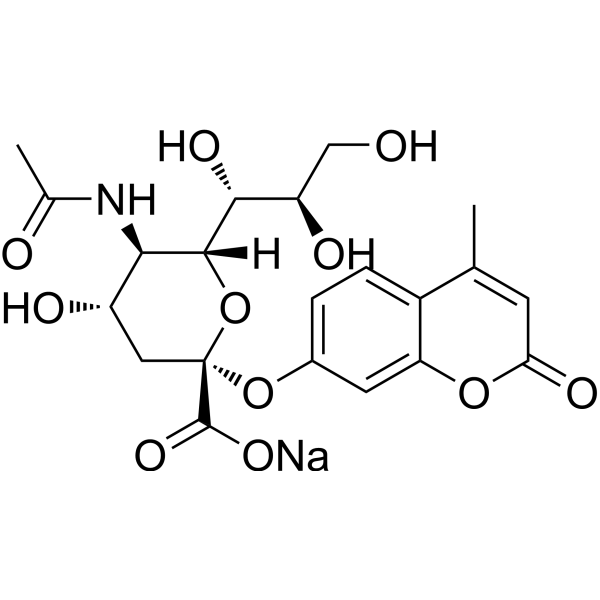
4-MUNANA is a substrate of influenza virus neuraminidase (NA) with high selectivity and irreversible reaction. In the enzymatic reaction, 4-MUNANA is hydrolyzed by NA to generate fluorescent 4-methylumbelliferone (4-MU). By detecting the fluorescence intensity of 4-MU, quantitative analysis of NA activity can be achieved. 4-MUNANA can be used in influenza-related research, such as screening NA inhibitors, developing new anti-influenza drugs, and studying the infection mechanism of influenza viruses .
|
-
-
- HY-13318
-
|
GS 4071; Ro 64-0802; Oseltamivir carboxylate
|
Influenza Virus
Drug Metabolite
|
Infection
Neurological Disease
|
|
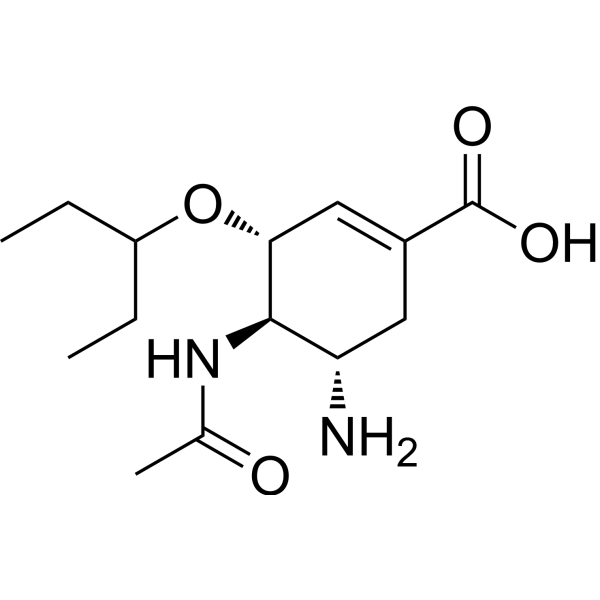
Oseltamivir acid (GS 4071), the active metabolite of Oseltamivir phosphate, is an orally bioavailable, potent and selective inhibitor of influenza virus neuraminidase (IC50=2 nM) with activity against both influenza A and B viruses. Oseltamivir acid has an extremely weak ability to penetrate the BBB under normal physiological conditions, but its blood-brain barrier penetration is significantly enhanced under inflammatory conditions .
|
-
-
- HY-13317
-
|
GS 4104
|
Influenza Virus
|
Infection
Cancer
|
|
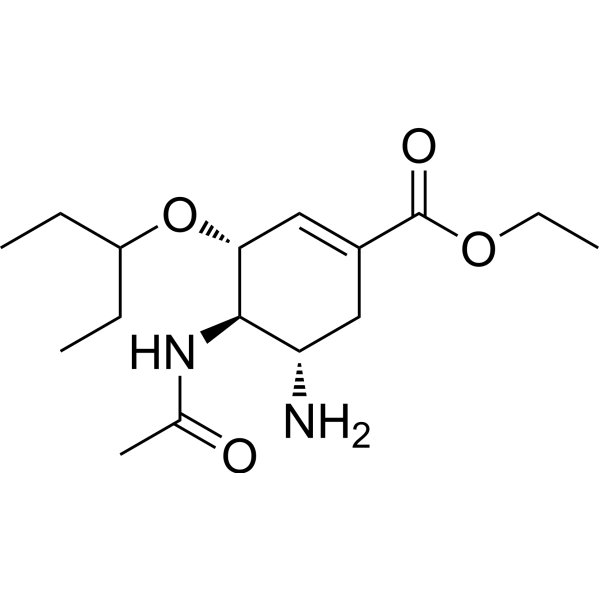
Oseltamivir (GS 4104) is an orally active influenza virus neuraminidase inhibitor (NAI). Oseltamivir inhibits influenza A/H3N2, A/H1N2, A/H1N1, and B viruses with mean IC50s of 0.67, 0.9, 1.34 and 13 nM, respectively .
|
-
-
- HY-125798
-
|
Neu5Ac2en; DANA
|
Influenza Virus
|
Infection
|
|
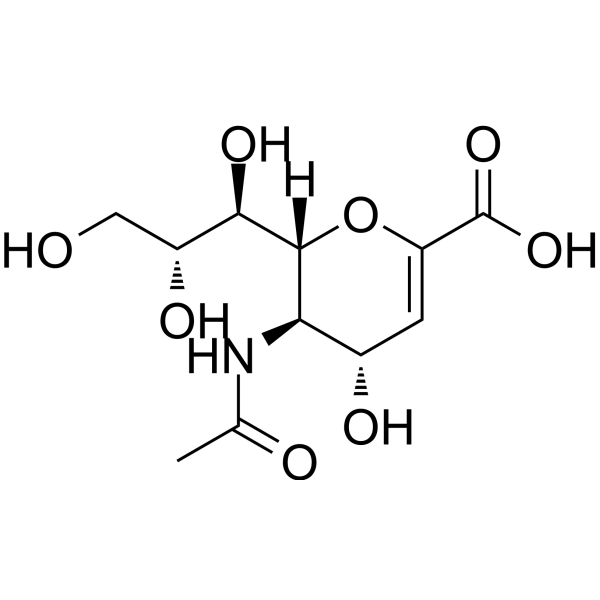
N-acetyl-2,3-dehydro-2-Deoxyneuraminic Acid (Neu5Ac2en) is a potent neuraminidase (sialidase) inhibitor. N-acetyl-2,3-dehydro-2-Deoxyneuraminic Acid shows inhibitory activities against human neuraminidase enzymes with IC50s of 143, 43, 61, and 74 μM for NEU1, NEU2, NEU3, and NEU4, respectively. Anti-influenza virus activity .
|
-
-
- HY-N7922
-
|
Decarboxyellagic acid
|
Influenza Virus
p38 MAPK
EGFR
Akt
Reactive Oxygen Species (ROS)
Apoptosis
|
Infection
Neurological Disease
|
|
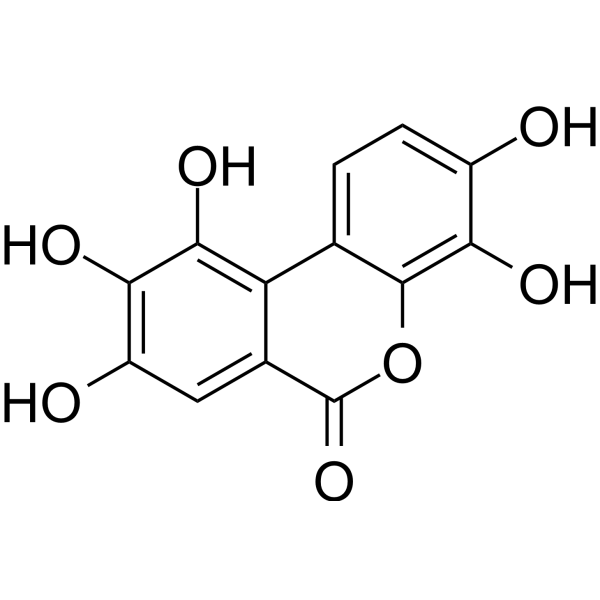
Urolithin M5 (Decarboxyellagic acid) is an orally active influenza virus neuraminidase inhibitor and neuroprotective agent, with IC50 values of 174.8 μM (HK68), 191.5 μM (pdm09), 243.2 μM (WSN) and 257.1 μM (PR8) against four influenza virus neuraminidases, respectively. Urolithin M5 inhibits viral neuraminidase activity, thereby blocking influenza virus replication (including oseltamivir (HY-13317)-resistant strains), protecting infected mammals from death and improving pulmonary edema. Urolithin M5 forms a hydrogen-bond stabilized complex with IGF1R, and binds to MAPK14, AKT1, NFKB1 and EGFR. Urolithin M5 reduces reactive oxygen species production, inhibits neuronal apoptosis, restores mitochondrial transmembrane potential, and promotes neurite outgrowth of damaged neuronal cells. Urolithin M5 can be used in research related to influenza virus infection and Alzheimer's disease .
|
-
-
- HY-17015A
-
|
RWJ-270201; BCX-1812
|
IKK
JNK
STAT
p38 MAPK
ERK
|
Infection
Inflammation/Immunology
|
|
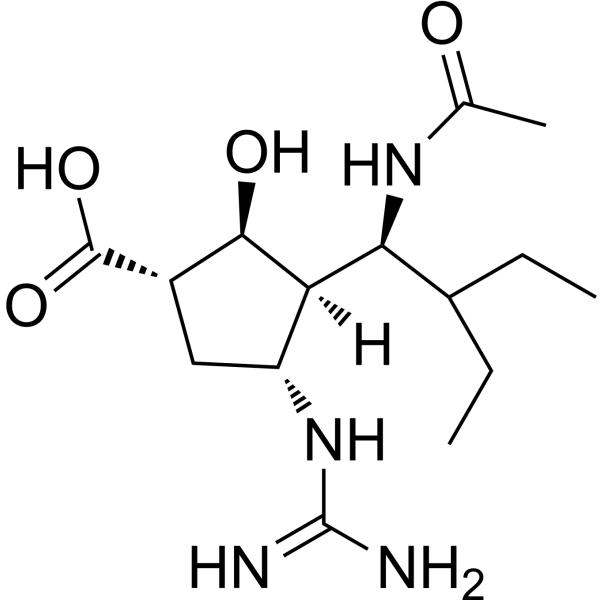
Peramivir is an novel cyclopentane neuraminidase inhibitor of influenza virus. Peramivir has antiviral activity and anti-cytokines stom effects. Peramivir can be used for the research of COVID-19 .
|
-
-
- HY-139218
-
|
|
E3 Ligase Ligand-Linker Conjugates
|
Others
|
|
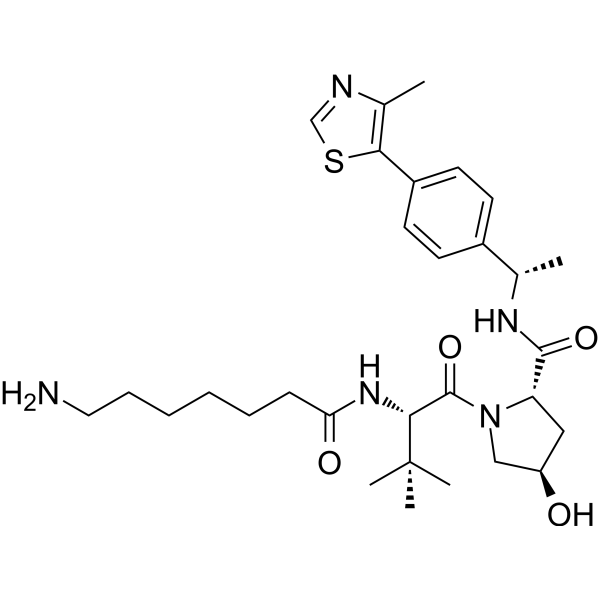
(S,R,S)-AHPC-Me-C6-NH2 is a VHL E3 ubiquitin ligase ligand-linker conjugate structurally modified based on VHL ligand 2 (HY-112078). (S,R,S)-AHPC-Me-C6-NH2 can be used for the synthesis of PROTACs .
|
-
-
- HY-17015
-
-
-
- HY-175469
-
|
|
Influenza Virus
|
Infection
|
|
VNT-101 is an orally active influenza A (IAV) inhibitor. VNT-101 disrupts NP-NP PPI to block NP oligomerization and destabilize the viral ribonucleoprotein (RNP) complex, with potent antiviral activity across multiple influenza A subtypes. VNT-101 exhibits EC50 values of 4-5 nM in cellular cytopathic effect (CPE) assay, 4-8 nM in neuraminidase (NA) assay, and 21-45 nM in RNP assay. VNT-101 demonstrates robust in vivo antiviral efficacy in mice infected with lethal H1N1 virus. VNT-101 can be used for the study of influenza A infection .
|
-

-
- HY-14818A
-
|
CS-8958
|
Influenza Virus
|
Infection
|
|
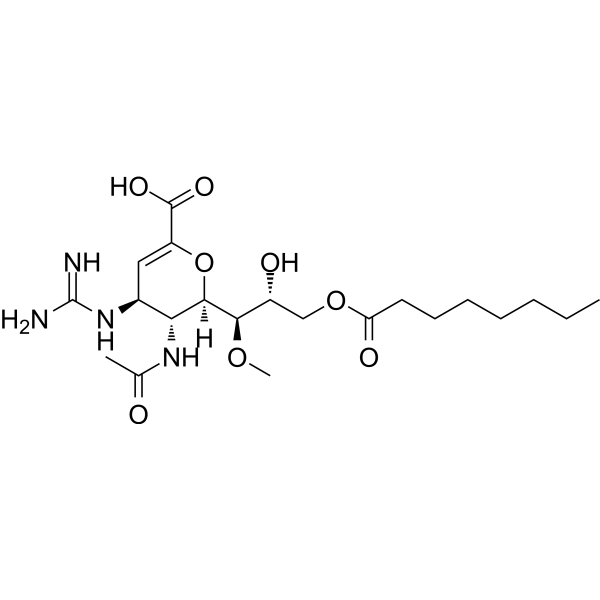
Laninamivir octanoate (CS-8958), a proagent of Laninamivir, is a long-acting neuraminidase (NA) inhibitor with anti-influenza virus activity. Laninamivir octanoate shows anti-influenza activity against Oseltamivir-resistant viruses, and also against the pandemic influenza viruses .
|
-
-
- HY-P3823
-
|
|
Influenza Virus
|
Infection
|
|
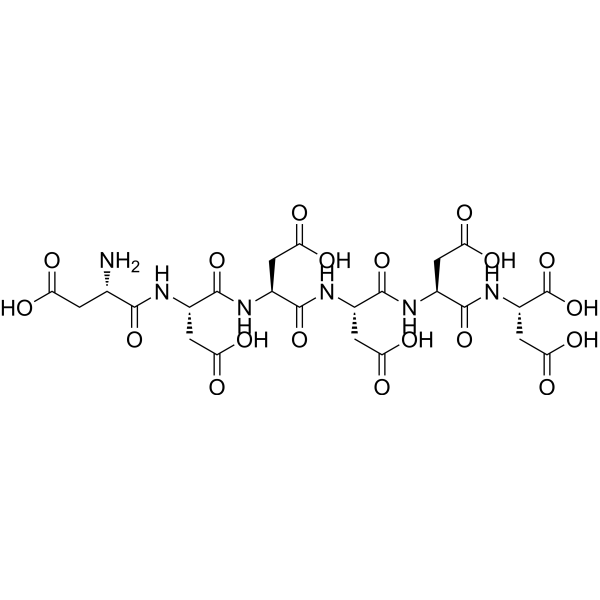
Asp-Asp-Asp-Asp-Asp-Asp is a polyaspartic acid. The specificity of the catalytic and antigenic sites of influenza virus neuraminidase is related to the number of specific amino acids.
|
-
-
- HY-N4194
-
|
|
PPAR
Influenza Virus
|
Infection
Metabolic Disease
|
|
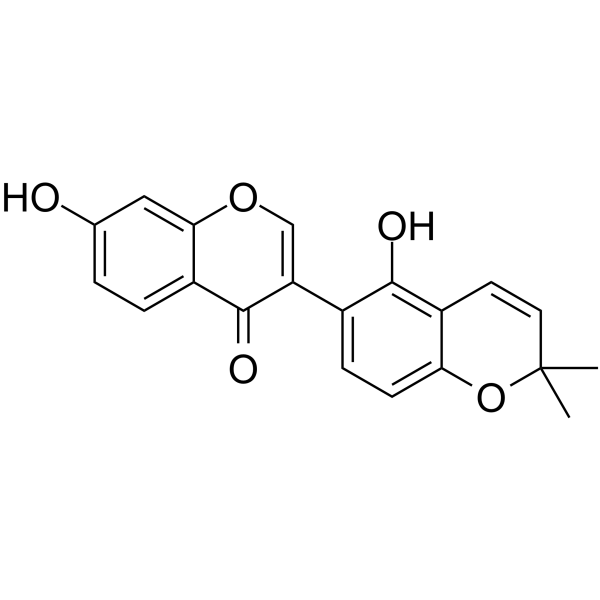
Glabrone is an isoflavone found in Glycyrrhiza glabra roots. Glabrone exhibits significant PPAR-γ ligand binding activity. Glabrone is a specific UGT1A9 probe substrate, and its metabolites can block influenza virus release by inhibiting neuraminidase (NA). Glabrone can be used to screen for herb-drug interactions and for anti-influenza virus activity .
|
-
-
- HY-13318S
-
|
GS 4071-d3; Ro 64-0802-d3; Oseltamivir carboxylate-d3
|
Isotope-Labeled Compounds
Influenza Virus
Drug Metabolite
|
Infection
|
|
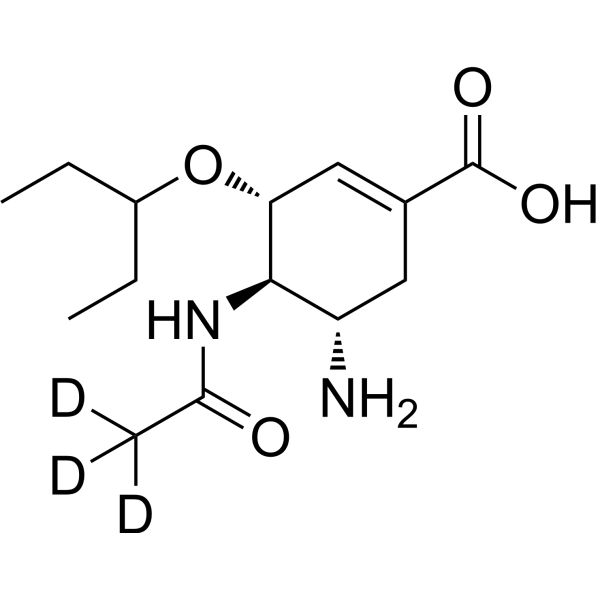
Oseltamivir acid-d3 is a deuterium labeled Oseltamivir acid (HY-13318). Oseltamivir acid, the active metabolite of Oseltamivir phosphate, is an orally bioavailable, potent and selective inhibitor of influenza virus neuraminidase (IC50=2 nM) with activity against both influenza A and B viruses. Oseltamivir acid has an extremely weak ability to penetrate the BBB under normal physiological conditions, but its blood-brain barrier penetration is significantly enhanced under inflammatory conditions .
|
-
-
- HY-DY1034
-
|
|
Fluorescent Dye
|
Infection
Neurological Disease
|
4-MUNANA (solution) is a substrate of influenza virus neuraminidase (NA) with high selectivity and irreversible reaction. In the enzymatic reaction, 4-MUNANA is hydrolyzed by NA to generate fluorescent 4-methylumbelliferone (4-MU). By detecting the fluorescence intensity of 4-MU, quantitative analysis of NA activity can be achieved. 4-MUNANA can be used in influenza-related research, such as screening NA inhibitors, developing new anti-influenza drugs, and studying the infection mechanism of influenza viruses .
Solvent and Concentration: Sterile water: 10 mM
|
-

-
- HY-N1745A
-
|
|
Reactive Oxygen Species (ROS)
Apoptosis
|
Infection
Inflammation/Immunology
Cancer
|
|
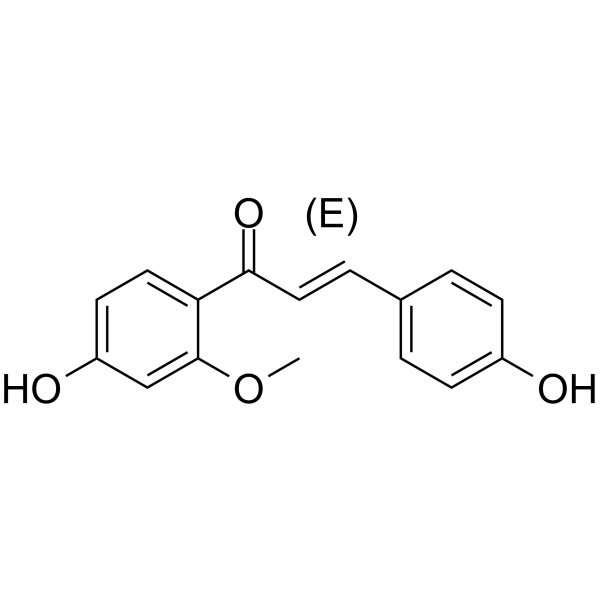
3-Deoxysappanchalcone is a natural chalcone compound isolated from the heartwood of Caesalpinia sappan L. 3-Deoxysappanchalcone induces cell cycle arrest, ROS production, and apoptosis. 3-Deoxysappanchalcone exhibits anti-inflammatory, anti-allergic, anticoagulant, and antithrombotic activities. 3-Deoxysappanchalcone is applicable to research related to lung cancer, esophageal squamous cell carcinoma, thrombosis, and influenza virus infection .
|
-
-
- HY-N2735
-
|
|
Influenza Virus
|
Infection
Inflammation/Immunology
|
|
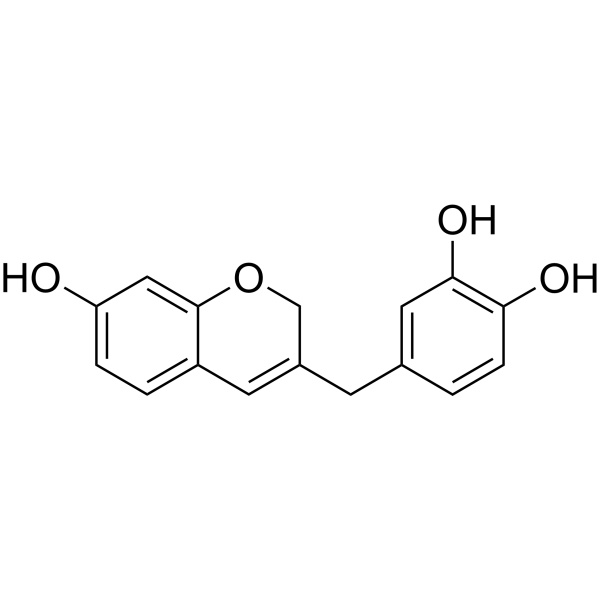
7,3',4'-Trihydroxy-3-benzyl-2H-chromene is an reversible noncompetitive neuraminidase (NA) inhibitor. 7,3',4'-Trihydroxy-3-benzyl-2H-chromene can be isolated from the dried heartwood of Caesalpinia sappan L. 7,3',4'-Trihydroxy-3-benzyl-2H-chromene has potent NAs inhibitory activities with IC50 values of 34.6 µM [H1N1], 39.5 µM [H3N2], and 50.5µM [H9N2], respectively. 7,3',4'-Trihydroxy-3-benzyl-2H-chromene can be used for the research of influenza virus .
|
-
-
- HY-13317S
-
|
|
Influenza Virus
|
Infection
|
|
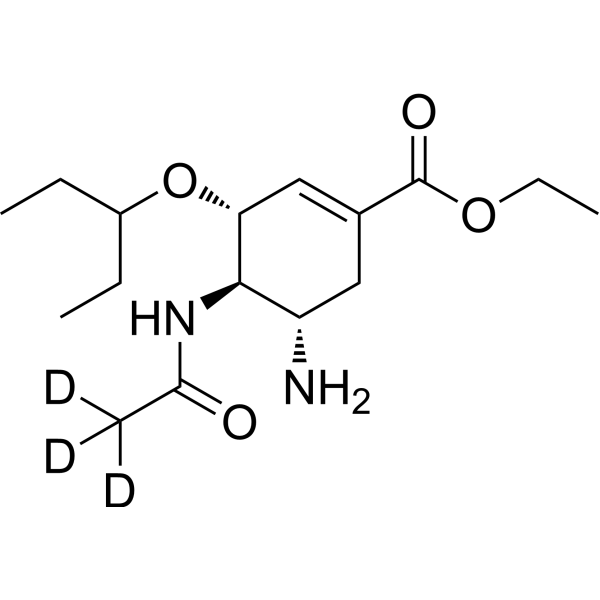
Oseltamivir-d3 is a deuterium labeled Oseltamivir. Oseltamivir is an influenza virus neuraminidase inhibitor (NAI). Oseltamivir inhibits influenza A/H3N2, A/H1N2, A/H1N1, and B viruses with mean IC50s of 0.67, 0.9, 1.34 and 13 nM, respectively. Anti-influenza A and B agent .
|
-
-
- HY-137334
-
|
|
Influenza Virus
|
Infection
|
|
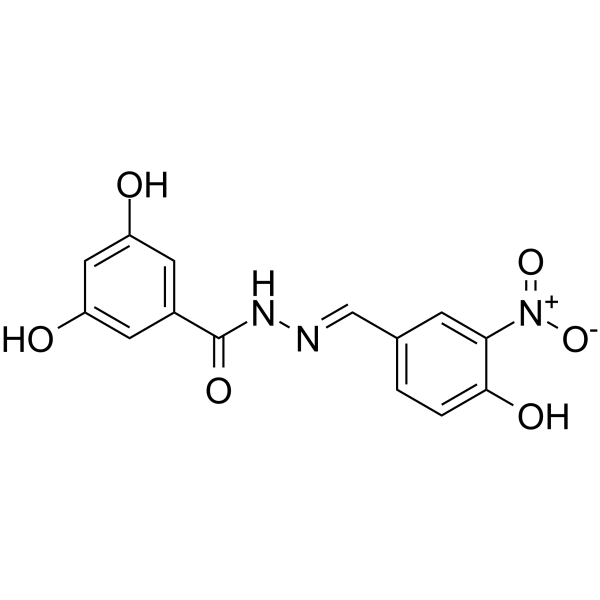
Neuraminidase-IN-1 is a neuraminidase inhibitor, with an IC50 of 0.21 μM. Neuraminidase-IN-1 has excellent activity against H1N1 influenza virus .
|
-
-
- HY-13317R
-
|
GS 4104 (Standard)
|
Reference Standards
Influenza Virus
|
Infection
|
|
Oseltamivir (Standard) is the analytical standard of Oseltamivir. This product is intended for research and analytical applications. Oseltamivir (GS 4104) is an orally active influenza virus neuraminidase inhibitor (NAI). Oseltamivir inhibits influenza A/H3N2, A/H1N2, A/H1N1, and B viruses with mean IC50s of 0.67, 0.9, 1.34 and 13 nM, respectively .
|
-

-
- HY-W892911
-
|
|
Influenza Virus
|
Infection
|
|
AV-5080 is an orally active neuraminidase inhibitor. AV-5080 can be used for the research of influenza A and B viruses .
|
-

-
- HY-N10843
-
|
|
Influenza Virus
|
Infection
|
|
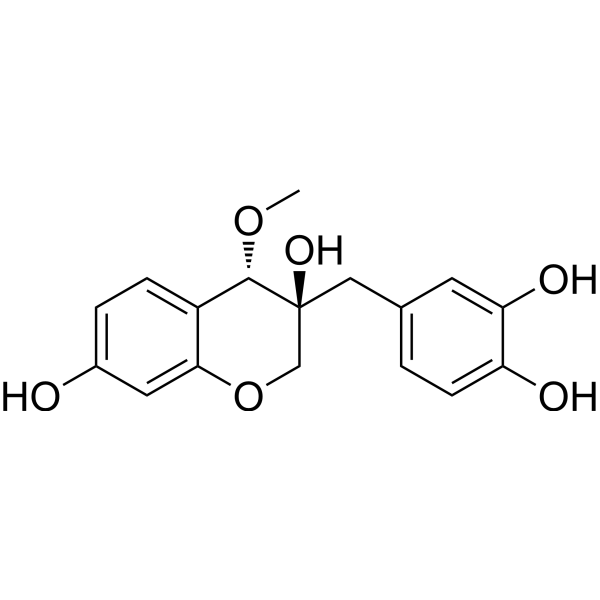
4-O-Methylepisappanol (compound 9) is nature product that could be isolated from heartwood of Caesalpinia sappan. 4-O-Methylepisappanol is a potent neuraminidase inhibitor on the surface of influenza viruses with IC50 values of 42.8, 63.2, and 63.2 µM for A/Chicken/Korea/MS96/96 [H9N2], A/PR/8/34 [H1N1], and A/Hong Kong/8/68 [H3N2], respectively .
|
-
-
- HY-146004
-
|
|
Influenza Virus
|
Infection
|
|
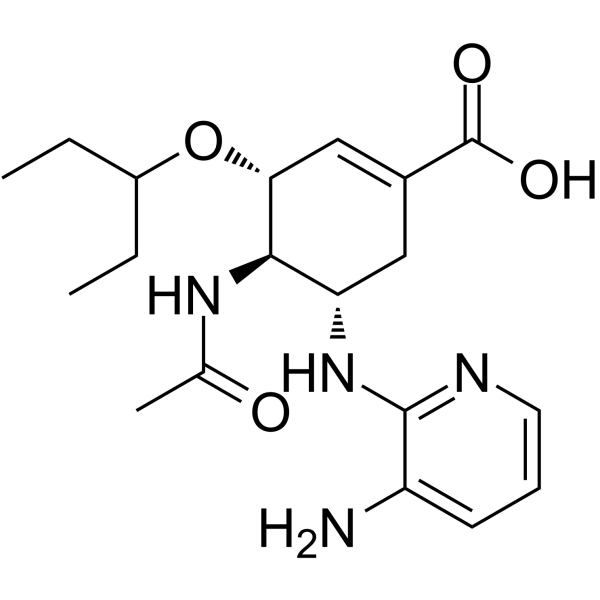
Influenza A virus-IN-4 (compound 23b), an Oseltamivir derivative, is a potent inhibitor of neuraminidase. Influenza A virus-IN-4 exerts powerful inhibitions on influenza viruses .
|
-
-
- HY-E70886
-
-

-
- HY-172515
-
-

-
- HY-13318R
-
|
GS 4071 (Standard); Ro 64-0802 (Standard); Oseltamivir carboxylate (Standard)
|
Reference Standards
Influenza Virus
Drug Metabolite
|
Infection
|
|
Oseltamivir acid (Standard) is the analytical standard of Oseltamivir acid. This product is intended for research and analytical applications. Oseltamivir acid (GS 4071), the active metabolite of Oseltamivir phosphate, is an orally bioavailable, potent and selective inhibitor of influenza virus neuraminidase (IC50=2 nM) with activity against both influenza A and B viruses .
|
-

-
- HY-129150
-
|
|
Influenza Virus
|
Infection
|
|
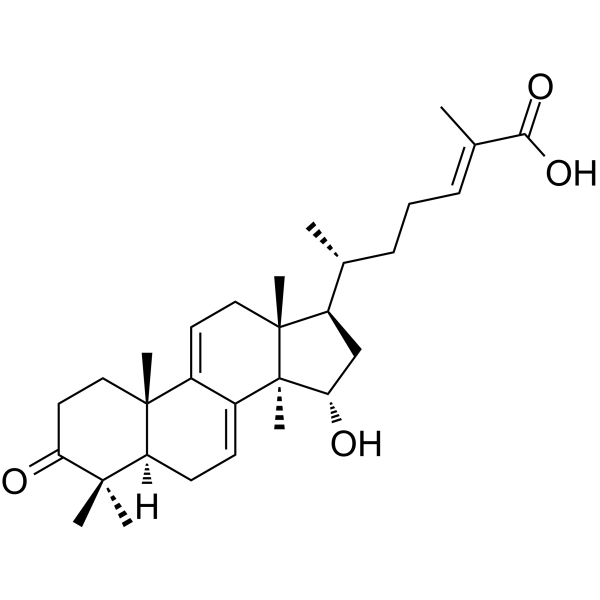
Ganoderic acid TR is a broad-spectrum inhibitor of influenza neuraminidase enzymes (NAs). Ganoderic acid TR has IC50 values of 10.9 and 4.6 μM for H5N1 and H1N1 NAs, respectively. Ganoderic acid TR is limited by cytotoxicity and shows only weak activity against Oseltamivir (HY-13317)-resistant H1N1 viruses and influenza B viruses .
|
-
-
- HY-17015R
-
|
RWJ 270201 trihydrate (Standard); BCX 1812 trihydrate (Standard)
|
Reference Standards
Influenza Virus
|
Infection
|
|
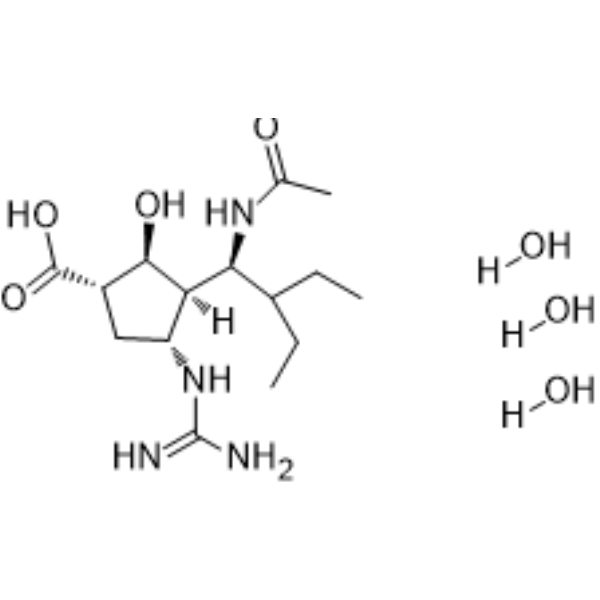
Peramivir (trihydrate) (Standard) is the analytical standard of Peramivir (trihydrate). This product is intended for research and analytical applications. Peramivir trihydrate (RWJ-270201 trihydrate;BCX-1812 trihydrate) is a highly potent, selective and orally active influenza virus neuraminidase (NA) inhibitor, with IC50 values ranging from 0.9 to 4.3 nM for nine NA subtypes .
|
-

-
- HY-175796
-
|
|
Influenza Virus
|
Infection
|
|
Antiviral agent 70 (Compound 12b) is an antiviral agent. Antiviral agent 70 has a superior binding capacity to to Neuraminidaseinfluenza A/H1N1 virus with an IC50 of 2.9 μM. Antiviral agent 70 can be used for influenza virus infections research .
|
-

-
- HY-105395
-
|
|
Influenza Virus
|
Infection
|
|
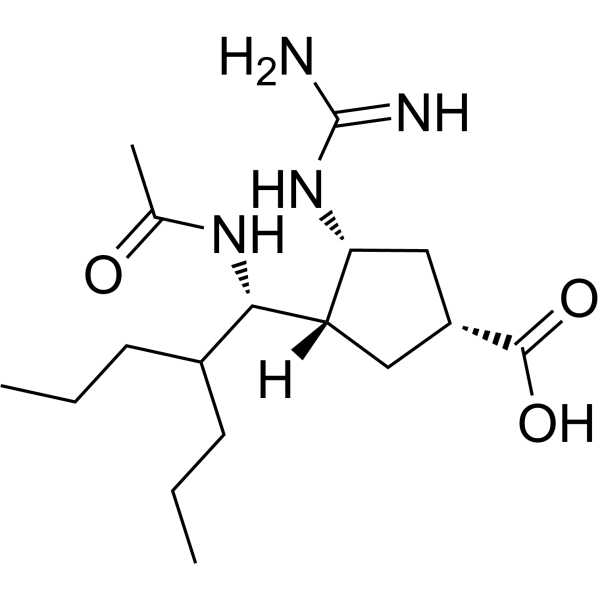
BCX-1898, a cyclopentane derivative, is an orally active and selective influenza virus neuraminidase inhibitor. BCX-1898 has antiviral activity with EC50s of <0.01-21 μM on influenza A (H1N1, H3N2, and H5N1) and influenza B viruses replication in MDCK cells. BCX-1898 shows protection against the mouse influenza model .
|
-
-
- HY-162801
-
|
|
Influenza Virus
|
Infection
|
|
Neuraminidase-IN-21 (Compound 6d) is an influenza H1N1 virus Neuraminidase inhibitor, with IC50s of 0.30 µM for Neuraminidase, and 30.01 µM for H1N1 strain of influenza. Neuraminidase-IN-21 formsg three hydrogen bonds with Arg292, Arg371, and Tyr406 of Neuraminidase .
|
-

-
- HY-14818C
-
|
CS-8958 hydrate
|
Influenza Virus
|
Infection
|
|
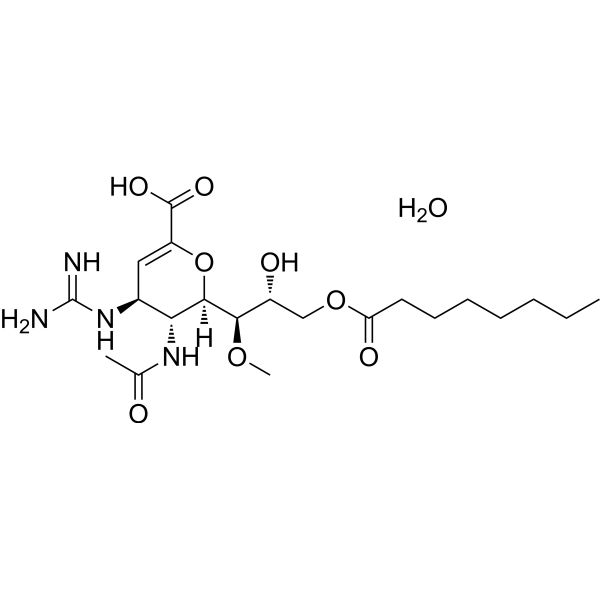
Laninamivir octanoate hydrate (CS-8958 hydrate), a prodrug of Laninamivir, is a long-acting neuraminidase (NA) inhibitor with anti-influenza virus activity. Laninamivir octanoate hydrate shows anti-influenza activity against Oseltamivir-resistant viruses, and also against the pandemic influenza viruses .
|
-
-
- HY-146001
-
|
|
Influenza Virus
|
Inflammation/Immunology
|
|
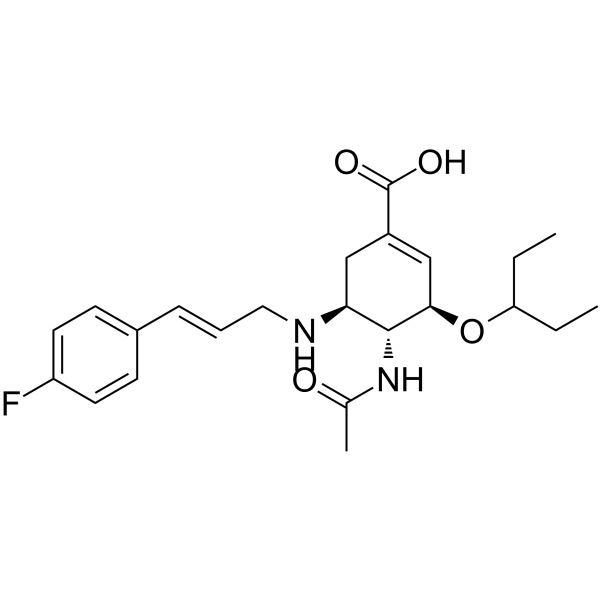
Influenza virus-IN-4 (compound 11e) is a potent influenza virus neuraminidase inhibitor with IC50s of 3.4, 0.094, 0.79, 0.077 µM for H5N1, H5N2, H5N6, H5N8, respectively. Influenza virus-IN-4 shows NA (neuraminidase enzyme)-inhibitory activity. Influenza virus-IN-4 shows low cytotoxicity with an CC50 of >200 µM. Influenza virus-IN-4 shows no obvious toxicity at the dose of 1500 mg/kg in mice .
|
-
-
- HY-161983
-
|
|
Influenza Virus
|
Infection
|
|
Neuraminidase-IN-22 (compound 3e) is a potent, selective and orally active neuraminidase inhibitor with an IC50 value of 0.03 µM. Neuraminidase shows cytotoxicity and anti-influenza A virus activity .
|
-

-
- HY-141862
-
|
|
Influenza Virus
|
Infection
|
|
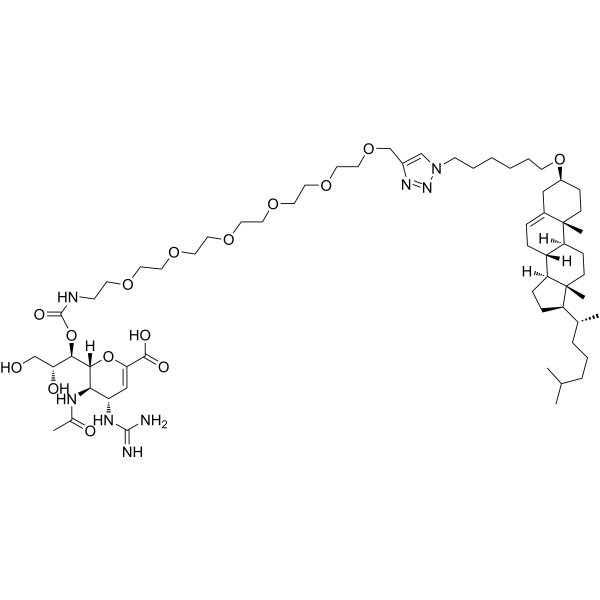
Zanamivir–cholesterol conjugate is a long-acting neuraminidase inhibitor with potent efficacy against drug-resistant influenza viruses.
|
-
-
- HY-162492
-
|
|
Influenza Virus
|
Infection
|
|
Influenza A virus-IN-14 (Compound 37) is an inhibitor for influenza virus type A (IAV), which inhibits H1N1 with an EC50 of 23 nM. Influenza A virus-IN-14 exhibits low cytotoxicity with CC50 of more than 100 μM. Influenza A virus-IN-14 inhibits cytopathic effect and improves the survival rates of cell Calu3. Influenza A virus-IN-14 exhibits synergistic activity with the neuraminidase inhibitor Oseltamivir (HY-13317). Influenza A virus-IN-14 exhibits poor pharmacokinetic properties in CD-1 mouse .
|
-

-
- HY-14818B
-
|
R 125489 TFA
|
Influenza Virus
|
Infection
|
|
Laninamivir TFA (R 125489 TFA) is an antiviral compound with inhibitory and prophylactic activity against influenza A and B viruses. Laninamivir TFA is a long-acting neuraminidase inhibitor administered by nasal inhalation. Laninamivir TFA has shown good safety and efficacy in the inhibition of influenza viruses .
|
-

-
- HY-146000
-
|
|
Influenza Virus
|
Inflammation/Immunology
|
|
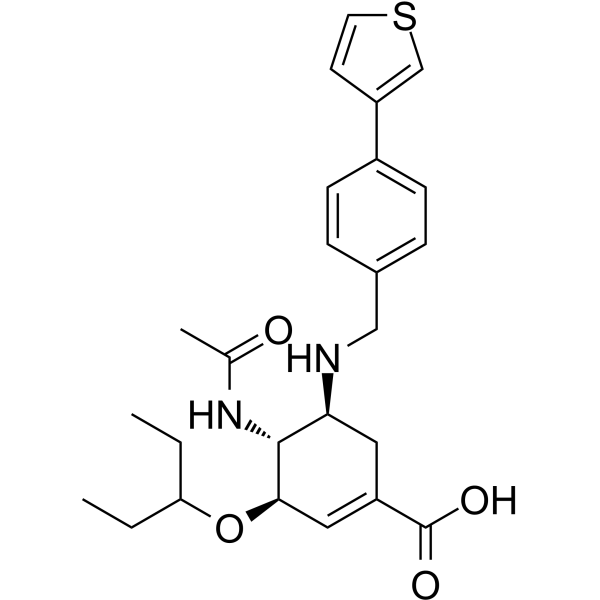
Influenza virus-IN-3 (compound 9) is a potent and selective influenza virus inhibitor with IC50s of 0.88, 0.10, 5.5, 0.51 µM for H5N1, H5N2, H5N6, H5N8, respectively. Influenza virus-IN-3 shows antiviral and NA (neuraminidase enzyme)-inhibitory activity. Influenza virus-IN-3 shows low cytotoxicity with an CC50 of >200 µM .
|
-
-
- HY-P3823A
-
|
|
Influenza Virus
|
Infection
|
|
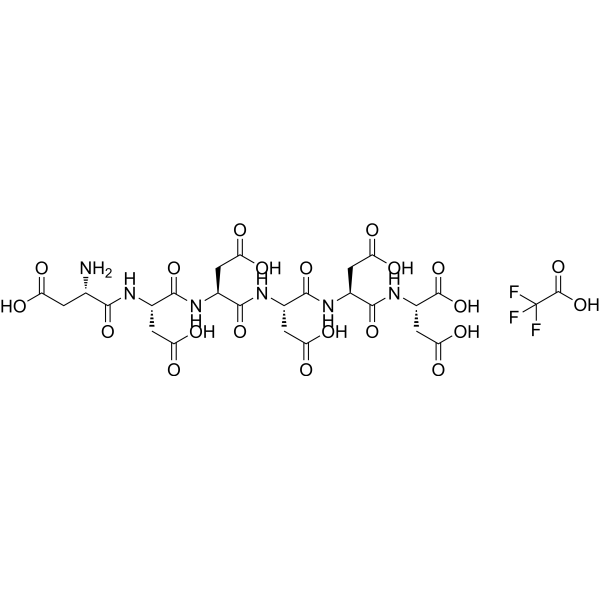
Asp-Asp-Asp-Asp-Asp-Asp TFA is a polyaspartic acid. The specificity of the catalytic and antigenic sites of influenza virus neuraminidase is related to the number of specific amino acids.
|
-
-
- HY-133172
-
|
|
Biochemical Assay Reagents
|
|
|
Zanamivir amine is a neuraminidase inhibitor with antiviral activity. Zanamivir amine can effectively inhibit the proliferation of influenza virus. Zanamivir amine is clinically used to inhibit influenza infection. Zanamivir amine reduces viral load by interfering with the viral replication process.
|
-

-
- HY-N9036
-
|
|
Influenza Virus
|
Infection
|
|
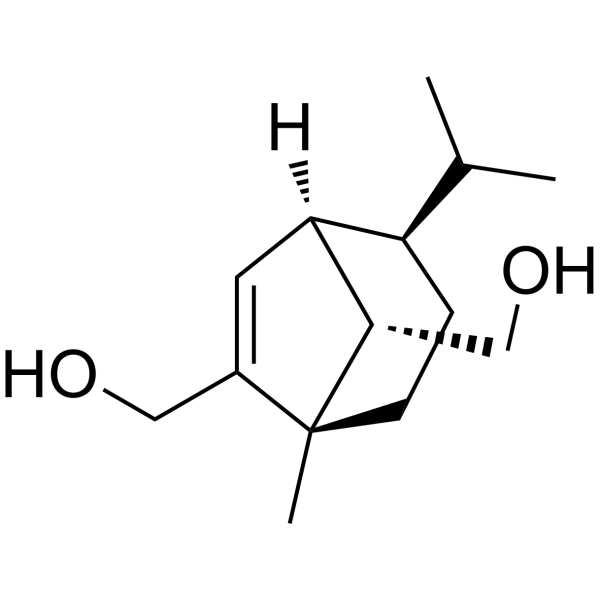
Drechslerine A has neuraminidase inhibitory activity (IC50: 0.79 μM). Drechslerine A is a terpene that can be isolated from endophytic Cochliobolus. Drechslerine A can be used for research of Influenza Virus .
|
-
-
- HY-163364
-
|
|
Influenza Virus
|
Infection
|
|
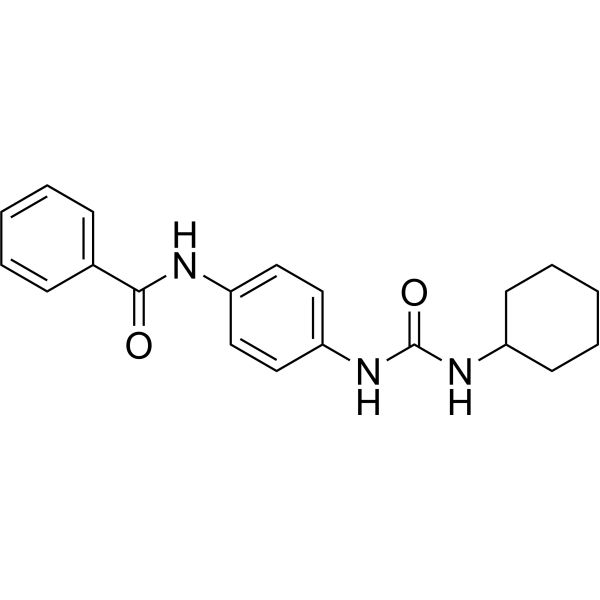
DS-22-inf-021 is a neuraminidase (NA) inhibitor. DS-22-inf-021 has antiviral activity against influenza viruses .
|
-
-
- HY-13317S3
-
|
|
Influenza Virus
|
Infection
|
|
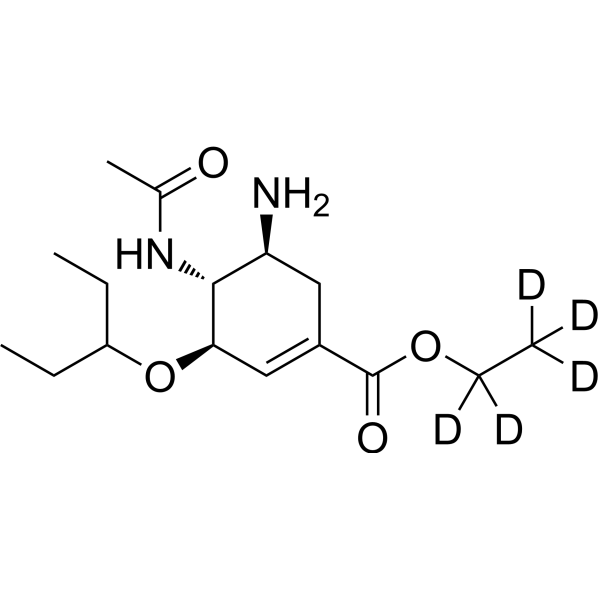
Oseltamivir-d5 is the deuterium labeled Oseltamivir . Oseltamivir is an influenza virus neuraminidase inhibitor (NAI). Oseltamivir inhibits influenza A/H3N2, A/H1N2, A/H1N1, and B viruses with mean IC50 of 0.67, 0.9, 1.34 and 13 nM, respectively. Anti-influenza A and B agent .
|
-
-
- HY-13317S4
-
|
|
Isotope-Labeled Compounds
|
Infection
|
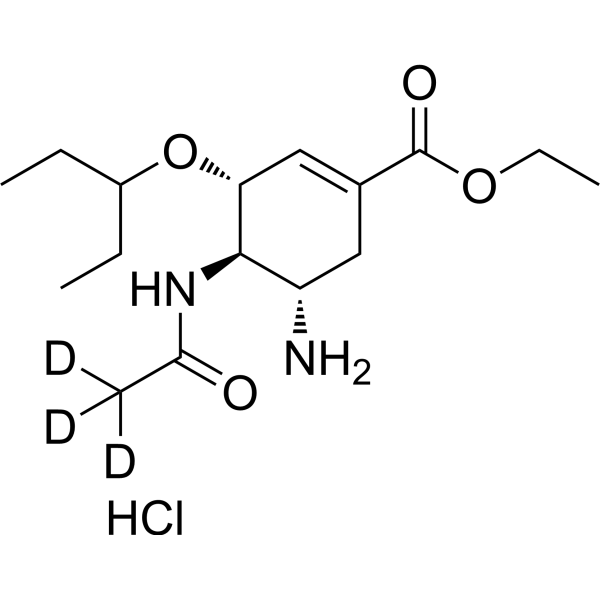
|
Oseltamivir-d3 hydrochloride is the deuterium-labeled Oseltamivir (HY-13317) . Oseltamivir is an influenza virus neuraminidase inhibitor (NAI). Oseltamivir inhibits influenza A/H3N2, A/H1N2, A/H1N1, and B viruses with mean IC50s of 0.67, 0.9, 1.34 and 13 nM, respectively. Anti-influenza A and B agent .
|
-
-
- HY-13317S1
-
|
|
Influenza Virus
|
Infection
|
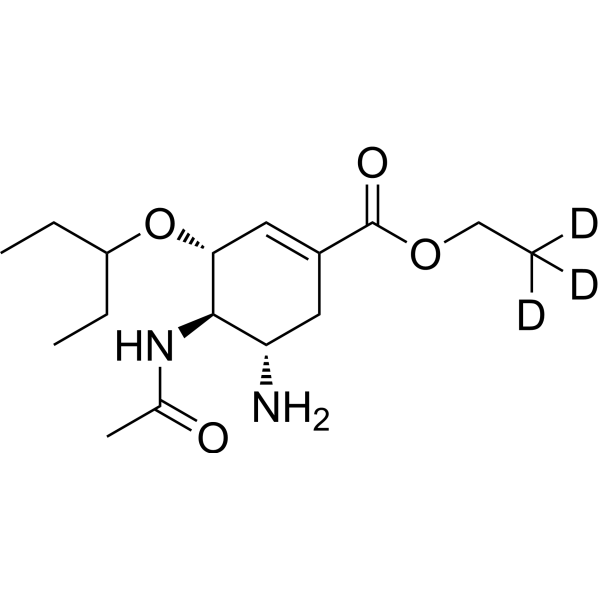
|
Oseltamivir-d3-1 is the deuterium labeled Oseltamivir . Oseltamivir is an influenza virus neuraminidase inhibitor (NAI). Oseltamivir inhibits influenza A/H3N2, A/H1N2, A/H1N1, and B viruses with mean IC50s of 0.67, 0.9, 1.34 and 13 nM, respectively. Anti-influenza A and B agent .
|
-
-
- HY-163393
-
|
|
Influenza Virus
|
Infection
|
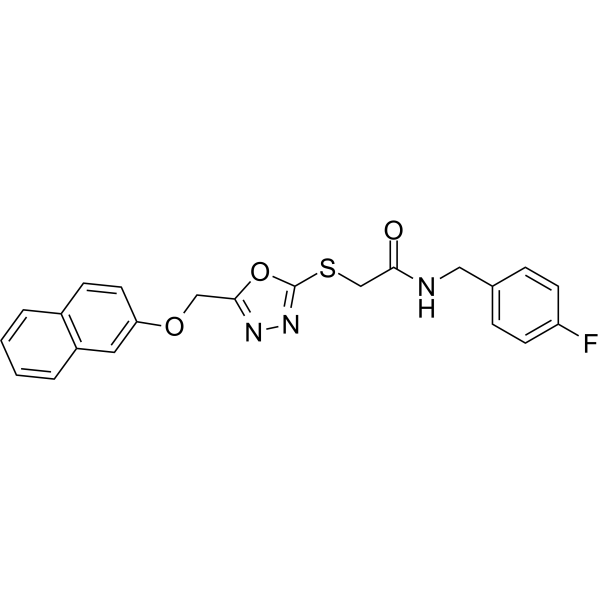
|
Neuraminidase-IN-18 (compound N5) is a novel polyheterocyclic neuraminidase (NA) inhibitor. Neuraminidase-IN-18 shows potency in inhibition of H5N1 NA with an IC50 of 0.14 μM and 0.27 μM against the wild-type H5N1 NA and H5N1-H274Y mutant NA, respectively. Neuraminidase-IN-18 inhibits influenza virus replication by binding to NAs in cell level .
|
-
-
- HY-N15618
-
|
|
Influenza Virus
|
Infection
|
|
Antiviral agent 68 (Compound 3) is a diarylheptanoid that can be isolated from Alpinia katsumadai. Antiviral agent 68 has weak inhibitory activity against the neuraminidase of influenza virus A/PR/8/34, with an IC50 of 29.75 μM .
|
-

-
- HY-13318S1
-
|
GS 4071-13C,d3; Ro 64-0802-13C,d3; Oseltamivir carboxylate-13C,d3
|
Isotope-Labeled Compounds
Drug Metabolite
Influenza Virus
|
Infection
|
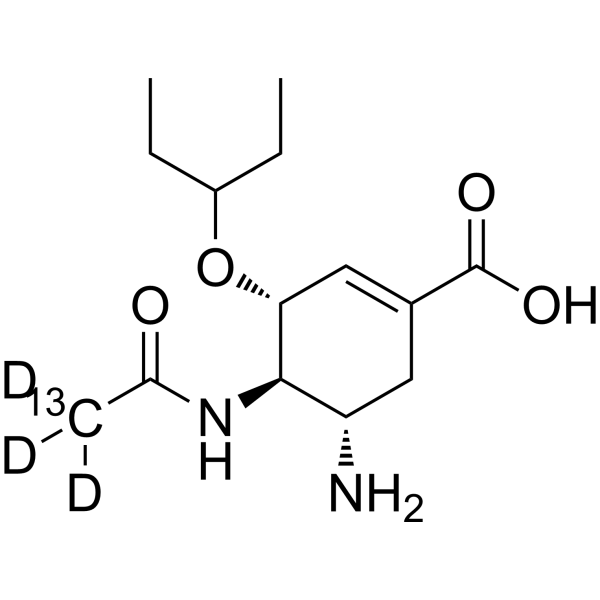
|
Oseltamivir acid-13C,d3 (GS 4071-13C,d3; Ro 64-0802-13C,d3) is a 13C- and deuterium-labeled Oseltamivir acid (HY-13318). Oseltamivir acid is the active metabolite of Oseltamivir phosphate and inhibits influenza virus neuraminidase (IC50=2 nM). Oseltamivir acid is orally active and can be used to study influenza A/B infections .
|
-
-
- HY-181885
-
|
|
Influenza Virus
Drug Derivative
|
Infection
|
|
Antiviral agent 80 is a conjugate of Zanamivir (HY-13210) and Amantadine (HY-13317), acting as a dual inhibitor of influenza virus M2 ion channel/neuraminidase (NA). Antiviral agent 80 exhibits potent inhibitory activity against both wild-type and drug-resistant influenza neuraminidase mutants, with an IC50 value range of 1.50 nM to 120.4 nM. Antiviral agent 80 can be used in influenza-related research .
|
-

-
- HY-D2982
-
|
|
Fluorescent Dye
|
Infection
|
|
BTP9-Neu5Ac is a fluorescent imaging probe specifically designed for detecting the neuraminidase (NA) sialidase activity of influenza viruses. BTP9-Neu5Ac can visualize the intracellular Golgi localization of the viral NA activity. BTP9-Neu5Ac can be used for precise and temporal monitoring of the key enzyme activities during the viral life cycle .
|
-

-
- HY-170445
-
|
|
Influenza Virus
|
Infection
Inflammation/Immunology
|
|
Neuraminidase-IN-23 (33c) is a potent neuraminidase (NA) inhibitor against influenza virus, with IC50 values of 0.049 μM (H1N1), 0.26 μM (H3N2), 0.17 μM (H5N1), 0.013 μM (H5N8) and 0.74 μM (H5N1-H274Y), respectively .
|
-

| Cat. No. |
Product Name |
Type |
-
- HY-W019823
-
|
|
Fluorescent Dyes
|
|
4-MUNANA is a substrate of influenza virus neuraminidase (NA) with high selectivity and irreversible reaction. In the enzymatic reaction, 4-MUNANA is hydrolyzed by NA to generate fluorescent 4-methylumbelliferone (4-MU). By detecting the fluorescence intensity of 4-MU, quantitative analysis of NA activity can be achieved. 4-MUNANA can be used in influenza-related research, such as screening NA inhibitors, developing new anti-influenza drugs, and studying the infection mechanism of influenza viruses .
|
-
- HY-DY1034
-
|
|
Fluorescent Dyes
|
4-MUNANA (solution) is a substrate of influenza virus neuraminidase (NA) with high selectivity and irreversible reaction. In the enzymatic reaction, 4-MUNANA is hydrolyzed by NA to generate fluorescent 4-methylumbelliferone (4-MU). By detecting the fluorescence intensity of 4-MU, quantitative analysis of NA activity can be achieved. 4-MUNANA can be used in influenza-related research, such as screening NA inhibitors, developing new anti-influenza drugs, and studying the infection mechanism of influenza viruses .
Solvent and Concentration: Sterile water: 10 mM
|
-
- HY-D2982
-
|
|
Fluorescent Dyes
|
|
BTP9-Neu5Ac is a fluorescent imaging probe specifically designed for detecting the neuraminidase (NA) sialidase activity of influenza viruses. BTP9-Neu5Ac can visualize the intracellular Golgi localization of the viral NA activity. BTP9-Neu5Ac can be used for precise and temporal monitoring of the key enzyme activities during the viral life cycle .
|
| Cat. No. |
Product Name |
Type |
-
- HY-133172
-
|
|
Biochemical Assay Reagents
|
|
Zanamivir amine is a neuraminidase inhibitor with antiviral activity. Zanamivir amine can effectively inhibit the proliferation of influenza virus. Zanamivir amine is clinically used to inhibit influenza infection. Zanamivir amine reduces viral load by interfering with the viral replication process.
|
| Cat. No. |
Product Name |
Target |
Research Area |
-
- HY-P3823
-
|
|
Influenza Virus
|
Infection
|
|
Asp-Asp-Asp-Asp-Asp-Asp is a polyaspartic acid. The specificity of the catalytic and antigenic sites of influenza virus neuraminidase is related to the number of specific amino acids.
|
-
- HY-P3823A
-
|
|
Influenza Virus
|
Infection
|
|
Asp-Asp-Asp-Asp-Asp-Asp TFA is a polyaspartic acid. The specificity of the catalytic and antigenic sites of influenza virus neuraminidase is related to the number of specific amino acids.
|
| Cat. No. |
Product Name |
Category |
Target |
Chemical Structure |
-
- HY-N7922
-
|
Decarboxyellagic acid
|
Structural Classification
Canarium album (Lour.) Rauesch.
Phenols
Polyphenols
Plants
Burseraceae
Source Classification
|
Influenza Virus
p38 MAPK
EGFR
Akt
Reactive Oxygen Species (ROS)
Apoptosis
|
|
Urolithin M5 (Decarboxyellagic acid) is an orally active influenza virus neuraminidase inhibitor and neuroprotective agent, with IC50 values of 174.8 μM (HK68), 191.5 μM (pdm09), 243.2 μM (WSN) and 257.1 μM (PR8) against four influenza virus neuraminidases, respectively. Urolithin M5 inhibits viral neuraminidase activity, thereby blocking influenza virus replication (including oseltamivir (HY-13317)-resistant strains), protecting infected mammals from death and improving pulmonary edema. Urolithin M5 forms a hydrogen-bond stabilized complex with IGF1R, and binds to MAPK14, AKT1, NFKB1 and EGFR. Urolithin M5 reduces reactive oxygen species production, inhibits neuronal apoptosis, restores mitochondrial transmembrane potential, and promotes neurite outgrowth of damaged neuronal cells. Urolithin M5 can be used in research related to influenza virus infection and Alzheimer's disease .
|
-
-
- HY-N4194
-
-
-
- HY-N1745A
-
-
-
- HY-N2735
-
|
|
Leguminosae
Caesalpinia sappan L.
Phenols
Polyphenols
Plants
Source Classification
|
Influenza Virus
|
|
7,3',4'-Trihydroxy-3-benzyl-2H-chromene is an reversible noncompetitive neuraminidase (NA) inhibitor. 7,3',4'-Trihydroxy-3-benzyl-2H-chromene can be isolated from the dried heartwood of Caesalpinia sappan L. 7,3',4'-Trihydroxy-3-benzyl-2H-chromene has potent NAs inhibitory activities with IC50 values of 34.6 µM [H1N1], 39.5 µM [H3N2], and 50.5µM [H9N2], respectively. 7,3',4'-Trihydroxy-3-benzyl-2H-chromene can be used for the research of influenza virus .
|
-
-
- HY-N10843
-
|
|
Flavanonols
Flavonoids
Caesalpiniaceae
Plants
Source Classification
|
Influenza Virus
|
|
4-O-Methylepisappanol (compound 9) is nature product that could be isolated from heartwood of Caesalpinia sappan. 4-O-Methylepisappanol is a potent neuraminidase inhibitor on the surface of influenza viruses with IC50 values of 42.8, 63.2, and 63.2 µM for A/Chicken/Korea/MS96/96 [H9N2], A/PR/8/34 [H1N1], and A/Hong Kong/8/68 [H3N2], respectively .
|
-
-
- HY-129150
-
-
-
- HY-N9036
-
-
-
- HY-N15618
-
-
| Cat. No. |
Product Name |
Chemical Structure |
-
- HY-13318S
-
|
|
|
Oseltamivir acid-d3 is a deuterium labeled Oseltamivir acid (HY-13318). Oseltamivir acid, the active metabolite of Oseltamivir phosphate, is an orally bioavailable, potent and selective inhibitor of influenza virus neuraminidase (IC50=2 nM) with activity against both influenza A and B viruses. Oseltamivir acid has an extremely weak ability to penetrate the BBB under normal physiological conditions, but its blood-brain barrier penetration is significantly enhanced under inflammatory conditions .
|
-
-
- HY-13317S
-
|
|
|
Oseltamivir-d3 is a deuterium labeled Oseltamivir. Oseltamivir is an influenza virus neuraminidase inhibitor (NAI). Oseltamivir inhibits influenza A/H3N2, A/H1N2, A/H1N1, and B viruses with mean IC50s of 0.67, 0.9, 1.34 and 13 nM, respectively. Anti-influenza A and B agent .
|
-
-
- HY-13317S3
-
|
|
|
Oseltamivir-d5 is the deuterium labeled Oseltamivir . Oseltamivir is an influenza virus neuraminidase inhibitor (NAI). Oseltamivir inhibits influenza A/H3N2, A/H1N2, A/H1N1, and B viruses with mean IC50 of 0.67, 0.9, 1.34 and 13 nM, respectively. Anti-influenza A and B agent .
|
-
-
- HY-13317S4
-
|
|
|
Oseltamivir-d3 hydrochloride is the deuterium-labeled Oseltamivir (HY-13317) . Oseltamivir is an influenza virus neuraminidase inhibitor (NAI). Oseltamivir inhibits influenza A/H3N2, A/H1N2, A/H1N1, and B viruses with mean IC50s of 0.67, 0.9, 1.34 and 13 nM, respectively. Anti-influenza A and B agent .
|
-
-
- HY-13317S1
-
|
|
|
Oseltamivir-d3-1 is the deuterium labeled Oseltamivir . Oseltamivir is an influenza virus neuraminidase inhibitor (NAI). Oseltamivir inhibits influenza A/H3N2, A/H1N2, A/H1N1, and B viruses with mean IC50s of 0.67, 0.9, 1.34 and 13 nM, respectively. Anti-influenza A and B agent .
|
-
-
- HY-13318S1
-
|
|
|
Oseltamivir acid-13C,d3 (GS 4071-13C,d3; Ro 64-0802-13C,d3) is a 13C- and deuterium-labeled Oseltamivir acid (HY-13318). Oseltamivir acid is the active metabolite of Oseltamivir phosphate and inhibits influenza virus neuraminidase (IC50=2 nM). Oseltamivir acid is orally active and can be used to study influenza A/B infections .
|
-
Your information is safe with us. * Required Fields.
Inquiry Information
- Product Name:
- Cat. No.:
- Quantity:
- MCE Japan Authorized Agent:








