



3-Deoxysappanchalcone
Based on 2 publication(s) in Google Scholar
3-Deoxysappanchalcone is a natural chalcone compound isolated from the heartwood of Caesalpinia sappan L. 3-Deoxysappanchalcone induces cell cycle arrest, ROS production, and apoptosis. 3-Deoxysappanchalcone exhibits anti-inflammatory, anti-allergic, anticoagulant, and antithrombotic activities. 3-Deoxysappanchalcone is applicable to research related to lung cancer, esophageal squamous cell carcinoma, thrombosis, and influenza virus infection.
Nur für Forschungszwecke. Wir verkaufen nicht an Patienten.
- Reinheit : 99.77%
- CAS. Nr.: 112408-67-0
- Formel: C16H14O4
- Molecular Weight:270.28
-
Speicherung:
4°C, protect from light
* In solvent : -80°C, 6 months; -20°C, 1 month (protect from light)

To place orders, for customer services and technical support, please contact: MedChemExpress USA
Tel: 609-228-6898 E-mail: [email protected] [email protected]


-
 Biologische Aktivität
-
Chemical Information
-
Lösungsmittel & Löslichkeit
- Protokoll
- Reinheit & Dokumentation
- Verweise
-
 Help & FAQs


-
HY-N0279
CardamoninNF-κB Inhibitor -
HY-N0269
EchinatinAnti-Inflammatory Agent -
HY-16558
ButeinEGFR/PDE Inhibitor -
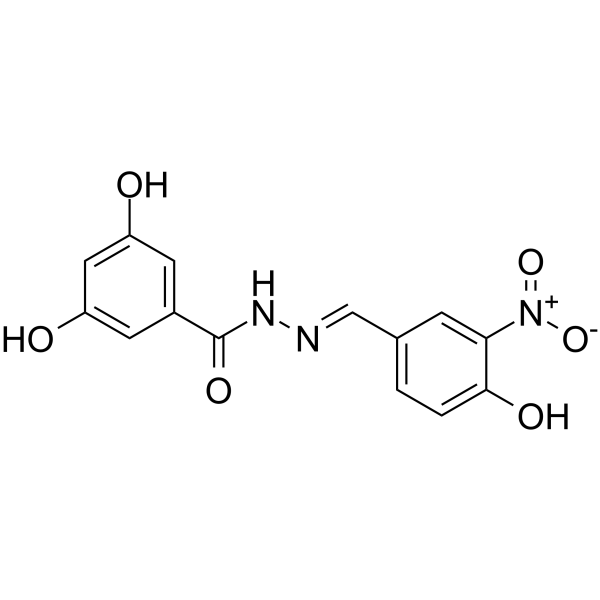
HY-137334
Neuraminidase-IN-1Neuraminidase Inhibitor -
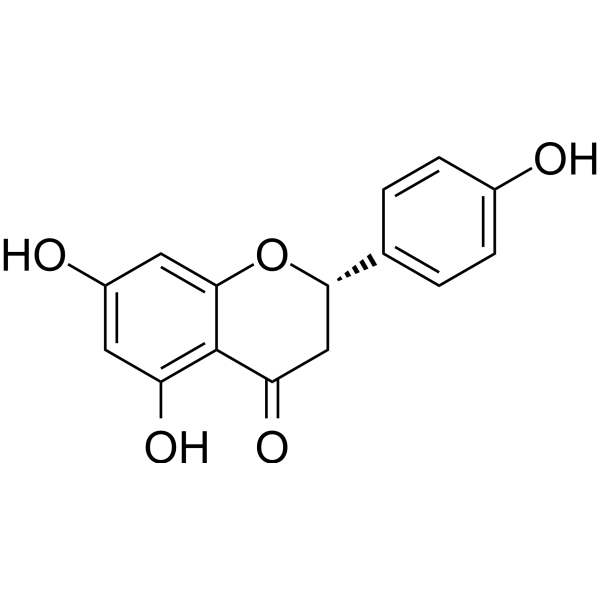
HY-N0100
NaringeninFlavonoid -
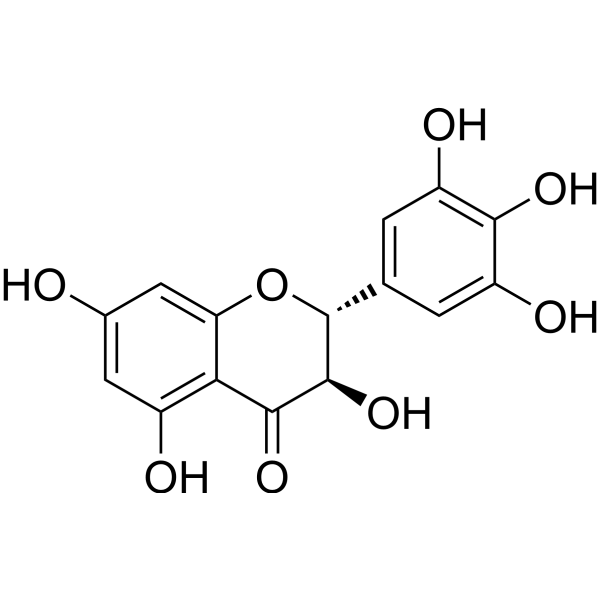
HY-N0112
DihydromyricetinAutophagy Inducer -
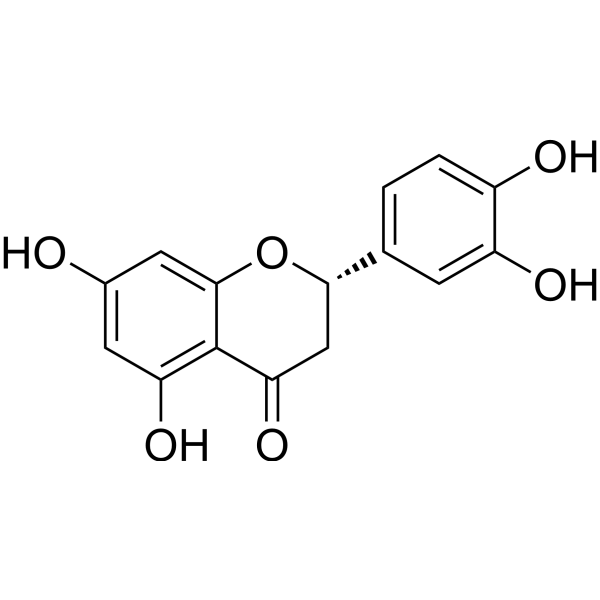
HY-N0637
EriodictyolEndogenous Metabolite -
HY-109025
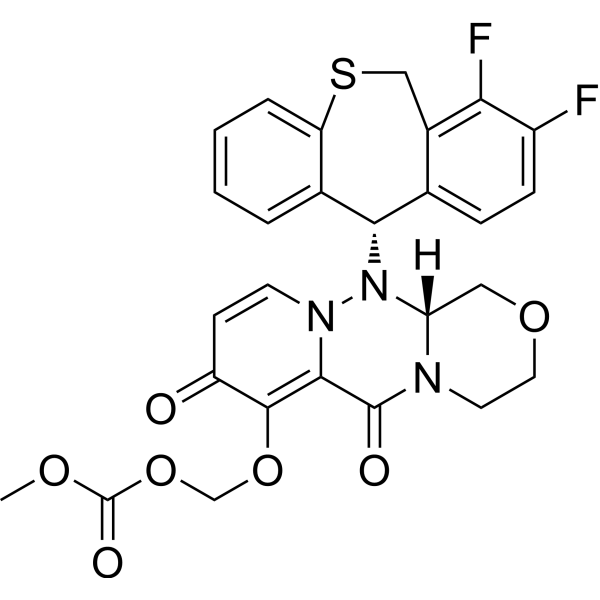
Baloxavir marboxilInfluenza A/B Inhibitor -
HY-107201
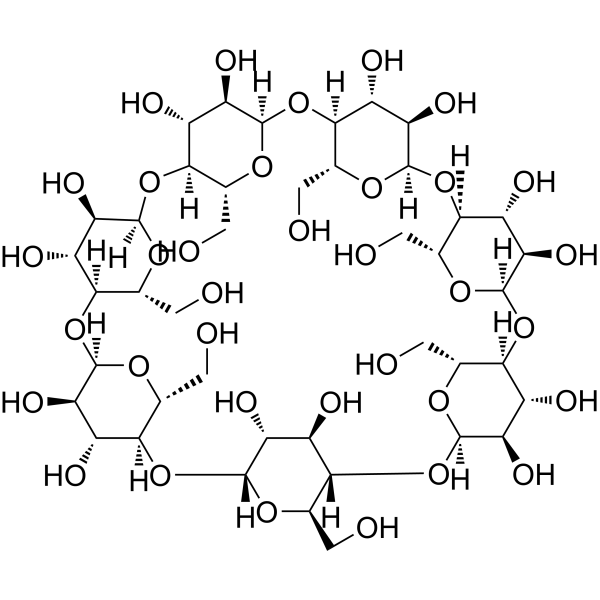
β-CyclodextrinInfluenza Virus Inhibitor -
HY-13210
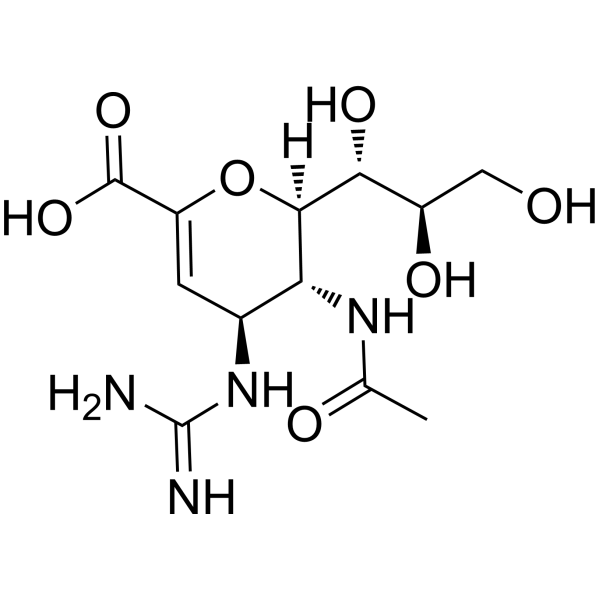
ZanamivirNeuraminidase Inhibitor -
HY-N0189
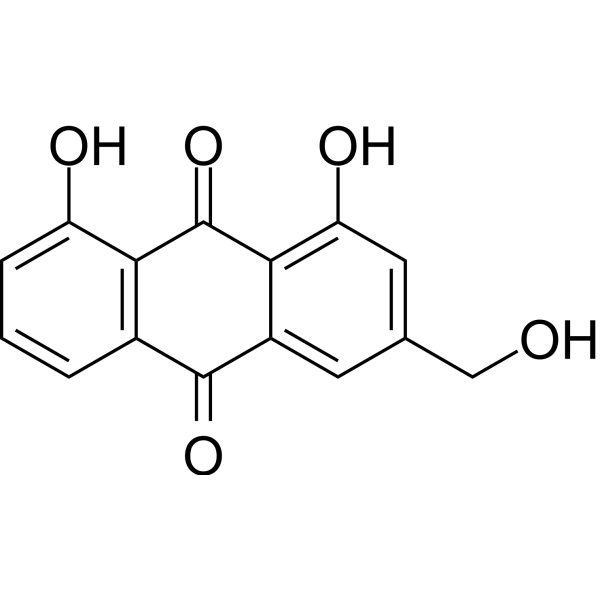
Aloe emodinmTORC2 Inhibitor -
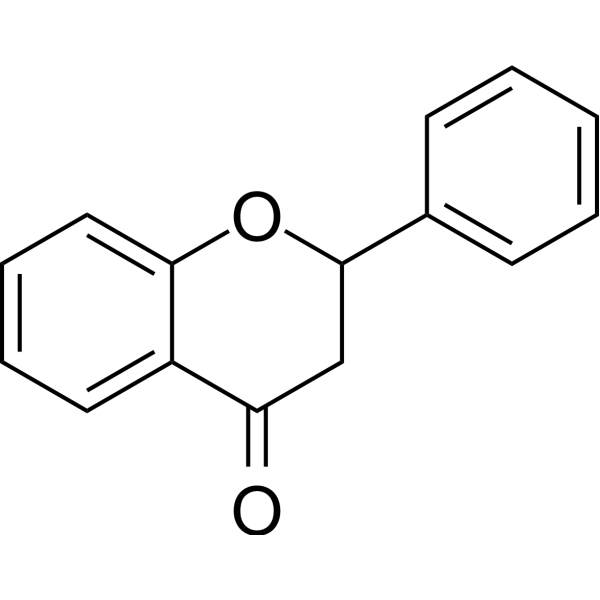
HY-N7128
FlavanoneFlavones
Publications Citing Use of MedChemExpress (MCE) 3-Deoxysappanchalcone
More

Biologische Aktivität
Beschreibung
Cellular Effect
|
Cell Line

|
Type | Value | Description | References |
|---|---|---|---|---|
| 3T3-L1 | IC50 |
41.8 μM
Compound: 6
|
Antiadipogenic activity against mouse 3T3L1 cells assessed as inhibition of differentiation after 7 days by oil-red O staining
Antiadipogenic activity against mouse 3T3L1 cells assessed as inhibition of differentiation after 7 days by oil-red O staining
|
[PMID: 19757853] |
| A549 | IC50 |
32.6 μM
Compound: 11
|
Cytotoxicity against human A549 cells after 3 days by MTT assay
Cytotoxicity against human A549 cells after 3 days by MTT assay
|
[PMID: 21800859] |
| A549 | IC50 |
62.1 μM
Compound: 29
|
Cytotoxicity against human A549 cells after 72 hrs by MTT assay
Cytotoxicity against human A549 cells after 72 hrs by MTT assay
|
[PMID: 18440233] |
| A549 | IC50 |
66.5 μM
Compound: 26
|
Cytotoxicity against human A549 cells after 72 hrs by MTT assay
Cytotoxicity against human A549 cells after 72 hrs by MTT assay
|
[PMID: 19689125] |
| B16-BL6 | IC50 |
49.9 μM
Compound: 26
|
Cytotoxicity against mouse B16-BL6 cells after 72 hrs by MTT assay
Cytotoxicity against mouse B16-BL6 cells after 72 hrs by MTT assay
|
[PMID: 19689125] |
| B16-BL6 | IC50 |
56.3 μM
Compound: 29
|
Cytotoxicity against mouse B16-BL6 cells after 72 hrs by MTT assay
Cytotoxicity against mouse B16-BL6 cells after 72 hrs by MTT assay
|
[PMID: 18440233] |
| Ca9-22 | IC50 |
57.56 μM
Compound: 11
|
Cytotoxicity against human Ca9-22 cells after 3 days by MTT assay
Cytotoxicity against human Ca9-22 cells after 3 days by MTT assay
|
[PMID: 21800859] |
| HeLa | IC50 |
33.3 μM
Compound: 26
|
Cytotoxicity against human HeLa cells after 72 hrs by MTT assay
Cytotoxicity against human HeLa cells after 72 hrs by MTT assay
|
[PMID: 19689125] |
| HeLa | IC50 |
67.9 μM
Compound: 29
|
Cytotoxicity against human HeLa cells after 72 hrs by MTT assay
Cytotoxicity against human HeLa cells after 72 hrs by MTT assay
|
[PMID: 18440233] |
| Hep 3B2 | IC50 |
17.89 μM
Compound: 11
|
Cytotoxicity against human Hep3B cells after 3 days by MTT assay
Cytotoxicity against human Hep3B cells after 3 days by MTT assay
|
[PMID: 21800859] |
| HepG2 | IC50 |
7.37 μM
Compound: 11
|
Cytotoxicity against human HepG2 cells after 3 days by MTT assay
Cytotoxicity against human HepG2 cells after 3 days by MTT assay
|
[PMID: 21800859] |
| HT-1080 | IC50 |
26.7 μM
Compound: 26
|
Cytotoxicity against human HT1080 cells after 72 hrs by MTT assay
Cytotoxicity against human HT1080 cells after 72 hrs by MTT assay
|
[PMID: 19689125] |
| HT-1080 | IC50 |
51.2 μM
Compound: 29
|
Cytotoxicity against human HT1080 cells after 72 hrs by MTT assay
Cytotoxicity against human HT1080 cells after 72 hrs by MTT assay
|
[PMID: 18440233] |
| Lewis lung carcinoma cell line | IC50 |
69.1 μM
Compound: 29
|
Cytotoxicity against mouse LLC cells after 72 hrs by MTT assay
Cytotoxicity against mouse LLC cells after 72 hrs by MTT assay
|
[PMID: 18440233] |
| MCF7 | IC50 |
51.41 μM
Compound: 11
|
Cytotoxicity against human MCF7 cells after 3 days by MTT assay
Cytotoxicity against human MCF7 cells after 3 days by MTT assay
|
[PMID: 21800859] |
| MDA-MB-231 | IC50 |
44.44 μM
Compound: 11
|
Cytotoxicity against human MDA-MB-231 cells after 3 days by MTT assay
Cytotoxicity against human MDA-MB-231 cells after 3 days by MTT assay
|
[PMID: 21800859] |
| RAW264.7 | IC50 |
8.1 μM
Compound: 13
|
Antiinflammatory activity in mouse RAW264.7 cells assessed as inhibition of LPS-induced NO production after 24 hrs by Griess method
Antiinflammatory activity in mouse RAW264.7 cells assessed as inhibition of LPS-induced NO production after 24 hrs by Griess method
|
[PMID: 23127886] |
In Vitro
3-Deoxysappanchalcone (12 h) directly binds to EGFR and MET proteins in HCC827GR Gefitinib (HY-50895)-resistant human lung adenocarcinoma cells[1].
3-Deoxysappanchalcone (3-12 μM; 1 h) inhibits purified EGFR kinase activity with dose-dependent efficacy[1].
3-Deoxysappanchalcone (3-12 μM; 24-48 h) reduces HCC827GR Gefitinib-resistant human lung adenocarcinoma cell viability in a dose- and time-dependent manne[1].
3-Deoxysappanchalcone (6-12 μM; 48 h) induces apoptotic cell death in HCC827GR Gefitinib-resistant human lung adenocarcinoma cells in a dose-dependent manner[1].
3-Deoxysappanchalcone (6-12 μM; 48 h) induces G2/M cell cycle arrest and increases apoptotic sub-G1 cell population in HCC827GR Gefitinib-resistant human lung adenocarcinoma cells[1].
3-Deoxysappanchalcone (6-12 μM; 48 h) inhibits phosphorylation of EGFR, MET, AKT, and ERK in HCC827GR Gefitinib-resistant human lung adenocarcinoma cells, reducing p-EGFR to 0.31-fold and p-MET to 0.24-fold of control at 12 μM after 48 h[1].
3-Deoxysappanchalcone (6-12 μM; 48 h) increases intracellular ROS levels and induces ER stress in HCC827GR Gefitinib-resistant human lung adenocarcinoma cells[1].
3-Deoxysappanchalcone (6-12 μM; 48 h) induces mitochondrial depolarization and intrinsic mitochondrial apoptosis in HCC827GR Gefitinib-resistant human lung adenocarcinoma cells, and modulating Bcl-2 family proteins and cytochrome C translocation[1].
3-Deoxysappanchalcone (5-50 μM; 48 h) exhibits no cytotoxicity in HUVECs at concentrations up to 50 μM following 48 h of incubation[4].
3-Deoxysappanchalcone (2-20 μM; 18 h) dose-dependently suppresses TNF-α-stimulated PAI-1 secretion in HUVECs at concentrations of 2, 3, 5, 10, and 20 μM over 18 h, mitigating the TNF-α-induced increase in the PAI-1/t-PA ratio without significantly affecting t-PA secretion[4].
3-Deoxysappanchalcone inhibits influenza virus A/PR/8/34 (H1N1) NA with an IC50 of 14.6 μg/mL[5].
3-Deoxysappanchalcone inhibits influenza virus A/Guangdong/243/72 (H3N2) NA with an IC50 of 17.4 μg/mL[5].
3-Deoxysappanchalcone inhibits influenza virus B/Jiangsu/10/2003 NA with an IC50 of 18.6 μg/mL[5].
3-Deoxysappanchalcone inhibits influenza virus A/Guangdong/243/72 (H3N2)-induced cytopathic effects in MDCK cells with an IC50 of 1.06 μg/mL, a CC50 of 17.25 μg/mL, and a selective index of 16.27[5].
MedChemExpress (MCE) has not independently confirmed the accuracy of these methods. They are for reference only.
-
Cell Line:HCC827GR gefitinib-resistant human lung adenocarcinoma cells
-
Concentration:3 μM; 6 μM; 9 μM; 12 μM
-
Incubation Time:24 h; 48 h
-
Result:Reduced HCC827GR cell viability in a dose- and time-dependent manner.
-
Cell Line:HCC827GR gefitinib-resistant human lung adenocarcinoma cells
-
Concentration:6 μM; 9 μM; 12 μM
-
Incubation Time:48 h
-
Result:Induced apoptotic cell death in a dose-dependent manner.
-
Cell Line:HCC827GR gefitinib-resistant human lung adenocarcinoma cells
-
Concentration:6 μM; 9 μM; 12 μM
-
Incubation Time:48 h
-
Result:Increased the sub-G1 (apoptotic) cell population and induced G2/M cell cycle arrest.
-
Cell Line:HCC827GR gefitinib-resistant human lung adenocarcinoma cells
-
Concentration:6 μM; 9 μM; 12 μM
-
Incubation Time:48 h
-
Result:Reduced phosphorylation of EGFR (Tyr1068) to 0.88-, 0.76-, and 0.31-fold of control at 6, 9, and 12 μM, respectively, without altering total EGFR protein levels.
Reduced phosphorylation of MET (Tyr1234/1235) to 0.94-, 0.27-, and 0.24-fold of control at 6, 9, and 12 μM, respectively, without altering total MET protein levels.
Reduced phosphorylation of downstream AKT (Ser473) to 0.72-, 0.39-, and 0.32-fold of control, and phosphorylation of ERK (Thr202/Tyr204) to 0.88-, 0.85-, and 0.68-fold of control at 6, 9, and 12 μM, respectively, without altering total AKT or ERK protein levels.
-
Cell Line:Human umbilical vein endothelial cells (HUVECs)
-
Concentration:2 μM; 3 μM; 5 μM; 10 μM; 20 μM
-
Incubation Time:18 h
-
Result:Markedly suppressed TNF-α-stimulated PAI-1 release in a concentration-dependent fashion, with significant inhibition observed from 5 μM onward.
Did not significantly affect t-PA secretion from HUVECs.
Mitigated the TNF-α-induced increase in the PAI-1/t-PA ratio.
In Vivo
3-Deoxysappanchalcone (0.02-0.4 mg/kg; i.v.) significantly prolongs tail bleeding time in male C57BL/6 mice at doses of 0.1 mg/kg, 0.2 mg/kg, and 0.4 mg/kg, with the highest tested dose (0.4 mg/kg) extending bleeding time to 82.3 s[4].
3-Deoxysappanchalcone (0.02-0.4 mg/kg; i.v.) significantly prolongs ex vivo aPTT and PT in male C57BL/6 mice at doses of 0.1 mg/kg, 0.2 mg/kg, and 0.4 mg/kg, with the highest tested dose (0.4 mg/kg) increasing aPTT to 47.9 ± 0.8 s and PT to 29.4 ± 1.2 s[4].
MedChemExpress (MCE) has not independently confirmed the accuracy of these methods. They are for reference only.
-
Animal Model:C57BL/6 (male, 20-22 g, LPS-induced systemic inflammation)[2]
-
Dosage:50 mg/kg
-
Administration:i.p.; single dose (1 hour prior to LPS challenge)
-
Result:Achieved 100% survival rate over 6 days.
-
Animal Model:C57BL/6 (male, 6-7 weeks old, 27 g)[4]
-
Dosage:0.02 mg/kg; 0.04 mg/kg; 0.06 mg/kg; 0.1 mg/kg; 0.2 mg/kg; 0.4 mg/kg
-
Administration:i.v.
-
Result:Prolonged tail bleeding time to 48.1 s at 0.1 mg/kg, 63.1 s at 0.2 mg/kg, and 82.3 s at 0.4 mg/kg.
Prolonged ex vivo aPTT to 35.4 s and PT to 23.8 s at 0.1 mg/kg, aPTT to 38.5 s and PT to 28.7 s at 0.2 mg/kg, and aPTT to 47.9 s and PT to 29.4 s at 0.4 mg/kg.
- Research Protocol for Infectious Diseases
- Detection of Apoptosis
- TUNEL staining for apoptotic DNA fragmentation
- Flow cytometric DNA-content cell-cycle staining
- Annexin V plus membrane-impermeant dye apoptosis staining
- BrdU Incorporation Assay
- ROS/oxidative-stress fluorescent staining
- Apoptosis Solutions
- Protocol for Cell Cycle
- Research Protocol for Inflammation-related Diseases


Chemical Information
-
CAS. Nr. 112408-67-0
-
Appearance Solid
-
Molecular Weight 270.28
-
Formel C16H14O4
-
Color Light yellow to yellow
-
SMILES
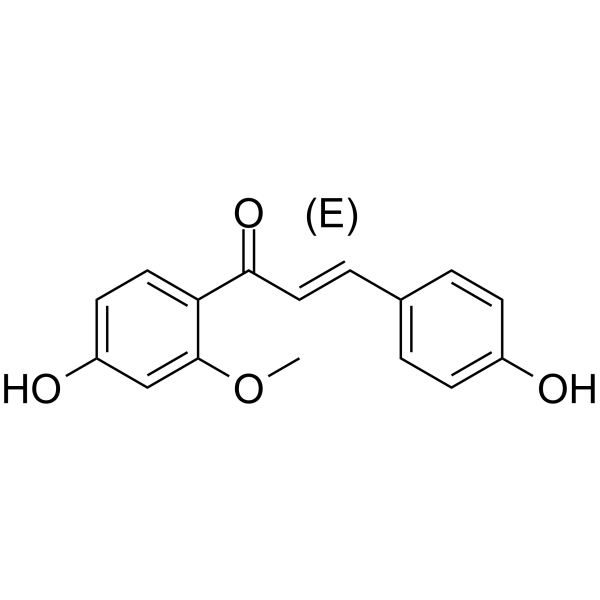
O=C(/C=C/C1=CC=C(C=C1)O)C2=CC=C(C=C2OC)O
-
Structure Classification
-
Initial Source
-
Versand
Room temperature in continental US; may vary elsewhere.
-
Speicherung
4°C, protect from light
* In solvent : -80°C, 6 months; -20°C, 1 month (protect from light)


Publications (2)
-
Journal Impact Factor
-
Most Recent
-
PLoS One
3-Deoxysappanchalcone attenuates LPS-induced neuroinflammation in microglia cell culture and ameliorates cognitive impairment in traumatic brain injury. [Abstract]2025 May 30;20(5):e0323259. PMID: 40445975 -
Oxid Med Cell Longev
Attenuation of the Severity of Acute Respiratory Distress Syndrome by Pomiferin through Blocking Inflammation and Oxidative Stress in an AKT/Foxo1 Pathway-Dependent Manner. [Abstract]2022 Nov 26:2022:5236908. PMID: 36471865


Lösungsmittel & Löslichkeit
In Vitro:
DMSO : 50 mg/mL (184.99 mM; Need ultrasonic; Hygroscopic DMSO has a significant impact on the solubility of product, please use newly opened DMSO)
Please refer to the solubility information to select the appropriate solvent. Once prepared, please aliquot and store the solution to prevent product inactivation from repeated freeze-thaw cycles.
Storage method and period of stock solution: -80°C, 6 months; -20°C, 1 month (protect from light). When stored at -80°C, please use it within 6 months. When stored at -20°C, please use it within 1 month.
Please refer to the solubility information to select the appropriate solvent. Once prepared, please aliquot and store the solution to prevent product inactivation from repeated freeze-thaw cycles.
Storage method and period of stock solution: -80°C, 6 months; -20°C, 1 month (protect from light). When stored at -80°C, please use it within 6 months. When stored at -20°C, please use it within 1 month.
Konzentration (Stammlösung) × Volumen (Stammlösung) = Konzentration (Ziellösung) × Volumen (Ziellösung)


Reinheit & Dokumentation
-
Data Sheet (283 KB)
-
SDS (252 KB)
- English - EN (252 KB)
- Français - FR (252 KB)
- Deutsch - DE (252 KB)
- Norwegian - NO (252 KB)
- Español - ES (252 KB)
- Swedish - SV (252 KB)
- Italian - IT (252 KB)
- Korean - KR (252 KB)
- Portuguese - PT (252 KB)
-
Handling Instructions (2659 KB)
Verweise
[1]. Lee JY, et al. 3-Deoxysappanchalcone Inhibits Cell Growth of Gefitinib-Resistant Lung Cancer Cells by Simultaneous Targeting of EGFR and MET Kinases. Biomol Ther (Seoul). 2023;31(4):446-455. [Content Brief]
[2]. Kim JH, et al. The anti-inflammatory effect of 3-deoxysappanchalcone is mediated by inducing heme oxygenase-1 via activating the AKT/mTOR pathway in murine macrophages. Int Immunopharmacol. 2014;22(2):420-426. [Content Brief]
[3]. Kwak AW, et al. The 3-deoxysappanchalcone induces ROS-mediated apoptosis and cell cycle arrest via JNK/p38 MAPKs signaling pathway in human esophageal cancer cells. Phytomedicine. 2021;86:153564. [Content Brief]
[4]. Han G, et al. Anti-Thrombotic Activity of 3-Deoxysappanchalcone via Inhibiting Platelet Aggregation and Thrombin (FIIa)/Activated Factor X (FXa) Activity. Molecules. 2025;30(12):2580. Published 2025 Jun 13. [Content Brief]
[5]. Liu AL, et al. In vitro anti-influenza viral activities of constituents from Caesalpinia sappan. Planta Med. 2009;75(4):337-339. [Content Brief]


Complete Stock Solution Preparation Table
Please refer to the solubility information to select the appropriate solvent. Once prepared, please aliquot and store the solution to prevent product inactivation from repeated freeze-thaw cycles.
Storage method and period of stock solution: -80°C, 6 months; -20°C, 1 month (protect from light). When stored at -80°C, please use it within 6 months. When stored at -20°C, please use it within 1 month.
| Optional Solvent | Concentration Solvent Mass | 1 mg | 5 mg | 10 mg | 25 mg |
|---|---|---|---|---|---|
| DMSO | 1 mM | 3.6999 mL | 18.4993 mL | 36.9987 mL | 92.4967 mL |
| 5 mM | 0.7400 mL | 3.6999 mL | 7.3997 mL | 18.4993 mL | |
| 10 mM | 0.3700 mL | 1.8499 mL | 3.6999 mL | 9.2497 mL | |
| 15 mM | 0.2467 mL | 1.2333 mL | 2.4666 mL | 6.1664 mL | |
| 20 mM | 0.1850 mL | 0.9250 mL | 1.8499 mL | 4.6248 mL | |
| 25 mM | 0.1480 mL | 0.7400 mL | 1.4799 mL | 3.6999 mL | |
| 30 mM | 0.1233 mL | 0.6166 mL | 1.2333 mL | 3.0832 mL | |
| 40 mM | 0.0925 mL | 0.4625 mL | 0.9250 mL | 2.3124 mL | |
| 50 mM | 0.0740 mL | 0.3700 mL | 0.7400 mL | 1.8499 mL | |
| 60 mM | 0.0617 mL | 0.3083 mL | 0.6166 mL | 1.5416 mL | |
| 80 mM | 0.0462 mL | 0.2312 mL | 0.4625 mL | 1.1562 mL | |
| 100 mM | 0.0370 mL | 0.1850 mL | 0.3700 mL | 0.9250 mL |


3-Deoxysappanchalcone Related Classifications
HY-N1745A Related Classifications
 Powered by Bioz