Search Result
Results for "
lipoprotein+LDL
" in MedChemExpress (MCE) Product Catalog:
2
Biochemical Assay Reagents
3
Isotope-Labeled Compounds
| Cat. No. |
Product Name |
Target |
Research Areas |
Chemical Structure |
-
- HY-17504
-
|
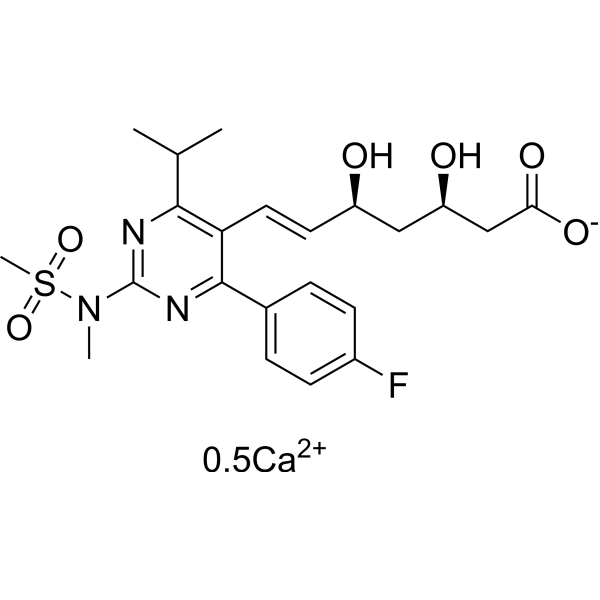
Rosuvastatin hemicalcium; ZD 4522 Calcium
|
HMG-CoA Reductase (HMGCR)
Autophagy
Potassium Channel
Bacterial
|
Cardiovascular Disease
Metabolic Disease
Cancer
|
|
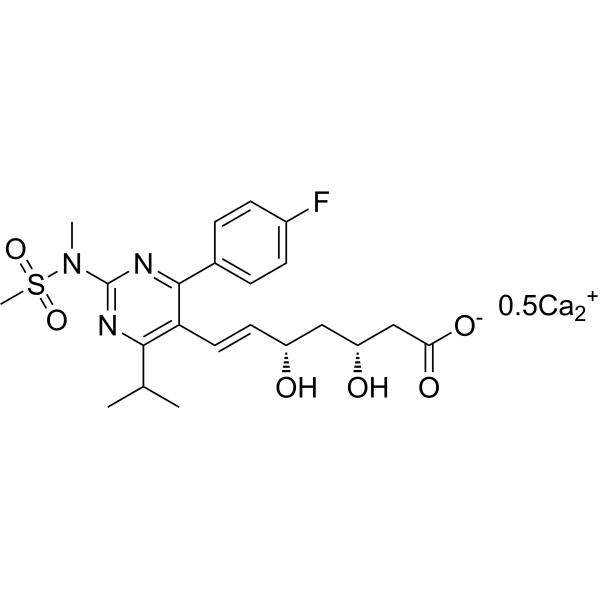
Rosuvastatin Calcium is a competitive HMG-CoA reductase (HMGCR) inhibitor, with an IC50 of 11 nM. Rosuvastatin Calcium potently blocks hERG current with an IC50 of 195 nM . Rosuvastatin Calcium reduces the expression of the mature hERG and the interaction of heat shock protein 70 (Hsp70) with the hERG protein. Rosuvastatin Calcium effectively lowers low-density lipoprotein (LDL) cholesterol, triglycerides, and C-reactive protein levels .
|
-
-
- HY-139414
-
|
|
Interleukin Related
p38 MAPK
ERK
Apoptosis
|
Inflammation/Immunology
|
|
Lysophosphatidylcholines is an orally active lysolipid and a component of oxidized low density lipoprotein (LDL). Lysophosphatidylcholines induces cell injury, the production of IL-1β and apoptosis. Lysophosphatidylcholines has a proactive effect on sepsis .
|
-

-
- HY-10626
-
|
|
LXR
FXR
ROR
Apoptosis
|
Cardiovascular Disease
Metabolic Disease
Cancer
|
|
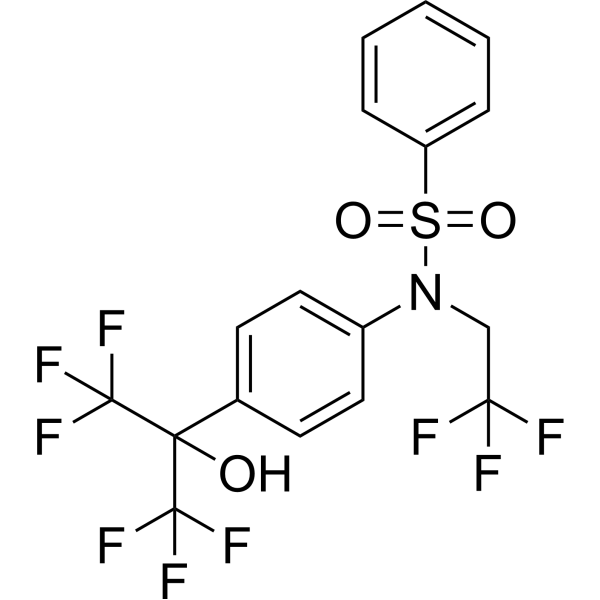
T0901317 is an orally active and highly selective LXR agonist with an EC50 of 20 nM for LXRα . T0901317 activates FXR with an EC50 of 5 μM . T0901317 is RORα and RORγ dual inverse agonist with Ki values of 132 nM and 51 nM, respectively . T0901317 induces apoptosis and inhibits the development of atherosclerosis in low-density lipoprotein (LDL) receptor-deficient mice .
|
-
-
- HY-112490
-
|
|
HMG-CoA Reductase (HMGCR)
|
Cardiovascular Disease
Others
|
|
Atorvastatin calcium salt trihydrate is a drug belonging to the statin class of drugs used to lower blood cholesterol levels. Atorvastatin calcium salt trihydrate has unique chemical properties that make it an effective tool in controlling high levels of low-density lipoprotein (LDL) cholesterol and triglycerides in the body, reducing the risk of heart attack and stroke. Atorvastatin calcium salt trihydrate works by inhibiting HMG-CoA reductase, the enzyme responsible for producing cholesterol in the liver.
|
-

-
- HY-17504A
-
|
ZD 4522
|
HMG-CoA Reductase (HMGCR)
Autophagy
Potassium Channel
Bacterial
|
Cardiovascular Disease
Metabolic Disease
Cancer
|
|
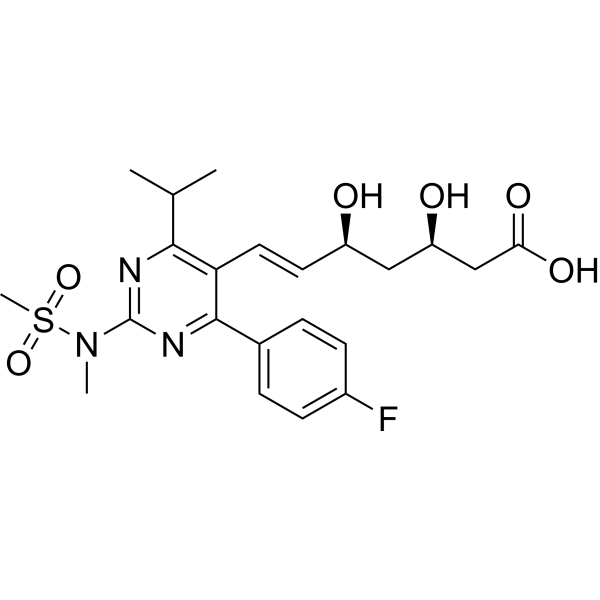
Rosuvastatin (ZD 4522) is a competitive HMG-CoA reductase inhibitor with an IC50 of 11 nM. Rosuvastatin potently blocks hERG current with an IC50 of 195 nM, delayed cardiac repolarization, and thereby prolonged action potential durations (APDs) and corrected QT interval (QTc) intervals. Rosuvastatin reduces the expression of the mature hERG and the interaction of heat shock protein 70 (Hsp70) with the hERG protein. Rosuvastatin effectively lowers low-density lipoprotein (LDL) cholesterol, triglycerides, and C-reactive protein levels .
|
-
-
- HY-B0388
-
-
-
- HY-NP013
-
|
Mouse ox-LDL
|
LDLR
ROR
β-catenin
|
Cardiovascular Disease
|
|
Oxidized low density lipoprotein (mouse) (Mouse ox-LDL) is an oxidized low density lipoprotein (LDL). Oxidized low density lipoprotein (mouse) induces atherosclerosis (AS) by facilitating endothelial dysfunction and accelerating the VSMCs growth and migration. Oxidized low density lipoprotein (mouse) can be used to construct an in vitro model of AS .
|
-

-
- HY-17504B
-
|
ZD 4522 Sodium; X-Plended Sodium; Crestor Sodium
|
HMG-CoA Reductase (HMGCR)
Potassium Channel
Autophagy
Bacterial
|
Cardiovascular Disease
Metabolic Disease
Cancer
|
|
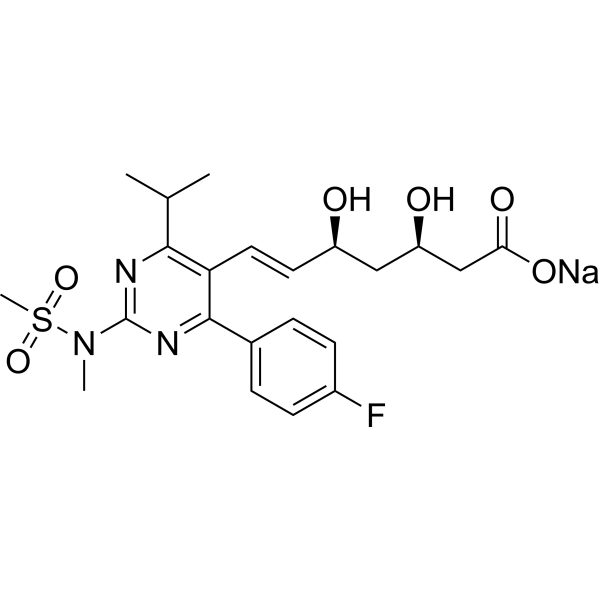
Rosuvastatin Sodium is a competitive HMG-CoA reductase (HMGCR) inhibitor, with an IC50 of 11 nM. Rosuvastatin Sodium potently blocks hERG current with an IC50 of 195 nM . Rosuvastatin Sodium reduces the expression of the mature hERG and the interaction of heat shock protein 70 (Hsp70) with the hERG protein. Rosuvastatin Sodium effectively lowers low-density lipoprotein (LDL) cholesterol, triglycerides, and C-reactive protein levels .
|
-
-
- HY-P99793
-
|
MLDL1278A
|
LDLR
|
Inflammation/Immunology
|
|
Orticumab (MLDL1278A) is an antibody targeting to oxidized or malondialdehyde-modified lipoprotein (LDL). Orticumab specifically inhibits oxidized low-density lipoproteins (oxLDL). Orticumab involves in modulation of autoimmune responses against oxLDL, improves atherosclerosis in animal model. Orticumab also can be used for research of psoriasis improvement .
|
-

-
- HY-10473
-
|
KB2115
|
Thyroid Hormone Receptor
|
Metabolic Disease
Endocrinology
|
|
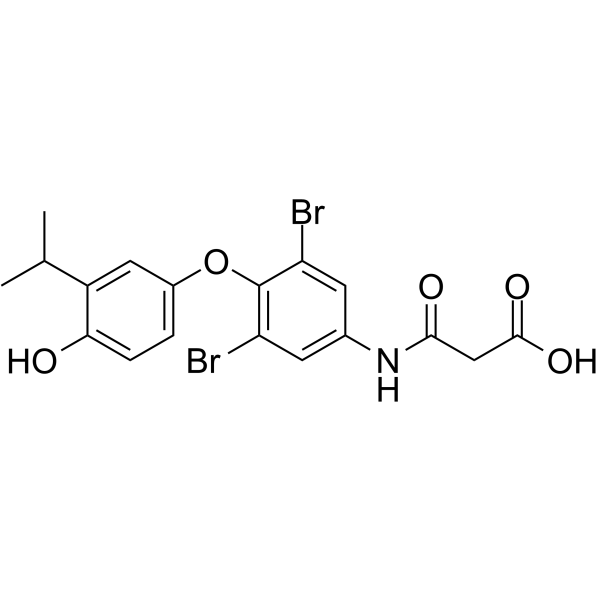
Eprotirome (KB2115) is a liver-selective thyroid hormone receptor (TR) agonist. KB2115 has modestly higher affinity for TRβ than for TRα. Eprotirome reduces low-density lipoprotein (LDL) cholesterol concentrations. Eprotirome can be used for dyslipidemias and obesity research .
|
-
-
- HY-145001
-
|
|
LDLR
CETP
|
Metabolic Disease
|
|
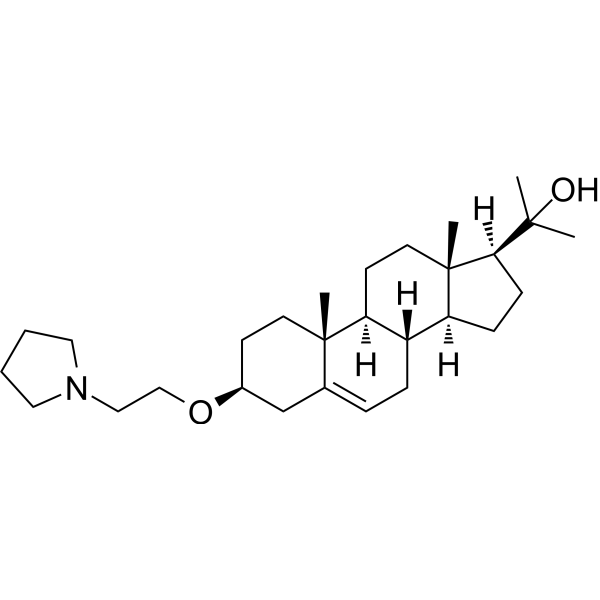
20-HC-Me-Pyrrolidine (compound AI-3d) is a potent Aster protein inhibitor with IC50s of 0.11 μM, 0.06 μM, and 0.71 μM for Aster-A, Aster-B, and Aster-C, respectively. 20-HC-Me-Pyrrolidine blocks the ability of Asters to bind and transfer cholesterol. 20-HC-Me-Pyrrolidine also inhibits the movement of low-density lipoprotein (LDL) cholesterol to the endoplasmic reticulum (ER) .
|
-
-
- HY-116175
-
|
|
LDLR
|
Metabolic Disease
|
|
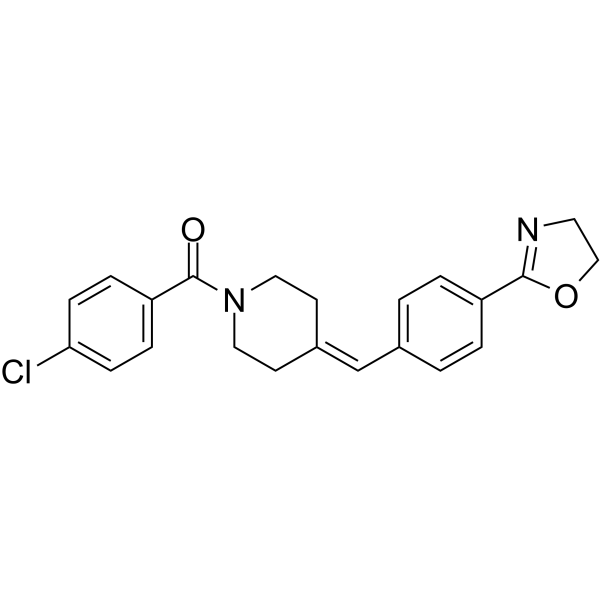
BIBB 515 is a potent, selective and orally active 2,3-oxidosqualene cyclase (OSC) inhibitor with ED50 values of 0.2-0.5 mg/kg and 0.36-33.3 mg/kg in rats and mice (1-5 hours), respectively. BIBB 515 exerts lipid-lowering effect mainly by inhibiting the production of low-density lipoprotein (LDL) .
|
-
-
- HY-113269
-
|
|
Drug Metabolite
|
Others
|
|
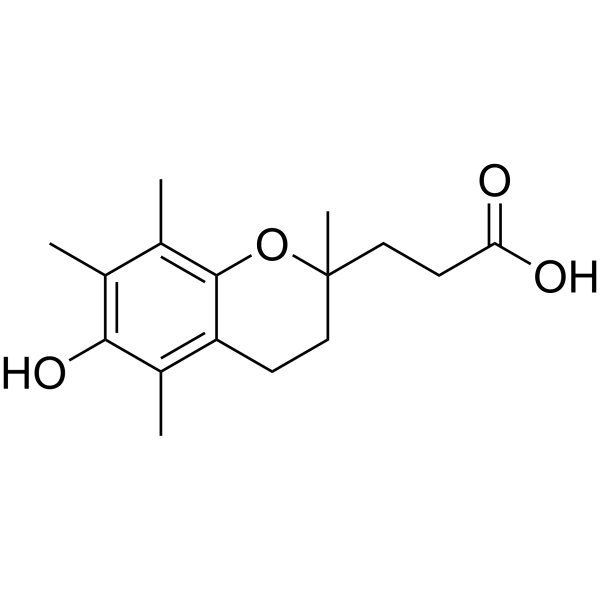
alpha-CEHC is a water-soluble metabolite of alpha-tocopherol (α-TOH) with potential antioxidant activity. alpha-CEHC slightly inhibits macrophage-induced low-density lipoprotein (LDL) oxidation, and its inhibitory potency is concentration-dependent .
|
-
-
- HY-130245
-
|
|
PCSK9
|
Metabolic Disease
|
|
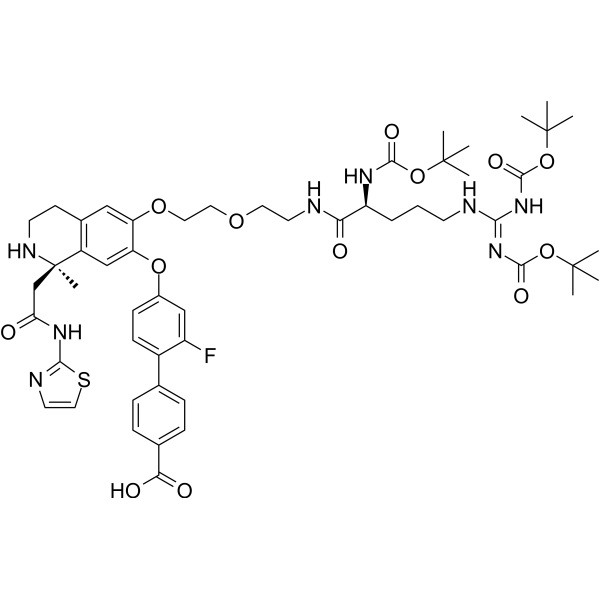
PCSK9 degrader 1 (Compound 16) is a small molecule ligand for proprotein convertase substilisin-like/kexin type 9 (PCSK9) and shows high affinity to PCSK9 with a Ki of 107 nM. PCSK9 degrader 1 can involve in a protein-protein interaction with the low-density lipoprotein (LDL) receptor .
|
-
-
- HY-N6738
-
|
|
Antibiotic
Bacterial
Fungal
Proton Pump
|
Infection
Neurological Disease
|
|
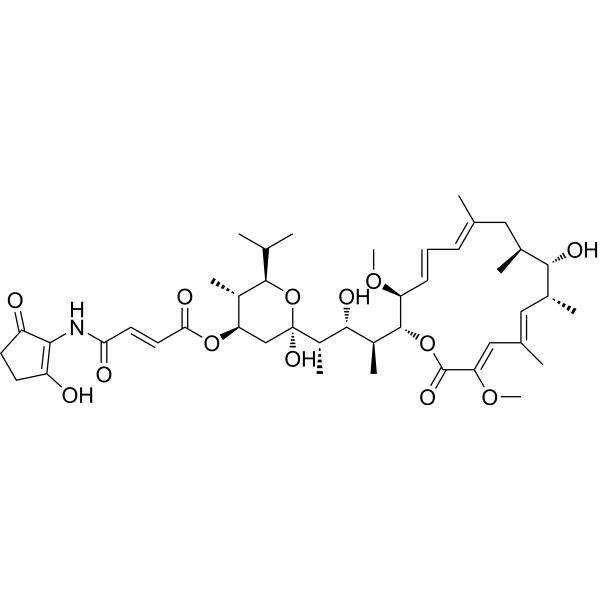
Bafilomycin B1 is a macrolide antibiotic that can be isolated from mycelium of Streptomyces gresuis. Bafilomycin B1 is neuroprotective against Chloroquine (HY-17589A)-induced death. Bafilomycin B1 is a structural analog of Bafilomycin A1 and has the ability to inhibit V-ATPase. Bafilomycin B1 inhibits significantly the oxidized low density lipoprotein (LDL)-induced accumulation of lipid droplets .
|
-
-
- HY-148758
-
-
-
- HY-17504R
-
|
Rosuvastatin hemicalcium (Standard); ZD 4522 Calcium (Standard)
|
Reference Standards
HMG-CoA Reductase (HMGCR)
Autophagy
Potassium Channel
Bacterial
|
Cardiovascular Disease
Metabolic Disease
Cancer
|
|
Rosuvastatin (Calcium) (Standard) is the analytical standard of Rosuvastatin (Calcium). This product is intended for research and analytical applications. Rosuvastatin Calcium is a competitive HMG-CoA reductase (HMGCR) inhibitor, with an IC50 of 11 nM. Rosuvastatin Calcium potently blocks hERG current with an IC50 of 195 nM . Rosuvastatin Calcium reduces the expression of the mature hERG and the interaction of heat shock protein 70 (Hsp70) with the hERG protein. Rosuvastatin Calcium effectively lowers low-density lipoprotein (LDL) cholesterol, triglycerides, and C-reactive protein levels .
|
-
-
- HY-P11071
-
|
|
PCSK9
|
Cardiovascular Disease
|
|
PCSK9 Inhibitor, EGF-A is a PCSK9 inhibitor. PCSK9 Inhibitor, EGF-A is residues 293-334 of the EGF-A domain of the low-density lipoprotein (LDL) receptor. PCSK9 Inhibitor, EGF-A can prevent PCSK9-induced intracellular LDLR degradation. PCSK9 Inhibitor, EGF-A can be used in the study of hypercholesterolemia and premature atherosclerosis .
|
-

-
- HY-17504AS1
-
|
ZD 4522-d6
|
Isotope-Labeled Compounds
Autophagy
Bacterial
HMG-CoA Reductase (HMGCR)
Potassium Channel
|
Cardiovascular Disease
Metabolic Disease
Cancer
|
|
Rosuvastatin-d6 (ZD 4522-d6) is deuterium labeled Rosuvastatin. Rosuvastatin (ZD 4522) is a competitive HMG-CoA reductase inhibitor with an IC50 of 11 nM. Rosuvastatin potently blocks hERG current with an IC50 of 195 nM, delayed cardiac repolarization, and thereby prolonged action potential durations (APDs) and corrected QT interval (QTc) intervals. Rosuvastatin reduces the expression of the mature hERG and the interaction of heat shock protein 70 (Hsp70) with the hERG protein. Rosuvastatin effectively lowers low-density lipoprotein (LDL) cholesterol, triglycerides, and C-reactive protein levels .
|
-

-
- HY-120651
-
|
|
LDLR
|
Metabolic Disease
|
|
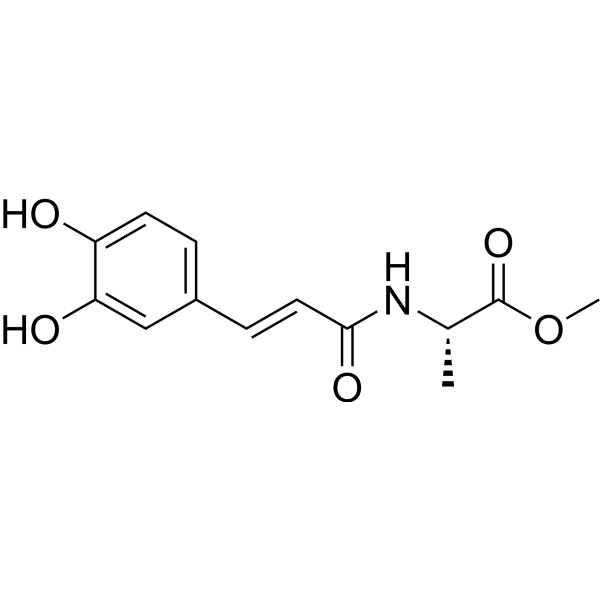
LDL-IN-2 (compound 3) is an antioxidant against copper mediated low-density lipoproteins (LDL) oxidation .
|
-
-
- HY-N10638
-
|
|
Reactive Oxygen Species (ROS)
NF-κB
|
Inflammation/Immunology
|
|
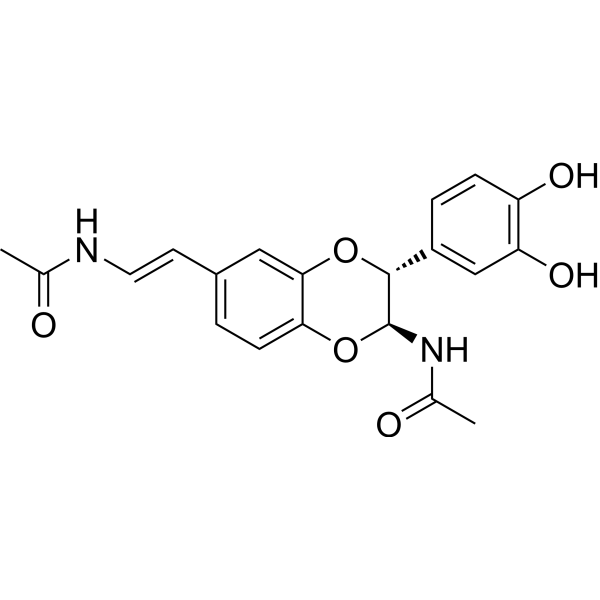
N-Acetyldopamine dimer-2 (compound 2) is a N-acetyldopamine dimer that can be isolated from the yellow powder form Periostracum Cicadae with antioxidant and anti-inflammatory activities. N-Acetyldopamine dimer-2 inhibits oxidized low-density lipoprotein (LDL) oxidation, ROS generation, NO production, and NF-κB activity .
|
-
-
- HY-17504BS1
-
|
|
HMG-CoA Reductase (HMGCR)
Autophagy
|
Cardiovascular Disease
Metabolic Disease
|
|
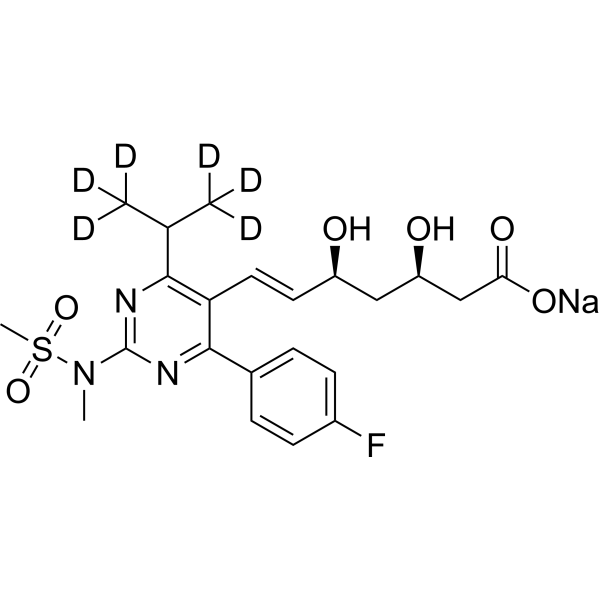
Rosuvastatin-d6 sodium is deuterium labeled Rosuvastatin sodium (HY-17504B). Rosuvastatin Sodium is a competitive HMG-CoA reductase (HMGCR) inhibitor, with an IC50 of 11 nM. Rosuvastatin Sodium potently blocks hERG current with an IC50 of 195 nM. Rosuvastatin Sodium reduces the expression of the mature hERG and the interaction of heat shock protein 70 (Hsp70) with the hERG protein. Rosuvastatin Sodium effectively lowers low-density lipoprotein (LDL) cholesterol, triglycerides, and C-reactive protein levels.
|
-
-
- HY-19251
-
|
|
Acyltransferase
|
Cardiovascular Disease
Metabolic Disease
|
|
CL-283796 is a potent and orally active acyl-CoA:cholesterol acyltransferase (ACAT) inhibitor. CL-283796 reduces low-density lipoprotein (LDL) cholesterol without affecting cholesterol absorption in African green monkeys. CL-283796 can be used for hypercholesterolemia research .
|
-

-
- HY-17504BR
-
|
ZD 4522 Sodium (Standard); X-Plended Sodium (Standard); Crestor Sodium (Standard)
|
HMG-CoA Reductase (HMGCR)
Potassium Channel
Autophagy
Bacterial
Reference Standards
|
Cardiovascular Disease
Metabolic Disease
Cancer
|
|
Rosuvastatin (Sodium) (Standard) is the analytical standard of Rosuvastatin (Sodium). This product is intended for research and analytical applications. Rosuvastatin Sodium is a competitive HMG-CoA reductase (HMGCR) inhibitor, with an IC50 of 11 nM. Rosuvastatin Sodium potently blocks hERG current with an IC50 of 195 nM . Rosuvastatin Sodium reduces the expression of the mature hERG and the interaction of heat shock protein 70 (Hsp70) with the hERG protein. Rosuvastatin Sodium effectively lowers low-density lipoprotein (LDL) cholesterol, triglycerides, and C-reactive protein levels .
|
-

-
- HY-10626R
-
|
|
Reference Standards
LXR
FXR
ROR
Apoptosis
|
Cardiovascular Disease
Metabolic Disease
Cancer
|
|
T0901317 (Standard) is the analytical standard of T0901317. This product is intended for research and analytical applications. T0901317 is an orally active and highly selective LXR agonist with an EC50 of 20 nM for LXRα . T0901317 activates FXR with an EC50 of 5 μM . T0901317 is RORα and RORγ dual inverse agonist with Ki values of 132 nM and 51 nM, respectively . T0901317 induces apoptosis and inhibits the development of atherosclerosis in low-density lipoprotein (LDL) receptor-deficient mice .
|
-

-
- HY-17504BS2
-
|
ZD 4522-13C,d3 sodium; X-Plended-13C,d3 sodium; Crestor-13C,d3 sodium
|
Autophagy
Bacterial
HMG-CoA Reductase (HMGCR)
Potassium Channel
Isotope-Labeled Compounds
|
Cardiovascular Disease
Metabolic Disease
|
|
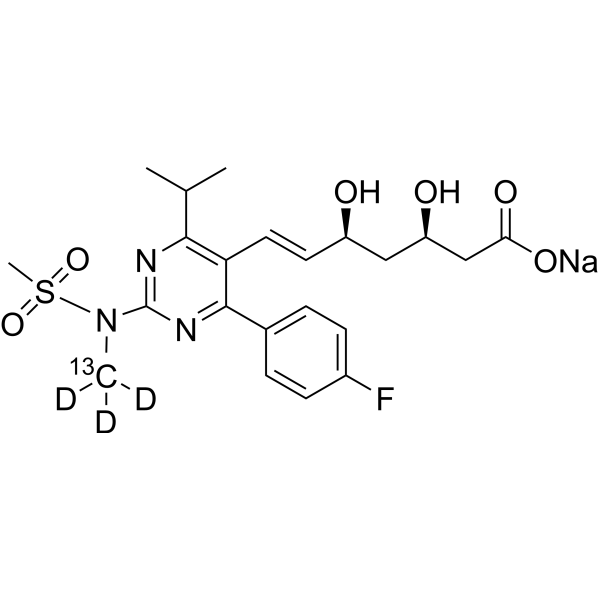
Rosuvastatin- 13C,d3 sodium is 13C and deuterated labeled Rosuvastatin sodium (HY-17504B). Rosuvastatin Sodium is a competitive HMG-CoA reductase (HMGCR) inhibitor, with an IC50 of 11 nM. Rosuvastatin Sodium potently blocks hERG current with an IC50 of 195 nM . Rosuvastatin Sodium reduces the expression of the mature hERG and the interaction of heat shock protein 70 (Hsp70) with the hERG protein. Rosuvastatin Sodium effectively lowers low-density lipoprotein (LDL) cholesterol, triglycerides, and C-reactive protein levels .
|
-
-
- HY-17504D
-
|
|
HMG-CoA Reductase (HMGCR)
Potassium Channel
Autophagy
|
Cardiovascular Disease
Metabolic Disease
|
|
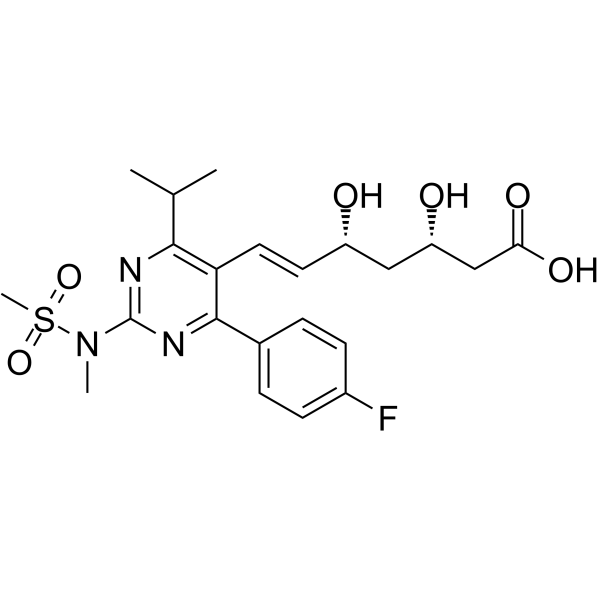
(3S,5R)-Rosuvastatin is the (3S,5R)-enantiomer of Rosuvastatin. Rosuvastatin is a competitive HMG-CoA reductase inhibitor with an IC50 of 11 nM . Rosuvastatin potently blocks human ether-a-go-go related gene (hERG) current with an IC50 of 195 nM . Rosuvastatin reduces the expression of the mature hERG and the interaction of heat shock protein 70 (Hsp70) with the hERG protein. Rosuvastatin is very effective in lowering low-density lipoprotein (LDL) cholesterol, triglycerides, and C-reactive protein levels .
|
-
-
- HY-17504C
-
|
|
HMG-CoA Reductase (HMGCR)
Potassium Channel
Autophagy
|
Cardiovascular Disease
Metabolic Disease
|
|
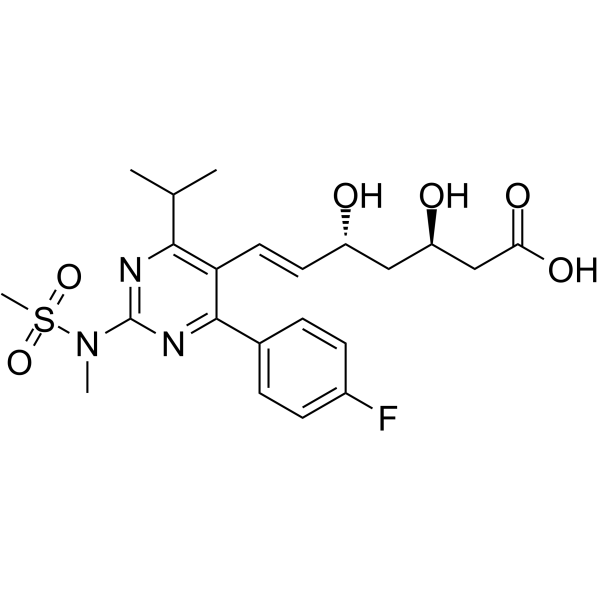
(3R,5R)-Rosuvastatin is the (3R,5R)-enantiomer of Rosuvastatin. Rosuvastatin is a competitive HMG-CoA reductase inhibitor with an IC50 of 11 nM . Rosuvastatin potently blocks human ether-a-go-go related gene (hERG) current with an IC50 of 195 nM . Rosuvastatin reduces the expression of the mature hERG and the interaction of heat shock protein 70 (Hsp70) with the hERG protein. Rosuvastatin is very effective in lowering low-density lipoprotein (LDL) cholesterol, triglycerides, and C-reactive protein levels .
|
-
-
- HY-165512
-
|
|
LDLR
|
Cardiovascular Disease
|
|
Nicanartine, an orally active antioxidant and lipid-lowering compound, is an antiatherogenic drug. Nicanartine inhibits the oxidation of low-density lipoprotein (LDL).
|
-

-
- HY-119265
-
|
|
Acyltransferase
|
Metabolic Disease
|
|
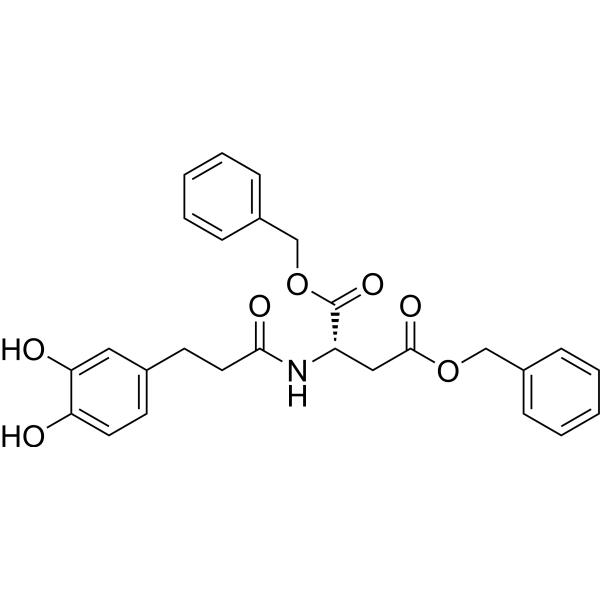
LDL-IN-4 (Compound 2) inhibits human acyl-CoA:cholesterol acyltransferase-1 and -2 activities. LDL-IN-4 inhibits copper-mediated low density lipoprotein (LDL) oxidation, with an IC50 of 3 μM. LDL-IN-4 has anti-atherosclerotic biological activity .
|
-
-
- HY-132303
-
|
|
CETP
|
Cardiovascular Disease
Metabolic Disease
|
|
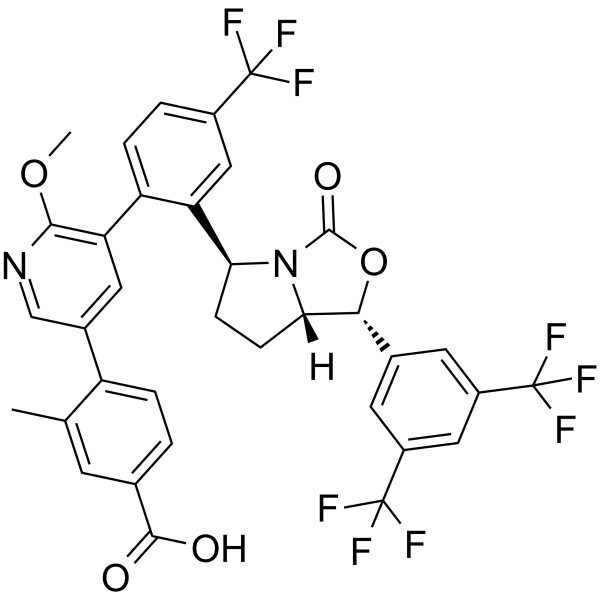
MK-8262 is an orally active and potent cholesteryl ester transfer protein (CETP) inhibitor with an IC50 of 53 nM and a log D of 5.3. MK-8262, a bistrifluoromethyl analogue, has the potential for coronary heart disease (CHD) correlated high-density lipoprotein (HDL) and low-density lipoprotein (LDL) research .
|
-
-
- HY-106278A
-
|
|
PPAR
|
Metabolic Disease
|
|
GW 590735 sodium is a potent and selective PPARα agonist with activity in regulating lipid metabolism. GW 590735 significantly increased high-density lipoprotein (HDL) cholesterol, decreased low-density lipoprotein (LDL) and very low-density lipoprotein (VLDL) cholesterol, and significantly reduced triglycerides. The maximum increases in HDL cholesterol for GW 590735 were 37%, 53% and 84%, respectively, compared with bezafibrate, torcetrapib and GW 590735 .
|
-

-
- HY-130245A
-
|
|
PCSK9
|
Metabolic Disease
|
|
(R,R)-PCSK9 degrader 1 is the isomer of PCSK9 degrader 1 (HY-130245). PCSK9 degrader 1 (Compound 16) is a small molecule ligand for proprotein convertase substilisin-like/kexin type 9 (PCSK9) and shows high affinity to PCSK9 with a Ki of 107 nM. PCSK9 degrader 1 can involve in a protein-protein interaction with the low-density lipoprotein (LDL) receptor .
|
-

-
- HY-161940
-
|
|
PCSK9
|
Cardiovascular Disease
|
|
PCSK9-IN-30 (Compound 3f) is a PCSK9 inhibitor. PCSK9-IN-30 interacts with a cryptic binding groove of PCSK9, inhibiting the binding of PCSK9 to the low-density lipoprotein receptor (LDLR) (IC50 = 537 nM), restoring the uptake of low-density lipoprotein (LDL) by liver cells, and ultimately reducing plasma cholesterol levels. PCSK9-IN-30 exhibits good bioavailability in mice and can be used for research in the field of cardiovascular diseases .
|
-

-
- HY-N12385
-
|
(R)-Hispaglabridin B
|
FOXO
|
Others
|
|
Hispaglabridin B is an anti-oxidant agent that can be isolated from Glycyrrhiza glabra. Hispaglabridin B exhibits potent peroxynitrite scavenging activity with an IC50 of 3.2 μM, and shows activity in a low-density lipoprotein (LDL) oxidation system . Hispaglabridin B is also a FoxO1 inhibitor . Hispaglabridin B improves muscle wasting by inhibiting catabolism in vivo and in vitro.
|
-

-
- HY-10473R
-
|
KB2115 (Standard)
|
Reference Standards
Thyroid Hormone Receptor
|
Metabolic Disease
Endocrinology
|
|
Eprotirome (Standard) is the analytical standard of Eprotirome (HY-10473). This product is intended for research and analytical applications. Eprotirome (KB2115) is a liver-selective thyroid hormone receptor (TR) agonist. KB2115 has modestly higher affinity for TRβ than for TRα. Eprotirome reduces low-density lipoprotein (LDL) cholesterol concentrations. Eprotirome can be used for dyslipidemias and obesity research .
|
-

-
- HY-182569
-
|
|
VEGFR
|
Inflammation/Immunology
Cancer
|
|
FR 111142 is an angiogenesis inhibitor (IC50 = 18.4 μM) and has anti-inflammatory activity (IC50 = 20.6 μM). FR 111142 inhibits capillary-like tube formation as well as nitric oxide production in LPS (HY-D1056)-activated murine macrophages. FR 111142 enhances catabolism of low-density lipoprotein (LDL). FR 111142 does not induce significant cytotoxicity in human endothelial progenitor cells, nor affect cell viability of murine macrophages. FR 111142 can be used for the research of cancer, inflammatory diseases .
|
-

-
- HY-N8353
-
|
|
Others
|
Metabolic Disease
|
|
Stachybotramide is a natural fungal metabolite with the property of modulating the activity of cholesteryl ester transfer protein (CETP). Stachybotramide stimulates the transfer of cholesteryl esters (CE) from high-density lipoprotein (HDL) to very-low-density lipoprotein (VLDL) and low-density lipoprotein (LDL), increasing the transfer efficiency by 1.3- to 1.5-fold. Stachybotramide slightly reduced the transfer of cholesteryl esters from LDL and VLDL to HDL at 0.5 mM. The effect of Stachybotramide on the transfer of triglycerides (TG) from HDL was not significant. By these results, Stachybotramide was shown to preferentially stimulate the CETP-mediated transfer of cholesteryl esters from HDL to VLDL and LDL .
|
-

| Cat. No. |
Product Name |
Type |
-
- HY-139414
-
|
|
Biochemical Assay Reagents
|
|
Lysophosphatidylcholines is an orally active lysolipid and a component of oxidized low density lipoprotein (LDL). Lysophosphatidylcholines induces cell injury, the production of IL-1β and apoptosis. Lysophosphatidylcholines has a proactive effect on sepsis .
|
-
- HY-NP013
-
|
Mouse ox-LDL
|
Biochemical Assay Reagents
|
|
Oxidized low density lipoprotein (mouse) (Mouse ox-LDL) is an oxidized low density lipoprotein (LDL). Oxidized low density lipoprotein (mouse) induces atherosclerosis (AS) by facilitating endothelial dysfunction and accelerating the VSMCs growth and migration. Oxidized low density lipoprotein (mouse) can be used to construct an in vitro model of AS .
|
| Cat. No. |
Product Name |
Target |
Research Area |
-
- HY-P11071
-
|
|
PCSK9
|
Cardiovascular Disease
|
|
PCSK9 Inhibitor, EGF-A is a PCSK9 inhibitor. PCSK9 Inhibitor, EGF-A is residues 293-334 of the EGF-A domain of the low-density lipoprotein (LDL) receptor. PCSK9 Inhibitor, EGF-A can prevent PCSK9-induced intracellular LDLR degradation. PCSK9 Inhibitor, EGF-A can be used in the study of hypercholesterolemia and premature atherosclerosis .
|
| Cat. No. |
Product Name |
Target |
Research Area |
Image |
-
- HY-P99793
-
|
MLDL1278A
|
LDLR
|
Inflammation/Immunology
|
|
Orticumab (MLDL1278A) is an antibody targeting to oxidized or malondialdehyde-modified lipoprotein (LDL). Orticumab specifically inhibits oxidized low-density lipoproteins (oxLDL). Orticumab involves in modulation of autoimmune responses against oxLDL, improves atherosclerosis in animal model. Orticumab also can be used for research of psoriasis improvement .
|
-

(5)
| Cat. No. |
Product Name |
Category |
Target |
Chemical Structure |
-
- HY-113269
-
|
|
Microorganisms
Source Classification
|
Drug Metabolite
|
|
alpha-CEHC is a water-soluble metabolite of alpha-tocopherol (α-TOH) with potential antioxidant activity. alpha-CEHC slightly inhibits macrophage-induced low-density lipoprotein (LDL) oxidation, and its inhibitory potency is concentration-dependent .
|
-
-
- HY-N6738
-
-
-
- HY-N12385
-
-
-
- HY-182569
-
|
|
Structural Classification
Natural Products
Microorganisms
Source Classification
|
VEGFR
|
|
FR 111142 is an angiogenesis inhibitor (IC50 = 18.4 μM) and has anti-inflammatory activity (IC50 = 20.6 μM). FR 111142 inhibits capillary-like tube formation as well as nitric oxide production in LPS (HY-D1056)-activated murine macrophages. FR 111142 enhances catabolism of low-density lipoprotein (LDL). FR 111142 does not induce significant cytotoxicity in human endothelial progenitor cells, nor affect cell viability of murine macrophages. FR 111142 can be used for the research of cancer, inflammatory diseases .
|
-
-
- HY-N8353
-
|
|
Natural Products
Microorganisms
Source Classification
|
Others
|
|
Stachybotramide is a natural fungal metabolite with the property of modulating the activity of cholesteryl ester transfer protein (CETP). Stachybotramide stimulates the transfer of cholesteryl esters (CE) from high-density lipoprotein (HDL) to very-low-density lipoprotein (VLDL) and low-density lipoprotein (LDL), increasing the transfer efficiency by 1.3- to 1.5-fold. Stachybotramide slightly reduced the transfer of cholesteryl esters from LDL and VLDL to HDL at 0.5 mM. The effect of Stachybotramide on the transfer of triglycerides (TG) from HDL was not significant. By these results, Stachybotramide was shown to preferentially stimulate the CETP-mediated transfer of cholesteryl esters from HDL to VLDL and LDL .
|
-
| Cat. No. |
Product Name |
Chemical Structure |
-
- HY-17504AS1
-
|
|
|
Rosuvastatin-d6 (ZD 4522-d6) is deuterium labeled Rosuvastatin. Rosuvastatin (ZD 4522) is a competitive HMG-CoA reductase inhibitor with an IC50 of 11 nM. Rosuvastatin potently blocks hERG current with an IC50 of 195 nM, delayed cardiac repolarization, and thereby prolonged action potential durations (APDs) and corrected QT interval (QTc) intervals. Rosuvastatin reduces the expression of the mature hERG and the interaction of heat shock protein 70 (Hsp70) with the hERG protein. Rosuvastatin effectively lowers low-density lipoprotein (LDL) cholesterol, triglycerides, and C-reactive protein levels .
|
-
-
- HY-17504BS1
-
|
|
|
Rosuvastatin-d6 sodium is deuterium labeled Rosuvastatin sodium (HY-17504B). Rosuvastatin Sodium is a competitive HMG-CoA reductase (HMGCR) inhibitor, with an IC50 of 11 nM. Rosuvastatin Sodium potently blocks hERG current with an IC50 of 195 nM. Rosuvastatin Sodium reduces the expression of the mature hERG and the interaction of heat shock protein 70 (Hsp70) with the hERG protein. Rosuvastatin Sodium effectively lowers low-density lipoprotein (LDL) cholesterol, triglycerides, and C-reactive protein levels.
|
-
-
- HY-17504BS2
-
|
|
|
Rosuvastatin- 13C,d3 sodium is 13C and deuterated labeled Rosuvastatin sodium (HY-17504B). Rosuvastatin Sodium is a competitive HMG-CoA reductase (HMGCR) inhibitor, with an IC50 of 11 nM. Rosuvastatin Sodium potently blocks hERG current with an IC50 of 195 nM . Rosuvastatin Sodium reduces the expression of the mature hERG and the interaction of heat shock protein 70 (Hsp70) with the hERG protein. Rosuvastatin Sodium effectively lowers low-density lipoprotein (LDL) cholesterol, triglycerides, and C-reactive protein levels .
|
-
Your information is safe with us. * Required Fields.
Inquiry Information
- Product Name:
- Cat. No.:
- Quantity:
- MCE Japan Authorized Agent:








