



Lysophosphatidylcholines
Based on 7 publication(s) in Google Scholar
Lysophosphatidylcholines is an orally active lysolipid and a component of oxidized low density lipoprotein (LDL). Lysophosphatidylcholines induces cell injury, the production of IL-1β and apoptosis. Lysophosphatidylcholines has a proactive effect on sepsis.
For research use only. We do not sell to patients.
- Purity : 99.9%
- CAS No.: 9008-30-4
-
Storage:Powder -20°C, 3 years ; In solvent -80°C, 6 months , -20°C, 1 month

To place orders, for customer services and technical support, please contact: MedChemExpress USA
Tel: 609-228-6898 E-mail: [email protected] [email protected]


-
 Biological Activity
-
Chemical Information
-
Solvent & Solubility
- Purity & Documentation
- References
-
 Help & FAQs


-
HY-125854
Phosphatidylcholines, egg -

HY-156041
Lysophosphatidylethanolamines, egg -
HY-125853
Phosphatidylcholines,soya -
HY-B2235
Lecithin -
HY-W251428
Phosphatidylglycerols (egg) sodium salt -
HY-W250118
Cephalin form bovine brain -
HY-42990
Hydrogenated soya phosphatidylcholine -
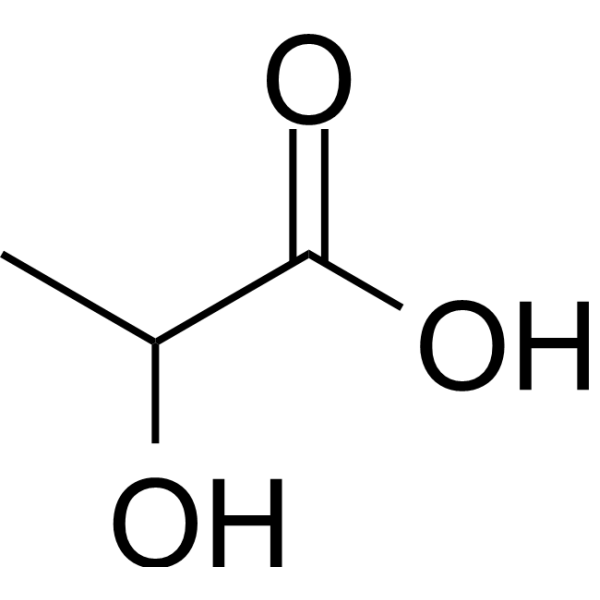
HY-B2227
Lactic acid -
HY-113498
Sphingomyelin -
HY-B0015
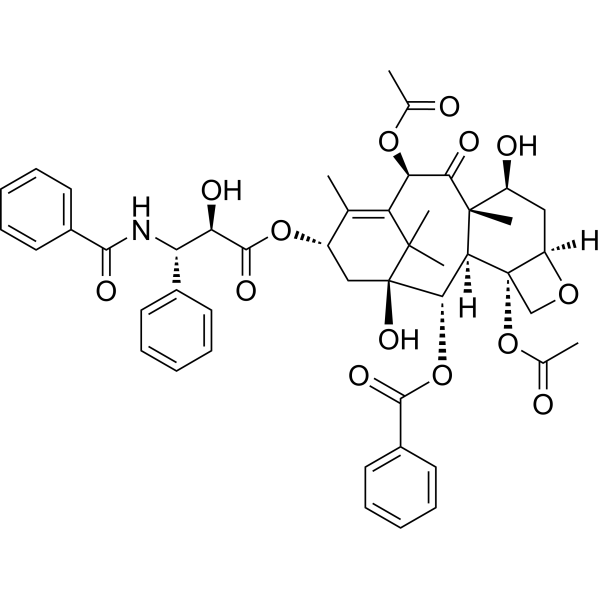
Paclitaxel -
HY-90006
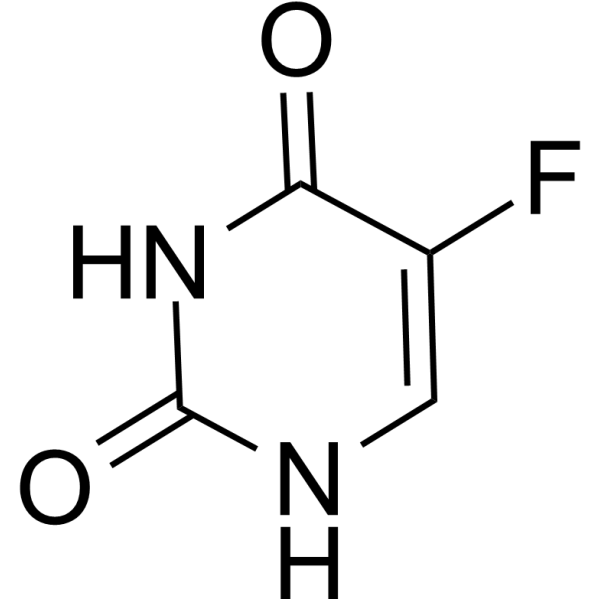
5-Fluorouracil -
HY-116429
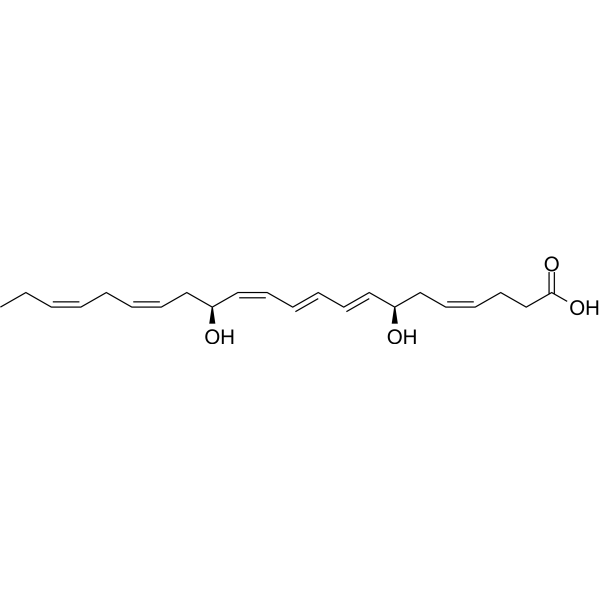
Maresin 1
Publications Citing Use of MedChemExpress (MCE) Lysophosphatidylcholines
More- Adv Mater. 2026 Jun;38(33):e21108. [Abstract]
- J Clin Invest. 2025 Dec 15;135(24):e193082. [Abstract]
- Adv Sci (Weinh). 2025 Nov 14:e17330. [Abstract]
- Cell Death Discov. 2025 Apr 21;11(1):190. [Abstract]
- J Infect Dis. 2024 Aug 16;230(2):298-308. [Abstract]
- Anim Reprod Sci. 2026 Jan 12;287:108108.
- SSRN. 2026 Mar 5.
 Customer Validation & Images

-
Cell Proliferation/Viability Assay
-
IHC
-
IF
-
WB
-
In Vivo Efficacy Study


Biological Activity
Description
IC50 & Target
|
IL-1β |
ERK1 |
ERK2 |
In Vitro
Lysophosphatidylcholine (3-100 μM, 24 h) reduced HUVEC viability[1].
Lysophosphatidylcholines (12.5μM, 4 h) upregulates gene expression of IL-1β in human peripheral blood monocytes[2].
Lysophosphatidylcholines (75μM, 24 h) induces apoptosis in HUVEC through a p38-mitogen-activated protein kinase-dependent mechanism[3].
MedChemExpress (MCE) has not independently confirmed the accuracy of these methods. They are for reference only.
-
Cell Line:HUVEC
-
Concentration:3 μM, 10μM, 30 μM, 100 μM
-
Incubation Time:24 h
-
Result:Reduced HUVEC viability in a concentration-dependent manner.
-
Cell Line:HUVEC
-
Concentration:75 μM
-
Incubation Time:24 h
-
Result:Showed both ERK1/2 and p38-MAPK phosphorylation.
In Vivo
Lysophosphatidylcholines (0.1-20 mg/kg, Oral, single dose) enhances bacterial clearance, blocks cecal ligation and puncture (CLP)-induced neutrophil deactivation and increases bactericidal activity of neutrophils[4].
MedChemExpress (MCE) has not independently confirmed the accuracy of these methods. They are for reference only.
-
Animal Model:Albino ICR mice [4]
-
Dosage:0.1 mg/kg, 1 mg/kg, 10 mg/kg, 20 mg/kg
-
Administration:Oral
-
Result:Provided significant protection against cecal ligation and puncture (CLP)-induced lethality at a dose of 1 mg/kg.


Chemical Information
-
CAS No. 9008-30-4
-
Appearance Solid
-
Color White to off-white
-
SMILES
[Lysophosphatidylcholines]
-
Shipping
Room temperature in continental US; may vary elsewhere.
-
Storage
Powder -20°C 3 years In solvent -80°C 6 months -20°C 1 month


Publications (7)
-
Journal Impact Factor
-
Most Recent
-
Adv Mater
Conformationally Variable Peptides Trap and Detoxify Ox-LDL in Plaques for Attenuating Atherosclerosis in Multiple Species. [Abstract]2026 Jun;38(33):e21108. PMID: 42116761 -
J Clin Invest
Leukemia-expanded splenic CD81+ erythroblasts potentiate disease progression in mice by reshaping leukemic cell metabolism. [Abstract]2025 Dec 15;135(24):e193082. PMID: 41392984 -
Adv Sci (Weinh)
Obesity-Associated TRIM15 Promotes the Proliferation of Esophageal Adenocarcinoma Through the YY2/FOXRED1 Axis. [Abstract]2025 Nov 14:e17330. PMID: 41237333
Lysophosphatidylcholines purchased from MedChemExpress. Usage Cited in: Adv Sci (Weinh). 2025 Nov 14:e17330. [Abstract]
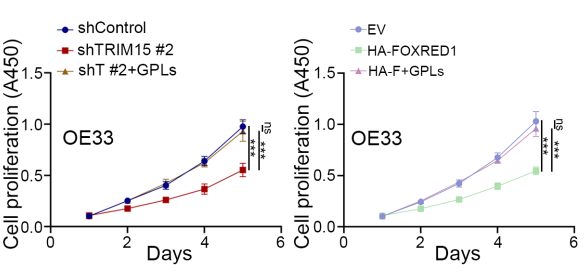
Addition of GPLs (PCs, PEs, LysoPCs, and LysoPAs; each at 10 µg/mL) to EAC cells for 5 days attenuated the inhibitory effect of TRIM15 knockdown or FOXRED1 overexpression on cell proliferation.
-
Cell Death Discov
APOE4 impairs macrophage lipophagy and promotes demyelination of spiral ganglion neurons in mouse cochleae. [Abstract]2025 Apr 21;11(1):190. PMID: 40258814
Lysophosphatidylcholines purchased from MedChemExpress. Usage Cited in: Cell Death Discov. 2025 Apr 21;11(1):190. [Abstract]
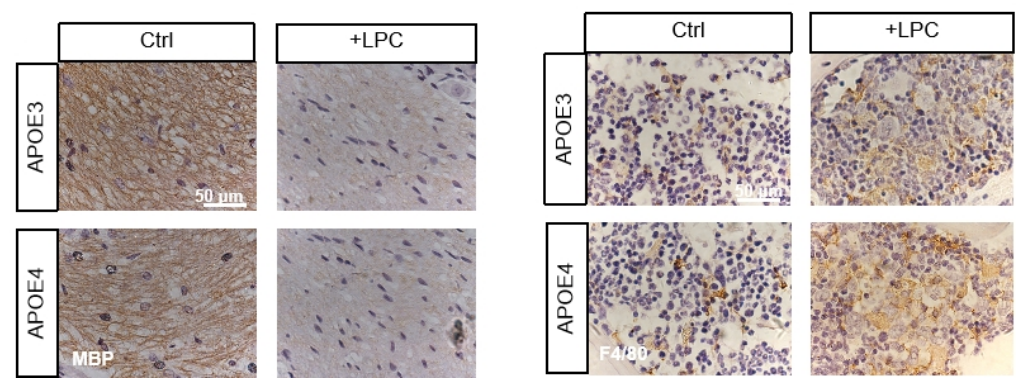
LPC (1 µL of 1% solution, single round-window administration) induced decreased MBP expression and an increase in F4/80-positive cells, indicating demyelination of spiral ganglion neurons (SGNs).
Lysophosphatidylcholines purchased from MedChemExpress. Usage Cited in: Cell Death Discov. 2025 Apr 21;11(1):190. [Abstract]
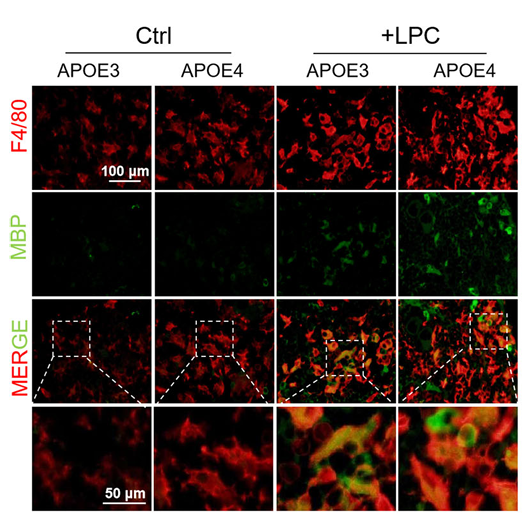
In the cochleae of mice treated with LPC (1 µL of 1% solution, single round-window administration), MBP was co-localized with F4/80-labeled RCMs in both APOE3 and APOE4 mice; however, APOE4 mice exhibited a lower proportion of MBP-positive RCMs with reduced MBP fluorescence intensity.
Lysophosphatidylcholines purchased from MedChemExpress. Usage Cited in: Cell Death Discov. 2025 Apr 21;11(1):190. [Abstract]
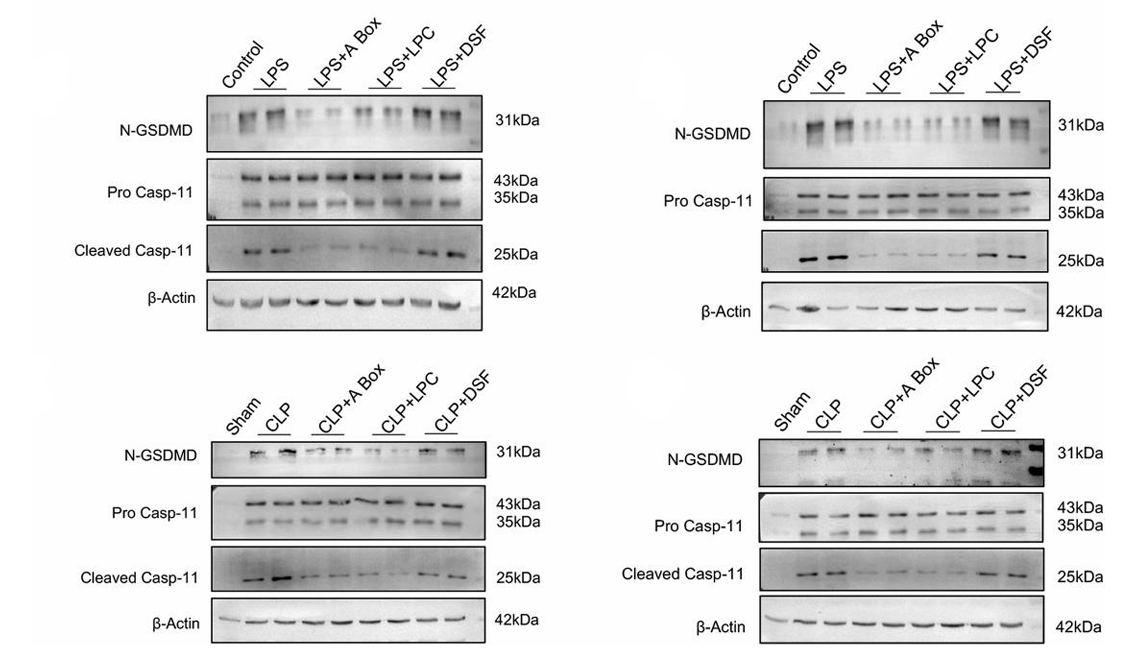
Western blot analysis of N-GSDMD, cleaved caspase-11, pro-caspase-11, and β-actin in peripheral blood monocytes (left) and peritoneal macrophages (right) from LPS and CLP model mice following treatment with 150 μg A box, 10 mg/kg LPC, or 50 mg/kg DSF. All experiments were performed at least three times. CLP, cecum ligation and puncture; DSF, disulfiram; LPC, lysophosphatidylcholine; LPS, lipopolysaccharide.
-
J Infect Dis
Role of Histiocyte-Derived frHMGB1 as a Facilitator in Non-Canonical Pyroptosis of Monocytes/Macrophages in Lethal Sepsis. [Abstract]2024 Aug 16;230(2):298-308. PMID: 38243905
Lysophosphatidylcholines purchased from MedChemExpress. Usage Cited in: J Infect Dis. 2024 Aug 16;230(2):298-308. [Abstract]
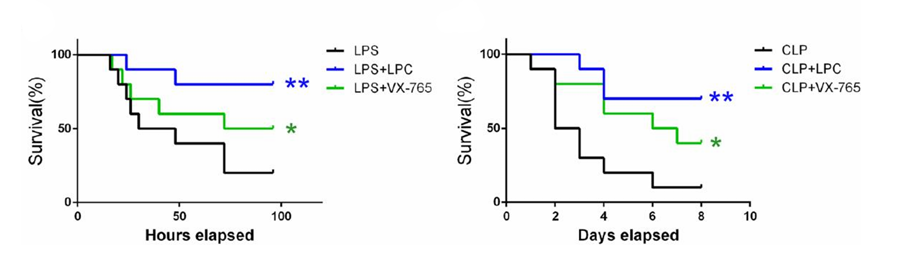
Survival curves of LPS (left) and CLP (right) model mice after treatment with 50 mg/kg VX-765 or 10 mg/kg LPC (n = 10). CLP + LPC vs. CLP, **P < 0.01; LPS + LPC vs. LPS, **P < 0.01. All data were collected from at least three independent experiments. CLP, cecum ligation and puncture; LPC, lysophosphatidylcholine; LPS, lipopolysaccharide.
-
-


Solvent & Solubility
In Vitro:
H2O : 100 mg/mL (Need ultrasonic)
Methanol : 25 mg/mL (Need ultrasonic)
DMSO : < 1 mg/mL (insoluble or slightly soluble)


Purity & Documentation
-
Data Sheet (272 KB)
-
SDS (394 KB)
- English - EN (394 KB)
- Français - FR (394 KB)
- Deutsch - DE (394 KB)
- Norwegian - NO (394 KB)
- Español - ES (394 KB)
- Swedish - SV (394 KB)
- Italian - IT (394 KB)
- Korean - KR (394 KB)
- Portuguese - PT (394 KB)
-
Handling Instructions (2659 KB)
References
[1]. Kim E A, et al. Lysophosphatidylcholine induces endothelial cell injury by nitric oxide production through oxidative stress [J]. The Journal of Maternal-Fetal & Neonatal Medicine, 2009, 22(4): 325-331. [Content Brief]
[2]. Liu-Wu Y, et al. Lysophosphatidylcholine induces the production of IL-1β by human monocytes [J]. Atherosclerosis, 1998, 137(2): 351-357. [Content Brief]
[3]. Takahashi M, et al. Lysophosphatidylcholine induces apoptosis in human endothelial cells through a p38-mitogen-activated protein kinase-dependent mechanism [J]. Atherosclerosis, 2002, 161(2): 387-394. [Content Brief]
[4]. Yan J J, et al. Therapeutic effects of lysophosphatidylcholine in experimental sepsis [J]. Nature medicine, 2004, 10(2): 161-167. [Content Brief]

Calculators
Concentration (start) × Volume (start) = Concentration (final) × Volume (final)


Lysophosphatidylcholines Related Classifications
HY-139414 Related Classifications
 Powered by Bioz