1. Search Result
Search Result
Pathways Recommended: Antibody-drug Conjugate/ADC Related
Results for "

natural antibodies

" in MedChemExpress (MCE) Product Catalog:

33

Inhibitors & Agonists

1

Screening Libraries

1

Biochemical Assay Reagents

3

Peptides

26

Inhibitory Antibodies

2

Natural
Products

1

Oligonucleotides

Cat. No. Product Name Target Research Areas Chemical Structure
  • HY-P9977
    Amivantamab
    3 Publications Verification

    JNJ-61186372

    EGFR Inflammation/Immunology Cancer
    Amivantamab (JNJ-61186372) is a human EGFR-MET bispecific antibody with immune anticancer activity. Amivantamab inhibits ligand binding, promotes endocytosis and degradation of receptor-antibody complexes, and induces Fc-dependent cytokinesis in macrophages and antibody-dependent cytotoxicity in natural killer cells .
    Amivantamab
  • HY-P99055

    TNF Receptor Inflammation/Immunology Cancer
    Urelumab, a fully human, non-ligand binding, CD137 agonist IgG4 monoclonal antibody, enhances T-cell and natural killer-cell antitumor activity, and may enhance cytotoxic activity of Rituximab (HY-P9913). Urelumab can be used for the research of diffuse large B-cell lymphoma (DLBCL), follicular lymphoma (FL), and other types of non-Hodgkin lymphoma (NHL) .
    Urelumab
  • HY-P99361

    PDL192; ABT-361; Anti-TNFRSF12A/TWEAKR/CD266 Reference Antibody (enavatuzumab)

    TNF Receptor Cancer
    Enavatuzumab (PDL192; ABT-361) is a humanized IgG1 monoclonal antibody targeting the receptor of TNF-like weak inducer of apoptosis (TWEAK). TWEAK (Fn14; TNFRSF12A), the natural ligand of the TWEAK receptor (TweakR), stimulates multiple cellular responses. Enavatuzumab induces tumor growth inhibition through direct TweakR signaling and antibody dependent cell-mediated cytotoxicity (ADCC). Enavatuzumab can actively recruits and activates myeloid effectors to kill tumor cells. Enavatuzumab inhibits the growth of various human TweakR-positive cancer cell lines and xenografts in vitro and in vivo .
    Enavatuzumab
  • HY-P9965

    HuLuc 63; PDL 063; BMS 901608

    Transmembrane Glycoprotein Cancer
    Elotuzumab (HuLuc 63) is an IgG1 monoclonal antibody targeting the SLAMF7 receptor. Elotuzumab exerts antitumor activity by activating natural killer cells and inducing antibody-dependent cell-mediated cytotoxicity. Elotuzumab can be combined with Lenalidomide (HY-A0003), Dexamethasone (HY-14648), etc., for the research of tumors such as multiple myeloma .
    Elotuzumab
  • HY-117371

    (-)-Hemiasterlin; Milnamide B

    ADC Payload Cancer
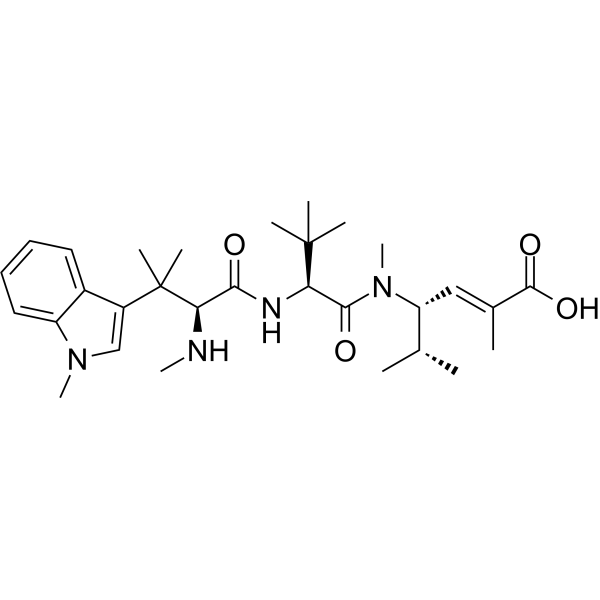
    Hemiasterlin ((-)-Hemiasterlin) is an antimitotic marine natural product with potent anticancer effects. Hemiasterlin can be used as a cytotoxic payload (ADC Cytotoxin) in antibody-drug conjugates (ADCs) .
    Hemiasterlin
  • HY-B0199A

    RS 61443 hydrochloride; TM-MMF hydrochloride

    Interleukin Related Inflammation/Immunology
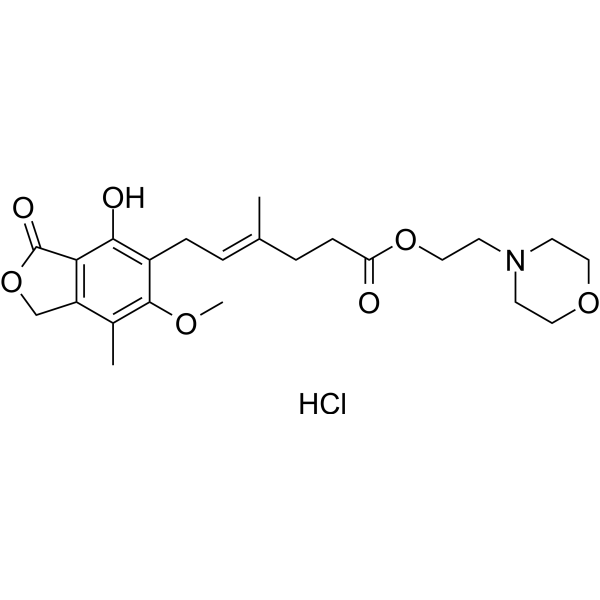
    Mycophenolate mofetil (RS 61443; TM-MMF) hydrochloride is an orally active antimetabolic immunosuppressant with antiproliferative and anti-inflammatory properties. Mycophenolate mofetil hydrochloride significantly inhibits the production of B, T lymphocytes and the proliferation of smooth muscle cells by selectively blocking the de novo purine synthesis pathway. Mycophenolate mofetil hydrochloride effectively reduces adventitial inflammation, medial necrosis and intimal thickening in rat aortic allografts, and decreases the number of lymphocytes expressing the IL-2 receptor, thereby delaying xenograft rejection. Mycophenolate mofetil hydrochloride shows certain toxicity in a hamster-to-rat limb xenotransplantation model when used in combination with FK506 (HY-13756). Mycophenolate mofetil hydrochloride is widely used in studies related to allograft arteriosclerosis (chronic rejection) .
    Mycophenolate mofetil hydrochloride
  • HY-P99143

    Neurokinin Receptor NF-κB STAT Inflammation/Immunology
    Anti-Mouse NK1.1 Antibody (PK136) is an anti-mouse NK1.1 IgG2a monoclonal antibody. Anti-Mouse NK1.1 Antibody (PK136) can deplete natural killer (NK) cells. Anti-Mouse NK1.1 Antibody (PK136) inhibits the JAK-STAT and NF-κB signaling pathways. Anti-Mouse NK1.1 Antibody (PK136) can be used for research on inflammation conditions such as non-alcoholic steatohepatitis (NASH) .
    Anti-Mouse NK1.1 Antibody (PK136)
  • HY-108738

    Ro 24-7375

    Interleukin Related Apoptosis Inflammation/Immunology Cancer
    Daclizumab (Ro 24-7375) is a humanized, monoclonal antibody that blocks CD25 (α-subunit of the high-affinity interleukin-2 receptor (IL-2R-HA)). Daclizumab inhibits effector T cell activation, regulatory T cell (Treg) expansion and survival, and activation-induced T-cell apoptosis. Daclizumab increases IL-2 bioavailability to bind to the intermediate-affinity IL-2R (IL-2R-IA), driving the expansion of anti-inflammatory CD56bright natural killer (NK) cells. Daclizumab can be used for multiple sclerosis and cancer research .
    Daclizumab
  • HY-P990273

    CD38 ERK CD1 Apoptosis Inflammation/Immunology Cancer
    Anti-Mouse CD38 Antibody (NIMR5) is an anti-mouse CD38 IgG2a monoclonal antibody. Anti-Mouse CD38 Antibody (NIMR5) can activate the ERK signaling pathway and promote cell apoptosis. Anti-Mouse CD38 Antibody (NIMR5) can restore T cell function. Anti-Mouse CD38 Antibody (NIMR5) upregulates the expression of CD1d protein and enhances spleen cell proliferation, dendritic cell (DC) and natural killer T cell (NKT) expansion. Anti-Mouse CD38 Antibody (NIMR5) can be used for researches on cancer and immunology such as melanoma and colon cancer .
    Anti-Mouse CD38 Antibody (NIMR5)
  • HY-P99157

    CD276/B7-H3 Cancer
    Omburtamab is a humanized monoclonal antibody targeting B7-H3 (CD276). Omburtamab selectively binds to B7-H3 highly expressed on the surface of tumor cells and activates anti-tumor immune responses mediated by T cells and natural killer (NK) cells. Omburtamab can promote the specific infiltration of CAR-T cells into tumors, enhance the killing function of NK cells through the CD16 signaling pathway, and regulate tumor cell glucose metabolism (such as inhibiting the Warburg effect). Omburtamab has the potential to inhibit solid tumors such as non-small cell lung cancer (NSCLC) .
    Omburtamab
  • HY-P9977A

    EGFR Cancer
    Amivantamab (FUT8-KO) is an anti-EGFR-MET monoclonal antibody expressed by CHO cells with the fucosyltransferase 8 gene (FUT8) knocked out. Fucose deficiency enhances the ADCC effect of the antibody. Amivantamab (FUT8-KO) inhibits ligand binding, promotes endocytosis and degradation of receptor-antibody complexes, and induces Fc-dependent cytokinesis in macrophages and antibody-dependent cytotoxicity in natural killer cells .
    Amivantamab (FUT8-KO)
  • HY-P99249

    Pogalizumab; MOXR 0916

    Orexin Receptor (OX Receptor) Cancer
    Vonlerolizumab (Pogalizumab; MOXR 0916) is a humanized IgG1 monoclonal antibody targeting OX40 (CD134). Pogalizumab partially blocks the interaction between OX40 and its natural ligand OX40L upon binding, thereby activating the NF-κB signaling pathway. Pogalizumab enhances T cell activation and proliferation and has shown antitumor activity in mouse models .
    Vonlerolizumab
  • HY-109714

    Drug Derivative Inflammation/Immunology
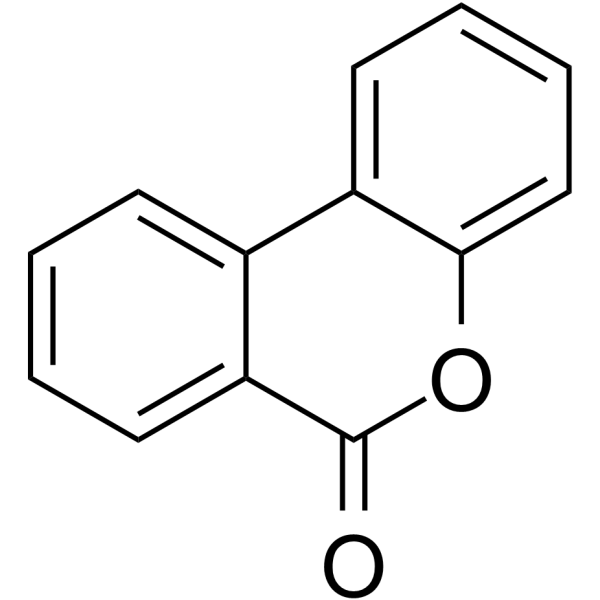
    3,4-Benzocoumarin is a kind of the expanded structure of coumarin derivatives.Coumarin is a chemical compound in the benzopyrone chemical class that can be found in many natural species. Coumarins possess variety of biological activities and unique photophysical properties . 3,4-Benzocoumarin, a AOH‐like compound , has the sensibility of the antibody with an IC50 of 919.2 ng/mL .
    3,4-Benzocoumarin
  • HY-P990742

    TJ-CD4B; ABL111; TJ033721

    TNF Receptor Claudin Inflammation/Immunology Cancer
    Givastomig (ABL111, TJ033721) is a bispecific antibody (BsAb) inhibitor. Givastomig can specifically binds to Claudin18.2 (CLDN 18.2) on the surface of cancer cells and 4-1BB (CD137, TNFRSF9) on the surface of activated T cells and natural killer (NK) cells. Givastomig is engineered to contain a single Fc-domain mutation (asparagine to alanine) to eliminate Fc-effector function. Givastomig-bound cell lines expressing a range of CLDN18.2 levels with high affinity and induced 4-1BB activation only in the context of CLDN18.2 binding. Givastomig can be used for the study of colon carcinoma .
    Givastomig
  • HY-P99622

    IMC-20D7S

    Tyrosinase Cancer
    Flanvotumab (IMC-20D7S) is a human monoclonal antibody targeting to tyrosinase-related protein (TYRP1), specifically expressed in melanocytes and melanoma cells. Flanvotumab acts function via natural killing-mediated antibody-dependent cell-mediated cytotoxicity (ADCC). Flanvotumab has potent anti-tumor activity and good tolerance .
    Flanvotumab
  • HY-P990178

    C-type Lectin-like Receptors (CTLRs) Infection Others Metabolic Disease Inflammation/Immunology Cancer
    Anti-Mouse NKG2D/CD314 Antibody (CX5) is a rat-derived IgG1 κ type antibody inhibitor, targeting to mouse NKG2D/CD314. Anti-Mouse NKG2D/CD314 Antibody (CX5) reduces cytotoxicity of natural killer cells. Anti-Mouse NKG2D/CD314 Antibody (CX5) can be used for the researches of cancer, infection, inflammation, immunology and metabolic disease, such as colitis and diabetes .
    Anti-Mouse NKG2D/CD314 Antibody (CX5)
  • HY-W046071

    Drug Intermediate Others
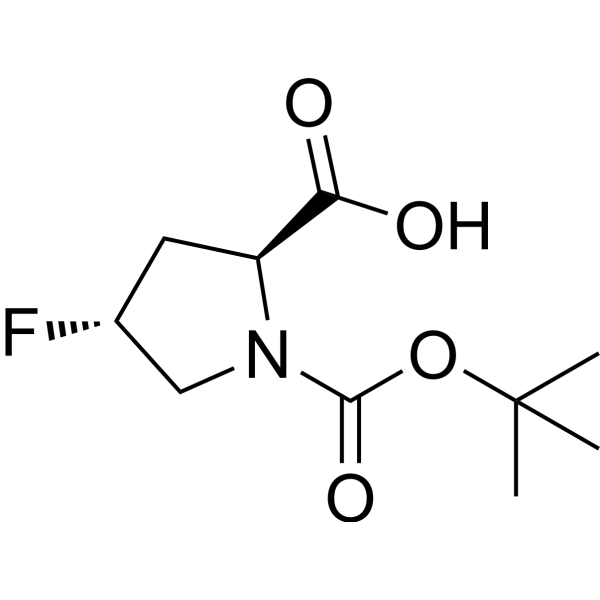
    N-Boc-trans-4-fluoro-L-proline is a non-natural amino acid substitute used to construct monoclonal antibodies that specifically target the seed conformation of tau protein .
    N-Boc-trans-4-fluoro-L-proline
  • HY-P990287

    CD1 Inflammation/Immunology
    Anti-Mouse CD1d Antibody (19G11) is a rat-derived IgG1 type antibody inhibitor, targeting to mouse CD1d. Anti-Mouse CD1d Antibody (19G11) can neutralize CD1d and inhibit the activation of invariant natural killer T (iNKT) cells. Anti-Mouse CD1d Antibody (19G11) can be used for the researches of inflammation and immunology, such as colitis .
    Anti-Mouse CD1d Antibody (19G11)
  • HY-P10563

    BHV-1100

    CD38 Cancer
    Noraramtide (BHV-1100) is an antibody recruitment molecule. Noraramtide can specifically bind to CD38 molecules to recruit natural killer (NK) cells. Noraramtide enhances the ability of NK cells to kill tumor cells through antibody-dependent cellular cytotoxicity (ADCC). This mechanism allows NK cells to more effectively recognize and eliminate tumor cells while avoiding mutual killing between NK cells. Noraramtide can be used for the study of autologous cancer immunity .
    Noraramtide
  • HY-P990808

    Interleukin Related Infection Metabolic Disease Inflammation/Immunology Cancer
    Anti-Mouse CD122/IL-2Rβ Antibody (TM-Beta 1) is a rat-derived IgG2b κ type antibody inhibito, targeting to mouse CD122/IL-2Rβ. Anti-Mouse CD122/IL-2Rβ Antibody (TM-Beta 1) can block IL-2 and IL-15. Anti-Mouse CD122/IL-2Rβ Antibody (TM-Beta 1) can deplete natural killer (NK) cells and NKT cells. Anti-Mouse CD122/IL-2Rβ Antibody (TM-Beta 1) can be used for the researches of cancer, infection, inflammation, immunology and metabolic disease, such as melanoma, experimental autoimmune encephalomyelitis (EAE) and diabetes .
    Anti-Mouse CD122/IL-2Rβ Antibody (TM-Beta 1)
  • HY-P990180

    C-type Lectin-like Receptors (CTLRs) Inflammation/Immunology Cancer
    Anti-Mouse NKG2A/C/E Antibody (20D5) is an anti-mouse NKG2A/C/E IgG2a monoclonal antibody. Anti-Mouse NKG2A/C/E Antibody (20D5) can activate natural killer (NK) and CD8 + T cells. Anti-Mouse NKG2A/C/E Antibody (20D5) can exacerbate liver pathological damage by enhancing the activation of iNKT cells. Anti-Mouse NKG2A/C/E Antibody (20D5) can be used for researches on cancer and immunology such as lymphoma .
    Anti-Mouse NKG2A/C/E Antibody (20D5)
  • HY-NP0220

    Biochemical Assay Reagents Infection Inflammation/Immunology
    Chicken Yolk Immunoglobulin (IgY) is a natural antibody extracted from the yolk of immune hens. It has high stability and is widely used in antiviral, immunoassay and other fields .
    Chicken Yolk Immunoglobulin
  • HY-P990719

    XmAb24306

    Interleukin Related Inflammation/Immunology Cancer
    Efbalropendekin Alfa (XmAb24306) is an IL-15/IL-15 receptor alpha complex fused to a heterodimeric Fc domain (IL15/IL15Rα-Fc). Efbalropendekin Alfa increases direct and antibody-dependent cellular cytotoxicity (ADCC)-mediated human natural killer (NK) cell cytotoxicity in vitro .
    Efbalropendekin alfa
  • HY-P11340

    MHC Infection Inflammation/Immunology
    VMAPRTLFL is a 9-mer peptide derived from the signal peptide of HLA-G and can serve as a peptide ligand for HLA-E. VMAPRTLFL plays a crucial role in regulating the functions of adaptive natural killer (NK) cells. Specifically, VMAPRTLFL enriches FcεRγ - adaptive NK cells, upregulates the expression of CD25, and enhances their proliferative activity, antibody-dependent cellular cytotoxicity (ADCC), and IFN-γ release. VMAPRTLFL can be used in research related to human cytomegalovirus (HCMV) infection, transplant rejection, and pregnancy immunity .
    VMAPRTLFL
  • HY-P990807

    CD1 Infection Inflammation/Immunology Cancer
    Anti-Mouse CD1d Antibody (20H2 (HB323)) is a rat-derived IgG1 κ type antibody inhibitor, targeting to mouse CD1d. Anti-Mouse CD1d Antibody (20H2 (HB323)) can block CD1d and neutralize invariant natural killer T (iNKT) cells. Anti-Mouse CD1d Antibody (20H2 (HB323)) can be used for the researches of cancer, infection, inflammation and immunology, such as melanoma, L. monocytogenes infection and arthritis .
    Anti-Mouse CD1d Antibody (20H2 (HB323))
  • HY-P991250

    Integrin Cancer
    MSH-TP15e is a humanized monoclonal antibody inhibitor targeting intercellular adhesion molecule-1 (ICAM-1). MSH-TP15e recruits natural killer cells and significantly triggers antibody-dependent cell-mediated cytotoxicity (ADCC) to inhibit tumor cell growth. MSH-TP15e is promising for research of multiple myeloma (MM) .
    MSH-TP15e
  • HY-P991095

    APV-527; ATOR-1016

    Transmembrane Glycoprotein Cancer
    ALG.APV-527 (APV-527) is a bispecific 4-1BB (CD137) and 5T4 antibody. ALG.APV-527 is designed to activate 4-1BB on T and natural killer (NK) cells only when simultaneously bound to 5T4-expressing tumor cells. ALG.APV-527 has a potent antitumor activity .
    ALG.APV-527
  • HY-180548

    E1/E2/E3 Enzyme Infection Inflammation/Immunology
    MRC37 is a potent and selective small-molecule ligand of TRIM21 that binds the PRYSPRY domain of TRIM21. MRC37 inhibits the natural antiviral function of TRIM21 by preventing antibody neutralisation of adenovirus 5 (Adv5). MRC37 is also capable of inhibiting Trim-Away, a targeted protein degradation technology where TRIM21 is recruited to specific proteins via electroporated antibodies .
    MRC37
  • HY-P992450

    TNF Receptor Cancer
    REGN6569 is a fully human IgG1 monoclonal antibody targeting glucocorticoid-induced tumor necrosis factor receptor-related protein (GITR) with high specificity for GITR. REGN6569 exerts stronger in vitro antibody-dependent cell-mediated cytotoxicity (ADCC) against regulatory T cells expressing GITR. REGN6569 selectively depletes regulatory T cells via antibody-dependent cell-mediated cytotoxicity and increases the proportion of proliferative natural killer (NK) cells in peripheral blood. REGN6569 is applicable for advanced solid malignancies. Isotype control: HY-P99001 .
    REGN6569
  • HY-118273

    Integrin Inflammation/Immunology Cancer
    IPS-05002 is an α5β1 antagonist. IPS-05002 can inhibit VEGF-stimulated human umbilical vein endothelial cell (HUVEC) proliferation, adhesion, and migration, and also suppresses tubular network formation. IPS-05002 can upregulate IKB-β, XRCC4, and downregulate Cdc6 in VEGF-induced HUVECs. IPS-05002 can be used for the study of tumor angiogenesis .
    IPS-05002
  • HY-P992361

    Transmembrane Glycoprotein Cancer
    HB0030 is a TIGIT inhibitor with antibody-dependent cellular cytotoxicity (ADCC) and complement-dependent cytotoxicity (CDC) activities. HB0030 enhances the expression of activation markers in natural killer (NK) cells, promotes the killing of regulatory T cells (Tregs), and reduces the proportion of FoxP3 + Treg in tumor-infiltrating lymphocytes. The combination of HB0030 with the anti-PD-L1/VEGF bispecific antibody HB0025 further enhances tumor suppression efficacy. HB0030 can be used in studies related to colorectal cancer, pancreatic adenocarcinoma, hepatocellular carcinoma, bladder cancer, breast cancer, non-small cell lung cancer, and advanced solid tumors .
    HB0030
  • HY-P992435

    TNF Receptor Cancer
    OX118 is a fully human, ADCC-enhanced monoclonal antibody targeting OX40L, the recommended isotype control is HY-P99001. OX118 blocks OX40L, suppresses effector T-cell proliferation, expands regulatory T-cell populations, and reduces bystander activation across natural killer cells, B cells, and CD14+ monocytes. OX118 can be used for the research of graft-versus-host disease .
    OX118
  • HY-P991530

    Biochemical Assay Reagents Inflammation/Immunology Cancer
    YH004 is an anti-CD137 agonistic monoclonal antibody, with immunostimulating and antineoplastic activities. YH004 activates CD137 expressed on a variety of leukocyte subsets including activated T lymphocytes and natural killer cells. YH004 enhances CD137-mediated signaling and induces cytotoxic T-lymphocyte (CTL) proliferation, cytokine production and promotes anti-tumor response mediated by CTL. YH004 induces NK-mediated tumor cell killing and suppresses the immunosuppressive activity of regulatory T cells. YH004 can be studied in anticancer research .
    YH004

Inquiry Online

Your information is safe with us. * Required Fields.

Salutation


Country or Region *

Applicant Name *


Organization Name *

Department *


Email Address *


Product Name *

Cat. No.


Requested quantity *

Phone Number *


Remarks

Inquiry Online

Inquiry Information

Product Name:
Cat. No.:
Quantity:
MCE Japan Authorized Agent: