



Enavatuzumab

Based on 1 Customer Validation
Enavatuzumab (PDL192; ABT-361) is a humanized IgG1 monoclonal antibody targeting the receptor of TNF-like weak inducer of apoptosis (TWEAK). TWEAK (Fn14; TNFRSF12A), the natural ligand of the TWEAK receptor (TweakR), stimulates multiple cellular responses. Enavatuzumab induces tumor growth inhibition through direct TweakR signaling and antibody dependent cell-mediated cytotoxicity (ADCC). Enavatuzumab can actively recruits and activates myeloid effectors to kill tumor cells. Enavatuzumab inhibits the growth of various human TweakR-positive cancer cell lines and xenografts in vitro and in vivo .
For research use only. We do not sell to patients.
- Purity : 98.27%
- CAS No.: 1062149-33-0
- Molecular Weight:150 kDa
-
Storage:Shipping with dry ice
Please store the product under the recommended conditions in the Certificate of Analysis.


To place orders, for customer services and technical support, please contact: MedChemExpress USA
Tel: 609-228-6898 E-mail: [email protected] [email protected]


-
 Biological Activity
-
Chemical Information
- Protocols
- Purity & Documentation
- References
-
 Help & FAQs


-

HY-P99260
ConatumumabDR5 Agonist Antibody -

HY-P99812
RagifilimabGITR Agonist -

HY-P99386
VesencumabAnti-NRP-1 IG1 Antibody -
HY-N0822
ShikoninChloride Channel Inhibitor -

HY-P9908
AdalimumabTNF-α Inhibitor -

HY-P990007
TulisokibartAnti-TNFSf15/TL1A Antibody -
HY-N0472
GeraniinTNF Receptor Inhibitor -
HY-110203
R-7050TNF Receptor Antagonist -

HY-P9980
BelantamabAnti-BCMA/TNFRSF17 Monoclonal Antibody -
HY-N0029
Forsythoside BTNF Inhibitor -
HY-N0619
Mulberroside ATyrosinase Inhibitor -

HY-P9952
BelimumabAnti-B-Lymphocyte Stimulator Antibody


Biological Activity
Description
Isotype
Human IgG1 kappa
Recommend Isotype Controls
Species Reactivity
Human
IC50 & Target
|
TWEAK |
In Vitro
Enavatuzumab (0.1-1000 ng/mL; 4 hours) induces effector cell activation and tumor cell killing in vitro[1].
Enavatuzumab (10 μg/mL; for 24 hours) results in significantly increased migration of immune effector cells toward the tumor cells in SN12C and A375 cells[1].
MedChemExpress (MCE) has not independently confirmed the accuracy of these methods. They are for reference only.
-
Cell Line:Renal carcinoma cell line SN12C, the melanoma cell line A375, the colorectal cancer cell lines HCT116 and DLD-1
-
Concentration:0.1, 1, 10, 100, 1000 ng/mL
-
Incubation Time:4 hours
-
Result:Showed potent tumor cell killing on all TweakR-positive tumor cells tested.
In Vivo
MedChemExpress (MCE) has not independently confirmed the accuracy of these methods. They are for reference only.
-
Animal Model:6-week old SCID mice with SN12C or HCT116 or DLD-1 or A375 tumors[1]
-
Dosage:10 mg/kg
-
Administration:IP; three times per week; 6 doses (DLD-1 model), 7 doses (SN12C model), 9 doses (A375 or HCT116 model)
-
Result:Some TweakR-expressing cells, such as SN12C and A375, were sensitive in vivo and in vitro.
Some TweakR-expressing cell lines, such as HCT116 and DLD-1, were not sensitive to enavatuzumab treatment in vivo, though both cell lines were effectively killed via ADCC in vitro.
Up-regulated the activation markers on splenocytes in SN12C tumor-bearing mice.
- Detection of Apoptosis
- TUNEL staining for apoptotic DNA fragmentation
- Cell Cytotoxicity Assay
- Mammalian live/dead viability and cytotoxicity staining
- Annexin V plus membrane-impermeant dye apoptosis staining
- Patient-Derived Xenograft (PDX)
- Apoptosis Solutions
- Patient-Derived Orthotopic Xenograft (PDOX)
- Subcutaneous Cell-Line-Derived Xenograft
- Orthotopic Cell-Line Xenograft
- Cell Viability Determination by MTT Colorimetric Assay
Gene ID
Accession
Conjugated
Unconjugated
Reconsititution
The product can be reconstituted/diluted with sterile PBS or saline.
Format
-
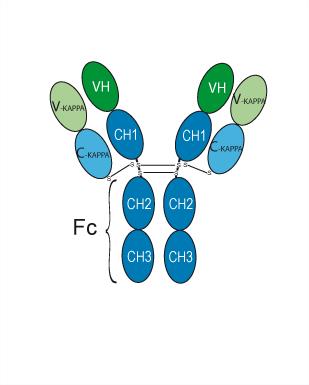
Human IgG1 kappa
Application
ELISA, FACS, Functional assay
Verified Bioactivity
-
 Immobilized TNFRSF12A Protein, Human (HEK293, Fc, HY-P72434) can bind Enavatuzumab. The EC50 for this effect is 3.039 ng/mL.
-
 Flow cytometric analysis of 1.5X10⁶ HT-29 cells with Enavatuzumab (HY-P99361, red). Cells were fixed with 4% paraformaldehyde. Then stained with the primary antibody at 1/200 dilution for an hour at 4℃. Goat Anti-Human IgG H&L (AF488) (HY-P83776) was used as the secondary antibody at 1/1,000 dilution for 30 minutes at 4℃. Human IgG1 kappa, Isotype Control (HY-P99001, blue) was used as the isotype control, cells without incubation with primary antibody were used as the unlabeled control (black).


Chemical Information
-
CAS No. 1062149-33-0
-
Appearance Liquid
-
Molecular Weight 150 kDa
-
Color Colorless to light yellow
-
SMILES
[Enavatuzumab]
-
Synonyms
PDL192; ABT-361; Anti-TNFRSF12A/TWEAKR/CD266 Reference Antibody (enavatuzumab)
-
Shipping
Shipping with dry ice.
-
Formulation
Please refer to the lot-specific COA for specific buffer information.
-
Storage
Please store the product under the recommended conditions in the Certificate of Analysis.


Purity & Documentation
-
Data Sheet (263 KB)
-
SDS (252 KB)
- English - EN (252 KB)
- Français - FR (252 KB)
- Deutsch - DE (252 KB)
- Norwegian - NO (252 KB)
- Español - ES (252 KB)
- Swedish - SV (252 KB)
- Italian - IT (252 KB)
- Korean - KR (252 KB)
- Portuguese - PT (252 KB)
-
Inhibitory Antibodies User Guide (603 KB)
References
[1]. Shiming Ye, et al. Enavatuzumab, a Humanized Anti-TWEAK Receptor Monoclonal Antibody, Exerts Antitumor Activity through Attracting and Activating Innate Immune Effector Cells. J Immunol Res. 2017;2017:5737159. [Content Brief]
[2]. Ludmilla de Plater, et al. Predictive gene signature of response to the anti-TweakR mAb PDL192 in patient-derived breast cancer xenografts. PLoS One. 2014 Nov 6;9(11):e104227. [Content Brief]

Calculators
Concentration (start) × Volume (start) = Concentration (final) × Volume (final)


Enavatuzumab Related Classifications
HY-P99361 Related Classifications
 Powered by Bioz
Keywords
- Enavatuzumab
- 1062149-33-0
- PDL192
- ABT-361
- Anti-TNFRSF12A/TWEAKR/CD266 Reference Antibody (enavatuzumab)
- PDL 192
- PDL-192
- ABT361
- ABT 361
- ABT-361
- TNF Receptor
- Tumor Necrosis Factor Receptor
- TNFR
- IgG1
- antibody
- TNF-like weak inducer of apoptosis
- TWEAK
- Fn14
- TNFRSF12A
- TweakR
- ADCC
- myeloid effector
- cancer
- Inhibitor
- inhibitor
- inhibit