Search Result
Results for "
ovarian cancer xenograft models
" in MedChemExpress (MCE) Product Catalog:
| Art. -Nr. |
Produktname |
Target |
Forschungsgebiete |
Chemical Structure |
-
- HY-164734
-
|
R-DXd; DS-6000
|
Antibody-Drug Conjugates (ADCs)
|
Cancer
|
|
Raludotatug Deruxtecan is an antibody-drug conjugate targeting CDH6, with an EC50 of 64.7 ng/mL in humans, 70.4 ng/mL in cynomolgus monkeys, and 228 ng/mL in mice. Raludotatug Deruxtecan specifically binds to CDH6 on the surface of cancer cells, triggers lysosomal internalization, and releases the DXd payload that inhibits TOP1. Raludotatug Deruxtecan induces DNA damage, Chk1 phosphorylation, caspase-3 cleavage, apoptosis, and bystander cell death. Raludotatug Deruxtecan is applicable to research related to serous ovarian cancer and renal cell carcinoma .
|
-

-
- HY-P991577
-
|
DS-8895A
|
Ephrin Receptor
|
Cancer
|
|
DS-8895(DS-8895A) is an anti-EphA2 monoclonal antibody with specific binding to EphA2 receptors and EphA2-expressing cells. DS-8895, when conjugated with 89Zr, 111In, or 125I, supports molecular imaging of EphA2 expression in xenograft models. DS-8895 allows noninvasive measurement of EphA2 expresssion in tumors in vivo. .
|
-

-
- HY-12929
-
|
SU093
|
Pim
Apoptosis
|
Cancer
|
|
NSC756093 (SU093) is a GBP1:PIM1 interaction inhibitor. NSC756093 binds to GBP1-PIM1 with a Kd of 38 nM. NSC756093 suppresses proliferation, reduces migration, induces G1 phase cell-cycle arrest, and increases apoptotic cell death in ovarian cancer cells. NSC756093 reduces cellular proteasomal activity, induces accumulation of ubiquitinated proteins, and restrains tumor progression and lung metastasis in murine ovarian cancer xenograft models. NSC756093 increases sensitivity of prostate cancer cells to Docetaxel (HY-B0011) and sensitizes GBP1-overexpressing ovarian cancer cells to Paclitaxel (HY-B0015). NSC756093 can be used for the research of prostate cancer and ovarian cancer .
|
-
-
- HY-163743
-
|
|
Salt-inducible Kinase (SIK)
|
Cancer
|
|
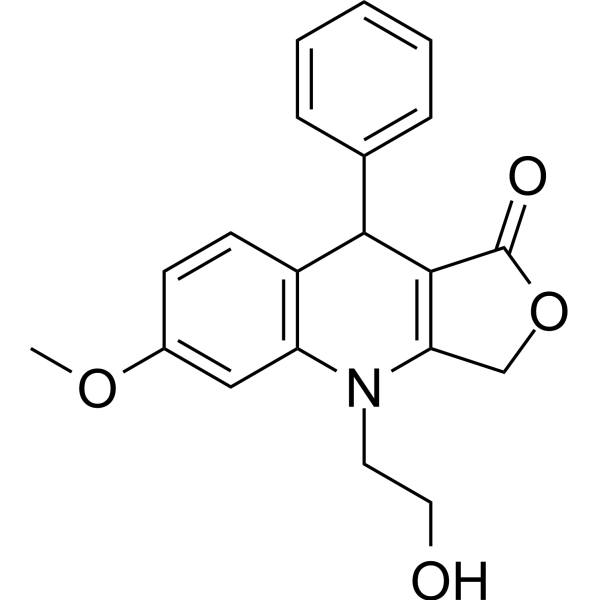
SIC-19 is a SIK2 inhibitor and promotes SIK2 protein degradation via the ubiquitination pathway. SIC-19 inhibits cancer cell growth and sensitizes cells to PARP inhibitors (Such as Olaparib (HY-10162)), as well as in ovarian cancer organoids and xenograft models .
|
-

-
- HY-139852
-
|
|
Phosphatase
|
Cancer
|
|
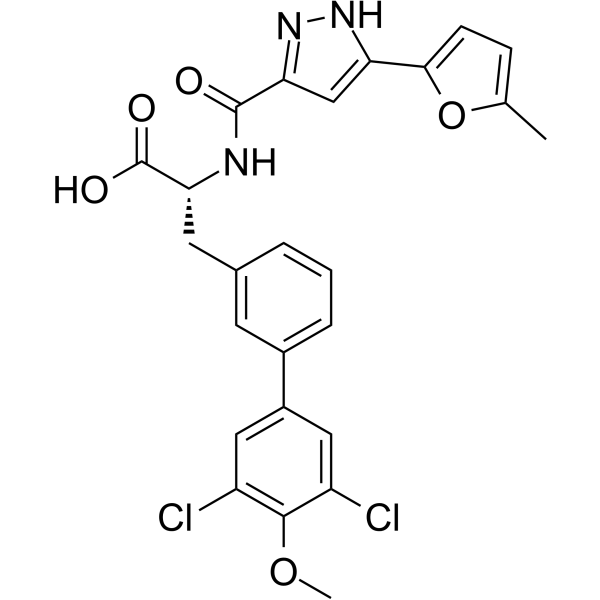
PLAP-IN-1 is a selective PLAP inhibitor with an IC50 of 0.032 μM. PLAP-IN-1 acts as a tumor-targeting agent; its fluorescein-conjugated derivative specifically binds to PLAP-positive tumor cells in vitro and targets cervical cancer in mouse xenograft models. PLAP-IN-1 can be used in the research of cervical cancer and ovarian cancer .
|
-
-
- HY-177542
-
|
Emi-Le; XMT-1660
|
|
Cancer
|
|
Emiltatug ledadotin (Emi-Le; XMT-1660) is a B7-H4-targeted antibody-drug conjugate (ADC). Emiltatug ledadotin consists of the tumor-specific anti-B7-H4 monoclonal antibody Emiltatug (HY-P990918) and the linker-payload system Ledadotin (HY-177541), with site-specific conjugation achieved via GlycoConnect click chemistry. Emiltatug ledadotin inhibits the growth of B7-H4-positive cancer cells. Emiltatug ledadotin can be used to study advanced solid tumors with B7-H4 overexpression, particularly breast cancer, ovarian cancer, and endometrial cancer .
|
-

-
- HY-P990953
-
|
Gen1047
|
CD3
|
Cancer
|
|
Zubotamig (Gen1047) is an CD3E/VTCN1-targeting Ig(G1 -κ_G1 -λ2) type chimeric human antibody. The recommed isotype control is Human IgG1 kappa, Isotype Control (HY-P99001). Zubotamig induces T-cell mediated cytotoxicity of B7H4-positive tumor cells, triggers T-cell activation, and induces cytokine release from T cells in the presence of B7H4-expressing tumor cells. Zubotamig demonstrates antitumor activity in mouse patient-derived xenograft (PDX) models. Zubotamig can be used for the research of solid cancers (including breast, ovarian and lung cancer) .
|
-

-
- HY-122650
-
|
|
Autophagy
|
Cancer
|
|
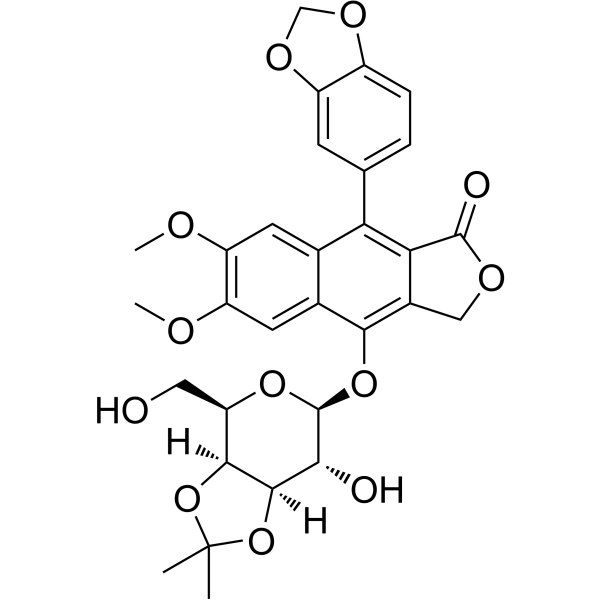
PHY34 is an inhibitor that inhibits ATP6V0A2 and CAS thereby inhibiting autophagy, and has a nanomolar effect. PHY34 inhibits cancer cell growth by inducing apoptosis and inhibits tumor growth in xenograft models. PHY34 can be used for research on high grade serous ovarian cancer .
|
-
-
- HY-179228
-
|
|
CTLA-4
TGF-beta/Smad
|
Cancer
|
|
AN02 is a derivative of Curcumin (HY-N0005). AN02 inhibits the proliferation and clonogenicity, migration and invasion of ovarian cancer cells. AN02 dose-dependently upregulates the expression of APC and mediates the degradation of CTLA-4 through SMAD4. In the small xenograft model, AN02 significantly inhibits tumor growth and reverses the tumor immune-suppressive microenvironment. AN02, when combined with Ipilimumab (HY-P9901), can enhance efficacy and inhibit epithelial-mesenchymal transition. AN02 can be used for the study of ovarian cancer .
|
-

-
- HY-P4144
-
|
Phor18-LHRH (338613); EP-100
|
GnRH Receptor
|
Endocrinology
Cancer
|
|
Onvitrelin ucalontide ([Phor18-LHRH (338613)]) is an analogue of luteinizing hormone releasing hormone (LHRH) with antineoplastic activity. Onvitrelin ucalontide is a peptide with sequences of KFAKFAKKFAKFAKKFAKQHWSYGLRPG. Onvitrelin ucalontide effectively inhibits breast cancer, ovarian cancer and prostate cancer xenografts in mouse model .
|
-

-
- HY-153221
-
|
|
CDK
|
Cancer
|
|
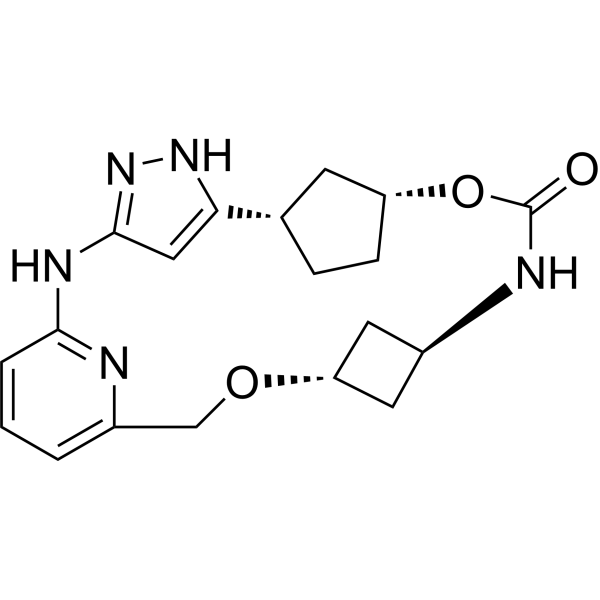
QR-6401 is an orally active and selective macrocyclic CDK2 inhibitor with IC50 values of 0.37, 10, 22, 34 and 45 nM for CDK2/E1, CDK9/T1, CDK1/A2, CDK6/D3 and CDK4/D1, respectively. QR-6401 has potent antitumor activity in an OVCAR3 ovarian cancer xenograft model. QR-6401 has the potential to be used in the study of cancer .
|
-
-
- HY-175257
-
|
|
PARP
Reactive Oxygen Species (ROS)
Apoptosis
NF-κB
ERK
Bcl-2 Family
TGF-β Receptor
EGFR
Cadherin
|
Cancer
|
|
Theophylline-platinum(IV) prodrug-1 is a PARP-1 inhibitor. Theophylline-platinum(IV) prodrug-1 enhances DNA
damage, ROS production, mitochondrial dysfunction, apoptosis and S-phase arrest, along with reducing invasion and metastasis in cells. Theophylline-platinum(IV) prodrug-1 exhibits superior antitumor activity in the xenograft SKOV3-BRCA1-KD tumor model. Theophylline-platinum(IV) prodrug-1 can be used for the study of ovarian cancer .
|
-

-
- HY-178325
-
|
|
Microtubule/Tubulin
Apoptosis
|
Cancer
|
|
Tubulin-IN-57 is a Tubulin inhibitor. Tubulin-IN-57 is a potent antiproliferative agent that inhibits clonogenic formation, migration, and invasion of ovarian cancer cells. Tubulin-IN-57 inhibits tubulin polymerization, which in turn induces G2/M arrest and apoptosis in SKOV3 cells. Tubulin-IN-57 demonstrates potent antitumor activity without observable toxicity in an SKOV3 xenograft model. Y60S can be used for the study of ovarian cancer .
|
-

-
- HY-177497
-
|
|
Histone Methyltransferase
Apoptosis
|
Cancer
|
|
SKLB-03220 is a selective and orally active EZH2 covalent inhibitor with an IC50 of 1.72 nM for EZH2 MUT. SKLB-03220 exhibits weak activities against other tested histone methyltransferases (HMTs) and kinases. SKLB-03220 displays noteworthy potency against ovarian cancer cell lines and induces cell apoptosis. SKLB-03220 significantly inhibits tumor growth in PA-1 xenograft model. SKLB-03220 can be used for the study of ovarian cancer .
|
-

-
- HY-179525
-
|
|
c-Myc
Microtubule/Tubulin
Apoptosis
|
Cancer
|
|
DL78 is an effective anti-mitotic agent. DL78 induces mitotic arrest, mitotic catastrophe and apoptosis in cancer cells by disrupting the interaction between Myc and α-tubulin. DL78 exhibits broad anti-cancer activity, especially against cancer cells with chromosomal instability and excessive expression of MYC. DL78 significantly reduces tumor burden in the OV81.2 xenograft model. DL78 can be used for the study of ovarian cancer .
|
-

-
- HY-186132
-
|
|
PROTACs
CDK
|
Cancer
|
|
PROTAC CDK2-pRb degrader-1 is an orally active PROTAC-class degrader of CDK2. PROTAC CDK2-pRb degrader-1 effectively inhibits the phosphorylation of retinoblastoma protein (Rb) at serine residues 807/811 by inducing ubiquitination and proteasomal degradation of CDK2. PROTAC CDK2-pRb degrader-1 exhibits significant activity against human cells (with EC50 values of 12 nM and 125 nM, respectively). In xenograft models, PROTAC CDK2-pRb degrader-1 effectively inhibits tumor growth and induces tumor stasis, making it suitable for research related to CCNE1-amplified cancers (such as ovarian cancer, gastric cancer, and breast cancer) .
|
-

-
- HY-186151
-
|
|
MDM-2/p53
Apoptosis
|
Cancer
|
|
UCI-LC0019 is a mutant p53 reactivator. UCI-LC0019 binds to mutant p53, induces wild-type-like conformational change, restores sequence-specific DNA binding activity, activates p53-dependent transcription programs, and does not act via thiol reactivity or glutathione depletion. UCI-LC0019 inhibits proliferation and induces apoptosis in cancer cells harboring mutant p53, with no significant effect on p53 null or wild-type p53 tumors cells. UCI-LC0019 exhibits anti-tumor activity in xenograft mouse models carrying p53R175H mutant tumors. UCI-LC0019 can be used for the research of cancer, such as ovarian cancer .
|
-

-
- HY-156484
-
|
|
PI3K
mTOR
|
Cancer
|
|
SPR519 is a selective, orally active dual PI3Kα/mTOR kinase inhibitor, with an IC50 of 0.03 μM against PI3Kα and an IC50 of 0.01 μM against mTOR. SPR519 exhibits anticancer effects in ovarian cancer and colon cancer xenograft models. SPR519 can be used for the research of solid tumors (ovarian cancer, colon cancer) .
|
-

-
- HY-P992441
-
|
|
Transmembrane Glycoprotein
|
Cancer
|
|
PHST001 is a humanized anti-CD24 antibody. PHST001 binds cell-surface CD24, blocks CD24-Siglec10 interaction, and engages Fc receptors to promote macrophage-mediated tumor cell phagocytosis. PHST001 inhibits growth of breast cancer and ovarian cancer, and reduces metastatic lesions in mouse xenograft models. PHST001 can be used for the research of triple negative breast cancer, HER2+ breast cancer, metastatic tumors, and ovarian cancer .
|
-

-
- HY-P992341
-
|
|
MMP
|
Cancer
|
|
D8P1C1 is a high-affinity ADAM17 inhibitor (with a Kd of 180 pM targeting ADAM17-ECD) that reduces the shedding and phosphorylation of EGFR ligands. D8P1C1 inhibits cancer cell proliferation in vitro and tumor growth in xenograft models. 89Zr-DFO-D8P1C1 radioimmunological PET imaging shows its substantial accumulation in ovarian tumor xenografts, serving as a platform for generating bispecific T-cell engager derivatives. D8P1C1 can be applied to research on related diseases including triple-negative breast cancer, various types of ovarian cancer, lung adenocarcinoma, glioma, and colon cancer .
|
-

-
- HY-177092
-
|
|
Antifolate
SHMT
Apoptosis
mTOR
Reactive Oxygen Species (ROS)
Mitochondrial Metabolism
|
Cancer
|
|
AGF347 is a potent and multi-targeted antifolate that targets serine hydroxymethyltransferase (SHMT)2 in the mitochondria and SHMT1 in the cytosol, and inhibits de novo purine biosynthesis. AGF347 induces apoptosis, inhibits mTOR signaling, decreases GSH pools, and increases ROS. AGF347 inhibits proliferation of Cisplatin (HY-17394) sensitive and resistant epithelial ovarian cancer (EOC) cells. AGF347 exhibits antitumor efficacy in SKOV3 EOC xenograft mouse models. AGF347 can be used for ovarian cancer research .
|
-

-
- HY-176957
-
|
|
Wee1
|
Cancer
|
|
PKMYT1-IN-11 (Example 1) is a PKMYT1 inhibitor with an IC50 of 4.49 nM. PKMYT1-IN-11 inhibits the proliferation of HCC1569 cells. When combined with Gemcitabine (HY-17026), PKMYT1-IN-11 shows a significant anti-tumor effect in the OVCAR3 xenograft mouse model. PKMYT1-IN-11 can be used for the study of various cancers such as breast cancer and ovarian cancer .
|
-

-
- HY-P992003
-
|
IKS01 Antibody
|
ADC Antibody
|
Cancer
|
|
IKS012 (IKS01) Antibody is a monoclonal antibody inhibitor targeting folate receptor α (FRA). IKS012 Antibody can be used to synthesize the antibody-drug conjugate (ADC) IKS012. IKS012 Antibody can be used to research related to platinum-resistant ovarian cancer .
|
-

-
- HY-183601A
-
|
|
Bcl-2 Family
Apoptosis
|
Cancer
|
|
Mcl-1-IN-22 hydrochloride is a tetrahydro-β-carboline-based Mcl-1 inhibitor with a Ki of 0.015 μM. Mcl-1-IN-22 hydrochloride shows antitumor activity, induces apoptosis and produces synergistic antitumor effects in combination with Cisplatin (HY-17394) and Paclitaxel (HY-B0015). Mcl-1-IN-22 hydrochloride can be used for the research of cancer, such as ovarian cancer .
|
-

-
- HY-184010
-
|
|
Ras
ERK
|
Cancer
|
|
KRASG12D-IN-8 is an orally active KRAS G12D inhibitor, with a Kd value of 0.003 nM for KRAS G12D and 0.024 nM for KRAS G12V. KRASG12D-IN-8 inhibits the activity of phosphorylated ERK in KRAS-mutated cells. KRASG12D-IN-8 induces tumor regression in ovarian cancer xenograft mouse models. KRASG12D-IN-8 can be used for the research of KRAS-mutated cancers .
|
-

-
- HY-183329
-
|
|
Microtubule/Tubulin
Apoptosis
|
Cancer
|
|
Tubulin polymerization-IN-92, an analog of KX-01 (HY-10340), is a potent orally active tubulin polymerization inhibitor that binds tubulin with a Ka of 1.29 μM. Tubulin polymerization-IN-92 simultaneously occupies the colchicine site in β-tubulin and a cavity in α-tubulin. Tubulin polymerization-IN-92 exerts antiproliferative activity, induces G2/M cell cycle arrest and apoptosis in cancer cells. Tubulin polymerization-IN-92 inhibits tumor growth in mouse xenograft models. Tubulin polymerization-IN-92 can be used for the research of colon cancer, cervical cancer, and Paclitaxel (HY-B0015)-resistant ovarian cancer .
|
-

-
- HY-179430
-
|
|
Mps1
|
Cancer
|
|
TTK-IN-5 is an orally active covalent threonine tyrosine kinase (TTK) inhibitor with selectivity (IC50 = 8.918 nM). TTK-IN-5 exhibits anti-proliferative potencies against MDA-MB-231, A2780, HCT116, HCC1569 and MKN1 cell lines (IC50 values of 0.113 μM, 0.476 μM, 3.136 μM, 3.649 μM, and 1.856 μM, respectively). TTK-IN-5 potently suppresses tumor growth without notable toxicity in A2780 and MDA-MB-231 xenograft mouse models. TTK-IN-5 can be used for the research of cancer such as breast cancer and ovarian cancer .
|
-

-
- HY-183601
-
|
|
Bcl-2 Family
Apoptosis
|
Cancer
|
|
Mcl-1-IN-22 is a selective Mcl-1 inhibitor with a Ki of 0.015 μM. Mcl-1-IN-22 binds selectively to Mcl-1, disrupts the Mcl-1/Bak complex to release free Bak, triggering intrinsic apoptosis. Mcl-1-IN-22 can be used for the research of ovarian cancer .
|
-

-
- HY-181071
-
|
|
DNA/RNA Synthesis
Drug Intermediate
|
Cancer
|
|
POLRMT-IN-3 is a photosensitive inhibitor of mitochondrial RNA polymerase (POLRMT). POLRMT-IN-3 is biologically inactive in the dark but rapidly releases the active parent compound LJ03 upon illumination with 405 nm light, enabling spatiotemporally precise inhibition of POLRMT. POLRMT-IN-3 exhibits antitumor activity and can be used in research on tumors such as pancreatic cancer and ovarian cancer .
|
-

-
- HY-181687
-
|
|
HSP
CDK
|
Cancer
|
|
Hsp90-IN-46 is a Hsp90 inhibitor. Hsp90-IN-46 exhibits broad-spectrum antiproliferative activity against tumor cell lines. Hsp90-IN-46 inhibits breast cancer cell proliferation by reducing colony formation and downregulating the proliferation marker Ki-67. Hsp90-IN-46 inhibits Hsp90 and its ATPase activity, downregulates the downstream substrate oncoproteins HER2 and CDK4, and moderately induces the heat shock response. Hsp90-IN-46 shows significant antitumor activity in a mouse model of triple-negative breast cancer tumor xenografts. Hsp90-IN-46 can be used for research on various cancers including triple-negative breast cancer, leukemia, non-small cell lung cancer, colon cancer, ovarian cancer, renal cancer, prostate cancer .
|
-

-
- HY-N1255A
-
|
(-)-Scoulerine hydrochloride; Discretamine hydrochloride
|
Apoptosis
PI3K
Akt
mTOR
Adrenergic Receptor
GABA Receptor
Beta-secretase
Bcl-2 Family
|
Cancer
|
|
Scoulerine ((-)-Scoulerine; Discretamine) hydrochloride is a multi-target inhibitor with anti-tumor and antioxidant activities. Scoulerine hydrochloride mainly targets the PI3K/Akt/mTOR signaling axis and α1D-adrenergic receptor, disrupts microtubule structure, and induces cell cycle arrest and apoptosis. Scoulerine hydrochloride effectively inhibits mitochondrial dehydrogenase activity, targets GABA receptors and BACE1, and suppresses the proliferation, migration, invasion, epithelial-mesenchymal transition and stem cell properties of cancer cells. Scoulerine hydrochloride also exhibits multiple pharmacological activities including anti-Plasmodium falciparum, antibacterial, antiemetic and antitussive effects, and regulates endoplasmic reticulum stress and mitochondrial function (modulates Bax, Bcl-2 and cytochrome c). Scoulerine hydrochloride is applicable to research related to leukemia, ovarian cancer, and colorectal cancer .
|
-

-
- HY-181540
-
|
|
Apelin Receptor (APJ)
|
Cancer
|
|
YL-GB063 is an Apelin receptor (APJ) antagonist. YL-GB063 inhibits Apelin-induced APJ β-arrestin recruitment (IC50 of 3.1 μM in HTLA cells). YL-GB063 has anti-cancer activity against ovarian cancer .
|
-

-
- HY-183558
-
-

-
- HY-181986
-
|
|
Lipase
Apoptosis
|
Cancer
|
|
ERX-208 is an anticancer agent that induces endoplasmic reticulum stress by targeting lysosomal acid lipase A (LIPA), ultimately leading to cancer cell apoptosis. ERX-208 can be used in ovarian cancer research .
|
-

-
- HY-P992163
-
|
|
Fc Receptor (FcR)
C-type Lectin-like Receptors (CTLRs)
|
Inflammation/Immunology
Cancer
|
|
23ME-01473 is an anti-ULBP6/2/5 antibody with enhanced Fc effector function, with a Kd of 0.053 nmol/L against hULBP6, 0.23 nmol/L against hULBP2, and 1.92 nmol/L against hULBP5. 23ME-01473 restores anti-tumor immunity by activating NKG2D and FcγRIIIa. 23ME-01473 exerts anti-cancer activity in non-small cell lung cancer PDX models. 23ME-01473 can be used for the research of non-small cell lung cancer .
|
-

-
- HY-182312
-
|
|
CDK
Apoptosis
|
Cancer
|
|
CTX-439 is an orally active, ATP-competitive small-molecule inhibitor of CDK12 and CDK13, with an IC50 of 3.1 nM and a Kd of 0.38 nM against CDK12, and an IC50 of 9.2 nM against CDK13. CTX-439 induces DNA damage and apoptosis in tumor cells. CTX-439 is applicable for the research of breast cancer and ovarian cancer .
|
-

-
- HY-185561
-
|
RC88
|
Mesothelin
|
Cancer
|
|
Misitatug blivedotin (RC88) is an antibody-drug conjugate (ADC) targeting mesothelin (MSLN). Misitatug blivedotin binds to mesothelin and exhibits dose‐dependent antitumor activity. Misitatug blivedotin can be used for the research of ovarian cancer, non-squamous non-small-cell lung carcinoma, cervical cancer .
|
-

| Art. -Nr. |
Produktname |
Target |
Research Area |
-
- HY-P4144
-
|
Phor18-LHRH (338613); EP-100
|
GnRH Receptor
|
Endocrinology
Cancer
|
|
Onvitrelin ucalontide ([Phor18-LHRH (338613)]) is an analogue of luteinizing hormone releasing hormone (LHRH) with antineoplastic activity. Onvitrelin ucalontide is a peptide with sequences of KFAKFAKKFAKFAKKFAKQHWSYGLRPG. Onvitrelin ucalontide effectively inhibits breast cancer, ovarian cancer and prostate cancer xenografts in mouse model .
|
| Art. -Nr. |
Produktname |
Target |
Research Area |
Image |
-
- HY-P991577
-
|
DS-8895A
|
Ephrin Receptor
|
Cancer
|
|
DS-8895(DS-8895A) is an anti-EphA2 monoclonal antibody with specific binding to EphA2 receptors and EphA2-expressing cells. DS-8895, when conjugated with 89Zr, 111In, or 125I, supports molecular imaging of EphA2 expression in xenograft models. DS-8895 allows noninvasive measurement of EphA2 expresssion in tumors in vivo. .
|
-

(5)
-
- HY-P990953
-
|
Gen1047
|
CD3
|
Cancer
|
|
Zubotamig (Gen1047) is an CD3E/VTCN1-targeting Ig(G1 -κ_G1 -λ2) type chimeric human antibody. The recommed isotype control is Human IgG1 kappa, Isotype Control (HY-P99001). Zubotamig induces T-cell mediated cytotoxicity of B7H4-positive tumor cells, triggers T-cell activation, and induces cytokine release from T cells in the presence of B7H4-expressing tumor cells. Zubotamig demonstrates antitumor activity in mouse patient-derived xenograft (PDX) models. Zubotamig can be used for the research of solid cancers (including breast, ovarian and lung cancer) .
|
-
(5)
-
- HY-P992441
-
|
|
Transmembrane Glycoprotein
|
Cancer
|
|
PHST001 is a humanized anti-CD24 antibody. PHST001 binds cell-surface CD24, blocks CD24-Siglec10 interaction, and engages Fc receptors to promote macrophage-mediated tumor cell phagocytosis. PHST001 inhibits growth of breast cancer and ovarian cancer, and reduces metastatic lesions in mouse xenograft models. PHST001 can be used for the research of triple negative breast cancer, HER2+ breast cancer, metastatic tumors, and ovarian cancer .
|
-
(5)
-
- HY-P992341
-
|
|
MMP
|
Cancer
|
|
D8P1C1 is a high-affinity ADAM17 inhibitor (with a Kd of 180 pM targeting ADAM17-ECD) that reduces the shedding and phosphorylation of EGFR ligands. D8P1C1 inhibits cancer cell proliferation in vitro and tumor growth in xenograft models. 89Zr-DFO-D8P1C1 radioimmunological PET imaging shows its substantial accumulation in ovarian tumor xenografts, serving as a platform for generating bispecific T-cell engager derivatives. D8P1C1 can be applied to research on related diseases including triple-negative breast cancer, various types of ovarian cancer, lung adenocarcinoma, glioma, and colon cancer .
|
-
(5)
-
- HY-P992003
-
|
IKS01 Antibody
|
ADC Antibody
|
Cancer
|
|
IKS012 (IKS01) Antibody is a monoclonal antibody inhibitor targeting folate receptor α (FRA). IKS012 Antibody can be used to synthesize the antibody-drug conjugate (ADC) IKS012. IKS012 Antibody can be used to research related to platinum-resistant ovarian cancer .
|
-
(5)
-
- HY-P992163
-
|
|
Fc Receptor (FcR)
C-type Lectin-like Receptors (CTLRs)
|
Inflammation/Immunology
Cancer
|
|
23ME-01473 is an anti-ULBP6/2/5 antibody with enhanced Fc effector function, with a Kd of 0.053 nmol/L against hULBP6, 0.23 nmol/L against hULBP2, and 1.92 nmol/L against hULBP5. 23ME-01473 restores anti-tumor immunity by activating NKG2D and FcγRIIIa. 23ME-01473 exerts anti-cancer activity in non-small cell lung cancer PDX models. 23ME-01473 can be used for the research of non-small cell lung cancer .
|
-
(5)
| Art. -Nr. |
Produktname |
Category |
Target |
Chemical Structure |
-
- HY-N1255A
-
|
(-)-Scoulerine hydrochloride; Discretamine hydrochloride
|
Structural Classification
Alkaloids
Phenols
Polyphenols
Umbelliferae
Plants
Isoquinoline Alkaloids
Carphephorus corymbosus (Nutt.) Torr. & A.Gray
Source Classification
|
Apoptosis
PI3K
Akt
mTOR
Adrenergic Receptor
GABA Receptor
Beta-secretase
Bcl-2 Family
|
|
Scoulerine ((-)-Scoulerine; Discretamine) hydrochloride is a multi-target inhibitor with anti-tumor and antioxidant activities. Scoulerine hydrochloride mainly targets the PI3K/Akt/mTOR signaling axis and α1D-adrenergic receptor, disrupts microtubule structure, and induces cell cycle arrest and apoptosis. Scoulerine hydrochloride effectively inhibits mitochondrial dehydrogenase activity, targets GABA receptors and BACE1, and suppresses the proliferation, migration, invasion, epithelial-mesenchymal transition and stem cell properties of cancer cells. Scoulerine hydrochloride also exhibits multiple pharmacological activities including anti-Plasmodium falciparum, antibacterial, antiemetic and antitussive effects, and regulates endoplasmic reticulum stress and mitochondrial function (modulates Bax, Bcl-2 and cytochrome c). Scoulerine hydrochloride is applicable to research related to leukemia, ovarian cancer, and colorectal cancer .
|
-
Your information is safe with us. * Required Fields.
Inquiry Information
- Produktname:
- Art. -Nr.:
- Menge:
- MCE Japan Authorized Agent:








