1. Apoptosis Metabolic Enzyme/Protease NF-κB Immunology/Inflammation
  2. Caspase Apoptosis RIP kinase Glutathione Peroxidase Reactive Oxygen Species (ROS)
  3. Z-VAD-FMK

Z-VAD-FMK  (Synonyms: Z-VAD(OH)-FMK)

Art. -Nr.: HY-16658B Reinheit: 98.0%
Handling Instructions Technical Support

Z-VAD-FMK is a pan-caspase inhibitor and also an ICE-like protease inhibitor, which inhibits apoptosis by preventing the processing of CPP32 to its active form. Z-VAD-FMK sensitivity varies primarily due to differential expression of receptor-interacting protein 1 (RIP1). Z-VAD-FMK limits the cryopreservation-induced apoptosis by reducing caspase-3 activity of in vitro produced bovine embryos. Z-VAD-FMK is immunosuppressive in vitro and inhibits T cell proliferation without blocking the processing of caspase-8 and caspase-3. Z-VAD-FMK leads to a decrease in intracellular glutathione (GSH) with a concomitant increase in reactive oxygen species (ROS) levels in activated T cells. Z-VAD-FMK is due to oxidative stress via the depletion of GSH. Z-VAD-FMK can be used for the study of acute pancreatitis.

Nur für Forschungszwecke. Wir verkaufen nicht an Patienten.

CAS. Nr. : 161401-82-7

Größe Preis Verfügbarkeit Menge
Solid + Solvent (Highly Recommended)
10 mM * 1 mL in DMSO
ready for reconstitution
Auf Lager
Solution
10 mM * 1 mL in DMSO Auf Lager
Solid
1 mg Auf Lager
5 mg Auf Lager
10 mg Auf Lager
25 mg Auf Lager
50 mg Auf Lager
100 mg Auf Lager
200 mg   Angebot einholen  
500 mg   Angebot einholen  

* Bitte wählen Sie Menge, bevor Sie Artikel hinzufügen.

This product is a controlled substance and not for sale in your territory.

Kundenbewertung

Based on 740 publication(s) in Google Scholar

Other Forms of Z-VAD-FMK:

Top Publications Citing Use of Products

740 Publications Citing Use of MCE Z-VAD-FMK

WB
IF
Cell Proliferation/Viability Assay

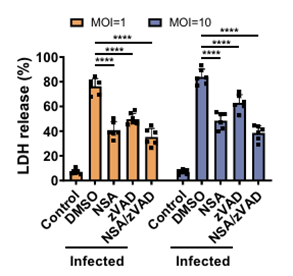
    Z-VAD-FMK purchased from MedChemExpress. Usage Cited in: Nat Commun. 2025 Aug 7;16(1):7309.  [Abstract]

    hBMECs were pretreated with Necrosulfonamide (NSA) (20 μM) or zVAD alone or in combination for 0.5 h, followed by infection with RS218 at an MOI of 1 or 10. LDH release (n=6 biologically independent samples) was assayed.

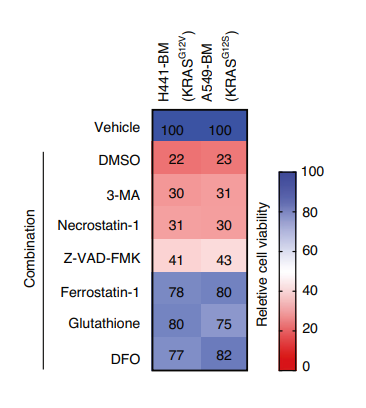
    Z-VAD-FMK purchased from MedChemExpress. Usage Cited in: Bone Res. 2024 Aug 27;12(1):47.  [Abstract]

    Cell death induced by HOXC10 inhibition plus TTI-101 cotreatment was rescued by ferroptosis inhibitors. Cells with or without knockdown of HOXC10 were pretreated with HOXC10 TTI-101 for 12 h and then treated the indicated cell death inhibitors (3-MA-1 mmol/L, Necrostatin-1-20 μmol/L, Ferrostatin-1-2 μmol/L, Z-VAD-FMK-10 μmol/L, Glutathione-1 mmol/L, Deferoxamine (DFO-100 μmol/L)) for an additional 72 h. Effect on ferroptosis inhibitors rescuing cell death was assessed by cell viability assays.

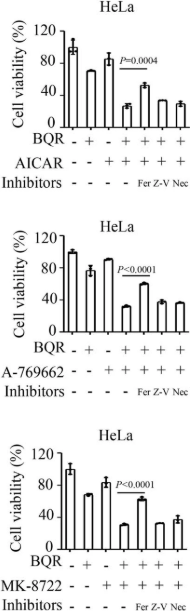
    Z-VAD-FMK purchased from MedChemExpress. Usage Cited in: Nat Cell Biol. 2023 Jun;25(6):836-847.  [Abstract]

    Cell viability of HeLa cells treated with brequinar (0.3 μM) or/and AICAR (40 μM)/A-769662 (200 μM)/MK-8722 (1 μM) for 72 h following pretreatment with vehicle or cell death inhibitors for 24 h. Ferr-1 (10 μM), Z-VAD-FMK (10 μM), necrosulfonamide (2 μM).

    Z-VAD-FMK purchased from MedChemExpress. Usage Cited in: Adv Funct Mater. 2023 May 14.

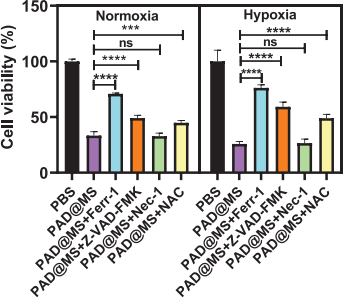
    The viability of MC38 cells treated with PAD@MS for 48 h in the presence or absence of 10 µM Ferr-1 (Ferrostatin-1), 20 µM Nec-1 (Necrostatin-1), 10 µM Z-VAD-FMK, and 1 mM NAC.

    Z-VAD-FMK purchased from MedChemExpress. Usage Cited in: Adv Funct Mater. 2023 May 14.

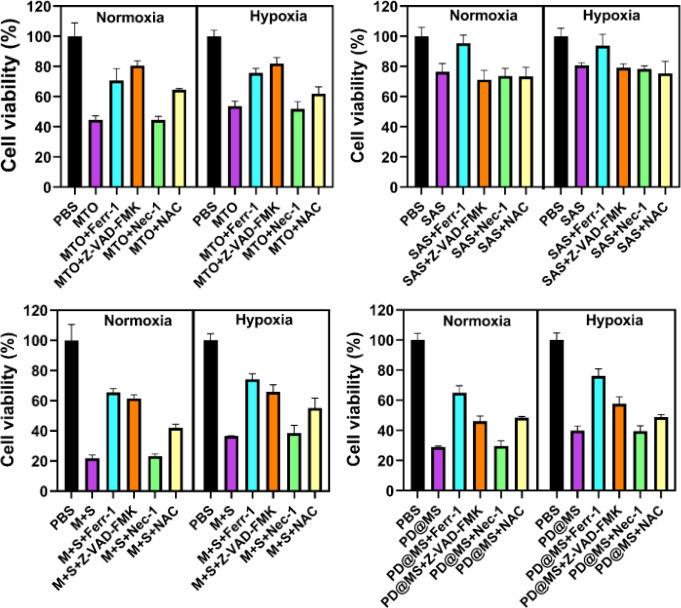
    The viability of MC38 cells treated with (A) MTO, (B) SAS, (C) M+S, and (D) PD@MS for 48 h in the presence or absence of 10 µM Ferr-1, 20 µM Nec-1, 10 µM Z-VADFMK, and 1 mM NAC.

    Z-VAD-FMK purchased from MedChemExpress. Usage Cited in: Nat Microbiol. 2022 Jul;7(7):1041-1053.  [Abstract]

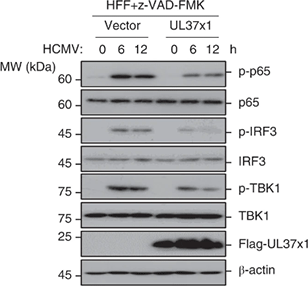
    HFFs stably expressing UL37x1 or empty vector are infected with HCMV in the presence of z-VAD-FMK. At 0, 6 and 12 h.

    Z-VAD-FMK purchased from MedChemExpress. Usage Cited in: Redox Biol. 2022 Oct;56:102435.  [Abstract]

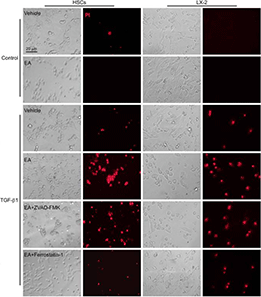
    Primary HSCs and LX-2 cells are treated with EA (LX-2 cells: 40 μM; primary HSCs: 45 μM), Ferrostatin-1 (1 μM) and Z-VAD-FMK (10 μM), and cells are stained with PI (red fluorescence) to examine the dead cells.

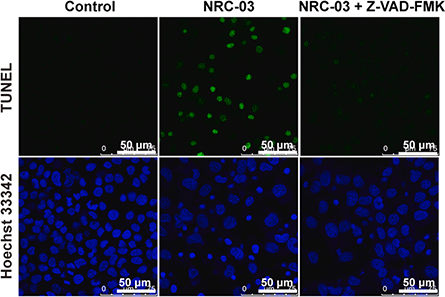
    Z-VAD-FMK purchased from MedChemExpress. Usage Cited in: Redox Biol. 2022 Aug;54:102355.

    In CAL-27 cells, Z-VAD-FMK (50 μM; 4 hours) treatment counteracted the NRC-03-induced cytotoxicity and apoptosis.

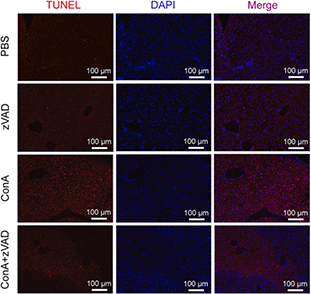
    Z-VAD-FMK purchased from MedChemExpress. Usage Cited in: J Autoimmun. 2022 Dec:133:102904.  [Abstract]

    C57BL/6 are treated with Concanavalin A (12 μg/g) alone or zVAD (20 μg/g) alone or zVAD (20 μg/g) + Concanavalin A (12 μg/g) at indicated times. The number of apoptotic cells in the zVAD + Concanavalin A treated group is markedly reduced compared with that observed in the ConA-treated group.

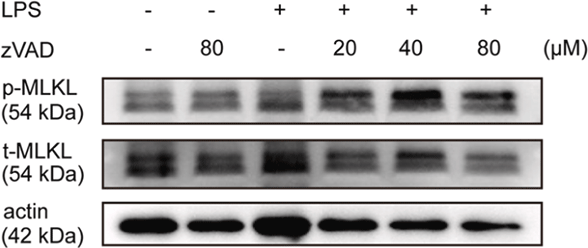
    Z-VAD-FMK purchased from MedChemExpress. Usage Cited in: J Autoimmun. 2022 Dec:133:102904.  [Abstract]

    After being treated with zVAD (0, 20, 40, 80 μM) for 30 min, the BMDMs are followed by the administration of LPS (100 ng/ml) for 24 h.

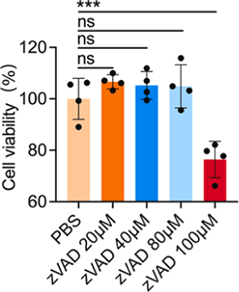
    Z-VAD-FMK purchased from MedChemExpress. Usage Cited in: J Autoimmun. 2022 Dec:133:102904.  [Abstract]

    The BMDMs are cultured with different concentrations of zVAD (0, 20, 40, 80, 100 μM) for 24 h.

    Z-VAD-FMK purchased from MedChemExpress. Usage Cited in: Phytother Res. 2023 Feb;37(2):689-701.  [Abstract]

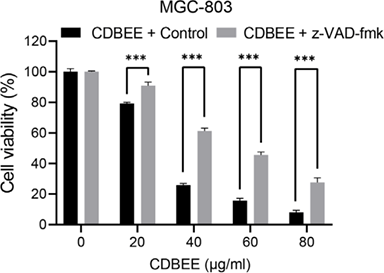
    z-VAD-fmk (5 μM; 4 h) weakens CDBEE-induced apoptosis in MGC-803 and HGC-27 cells.

    Z-VAD-FMK purchased from MedChemExpress. Usage Cited in: Bioact Mater. 2021 Nov 19;13:23-36.  [Abstract]

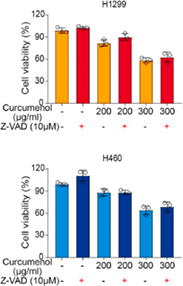
    H1299 and H460 cells are treated with curcumenol with or without Z-VAD-FMK (10 μM) for 24 h, the cell viability is detected.

    Z-VAD-FMK purchased from MedChemExpress. Usage Cited in: Adv Sci (Weinh). 2021 Feb 8;8(8):2002874.  [Abstract]

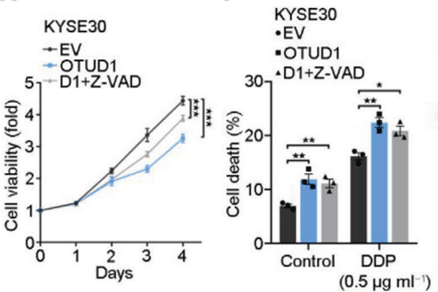
    In vitro growth of KYSE30 cells expressing EV or OTUD1 and treated with or without Z‐VAD-FMK (50 μM).

    Z-VAD-FMK purchased from MedChemExpress. Usage Cited in: Adv Sci (Weinh). 2021 Feb 8;8(8):2002874.  [Abstract]

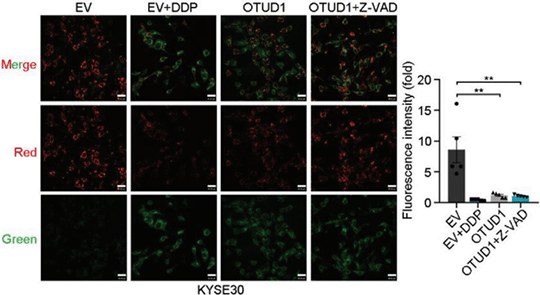
    Representative image and statistical analyses of JC‐1 staining of KYSE30 cells expressing EV or OTUD1 and treated with DDP or Z‐VAD-FMK (50 μM). Z‐VAD-FMK treatment could not completely inhibit the proapoptotic function of OTUD1.

    Z-VAD-FMK purchased from MedChemExpress. Usage Cited in: Adv Sci (Weinh). 2021 Feb 8;8(8):2002874.  [Abstract]

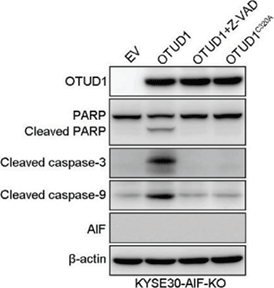
    IB further confirmed the activation of the caspase‐dependent apoptotic pathway in OTUD1‐overexpressing cells with AIF ablation, which is diminished by VAD-FMK (50 μM).

    Z-VAD-FMK purchased from MedChemExpress. Usage Cited in: Acta Pharm Sin B. 2021 May;11(5):1246-1260.

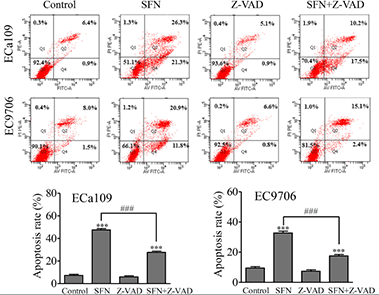
    Apoptosis of ECa109 and EC9706 cells treated with SFN (40 μM) and Z-VAD-FMK (20 μM) alone or combination for 48 h is analyzed by flow cytometry.

    Z-VAD-FMK purchased from MedChemExpress. Usage Cited in: Theranostics. 2020 Jun 19;10(17):7710-7729.  [Abstract]

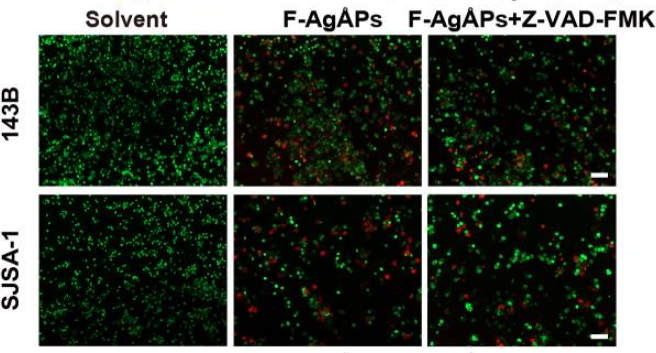
    When the cells were co-treated with Z-VAD-FMK (50 μM; 24 hours), the F-AgÅPs-induced inhibition of survival of 143B and SJSA-1 is significantly attenuated, as revealed by live/dead cell staining.

    Z-VAD-FMK purchased from MedChemExpress. Usage Cited in: Acta Biomater. 2020 Jun;109:229-243.  [Abstract]

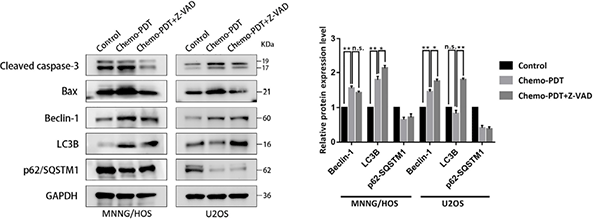
    The decreased cleaved caspase-3 and Bax proteins showed that Z-VAD successfully inhibited Chemo-PDT induced apoptosis.

    Alle Caspase Isoform-spezifische Produkte anzeigen:

    Alle RIP kinase Isoform-spezifische Produkte anzeigen:

    Alle Glutathione Peroxidase Isoform-spezifische Produkte anzeigen:

    • Biologische Aktivität

    • Reinheit & Dokumentation

    • Verweise

    • Kundenbewertung

    Beschreibung

    Z-VAD-FMK is a pan-caspase inhibitor and also an ICE-like protease inhibitor, which inhibits apoptosis by preventing the processing of CPP32 to its active form. Z-VAD-FMK sensitivity varies primarily due to differential expression of receptor-interacting protein 1 (RIP1). Z-VAD-FMK limits the cryopreservation-induced apoptosis by reducing caspase-3 activity of in vitro produced bovine embryos. Z-VAD-FMK is immunosuppressive in vitro and inhibits T cell proliferation without blocking the processing of caspase-8 and caspase-3. Z-VAD-FMK leads to a decrease in intracellular glutathione (GSH) with a concomitant increase in reactive oxygen species (ROS) levels in activated T cells. Z-VAD-FMK is due to oxidative stress via the depletion of GSH. Z-VAD-FMK can be used for the study of acute pancreatitis[1][2][3][4][5][6][7].

    IC50 & Target[1]

    Caspase


    In Vitro

    Z-VAD-FMK (100 μM, 8 h) can induce both autophagy and necrosis in J774A.1 macrophages, indicating that it can trigger non-apoptotic cell death pathways[2].
    Z-VAD-FMK (20 μM, 48 h) significantly improves the cryotolerance of Bovine in vitro produced blastocysts by inhibiting apoptosis, and improves the survival and development of embryos after thawing[3].
    Z-VAD-FMK (20 μM, 48 h) directly inhibits caspase-3 activation, demonstrating that it improves the cryotolerance of bovine blastocysts by blocking the apoptosis pathway[3].
    Z-VAD-FMK (0-100 μM, 72 h) dose-dependently inhibits T cell proliferation mediated through the co-stimulation with anti-CD3 and anti-CD28[4].
    Z-VAD-FMK (50-100 μM, 16 h) significantly inhibits FasL-induced T cell apoptosis and caspase-8/caspase-3 treatment[4].
    Z-VAD-FMK (25-100 μM, 6-24 h) can deplete and activate GSH in anti-CD3 antibody-pretreated peripheral blood mononuclear cells (PBMCs) following prolonged incubation[5].
    Z-VAD-FMK (25-100 μM, 6-24 h) significantly increases ROS levels in primary T cells[5].

    MedChemExpress (MCE) has not independently confirmed the accuracy of these methods. They are for reference only.

    Western Blot Analysis[4]

    Cell Line: FasL-induced T cells
    Concentration: 50 μM, 100 μM
    Incubation Time: 16 h
    Result: Effectively inhibited caspase activity in the apoptosis model, but had no effect on T cell activation.
    In Vivo

    Z-VAD-FMK (3 mg/kg, i.p., once every other day, for 3 months) can reduce inflammation and mucus secretion in mice induced by cigarette smoke[6].
    Z-VAD-FMK (50 μmol/L (0.3 mL), i.p., 30 mins before modeling) significantly reduces severe acute pancreatitis (SAP)-induced lung tissue pathological damage in a SAP model in rats[7].

    MedChemExpress (MCE) has not independently confirmed the accuracy of these methods. They are for reference only.

    Animal Model: Thirty-two 6-7-week-old male C57BL/6J mice were exposed to cigarette smoke (CS)[6].
    Dosage: 3 mg/kg
    Administration: I.P., once every other day, for 3 months
    Result: Significantly reduced airway inflammation and emphysema lesions caused by CS exposure.
    Lowered serum IL-1β, IL-8, and IL-1β levels in BALF.
    Had no significant inhibitory effect on mucus secretion (Muc5ac).
    Animal Model: Seventy-two male Sprague-Dawley rats (weighing 250-300 g) were anesthetized by intraperitoneal injection of ketamine (100 mg/kg), followed by laparotomy and retrograde injection of 5% sodium taurocholate (1.0 mL/kg) into the pancreatic duct via the duodenal papilla[7].
    Dosage: 50 μmol/L (0.3 mL)
    Administration: I.p., 30 mins before modeling
    Result: Significantly alleviated SAP-induced pathological damage to lung tissue (edema, inflammatory infiltration, and hemorrhage).
    Inhibiting cleaved caspase-3 expression blocked lung cell apoptosis.
    Reduced myeloperoxidase (MPO) activity and inflammatory cytokine (IL-1β, TNF-α) levels, inhibiting neutrophil infiltration and inflammatory responses.
    Molekulargewicht

    453.46

    Formel

    C21H28FN3O7

    CAS. Nr.
    Appearance

    Solid

    Color

    White to light yellow

    SMILES

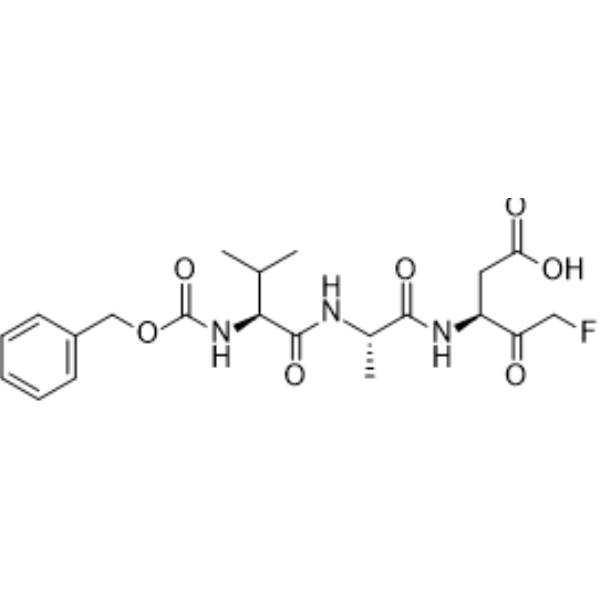
    O=C(N[C@H](C(N[C@@H](C)C(N[C@@H](CC(O)=O)C(CF)=O)=O)=O)C(C)C)OCC1=CC=CC=C1

    Versand

    Room temperature in continental US; may vary elsewhere.

    Speicherung

    4°C, sealed storage, away from moisture and light

    *In solvent : -80°C, 6 months; -20°C, 1 month (sealed storage, away from moisture and light)

    Lösungsmittel & Löslichkeit
    In Vitro: 

    DMSO : 100 mg/mL (220.53 mM; Need ultrasonic; Hygroscopic DMSO has a significant impact on the solubility of product, please use newly opened DMSO)

    Preparing
    Stock Solutions
    Concentration Solvent Mass 1 mg 5 mg 10 mg
    1 mM 2.2053 mL 11.0263 mL 22.0527 mL
    5 mM 0.4411 mL 2.2053 mL 4.4105 mL
    View the Complete Stock Solution Preparation Table

    * Please refer to the solubility information to select the appropriate solvent. Once prepared, please aliquot and store the solution to prevent product inactivation from repeated freeze-thaw cycles.
    Storage method and period of stock solution: -80°C, 6 months; -20°C, 1 month (sealed storage, away from moisture and light). When stored at -80°C, please use it within 6 months. When stored at -20°C, please use it within 1 month.

    • Molaritätsrechner

    • Verdünnungsrechner
    Mass (g) = Concentration (mol/L) × Volume (L) × Molecular Weight (g/mol)

    Mass
    =
    Concentration
    ×
    Volume
    ×
    Molecular Weight *

    Concentration (start) × Volume (start) = Concentration (final) × Volume (final)

    This equation is commonly abbreviated as: C1V1 = C2V2

    Concentration (start)

    C1

    ×
    Volume (start)

    V1

    =
    Concentration (final)

    C2

    ×
    Volume (final)

    V2

    In Vivo:

    Select the appropriate dissolution method based on your experimental animal and administration route.

    For the following dissolution methods, please ensure to first prepare a clear stock solution using an In Vitro approach and then sequentially add co-solvents:
    To ensure reliable experimental results, the clarified stock solution can be appropriately stored based on storage conditions. As for the working solution for in vivo experiments, it is recommended to prepare freshly and use it on the same day.
    The percentages shown for the solvents indicate their volumetric ratio in the final prepared solution. If precipitation or phase separation occurs during preparation, heat and/or sonication can be used to aid dissolution.

    • Protocol 1

      Add each solvent one by one:  10% DMSO    40% PEG300    5% Tween-80    45% Saline

      Solubility: ≥ 2.08 mg/mL (4.59 mM); Clear solution

      This protocol yields a clear solution of ≥ 2.08 mg/mL (saturation unknown).

      Taking 1 mL working solution as an example, add 100 μL DMSO stock solution (20.8 mg/mL) to 400 μL PEG300, and mix evenly; then add 50 μL Tween-80 and mix evenly; then add 450 μL Saline to adjust the volume to 1 mL.

      Preparation of Saline: Dissolve 0.9 g sodium chloride in ddH₂O and dilute to 100 mL to obtain a clear Saline solution.
    • Protocol 2

      Add each solvent one by one:  10% DMSO    90% (20% SBE-β-CD in Saline)

      Solubility: 2.08 mg/mL (4.59 mM); Suspended solution; Need ultrasonic

      This protocol yields a suspended solution of 2.08 mg/mL. Suspended solution can be used for oral and intraperitoneal injection.

      Taking 1 mL working solution as an example, add 100 μL DMSO stock solution (20.8 mg/mL) to 900 μL 20% SBE-β-CD in Saline, and mix evenly.

      Preparation of 20% SBE-β-CD in Saline (4°C, storage for one week): 2 g SBE-β-CD powder is dissolved in 10 mL Saline, completely dissolve until clear.
    In Vivo Dissolution Calculator
    Please enter the basic information of animal experiments:

    Dosage

    mg/kg

    Animal weight
    (per animal)

    g

    Dosing volume
    (per animal)

    μL

    Number of animals

    Recommended: Prepare an additional quantity of animals to account for potential losses during experiments.
    Please enter your animal formula composition:
    %
    DMSO +
    +
    %
    Tween-80 +
    %
    Saline
    Recommended: Keep the proportion of DMSO in working solution below 2% if your animal is weak.
    The co-solvents required include: DMSO, . All of co-solvents are available by MedChemExpress (MCE). , Tween 80. All of co-solvents are available by MedChemExpress (MCE).
    Calculation results:
    Working solution concentration: mg/mL
    Method for preparing stock solution: mg drug dissolved in μL  DMSO (Stock solution concentration: mg/mL).

    *In solvent : -80°C, 6 months; -20°C, 1 month (sealed storage, away from moisture and light)

    The concentration of the stock solution you require exceeds the measured solubility. The following solution is for reference only. If necessary, please contact MedChemExpress (MCE).
    Method for preparing in vivo working solution for animal experiments: Take μL DMSO stock solution, add μL . μL , mix evenly, next add μL Tween 80, mix evenly, then add μL Saline.
     If the continuous dosing period exceeds half a month, please choose this protocol carefully.
    Please ensure that the stock solution in the first step is dissolved to a clear state, and add co-solvents in sequence. You can use ultrasonic heating (ultrasonic cleaner, recommended frequency 20-40 kHz), vortexing, etc. to assist dissolution.
    Reinheit & Dokumentation

    Purity: 99.76%

    Verweise

    Complete Stock Solution Preparation Table

    * Please refer to the solubility information to select the appropriate solvent. Once prepared, please aliquot and store the solution to prevent product inactivation from repeated freeze-thaw cycles.
    Storage method and period of stock solution: -80°C, 6 months; -20°C, 1 month (sealed storage, away from moisture and light). When stored at -80°C, please use it within 6 months. When stored at -20°C, please use it within 1 month.

    Optional Solvent Concentration Solvent Mass 1 mg 5 mg 10 mg 25 mg
    DMSO 1 mM 2.2053 mL 11.0263 mL 22.0527 mL 55.1317 mL
    5 mM 0.4411 mL 2.2053 mL 4.4105 mL 11.0263 mL
    10 mM 0.2205 mL 1.1026 mL 2.2053 mL 5.5132 mL
    15 mM 0.1470 mL 0.7351 mL 1.4702 mL 3.6754 mL
    20 mM 0.1103 mL 0.5513 mL 1.1026 mL 2.7566 mL
    25 mM 0.0882 mL 0.4411 mL 0.8821 mL 2.2053 mL
    30 mM 0.0735 mL 0.3675 mL 0.7351 mL 1.8377 mL
    40 mM 0.0551 mL 0.2757 mL 0.5513 mL 1.3783 mL
    50 mM 0.0441 mL 0.2205 mL 0.4411 mL 1.1026 mL
    60 mM 0.0368 mL 0.1838 mL 0.3675 mL 0.9189 mL
    80 mM 0.0276 mL 0.1378 mL 0.2757 mL 0.6891 mL
    100 mM 0.0221 mL 0.1103 mL 0.2205 mL 0.5513 mL
    • No file chosen (Maximum size is: 1024 Kb)
    • If you have published this work, please enter the PubMed ID.
    • Your name will appear on the site.
    Help & FAQs
    • Do most proteins show cross-species activity?

      Species cross-reactivity must be investigated individually for each product. Many human cytokines will produce a nice response in mouse cell lines, and many mouse proteins will show activity on human cells. Other proteins may have a lower specific activity when used in the opposite species.

    Ihre kürzlich angesehenen Produkte:

    Online-Anfrage

    Your information is safe with us. * Required Fields.

    Produktname


    Requested Quantity *

    Name des Antragstellers *


    Anrede

    E-Mail-Addresse *


    Telefonnummer *

    Department


    Name der Organisation *

    City

    Bundesland

    Country or Region *


    Bemerkungen

    Massenanfrage

    Inquiry Information

    Produktname:
    Z-VAD-FMK
    Art. -Nr.:
    HY-16658B
    Menge:
    MCE Japan Authorized Agent: