1. Others Vitamin D Related/Nuclear Receptor Metabolic Enzyme/Protease
  2. Androgen Receptor Environmental Pollutants Endogenous Metabolite
  3. DHEA

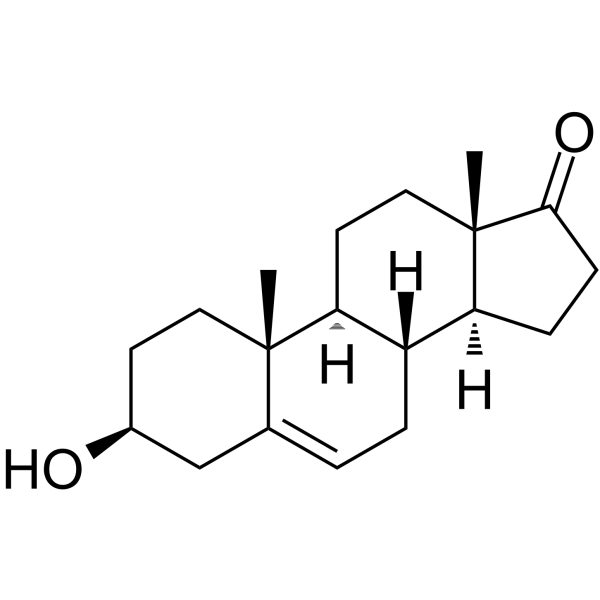
DHEA  (Synonyms: Prasterone; Dehydroisoandrosterone; Dehydroepiandrosterone)

Cat. No.: HY-14650 Purity: 99.94%
Handling Instructions Technical Support

DHEA (Prasterone) is one of the most abundant steroid hormones. DHEA (Prasterone) mediates its action via multiple signaling pathways involving specific membrane receptors and via transformation into androgen and estrogen derivatives (e.g., androgens, estrogens, 7α and 7β DHEA, and 7α and 7β epiandrosterone derivatives) acting through their specific receptors.

For research use only. We do not sell to patients.

CAS No. : 53-43-0

Size Price Stock Quantity
Solid + Solvent (Highly Recommended)
10 mM * 1 mL in DMSO
ready for reconstitution
In-stock
Solution
10 mM * 1 mL in DMSO In-stock
Solid
500 mg In-stock
1 g In-stock
5 g In-stock
10 g In-stock
50 g   Get quote  

* Please select Quantity before adding items.

This product is a controlled substance and not for sale in your territory.

Customer Review

Based on 50 publication(s) in Google Scholar

Other Forms of DHEA:

Top Publications Citing Use of Products

50 Publications Citing Use of MCE DHEA

Histological Imaging/Staining
WB
In Vivo Efficacy Study
RT-PCR

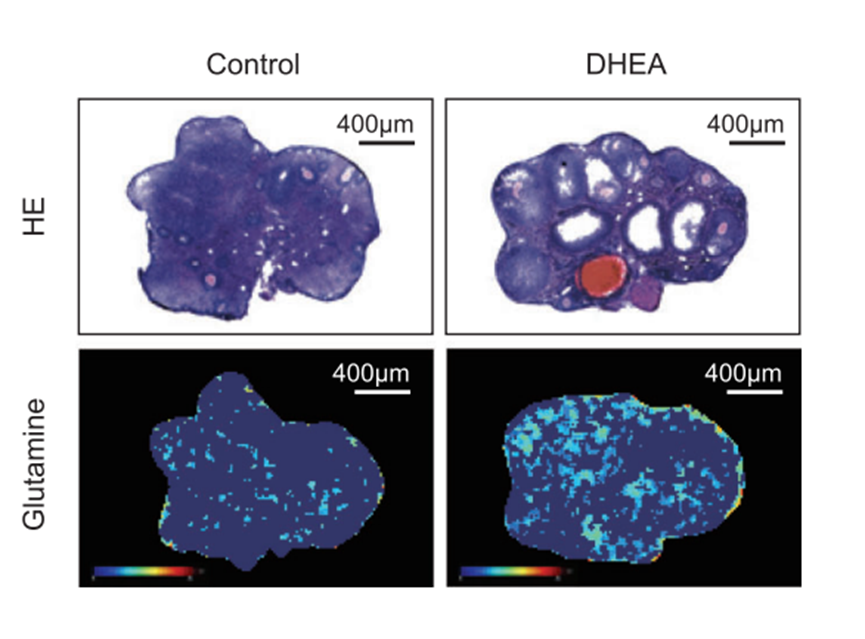
    DHEA purchased from MedChemExpress. Usage Cited in: Nat Commun. 2025 Aug 15;16(1):7611.  [Abstract]

    Representative images of hematoxylin and eosin (HE) staining and MALDI mass spectrometry imaging of Gln on murine ovaries. Gln levels increased within granulosa cells of the DHEA (600 mg/kg; i.p.; 21 consecutive days) group.

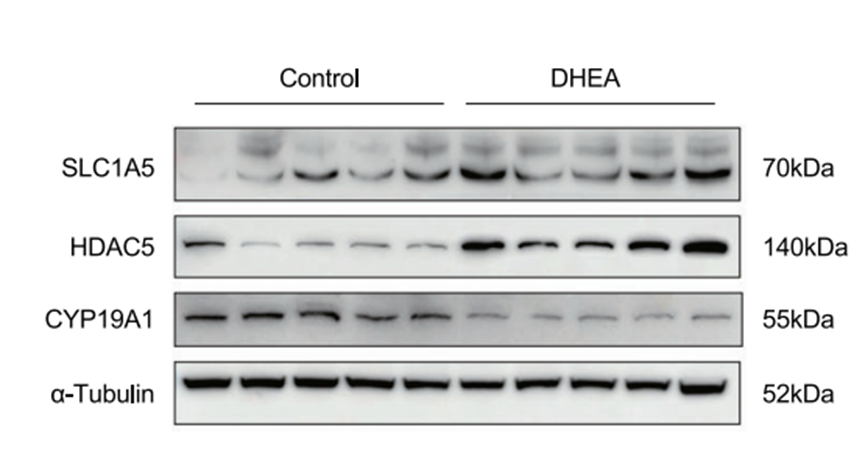
    DHEA purchased from MedChemExpress. Usage Cited in: Nat Commun. 2025 Aug 15;16(1):7611.  [Abstract]

    Western blots analysis of SLC1A5 and HDAC5 were significantly elevated, whereas CYP19A1 decreased. in the ovaries of Control and DHEA (600 mg/kg; i.p.; 21 consecutive days)-treated mice.

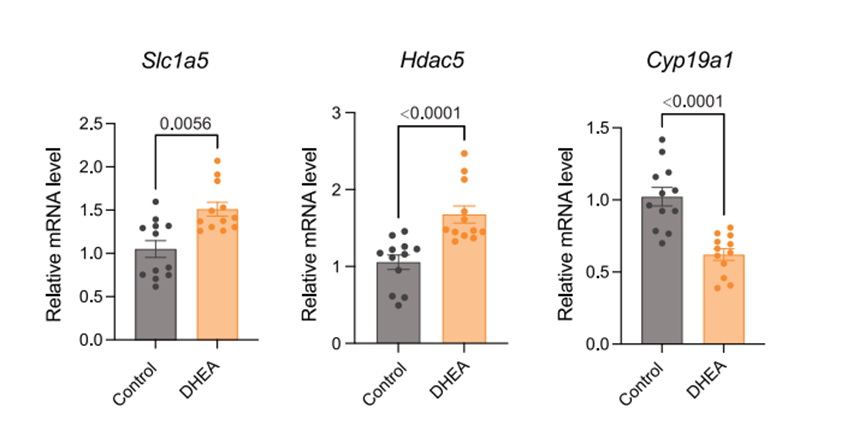
    DHEA purchased from MedChemExpress. Usage Cited in: Nat Commun. 2025 Aug 15;16(1):7611.  [Abstract]

    mRNA expression of SLC1A5 and HDAC5 were significantly elevated, whereas CYP19A1 decreased in ovaries collected from Control and DHEA (600 mg/kg; i.p.; 21 consecutive days)-treated mice determined by qPCR.

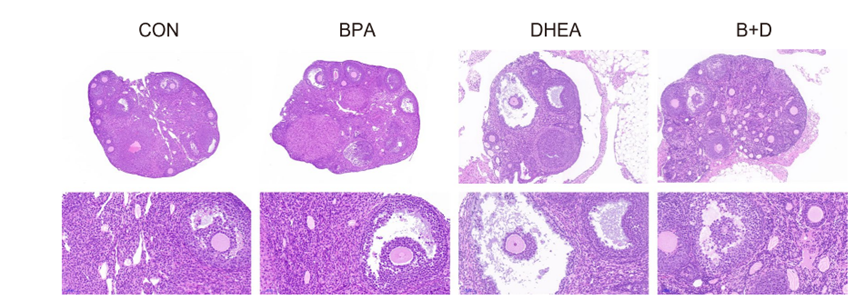
    DHEA purchased from MedChemExpress. Usage Cited in: Cell Commun Signal. 2024 Jan 10;22(1):28.  [Abstract]

    Representative ovary sections were stained with H&E, DHEA (60 mg/kg/day; s.c.; 21 days) treatment resulted in a higher number of cystic follicles, thinner granulosa cell layers, and a lower number of corpora lutea compared to the control treatment.

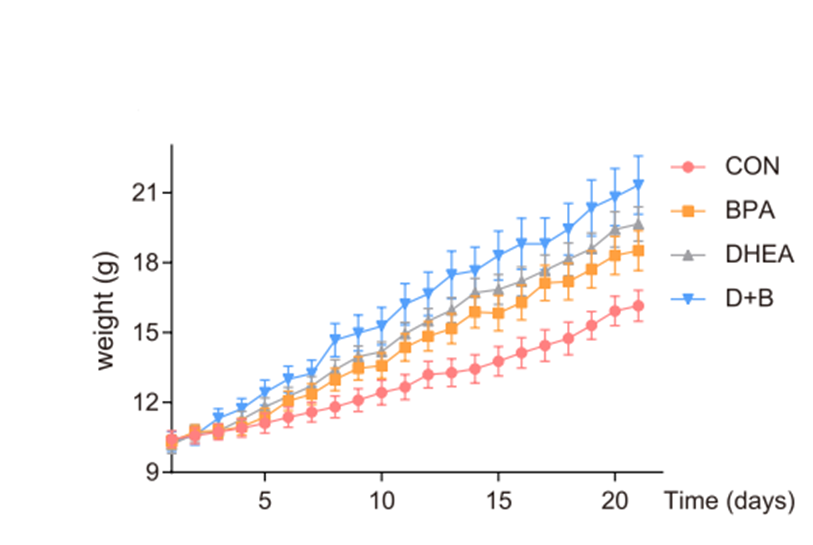
    DHEA purchased from MedChemExpress. Usage Cited in: Cell Commun Signal. 2024 Jan 10;22(1):28.  [Abstract]

    DHEA (60 mg/kg/day; s.c.; 21 days)-induced PCOS mice, gained body weight.

    View All Endogenous Metabolite Isoform Specific Products:

    • Biological Activity

    • Protocol

    • Purity & Documentation

    • References

    • Customer Review

    Description

    DHEA (Prasterone) is one of the most abundant steroid hormones. DHEA (Prasterone) mediates its action via multiple signaling pathways involving specific membrane receptors and via transformation into androgen and estrogen derivatives (e.g., androgens, estrogens, 7α and 7β DHEA, and 7α and 7β epiandrosterone derivatives) acting through their specific receptors.

    IC50 & Target

    Human Endogenous Metabolite


    Cellular Effect
    Cell Line Type Value Description References
    A-431 IC50
    > 50 μM
    Compound: DHEA
    Cytotoxic activity against human A431 cells after 24 hrs by MTT assay
    Cytotoxic activity against human A431 cells after 24 hrs by MTT assay
    [PMID: 25456391]
    A-431 IC50
    > 50 μM
    Compound: DHEA
    Cytotoxic activity against human A431 cells after 48 hrs by MTT assay
    Cytotoxic activity against human A431 cells after 48 hrs by MTT assay
    [PMID: 25456391]
    A549 IC50
    47.8 μM
    Compound: DHEA
    Cytotoxic activity against human A549 cells after 24 hrs by MTT assay
    Cytotoxic activity against human A549 cells after 24 hrs by MTT assay
    [PMID: 25456391]
    A549 IC50
    47.8 μM
    Compound: DHEA
    Cytotoxic activity against human A549 cells after 48 hrs by MTT assay
    Cytotoxic activity against human A549 cells after 48 hrs by MTT assay
    [PMID: 25456391]
    A549 IC50
    > 20 μM
    Compound: c1
    Antiproliferative activity against human A549 cells assessed as reduction in cell viability incubated for 48 hrs by MTS assay
    Antiproliferative activity against human A549 cells assessed as reduction in cell viability incubated for 48 hrs by MTS assay
    [PMID: 30822712]
    CHO EC50
    3.33 μM
    Compound: 49
    Agonist activity at human TGR5 expressed in CHO cells by luciferase assay
    Agonist activity at human TGR5 expressed in CHO cells by luciferase assay
    [PMID: 18307294]
    DU-145 IC50
    > 50 μM
    Compound: DHEA
    Antiproliferative activity against human DU145 cells assessed as reduction in cell viability after 96 hrs by sulforhodamine B assay
    Antiproliferative activity against human DU145 cells assessed as reduction in cell viability after 96 hrs by sulforhodamine B assay
    [PMID: 26866967]
    HCT-116 IC50
    > 50 μM
    Compound: DHEA
    Antiproliferative activity against human HCT116 cells assessed as reduction in cell viability after 96 hrs by sulforhodamine B assay
    Antiproliferative activity against human HCT116 cells assessed as reduction in cell viability after 96 hrs by sulforhodamine B assay
    [PMID: 26866967]
    HEK-293T IC50
    24.9 μM
    Compound: 1, DHEA, dehydroepiandrosterone
    Inhibition of G6PD in HEK293T cells assessed as accumulation of 6-phosphogluconate after 5 hrs by LC-MS/MS analysis using 6-aminonicotinamide
    Inhibition of G6PD in HEK293T cells assessed as accumulation of 6-phosphogluconate after 5 hrs by LC-MS/MS analysis using 6-aminonicotinamide
    [PMID: 22506561]
    HEK293 EC50
    > 10 μM
    Compound: 19
    Binding affinity to FLAG/tGFP-tagged NPC1 I1061T mutant (unknown origin) expressed in HEK293 cells assessed as localization after 24 hrs by fluorescence microscopy
    Binding affinity to FLAG/tGFP-tagged NPC1 I1061T mutant (unknown origin) expressed in HEK293 cells assessed as localization after 24 hrs by fluorescence microscopy
    [PMID: 24928400]
    HL-60 IC50
    > 20 μM
    Compound: c1
    Antiproliferative activity against human HL60 cells assessed as reduction in cell viability incubated for 48 hrs by MTS assay
    Antiproliferative activity against human HL60 cells assessed as reduction in cell viability incubated for 48 hrs by MTS assay
    [PMID: 30822712]
    HL-60 IC50
    > 50 μM
    Compound: DHEA
    Antiproliferative activity against human HL60 cells assessed as reduction in cell viability after 96 hrs by MTS assay
    Antiproliferative activity against human HL60 cells assessed as reduction in cell viability after 96 hrs by MTS assay
    [PMID: 26866967]
    HT-29 IC50
    > 50 μM
    Compound: DHEA
    Cytotoxic activity against human HT-29 cells after 24 hrs by MTT assay
    Cytotoxic activity against human HT-29 cells after 24 hrs by MTT assay
    [PMID: 25456391]
    HT-29 IC50
    > 50 μM
    Compound: DHEA
    Cytotoxic activity against human HT-29 cells after 48 hrs by MTT assay
    Cytotoxic activity against human HT-29 cells after 48 hrs by MTT assay
    [PMID: 25456391]
    HT-29 IC50
    > 50 μM
    Compound: DHEA
    Antiproliferative activity against human HT-29 cells assessed as reduction in cell viability after 96 hrs by sulforhodamine B assay
    Antiproliferative activity against human HT-29 cells assessed as reduction in cell viability after 96 hrs by sulforhodamine B assay
    [PMID: 26866967]
    HeLa IC50
    > 50 μM
    Compound: DHEA
    Cytotoxic activity against human HeLa cells after 24 hrs by MTT assay
    Cytotoxic activity against human HeLa cells after 24 hrs by MTT assay
    [PMID: 25456391]
    HeLa IC50
    > 50 μM
    Compound: DHEA
    Cytotoxic activity against human HeLa cells after 48 hrs by MTT assay
    Cytotoxic activity against human HeLa cells after 48 hrs by MTT assay
    [PMID: 25456391]
    HepG2 IC50
    > 50 μM
    Compound: DHEA
    Cytotoxic activity against human HepG2 cells after 24 hrs by MTT assay
    Cytotoxic activity against human HepG2 cells after 24 hrs by MTT assay
    [PMID: 25456391]
    HepG2 IC50
    > 50 μM
    Compound: DHEA
    Cytotoxic activity against human HepG2 cells after 48 hrs by MTT assay
    Cytotoxic activity against human HepG2 cells after 48 hrs by MTT assay
    [PMID: 25456391]
    J774.2 CC50
    198.17 μM
    Compound: 1a; DHEA
    Cytotoxicity against mouse J774.2 cells assessed as reduction in cell viability measured after 48 hrs by resazurin dye based assay
    Cytotoxicity against mouse J774.2 cells assessed as reduction in cell viability measured after 48 hrs by resazurin dye based assay
    [PMID: 34571489]
    J774.A1 IC50
    141 nM
    Compound: 1, DHEA
    Inhibition of LPS-induced TNFalpha production in mouse J774A.1 cells
    Inhibition of LPS-induced TNFalpha production in mouse J774A.1 cells
    [PMID: 17892941]
    Jurkat IC50
    46.5 μM
    Compound: DHEA
    Antiproliferative activity against human Jurkat cells assessed as reduction in cell viability after 96 hrs by MTS assay
    Antiproliferative activity against human Jurkat cells assessed as reduction in cell viability after 96 hrs by MTS assay
    [PMID: 26866967]
    LNCaP IC50
    > 50 μM
    Compound: DHEA
    Cytotoxic activity against human LNCAP cells after 24 hrs by MTT assay
    Cytotoxic activity against human LNCAP cells after 24 hrs by MTT assay
    [PMID: 25456391]
    LNCaP IC50
    > 50 μM
    Compound: DHEA
    Cytotoxic activity against human LNCAP cells after 48 hrs by MTT assay
    Cytotoxic activity against human LNCAP cells after 48 hrs by MTT assay
    [PMID: 25456391]
    LNCaP IC50
    > 50 μM
    Compound: DHEA
    Antiproliferative activity against human LNCAP cells assessed as reduction in cell viability after 96 hrs by sulforhodamine B assay
    Antiproliferative activity against human LNCAP cells assessed as reduction in cell viability after 96 hrs by sulforhodamine B assay
    [PMID: 26866967]
    MCF7 IC50
    > 20 μM
    Compound: c1
    Antiproliferative activity against human MCF7 cells assessed as reduction in cell viability incubated for 48 hrs by MTS assay
    Antiproliferative activity against human MCF7 cells assessed as reduction in cell viability incubated for 48 hrs by MTS assay
    [PMID: 30822712]
    MCF7 IC50
    > 200 μM
    Compound: DHEA
    Cytotoxicity against human MCF7 cells after 48 hrs by MTT assay
    Cytotoxicity against human MCF7 cells after 48 hrs by MTT assay
    [PMID: 23880359]
    MCF7 IC50
    > 50 μM
    Compound: DHEA
    Cytotoxic activity against human MCF7 cells after 24 hrs by MTT assay
    Cytotoxic activity against human MCF7 cells after 24 hrs by MTT assay
    [PMID: 25456391]
    MCF7 IC50
    > 50 μM
    Compound: DHEA
    Cytotoxic activity against human MCF7 cells after 48 hrs by MTT assay
    Cytotoxic activity against human MCF7 cells after 48 hrs by MTT assay
    [PMID: 25456391]
    MCF7 IC50
    > 50 μM
    Compound: DHEA
    Antiproliferative activity against human MCF7 cells assessed as reduction in cell viability after 96 hrs by sulforhodamine B assay
    Antiproliferative activity against human MCF7 cells assessed as reduction in cell viability after 96 hrs by sulforhodamine B assay
    [PMID: 26866967]
    MDA-MB-231 IC50
    > 50 μM
    Compound: DHEA
    Antiproliferative activity against human MDA-MB-231 cells assessed as reduction in cell viability after 96 hrs by sulforhodamine B assay
    Antiproliferative activity against human MDA-MB-231 cells assessed as reduction in cell viability after 96 hrs by sulforhodamine B assay
    [PMID: 26866967]
    PC-12 IC50
    0.29 nM
    Compound: DHEA
    Neuroprotective activity in rat PC12 cells assessed as inhibition of serum deprivation-induced apoptosis after 24 hrs by APO Percentage apoptosis assay
    Neuroprotective activity in rat PC12 cells assessed as inhibition of serum deprivation-induced apoptosis after 24 hrs by APO Percentage apoptosis assay
    [PMID: 19845386]
    PC-12 IC50
    1.65 nM
    Compound: DHEA
    Displacement of [3H]DHEA from DHEA-binding site in rat PC12 cell membranes by gamma-scintillation counting
    Displacement of [3H]DHEA from DHEA-binding site in rat PC12 cell membranes by gamma-scintillation counting
    [PMID: 19845386]
    SMMC-7721 IC50
    > 20 μM
    Compound: c1
    Antiproliferative activity against human SMMC7721 cells assessed as reduction in cell viability incubated for 48 hrs by MTS assay
    Antiproliferative activity against human SMMC7721 cells assessed as reduction in cell viability incubated for 48 hrs by MTS assay
    [PMID: 30822712]
    SW480 IC50
    > 20 μM
    Compound: c1
    Antiproliferative activity against human SW480 cells assessed as reduction in cell viability incubated for 48 hrs by MTS assay
    Antiproliferative activity against human SW480 cells assessed as reduction in cell viability incubated for 48 hrs by MTS assay
    [PMID: 30822712]
    T47D IC50
    2.55 μM
    Compound: DHEA
    Antiproliferative activity against human T47D cells assessed as reduction in cell viability after 96 hrs by sulforhodamine B assay
    Antiproliferative activity against human T47D cells assessed as reduction in cell viability after 96 hrs by sulforhodamine B assay
    [PMID: 26866967]
    In Vitro

    DHEA (Prasterone) is an effective antiapoptotic factor, reversing the serum deprivation-induced apoptosis in prostate cancer cells (DU145 and LNCaP cell lines) as well as in colon cancer cells (Caco2 cell line). DHEA (Prasterone) significantly reduces serum deprivation-induced apoptosis in all 3 cancer cell types, quantitated with the APOPercentage assay (apoptosis is reduced from 0.587±0.053 to 0.142±0.0016 or 0.059±0.002 after treatment for 12 hours with DHEA or NGF, respectively; n=3, P<0.01), and by flow cytometry analysis (FACS) for DU145 cells. The antiapoptotic effect of DHEA is dose dependent with an EC50 at nanomolar concentrations (EC50: 11.2±3.6 nM and 12.4±2.2 nM in DU145 and Caco2 cells, respectively)[1]. DHEA (Prasterone) is the principal sex steroid precursor in humans and can be converted directly to androgens. DHEA (Prasterone) (≥1 μM) causes a dose-dependent inhibition of Chub-S7 proliferation, as assessed by thymidine incorporation assays. DHEA (Prasterone) treatment inhibits expression of the key glucocorticoid-regulating genes H6PDH (≥100 nM) and HSD11B1 (≥1 μM) in differentiating preadipocytes in a dose-dependent manner. In keeping with this finding, DHEA (Prasterone) treatment (≥1 μM) results in a marked reduction in 11β-HSD1 oxoreductase activity (≥1 μM) and a concurrent increase in dehydrogenase activity at the highest DHEA dose used (25 μM DHEA) in differentiated adipocytes[2].

    MedChemExpress (MCE) has not independently confirmed the accuracy of these methods. They are for reference only.

    In Vivo

    DHEA (Prasterone) in the diet (0.45 % w/w) of male B6 mice (groups of five mice) treated for 8 weeks led to significant decreases in body temperature compared with mice fed the control AIN-76A diet. A similar comparison indicated that control and pair-fed mice are also significantly different. Animals fed DHEA (Prasterone) have significantly lower temperatures than mice fed the control diet 26/29 times tested; mice pair fed to those on the DHEA (Prasterone) diet are less affected, with 8/29 values significantly lower than in mice fed AIN-76A ad libitum. The temperatures of mice fed DHEA (Prasterone) or pair fed to DHEA (Prasterone) are significantly different 21/29 times tested. Body weights are significantly greater in mice fed the control diet than in mice fed DHEA or pair fed to DHEA (Prasterone). Food intake (grams per day) from cages are averaged for each week (n=7), except for Week 9 (n=3). The amount of food intake is significantly decreased in mice fed DHEA (Prasterone). By design, mice pair fed to DHEA (Prasterone) ate about the same amount. Thus, it appears that DHEA (Prasterone) reduces body temperature by food restriction and by a separate mechanism[3].

    MedChemExpress (MCE) has not independently confirmed the accuracy of these methods. They are for reference only.

    Clinical Trial
    Molecular Weight

    288.42

    Formula

    C19H28O2

    CAS No.
    Appearance

    Solid

    Color

    White to off-white

    SMILES

    O=C1CC[C@@]2([H])[C@]3([H])CC=C4C[C@@H](O)CC[C@]4(C)[C@@]3([H])CC[C@@]21C

    Structure Classification
    Initial Source
    Shipping

    Room temperature in continental US; may vary elsewhere.

    Storage
    Powder -20°C 3 years
    4°C 2 years
    In solvent -80°C 2 years
    -20°C 1 year
    Solvent & Solubility
    In Vitro: 

    DMSO : 50 mg/mL (173.36 mM; Need ultrasonic; Hygroscopic DMSO has a significant impact on the solubility of product, please use newly opened DMSO)

    Ethanol : 40 mg/mL (138.69 mM; ultrasonic and warming and heat to 60°C)

    H2O : < 0.1 mg/mL (insoluble)

    Preparing
    Stock Solutions
    Concentration Solvent Mass 1 mg 5 mg 10 mg
    1 mM 3.4672 mL 17.3358 mL 34.6717 mL
    5 mM 0.6934 mL 3.4672 mL 6.9343 mL
    View the Complete Stock Solution Preparation Table

    * Please refer to the solubility information to select the appropriate solvent. Once prepared, please aliquot and store the solution to prevent product inactivation from repeated freeze-thaw cycles.
    Storage method and period of stock solution: -80°C, 2 years; -20°C, 1 year. When stored at -80°C, please use it within 2 years. When stored at -20°C, please use it within 1 year.

    • Molarity Calculator

    • Dilution Calculator

    Mass (g) = Concentration (mol/L) × Volume (L) × Molecular Weight (g/mol)

    Mass
    =
    Concentration
    ×
    Volume
    ×
    Molecular Weight *

    Concentration (start) × Volume (start) = Concentration (final) × Volume (final)

    This equation is commonly abbreviated as: C1V1 = C2V2

    Concentration (start)

    C1

    ×
    Volume (start)

    V1

    =
    Concentration (final)

    C2

    ×
    Volume (final)

    V2

    In Vivo:

    Select the appropriate dissolution method based on your experimental animal and administration route.

    For the following dissolution methods, please ensure to first prepare a clear stock solution using an In Vitro approach and then sequentially add co-solvents:
    To ensure reliable experimental results, the clarified stock solution can be appropriately stored based on storage conditions. As for the working solution for in vivo experiments, it is recommended to prepare freshly and use it on the same day.
    The percentages shown for the solvents indicate their volumetric ratio in the final prepared solution. If precipitation or phase separation occurs during preparation, heat and/or sonication can be used to aid dissolution.

    • Protocol 1

      Add each solvent one by one:  10% DMSO    90% Corn Oil

      Solubility: ≥ 2.5 mg/mL (8.67 mM); Clear solution

      This protocol yields a clear solution of ≥ 2.5 mg/mL (saturation unknown). If the continuous dosing period exceeds half a month, please choose this protocol carefully.

      Taking 1 mL working solution as an example, add 100 μL DMSO stock solution (25.0 mg/mL) to 900 μL Corn oil, and mix evenly.

    • Protocol 2

      Add each solvent one by one:  10% EtOH    90% (20% SBE-β-CD in Saline)

      Solubility: ≥ 2.5 mg/mL (8.67 mM); Clear solution

      This protocol yields a clear solution of ≥ 2.5 mg/mL (saturation unknown).

      Taking 1 mL working solution as an example, add 100 μL EtOH stock solution (25.0 mg/mL) to 900 μL 20% SBE-β-CD in Saline, and mix evenly.

      Preparation of 20% SBE-β-CD in Saline (4°C, storage for one week): 2 g SBE-β-CD powder is dissolved in 10 mL Saline, completely dissolve until clear.

    For the following dissolution methods, please prepare the working solution directly. It is recommended to prepare fresh solutions and use them promptly within a short period of time.
    The percentages shown for the solvents indicate their volumetric ratio in the final prepared solution. If precipitation or phase separation occurs during preparation, heat and/or sonication can be used to aid dissolution.

    • Protocol 1

      Add each solvent one by one:  Corn Oil

      Solubility: 3.57 mg/mL (12.38 mM); Clear solution; Need ultrasonic and warming and heat to 60°C

    In Vivo Dissolution Calculator
    Please enter the basic information of animal experiments:

    Dosage

    mg/kg

    Animal weight
    (per animal)

    g

    Dosing volume
    (per animal)

    μL

    Number of animals

    Recommended: Prepare an additional quantity of animals to account for potential losses during experiments.
    Please enter your animal formula composition:
    %
    DMSO +
    +
    %
    Tween-80 +
    %
    Saline
    Recommended: Keep the proportion of DMSO in working solution below 2% if your animal is weak.
    The co-solvents required include: DMSO, . All of co-solvents are available by MedChemExpress (MCE). , Tween 80. All of co-solvents are available by MedChemExpress (MCE).
    Calculation results:
    Working solution concentration: mg/mL
    Method for preparing stock solution: mg drug dissolved in μL  DMSO (Stock solution concentration: mg/mL).
    The concentration of the stock solution you require exceeds the measured solubility. The following solution is for reference only. If necessary, please contact MedChemExpress (MCE).
    Method for preparing in vivo working solution for animal experiments: Take μL DMSO stock solution, add μL . μL , mix evenly, next add μL Tween 80, mix evenly, then add μL Saline.
     If the continuous dosing period exceeds half a month, please choose this protocol carefully.
    Please ensure that the stock solution in the first step is dissolved to a clear state, and add co-solvents in sequence. You can use ultrasonic heating (ultrasonic cleaner, recommended frequency 20-40 kHz), vortexing, etc. to assist dissolution.
    Purity & Documentation

    Purity: 99.94%

    References
    Cell Assay
    [2]

    Chub-S7 preadipocytes and human primary preadipocytes are seeded into a 24-well plate at densities 1×10⁵ and 2.5×10⁵ respectively. Following overnight culture, medium is supplemented with DHEA, androstenediol, or DHEA (Prasterone) (0-100 μM). Following 24-, 48-, or 72 h incubation, cell proliferation is assessed by incubation with radiolabeled thymidine (0.2 μCi/well) for the final 6 h of culture. Proteins are precipitated with TCA, and cells are scraped in NaOH. The respective content of radiolabeled nuclear material in the resulting lysates is analyzed by scintillation counting[2].

    MCE has not independently confirmed the accuracy of these methods. They are for reference only.

    Animal Administration
    [3]

    Mice[3]
    Mice are fed Purina Lab Chow until the start of experiments (Day 0). Groups of five mice are then fed pelleted AIN-76A diet containing either no additive or DHEA (0.45% w/w) between 0900 and 1000 hr. Diets are stored at 4°C for no longer than six months to maintain optimal activity. Mice are given the diets ad libitum, except for mice that are pair fed to mice treated with DHEA (Prasterone). The amounts of AIN-76A diet the pair-fed mice received are determined by the weight of food consumed by the DHEA-fed mice on a daily basis. Body weights (grams) are measured at different time points starting at Day 1 and ending at Day 59. Daily food intakes (grams per day) are determined by weighing the food consumed per cage of five mice. The mean±SEM values are calculated for weeks 1 to 8 (n=7); week 9 had only 3 days.

    MCE has not independently confirmed the accuracy of these methods. They are for reference only.

    References

    Complete Stock Solution Preparation Table

    * Please refer to the solubility information to select the appropriate solvent. Once prepared, please aliquot and store the solution to prevent product inactivation from repeated freeze-thaw cycles.
    Storage method and period of stock solution: -80°C, 2 years; -20°C, 1 year. When stored at -80°C, please use it within 2 years. When stored at -20°C, please use it within 1 year.

    Optional Solvent Concentration Solvent Mass 1 mg 5 mg 10 mg 25 mg
    Ethanol / DMSO 1 mM 3.4672 mL 17.3358 mL 34.6717 mL 86.6791 mL
    5 mM 0.6934 mL 3.4672 mL 6.9343 mL 17.3358 mL
    10 mM 0.3467 mL 1.7336 mL 3.4672 mL 8.6679 mL
    15 mM 0.2311 mL 1.1557 mL 2.3114 mL 5.7786 mL
    20 mM 0.1734 mL 0.8668 mL 1.7336 mL 4.3340 mL
    25 mM 0.1387 mL 0.6934 mL 1.3869 mL 3.4672 mL
    30 mM 0.1156 mL 0.5779 mL 1.1557 mL 2.8893 mL
    40 mM 0.0867 mL 0.4334 mL 0.8668 mL 2.1670 mL
    50 mM 0.0693 mL 0.3467 mL 0.6934 mL 1.7336 mL
    60 mM 0.0578 mL 0.2889 mL 0.5779 mL 1.4447 mL
    80 mM 0.0433 mL 0.2167 mL 0.4334 mL 1.0835 mL
    100 mM 0.0347 mL 0.1734 mL 0.3467 mL 0.8668 mL
    • No file chosen (Maximum size is: 1024 Kb)
    • If you have published this work, please enter the PubMed ID.
    • Your name will appear on the site.
    Help & FAQs
    • Do most proteins show cross-species activity?

      Species cross-reactivity must be investigated individually for each product. Many human cytokines will produce a nice response in mouse cell lines, and many mouse proteins will show activity on human cells. Other proteins may have a lower specific activity when used in the opposite species.

    Your Recently Viewed Products:

    Inquiry Online

    Your information is safe with us. * Required Fields.

    Product Name


    Requested Quantity *

    Applicant Name *


    Salutation

    Email Address *


    Phone Number *

    Department


    Organization Name *

    City

    State

    Country or Region *


    Remarks

    Bulk Inquiry

    Inquiry Information

    Product Name:
    DHEA
    Cat. No.:
    HY-14650
    Quantity:
    MCE Japan Authorized Agent: