Inflammation/Immunology
-
Inflammation/Immunology Related Products (20639)
Related Products (20639)

-
Antibodies (115)
-
Related Compound Screening Libraries (4)
-
BMS-645737
 0 ImagesCat. No.: HY-10335CAS No.: 651744-16-0
-
Impentamine dihydrobromide
 0 ImagesCat. No.: HY-107564CAS No.: 149629-70-9Synonyms: VUF 4702 dihydrobromide
Impentamine dihydrobromide (VUF 4702 dihydrobromide) is a histamine H3 receptor antagonist with potential antihistamine activity. Impentamine dihydrobromide shows the strongest selective H3 antagonism among a series of 4(5)-(ω-aminoalkyl)-1H-imidazole compounds. The pA2 value of impentamine dihydrobromide is 8.4, showing its high efficacy in guinea pig jejunum. Impentamine dihydrobromide has a specific antagonistic binding site with the H3 receptor.
-
6-T-5'-GMP
 0 ImagesCat. No.: HY-134242ACAS No.: 15867-02-4Synonyms: 6-Thioguanosine monophosphate; 6-Thio-GMP
6-T-5'-GMP (6-Thioguanosine monophosphate) is an analogue of guanosine-5'-O-monophosphate (5'-GMP) and a metabolite of an immunosuppressive drug, Azathioprine (HY-B0256).
-
MK-0359
 0 ImagesCat. No.: HY-11072CAS No.: 346629-30-9Synonyms: L-454,560
MK-0359 (L-454,560) is a selective and orally active PDE4 inhibitor, and can be used for asthma and chronic obstructive pulmonary disease (COPD) research.
-
Versicolactone B
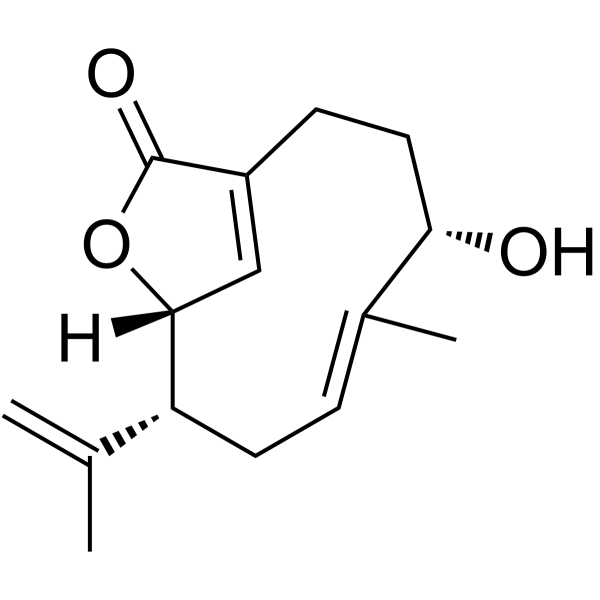 0 ImagesCat. No.: HY-N12265CAS No.: 108885-62-7
Versicolactone B is a sesquiterpene that can be isolated from Viola yedoensis. Versicolactone B exhibits anti-complement activity against the classical pathway and the alternative pathway.
-
Luteolin 7-O-glucuronide (Standard)
 0 ImagesCat. No.: HY-N1463RCAS No.: 29741-10-4Synonyms: Luteolin 7-glucuronide (Standard)
Luteolin 7-O-glucuronide (Standard) is the analytical standard of Luteolin 7-O-glucuronide. This product is intended for research and analytical applications. Luteolin 7-O-glucuronide could inhibit Matrix Metalloproteinases (MMP) activities, with IC50s of 17.63, 7.99, 11.42, 12.85, 0.03 μM for MMP-1, MMP-3, MMP-8, MMP-9, MMP-13, respectively.


-
Chick CB12 of type II collagen
 0 ImagesCat. No.: HY-NP0241DSynonyms: Chick cyanogen bromide digested peptide 12
Chick CB12 of type II collagen (Chick cyanogen bromide digested peptide 12) is a cyanobromide digested peptide (CB-peptide) fragment of type II collagen, which can be used to study B cell and T cell epitopes of type II collagen. This product is pepsin-free, making it ideal for studying T cell epitope specificity through proliferation assays. Chick CB12 of type II collagen can also be used as an antigen for analyzing antibody epitope specificity via ELISA.
-
Suberic acid-13C2
 0 ImagesCat. No.: HY-W015300S2CAS No.: 2251773-62-1Synonyms: Octanedioic acid-13C2
Suberic acid-13C2 (Octanedioic acid-13C2) is the 13C-labeled Suberic acid (HY-W015300). Suberic acid (Octanedioic acid) is an orally active crystalline dibasic acid. Suberic acid activates the Akt signaling pathway and regulates the expression of molecules related to the TGF-β and MAPK signaling pathways. Suberic acid inhibits skin dryness.
-
Ginsenoside Rk1 (Standard)
 0 ImagesCat. No.: HY-N2515RCAS No.: 494753-69-4
Ginsenoside Rk1 (Standard) is the analytical standard of Ginsenoside Rk1. This product is intended for research and analytical applications. Ginsenoside Rk1 is a unique component created by processing the ginseng plant (mainly Sung Ginseng, SG) at high temperatures. Ginsenoside Rk1 has anti-inflammatory effect, suppresses the activation of Jak2/Stat3 signaling pathway and NF-κB. Ginsenoside Rk1 has anti-tumor effect, antiplatelet aggregation activities, anti-insulin resistance, nephroprotective effect, antimicrobial effect, cognitive function enhancement, lipid accumulation reduction and prevents osteoporosis. Ginsenoside Rk1 induces cell apoptosis by triggering intracellular reactive oxygen species (ROS) generation and blocking PI3K/Akt pathway.
-
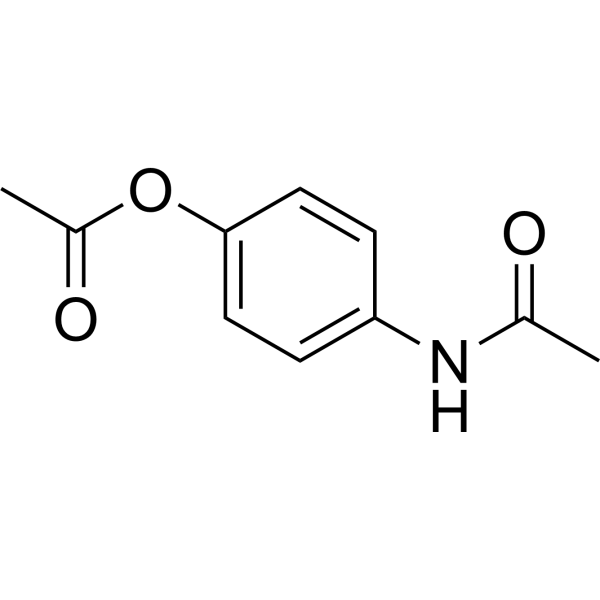
4-Acetamidophenyl acetate (Standard)
 0 Images
4-Acetamidophenyl acetate (Standard) is the analytical standard of 4-Acetamidophenyl acetate (HY-66004). This product is intended for research and analytical applications. 4-Acetamidophenyl acetate is an impurity of Acetaminophen (HY-66005). 4-Acetamidophenyl acetate acts as an intermediate in the synthesis of Acetaminophen. Acetaminophen is a selective COX-2 inhibitor (IC50=25.8 μM), and is a potent hepatic N-acetyltransferase 2 (NAT2) inhibitor.
-
Uncarine F
 0 ImagesCat. No.: HY-N16467CAS No.: 14019-66-0Synonyms: Speciofiline
Uncarine F (Speciofiline) is a pentacyclic oxindole alkaloid found in Uncaria tomentosa. Uncaria alkaloids have wide medicinal properties, including neuroprotective, anticancer, and antihypertensive activities. Uncaria alkaloids may stimulate the immune system, relax smooth muscles, dilate blood vessels, and act as a diuretic. Uncarine F can be used for the researches of cancer, immunology, cardiovascular and neurological disease.
-
Megestrol-d5
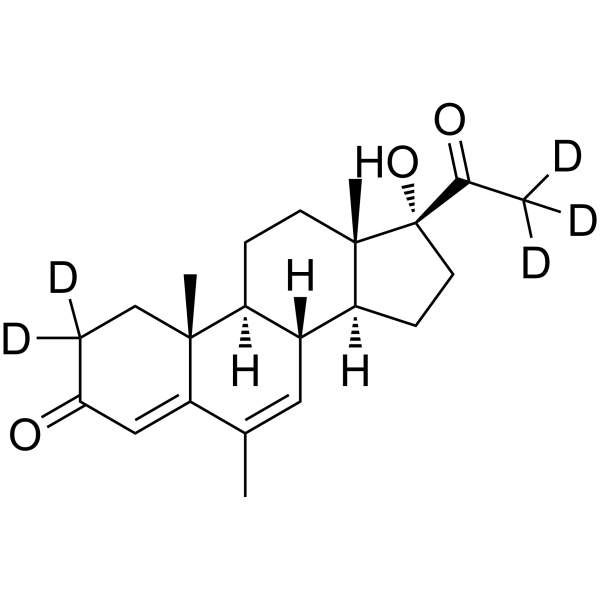 0 ImagesCat. No.: HY-B1834S1
Megestrol-d5 is the deuterium labeled Megestrol. Megestrol is an orally active glucocorticoid and progesterone receptor agonist. Megestrol can alleviate anorexia, cachexia or unexplained significant weight loss associated with acquired immunodeficiency syndrome (AIDS). Megestrol may cause glucocorticoid-like effects and an increased risk of mental disorders.
-
4''-methyloxy-Genistin
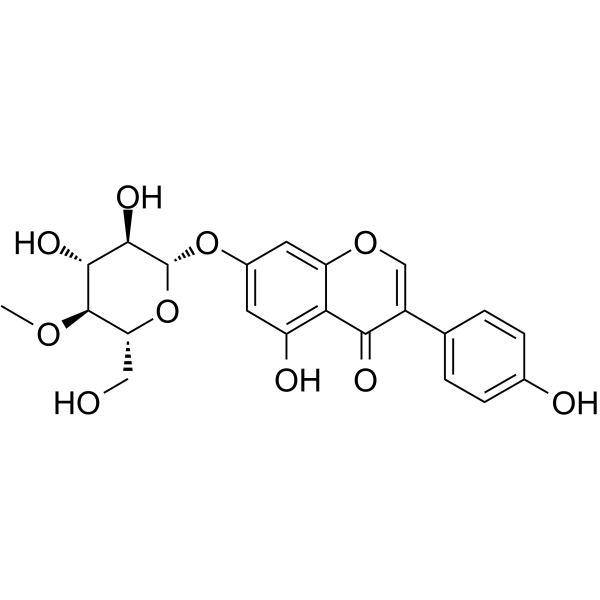 0 ImagesCat. No.: HY-N4129CAS No.: 950910-16-4
4''-methyloxy-Genistin, an isoflavone methyl-glycoside, is isolated from Cordyceps militaris grown on germinated soybeans. Isoflavones possess immunomodulating and antiallergic activities.
-
Nagarine
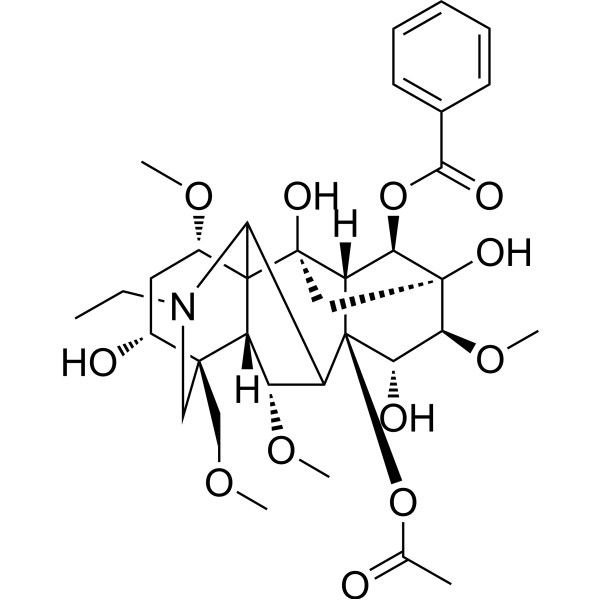 0 ImagesCat. No.: HY-N7002CAS No.: 41849-35-8Synonyms: 10-Hydroxy aconitine
Nagarine, an alkaloid isolated from the roots of Aconitum nagarum Stapf (Ranunculaceae), is used to treat Rheumatic and neuralgic disorders.
-
(Rac)-Myrislignan
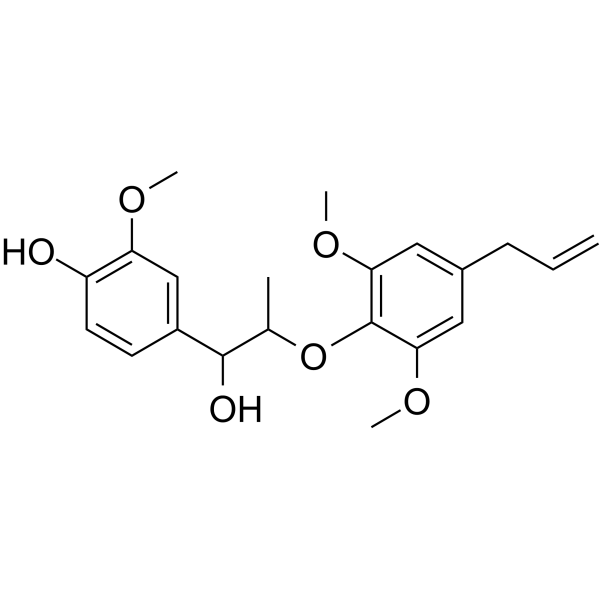 0 Images
(Rac)-Myrislignan is the racemate of Myrislignan. Myrislignan, a lignan isolated from Myristica fragrans Houtt, possesses anti-inflammatory activities. Myrislignan attenuates LPS-induced inflammation reaction in murine macrophage cells through inhibition of NF-kB signalling pathway activation.

-
Nerylformate
 0 ImagesCat. No.: HY-W1121912CAS No.: 2142-94-1
Nerylformate is a terpenoid derivative secreted by American house dust mites (Dermatophagoides farinae) and European house dust mites (Dermatophagoides pteronyssinus). Nerylformate has a significant attraction effect on both male and female individuals of the two species of house dust mites. Nerylformate guides the mites to gather together to reduce dehydration and enhance defense. Nerylformate can be used for the research of immunology and inflammation, such as allergic rhinitis.
-
HYDAMTIQ
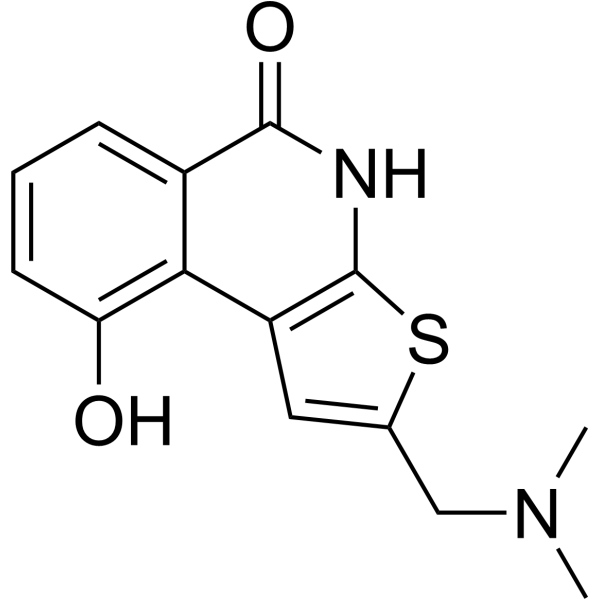 0 ImagesCat. No.: HY-155458CAS No.: 1201832-32-7
HYDAMTIQ is a PARP-1/2 inhibitor (IC50: 29-38 nM) with anticancer, anti-inflammatory, and ischemic protective effects. HYDAMTIQ inhibits pulmonary PARP activity, is effective against allergen-induced cough and dyspnea, and inhibits bronchial hyperresponsiveness to methacholine. HYDAMTIQ has broad-spectrum tumor suppressor effects, including ovarian and breast cancers, prostate and pancreatic tumors, and glioblastoma multiforme. HYDAMTIQ has demonstrated in vivo efficacy in animal models of cerebral ischemia, asthma, cancer, and more.