



Cathepsin
Cathepsins are protease enzymes, categorized into multiple families. Cathepsins can be serine protease, cysteine protease, or aspartyl protease. There are about 15 classes of cathepsins in humans (Cathepsin A, B, C, D, E, F, G, H, K, L, O, S, V, W, and Z). Cathepsins are active in the low pH milieu of lysosomes and are versatile in their functions. Like other enzymes, they are vital for the normal physiological functions such as digestion, blood coagulation, bone resorption, ion channel activity, innate immunity, complement activation, apoptosis, vesicular trafficking, autophagy, angiogenesis, proliferation, and metastasis, among scores of others.
Numerous pathologies have been attributed to the dysregulated cathepsins, some of which include arthritis, periodontitis, pancreatitis, macular degeneration, muscular dystrophy, atherosclerosis, obesity, stroke, Alzheimer's disease, schizophrenia, tuberculosis, and Ebola.
Cathepsin Isoform Specific Products
All Product Categories
-
Cathepsin Inhibitors
(216)
View all products
-
Cathepsin Antagonist
(1)
View all products
-
Cathepsin Activators
(7)
View all products
-
Cathepsin Inducers
(3)
View all products
-
Cathepsin Degrader
(1)
View all products
-
Cathepsin Control
(1)
View all products
-
Cathepsin Substrates
(21)
View all products
-
Cathepsin Ligand
(1)
View all products
-
Cathepsin Proteins
(35)
View all products
-
Cathepsin B Proteins
(5)
View all products
-
Cathepsin C Proteins
(4)
View all products
-
Cathepsin D Proteins
(5)
View all products
-
Cathepsin E Proteins
(3)
View all products
-
Cathepsin K Proteins
(1)
View all products
-
Cathepsin L1 Proteins
(4)
View all products
-
Cathepsin S Proteins
(2)
View all products
-
Cathepsin Related Products (297)
Related Products (297)

-
Recombinant Proteins (35)
-
Antibodies (6)
-
Cathepsin Isoform Comparison
-
Z-Arg-Arg-βNA acetate
 0 ImagesZ-Arg-Arg-βNA acetate is a sensitive dipeptide substrate of the protease Cathepsin B and resistant to proteases H and L. Z-Arg-Arg-βNA acetate can serve as an important tool for distinguishing non-Cathepsin B type proteins.
-
CTSL Human Pre-designed siRNA Set A
 0 ImagesCat. No.: HY-RS03340
CTSL Human Pre-designed siRNA Set A contains three designed siRNAs for CTSL gene (Human), as well as a negative control, a positive control, and a FAM-labeled negative control.
-
Asperphenamate (Standard)
 0 ImagesCat. No.: HY-129578RCAS No.: 63631-36-7Asperphenamate (Standard) is the analytical standard of Asperphenamate. This product is intended for research and analytical applications. Asperphenamate, a fungal metabolite of Aspergillus flatiipes with anti-cancer effect, exhibits IC50 values of 92.3 μM, 96.5 μM and 97.9 μM in T47D, MDA-MB-231 and HL-60 cells, respectively[1][2].
-
Leupeptin
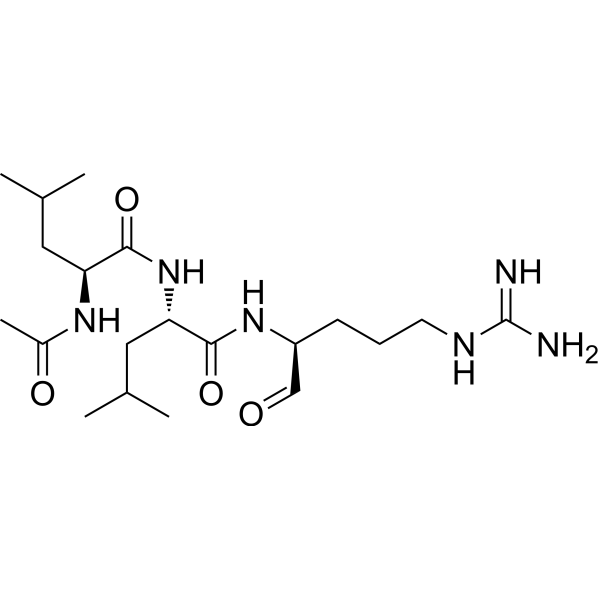 0 ImagesCat. No.: HY-18234CAS No.: 55123-66-5Leupeptin is a broad-spectrum protease inhibitor. Leupeptin inhibits serine, cysteine and threonine proteases, and regulates autophagy. Leupeptin reduces the expression levels of LC3B, iNOS, Cox-2, Beclin-1 and the level of endopeptidases; increases the levels of p62, Arg 1, Msr 1 and Mrc−1; and blocks the upregulation of p-PTEN, p-NF-κB, p-PI3K, p-Akt, p-p38 and ERK1/2. Leupeptin inhibits NO, ROS, proinflammatory cytokines, the IFN-γ/IL-10 ratio, phagolysosome fusion, mammalian lysosomal hydrolase activity and SARS-CoV-2 replication; and reverses impaired autophagic flux. Leupeptin is applicable to research related to chronic inflammatory diseases, edema, skin tumorigenesis, COVID-19 and respiratory infections.
-
Mesaconic acid (Standard)
 0 ImagesSynonyms: Citronic acid (Standard); Methylfumaric acid (Standard)Mesaconic acid (Standard) is the analytical standard of Mesaconic acid. This product is intended for research and analytical applications. Mesaconic acid (Citronic acid; Methylfumaric acid) is an orally active anti-inflammatory and antioxidant agent. Mesaconic acid reduces the level of NF-κB in colon tissues, downregulates the expression of Keap1 and Bax, upregulates the expression of Nrf2 and Bcl2, and decreases the expression of Caspase-1. Mesaconic acid reduces the levels of NLRP3, ASC and Casp-1 in colon, liver and kidney tissues. Mesaconic acid reduces pro-inflammatory cytokine levels, increases the level of the anti-inflammatory cytokine IL-10, elevates NAD+ levels, regulates oxidative stress markers and antioxidant enzyme levels, and upregulates intestinal barrier proteins in colon, liver and kidney tissues. Mesaconic acid increases the abundance of beneficial gut bacteria and reduces the abundance of harmful gut bacteria in rapidly aging mice, and exhibits anti-aging properties. Mesaconic acid acts as a flame retardant and serves as a competitive inhibitor of fumarate reduction. Mesaconic acid can be used in the research of aging-related inflammation.
-
(S,S)-Z-FA-FMK
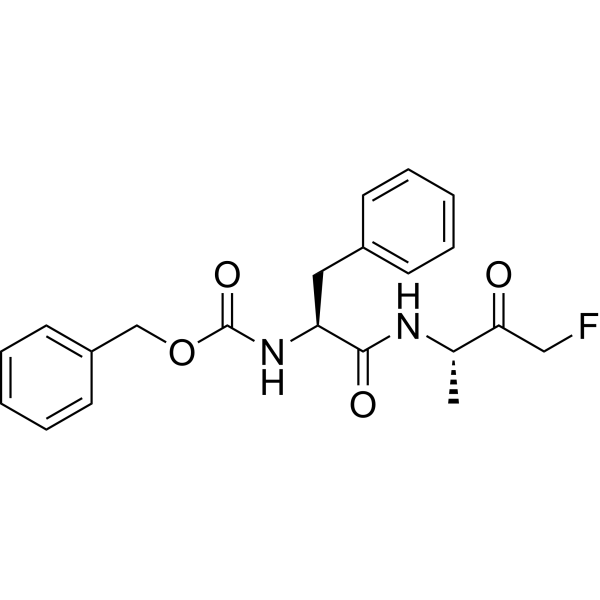 0 ImagesCat. No.: HY-P0109CAS No.: 105637-38-5(S,S)-Z-FA-FMK is a cell-permeable, irreversible cathepsin B inhibitor. (S,S)-Z-FA-FMK blocks LPS-induced production of IL-1α and IL-1β. (S,S)-Z-FA-FMK can be used as a negative control for caspase-1 and caspase-2 inhibitors because it lacks an aspartic acid residue at the P1 position.
-
Cathepsin D and E FRET Substrate
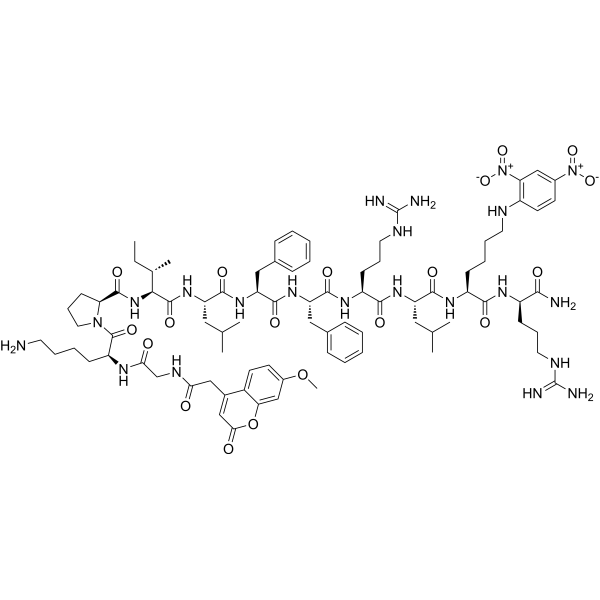 0 ImagesCat. No.: HY-P2498CAS No.: 839730-93-7Cathepsin D and E FRET Substrate is a fluorogenic substrate for cathepsins D and E and not for B, H or L. The cleavage occurs at the Phe-Phe amide bond resul. Cathepsin D and E FRET Substrate is a valuable tool for routine assays and for mechanistic studies on cathepsins E and D.
-
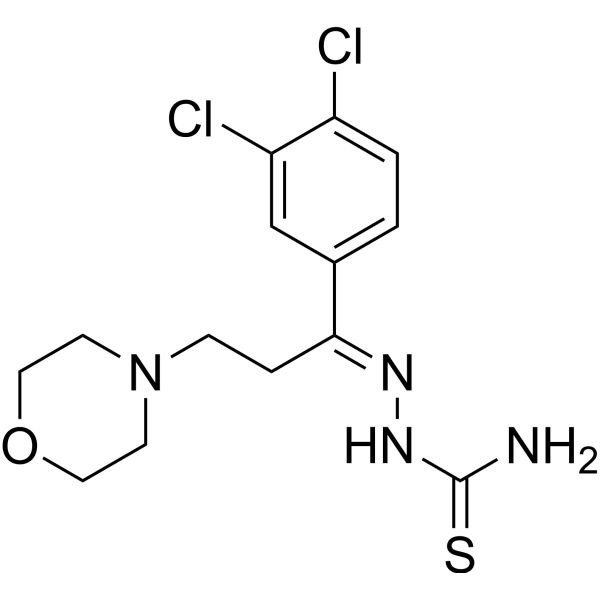
Cathepsin Inhibitor 4
 0 ImagesCat. No.: HY-161721Cathepsin Inhibitor 4 (Compound 45) is a selective inhibitor for Cathepsin S with Ki of 0.04 nM.
-
Suc-Val-Pro-Phe-SBzl
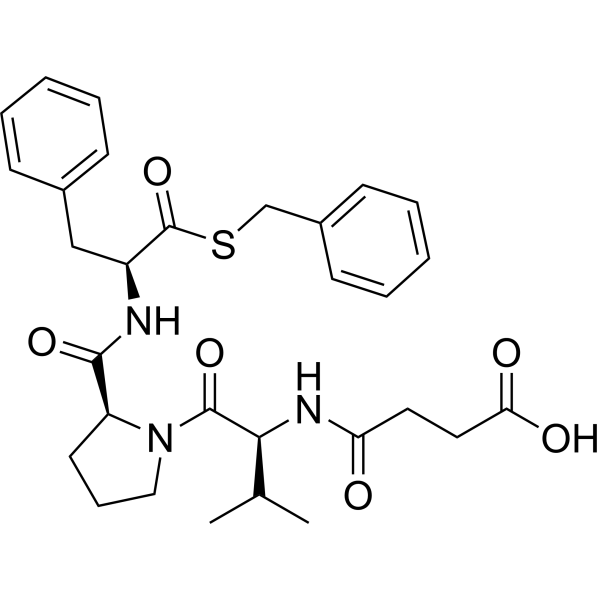 0 ImagesCat. No.: HY-P4583CAS No.: 95192-51-1Suc-Val-Pro-Phe-SBzl (succinyl-valine-proline-phenylalanine thiobenzyl ester) is an inhibitor of CatG enzymes with IC50 values of 111-225 mM
-
Ac-Glu-Asp(EDANS)-Lys-Pro-Ile-Leu-Phe-Phe-Arg-Leu-Gly-Lys(DABCYL)-Glu-NH2
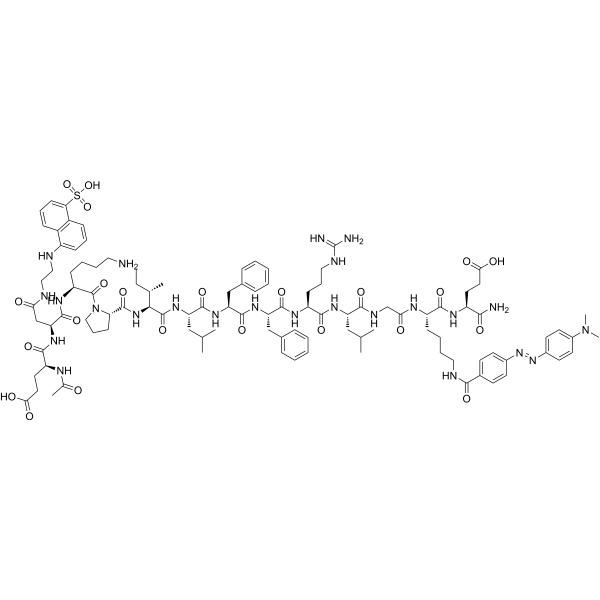 0 ImagesCat. No.: HY-P4787CAS No.: 400716-78-1Ac-Glu-Asp(EDANS)-Lys-Pro-Ile-Leu-Phe-Phe-Arg-Leu-Gly-Lys(DABCYL)-Glu-NH2 is a cathepsin D substrate, that can be used for cathepsin D FRET assay.
-
Cathepsin D degrader 1
 0 ImagesCat. No.: HY-181655CAS No.: 3127060-85-6Anti-hepatic fibrosis agent 3 is an orally active anti-hepatic fibrosis compound targeting Cathepsin D. Anti-hepatic fibrosis agent 3 shows an IC50 of 53.18 μM against COL1A1-promoter and a Kd of 8.86 μM for binding to Cathepsin D. Anti-hepatic fibrosis agent 3 directly binds to and promotes the degradation of Cathepsin D, with no significant effect on Cathepsin B or Cathepsin L. Anti-hepatic fibrosis agent 3 inhibits hepatic stellate cell activation and reduces extracellular matrix deposition and inflammatory cytokine expression. Anti-hepatic fibrosis agent 3 exhibits remarkable anti-fibrotic activity in rat BDL and mouse CDAHFD-induced hepatic fibrosis models. Anti-hepatic fibrosis agent 3 can be used for the study of hepatic fibrosis.
-
PD 145305
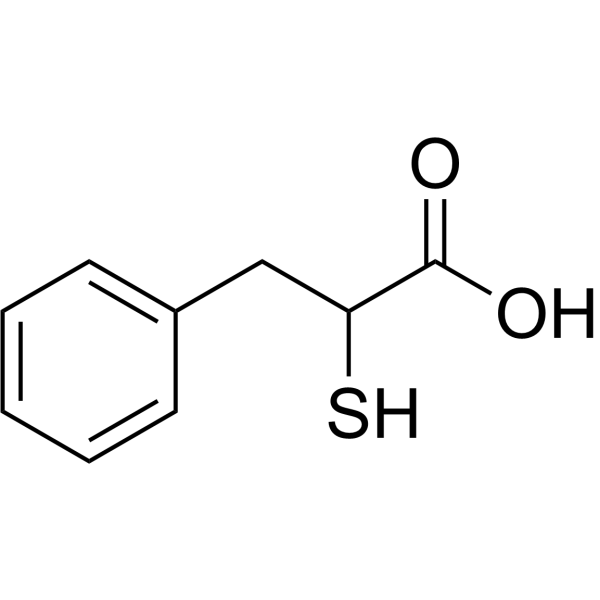 0 ImagesCat. No.: HY-111176CAS No.: 90536-15-5Synonyms: 3-Phenyl-2-sulfanylpropanoic acidPD 145305 (3-Phenyl-2-sulfanylpropanoic acid) is an inactive analogue of PD150606. PD150606 is a selective calpain inhibitor.
-
AEP-IN-1
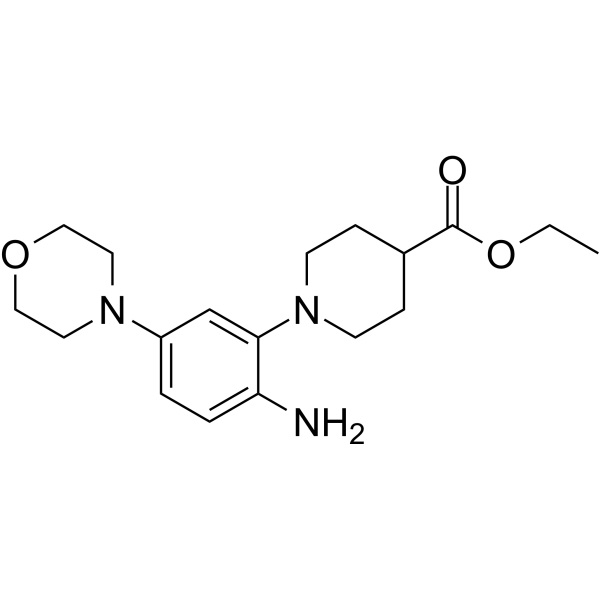 0 ImagesCat. No.: HY-146068CAS No.: 3032742-75-6AEP-IN-1 (Compound 13e) is a CNS agent-like non-covalent inhibitor of asparagine endopeptidase (AEP), with the IC50 of 89 nM. AEP-IN-1 can be used for the research of numerous neurological diseases such as Alzheimer’s disease (AD).

-
Z-Leu-Tyr-Chloromethylketone
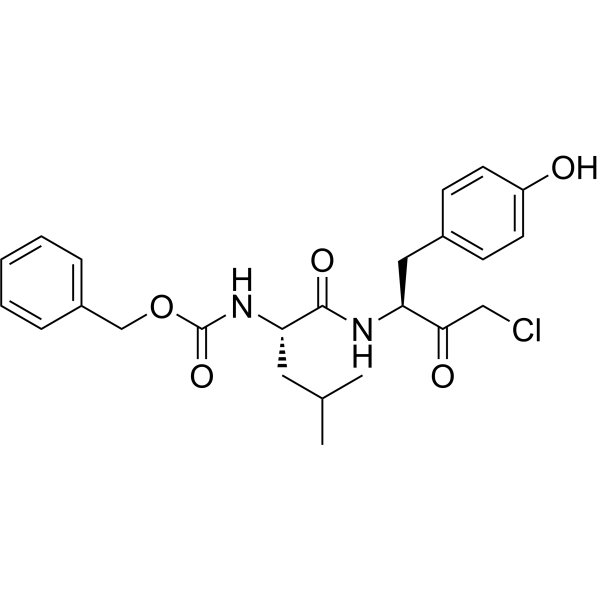 0 ImagesCat. No.: HY-P4293CAS No.: 56979-35-2Z-Leu-Tyr-Chloromethylketone is a calpain inhibitor.
-
H-Pro-Thr-Glu-Phe-p-nitro-Phe-Arg-Leu-OH
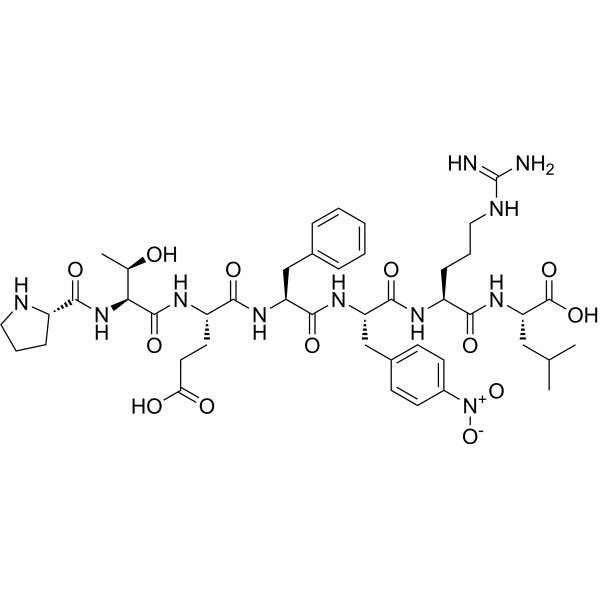 0 ImagesCat. No.: HY-P4561CAS No.: 90331-82-1H-Pro-Thr-Glu-Phe-p-nitro-Phe-Arg-Leu-OH is a water-soluble polypeptide that can serve as a substrate for cathepsin D, pepsin and pepsinogen. H-Pro-Thr-Glu-Phe-p-nitro-Phe-Arg-Leu-OH has potential applications in biochemical analysis.
-
NCO-700
 0 ImagesCat. No.: HY-106058CAS No.: 84518-80-9NCO-700 is a dual cathepsin B and calcium-activated neutral protease (CANP) inhibitor with IC50 values of 0.8 and 46 μM, respectively. NCO-700 reduces the degradation of myocardial fibrin by inhibiting protease activity. NCO-700 also has inhibitory effects on hormone-independent tumor cells, such as prostate cancer cells, and induces apoptosis. NCO-700 can be used to study myocardial ischemia and refractory hormone-independent tumors.

-
Calpain-1 (pig)
 0 ImagesCat. No.: HY-E70197CAS No.: 689772-75-6Synonyms: μ-CalpainCalpain-1 (pig) (μ-Calpain) is an intracellular Ca2+-regulated cysteine protease. Calpain-1 (pig) exhibits neuroprotective effect.




