



Cathepsin Substrate
- 1
- 2
-
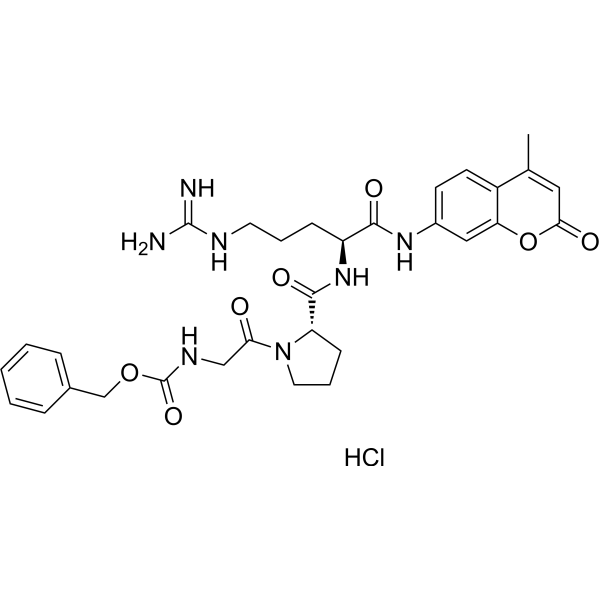
Z-Gly-Pro-Arg-AMC hydrochloride
 0 Images
Z-Gly-Pro-Arg-AMC hydrochloride is an AMC-labeled fluorescent peptide substrate used in various in vitro biochemical assays for proteases. Z-Gly-Pro-Arg-AMC hydrochloride releases free AMC upon cleavage of the Arg-AMC peptide bond by proteases, generating a fluorescent signal. Z-Gly-Pro-Arg-AMC hydrochloride is efficiently hydrolyzed by CatCΔEx and recombinant proMlCtL, and can also serve as a detection substrate for KLK family proteases.
-
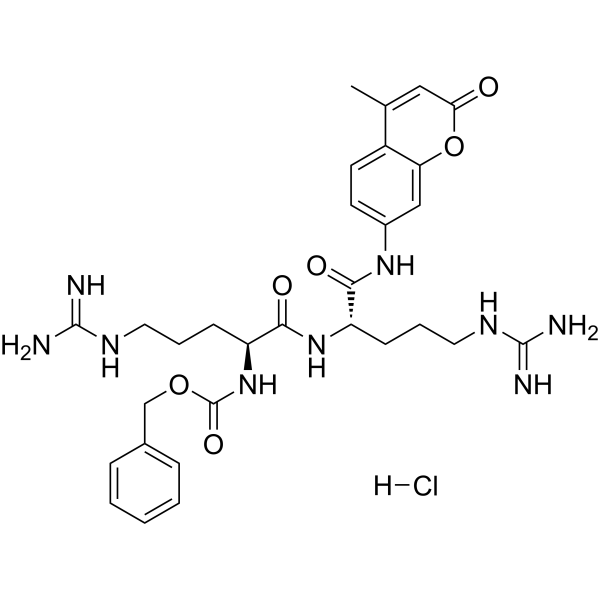
Z-Arg-Arg-AMC hydrochloride
 0 Images
Z-Arg-Arg-AMC hydrochloride is a highly selective fluorescent Cathepsin B substrate. Z-Arg-Arg-AMC hydrochloride can be hydrolyzed by Cathepsin B to produce a fluorescent product for enzyme activity detection.
-
Poly-L-Glutamic acid (MW 700000)
 0 Images
Poly-L-Glutamic acid (MW 700000) is a synthetic polypeptide with biocompatibility, biodegradability and non-immunogenicity. Poly-L-Glutamic acid is an ideal tumor-targeting polymer carrier. Poly-L-Glutamic acid can be hydrolyzed by cathepsin B during metabolic decomposition.
-
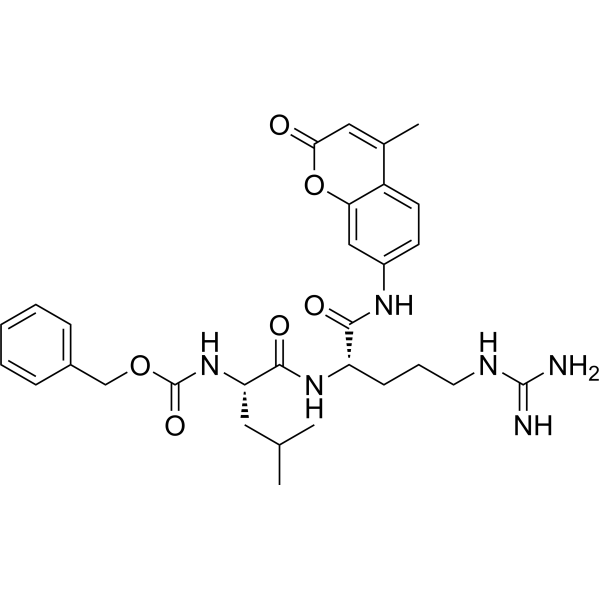
Z-Leu-Arg-AMC
 0 Images
Z-Leu-Arg-AMC is a fluorogenic peptide substrate for cysteine proteases (e.g., Cathepsin) (Ex=350 nm,Em=460 nm). Z-Leu-Arg-AMC is preferentially cleaved by Cathepsin K and S under weakly acidic conditions, while its hydrolysis relies on residual Cathepsin S activity at neutral pH. Z-Leu-Arg-AMC serves as a substrate for recombinant Sphenophorus levis Cathepsin L, falcipain-2, falcipain-3, berghepain-2, knowlepain-2, vivapain-2, as well as falcipain-2 chimeras and constructs. It enables quantitative detection of cysteine protease activity in human inflammatory bronchoalveolar lavage fluid via fluorescence generation. Z-Leu-Arg-AMC can be used in research related to pulmonary inflammatory diseases and malaria.
-
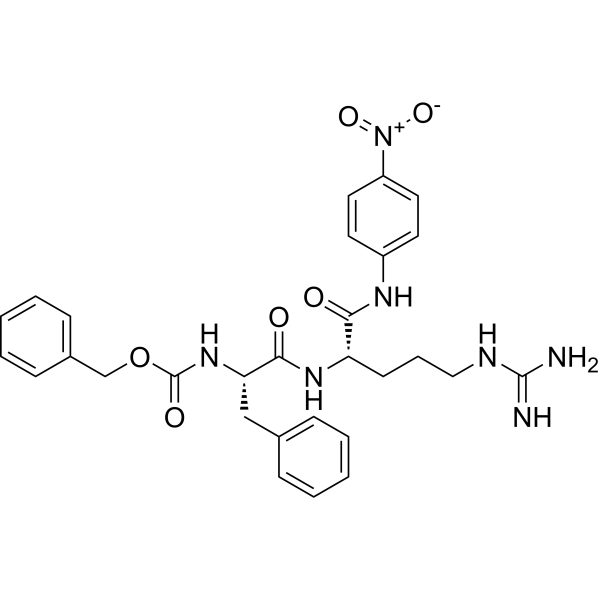
Z-Phe-Arg-pNA
 0 Images
Z-Phe-Arg-pNA is a chromogenic peptide substrate and a Cathepsin L substrate. Z-Phe-Arg-pNA is cleaved by recombinant CatL3. Z-Phe-Arg-pNA is used in the research of inflammatory bowel disease.
-
N-CBZ-Phe-Arg-AMC TFA
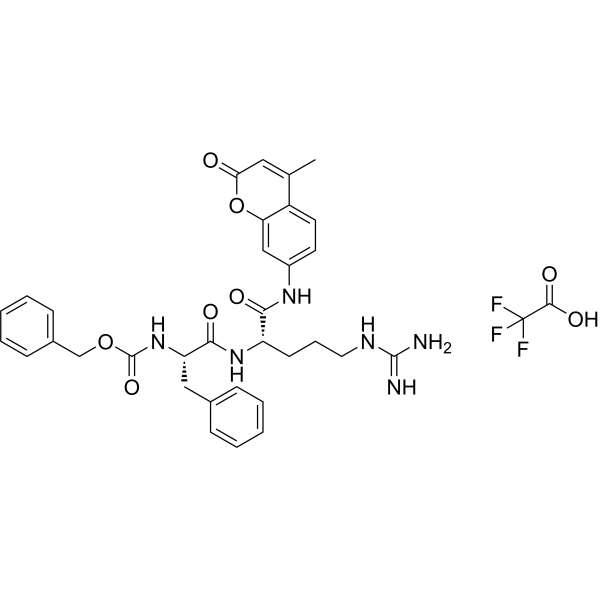 0 ImagesArt. -Nr.: HY-P1759BReinheit: 99.79%Synonyms: Z-FR-AMC TFA
N-CBZ-Phe-Arg-AMC (Z-FR-AMC) TFA is a cathepsin substrate used in assessment activity of lysosomal cathepsin enzymes.
-
Z-Val-Val-Arg-AMC
 0 Images
Z-Val-Val-Arg-AMC is a fluorescent peptide substrate that can be used to test the activity of cathepsins. Z-Val-Val-Arg-AMC exhibits preference for Cathepsin S. Z-Val-Val-Arg-AMC undergoes hydrolysis catalyzed by cathepsin to release the AMC fluorophore, thereby enabling fluorescence-based quantitative assessment of the target enzyme activity.
-
Z-Nle-Lys-Arg-AMC acetate
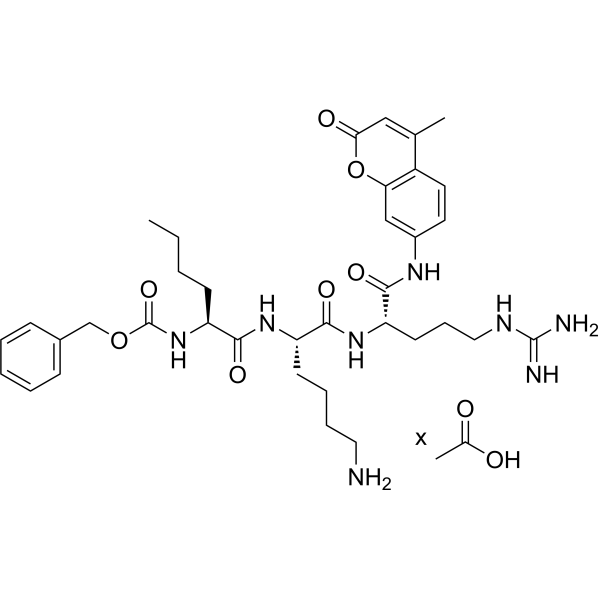 0 ImagesArt. -Nr.: HY-155667AReinheit: 99.69%
Z-Nle-Lys-Arg-AMC acetate is a selective Fluorescent peptide substrate for Cathepsin B. Z-Nle-Lys-Arg-AMC acetate releases AMC upon cleavage, thereby enabling monitoring of proteolytic activity over an acidic to neutral pH range.
-
N-CBZ-Phe-Arg-AMC hydrochloride
 0 ImagesSynonyms: Z-FR-AMC hydrochloride
-
N-CBZ-Phe-Arg-AMC
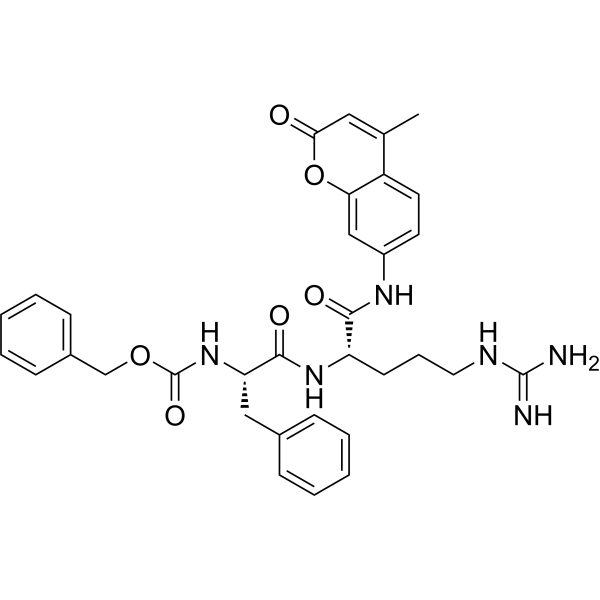 0 ImagesSynonyms: Z-FR-AMC
N-CBZ-Phe-Arg-AMC (Z-FR-AMC) is a cathepsin substrate used in assessment activity of lysosomal cathepsin enzymes.
-
diABZI-V/C-Mal
 0 Images
diABZI-V/C-Mal is a STING agonist (with a STING EC50 of 314 nM in TH1 dual reporter cells) and a Cathepsin B substrate. diABZI-V/C-Mal activates STING, thereby triggering the IRF3 signaling pathway. diABZI-V/C-Mal is cleaved by Cathepsin B to regenerate diABZI-NH2.
-
Poly-L-glutamic acid sodium salt (MW 30000)
 0 ImagesArt. -Nr.: HY-W596474DCAS. Nr.: 26247-79-0
Poly-L-glutamic acid sodium salt (MW 30000) is a synthetic polypeptide with biocompatibility, biodegradability and non-immunogenicity. Poly-L-glutamic acid sodium salt is an ideal tumor-targeting polymer carrier. Poly-L-glutamic acid sodium salt can be hydrolyzed by cathepsin B during metabolic decomposition.
-
Poly-L-glutamic acid sodium salt (MW 15000)
 0 ImagesArt. -Nr.: HY-W596474CCAS. Nr.: 26247-79-0
Poly-L-glutamic acid sodium salt (MW 15000) is a synthetic polypeptide with biocompatibility, biodegradability and non-immunogenicity. Poly-L-glutamic acid sodium salt is an ideal tumor-targeting polymer carrier. Poly-L-glutamic acid sodium salt can be hydrolyzed by cathepsin B during metabolic decomposition.
-
L-Arginine p-nitroanilide dihydrochloride, 98%
 0 ImagesSynonyms: H-Arg-pNA 2HCl, 98%
L-Arginine p-nitroanilide dihydrochloride, 98% (H-Arg-pNA 2HCl, 98%) is a chromogenic substrate for cathepsin H. L-Arginine p-nitroanilide dihydrochloride, 98% can be hydrolyzed to produce a chromogenic product detectable by photometry, which is used to measure the activities of cathepsin H and aminopeptidases.
-
Val-Cit-PABC-DOX
 0 ImagesArt. -Nr.: HY-160774CAS. Nr.: 1022094-34-3
Val-Cit-PABC-DOX is an ε-poly-L-lysine-based drug conjugate, serving as a drug-linker conjugate for ADC. It is formed by conjugating Doxorubicin (HY-15142), an inhibitor of DNA topoisomerase I and topoisomerase II, with Val-Cit-PABC. Val-Cit-PABC-DOX relies on the self-cleavable PABC spacer to enable Cathepsin B-mediated linker cleavage and release of free Doxorubicin (HY-15142A). Val-Cit-PABC-DOX can be used in cancer-related research.
-
Poly-L-glutamic acid sodium salt (MW 60000)
 0 ImagesArt. -Nr.: HY-W596474HCAS. Nr.: 26247-79-0
Poly-L-glutamic acid sodium salt (MW 60000) is a synthetic polypeptide with biocompatibility, biodegradability and non-immunogenicity. Poly-L-glutamic acid sodium salt is an ideal tumor-targeting polymer carrier. Poly-L-glutamic acid sodium salt can be hydrolyzed by cathepsin B during metabolic decomposition.
-
Poly-L-glutamic acid sodium salt (MW 7500)
 0 ImagesArt. -Nr.: HY-W596474BCAS. Nr.: 26247-79-0
Poly-L-glutamic acid sodium salt (MW 7500) is a synthetic polypeptide with biocompatibility, biodegradability and non-immunogenicity. Poly-L-glutamic acid sodium salt is an ideal tumor-targeting polymer carrier. Poly-L-glutamic acid sodium salt can be hydrolyzed by cathepsin B during metabolic decomposition.
-
Ac-FR-AFC TFA
 0 ImagesArt. -Nr.: HY-P11326Reinheit: 99.51%
Ac-FR-AFC TFA is a fluorometric substrate for cathepsin L. Ac-FR-AFC TFA can be used for the research of glioblastoma.
-
KYS-1
 0 Images
KYS-1 is a specific fluorescent substrate for Cathepsin E, with a Km of 1.90 μM. KYS-1 is specifically cleaved by Cathepsin E at the Phe-Leu bond under acidic conditions (optimal pH approximately 4.0), relieving fluorescence quenching and releasing a strong signal, thereby enabling measurement of Cathepsin E enzyme activity. KYS-1 can be used for breast cancer research.
-
Ac-Glu-Asp(EDANS)-Lys-Pro-Ile-Leu-Phe-Phe-Arg-Leu-Gly-Lys(DABCYL)-Glu-NH2 acetate
 0 ImagesArt. -Nr.: HY-P4787AReinheit: 99.44%
Ac-Glu-Asp(EDANS)-Lys-Pro-Ile-Leu-Phe-Phe-Arg-Leu-Gly-Lys(DABCYL)-Glu-NH2 acetate is a Cathepsin D substrate, that can be used for cathepsin D FRET assay.
- 1
- 2



