



Z-Phe-Arg-pNA

Based on 1 Customer Validation
Z-Phe-Arg-pNA is a chromogenic peptide substrate and a Cathepsin L substrate. Z-Phe-Arg-pNA is cleaved by recombinant CatL3. Z-Phe-Arg-pNA is used in the research of inflammatory bowel disease.
For research use only. We do not sell to patients.
- Purity : 99.87%
- CAS No.: 117761-01-0
- Formula: C29H33N7O6
- Molecular Weight:575.62
-
Storage:
Sealed storage, away from moisture.
Powder -80°C, 2 years , -20°C, 1 year* In solvent : -80°C, 6 months; -20°C, 1 month (sealed storage, away from moisture)

To place orders, for customer services and technical support, please contact: MedChemExpress USA
Tel: 609-228-6898 E-mail: [email protected] [email protected]


-
 Biological Activity
-
Chemical Information
-
Solvent & Solubility
- Protocols
- Purity & Documentation
- References
-
 Help & FAQs


-
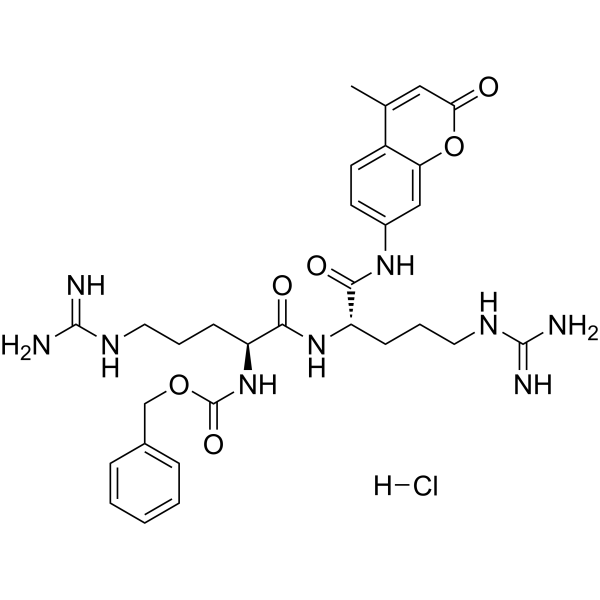
HY-134434
Z-Arg-Arg-AMC hydrochlorideCathepsin B Substrate -
HY-D0843
N-EthylmaleimideCysteine Residues Modifier -
HY-148905
p-Aminophenylmercuric acetateMatrix Metalloproteinases Activator -
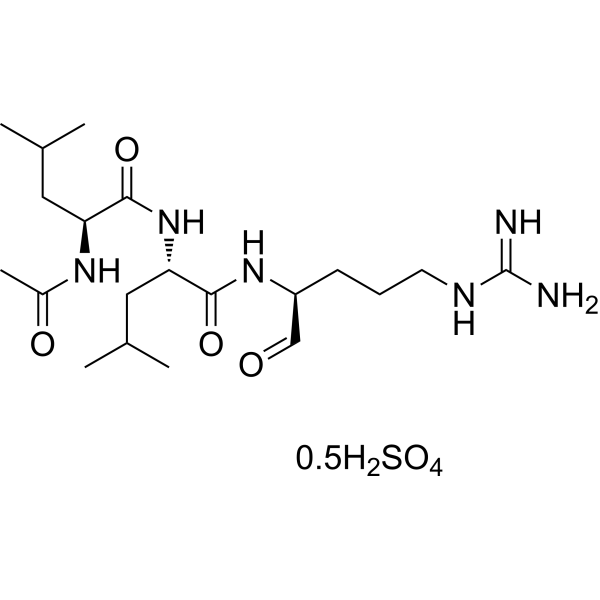
HY-18234A
Leupeptin hemisulfateProtease Inhibitor -
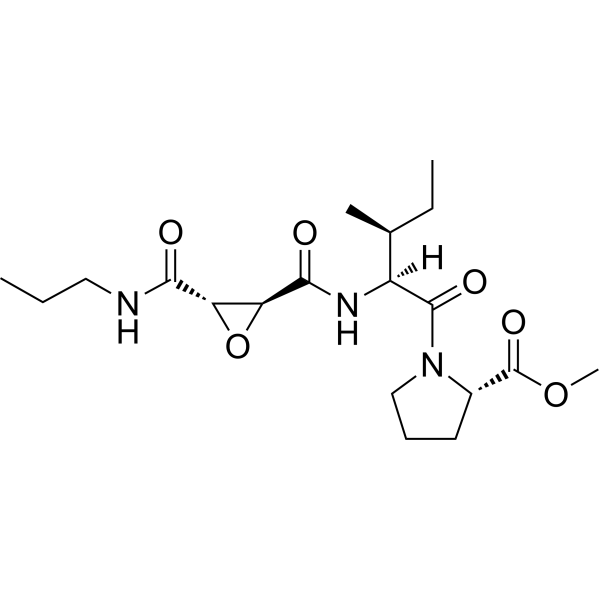
HY-100350
CA-074 methyl esterCathepsin B Inhibitor -
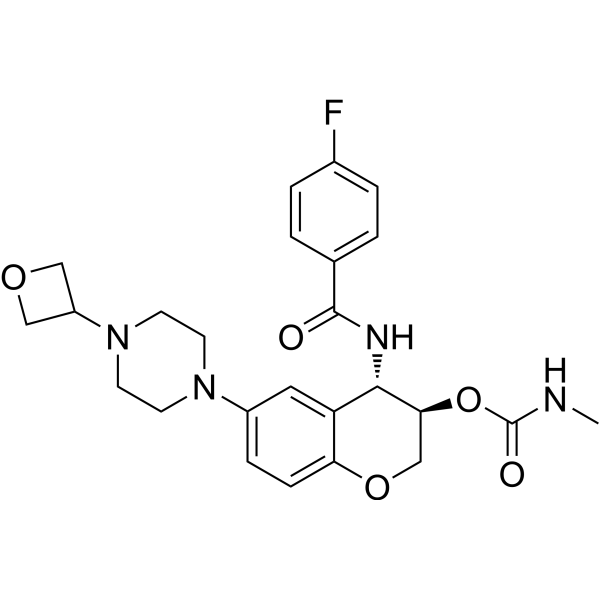
HY-15533
LY 3000328Cathepsin S Inhibitor -
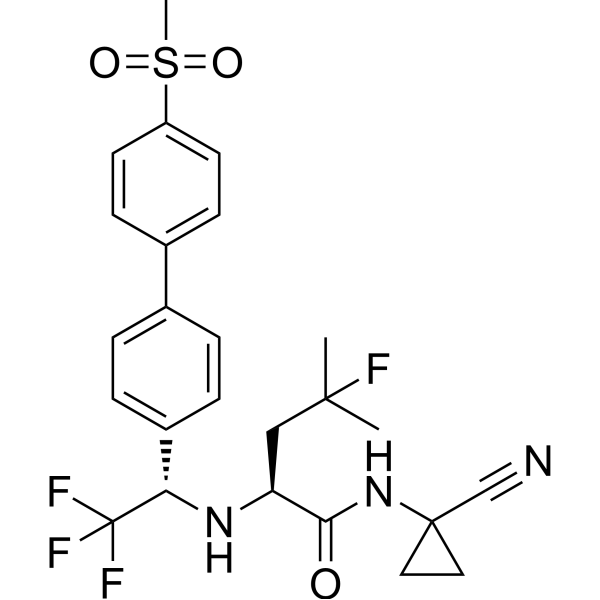
HY-10042
OdanacatibCathepsin K Inhibitor -
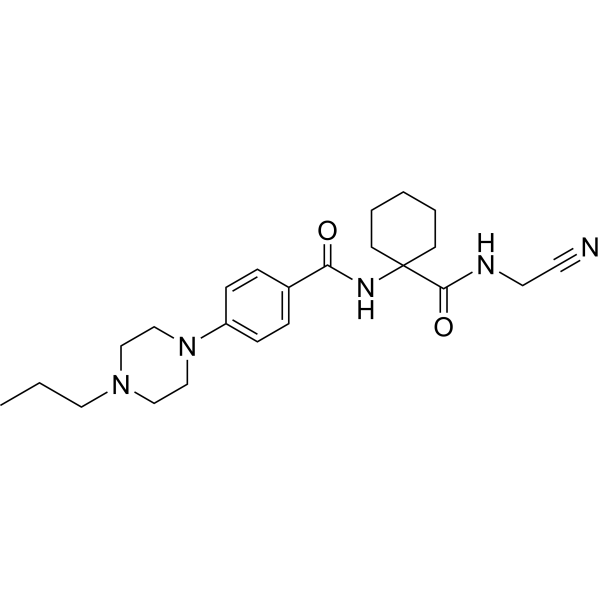
HY-15100
BalicatibCathepsin K Inhibitor -
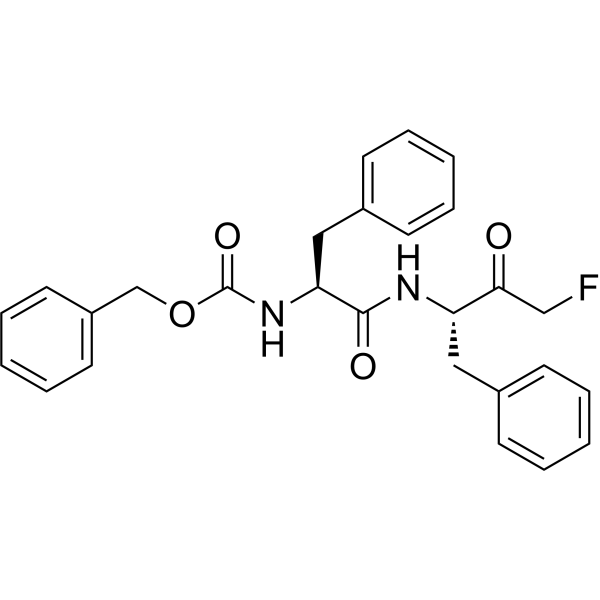
HY-141867
Z-FF-FMKCathepsin L Inhibitor -
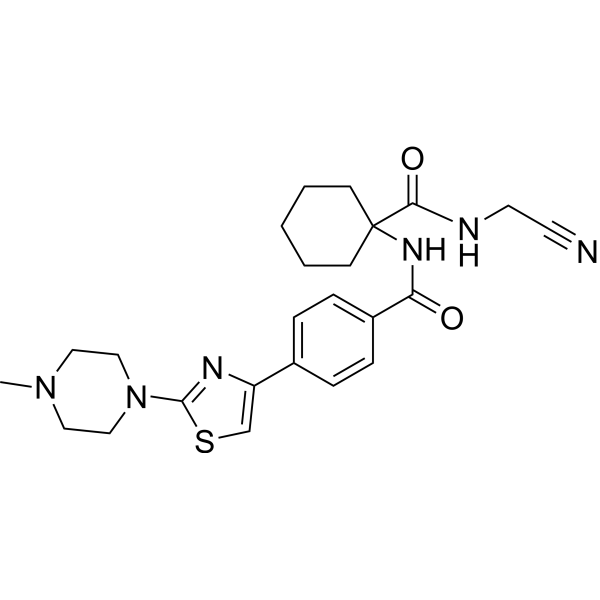
HY-103352
L-006235Cathepsin K Inhibitor -
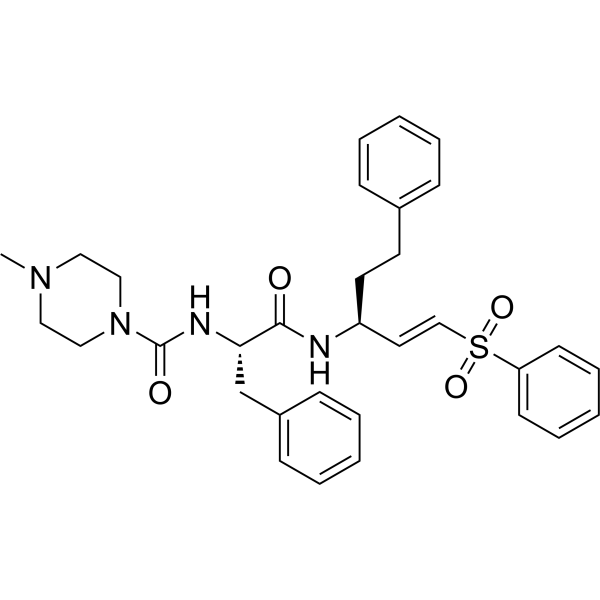
HY-119293
K777Cysteine Protease Inhibitor -
HY-N2905
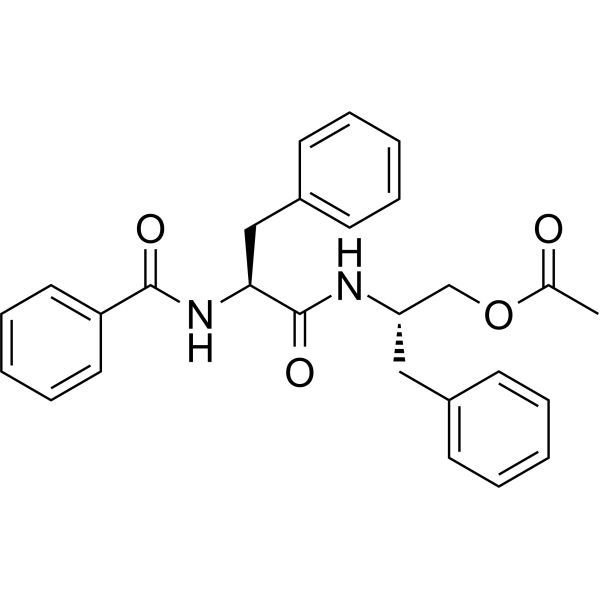
Aurantiamide acetateCathepsin Inhibitor
All Cathepsin Isoforms
More

Biological Activity
Description
IC50 & Target
[1]|
cathepsin L |
In Vitro
Z-Phe-Arg-pNa serves as a substrate for determining the hydrolytic activity of cysteine protease (intestain) in gut extracts of Colorado potato beetle larvae[1].
In the Z-Phe-Arg-pNA (15 mM) peptide substrate assay, leupeptin is the most potent inhibitor of cathepsin B endopeptidase activity, with a Ki of 2.9 × 10⁻¹⁰ M, followed by CA074Me (1.5 × 10⁻⁷ M) and Z-Phe-Phe-FMK (2.3 × 10⁻⁶ M)[2].
Z-Phe-Arg-pNA (100 μM; 30 min) is used as a chromogenic substrate at a concentration of 100 μM (5.88 × Km) to determine the inhibitory effects of 3-cyano-3-aza-β-amino acid derivatives on human cathepsin L[4].
Z-Phe-Arg-pNA (100 μM; 60 min) is a chromogenic substrate suitable for monitoring CatL activity in vitro and is used to determine the Ki values of test inhibitors[5].
MedChemExpress (MCE) has not independently confirmed the accuracy of these methods. They are for reference only. Further protocols information, click here.


Chemical Information
-
CAS No. 117761-01-0
-
Appearance Solid
-
Molecular Weight 575.62
-
Formula C29H33N7O6
-
Color White to off-white
-
Sequence
{Cbz}-Phe-Arg-{pNA}
-
Sequence Shortening
{Cbz}-FR-{pNA}
-
Shipping
Room temperature in continental US; may vary elsewhere.
-
Storage
Sealed storage, away from moisture
Powder -80°C 2 years -20°C 1 year * In solvent : -80°C, 6 months; -20°C, 1 month (sealed storage, away from moisture)


Solvent & Solubility
In Vitro:
H2O : 10 mg/mL (17.37 mM; Need ultrasonic)
Please refer to the solubility information to select the appropriate solvent. Once prepared, please aliquot and store the solution to prevent product inactivation from repeated freeze-thaw cycles.
Storage method and period of stock solution: -80°C, 6 months; -20°C, 1 month (sealed storage, away from moisture). When stored at -80°C, please use it within 6 months. When stored at -20°C, please use it within 1 month.
* Note: If you choose water as the stock solution, please dilute it to the working solution, then filter and sterilize it with a 0.22 μm filter before use.
Please refer to the solubility information to select the appropriate solvent. Once prepared, please aliquot and store the solution to prevent product inactivation from repeated freeze-thaw cycles.
Storage method and period of stock solution: -80°C, 6 months; -20°C, 1 month (sealed storage, away from moisture). When stored at -80°C, please use it within 6 months. When stored at -20°C, please use it within 1 month.
* Note: If you choose water as the stock solution, please dilute it to the working solution, then filter and sterilize it with a 0.22 μm filter before use.
Concentration (start) × Volume (start) = Concentration (final) × Volume (final)

Protocols
-
DSS-Induced Colitis
Dextran sulfate sodium (DSS)-induced colitis is generated by administering DSS in mouse drinking water, producing epithelial injury, barrier disruption, weight loss, diarrhea, fecal blood, colon shortening, histologic mucosal damage, and inflammatory mediator changes; the model is mainly used to study acute or chronic intestinal inflammation resembling selected features of ulcerative colitis. DSS injury is interpreted through clinical and tissue readouts rather than a single molecular endpoint: daily body weight, stool consistency, and bleeding are combined into a disease activity index, while colon length, histology, cytokines, myeloperoxidase activity, intestinal permeability, and tight-junction markers provide complementary measures of inflammation and barrier damage.
-
TNBS-Induced Colitis
TNBS-induced colitis is produced by intrarectal delivery of 2,4,6-trinitrobenzene sulfonic acid in ethanol, where ethanol disrupts the mucosal barrier and TNBS haptenates colonic proteins, generating immune-mediated colonic inflammation with weight loss, diarrhea, ulceration, transmural injury, inflammatory-cell infiltration, and cytokine responses. The model is used as an experimental intestinal inflammation model with Crohn’s disease–like features, especially when Th1-type responses, IL-12–dependent inflammation, chronic relapsing inflammation, or fibrosis-related endpoints are studied.


Purity & Documentation
-
Data Sheet (276 KB)
-
SDS (252 KB)
- English - EN (252 KB)
- Français - FR (252 KB)
- Deutsch - DE (252 KB)
- Norwegian - NO (252 KB)
- Español - ES (252 KB)
- Swedish - SV (252 KB)
- Italian - IT (252 KB)
- Korean - KR (252 KB)
- Portuguese - PT (252 KB)
-
Handling Instructions (2659 KB)
References


Complete Stock Solution Preparation Table
Please refer to the solubility information to select the appropriate solvent. Once prepared, please aliquot and store the solution to prevent product inactivation from repeated freeze-thaw cycles.
Storage method and period of stock solution: -80°C, 6 months; -20°C, 1 month (sealed storage, away from moisture). When stored at -80°C, please use it within 6 months. When stored at -20°C, please use it within 1 month.
| Optional Solvent | Concentration Solvent Mass | 1 mg | 5 mg | 10 mg | 25 mg |
|---|---|---|---|---|---|
| H2O | 1 mM | 1.7373 mL | 8.6863 mL | 17.3726 mL | 43.4314 mL |
| 5 mM | 0.3475 mL | 1.7373 mL | 3.4745 mL | 8.6863 mL | |
| 10 mM | 0.1737 mL | 0.8686 mL | 1.7373 mL | 4.3431 mL | |
| 15 mM | 0.1158 mL | 0.5791 mL | 1.1582 mL | 2.8954 mL |
* Note: If you choose water as the stock solution, please dilute it to the working solution, then filter and sterilize it with a 0.22 μm filter before use.


Z-Phe-Arg-pNA Related Classifications
HY-P4515 Related Classifications
 Powered by Bioz