



Cathepsin S
Cathepsin S is a cysteine protease that enables MHC class II antigen presentation by degrading invariant chain (Ii) so class II molecules can bind antigenic peptides[1]. Mechanistically, purified cathepsin S, but not cathepsin B, H, or D, digests Ii from αβIi trimers and generates αβ-CLIP complexes competent for peptide loading[1]. In antigen-presenting cells, cathepsin S inhibition accumulates class II-associated Ii fragments, attenuates class II-peptide complex formation, and inhibits antigen presentation[2]. Cathepsin S also supports TAP-independent MHC class I cross-presentation, because cathepsin S-deficient dendritic cells lack this vacuolar pathway and show reduced crosspriming in vivo[3]. In vascular disease models, cathepsin S participates with cathepsins K and V in elastin degradation, generating elastin-derived peptides that promote vascular smooth muscle cell calcification through ERK1/2 signaling[4]. Compared with related isoforms, cathepsin S shows a distinct immune role because cathepsin L did not process invariant chain efficiently in large yellow croaker, while cathepsin S did[5]. For experimental applications, selective cathepsin S inhibitors such as CSI-75 increase invariant chain Lip10 and reduce antigen-specific Th1/Th17 responses in autoimmune models[6].
References:
- [1]. Riese RJ, et al. Essential role for cathepsin S in MHC class II-associated invariant chain processing and peptide loading. Immunity. 1996 Apr;4(4):357-66. [Content Brief]
- [2]. Riese RJ, et al. Cathepsin S activity regulates antigen presentation and immunity. J Clin Invest. 1998 Jun 1;101(11):2351-63.
- [3]. Shen L, et al. Important role of cathepsin S in generating peptides for TAP-independent MHC class I crosspresentation in vivo. Immunity. 2004 Aug;21(2):155-65. doi: 10.1016/j.immuni.2004.07.004. PMID: 15308097. [Content Brief]
- [4]. Andrault PM, et al. Elastolytic activity of cysteine cathepsins K, S, and V promotes vascular calcification. Sci Rep. 2019 Jul 4;9(1):9682. [Content Brief]
- [5]. Li Q, et al. Cathepsin S, but not cathepsin L, participates in the MHC class II-associated invariant chain processing in large yellow croaker (Larimichthys crocea). Fish Shellfish Immunol. 2015 Dec;47(2):743-50. [Content Brief]
- [6]. Baugh M, et al. Therapeutic dosing of an orally active, selective cathepsin S inhibitor suppresses disease in models of autoimmunity. J Autoimmun. 2011 May;36(3-4):201-9. doi: 10.1016/j.jaut.2011.01.003. Epub 2011 Mar 24. PMID: 21439785. [Content Brief]
-
Cathepsin S Related Products (20)
Related Products (20)

-
Recombinant Proteins (2)
- 1
-
LY 3000328
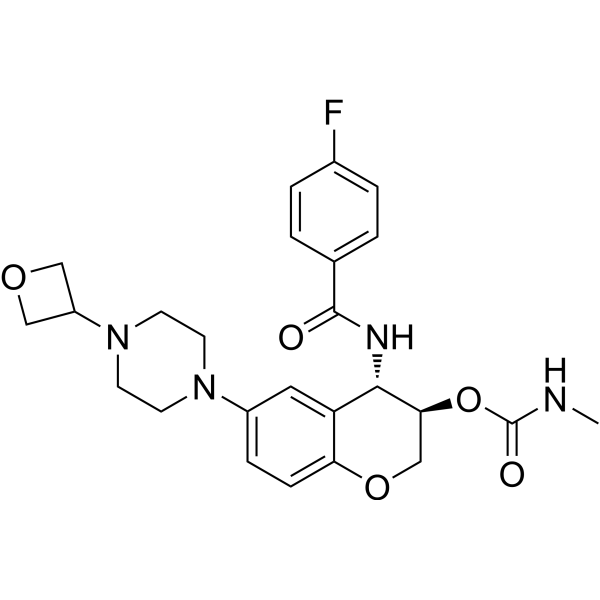 0 ImagesSynonyms: Z-FL-COCHOLY 3000328 (Z-FL-COCHO) is a potent and selective Cathepsin S (Cat S) inhibitor with IC50s of 7.7 and 1.67 nM for hCat S and mCat S, respectively.
-
Z-Leu-Arg-AMC
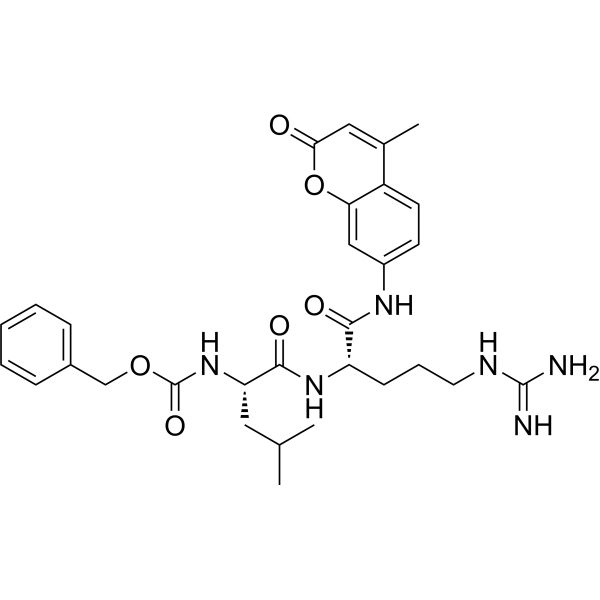 0 ImagesZ-Leu-Arg-AMC is a fluorogenic peptide substrate for cysteine proteases (e.g., Cathepsin) (Ex=350 nm,Em=460 nm). Z-Leu-Arg-AMC is preferentially cleaved by Cathepsin K and S under weakly acidic conditions, while its hydrolysis relies on residual Cathepsin S activity at neutral pH. Z-Leu-Arg-AMC serves as a substrate for recombinant Sphenophorus levis Cathepsin L, falcipain-2, falcipain-3, berghepain-2, knowlepain-2, vivapain-2, as well as falcipain-2 chimeras and constructs. It enables quantitative detection of cysteine protease activity in human inflammatory bronchoalveolar lavage fluid via fluorescence generation. Z-Leu-Arg-AMC can be used in research related to pulmonary inflammatory diseases and malaria.
-
Balicatib
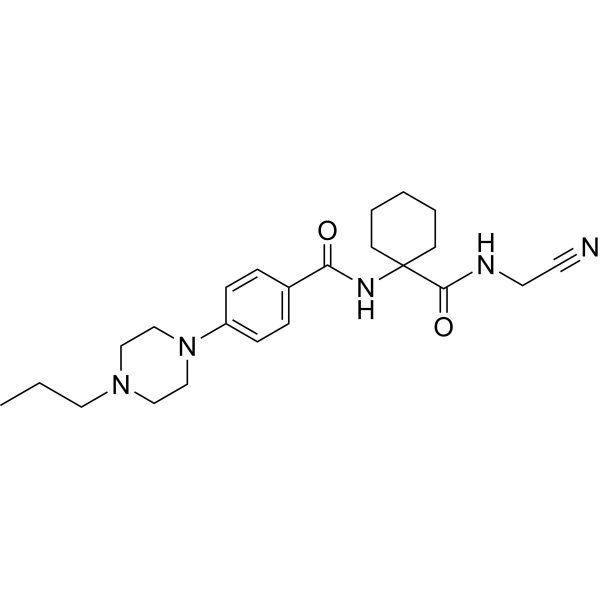 0 ImagesSynonyms: AAE581Balicatib (AAE581) is a potent, orally active and selective cathepsin K inhibitor with IC50 values of 22, 61, 48, 2900 nM for cathepsin K, cathepsin B, cathepsin L, cathepsin S, respectively. Balicatib inhibits bone turnover, decreases bone formation rates. Balicatib has the potential for the research of osteoporosis.
-
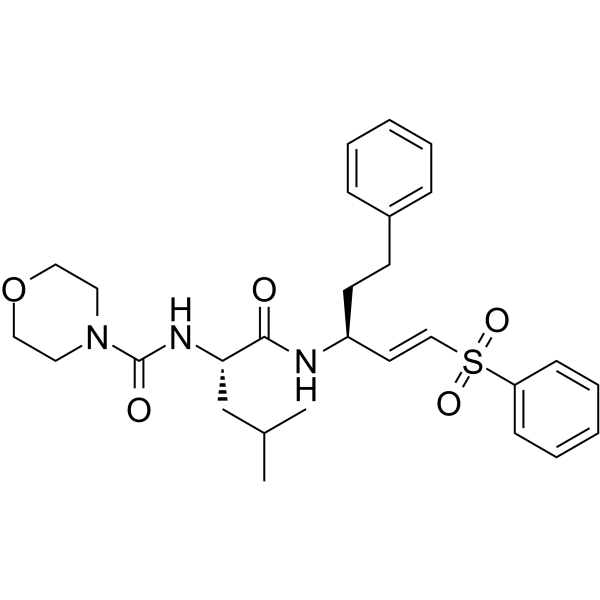
Petesicatib
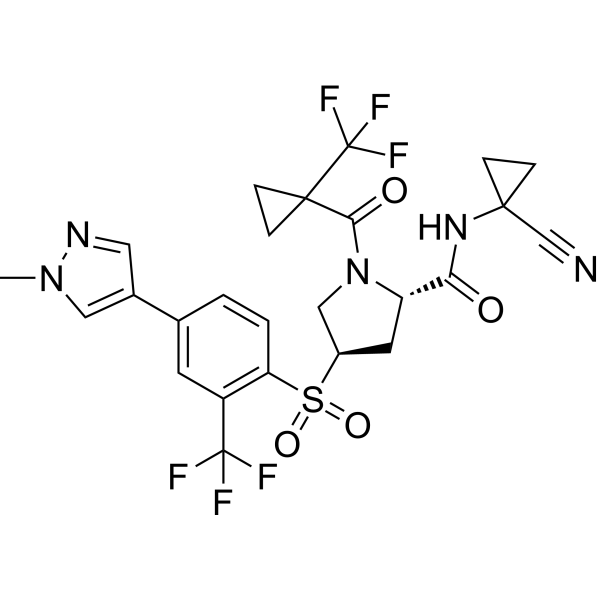 0 ImagesSynonyms: RO5459072; RG-7625Petesicatib (RO5459072; RG-7625) is a cathepsin S inhibitor, used in research of immune diseases.
-
Cathepsin-IN-5
 0 ImagesCat. No.: HY-182269CAS No.: 2475078-38-5Cathepsin-IN-5 is a cathepsin inhibitor with IC50 values of 6.2 μM and 81 nM for cathepsin L and cathepsin S. Cathepsin-IN-5 inhibits cancer cells proliferation, induces apoptosis, reduces growth of hepatocellular tumors in mouse models, and modulates expression of genes linked to cell death, cell proliferation, and cellular processes. Cathepsin-IN-5 can be used for the research of hepatocellular carcinoma.
-
Cathepsin L-IN-7
 0 ImagesCat. No.: HY-183940CAS No.: 1194047-02-3Cathepsin L-IN-7 is an inhibitor of cathepsin L, cathepsin B and cathepsin S. Cathepsin L-IN-7 has an IC50 of 0.011 μM against cathepsin L and an IC50 of 0.062 μM against cathepsin S, while it shows weak inhibitory activity against cathepsin B. Cathepsin L-IN-7 binds to the active site of cysteine proteases and blocks their proteolytic function. Cathepsin L-IN-7 can be used in research on viral infections and cancer.
-
BI-1124
 0 ImagesCat. No.: HY-171925CAS No.: 752237-69-7BI-1124 is a cathepsin S inhibitor that exhibits simulated sufficient ocular pharmacokinetic-pharmacodynamic coverage in rabbit models via topical ocular administration. BI-1124 can be used for the research of age-related dry eye disease.
-
RO5461111
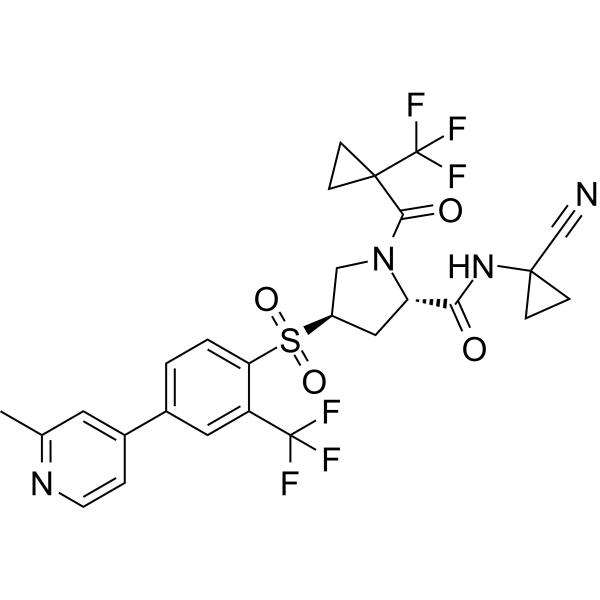 0 ImagesRO5461111 a highly specific and orally active antagonist of Cathepsin S with IC50s of 0.4 nM (human Cathepsin S) and 0.5 nM (murine Cathepsin S), respectively. RO5461111 can effectively inhibit the activation of antigen-specific T cells and B cells. RO5461111 can improve pulmonary inflammation and lupus nephritis.
-
VBY-825
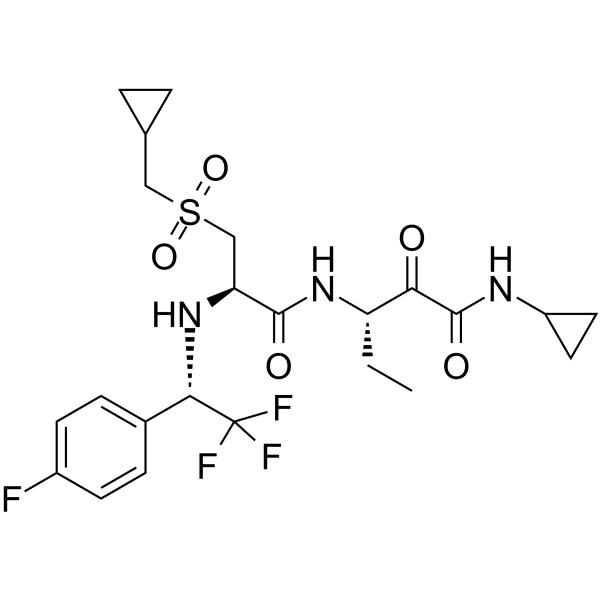 0 ImagesVBY-825 is an orally available novel reversible cathepsin inhibitor that has high inhibitory potency against cathepsin B, L, S and V, and possesses anti-tumor, anti-inflammatory and analgesic effects.
-
Cathepsin Inhibitor 2
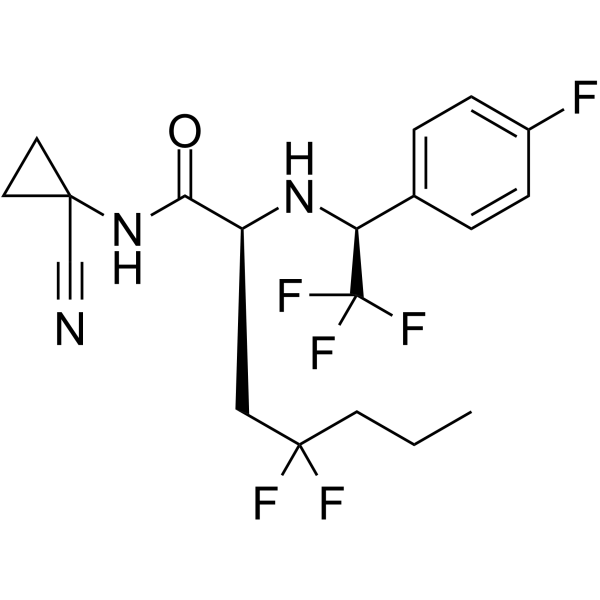 0 ImagesCathepsin Inhibitor 2 is a potent Cathepsin S inhibitor extracted from patent WO2009123623A1, has a Ki of <20 nM.
-
Cathepsin L/S-IN-1
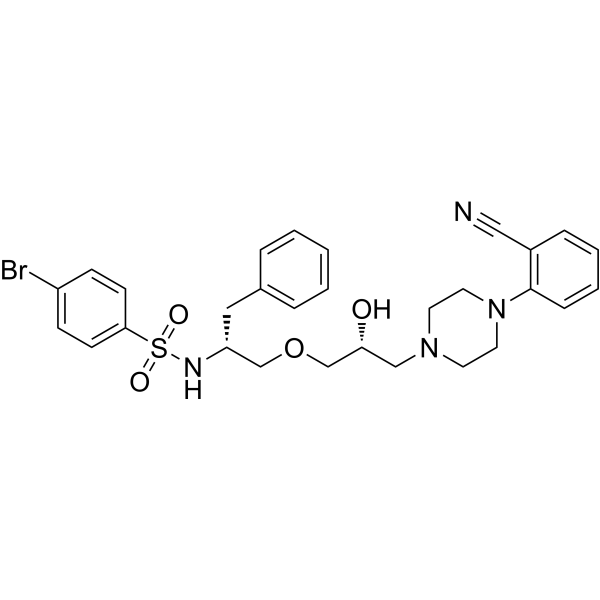 0 ImagesCathepsin L/S-IN-1 is a dual inhibitor of Cathepsin L and Cathepsin S with IC50s of 4.10 μM and 1.79 μM, respectively. Cathepsin L/S-IN-1 shows a significant antimetastatic and invasive effects on pancreatic cancer BxPC-3 and PANC-1 cells.
-
TS-24
 0 ImagesTS-24 is an inhibitor for cathepsin S, with an IC50 of 4.3 μM. TS-24 exhibits radiosensitizing activity in wild type breast cancer susceptibility gene 1 (BRCA1) and in TNBC xenograft mice model, through induction of apoptosis.
-
MIV-247
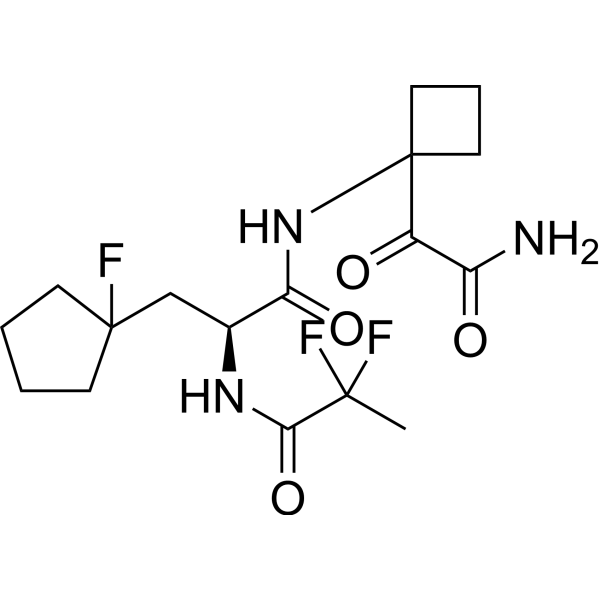 0 ImagesCat. No.: HY-112583CAS No.: 1352817-76-5MIV-247 is a selective cathepsin S inhibitor with Kis of 2.1, 4.2 and 7.5 nM for human, mouse and cynomolgus monkey cathepsin S, respectively.
-
Cathepsin Inhibitor 4
 0 ImagesCat. No.: HY-161721Cathepsin Inhibitor 4 (Compound 45) is a selective inhibitor for Cathepsin S with Ki of 0.04 nM.
-
JNJ 10329670
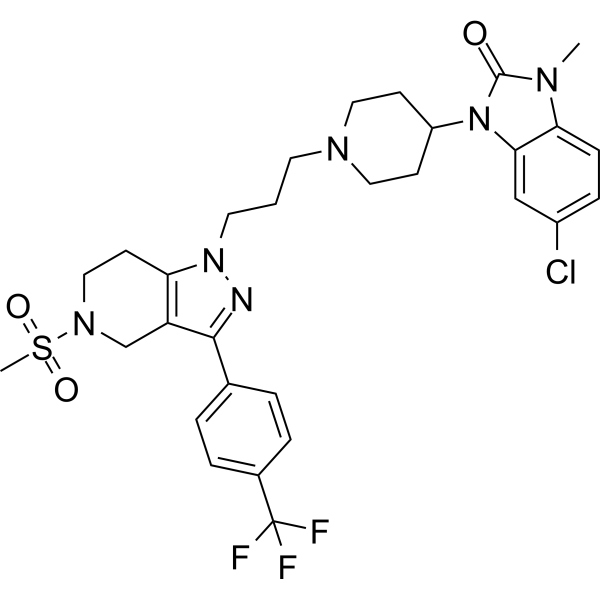 0 ImagesCat. No.: HY-123531CAS No.: 400797-24-2JNJ 10329670 is a potent and selective noncovalent cathepsin S inhibitor with a Ki value of 34 nM for human cathepsin S. JNJ 10329670 blocks invariant chain proteolysis in B cells and dendritic cells, as well as antigen-induced T cell proliferation.
-
Cathepsin L-IN-6
 0 ImagesCat. No.: HY-180799CAS No.: 3077842-39-5Cathepsin L-IN-6 (Compound 6a) is a selective cathepsin L inhibitor with an IC50 of 0.021 μM. Cathepsin L-IN-6 suppresses cathepsin L activity by directly binding to cathepsin L. Cathepsin L-IN-6 inhibits IL-6 and IL-8. Cathepsin L-IN-6 shows a high anti-inflammatory activity. Cathepsin L-IN-6 can be used in the research of acute lung injury.
-
ASPER-29
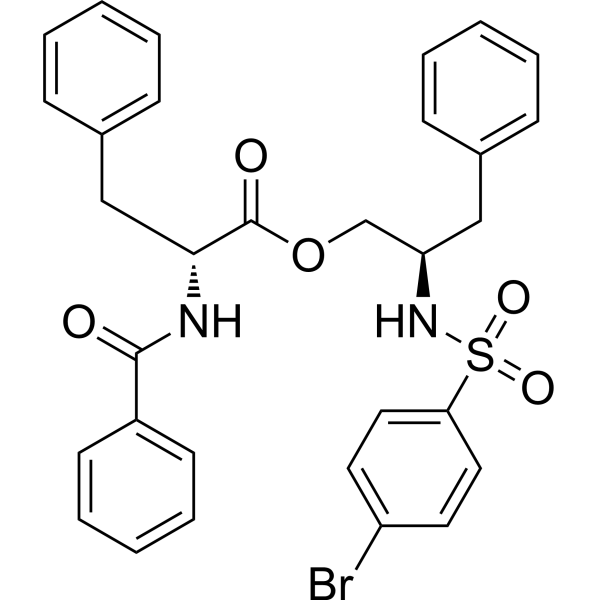 0 ImagesCat. No.: HY-152210CAS No.: 2630388-03-1ASPER-29 is Asperphenamate HY-129578 analog. ASPER-29 also is a dual cathepsin L and S inhibitor with IC50 value of 6.03 μM and 5.02 μM, respectively. ASPER-29 can be used for the research of the migration and invasion of cancer.
-
Alkyne-GRWHPM-CONH-NH-CMK
 0 ImagesCat. No.: HY-P11857Alkyne-GRWHPM-CONH-NH-CMK is a covalent Cathepsin S inhibitor (IC50=82 nM). Alkyne-GRWHPM-CONH-NH-CMK has an N-terminal alkyne handle for CuAAC functionalization that engages off-target protein disulfide isomerase PDIA1. Alkyne-GRWHPM-CONH-NH-CMK can be used for the research of autoimmune disorders.
-
SARS-CoV-2-IN-77
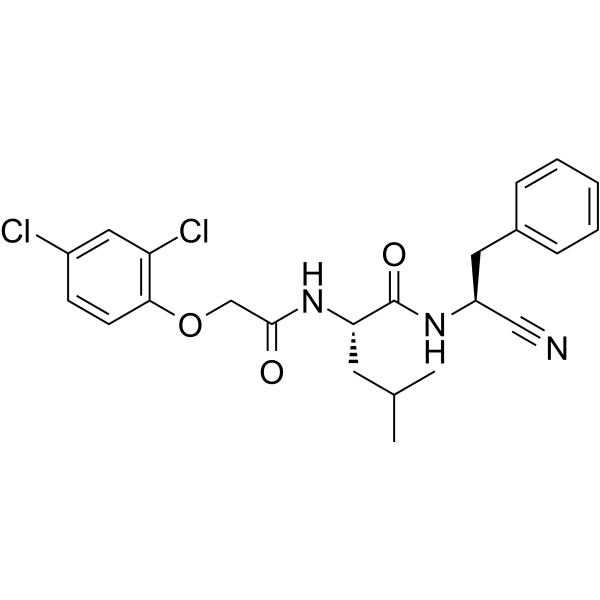 0 ImagesCat. No.: HY-163206SARS-CoV-2-IN-77 (compound 11e) is a cathepsin L and cathepsin S inhibitor with Ki values of 111 nM and 103 nM, respectively. SARS-CoV-2-IN-77 inhibits SARS-CoV-2 with an EC50 value of 38.4 nM in Calu-3 cells without showing cytotoxicity.
- 1




