



Cathepsin D
Cathepsin D is a lysosomal aspartic protease whose major described function is intracellular catabolism in lysosomal compartments, with additional roles in hormone processing and antigen processing[1]. Its function extends beyond nonspecific acidic bulk degradation, because cathepsin D-deficient mice maintain lysosomal bulk proteolysis but develop intestinal mucosal atrophy, lymphoid-cell destruction, and early death, indicating roles in limited proteolysis and tissue homeostasis[2]. Mechanistically, cathepsin D participates in endocytic and autophagic pathways where lysosomal proteases regulate substrate degradation and cellular remodeling[3]. In apoptosis-related models, mature lysosomal cathepsin D can translocate to the cytosol, and cathepsin D activity has been linked to induced apoptosis[4]. In breast cancer biology, cathepsin D is overexpressed and hypersecreted by epithelial breast cancer cells, correlates with clinical metastasis, and stimulates tumorigenicity, metastasis, cancer-cell proliferation, fibroblast outgrowth, and angiogenesis[4]. Compared with cathepsin E, cathepsin D showed distinct cytosolic activity after lysosomal permeabilization, because cathepsin D silencing prevented stefin B degradation whereas cathepsin E silencing did not[5]. For experimental applications, pepstatin A inhibited aspartic-protease-dependent stefin B degradation, and fluorogenic peptide probes detected cathepsin D activity in macrophages challenged with bacteria[5][6].
References:
- [1]. Fusek M, et al. Dual role of cathepsin D: ligand and protease. Biomed Pap Med Fac Univ Palacky Olomouc Czech Repub. 2005 Jun;149(1):43-50. [Content Brief]
- [2]. Saftig P, et al. Mice deficient for the lysosomal proteinase cathepsin D exhibit progressive atrophy of the intestinal mucosa and profound destruction of lymphoid cells. EMBO J. 1995 Aug 1;14(15):3599-608. [Content Brief]
- [3]. Müller S, et al. Specific functions of lysosomal proteases in endocytic and autophagic pathways. Biochim Biophys Acta. 2012 Jan;1824(1):34-43. [Content Brief]
- [4]. Liaudet-Coopman E, et al. Cathepsin D: newly discovered functions of a long-standing aspartic protease in cancer and apoptosis. Cancer Lett. 2006 Jun 18;237(2):167-79. [Content Brief]
- [5]. Železnik TZ, et al. Aspartic cathepsin D degrades the cytosolic cysteine cathepsin inhibitor stefin B in the cells. Biochem Biophys Res Commun. 2015 Sep 18;465(2):213-7. [Content Brief]
- [6]. Rodriguez-Rios M, et al. A fluorogenic, peptide-based probe for the detection of Cathepsin D in macrophages. Commun Chem. 2023 Nov 2;6(1):237. [Content Brief]
-
Cathepsin D Related Products (14)
Related Products (14)

-
Recombinant Proteins (5)
-
Antibodies (1)
- 1
-
Umibecestat
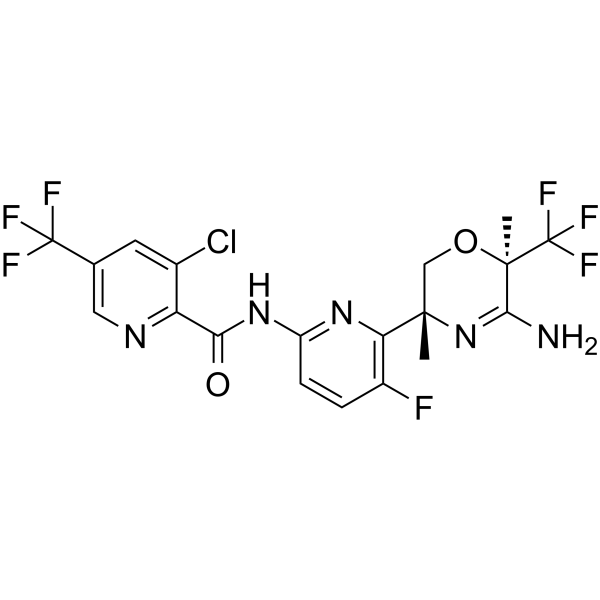 0 ImagesSynonyms: CNP520Umibecestat (CNP520) is a selective, orally active BACE inhibitor, with an IC50 of 11 nM for hBACE-1, 10 nM for mouse BACE-1, and 30 nM for hBACE-2. Umibecestat reduces β-Amyloid levels in the brain and cerebrospinal fluid, decreases β-amyloid plaque deposition, and inhibits plaque-associated neuroinflammation. Umibecestat is used in research related to Alzheimer's disease.
-
NOTA-FZCD-3
 0 ImagesCat. No.: HY-P11844Purity: 98.43%NOTA-FZCD-3 is a NOTA (HY-134418)-labeled FZCD-3 polypeptide precursor that targets cathepsin D (CTSD) with a KD of 0.65 μM. NOTA-FZCD-3 binds specifically to the active site of CTSD, exhibits rapid in vivo clearance properties, and remains stable in blood for more than 2 h. NOTA-FZCD-3 can be used in studies monitoring CTSD-positive tumors.
-
Ac-Glu-Asp(EDANS)-Lys-Pro-Ile-Leu-Phe-Phe-Arg-Leu-Gly-Lys(DABCYL)-Glu-NH2 acetate
 0 ImagesCat. No.: HY-P4787APurity: 99.44%Ac-Glu-Asp(EDANS)-Lys-Pro-Ile-Leu-Phe-Phe-Arg-Leu-Gly-Lys(DABCYL)-Glu-NH2 acetate is a Cathepsin D substrate, that can be used for cathepsin D FRET assay.
-
Cathepsin D and E FRET Substrate
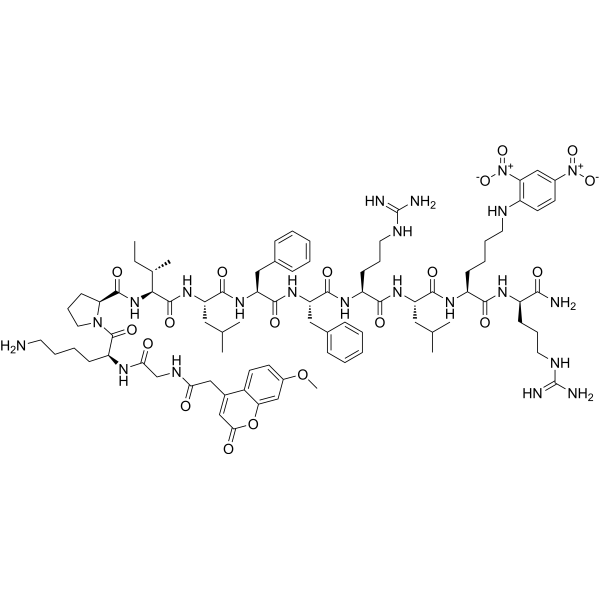 0 ImagesCat. No.: HY-P2498CAS No.: 839730-93-7Cathepsin D and E FRET Substrate is a fluorogenic substrate for cathepsins D and E and not for B, H or L. The cleavage occurs at the Phe-Phe amide bond resul. Cathepsin D and E FRET Substrate is a valuable tool for routine assays and for mechanistic studies on cathepsins E and D.
-
Ac-Glu-Asp(EDANS)-Lys-Pro-Ile-Leu-Phe-Phe-Arg-Leu-Gly-Lys(DABCYL)-Glu-NH2
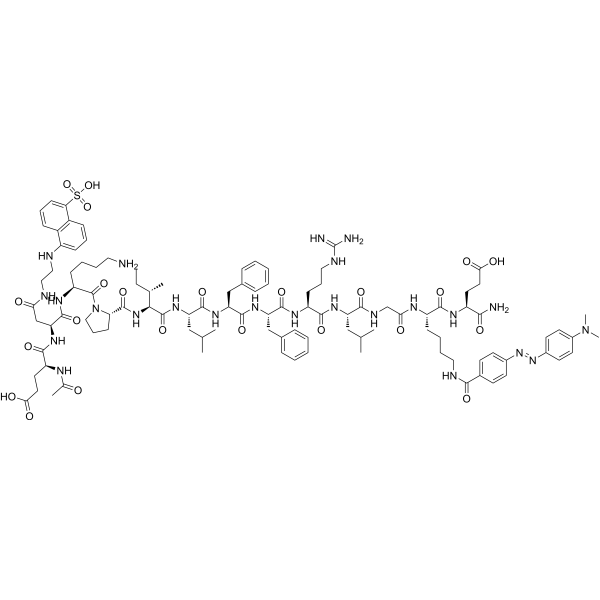 0 ImagesCat. No.: HY-P4787CAS No.: 400716-78-1Ac-Glu-Asp(EDANS)-Lys-Pro-Ile-Leu-Phe-Phe-Arg-Leu-Gly-Lys(DABCYL)-Glu-NH2 is a cathepsin D substrate, that can be used for cathepsin D FRET assay.
-
Cathepsin D degrader 1
 0 ImagesCat. No.: HY-181655CAS No.: 3127060-85-6Anti-hepatic fibrosis agent 3 is an orally active anti-hepatic fibrosis compound targeting Cathepsin D. Anti-hepatic fibrosis agent 3 shows an IC50 of 53.18 μM against COL1A1-promoter and a Kd of 8.86 μM for binding to Cathepsin D. Anti-hepatic fibrosis agent 3 directly binds to and promotes the degradation of Cathepsin D, with no significant effect on Cathepsin B or Cathepsin L. Anti-hepatic fibrosis agent 3 inhibits hepatic stellate cell activation and reduces extracellular matrix deposition and inflammatory cytokine expression. Anti-hepatic fibrosis agent 3 exhibits remarkable anti-fibrotic activity in rat BDL and mouse CDAHFD-induced hepatic fibrosis models. Anti-hepatic fibrosis agent 3 can be used for the study of hepatic fibrosis.
-
NB-533
 0 ImagesCat. No.: HY-182429CAS No.: 1146544-18-4NB-533 is an orally active and brain-penetrant BACE-1 inhibitor with a human IC50 of 0.002 μM. NB-533 also inhibits human cathepsin D with an IC50 of 0.001 μM. NB-533 inhibits amyloidogenic amyloid precursor protein (APP) processing and reduces Aβ40 release. NB-533 reduces brain levels of APP metabolite C99 and Aβ40 in transgenic mice. NB-533 can be used for the research of Alzheimer’s disease.
-
Tasiamide B
 0 ImagesCat. No.: HY-N15154CAS No.: 587014-85-5Tasiamide B is a Cathepsin D inhibitor, which is a linear peptide found in the marine cyanobacteria Symploca sp.. Tasiamide B is proved as a good template for the development of aspartic proteases inhibitors. Tasiamide B is effective against skin cancer by strongly interacting with the target protein HSP90.
-
NB-216
 0 ImagesCat. No.: HY-11014CAS No.: 943924-04-7NB-216 is an orally active and brain-penetrant BACE-1 inhibitor (IC50 = 17 nM). NB-216 has a strong inhibitory effect on cathepsin D (IC50 = 1 nM) and cathepsin E (IC50 = 0.4 nM). NB-216 can be used for the study of Alzheimer's disease.
-
TB-9
 0 ImagesCat. No.: HY-164956CAS No.: 1415033-91-8TB-9, a Tasiamide B (HY-N15154) derivative, is a potent cathepsin D, cathepsin E, and BACE1 inhibitor with IC50s of 0.0783 nM, 0.724 nM, and 54.2 nM, respectively.
-
TB-11
 0 ImagesTB-11 is a Cathepsin D inhibitor, with IC50s of 0.126 nM (Cathepsin D), 1.92 nM (Cathepsin E), 48.8 nM (BACE1), respectively. TB-11 can be used for tumor research.
-
Rpi-856 C
 0 ImagesCat. No.: HY-P1982CAS No.: 157381-55-0Rpi-856 C is an Aspartic protease inhibitor, with an IC50 of 5.5 nM against HIV-1 protease, 9.2 nM against HTLV-I protease, 2.0 μM against Cathepsin D, and 4.8 μM against Pepsin. Rpi-856 C is produced by the Streptomyces strain AL-322. Rpi-856 C does not inhibit chymosin, trypsin, chymotrypsin, papain, bromelain, thermolysin, prolyl endopeptidase, carboxypeptidase A or carboxypeptidase B. Rpi-856 C can be used in the research of acquired immunodeficiency syndrome (AIDS) and related diseases, as well as HIV infection.
-
WJM590
 0 ImagesCat. No.: HY-187367WJM590 is an orally active antimalarial agent that also exhibits inhibitory activities against renin, cathepsin D, BACE1, and plasmodial aspartic proteases. WJM590 inhibits substrate and protein maturation processing mediated by key proteases of Plasmodium falciparum, arrests asexual blood-stage parasites at the late schizont stage, inhibits merozoite release, and blocks malaria parasite transmission via vectors. WJM590 exerts selective inhibitory activity against multiple Plasmodium species and drug-resistant Plasmodium falciparum strains, and reduces parasitemia in infected mice. WJM590 can be used in malaria-related research.
-
Umibecestat hydrochloride
 0 ImagesCat. No.: HY-119689ACAS No.: 2365306-62-1Synonyms: CNP520 hydrochlorideUmibecestat hydrochloride (CNP520 hydrochloride) is a selective, orally active BACE inhibitor, with an IC50 of 11 nM for hBACE-1, 10 nM for mouse BACE-1, and 30 nM for hBACE-2. Umibecestat hydrochloride reduces β-Amyloid levels in the brain and cerebrospinal fluid, decreases β-amyloid plaque deposition, and inhibits plaque-associated neuroinflammation. Umibecestat hydrochloride is used in research related to Alzheimer's disease.
- 1




