



PI3K
Phosphoinositide 3-kinase
PI3K (Phosphoinositide 3-kinase), via phosphorylation of the inositol lipid phosphatidylinositol 4,5-bisphosphate (PI(4,5)P2), forms the second messenger molecule phosphatidylinositol (3,4,5)-trisphosphate (PI(3,4,5)P3) which recruits and activates pleckstrin homology domain containing proteins, leading to downstream signalling events crucial for proliferation, survival and migration. Class I PI3K enzymes consist of four distinct catalytic isoforms, PI3Kα, PI3Kβ, PI3Kδ and PI3Kγ.
There are three major classes of PI3K enzymes, being class IA widely associated to cancer. Class IA PI3K are heterodimeric lipid kinases composed of a catalytic subunit (p110α, p110β, or p110δ; encoded by PIK3CA, PIK3CB, and PIK3CD genes, respectively) and a regulatory subunit (p85).
The PI3K pathway plays an important role in many biological processes, including cell cycle progression, cell growth, survival, actin rearrangement and migration, and intracellular vesicular transport.
PI3K Isoform Specific Products
-
PI3Kα
(240)
View all products
-
PI3Kβ
(165)
View all products
-
PI3Kγ
(185)
View all products
-
PI3Kδ
(205)
View all products
-
PI3KC2α
(8)
View all products
-
PI3KC2β
(12)
View all products
-
PI3KC2γ
(4)
View all products
-
Vps34
(25)
View all products
-
PI3K
(671)
View all products
-
PI3KC3
(1)
View all products
-
p120γ
(1)
View all products
All Product Categories
-
PI3K Inhibitors
(881)
View all products
-
PI3K Agonists
(9)
View all products
-
PI3K Antagonist
(1)
View all products
-
PI3K Activators
(133)
View all products
-
PI3K Modulators
(23)
View all products
-
PI3K Inducers
(3)
View all products
-
PI3K Degraders
(7)
View all products
-
PI3K Controls
(4)
View all products
-
PI3K Substrate
(1)
View all products
-
PI3K Ligands
(9)
View all products
-
PI3K Related Products (1133)
Related Products (1133)

-
Antibodies (16)
-
PI3K Signaling Pathway
-
PI3K Isoform Comparison
-
Erufosine
 0 ImagesCat. No.: HY-171777CAS No.: 202867-33-2Synonyms: ErPC3; ErucylphosphohomocholineErufosine is an inhibitor of PI3K/Akt and Ras/Raf/MAPK signaling pathways. Erufosine inhibits the activity of breast cancer cell lines MCF-7 and MDA-MB 231 (IC50: 40.95/40.8 μM). Erufosine reduces the phosphorylation of PI3K (p85), Akt (PKB), and cRaf. Erufosine can be used in the study of breast cancer and myeloid leukemia.
-
IHMT-PI3K-455
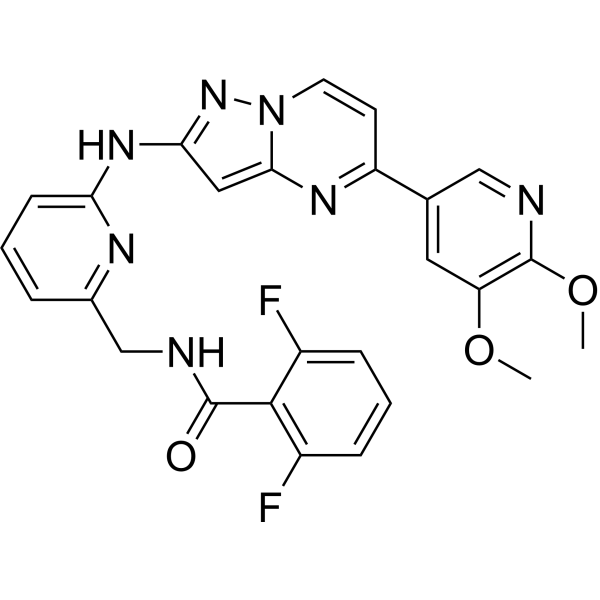 0 ImagesCat. No.: HY-149493CAS No.: 3047746-40-4IHMT-PI3K-455 (Compound 15u) is a potent, selective, orally active PI3Kγ/δ dual inhibitor with IC50s of 7.1 nM and 0.57 nM for PI3Kγ and PI3Kδ, respectively. IHMT-PI3K-455 suppresses the AKT phosphorylation. IHMT-PI3K-455 inhibits tumor growth by recruiting and activating more CD8+ killing T cells.IHMT-PI3K-455 is used in cancer research.
-
PI3Kα-IN-27
 0 ImagesCat. No.: HY-178812CAS No.: 2098649-83-1PI3Kα-IN-27 (Compound 50b) is an orally active PI3K-α inhibitor, with an IC50 of 40 nM. PI3Kα-IN-27 effectively inhibits PAK3, p110α, phospho-mTOR and phospho-ERK1/2. PI3Kα-IN-27 induces early Apoptosis. PI3Kα-IN-27 shows anticancer activity against pancreatic cancer, lung cancer, breast cancer.
-
D-Allose-13C-1
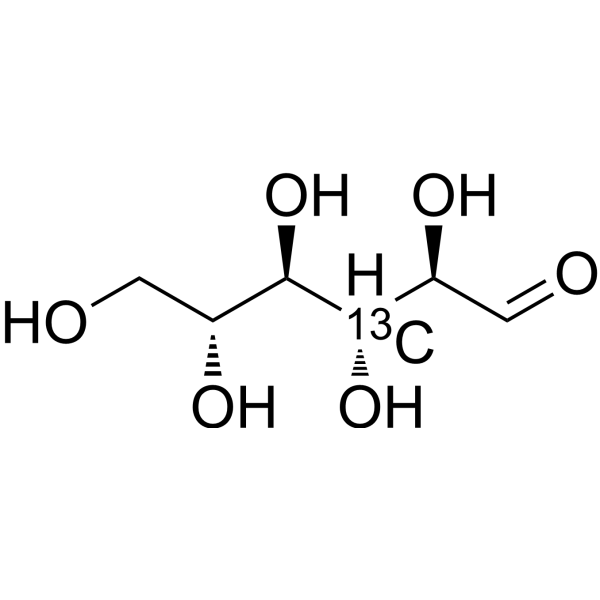 0 ImagesCat. No.: HY-128741S1D-Allose-13C-1 is the 13C labeled D-Allose (HY-128741). D-Allose exhibits antitumor activity against various cancer cells. D-Allose scavenges reactive oxygen species (ROS) and reduces oxidative stress damage. D-Allose exhibits anti-inflammatory and neuroprotective through inhibition of TLR4/PI3K/AKT signaling pathway. D-Allose exhibits antihypertensive, cryoprotective, and anti-osteoporotic activities.
-
RV-1729
 0 ImagesCat. No.: HY-106006CAS No.: 1293915-42-0RV-1729 is an inhibitor of the phosphatidylinositol 3-kinase-δ (PI3Kδ). RV-1729 identifies inhibition of the PI3K isotype by quantifying the release of phosphatidylinositol 3,4, 5-triphosphate (PIP3) (IC50=12 nM), showing twice the selectivity for PI3Kδ relative to PI3Kγ. RV-1729 is also 16 times more selective to PI3Kα. RV-1729 regulates immune and inflammatory responses by inhibiting PI3Kδ. RV-1729 can be used in studies of asthma and chronic obstructive pulmonary disease (COPD).
-
Isorhamnetin (Standard)
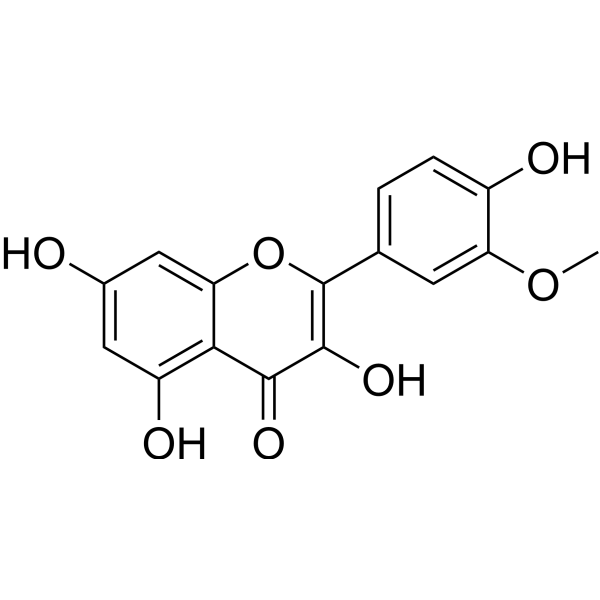 0 ImagesIsorhamnetin (Standard) is the analytical standard of Isorhamnetin. This product is intended for research and analytical applications. Isorhamnetin is a flavonoid compound extracted from the Chinese herb Hippophae rhamnoides L.. Isorhamnetin suppresses skin cancer through direct inhibition of MEK1 and PI3K.
-
Nogo-B-IN-1
 0 ImagesCat. No.: HY-175317Nogo-B-IN-1 ((S,R)-4v) is a covalent Nogo-B inhibitor. Nogo-B-IN-1 inhibits the progression of osteosarcoma (OS) by suppressing Nogo-B activity and the PI3K/AKT/NF-κB/Bcl-2 signaling pathway. Nogo-B-IN-1 inhibits the proliferation of OS 143B cells (IC50 = 0.28 µM) and induces apoptosis. Nogo-B-IN-1 can be used for OS targeting research.
-
WH23
 0 ImagesCat. No.: HY-181670WH23 is a dehydrogenase/reductase SDR family member 11 (DHRS11) inhibitor with IC50 values of 0.037 μM. WH23 binds to DHRS11, forming a hydrogen bond with the enzyme’s His210 residue. WH23 suppresses androgen receptor mRNA and protein expression, reduces c-Myc expression, and inhibits cancer cell proliferation. WH23 inhibits PI3K/AKT signaling by reducing phosphorylation of PDK1, AKT, mTOR, and ERK. WH23 enhances Capivasertib (HY-15431)-induced cytotoxicity and apoptosis. WH23 can be used for the research of luminal androgen receptor-positive triple-negative breast cancer.
-
PI3K/Akt/mTOR-IN-3
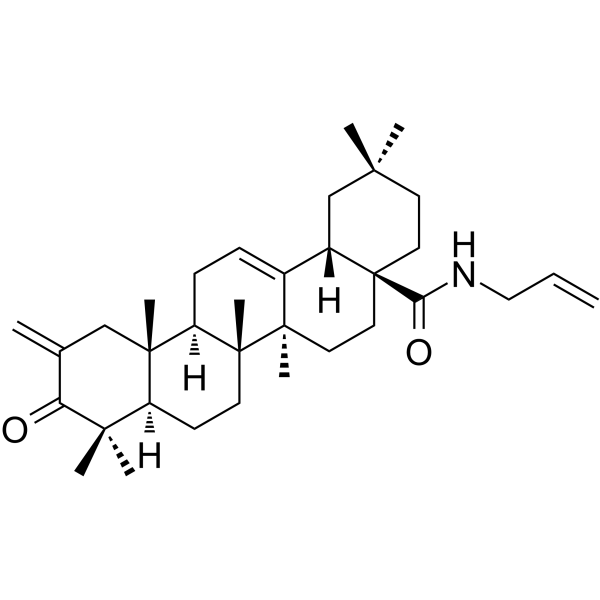 0 ImagesCat. No.: HY-147913CAS No.: 2457245-94-0PI3K/Akt/mTOR-IN-3 (compound 3d) is a potent PI3K/AKT/mTOR inhibitor. PI3K/Akt/mTOR-IN-3 displays the inhibitory activity in MCF-7, HeLa and HepG2 cells, with IC50 values of 0.77, 1.23, and 4.57μM, respectively. PI3K/Akt/mTOR-IN-3 inhibits the migration of MCF-7 and HeLa cells at the concentration of 4 μM. PI3K/Akt/mTOR-IN-3 induces cell apoptosis and S phase arrest.
-
NF-κB-IN-19
 0 ImagesCat. No.: HY-172201NF-κB-IN-19 (Compound 8) is an NF-κB inhibitor. NF-κB-IN-19 effectively induces DNA damage, promotes the generation of ROS, and induces autophagy and apoptosis through the NF-κB signaling pathway in tumor cells. In addition, NF-κB-IN-19 can inhibit the levels of VEGF and HIF-1α, and exert antiproliferative activity in tumor cells through the PI3K/AKT and STAT-3 pathways. NF-κB-IN-19 can effectively overcome cisplatin resistance and has anti-tumor activity.
-
PI3K/PIKK-IN-2
 0 ImagesCat. No.: HY-181855CAS No.: 3109464-36-7PI3K/PIKK-IN-2 (Compound 2) is an inhibitor of PI3K/PIKK. PI3K/PIKK-IN-2 can be used in preparing antibody-drug conjugates (ADCs).
-
PI3Kδ-IN-12
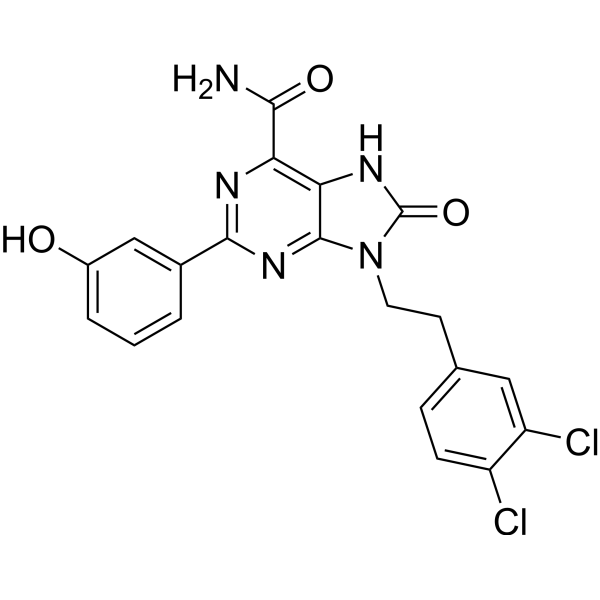 0 ImagesCat. No.: HY-149235PI3Kδ-IN-12 (compound 13) is a PI3Kδ inhibitor (pIC50 = 5.8), with pKi values of 8.0/6.5/6.4/6.7 for PI3Kδ/γ/β/α, respectively. PI3Kδ-IN-12 can be used in the study of chronic respiratory diseases such as asthma and chronic obstructive pulmonary disease (COPD).
-
Kukoamine B (Standard)
 0 ImagesCat. No.: HY-N2393RCAS No.: 164991-67-7Kukoamine B (Standard) is the analytical standard of Kukoamine B. This product is intended for research and analytical applications. Kukoamine B, a spermine alkaloid, is a potent dual LPS and CpG DNA inhibitor with Kd values of 1.23 µM and 0.66 µM, respectively. Kukoamine B exerts anti-inflammatory, anti-diabetic, anti-oxidant, anti-osteoporotic and neuroprotective effects. Kukoamine B has the potential for the study of sepsis.
-
Taurolithocholic acid-d5
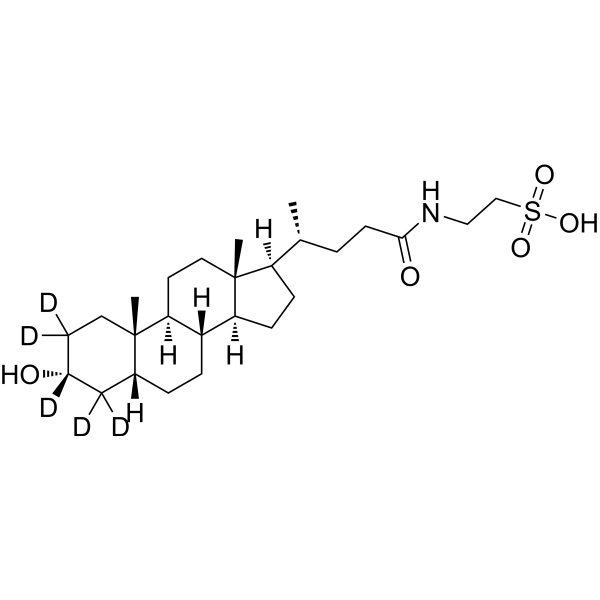 0 ImagesCat. No.: HY-113308SCAS No.: 1265681-64-8Taurolithocholic acid-d5 is deuterium labeled Taurolithocholic acid. Taurolithocholic acid is an orally active bile acid and antiviral agent. Taurolithocholic acid upregulates FADS2 by activating the TGR5-PI3K/AKT-SREBP2 signaling axis, inhibits SFTSV-induced ferroptosis, viral replication and viral entry of HBV/HDV, while reducing the release of IL-1β, lipid ROS and LDH. While exerting antiviral protective effects, Taurolithocholic acid also stimulates the recycling of hepatocellular membrane transporters, impairs canalicular bile acid secretion function, and induces hepatocyte cholestasis, apoptosis and acute hepatocellular injury. Taurolithocholic acid serves as an experimental model compound for hepatocellular cholestasis. At concentrations ≤200 μM, Taurolithocholic acid shows no cytotoxicity and does not activate the interferon pathway. Taurolithocholic acid not only protects mice from lethal SFTSV infection but also is suitable for studies related to severe fever with thrombocytopenia syndrome and cholestasis.
-
Anti-osteoporosis agent-4
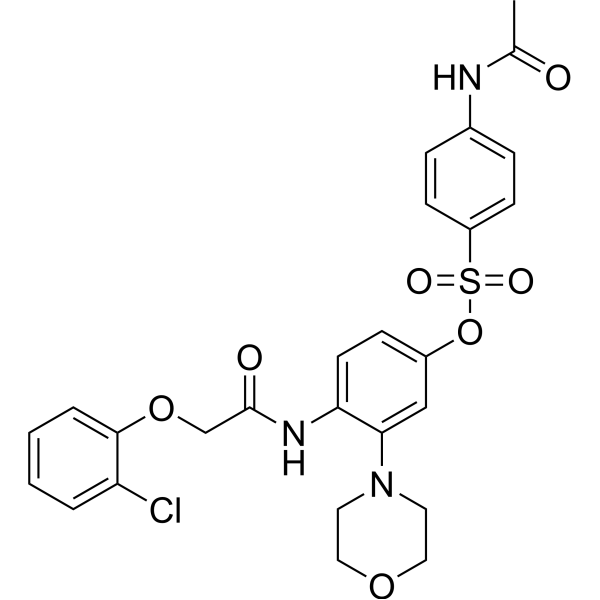 0 ImagesCat. No.: HY-149472CAS No.: 3046142-30-4Anti-osteoporosis agent-4 (Compound 11h) inhibits differentiation of primary osteoclasts. Anti-osteoporosis agent-4 attenuates RANKL-induced osteoclastogenesis. Anti-osteoporosis agent-4 inhibits osteoclast formation with an IC50 value of 358.29 nM. Anti-osteoporosis agent-4 inhibits PI3K/AKT and IκBα/NF-κB signaling pathway activation.
-
PI3K/AKT-IN-7
 0 ImagesCat. No.: HY-189668PI3K/AKT-IN-7 is a PI3K/Akt signaling pathway inhibitor with selective antiproliferative activity against hepatocellular carcinoma cells. PI3K/AKT-IN-7 downregulates the phosphorylation of PI3K and Akt and binds to NCF2 (Kd = 1.40 μM). PI3K/AKT-IN-7 induces apoptosis, S-phase cell cycle arrest, loss of mitochondrial membrane potential, and ROS accumulation, while inhibiting proliferation, migration, invasion, and DNA synthesis. PI3K/AKT-IN-7 inhibits tumor growth in a Hep3B xenograft BALB/c mouse model and reduces the expression of Ki67, PCNA, and MMP9. PI3K/AKT-IN-7 can be used for research on hepatocellular carcinoma.
-
Nemiralisib succinate
 0 ImagesCat. No.: HY-19535BCAS No.: 1364799-98-3Synonyms: GSK2269557 succinateNemiralisib Succinate is a potent and highly selective PI3Kδ inhibitor with a pKi of 9.9.
-
PI3Kδ-IN-25
 0 ImagesCat. No.: HY-175369PI3Kδ-IN-25 is an orally active selective PI3Kδ inhibitor (IC50 = 2.1 nM). PI3Kδ-IN-25 has IC50s of 272, 285, and 1171 nM for PI3Kα, PI3Kγ, and PI3Kβ, respectively. PI3Kδ-IN-25 inhibits AKT Ser473 phosphorylation, suppresses Treg cell proliferation, and downregulates PD-L1 expression in B16F10 cells. PI3Kδ-IN-25 exhibits anticancer effects in B16F10 melanoma and Lewis lung cancer mouse models by reducing tumor-infiltrating Treg cells and enhancing immune responses. PI3Kδ-IN-25 is potentially useful in the study of melanoma, lung cancer, and other cancers.

-
D-87503
 0 ImagesCat. No.: HY-108959CAS No.: 800394-83-6D-87503 is a potent inhibitor of PI3k/Akt/mTOR, with the IC50s of 62 nM and 0.76 μM, respectively for PI3k and Erk2. D-87503 effectively suppressed the target downstream substrates Akt and Rsk1 kinase of the PI3k/Akt/mTOR signaling pathway.




