Sirtuin
Sirtuin (Sir2 proteins) are a class of proteins that possess either mono-ADP-ribosyltransferase, or deacylase activity, including deacetylase, desuccinylase, demalonylase, demyristoylase and depalmitoylase activity. Sirtuins regulate important biological pathways in bacteria, archaeaand eukaryotes. Sirtuins have been implicated in influencing a wide range of cellular processes like aging, transcription, apoptosis, inflammation and stress resistance, as well as energy efficiency and alertness during low-calorie situations. Sirtuins can also control circadian clocks and mitochondrial biogenesis.
Sirtuin Isoform Specific Products
All Product Categories
-
Sirtuin Inhibitors
(171)
View all products
-
Sirtuin Agonists
(11)
View all products
-
Sirtuin Activators
(104)
View all products
-
Sirtuin Modulators
(13)
View all products
-
Sirtuin Inducer
(1)
View all products
-
Sirtuin Degraders
(3)
View all products
-
Sirtuin Controls
(5)
View all products
-
Sirtuin Substrates
(4)
View all products
-
Sirtuin Ligand
(1)
View all products
-
Sirtuin Related Products (333)
Related Products (333)

-
Antibodies (9)
-
Sirtuin Isoform Comparison
-
SIRT-IN-5
 0 ImagesCat. No.: HY-169051CAS No.: 3104122-36-0SIRT-IN-5 is a SIRT3 inhibitor, with an IC50 value of 2.88 μM. SIRT-IN-5 can promote the differentiation of multiple myeloma cells, along with an increase in the expression of the differentiation antigen CD49e and human immunoglobulin light chains λ and κ.

-
Sirtuin modulator 4
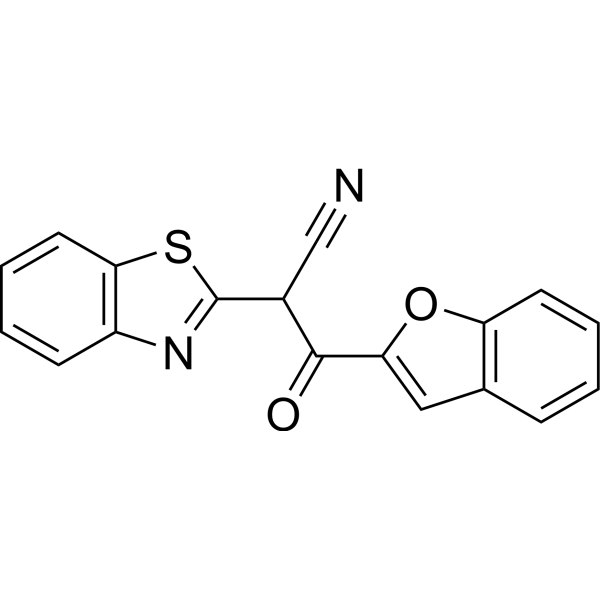 0 ImagesCat. No.: HY-148312CAS No.: 327104-77-8Sirtuin modulator 4 (compound 12) is a sirtuin modulator. Sirtuin modulator 4 shows inhibitory effect to SIRT1 with an EC50 value of 51-100 μM. Sirtuin modulator 4 may be used for the research of increasing the lifespan of a cell, and preventing a wide variety of diseases and disorders including, for example, diabetes, obesity, neurodegenerative diseases, cardiovascular diseases, inflammation and cancer.
-
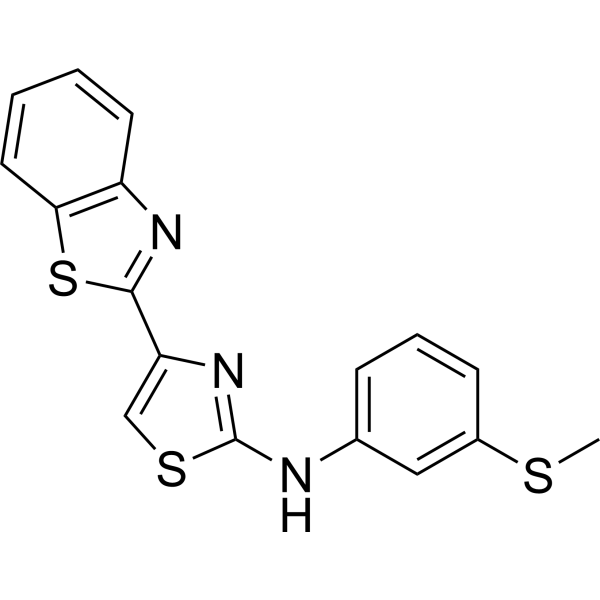
SIRT1-IN-5
 0 ImagesCat. No.: HY-169809CAS No.: 863589-21-3SIRT1-IN-5 (215) is a NAD-dependent protein deacetylase sirtuin-1 modulator.
-
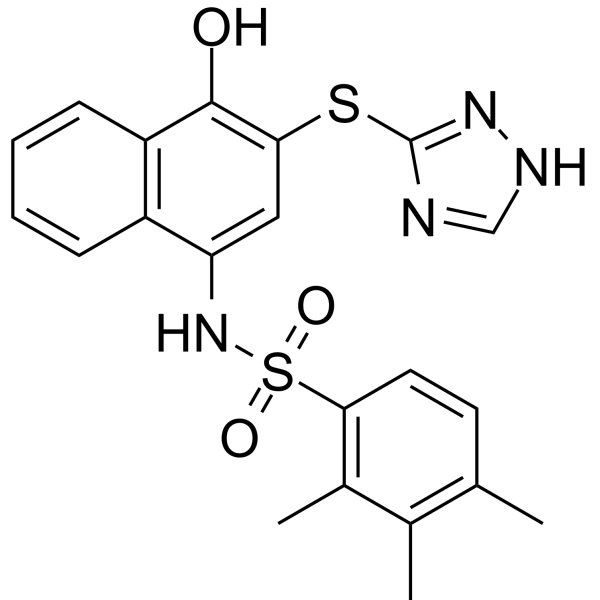
SIRT2-IN-14
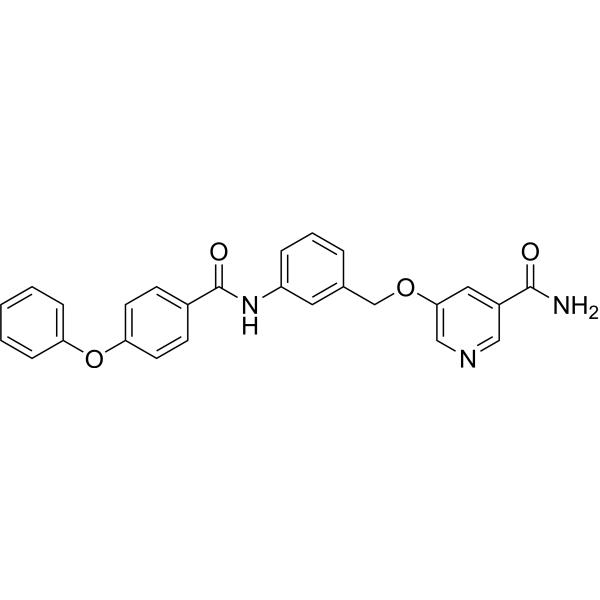 0 ImagesCat. No.: HY-160617CAS No.: 1884571-59-8SIRT2-IN-14 (Compound 78) is a selectve inhibitor for SIRT2 with an IC50 of 0.196 μM.

-
SIRT-IN-4
 0 ImagesCat. No.: HY-163698CAS No.: 3052115-51-9SIRT-IN-4 is an inhibitor of the NAD+-dependent lysine deacetylase Sirtuin2 (Sirt2) (IC50=0.35 μM). SIRT-IN-4 is a potent Sirt2 deacetylase inhibitor that reduces cell survival and inhibits the migration of prostate cancer cells. SIRT-IN-4 can be used to study Sirt2 in cell cycle regulation, gene expression regulation, etc.
-
SIRT5 inhibitor 2
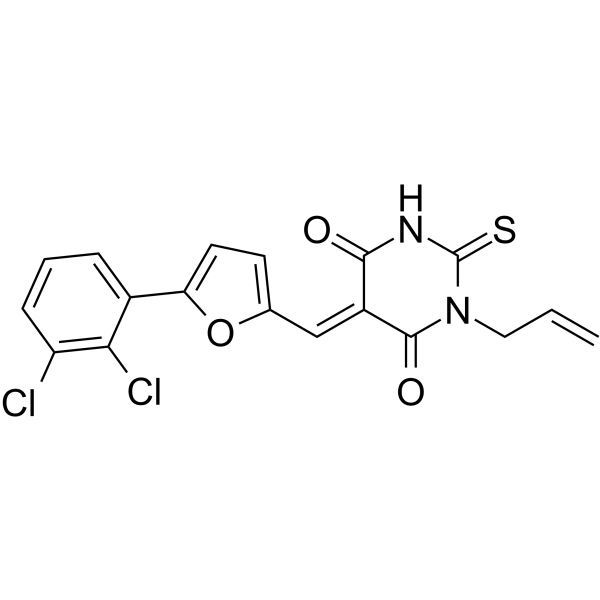 0 ImagesCat. No.: HY-146386CAS No.: 340306-87-8SIRT5 inhibitor 2 (compound 49) is a potent SIRT5 inhibitor with an IC50 value of 2.3 μM. SIRT5 inhibitor 2 has inhibitory activity against the SIRT5-dependent desuccinylation. SIRT5 inhibitor 2 can be used for researching cancer and neurodegenerative diseases.
-
NCO-90
 0 ImagesCat. No.: HY-183870CAS No.: 1382354-18-8NCO-90 is a selective SIRT2 inhibitor with an IC50 of 1.0 μM. NCO-90 induces Apoptosis via Caspase activation and mitochondrial superoxide anion production, and also induces Autophagic cell death by increasing LC3-II levels and autophagosome accumulation. NCO-90 exhibits anticancer activity against leukemia. NCO-90 can be used in research related to acute lymphoblastic leukemia and acute myeloid leukemia.
-
Antileishmanial agent-44
 0 ImagesCat. No.: HY-184214Antileishmanial agent-44 is a histone deacetylase inhibitor targeting Leishmania donovani Sir2, with an IC50 of 0.652 μM against amastigotes. Antileishmanial agent-44 elevates ROS levels to induce oxidative stress, which causes mitochondrial membrane potential depolarization, cytochrome c release, phosphatidylserine externalization and DNA fragmentation, triggers apoptosis-like cell death, and arrests the cell cycle. Antileishmanial agent-44 upregulates the expression of Th1-type cytokines and NO in macrophages, reshapes host immune responses to eliminate intracellular parasites. Antileishmanial agent-44 inhibits parasites in infected golden hamsters in vivo. Antileishmanial agent-44 can be used for the research of visceral leishmaniasis.
-
ZINC08792355
 0 ImagesCat. No.: HY-126904CAS No.: 904513-52-6
-
SL010110
 0 ImagesCat. No.: HY-W197205CAS No.: 380173-90-0SL010110 is an anti-hyperglycemic agent. SL010110 potently inhibits gluconeogenesis by inhibiting SIRT2, activating p300, and subsequently promoting PEPCK1 degradation. SL010110 downregulates the protein level of PEPCK1 without affecting the gene expressions of PEPCK, glucose-6-phosphatase, and fructose-1,6-bisphosphatase. SL010110 significantly improves glucose homeostasis in type 2 diabetic (T2D) mice model. SL010110 can be used for T2D research.

-
NSC 90469 (Standard)
 0 ImagesCat. No.: HY-114557RCAS No.: 1041-01-6Synonyms: 3,5-Diiodo-L-thyronine (Standard)NSC 90469 (Standard) is the analytical standard of NSC 90469. This product is intended for research and analytical applications. NSC 90469 (3,5-Diiodo-L-thyronine) is an orally active thyroid hormone derivative. NSC 90469 inhibits JNK phosphorylation and NF-κB acetylation, blocks SIRT1 protein expression, induces elevated PGC-1α levels, and stimulates COX activity. NSC 90469 enhances UCP1-mediated thermogenesis, increases hepatic Dio1 activity, inhibits TSH levels and hypothalamic-pituitary-thyroid axis function, enhances lipid metabolism, and regulates energy metabolism via the mitochondrial pathway. NSC 90469 prevents blood glucose reduction, reduces urinary albumin excretion, inhibits renal matrix expansion, decreases TGF-β1 expression, and reduces renal fibronectin and type Ⅳ collagen deposition. NSC 90469 also increases energy expenditure and prevents diet-induced overweight. NSC 90469 can be used in studies related to diabetic nephropathy, hypothyroidism, non-alcoholic fatty liver disease, and diet-induced obesity.
-
SR94
 0 ImagesCat. No.: HY-W841840CAS No.: 550301-63-8
-
SIRT1-IN-7
 0 ImagesCat. No.: HY-184372CAS No.: 720672-18-4