



mAChR
Muscarinic acetylcholine receptor
mAChRs (muscarinic acetylcholine receptors) are acetylcholine receptors that form G protein-receptor complexes in the cell membranes of certainneurons and other cells. They play several roles, including acting as the main end-receptor stimulated by acetylcholine released from postganglionic fibersin the parasympathetic nervous system. mAChRs are named as such because they are more sensitive to muscarine than to nicotine. Their counterparts are nicotinic acetylcholine receptors (nAChRs), receptor ion channels that are also important in the autonomic nervous system. Many drugs and other substances (for example pilocarpineand scopolamine) manipulate these two distinct receptors by acting as selective agonists or antagonists. Acetylcholine (ACh) is a neurotransmitter found extensively in the brain and the autonomic ganglia.
mAChR Isoform Specific Products
All Product Categories
-
mAChR Inhibitors
(114)
View all products
-
mAChR Agonists
(146)
View all products
-
mAChR Antagonists
(322)
View all products
-
mAChR Activators
(20)
View all products
-
mAChR Modulators
(48)
View all products
-
mAChR Inducer
(1)
View all products
-
mAChR Controls
(9)
View all products
-
mAChR Ligands
(7)
View all products
-
mAChR Related Products (721)
Related Products (721)

-
Antibodies (2)
-
mAChR Isoform Comparison
-
Methscopolamine bromide
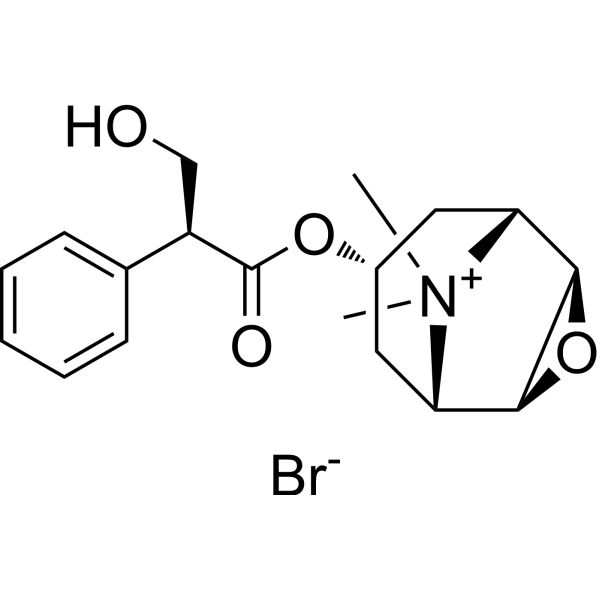 0 ImagesSynonyms: (-)-Scopolamine methyl bromide; Hyoscine methyl bromideMethscopolamine bromide ((-)-Scopolamine methyl bromide; Hyoscine methyl bromide) is a peripherally acting muscarinic receptor (mAChR) antagonist that cannot cross the blood-brain barrier. Methscopolamine bromide blocks the muscarinic negative feedback regulation of acetylcholine release from striatal cholinergic terminals, thereby increasing acetylcholine release in the striatum of freely moving rats. Methscopolamine bromide does not induce motor excitation in freely moving rats, nor does it alter the duration of ethanol-induced loss of righting reflex in mice. Methscopolamine bromide fails to antagonize the arecoline-mediated reduction in the duration of ethanol-induced loss of righting reflex in mice.
-
Desfesoterodine
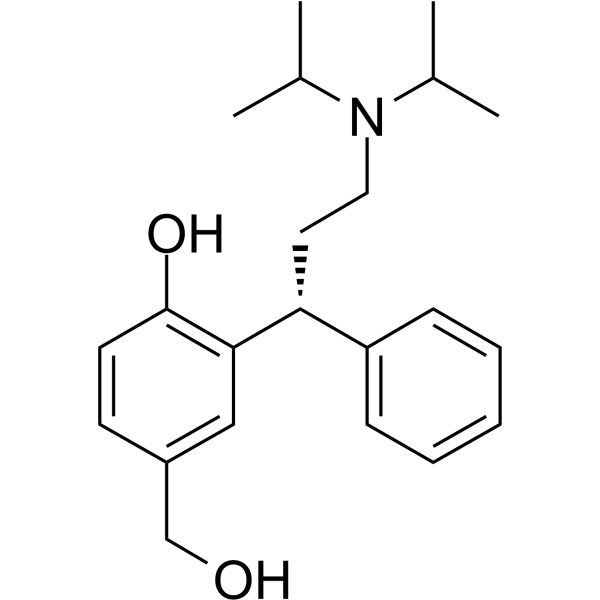 0 ImagesCat. No.: HY-76569CAS No.: 207679-81-0Synonyms: PNU-200577; 5-Hydroxymethyl TolterodineDesfesoterodine (PNU-200577) is a potent and selective muscarinic receptor (mAChR) antagonist with a KB and a pA2 of 0.84 nM and 9.14, respectively. Desfesoterodine is a major pharmacologically active metabolite of Tolterodine (PNU-200583; HY-A0024) and Fesoterodine (HY-70053). Desfesoterodine improves cerebral infarction induced detrusor overactivity in rats.
-
VU 0255035
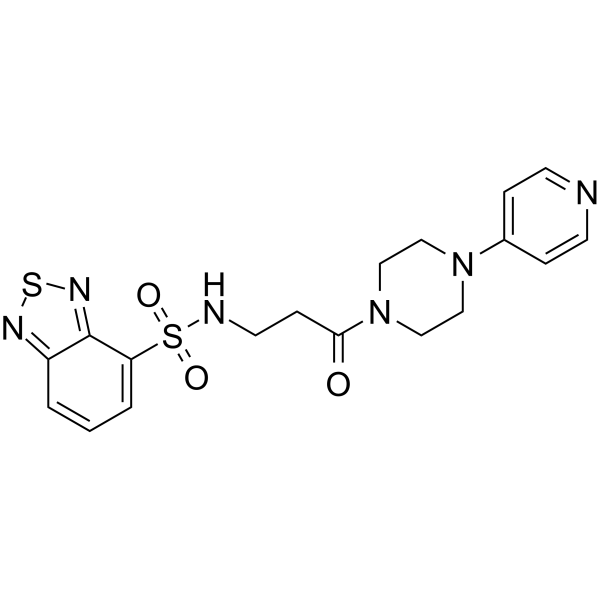 0 ImagesSynonyms: VU 255035VU0255035 is a highly selective and competitive M1 mAChR antagonist. VU0255035 blocks M1 mAChR signals to reduce epileptic seizures and regulate neuronal membrane potential. VU0255035 can be used in research related to central nervous system diseases, such as epilepsy, Parkinson's disease, and dystonia.
-
Ethopropazine hydrochloride
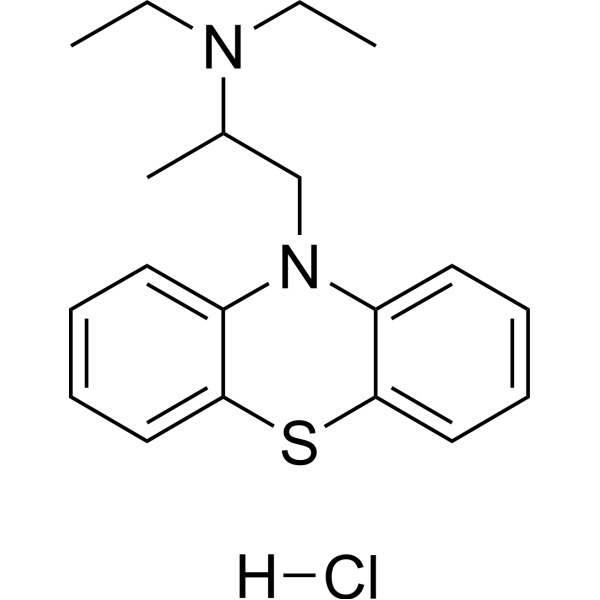 0 ImagesEthopropazine (Isothazine) hydrochloride is a potent and selective BChE inhibitor, a poor AChE inhibitor and a non-selective mAChR and NMDA antagonist. Ethopropazine hydrochloride has anticholinergic, antihistamine, antiadrenergic actions and properties. Ethopropazine hydrochloride alleviates thermal hyperalgesia in a dose dependent manner. Ethopropazine hydrochloride can be used for the research of Parkinson’s disease.
-
Trospium chloride
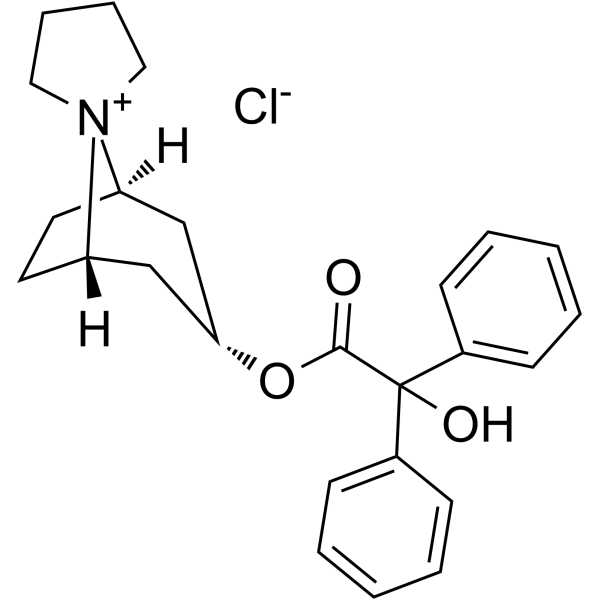 0 ImagesTrospium chloride is an orally active, specific and competitive antagonist of muscarinic cholinergic receptors (mAChRs), with antimuscarinic activity. Trospium chloride binds to muscarinic receptors M1, M2 and M3 with high affinity, but not nicotinic, cholinergic receptors.
-
DREADD agonist 21
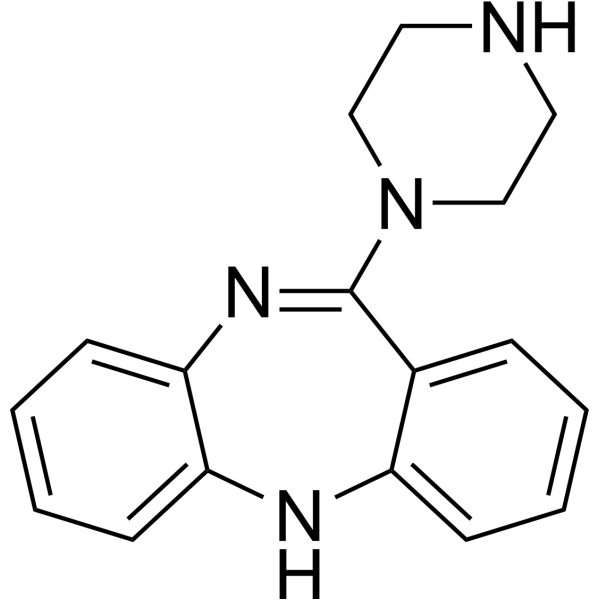 0 ImagesDREADD agonist 21 is a potent human muscarinic acetylcholine M3 receptors (hM3Dq) agonist (EC50=1.7 nM).
-
Tropicamide
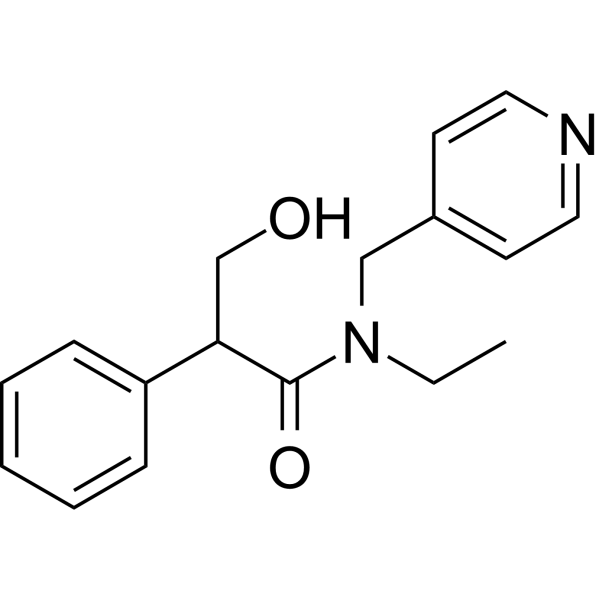 0 ImagesTropicamide (Ro 1-7683) is a selective M4 muscarinic acetylcholine receptor antagonist. When used as an eye drop, Tropicamide causes short-term mydriasis (pupil dilation) and cycloplegia. Tropicamide can be used in the research of neurological diseases, such as epilepsy.
-
Dronedarone
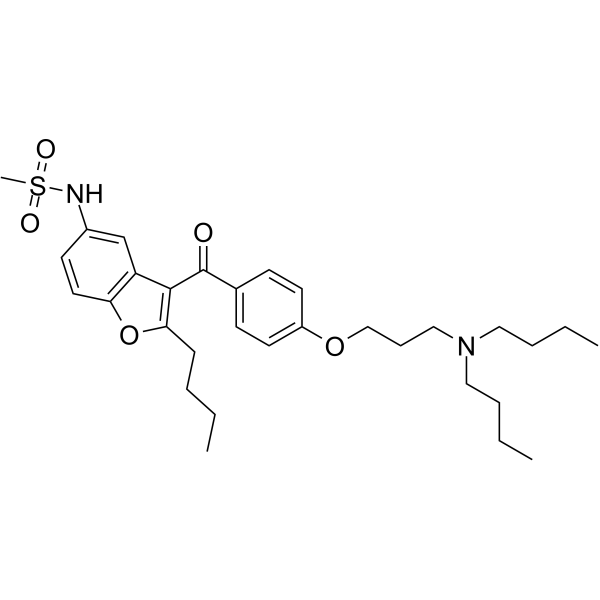 0 ImagesSynonyms: SR 33589Dronedarone (SR 33589), a derivative of amiodarone (HY-14187), is a class III antiarrhythmic agent for the study of atrial fibrillation (AF) and atrial flutter. Dronedarone is a potent blocker of multiple ion currents, including potassium current, sodium current, and L-type calcium current, and exhibits antiadrenergic effects by noncompetitive binding to β-adrenergic receptors. Dronedarone is a substrate for and a moderate inhibitor of CYP3A4.
-
Fesoterodine fumarate
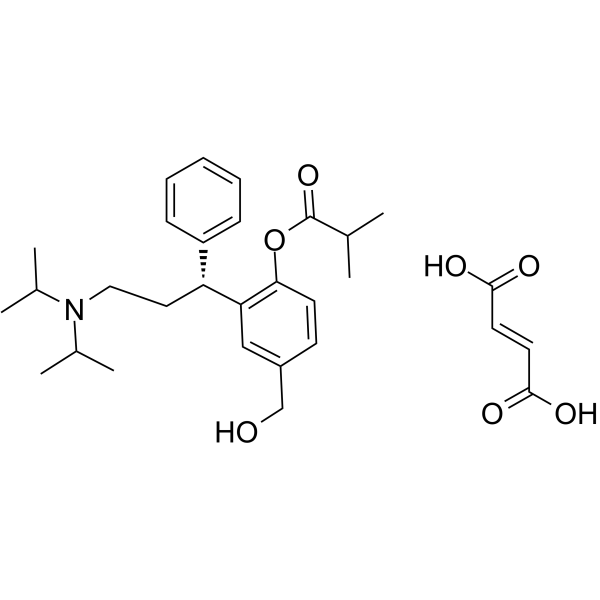 0 ImagesCat. No.: HY-A0030CAS No.: 286930-03-8Fesoterodine Fumarate is an orally active, nonsubtype selective, competitive muscarinic receptor (mAChR) antagonist with pKi values of 8.0, 7.7, 7.4, 7.3, 7.5 for M1, M2, M3, M4, M5 receptors, respectively. Fesoterodine Fumarate is used for the overactive bladder (OAB).
-
Pirenzepine dihydrochloride
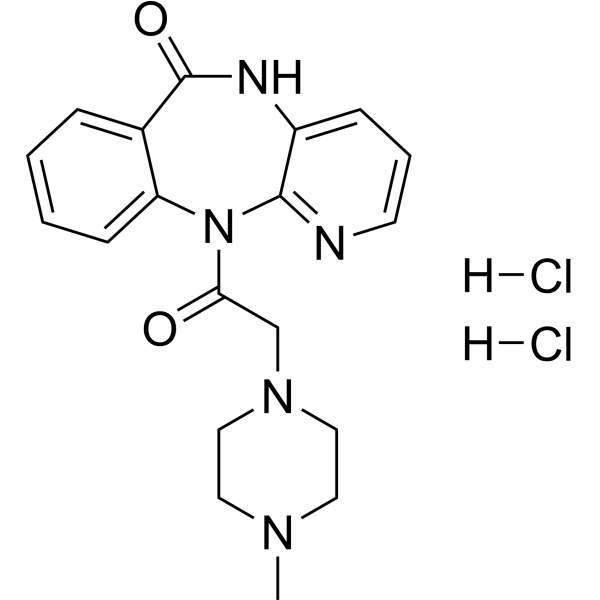 0 ImagesSynonyms: LS 519; Pirenzepin dihydrochloride; Gastrozepin dihydrochloridePirenzepine (LS 519) dihydrochloride is a selective M1 mAChR (muscarinic acetylcholine receptor) antagonist, with poor penetration of the blood-brain barrier. Pirenzepine dihydrochloride reduces gastric acid secretion and reduces muscle spasm, can be used in peptic ulcers research. Pirenzepine dihydrochloride shows anti-proliferative activity to cancer cells.
-
Atropine methyl bromide
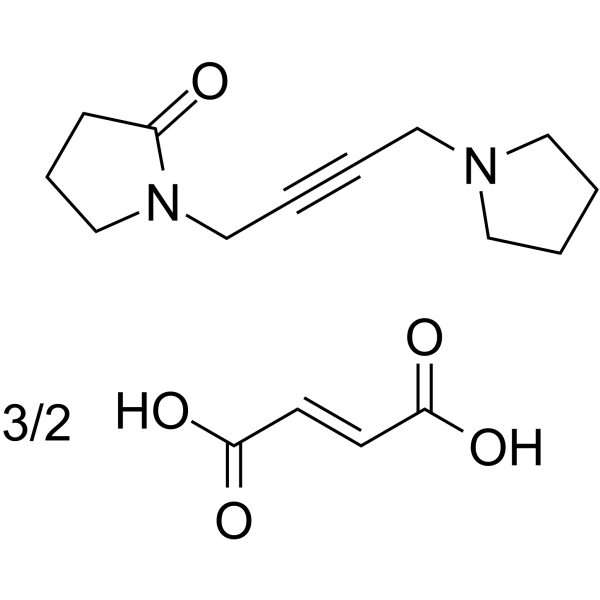
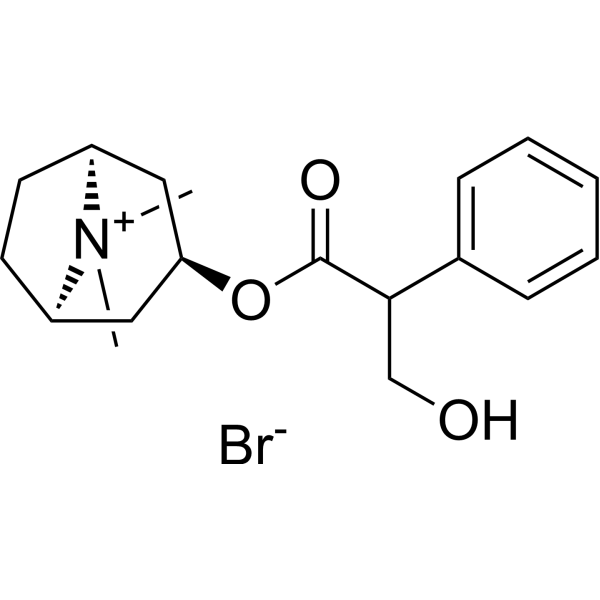 0 ImagesAtropine methyl bromide (Methylatropine bromide), an antagonist of muscarinic acetylcholine receptors (mAChR), is a quaternary ammonium salt of atropine and an active molecule used for pupil dilation during ophthalmic examinations. Due to its high polarity, it is used to relieve pyloric spasm in infants. It is less likely than atropine to cross the central nervous system.
-
Pirenzepine
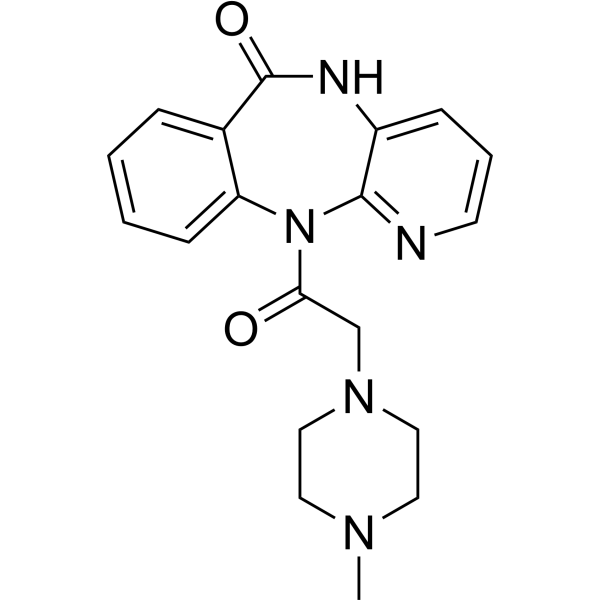 0 ImagesSynonyms: LS 519 free base; Pirenzepin; GastrozepinPirenzepine (LS 519 free base) is a selective M1 mAChR (muscarinic acetylcholine receptor) antagonist, with poor penetration of the blood-brain barrier. Pirenzepine reduces gastric acid secretion and reduces muscle spasm, can be used in peptic ulcers research. Pirenzepine shows anti-proliferative activity to cancer cells.
-
Atropine sulfate monohydrate
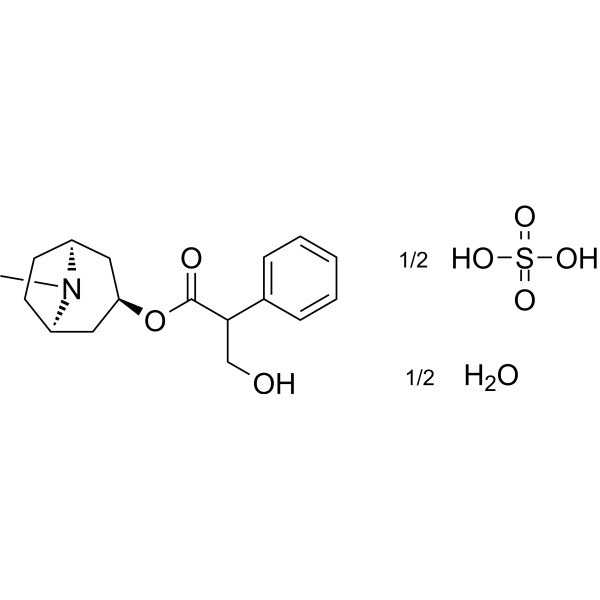 0 ImagesSynonyms: Tropine tropate sulfate monohydrate; DL-Hyoscyamine sulfate monohydrateAtropine (Tropine tropate) sulfate monohydrate is a competitive muscarinic acetylcholine receptor (mAChR) antagonist with IC50 values of 0.39 and 0.71 nM for Human mAChR M4 and Chicken mAChR M4, respectively. Atropine sulfate monohydrate inhibits ACh-induced relaxations in human pulmonary veins. Atropine sulfate monohydrate can be used for research of anti-myopia and bradycardia.
-
Trihexyphenidyl hydrochloride
 0 ImagesTrihexyphenidyl hydrochloride is a selective and orally active M1 muscarinic receptor antagonist with an IC50 of 3.7 nM for rat cerebral cortex M1 muscarinic receptors. Trihexyphenidyl hydrochloride modulates cholinergic activity, countering acetylcholine supersensitivity in neural pathways. Trihexyphenidyl hydrochloride improves movement disorder, inhibits McN-A-343 (HY-107648)-induced pressor responses, vagally-induced bradycardia and vasodilatation. Trihexyphenidyl hydrochloride can be used for the research of Parkinson's disease..
-
TAK-071
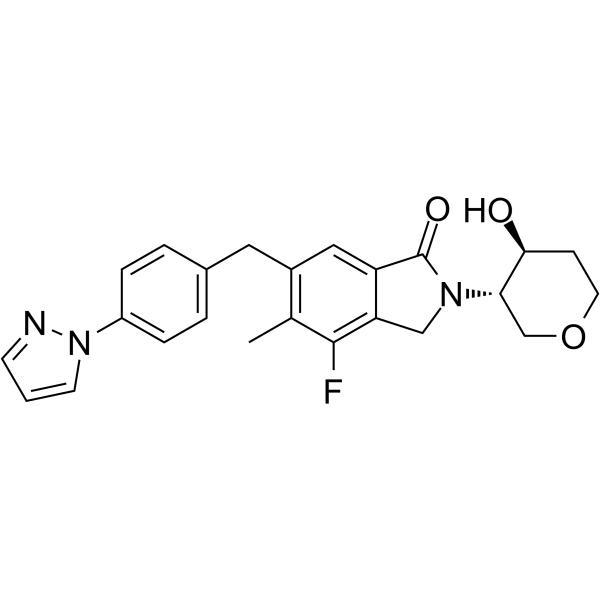 0 ImagesTAK-071 is a novel, potent and highly selective muscarinic acetylcholine receptor 1 (M1R) positive allosteric modulator. EC50 of TAK-071 M1R agonist activities is 520 nM.
-
Cevimeline hydrochloride hemihydrate
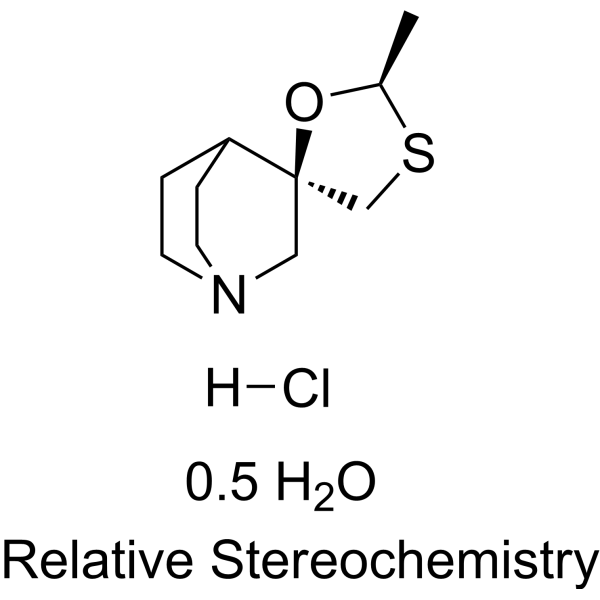 0 ImagesSynonyms: SNI-2011; AF102B hydrochloride hemihydrateCevimeline hydrochloride hemihydrate (SNI-2011) is a quinuclidine derivative of acetylcholine and a selective and orally active muscarinic M1 and M3 receptor agonist. Cevimeline hydrochloride hemihydrate stimulates secretion by the salivary glands and can be used as a sialogogue for xerostomia. Cevimeline hydrochloride hemihydrate can cross the blood-brain barrier (BBB).
-
MK-7622
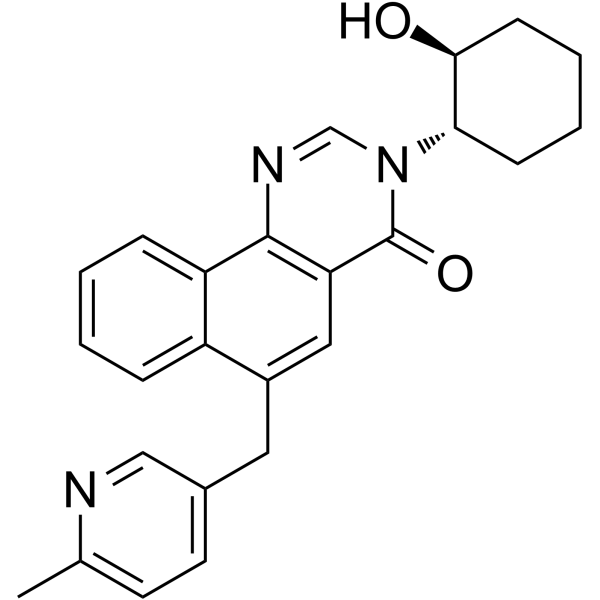 0 ImagesSynonyms: M1 receptor modulatorMK-7622 (M1 receptor modulator) is an orally active positive allosteric modulator of muscarinic M1 acetylcholine receptors (mAChRs). MK-7622 enhances ACh-induced calcium flux in CHO cells expressing human M1 receptors (EC50 = 21 nM) and shows robust agonist activity in rat M1-expressing CHO cells, increasing intracellular calcium. MK-7622 reverses Scopolamine (HY-N0296)-induced cognitive deficits in rhesus macaques in an object retrieval detour task. MK-7622 can be used for the study of Alzheimer's disease (AD).
-
Promethazine hydrochloride
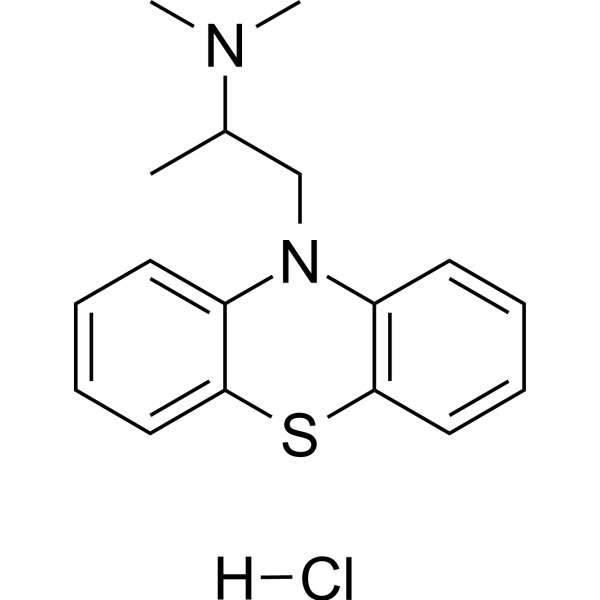 0 ImagesPromethazine hydrochloride is an orally active phenothiazine derivative with antihistaminic (H1), sedative, antiemetic, anticholinergic, and antimotion sickness properties. Promethazine hydrochloride is a potent H1 receptor antagonist and a mAChR antagonist. It also has a certain affinity for 5-HT2A and 5-HT2C receptors.




