



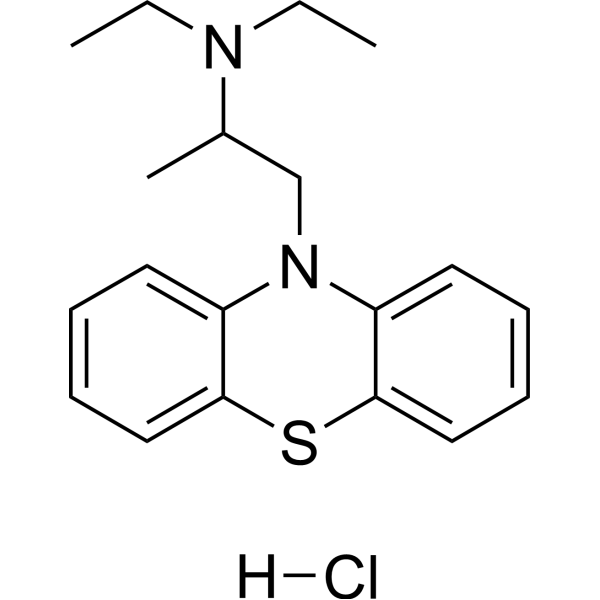
Ethopropazine hydrochloride
Based on 1 publication(s) in Google Scholar
Ethopropazine (Isothazine) hydrochloride is a potent and selective BChE inhibitor, a poor AChE inhibitor and a non-selective mAChR and NMDA antagonist. Ethopropazine hydrochloride has anticholinergic, antihistamine, antiadrenergic actions and properties. Ethopropazine hydrochloride alleviates thermal hyperalgesia in a dose dependent manner. Ethopropazine hydrochloride can be used for the research of Parkinson’s disease.
For research use only. We do not sell to patients.
- Purity : 99.32%
- CAS No.: 1094-08-2
- Formula: C19H25ClN2S
- Molecular Weight:348.93
-
Storage:
4°C, sealed storage, away from moisture and light
* In solvent : -80°C, 6 months; -20°C, 1 month (sealed storage, away from moisture and light)

To place orders, for customer services and technical support, please contact: MedChemExpress USA
Tel: 609-228-6898 E-mail: [email protected] [email protected]


-
 Biological Activity
-
Chemical Information
-
Solvent & Solubility
- Purity & Documentation
- References
-
 Help & FAQs


-
HY-112251
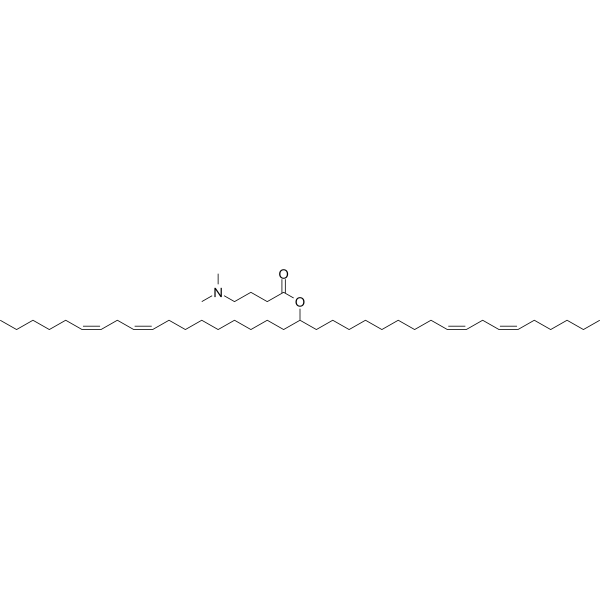
D-Lin-MC3-DMAsiRNA Delivery Vehicle -

HY-107922R
Ethopropazine hydrochloride (Standard)BChE/NMDA/mAChR Antagonist -
HY-17387
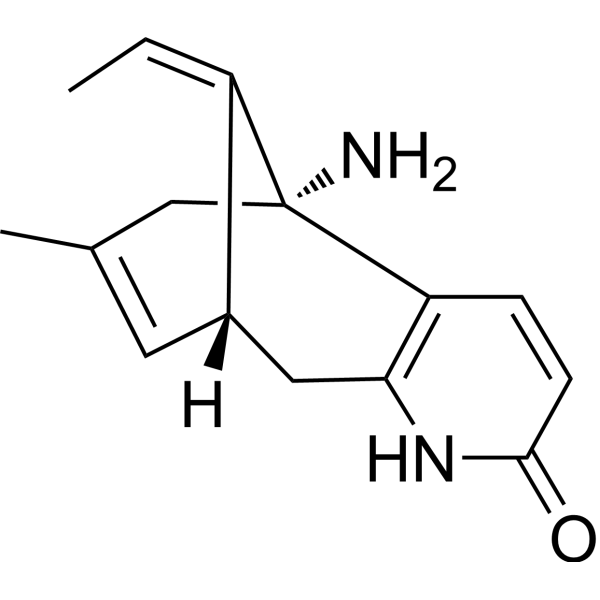
(-)-Huperzine AAChE/NMDA Receptor Inhibitor -
HY-19948
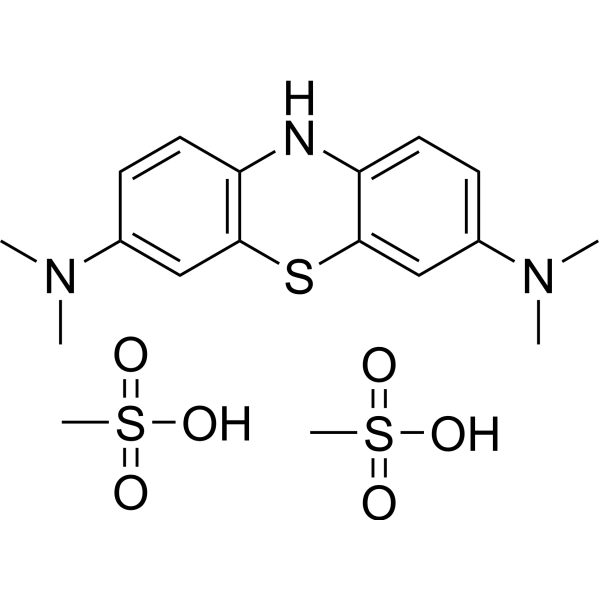
Leucomethylene blue mesylateTau Aggregation Inhibitor -
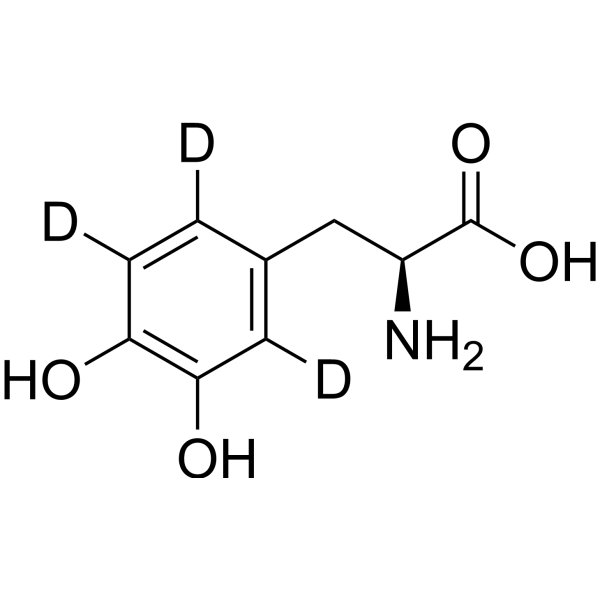
HY-132392S
L-DOPA-2,5,6-d3Stable Isotope -
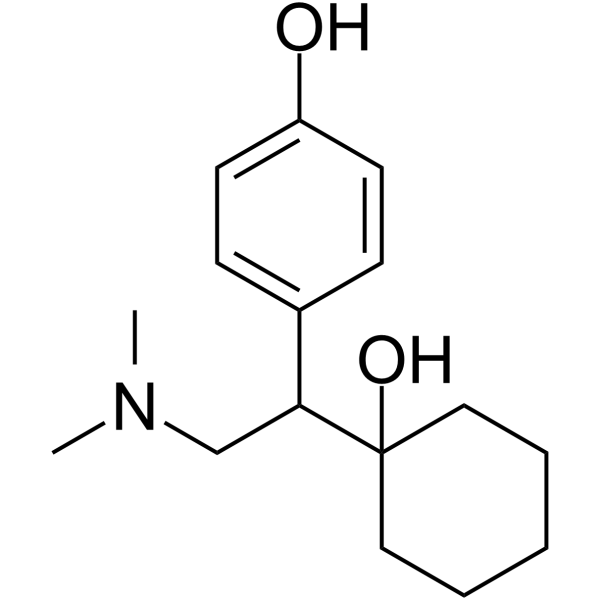
HY-B0602
Desvenlafaxine5-HT/Norepinephrine Reuptake Inhibitor -
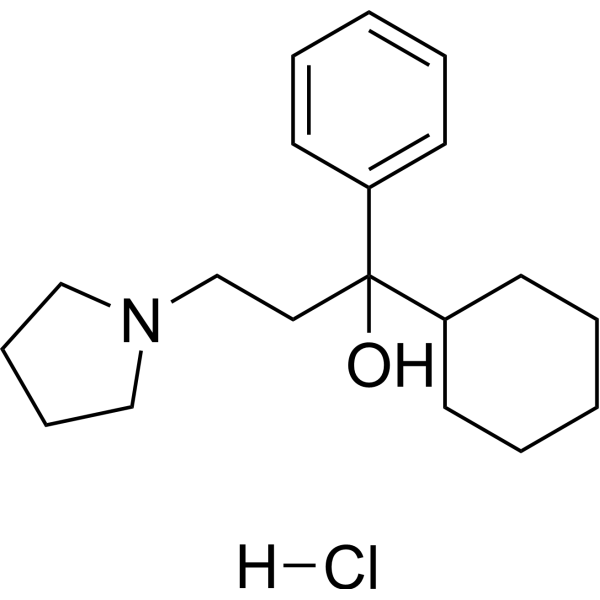
HY-B1487
Procyclidine hydrochlorideMuscarinic Receptor Antagonist -
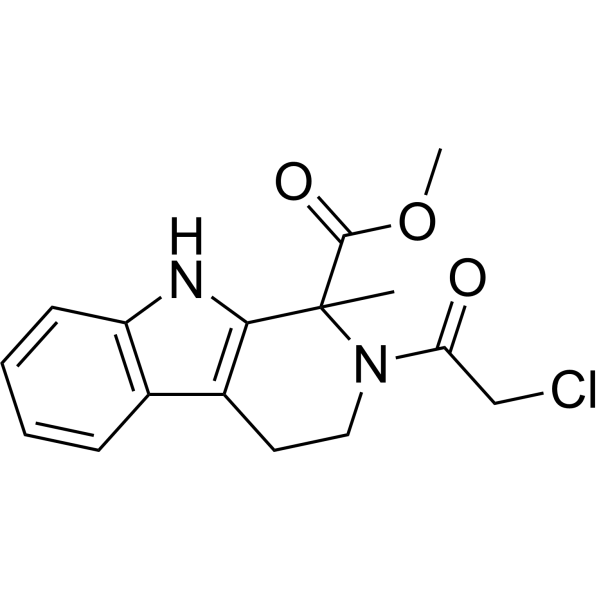
HY-124866
PDI-IN-3PDI Inhibitor -
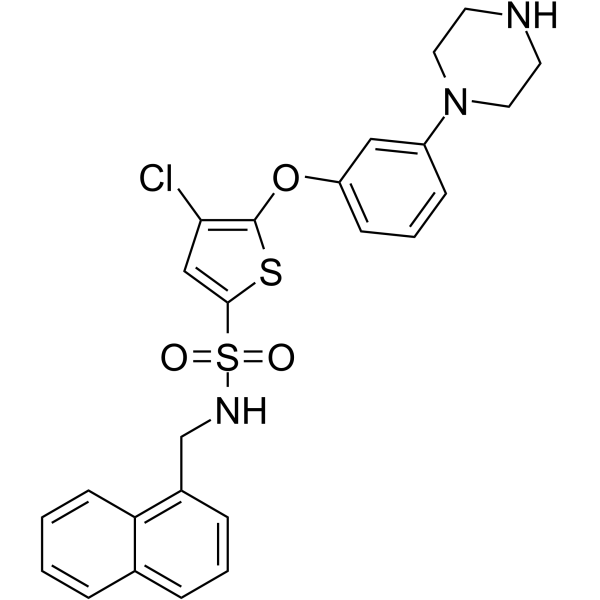
HY-120553
B-355252NGF Receptor Agonist -

HY-W269511
NW-1689Process-related Impurity -

HY-W017851
4-Phenyl-2-pyrrolidinoneDrug Precursor and Intermediate -

HY-W020576
Rivastigmine metaboliteMetabolite Produced
Publications Citing Use of MedChemExpress (MCE) Ethopropazine hydrochloride
MoreAll iGluR Isoforms
More

Biological Activity
Description
IC50 & Target
|
AChE |
BChE |
In Vitro
Ethopropazine (0-250 µM, 24 h) hydrochloride exhibits dose-dependent toxicity in LAN-5 cells with an LD50 of 28 µM[1].
Ethopropazine (<28 µM, 24 h) hydrochloride exhibits proliferative properties in SK-N-SH cells by enhancing [3H] thymidine uptake[1].
Ethopropazine (10 μM, 24 h) hydrochloride significantly enhances the proliferation of NCI-H69 cells, and this proliferative effect is significantly inhibited by the mAChR3 antagonist 4-DAMP (HY-100958)[2].
MedChemExpress (MCE) has not independently confirmed the accuracy of these methods. They are for reference only. .
In Vivo
MedChemExpress (MCE) has not independently confirmed the accuracy of these methods. They are for reference only.
-
Animal Model:Adult female Sprague-Dawley rats (weight 300-330 g) underwent loose ligation of the right sciatic nerve to induce thermal hyperalgesia (neuropathic pain)[1]
-
Dosage:10, 20, 30 mg/kg combined with 0.025 mg/kg Clonidine (HY-12721) or 0.1 mg/kg Guanabenz (HY-12724)
-
Administration:Subcutaneous administration for a single dose
-
Result:Showed no significant effect on pawwithdrawal latency (PWL) in either ligated or unligated limbs at 10 mg/kg.
Increased PWL in the ligated limb significantly at 1 hour post-administration at 20 mg/kg.
Increased PWL in the ligated limb at 1, 2, and 3 hours post-administration at 30 mg/kg.
Increased PWL in the ligated limb at 1-2 hours post-administration when combined with 0.025 mg/kg Clonidine.
Increased PWL in the ligated limb at 1-3 hours post-administration when combined with 0.1 mg/kg Guanabenz.


Chemical Information
-
CAS No. 1094-08-2
-
Appearance Solid
-
Molecular Weight 348.93
-
Formula C19H25ClN2S
-
Color White to off-white
-
SMILES
CCN(CC)C(C)CN1C2=CC=CC=C2SC3=CC=CC=C13.[H]Cl
-
Synonyms
Isothazine
-
Shipping
Room temperature in continental US; may vary elsewhere.
-
Storage
4°C, sealed storage, away from moisture and light
* In solvent : -80°C, 6 months; -20°C, 1 month (sealed storage, away from moisture and light)


Publications (1)
-
Journal Impact Factor
-
Most Recent


Solvent & Solubility
In Vitro:
DMSO : 25 mg/mL (71.65 mM; ultrasonic and warming and heat to 60°C; Hygroscopic DMSO has a significant impact on the solubility of product, please use newly opened DMSO)
Please refer to the solubility information to select the appropriate solvent. Once prepared, please aliquot and store the solution to prevent product inactivation from repeated freeze-thaw cycles.
Storage method and period of stock solution: -80°C, 6 months; -20°C, 1 month (sealed storage, away from moisture and light). When stored at -80°C, please use it within 6 months. When stored at -20°C, please use it within 1 month.
Please refer to the solubility information to select the appropriate solvent. Once prepared, please aliquot and store the solution to prevent product inactivation from repeated freeze-thaw cycles.
Storage method and period of stock solution: -80°C, 6 months; -20°C, 1 month (sealed storage, away from moisture and light). When stored at -80°C, please use it within 6 months. When stored at -20°C, please use it within 1 month.
Concentration (start) × Volume (start) = Concentration (final) × Volume (final)
In Vivo:
Select the appropriate dissolution method based on your experimental animal and administration route.
- For the following dissolution methods, please ensure to first prepare a clear stock solution using an In Vitro approach and then sequentially add co-solvents:
- To ensure reliable experimental results, the clarified stock solution can be appropriately stored based on storage conditions. As for the working solution for In Vivo experiments, it is recommended to prepare freshly and use it on the same day.
- The percentages shown for the solvents indicate their volumetric ratio in the final prepared solution. If precipitation or phase separation occurs during preparation, heat and/or sonication can be used to aid dissolution.
Add each solvent one by one: 10% DMSO 40% PEG300 5% Tween-80 45% Saline
Solubility: ≥ 2.5 mg/mL (7.16 mM); Clear solution
This protocol yields a clear solution of ≥ 2.5 mg/mL (saturation unknown).
Taking 1 mL working solution as an example, add 100 μL DMSO stock solution (25.0 mg/mL) to 400 μL PEG300, and mix evenly; then add 50 μL Tween-80 and mix evenly; then add 450 μL Saline to adjust the volume to 1 mL.
Preparation of Saline: Dissolve 0.9 g sodium chloride in ddH₂O and dilute to 100 mL to obtain a clear Saline solution.
Add each solvent one by one: 10% DMSO 90% (20% SBE-β-CD in Saline)
Solubility: ≥ 2.5 mg/mL (7.16 mM); Clear solution
This protocol yields a clear solution of ≥ 2.5 mg/mL (saturation unknown).
Taking 1 mL working solution as an example, add 100 μL DMSO stock solution (25.0 mg/mL) to 900 μL 20% SBE-β-CD in Saline, and mix evenly.
Preparation of 20% SBE-β-CD in Saline (4°C, storage for one week): 2 g SBE-β-CD powder is dissolved in 10 mL Saline, completely dissolve until clear.
In Vivo Dissolution Calculator
Please enter the basic information of animal experiments:
-
-
-
-
Recommended: Prepare an additional quantity of animals to account for potential losses during experiments.
Please enter your animal formula composition:
-
%DMSO +
Recommended: Keep the proportion of DMSO in working solution below 2% if your animal is weak.
-
%+
-
+%Tween-80 + +
-
%Saline +
The co-solvents required include: DMSO, . All of co-solvents are available by MedChemExpress (MCE). , Tween 80. All of co-solvents are available by MedChemExpress (MCE).
Working solution concentration: 0.22 mg/mL
Method for preparing stock solution: mg drug dissolved in μL DMSO. Stock solution concentration: mg/mL. * In solvent : -80°C, 6 months; -20°C, 1 month (sealed storage, away from moisture and light)
1. Take μL DMSO stock solution;
2. Add μL .
μL , mix evenly;
3. Then add μL Tween 80, mix evenly;
4. Then add μL
Please ensure that the stock solution in the first step is dissolved to a clear state, and add co-solvents in sequence. You can use ultrasonic heating (ultrasonic cleaner, recommended frequency 20-40 kHz), vortexing, etc. to assist dissolution.


Purity & Documentation
-
Data Sheet (281 KB)
-
SDS (393 KB)
- English - EN (393 KB)
- Français - FR (393 KB)
- Deutsch - DE (393 KB)
- Norwegian - NO (393 KB)
- Español - ES (393 KB)
- Swedish - SV (393 KB)
- Italian - IT (393 KB)
- Korean - KR (393 KB)
- Portuguese - PT (393 KB)
-
Handling Instructions (2659 KB)
References
[1]. Giladi N, et al. Toxicity of the specific antimuscarinic agent methoctramine and other non-specific anticholinergic drugs in human neuroblastoma cell lines in vitro. Toxicol In Vitro. 1993 Sep;7(5):595-603. [Content Brief]
[2]. Inazu M, et al. Functional expression of choline transporter-like protein 1 (CTL1) in small cell lung carcinoma cells: a target molecule for lung cancer therapy. Pharmacol Res. 2013 Oct;76:119-31. [Content Brief]
[3]. Jevtovic-Todorovic V, et al. Anti-parkinsonian agents procyclidine and ethopropazine alleviate thermal hyperalgesia in neuropathic rats. Neuropharmacology. 2003 May;44(6):739-48. [Content Brief]
[4]. Sinko G, et al. Mechanism of stereoselective interaction between butyrylcholinesterase and ethopropazine enantiomers. Biochimie. 2011 Oct;93(10):1797-807. [Content Brief]
[5]. V. Debbeti, et al. Transition Metal Complexes of Ethopropazine: Synthesis and Characterization


Complete Stock Solution Preparation Table
Please refer to the solubility information to select the appropriate solvent. Once prepared, please aliquot and store the solution to prevent product inactivation from repeated freeze-thaw cycles.
Storage method and period of stock solution: -80°C, 6 months; -20°C, 1 month (sealed storage, away from moisture and light). When stored at -80°C, please use it within 6 months. When stored at -20°C, please use it within 1 month.
| Optional Solvent | Concentration Solvent Mass | 1 mg | 5 mg | 10 mg | 25 mg |
|---|---|---|---|---|---|
| DMSO | 1 mM | 2.8659 mL | 14.3295 mL | 28.6590 mL | 71.6476 mL |
| 5 mM | 0.5732 mL | 2.8659 mL | 5.7318 mL | 14.3295 mL | |
| 10 mM | 0.2866 mL | 1.4330 mL | 2.8659 mL | 7.1648 mL | |
| 15 mM | 0.1911 mL | 0.9553 mL | 1.9106 mL | 4.7765 mL | |
| 20 mM | 0.1433 mL | 0.7165 mL | 1.4330 mL | 3.5824 mL | |
| 25 mM | 0.1146 mL | 0.5732 mL | 1.1464 mL | 2.8659 mL | |
| 30 mM | 0.0955 mL | 0.4777 mL | 0.9553 mL | 2.3883 mL | |
| 40 mM | 0.0716 mL | 0.3582 mL | 0.7165 mL | 1.7912 mL | |
| 50 mM | 0.0573 mL | 0.2866 mL | 0.5732 mL | 1.4330 mL | |
| 60 mM | 0.0478 mL | 0.2388 mL | 0.4777 mL | 1.1941 mL |


Ethopropazine hydrochloride Related Classifications
HY-107922 Related Classifications
 Powered by Bioz