



1094-08-2
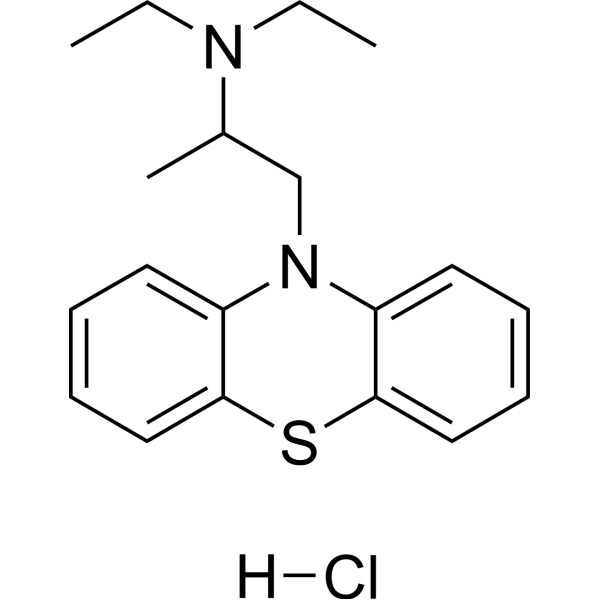
Chemical Structure
Ethopropazine hydrochloride
Synonym(s): Isothazine
- CAS No.: 1094-08-2
- Formula:C19H25ClN2S
- Molecular Weight:348.93
IUPAC Name: N,N-diethyl-1-(10H-phenothiazin-10-yl)propan-2-amine hydrochloride
InChIKey: VXPCQISYVPFYRK-UHFFFAOYSA-N
SMILES: CCN(CC)C(C)CN1C2=CC=CC=C2SC3=CC=CC=C13.[H]Cl
Biological Activity: Ethopropazine (Isothazine) hydrochloride is a potent and selective BChE inhibitor, a poor AChE inhibitor and a non-selective mAChR and NMDA antagonist. Ethopropazine hydrochloride has anticholinergic, antihistamine, antiadrenergic actions and properties. Ethopropazine hydrochloride alleviates thermal hyperalgesia in a dose dependent manner. Ethopropazine hydrochloride can be used for the research of Parkinson’s disease[1][2][3][4][5].
| Cat. No. | Product Name | Purity | Description | Pricing | |||||||||||||||||||
|---|---|---|---|---|---|---|---|---|---|---|---|---|---|---|---|---|---|---|---|---|---|---|---|
|
|
Ethopropazine hydrochloride | 99.32% | Ethopropazine (Isothazine) hydrochloride is a potent and selective BChE inhibitor, a poor AChE inhibitor and a non-selective mAChR and NMDA antagonist. Ethopropazine hydrochloride has anticholinergic, antihistamine, antiadrenergic actions and properties. Ethopropazine hydrochloride alleviates thermal hyperalgesia in a dose dependent manner. Ethopropazine hydrochloride can be used for the research of Parkinson’s disease. | ||||||||||||||||||||
|
loading...
/
|
|||||||||||||||||||||||
|
|
Ethopropazine hydrochloride (Standard) | ≥98% | Ethopropazine (hydrochloride) (Standard) is the analytical standard of Ethopropazine (hydrochloride) (HY-107922). This product is intended for research and analytical applications. Ethopropazine (Isothazine) hydrochloride is a potent and selective BChE inhibitor, a poor AChE inhibitor and a non-selective mAChR and NMDA antagonist. Ethopropazine hydrochloride has anticholinergic, antihistamine, antiadrenergic actions and properties. Ethopropazine hydrochloride alleviates thermal hyperalgesia in a dose dependent manner. Ethopropazine hydrochloride can be used for the research of Parkinson’s disease. | ||||||||||||||||||||
|
loading...
/
|
|||||||||||||||||||||||
-
Similarity Score 0.88
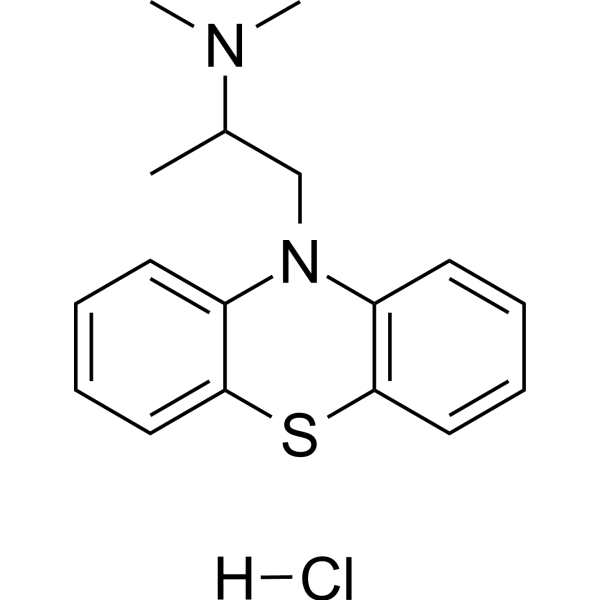 HY-B0781Promethazine hydrochloride
-
Similarity Score 0.87
 HY-B1296B(R)-Promethazine
-
Similarity Score 0.87
 HY-B1296RPromethazine (Standard)
-
Similarity Score 0.84
 HY-Z9100rac N-Demethyl promethazine hydrochloride
-
Similarity Score 0.83
 HY-U00267Thiazinamium chloride
-
Similarity Score 0.82
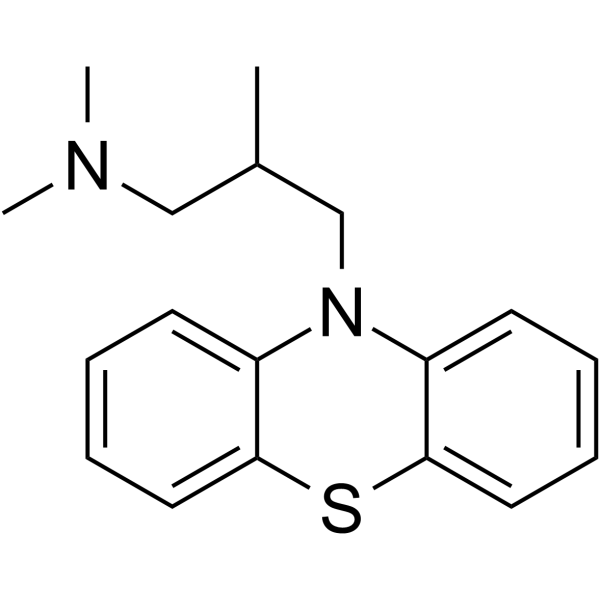 HY-12752Alimemazine
-
Similarity Score 0.80
 HY-B1225RPromazine hydrochloride (Standard)
-
Similarity Score 0.80
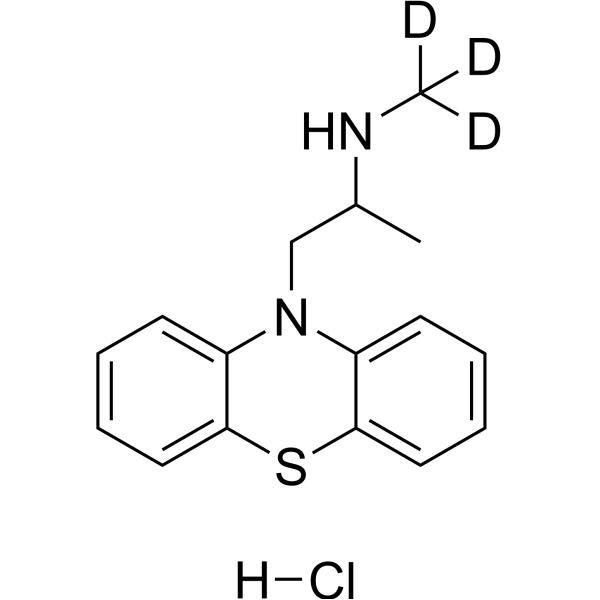 HY-141742SN-Demethyl Promethazine-d3 (hydrochloride)
-
Similarity Score 0.80
 HY-123375Fenethazine
-

Explore the MedChemAI to find more analogs


References
- [1]. Giladi N, et al. Toxicity of the specific antimuscarinic agent methoctramine and other non-specific anticholinergic drugs in human neuroblastoma cell lines in vitro. Toxicol In Vitro. 1993 Sep;7(5):595-603. [Content Brief]
- [2]. Inazu M, et al. Functional expression of choline transporter-like protein 1 (CTL1) in small cell lung carcinoma cells: a target molecule for lung cancer therapy. Pharmacol Res. 2013 Oct;76:119-31. [Content Brief]
- [3]. Jevtovic-Todorovic V, et al. Anti-parkinsonian agents procyclidine and ethopropazine alleviate thermal hyperalgesia in neuropathic rats. Neuropharmacology. 2003 May;44(6):739-48. [Content Brief]
- [4]. Sinko G, et al. Mechanism of stereoselective interaction between butyrylcholinesterase and ethopropazine enantiomers. Biochimie. 2011 Oct;93(10):1797-807. [Content Brief]
- [5]. V. Debbeti, et al. Transition Metal Complexes of Ethopropazine: Synthesis and Characterization



