



Reactive Oxygen Species (ROS)
Reactive oxygen species (ROS), such as superoxide anion (O2-), hydrogen peroxide (H2O2), and hydroxyl radical (HO•), consist of radical and non-radical oxygen species formed by the partial reduction of oxygen. Cellular ROS are generated endogenously during mitochondrial oxidative metabolism as well as in cellular response to xenobiotics, cytokines, and bacterial invasion.
ROS also activates MAPK pathways by the direct inhibition of MAPK phosphatases. Through PTEN, the PI3K pathway is subject to reversible redox regulation by ROS generated by growth factor stimulation. The activation of autophagy may be a cellular defense mechanism in response to ROS.
All Product Categories
-
Reactive Oxygen Species (ROS) Inhibitors
(1091)
View all products
-
Reactive Oxygen Species (ROS) Agonists
(37)
View all products
-
Reactive Oxygen Species (ROS) Antagonists
(2)
View all products
-
Reactive Oxygen Species (ROS) Activators
(525)
View all products
-
Reactive Oxygen Species (ROS) Modulators
(22)
View all products
-
Reactive Oxygen Species (ROS) MDM2 Inhibitor
(1)
View all products
-
Reactive Oxygen Species (ROS) Inducers
(645)
View all products
-
Reactive Oxygen Species (ROS) Controls
(5)
View all products
-
Reactive Oxygen Species (ROS) Substrates
(3)
View all products
-
Reactive Oxygen Species (ROS) Related Products (2859)
Related Products (2859)

-
Antibodies (8)
-
Antitumor photosensitizer-11
 0 ImagesCat. No.: HY-183570CAS No.: 2813319-14-9Antitumor photosensitizer-11 is a type-I carbazole/benzindolium photosensitizer with antitumor activity. Antitumor photosensitizer-11 induces ROS generation via a type-I pathway, forming superoxide anions and hydroxyl radicals. Antitumor photosensitizer-11 triggers immunogenic cell death in cancer cells via enhanced oxidative stress. Antitumor photosensitizer-11 exhibits antiproliferative activity in normoxic and hypoxic environments, inhibits breast cancer tumor growth in vivo, and promotes dendritic cell maturation and T cell infiltration. Antitumor photosensitizer-11 can be used for the research of cancer, such as breast cancer.
-
As-CA11
 0 ImagesCat. No.: HY-179712As-CA11 is a Thioredoxin reductase (TrxR) inhibitor with an IC50 of 18.7 nM. As-CA11 can induce cancer cells apoptosis and ROS production. As-CA11 can reduce the level of reduced Trx and increase the level of oxidized Trx. As-CA11 demonstrates anti-tumor activity in the 4T1 tumor-bearing mouse model.
-
Ethyl 3,4-dihydroxybenzoate-13C3
 0 ImagesCat. No.: HY-W778057CAS No.: 1330195-40-8Synonyms: Protocatechuic acid ethyl ester-13C3Ethyl 3,4-Dihydroxybenzoate-13C3 (Protocatechuic acid ethyl ester-13C3) is the 13C-labeled Ethyl 3,4-dihydroxybenzoate (HY-W016409). Ethyl 3,4-dihydroxybenzoate (Protocatechuic acid ethyl ester) is an orally effective, blood-brain barrier-permeable, competitive prolyl hydroxylase (PHD) inhibitor that inhibits the hydroxylation modification of hypoxia-inducible factor (HIF) by PHD. Ethyl 3,4-dihydroxybenzoate stabilizes HIF-1α by inhibiting PHD, activates downstream pathways to induce autophagy and apoptosis of tumor cells, and regulates inflammatory responses, inhibits the NF-κB pathway, improves vascular permeability, and promotes osteoblast differentiation. Ethyl 3,4-dihydroxybenzoate has anti-tumor, anti-hypoxic injury, and bone metabolism regulation effects. It can also be used in the research of cardiovascular protection (such as reducing myocardial ischemic damage), bone tissue engineering (promoting osteogenesis/inhibiting osteoclast differentiation), and prevention and treatment of high-altitude cerebral edema.
-
Black tea extract
 0 ImagesCat. No.: HY-N16399Black tea extract is the extract of Black tea. Black tea extract prevents inorganic arsenic (iAs) induced ROS generation, inhibiting uncontrolled proliferation, epithelial to mesenchymal transition (EMT) and metastasis in HaCaT cells. Black tea extract has an anti-fibrotic activity. Black tea extract can be used for skin cancers research.
-
HVF18-a3-d
 0 ImagesCat. No.: HY-P11250HVF18-a3-d is an antimicrobial peptide. HVF18-a3-d reduces NO production. HVF18-a3-d inhibits the production of TNF-α and IL-6, reduces ROS production, and suppresses the TLR4 signaling pathway, as well as LPS-induced phosphorylation of ERK, JNK, and p38 MAPK. HVF18-a3-d exhibits antimicrobial activity against a variety of bacteria by disrupting their outer and inner membranes. HVF18-a3-d protects mice from fatal septic shock induced by Acinetobacter baumannii resistant to Carbapenem. HVF18-a3-d shows anti-inflammatory and antioxidant effects.
-
3-Methylglutaric acid (Standard)
 0 ImagesCat. No.: HY-113410RCAS No.: 626-51-73-Methylglutaric acid (Standard) is the analytical standard of 3-Methylglutaric acid (HY-113410). This product is intended for research and analytical applications. 3-Methylglutaric acid is a non-selective inhibitor of mitochondrial function and Na+, K+-ATPase, with an inhibition rate of 30% on rat cortical synaptosomal Na+, K+-ATPase. 3-Methylglutaric acid can induce reactive oxygen species (ROS) generation, thereby causing oxidative damage and inhibiting mitochondrial redox potential and ion pump function of cell membranes. 3-Methylglutaric acid can be used to study the neuropathological mechanisms of metabolic diseases and the role of oxidative stress-mediated neuronal damage in neurodegeneration.
-
CC15009
 0 ImagesCat. No.: HY-162882CAS No.: 2482713-67-5CC15009 is a xanthine oxidoreductase (XOR) inhibitor, with an IC50 value of 0.237 nM. CC15009 can inhibit the oxidative subtype of XOR, thereby reducing the production of the byproduct ROS and exhibiting antioxidant activity. CC15009 has demonstrated a good dose-dependent uric acid-lowering effect in two different mouse models of hyperuricemia induced by XOR substrates.
-
KRAS G12D-IN-37
 0 ImagesCat. No.: HY-183355KRAS G12D-IN-37 is a KRASG12D inhibitor. KRAS G12D-IN-37 shows antiproliferative activity against KRASG12D mutant tumor cells and minimal cytotoxicity toward normal cells. KRAS G12D-IN-37 binds stably to KRASG12D via hydrogen bond interactions with residues His 95, Arg 68, and Asp 12, and inhibits downstream ERK/AKT signaling pathways. KRAS G12D-IN-37 elevates ROS levels, induces apoptosis, disrupts mitochondrial membrane potential. KRAS G12D-IN-37 downregulates the level of anti-apoptotic protein Bcl-2, and upregulates the levels of pro-apoptotic proteins Bax and caspase 3. KRAS G12D-IN-37 can be used for the research of cancer, such as gastric adenocarcinoma and colorectal cancer.

-
Aurora kinase/ALK-IN-1
 0 ImagesCat. No.: HY-183767Aurora kinase/ALK-IN-1 is a dual Aurora A kinase and ALK inhibitor with IC50 values of 0.296 μM and 0.332 μM, respectively. Aurora kinase/ALK-IN-1 induces G2/M cell cycle arrest, triggers mitochondrial apoptosis, elevates intracellular reactive oxygen species (ROS) levels, and inhibits ALDH1 activity. Aurora kinase/ALK-IN-1 demonstrates cytotoxicity and tumor selectivity. Aurora kinase/ALK-IN-1 can be used for the research of anaplastic large cell lymphoma.
-
Ferroptosis inducer-16
 0 ImagesCat. No.: HY-182052CAS No.: 3063042-21-4Synonyms: anti-NSCLC agent-2Ferroptosis inducer-16 (anti-NSCLC agent-2) is a nitric oxide (NO) donor and a ferroptosis inducer. Ferroptosis inducer-16 inhibits DNA synthesis and colony formation. Ferroptosis inducer-16 disrupts lysosomal integrity by releasing NO, triggers iron overload and oxidative stress, downregulates the SLC7A11-GPX4 axis, depletes GSH, and accumulates lipid peroxides. Ferroptosis inducer-16 inhibits tumor growth in an OVCAR8/ADR xenograft mouse model without obvious toxicity, and can be used in the study of non-small cell lung cancer and drug-resistant ovarian cancer.
-
Topo I-IN-1
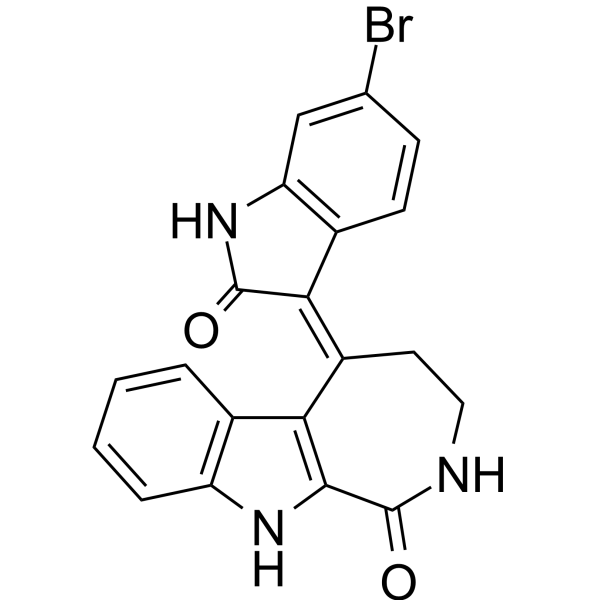 0 ImagesCat. No.: HY-145859CAS No.: 2763655-68-9
-
Fentomycin-1
 0 ImagesCat. No.: HY-186196CAS No.: 3095435-04-1Fentomycin-1 is a ferroptosis inducer. Fentomycin-1 activates lysosomal iron2+ under acidic conditions with hydrogen peroxide to form a reactive iron-oxo species, which induces oxidative degradation, oxidation, and lipolysis of membrane phospholipids, triggering ferroptosis. Fentomycin-1 can be used for the research of pancreatic ductal adenocarcinoma, breast cancer metastasis, and melanoma.

-
TrxR1-IN-3
 0 ImagesCat. No.: HY-184328CAS No.: 3028398-90-2TrxR1-IN-3 is a selective TrxR1 inhibitor with an IC50 of 1.19 μM. TrxR1-IN-3 increases intracellular reactive oxygen species (ROS) levels, induces endoplasmic reticulum (ER) stress, and activates Caspase-dependent Apoptosis. TrxR1-IN-3 exhibits anticancer activity against multiple breast cancer subtypes, including triple-negative breast cancer (TNBC). TrxR1-IN-3 can be used in breast cancer-related research.
-
Sinigrin (Standard)
 0 ImagesSynonyms: Allyl-glucosinolate (Standard); 2-Propenyl-glucosinolate (Standard)Sinigrin (Standard) (Allyl-glucosinolate (Standard)) is the analytical standard of Sinigrin (HY-N0404). This product is intended for research and analytical applications. Sinigrin (Allyl-glucosinolate) is an orally active glucosinolate found in cruciferous plants. Sinigrin possesses multiple activities such as anti-cancer, antibacterial, antifungal, anti-inflammatory, antioxidant, and inhibition of fat synthesis. Sinigrin can be used in the research of tumors, inflammatory, and metabolic diseases.
-
AChE-IN-105
 0 ImagesCat. No.: HY-180946CAS No.: 2678601-07-3AChE-IN-105 (Compound C5) is a potent, mixed AChE inhibitor with an IC50 of 5.02 μM. AChE-IN-105 scavenges ROS, decreases Hydrogen peroxide-induced Caspase-3 activation, reduces activity of the Nrf2-ARE pathway. AChE-IN-105 prevents memory impairments in the Scopolamine (HY-N0296)-induced cognitive dysfunction zebrafish model. AChE-IN-105 has potent antioxidant activity. AChE-IN-105 can be used in the research of Alzheimer's disease.
-
TrxR1-IN-B19
 0 ImagesCat. No.: HY-120914CAS No.: 170950-29-5Synonyms: GO-Y015TrxR1-IN-B19 (GO-Y015) is a Curcumin (HY-N0005) derivative and TrxR1 inhibitor. TrxR1-IN-B19 inhibits de novo selenoprotein synthesis, suppresses SeP and GPx expression, and impairs selenium incorporation into Sec-tRNA[Sec]. TrxR1-IN-B19 induces Nrf2 accumulation through Keap1 cysteine modification, HO-1 expression, GSH synthesis, ROS accumulation, ER stress, mitochondrial dysfunction, Apoptosis, and G2/M phase arrest. TrxR1-IN-B19 improves glucose tolerance and insulin sensitivity, lowers blood glucose, inhibits tumor growth, and reduces arsenic accumulation. TrxR1-IN-B19 can be used for research on type 2 diabetes, arsenite-induced toxicity, and gastric cancer.
-
Hordenine (Standard)
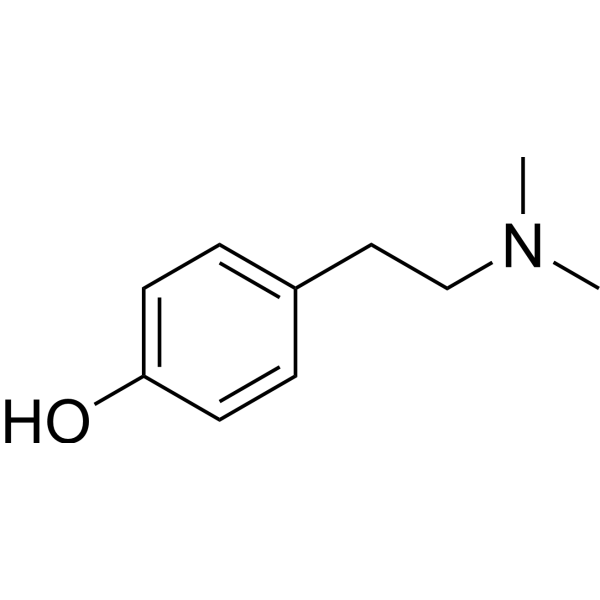 0 ImagesSynonyms: Ordenina (Standard); Peyocactine (Standard)Hordenine (Standard) (Ordenina (Standard); Peyocactine (Standard)) is the analytical standard of Hordenine (HY-N0113). This product is intended for research and analytical applications. Hordenine (Ordenina; Peyocactine) is a multifunctional alkaloid with oral activity and blood-brain barrier penetration. Hordenine inhibits LPS-induced phosphorylation of p38, JNK, ERK1/2, p65, IκB, and AKT, prevents p65 nuclear translocation, and suppresses inflammatory cytokines and mediators. Hordenine promotes M2 macrophage polarization, restores blood-milk barrier integrity, alleviates oxidative stress by reducing ROS and MDA, and attenuates LPS-induced lung injury and pulmonary edema. Hordenine inhibits cAMP production, CREB phosphorylation, and MITF expression, thereby suppressing melanin synthesis in melanocytes and reconstructed epidermis. Hordenine activates the Wnt/β-catenin signaling pathway, promotes dermal papilla cell proliferation and hair shaft elongation, and accelerates hair regeneration. Hordenine activates DRD2, acts as a D3R partial agonist, α2A-AR full agonist, and 5-HT2A-R antagonist, and inhibits SERT and DAT. Hordenine inhibits α-synuclein accumulation and ameliorates motor deficits in Parkinson's disease models. Hordenine limits alcohol intake, reduces relapse drinking behavior, and modulates alcohol-induced conditioned place preference. Hordenine can be used for research on mastitis, skin pigmentation, acute lung injury, foodborne diseases, hair loss, Parkinson's disease, bacterial infections, and alcohol use disorder.
-
ZLWH-67
 0 ImagesCat. No.: HY-182022CAS No.: 3083425-49-1ZLWH-67 is a β-Carboline derivative and Antibacterial agent. ZLWH-67 inhibits DNA synthesis, suppresses biofilm formation, and increases reactive oxygen species (ROS) levels. ZLWH-67 exhibits potent in vitro antibacterial activity against MRSA (MIC = 0.5-4 μg/mL), S. epidermidis (MIC = 4 μg/mL), E. faecalis (MIC = 4-8 μg/mL), and S. pneumoniae (MIC = 16 μg/mL). ZLWH-67 displays anti-MRSA effects in murine skin and pneumonia infection models.




