



Thiamphenicol

Based on 1 Customer Validation
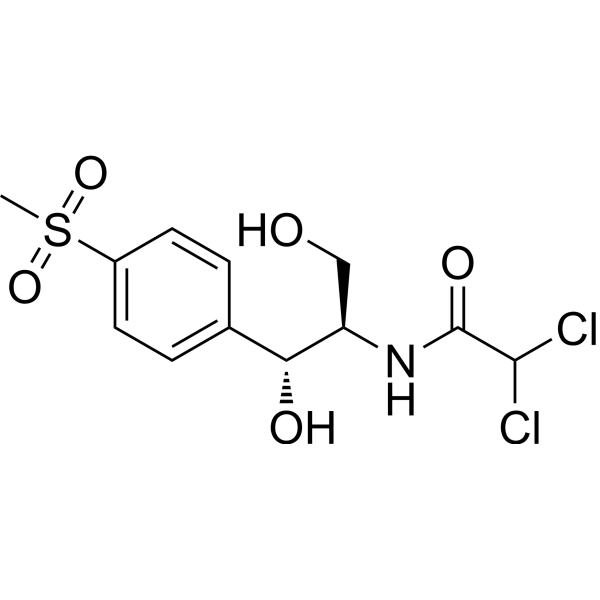
Thiamphenicol (Thiophenicol), a methyl-sulfonyl derivative of Chloramphenicol, is a broad-spectrum antimicrobial antibiotic. Thiamphenicol acts by binding to the 50S ribosomal subunit, leading to inhibition of protein synthesis and bacteriostatic effect (against Gram-negative, Gram-positive aerobic and anaerobic bacteria).
Nos produits utilisent uniquement pour la recherche. Nous ne vendons pas aux patients.
- Pureté : 99.63%
- CAS No.: 15318-45-3
- Formule: C12H15Cl2NO5S
- Masse moléculaire:356.22
-
Stockage:Powder -20°C, 3 years , 4°C, 2 years ; In solvent -80°C, 6 months , -20°C, 1 month

To place orders, for customer services and technical support, please contact: MedChemExpress USA
Tel: 609-228-6898 E-mail: [email protected] [email protected]


-
 Activité biologique
-
Chemical Information
-
Solvant et solubilité
- Protocole
- Pureté et documentation
- Références
-
 Help & FAQs


-
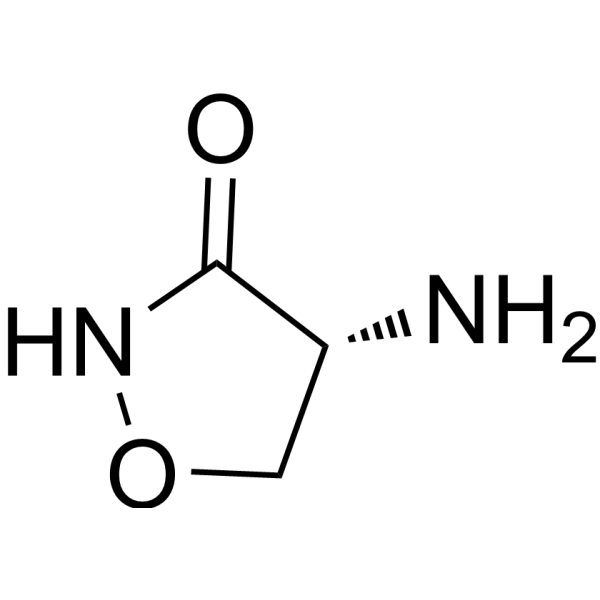
HY-B0030
D-CycloserineBacterial Inhibitor -
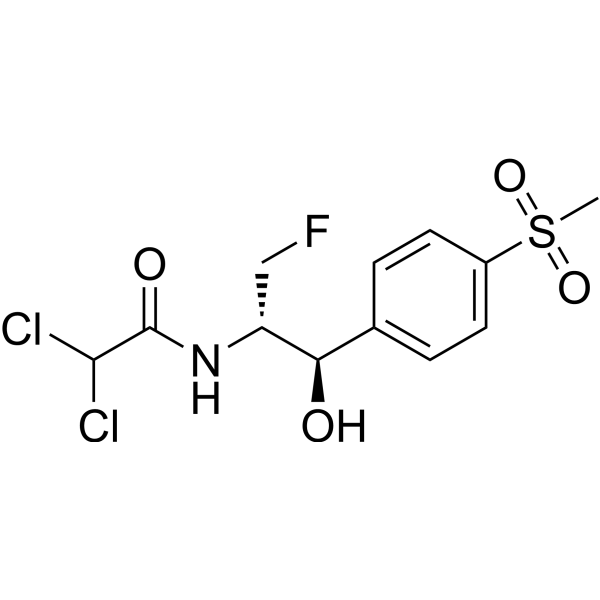
HY-B1374
FlorfenicolBacterial Inhibitor -
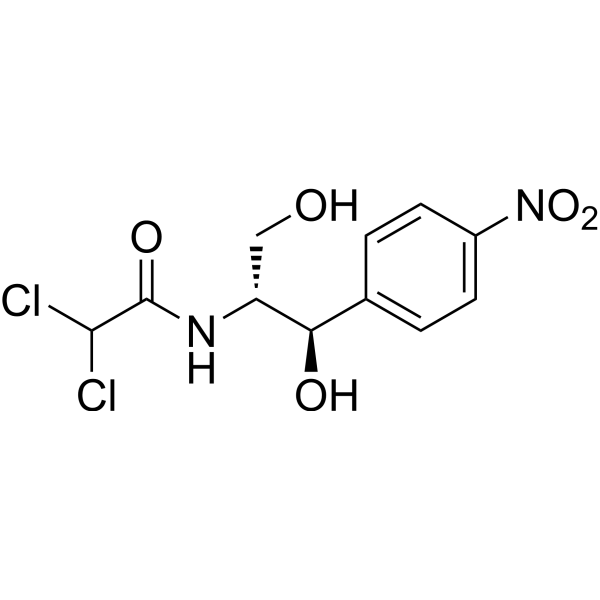
HY-B0239
ChloramphenicolHIF-1α Inhibitor -
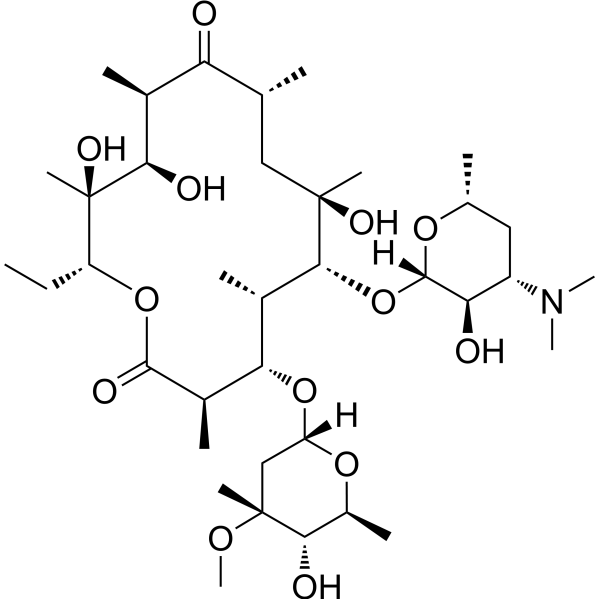
HY-B0220
ErythromycinAntibiotic -
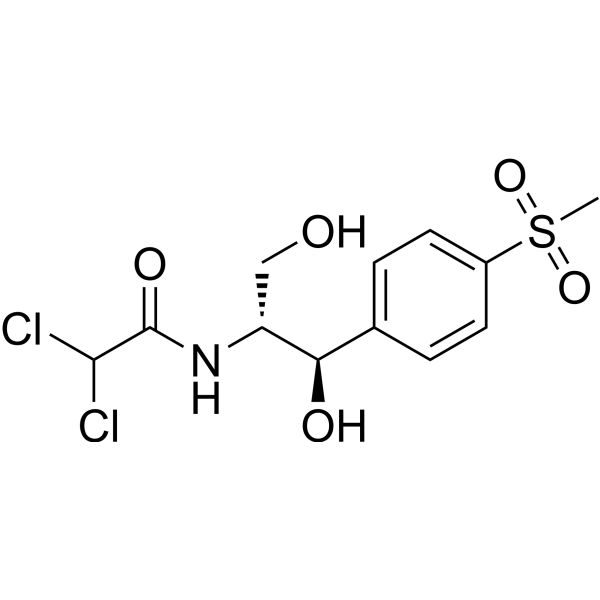
HY-B0479R
Thiamphenicol (Standard)Antibiotic Agent -
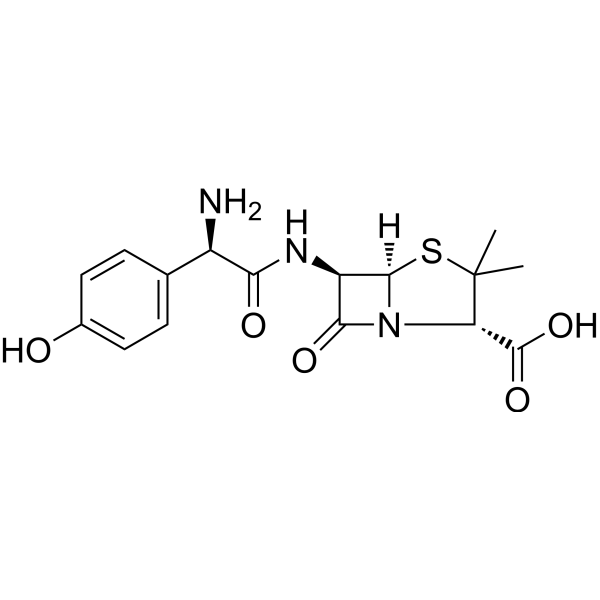
HY-B0467A
AmoxicillinAntibiotic -
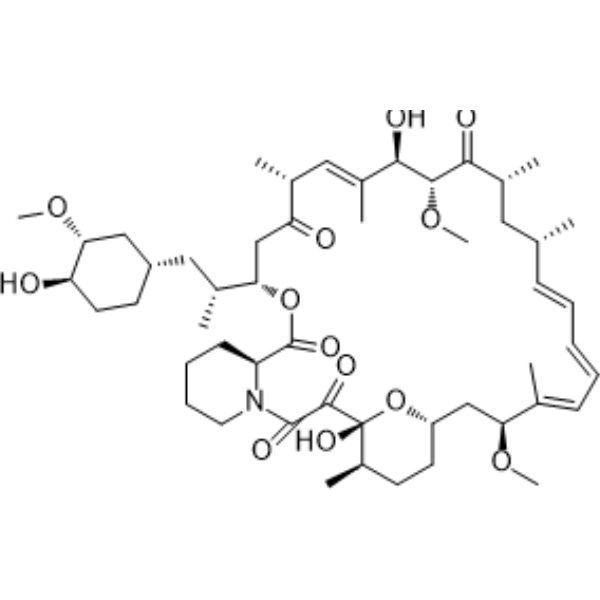
HY-10219
RapamycinmTOR Inhibitor -
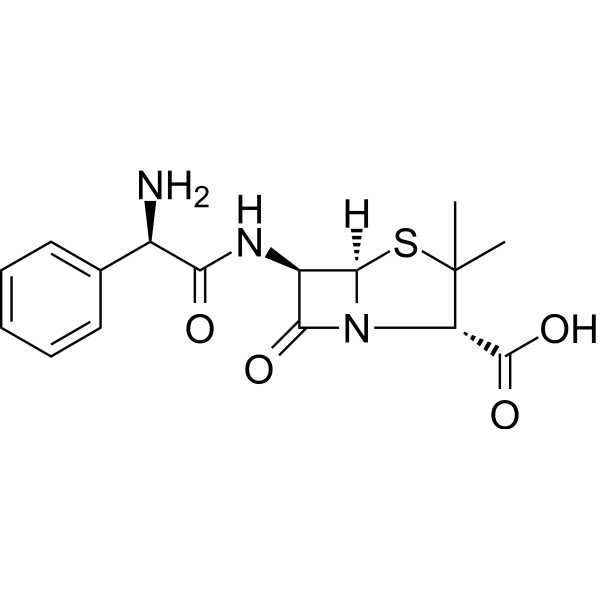
HY-B0522
AmpicillinBacterial Inhibitor -

HY-E70005B
Collagenase, Type IIZinc peptidase, Matrix metalloproteinases (MMPs) -
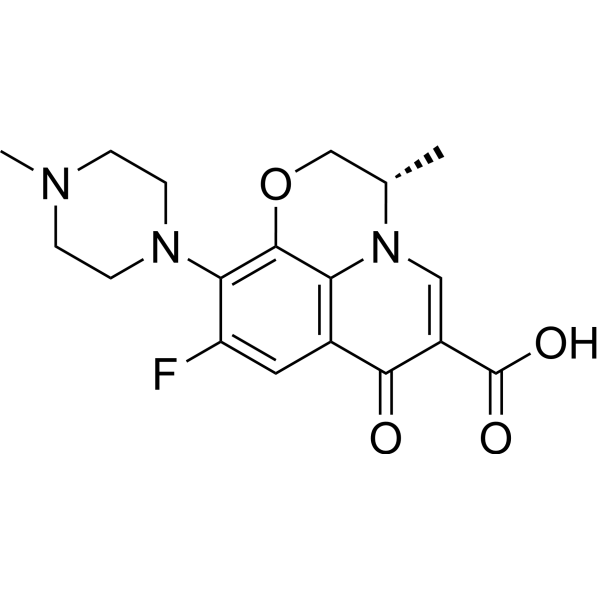
HY-B0330
LevofloxacinDNA Gyrase/Topoisomerase Inhibitor -
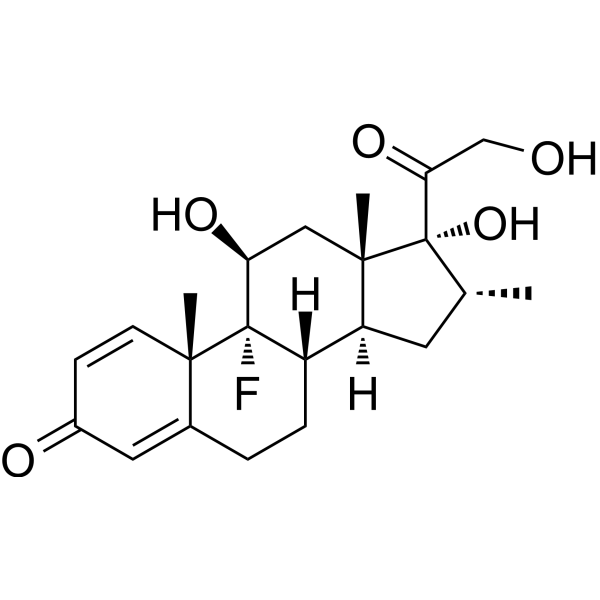
HY-14648
DexamethasoneGR Agonist -
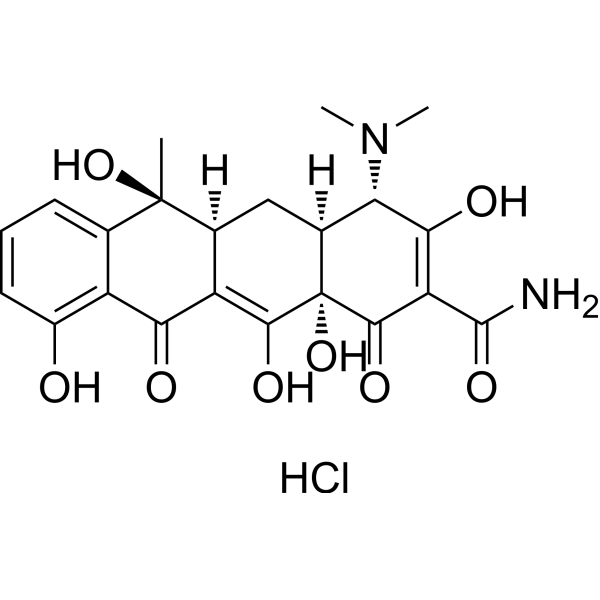
HY-B0474
Tetracycline hydrochlorideAntibiotic
Voir tous les produits spécifiques à Isoform Beta-lactamase
MoreVoir tous les produits spécifiques à Isoform Antibiotic
More

Activité biologique
Description
In Vitro
Thiamphenicol shows a significant post-antibiotic effect (PAE) (0.33 to 2.9h) on all pathogens studied (S. pneumoniae, S. aureus and Escherichia coli) and a powerful bactericidal effect against β-lactamase-positive and -negative H. influenzae. Thiamphenicol MICs for the microorganisms analyzed are: 32 mg/L (S. aureus and E. coli), 2 mg/L (S. pneumoniae) and 0.25 mg/L (H. influenzae). Thiamphenicol shows a good in vitro activity against difficult-to-treat multiply resistant pathogens[1].
MedChemExpress (MCE) has not independently confirmed the accuracy of these methods. They are for reference only.
In Vivo
MedChemExpress (MCE) has not independently confirmed the accuracy of these methods. They are for reference only.
Essai clinique
| NCT Number | Sponsor | Condition | Start Date |
Phase

|
|---|---|---|---|---|
| NCT01329991 | 2011-05 | PHASE1 |


Chemical Information
-
CAS No. 15318-45-3
-
Appearance Solid
-
Masse moléculaire 356.22
-
Formule C12H15Cl2NO5S
-
Color White to off-white
-
SMILES
O=C(N[C@H](CO)[C@H](O)C1=CC=C(S(=O)(C)=O)C=C1)C(Cl)Cl
-
Synonyms
Thiophenicol; Dextrosulphenidol
-
Livraison
Room temperature in continental US; may vary elsewhere.
-
Stockage
Powder -20°C 3 years 4°C 2 years In solvent -80°C 6 months -20°C 1 month


Solvant et solubilité
In Vitro:
DMSO : 100 mg/mL (280.73 mM; Need ultrasonic; Hygroscopic DMSO has a significant impact on the solubility of product, please use newly opened DMSO)
H2O : 2 mg/mL (5.61 mM; Need ultrasonic)
Please refer to the solubility information to select the appropriate solvent. Once prepared, please aliquot and store the solution to prevent product inactivation from repeated freeze-thaw cycles.
Storage method and period of stock solution: -80°C, 6 months; -20°C, 1 month. When stored at -80°C, please use it within 6 months. When stored at -20°C, please use it within 1 month.
* Note: If you choose water as the stock solution, please dilute it to the working solution, then filter and sterilize it with a 0.22 μm filter before use.
Please refer to the solubility information to select the appropriate solvent. Once prepared, please aliquot and store the solution to prevent product inactivation from repeated freeze-thaw cycles.
Storage method and period of stock solution: -80°C, 6 months; -20°C, 1 month. When stored at -80°C, please use it within 6 months. When stored at -20°C, please use it within 1 month.
* Note: If you choose water as the stock solution, please dilute it to the working solution, then filter and sterilize it with a 0.22 μm filter before use.
Concentration (start) × Volume (start) = Concentration (final) × Volume (final)
In Vivo:
Select the appropriate dissolution method based on your experimental animal and administration route.
- For the following dissolution methods, please ensure to first prepare a clear stock solution using an In Vitro approach and then sequentially add co-solvents:
- To ensure reliable experimental results, the clarified stock solution can be appropriately stored based on storage conditions. As for the working solution for In Vivo experiments, it is recommended to prepare freshly and use it on the same day.
- The percentages shown for the solvents indicate their volumetric ratio in the final prepared solution. If precipitation or phase separation occurs during preparation, heat and/or sonication can be used to aid dissolution.
Add each solvent one by one: 10% DMSO 40% PEG300 5% Tween-80 45% Saline
Solubility: ≥ 2.5 mg/mL (7.02 mM); Clear solution
This protocol yields a clear solution of ≥ 2.5 mg/mL (saturation unknown).
Taking 1 mL working solution as an example, add 100 μL DMSO stock solution (25.0 mg/mL) to 400 μL PEG300, and mix evenly; then add 50 μL Tween-80 and mix evenly; then add 450 μL Saline to adjust the volume to 1 mL.
Preparation of Saline: Dissolve 0.9 g sodium chloride in ddH₂O and dilute to 100 mL to obtain a clear Saline solution.
Add each solvent one by one: 10% DMSO 90% (20% SBE-β-CD in Saline)
Solubility: ≥ 2.5 mg/mL (7.02 mM); Clear solution
This protocol yields a clear solution of ≥ 2.5 mg/mL (saturation unknown).
Taking 1 mL working solution as an example, add 100 μL DMSO stock solution (25.0 mg/mL) to 900 μL 20% SBE-β-CD in Saline, and mix evenly.
Preparation of 20% SBE-β-CD in Saline (4°C, storage for one week): 2 g SBE-β-CD powder is dissolved in 10 mL Saline, completely dissolve until clear.
In Vivo Dissolution Calculator
Please enter the basic information of animal experiments:
-
-
-
-
Recommended: Prepare an additional quantity of animals to account for potential losses during experiments.
Please enter your animal formula composition:
-
%DMSO +
Recommended: Keep the proportion of DMSO in working solution below 2% if your animal is weak.
-
%+
-
+%Tween-80 + +
-
%Saline +
The co-solvents required include: DMSO, . All of co-solvents are available by MedChemExpress (MCE). , Tween 80. All of co-solvents are available by MedChemExpress (MCE).
Working solution concentration: 0.22 mg/mL
Method for preparing stock solution: mg drug dissolved in μL DMSO. Stock solution concentration: mg/mL.
1. Take μL DMSO stock solution;
2. Add μL .
μL , mix evenly;
3. Then add μL Tween 80, mix evenly;
4. Then add μL
Please ensure that the stock solution in the first step is dissolved to a clear state, and add co-solvents in sequence. You can use ultrasonic heating (ultrasonic cleaner, recommended frequency 20-40 kHz), vortexing, etc. to assist dissolution.


Pureté et documentation
-
Fiche technique (274 KB)
-
SDS (393 KB)
- English - EN (393 KB)
- Français - FR (393 KB)
- Deutsch - DE (393 KB)
- Norwegian - NO (393 KB)
- Español - ES (393 KB)
- Swedish - SV (393 KB)
- Italian - IT (393 KB)
- Korean - KR (393 KB)
- Portuguese - PT (393 KB)
-
Instruction de manipulation (2659 KB)
Références
[1]. A Marchese, et al. In vitro activity of thiamphenicol against multiresistant Streptococcus pneumoniae, Haemophilus influenzae and Staphylococcus aureus in Italy. J Chemother. 2002 Dec;14(6):554-61. [Content Brief]
[2]. Marta Tikhomirov, et al. Pharmacokinetics of florfenicol and thiamphenicol in ducks. J Vet Pharmacol Ther. 2019 Jan;42(1):116-120. [Content Brief]


Complete Stock Solution Preparation Table
Please refer to the solubility information to select the appropriate solvent. Once prepared, please aliquot and store the solution to prevent product inactivation from repeated freeze-thaw cycles.
Storage method and period of stock solution: -80°C, 6 months; -20°C, 1 month. When stored at -80°C, please use it within 6 months. When stored at -20°C, please use it within 1 month.
| Optional Solvent | Concentration Solvent Mass | 1 mg | 5 mg | 10 mg | 25 mg |
|---|---|---|---|---|---|
| H2O / DMSO | 1 mM | 2.8073 mL | 14.0363 mL | 28.0725 mL | 70.1813 mL |
| 5 mM | 0.5615 mL | 2.8073 mL | 5.6145 mL | 14.0363 mL | |
| DMSO | 10 mM | 0.2807 mL | 1.4036 mL | 2.8073 mL | 7.0181 mL |
| 15 mM | 0.1872 mL | 0.9358 mL | 1.8715 mL | 4.6788 mL | |
| 20 mM | 0.1404 mL | 0.7018 mL | 1.4036 mL | 3.5091 mL | |
| 25 mM | 0.1123 mL | 0.5615 mL | 1.1229 mL | 2.8073 mL | |
| 30 mM | 0.0936 mL | 0.4679 mL | 0.9358 mL | 2.3394 mL | |
| 40 mM | 0.0702 mL | 0.3509 mL | 0.7018 mL | 1.7545 mL | |
| 50 mM | 0.0561 mL | 0.2807 mL | 0.5615 mL | 1.4036 mL | |
| 60 mM | 0.0468 mL | 0.2339 mL | 0.4679 mL | 1.1697 mL | |
| 80 mM | 0.0351 mL | 0.1755 mL | 0.3509 mL | 0.8773 mL | |
| 100 mM | 0.0281 mL | 0.1404 mL | 0.2807 mL | 0.7018 mL |
* Note: If you choose water as the stock solution, please dilute it to the working solution, then filter and sterilize it with a 0.22 μm filter before use.


Thiamphenicol Related Classifications
HY-B0479 Related Classifications
 Powered by Bioz