Search Result
Results for "
Aβ40
" in MedChemExpress (MCE) Product Catalog:
1
Biochemical Assay Reagents
| Cat. No. |
Product Name |
Target |
Research Areas |
Chemical Structure |
-
- HY-11102
-
|
|
γ-secretase
Notch
|
Neurological Disease
Cancer
|
|
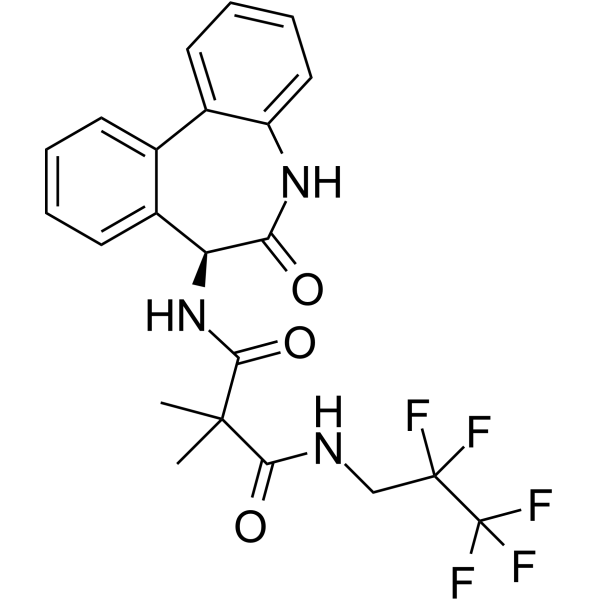
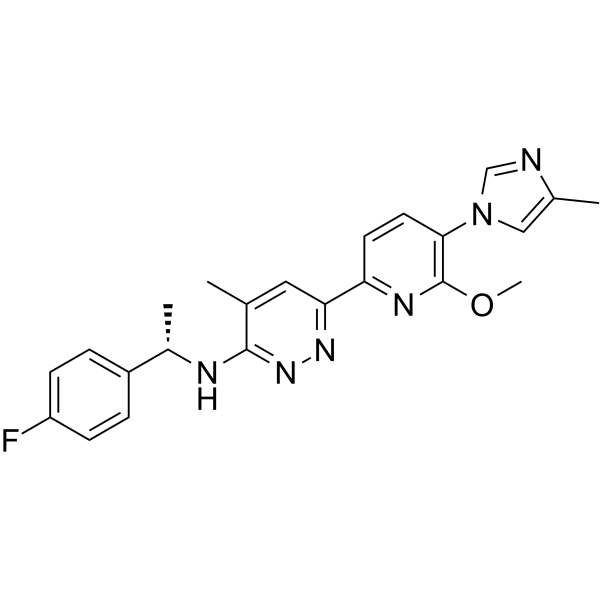
RO4929097 is an orally active γ secretase inhibitor with an IC50 of 4 nM, inhibiting cellular processing of Aβ40 and Notch with EC50 of 14 nM and 5 nM, respectively .
|
-
-
- HY-10974
-
|
|
γ-secretase
|
Neurological Disease
Cancer
|
|
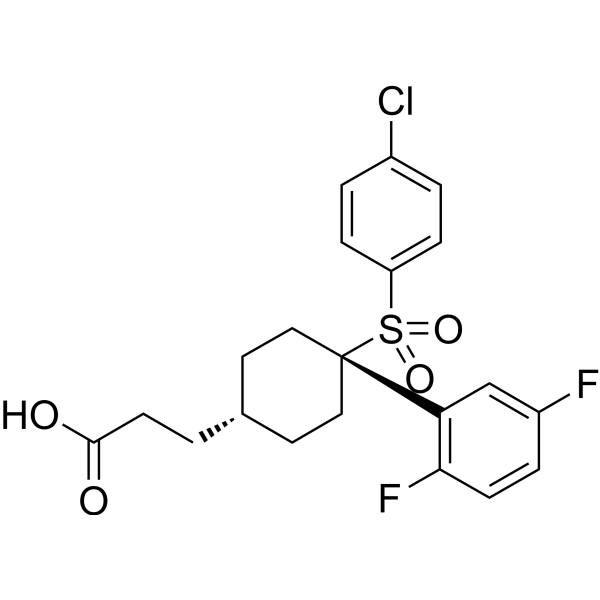
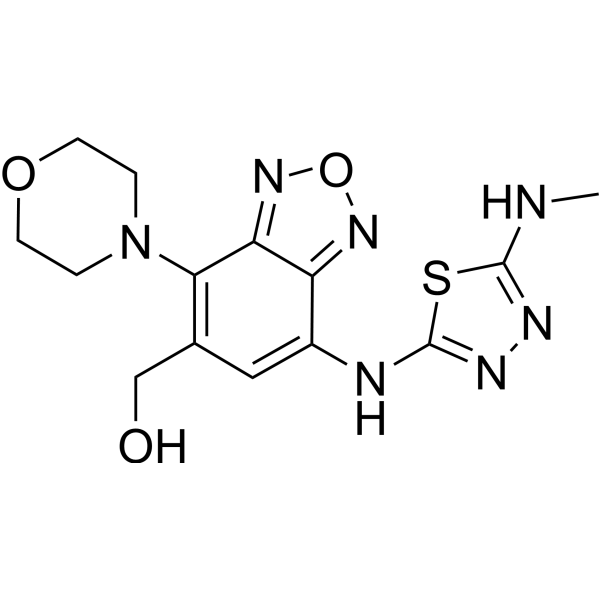
MK-0752 is a potent, orally active and specific γ-secretase inhibitor, showing dose-dependent reduction of Aβ40 with an IC50 of 5 nM in human SH-SY5Y cells. MK-0752 crosses the blood-brain barrier. MK-0752 reduces newly generated CNS Aβ in vivo .
|
-
-
- HY-16759
-
|
MK-8931
|
Beta-secretase
|
Neurological Disease
|
|
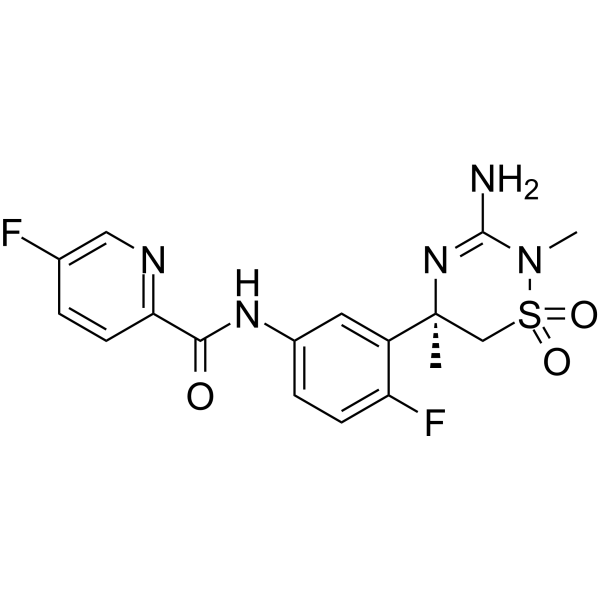
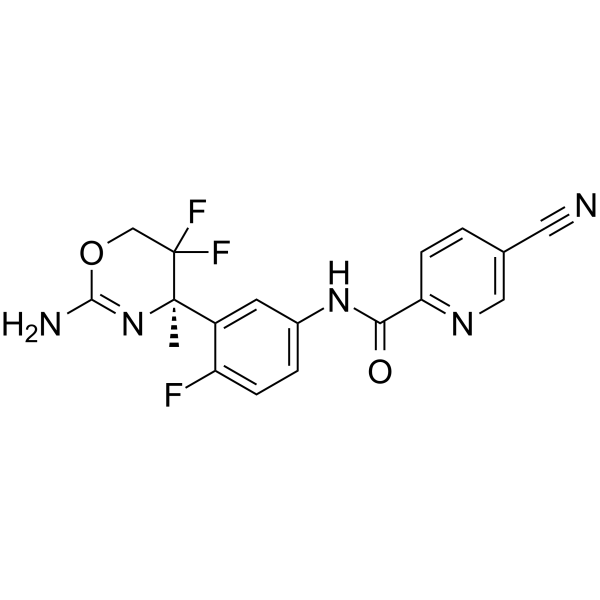
Verubecestat (MK-8931) is an orally active, high-affinity BACE1 and BACE2 inhibitor with Ki values of 2.2 nM and 0.38 nM. Verubecestat effectively reduces Aβ40 and has the potential for Alzheimer's Disease .
|
-
-
- HY-50845
-
|
BMS-708163
|
γ-secretase
Notch
|
Cancer
|
|
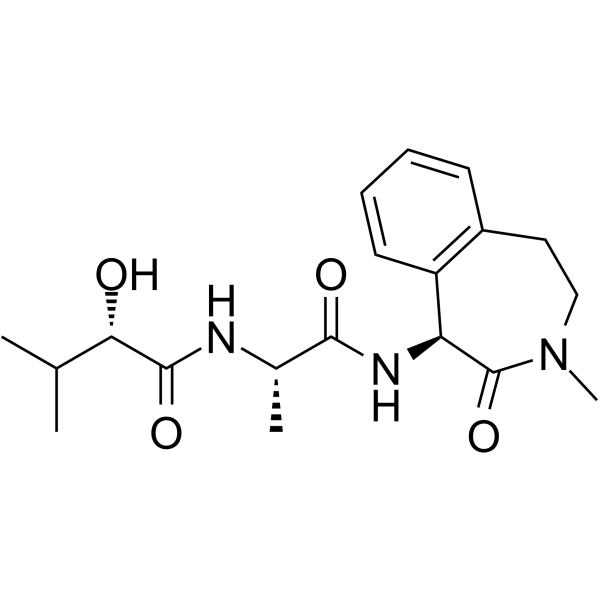
Avagacestat (BMS-708163) is a potent inhibitor of γ-secretase, with IC50s of 0.27 nM and 0.30 nM for Aβ42 and Aβ40 inhibition; Avagacestat (BMS-708163) also inhibits NICD (Notch IntraCellular Domain) with IC50 of 0.84 nM and shows weak inhibition of CYP2C19, with IC50 of 20 μM. Avagacestat can be used for Alzheimer disease research.
|
-
-
- HY-12723
-
|
(-)-Apomorphine
|
Dopamine Receptor
Monoamine Oxidase
Reactive Oxygen Species (ROS)
JNK
ERK
Amyloid-β
Tau Protein
MMP
|
Neurological Disease
Inflammation/Immunology
Endocrinology
Cancer
|
|
Apomorphine ((-)-Apomorphine) is a potent dopamine receptor agonist. Apomorphine also inhibit MAO-A and MAO-B. Apomorphine exerts neuroprotective effect and can relax rat corpus cavernosum. Apomorphine can inhibit ROS production, DNA fragmentation and inibit JNK and ERK1/2 phosphorylation. Apomorphine can enhance degradation of intracellular Aβ40 and Aβ42, reduces tau protein levels and inhibit MMP-9 expression. Apomorphine is a highly potent radical scavenger and iron chelator. Apomorphine can be used for the researches of dementia, parkinson's disease, alzheimer disease, breast carcinoma, and erectile dysfunction .
|
-
-
- HY-10009
-
|
LY450139
|
γ-secretase
Amyloid-β
Notch
|
Neurological Disease
|
|
Semagacestat is a γ-secretase inhibitor, inhibits β-amyloid (Aβ42), Aβ38 and Aβ40 with IC50s of 10.9, 12 and 12.1 nM, respectively; also inhibits Notch signaling with IC50 of 14.1 nM. Semagacestat can be used for the research of alzheimer's disease .
|
-
-
- HY-16659
-
EHT 1864
Maximum Cited Publications
22 Publications Verification
|
Ras
|
Neurological Disease
Cancer
|
|
EHT 1864 is an inhibitor of Rac family small GTPases. EHT 1864 directly binds and impairs the ability of this small GTPase to engage critical downstream effectors required for growth transformation. The Kd values are 40, 50, 60, and 230 nM for Rac1, Rac1b, Rac2 and Rac3, respectively. EHT 1864 also potently inhibits other Rac-dependent transformation processes, Tiam1- and Ras-mediated growth transformation. EHT 1864 prevents Aβ 40 and Aβ 42 production in vivo. EHT 1864 dependently suppresses the release of migrasomes from podocytes induced by LPS, PAN, or HG .
|
-
-
- HY-137131
-
|
DC-Cholesterol hydrochloride
|
Amyloid-β
Liposome
IFNAR
Interleukin Related
|
Neurological Disease
Inflammation/Immunology
|
|
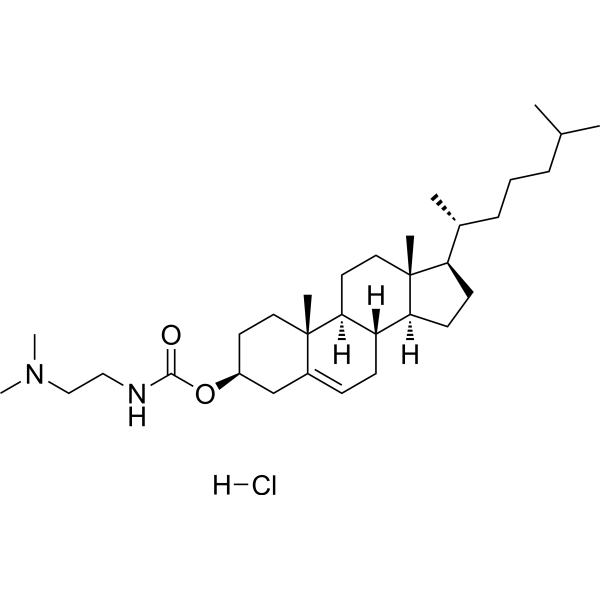
DC-Chol hydrochloride is a cationic lipid. DC-Chol hydrochloride could inhibit Aβ40 fibril formation under appropriate experimental conditions. DC-Chol hydrochloride strongly inhibits amyloidogenesis of oxidized hCT in a dose-dependent manner. DC-Chol hydrochloride induces the production of Th1 (IL-2 and IFN-γ) and Th2 (IL-5) cytokines. DC-Chol hydrochloride can enhance the body's immune response to antigens. DC-Chol hydrochloride is used as a gene delivery vector. DC-Chol hydrochloride can be used in research in areas such as hepatitis B vaccines to improve vaccine immunity .
|
-
-
- HY-14399
-
|
CHF5074; CSP-1103
|
γ-secretase
Apoptosis
|
Neurological Disease
|
|
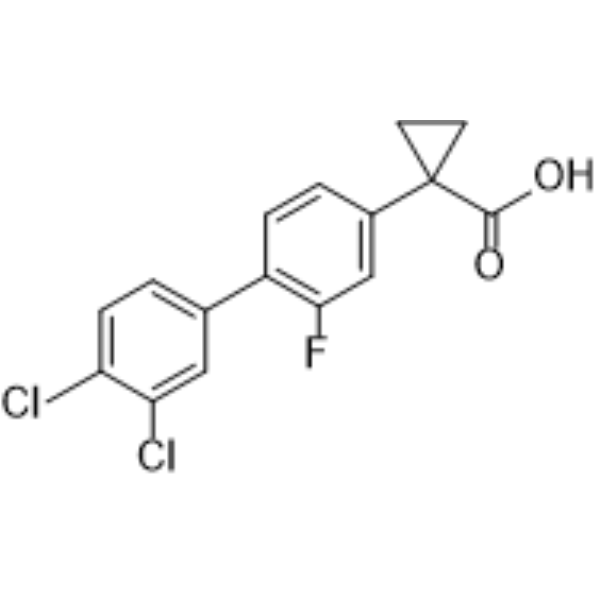
Itanapraced (CHF5074) is an orally active γ-secretase modulator and a non-steroidal anti-inflammatory derivative. Itanapraced reduces Aβ42 and Aβ40 secretion with IC50 values of 3.6 and 18.4 μM, respectively. Itanapraced inhibits cell apoptosis of hippocampal neurons induced by oxygen and glucose deprivation (OGD). Itanapraced can be used for the research of Alzheimer's disease .
|
-
-
- HY-W176557
-
|
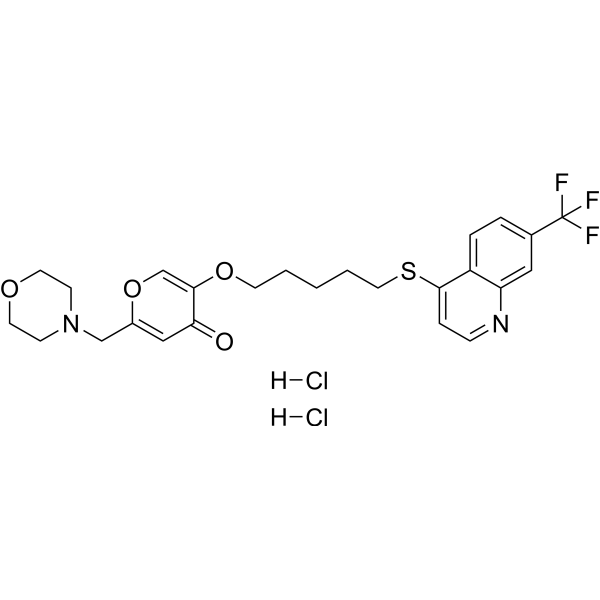
|
Aquaporin
|
Neurological Disease
|
|
TGN-073 is a aquaporin 4 (AQP4) modulator, as well as an orally available, blood-brain barrier-permeable agent. TGN-073 increases the uptake and distribution of brain MRI tracers in the brain parenchyma and reduces the levels of insoluble amyloid-β 40 and β 42. TGN-073 can be used in research related to Alzheimer's disease, dementia, traumatic brain injury and pain .
|
-
-
- HY-120789
-
|
|
γ-secretase
|
Neurological Disease
|
|
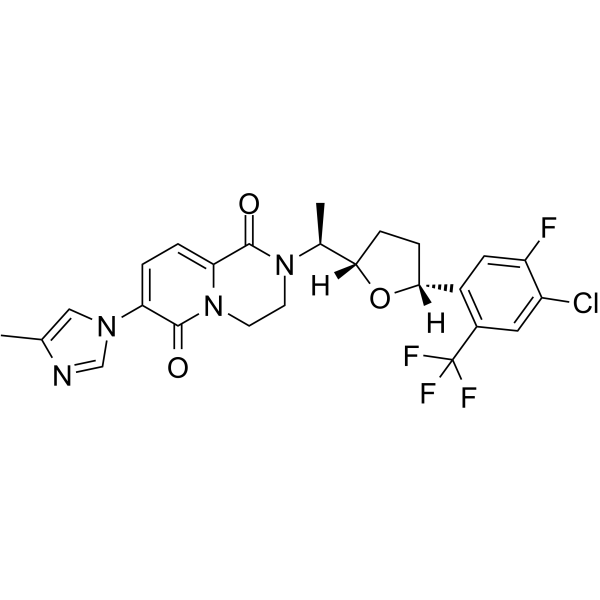
PF-06648671 is a novel, brain-penetrable, and orally active γ-secretase modulator (GSM). PF-06648671 reduces Aβ42 and Aβ40, with concomitant increases in Aβ37 and Aβ38 in vitro. PF-06648671 is used for the study of Alzheimer’s disease .
|
-
-
- HY-101087
-
|
|
Carbonic Anhydrase
Amyloid-β
Reactive Oxygen Species (ROS)
|
Neurological Disease
Inflammation/Immunology
Cancer
|
|
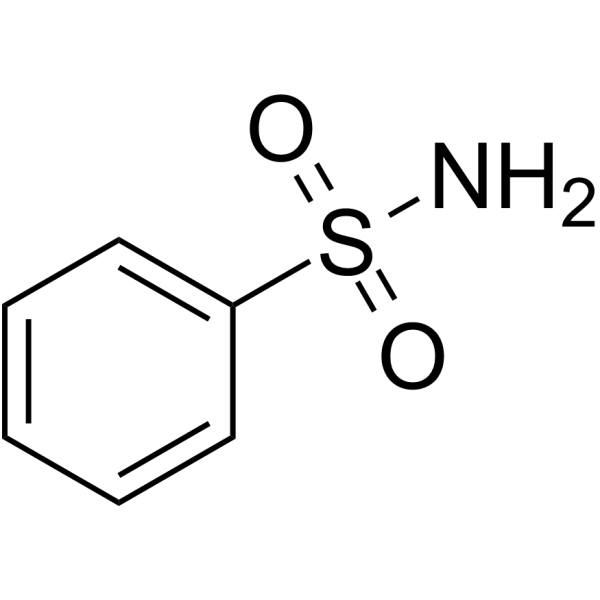
Benzenesulphonamide (Compound 1) is a carbonic anhydrase inhibitor. Benzenesulphonamide exhibits CA II inhibitory activity. Benzenesulphonamide reduces ROS and improves the gene expression of amyloid-β40 and 42. Benzenesulphonamide is beneficial for Alzheimer's disease. Benzenesulphonamide derivatives have anticancer, anti-inflammatory, and anticonvulsant activities. Benzenesulphonamide can be used in the research of Alzheimer's disease, epilepsy, inflammatory diseases, leukemia, melanoma, lung cancer, and colon cancer .
|
-
-
- HY-14175
-
|
GSI-953
|
γ-secretase
|
Neurological Disease
|
|
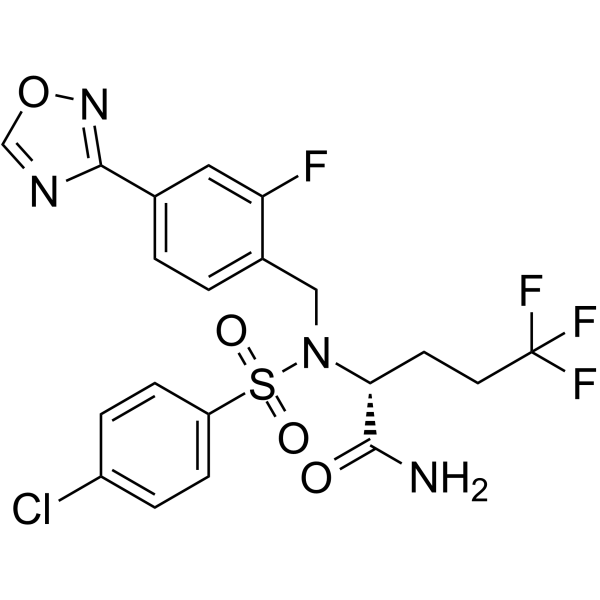
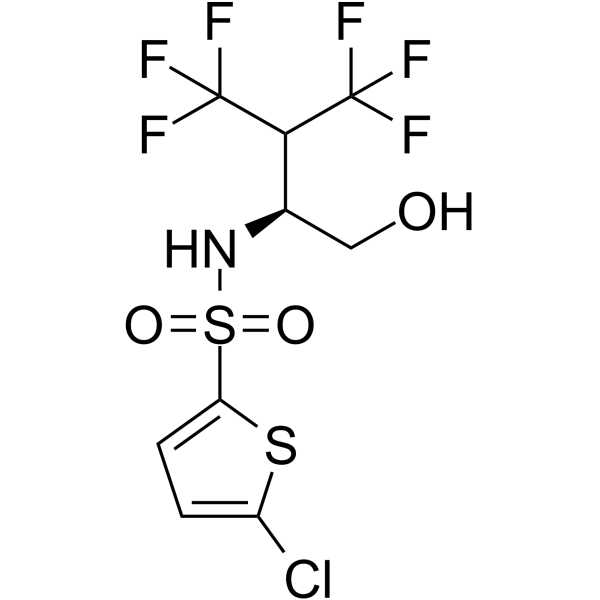
Begacestat (GSI-953) is a selective thiophene sulfonamide inhibitor of amyloid precursor protein gamma-secretase (IC50Aβ40=15 nM) for the treatment of Alzheimer's disease .
|
-
-
- HY-P990301
-
|
|
Amyloid-β
|
Neurological Disease
|
|
Anti-Human/Mouse/Rat Amyloid-beta Antibody (MOAB-2) is a mouse-derived IgG2b λ type antibody inhibitor, targeting to Amyloid-beta. Anti-Human/Mouse/Rat Amyloid-beta Antibody (MOAB-2) recognizes unaggregated, oligomeric or fibrillar forms of Aβ42 and unaggregated Aβ40. Anti-Human/Mouse/Rat Amyloid-beta Antibody (MOAB-2) is selective for human Aβ42 over Aβ40, but not amyloid precursor protein (APP). Anti-Human/Mouse/Rat Amyloid-beta Antibody (MOAB-2) can immunostain human or rat and mouse tissue. Anti-Human/Mouse/Rat Amyloid-beta Antibody (MOAB-2) can be used for detections of western blot, immunohistochemistry, immunofluorescence, immunoprecipitation and ELISA .
|
-
-
- HY-117482
-
|
|
γ-secretase
|
Neurological Disease
|
|
BPN-15606 is a highly potent, orally active γ-secretase modulator (GSM), attenuates the production of Aβ42 and Aβ40 by SHSY5Y neuroblastoma cells with IC50 values of 7 nM and 17nM, respectively. BPN-15606 lowers Aβ42 and Aβ40 levels in the central nervous system of rats and mice. BPN-15606 has acceptable PK/PD properties, including bioavailability, half-life, and clearance .
|
-
-
- HY-W594851
-
|
BPT
|
Amyloid-β
|
Neurological Disease
|
|
Biphenyl-3′,3,4,4′-tetrol (BPT) is a potent Aβ40 aggregation inhibitor. Biphenyl-3′,3,4,4′-tetrol (BPT) can be used in the study of neurodegenerative diseases such as Alzheimer's disease .
|
-
-
- HY-153986
-
|
|
Cathepsin
|
Neurological Disease
|
|
AEP-IN-2 is an asparagine endopeptidase (AEP) inhibitor via block AEP cleavage of APP and Tau. AEP-IN-2 has oral activity and decreases Aβ40 and Aβ42 and p-Tau levels .
|
-
-
- HY-114508
-
|
3-Phenylpropiophenone; β-Phenylpropiophenone
|
Amyloid-β
|
Neurological Disease
|
|
Dihydrochalcone (3-Phenylpropiophenone) is a Aβ aggregation inhibitor. Dihydrochalcone destabilizes Aβ17-42 protofibrils by disrupting the β-sheet of β1 region. Dihydrochalcone destabilizes both U-shaped Aβ40/Aβ42 protofibrils and S-shaped Aβ42 protofibrils by binding to the protofibril cavity. Dihydrochalcone is the main component of daemonorops draco tree .
|
-
-
- HY-P1894
-
|
|
Amyloid-β
|
Neurological Disease
|
|
β-Amyloid Protein Precursor 770 (135-155) is a peptide of amyloid precursor protein isoform (APP 770). APP 770 produces Aβ40/42 .
|
-
-
- HY-12938
-
|
|
Beta-secretase
|
Neurological Disease
|
|
AMG-8718 is a potent, selective and orally active BACE1 inhibitor with IC50 values of 0.0007, 0.005 µM for BACE1 and BACE2, respectively. AMG-8718 significantly decreases Aβ40 levels in the CSF and brain .
|
-
-
- HY-P1894A
-
|
|
Amyloid-β
|
Neurological Disease
|
|
β-Amyloid Protein Precursor 770 (135-155) TFA is a peptide of amyloid precursor protein isoform (APP 770). APP 770 produces Aβ40/42 .
|
-
-
- HY-16759B
-
|
MK-8931 tosylate
|
Beta-secretase
|
Neurological Disease
|
|
Verubecestat tosylate is an orally active, high-affinity BACE1 and BACE2 inhibitor with Ki values of 2.2 nM and 0.38 nM. Verubecestat tosylate effectively reduces Aβ40 and has the potential for Alzheimer's Disease .
|
-
-
- HY-117236
-
|
|
γ-secretase
|
Neurological Disease
|
|
GSI-136 is an inhibitor of γ-secretase with an IC50 of 3 nM. GSI-136 can lead to a dose-dependent reduction of Aβ40 levels in diethylamine-extracted brain homogenates of C57BL/6 mice. GSI-136 can be studied in medicinal chemistry and Alzheimer's disease research .
|
-
-
- HY-149272
-
-
-
- HY-117482A
-
|
|
γ-secretase
|
Neurological Disease
|
|
BPN-15606 besylate is a highly potent, orally active γ-secretase modulator (GSM), attenuates the production of Aβ42 and Aβ40 by SHSY5Y neuroblastoma cells with IC50 values of 7 nM and 17nM, respectively. BPN-15606 besylate lowers Aβ42 and Aβ40 levels in the central nervous system of rats and mice. BPN-15606 besylate has acceptable PK/PD properties, including bioavailability, half-life, and clearance .
|
-
-
- HY-123228
-
|
|
Amyloid-β
|
Neurological Disease
|
|
CHF5022 is an inhibitor of Aβ42 secretion (IC50=92 μM). CHF5022 retains a modest activity on Aβ40 at non-cytotoxic concentrations (−22.2±4.8% at 100 μM) .
|
-
-
- HY-16759A
-
|
MK-8931 TFA
|
Beta-secretase
|
Neurological Disease
|
|
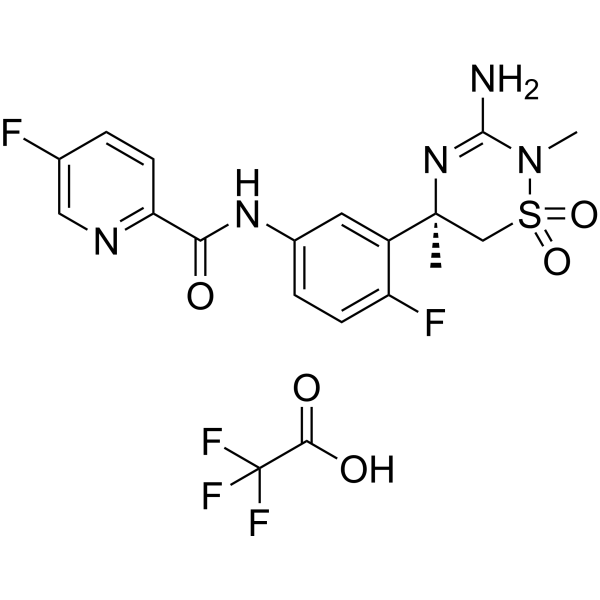
Verubecestat (MK-8931) TFA is an orally active, high-affinity BACE1 and BACE2 inhibitor with Ki values of 2.2 nM and 0.38 nM. Verubecestat TFA effectively reduces Aβ40 and has the potential for Alzheimer's Disease .
|
-
-
- HY-155304
-
|
|
Cholinesterase (ChE)
|
Neurological Disease
|
|
BuChE-IN-8 (compound 19c) is a butyrylcholinesterase (BuChE) inhibitor with an IC50 of 559 nM. BuChE-IN-8 possesses human β-secretase (BACE1) and Aβ40 aggregation inhibitory activities. BuChE-IN-8 has significant antiamnesic properties .
|
-
-
- HY-14175R
-
|
GSI-953 (Standard)
|
γ-secretase
Reference Standards
|
Neurological Disease
|
|
Begacestat (Standard) is the analytical standard of Begacestat. This product is intended for research and analytical applications. Begacestat (GSI-953) is a selective thiophene sulfonamide inhibitor of amyloid precursor protein gamma-secretase (IC50Aβ40=15 nM) for the treatment of Alzheimer's disease .
|
-
-
- HY-10143
-
|
|
Beta-secretase
Amyloid-β
|
Neurological Disease
|
|
LY-2434074 is a selective β-secretase (BACE) inhibitor with an IC50 <100 nM. LY-2434074 can inhibit amyloid-β (Aβ40 and Aβ42) production. LY-2434074 can be used for the research of neurological disease, such as Alzheimer's disease .
|
-
-
- HY-16759R
-
|
MK-8931 (Standard)
|
Beta-secretase
Reference Standards
|
Neurological Disease
|
|
Verubecestat (Standard) is the analytical standard of Verubecestat. This product is intended for research and analytical applications. Verubecestat (MK-8931) is an orally active, high-affinity BACE1 and BACE2 inhibitor with Ki values of 2.2 nM and 0.38 nM. Verubecestat effectively reduces Aβ40 and has the potential for Alzheimer's Disease .
|
-
-
- HY-10975
-
|
|
γ-secretase
|
Neurological Disease
Cancer
|
|
MK-0752 sodium is a potent, orally active and specific γ-secretase inhibitor, showing dose-dependent reduction of Aβ40 with an IC50 of 5 nM in human SH-SY5Y cells. MK-0752 sodium crosses the blood-brain barrier. MK-0752 sodium reduces newly generated CNS Aβ in vivo .
|
-
-
- HY-149273
-
|
|
Cholinesterase (ChE)
Amyloid-β
Tau Protein
|
Neurological Disease
|
|
hBChE-IN-1 (compound 4), a quinolizidinyl derivative, is a potent hBChE inhibitor (IC50=7 nM) and highly selective over hAChE. hBChE-IN-1 shows inhibitory activity against tau and Aβ40 protein aggregation, with IC50 values of 20 and 4.3 μM, respectively. hBChE-IN-1 can be used for Alzheimer's disease research .
|
-
-
- HY-10009R
-
|
LY450139 (Standard)
|
Reference Standards
γ-secretase
Amyloid-β
Notch
|
Neurological Disease
|
|
Semagacestat (Standard) is the analytical standard of Semagacestat. This product is intended for research and analytical applications. Semagacestat is a γ-secretase inhibitor, inhibits β-amyloid (Aβ42), Aβ38 and Aβ40 with IC50s of 10.9, 12 and 12.1 nM, respectively; also inhibits Notch signaling with IC50 of 14.1 nM. Semagacestat can be used for the research of alzheimer's?disease .
|
-
-
- HY-P3781
-
|
|
Amyloid-β
|
Neurological Disease
|
|
(Met(O)35)-Amyloid β-Protein (1-42) is the oxidation form of Met35 in Aβ42. (Met(O)35)-Amyloid β-Protein (1-42) can yield an oligomer size distribution characteristic of Aβ40. (Met(O)35)-Amyloid β-Protein (1-42) can be used in the research of Alzheimer’s disease (AD) .
|
-
-
- HY-50845R
-
|
BMS-708163 (Standard)
|
γ-secretase
Notch
Reference Standards
|
Cancer
|
|
Avagacestat (Standard) is the analytical standard of Avagacestat. This product is intended for research and analytical applications. Avagacestat (BMS-708163) is a potent inhibitor of γ-secretase, with IC50s of 0.27 nM and 0.30 nM for Aβ42 and Aβ40 inhibition; Avagacestat (BMS-708163) also inhibits NICD (Notch IntraCellular Domain) with IC50 of 0.84 nM and shows weak inhibition of CYP2C19, with IC50 of 20 μM. Avagacestat can be used for Alzheimer disease research.
|
-
-
- HY-14399R
-
|
CHF5074 (Standard); CSP-1103 (Standard)
|
γ-secretase
Apoptosis
Reference Standards
|
Neurological Disease
|
|
Itanapraced (Standard) is the analytical standard of Itanapraced. This product is intended for research and analytical applications. Itanapraced (CHF5074) is an orally active γ-secretase modulator and a non-steroidal anti-inflammatory derivative. Itanapraced reduces Aβ42 and Aβ40 secretion with IC50 values of 3.6 and 18.4 μM, respectively. Itanapraced inhibits cell apoptosis of hippocampal neurons induced by oxygen and glucose deprivation (OGD). Itanapraced can be used for the research of Alzheimer's disease .
|
-
-
- HY-101087R
-
|
|
Reference Standards
Carbonic Anhydrase
Amyloid-β
Reactive Oxygen Species (ROS)
|
Neurological Disease
Inflammation/Immunology
Cancer
|
|
Benzenesulphonamide (Standard) is the analytical standard of Benzenesulphonamide (HY-101087). This product is intended for research and analytical applications. Benzenesulphonamide (Compound 1) is a carbonic anhydrase inhibitor. Benzenesulphonamide exhibits CA II inhibitory activity. Benzenesulphonamide reduces ROS and improves the gene expression of amyloid-β40 and 42. Benzenesulphonamide is beneficial for Alzheimer's disease. Benzenesulphonamide derivatives have anticancer, anti-inflammatory, and anticonvulsant activities. Benzenesulphonamide can be used in the research of Alzheimer's disease, epilepsy, inflammatory diseases, leukemia, melanoma, lung cancer, and colon cancer .
|
-
-
- HY-182429
-
|
|
Beta-secretase
Cathepsin
Amyloid-β
|
Neurological Disease
|
|
NB-533 is an orally active and brain-penetrant BACE-1 inhibitor with a human IC50 of 0.002 μM. NB-533 also inhibits human cathepsin D with an IC50 of 0.001 μM. NB-533 inhibits amyloidogenic amyloid precursor protein (APP) processing and reduces Aβ40 release. NB-533 reduces brain levels of APP metabolite C99 and Aβ40 in transgenic mice. NB-533 can be used for the research of Alzheimer’s disease .
|
-
-
- HY-180843
-
|
|
Tau Protein
Amyloid-β
Cholinesterase (ChE)
Monoamine Oxidase
Reactive Oxygen Species (ROS)
|
Neurological Disease
|
|
Aβ/tau aggregation-IN-4 (Compound D21) is an Aβ/tau aggregation inhibitor. Aβ/tau aggregation-IN-4 promotes the degradation of Aβ40/42 (Aβ40, IC50 = 2.151 μM; Aβ42, IC50 = 3.622 μM). Aβ/tau aggregation-IN-4 shows selective AChE inhibition (IC50: 5.56 μM). Aβ/tau aggregation-IN-4 inhibits MAO-A and MAO-B with IC50s of 0.59 μM and 0.09 μM, respectively. Aβ/tau aggregation-IN-4 suppresses intracellular ROS levels. Aβ/tau aggregation-IN-4 can be used in the research of Alzheimer's disease .
|
-
-
- HY-P991866
-
|
|
Amyloid-β
|
Neurological Disease
|
|
BI 1034020 is a humanized nanobody, targeting two different epitopes of Aβ ( Aβ40 and Aβ42) with high affinity. BI 1034020 reduces the level of free Ab peptide in plasma and thus prevent the formation of new Aβ plaques and clear existing plaques. BI 1034020 can be used for Alzheimer’s disease research .
|
-
-
- HY-128391
-
|
|
γ-secretase
Amyloid-β
|
Neurological Disease
|
|
AZ1136 is a highly selective γ-secretase modulator (GSM). AZ1136 reduces the levels of Aβ42 and Aβ40, with its IC50 being 990 and 1400 nM. AZ1136 increases the levels of Aβ39 and Aβ37, but does not affect Aβ38. AZ1136 can be used for the study of Alzheimer's disease .
|
-
-
- HY-18157
-
|
|
Amyloid-β
|
Neurological Disease
|
|
SCH 900229 is a potent γ-secretase inhibitor with selective activity against PS1. The Aβ40 IC50 value of SCH 900229 is 1.3 nM, showing its excellent ability in reducing Aβ. SCH 900229 has shown good Aβ-lowering effects after oral administration in preclinical animal models. SCH 900229 has been advanced to human clinical trials for further development of compounds for the inhibition of Alzheimer's disease .
|
-
-
- HY-180842
-
|
|
Monoamine Oxidase
Amyloid-β
Tau Protein
Cholinesterase (ChE)
|
Neurological Disease
|
|
MAO-B-IN-50 (Compound C20) is a selective MAO-B inhibitor with an IC50 value of 0.06 μM. MAO-B-IN-50 shows good inhibitory effects on the aggregation of Aβ40/42 and Tau proteins, with overall IC50 values around 1 μM. MAO-B-IN-50 exhibits potent and selective AChE inhibition (IC50 = 1.78 μM). MAO-B-IN-50 can be used in the research of Alzheimer's disease .
|
-
-
- HY-P11677
-
|
|
|
Neurological Disease
|
|
CPO_Aβ17-21P is a apoE/Aβ interaction inhibitor with an IC50 of 1.02 nM. CPO_Aβ17-21P significantly inhibits ApoE4-mediated aggregation of Aβ40 and Aβ42. CPO_Aβ17-21P significantly improves cognitive function and comprehensively alleviates Alzheimer's disease (AD)-related pathologies in mouse models. CPO_Aβ17-21P is applicable to the research of AD .
|
-
-
- HY-181861
-
|
|
Cholinesterase (ChE)
Monoamine Oxidase
Amyloid-β
Tau Protein
|
Neurological Disease
|
|
AChE/MAO-B-IN-9 (Compound E12) is an orally active, selective, reversible, non-competitive AChE and MAO-B inhibitor, with an IC50 of 0.156 μM against electric eel AChE. AChE/MAO-B-IN-9 inhibits Aβ40/42 fibril formation, promotes Aβ fibril depolymerization, and inhibits Tau protein fibril formation. AChE/MAO-B-IN-9 exerts antioxidant and neuroprotective effects, and improves scopolamine (HY-N0296)-induced memory impairment in mice. AChE/MAO-B-IN-9 can be used for the research of Alzheimer's disease .
|
-
-
- HY-12723R
-
|
(-)-Apomorphine (Standard)
|
Reference Standards
Dopamine Receptor
Monoamine Oxidase
Reactive Oxygen Species (ROS)
JNK
ERK
Amyloid-β
Tau Protein
MMP
|
Neurological Disease
Inflammation/Immunology
Endocrinology
Cancer
|
|
Apomorphine ((-)-Apomorphine) (Standard) is the analytical standard of Apomorphine (HY-12723). This product is intended for research and analytical applications. Apomorphine is a potent dopamine receptor agonist. Apomorphine also inhibit MAO-A and MAO-B. Apomorphine exerts neuroprotective effect and can relax rat corpus cavernosum. Apomorphine can inhibit ROS production, DNA fragmentation and inibit JNK and ERK1/2 phosphorylation. Apomorphine can enhance degradation of intracellular Aβ40 and Aβ42, reduces tau protein levels and inhibit MMP-9 expression. Apomorphine is a highly potent radical scavenger and iron chelator. Apomorphine can be used for the researches of dementia, parkinson's disease, alzheimer disease, breast carcinoma, and erectile dysfunction .
|
-
-
- HY-182304
-
|
|
Amyloid-β
α-synuclein
Amylin Receptor
Tau Protein
SOD
|
Neurological Disease
|
|
CLR01 sodium is a blood-brain barrier-permeable anti-aggregation agent. CLR01 sodium inhibits the de novo aggregation of Amyloid-β 40/42, α-synuclein, IAPP, tau protein and SOD1. CLR01 sodium reduces amyloid plaque burden in the cortex of triple-transgenic mice and improves the memory and motor abilities of these mice. CLR01 sodium can be used in research related to Alzheimer's disease, Parkinson's disease, and amyotrophic lateral sclerosis (ALS) .
|
-
| Cat. No. |
Product Name |
Type |
-
- HY-137131
-
|
DC-Cholesterol hydrochloride
|
Biochemical Assay Reagents
|
|
DC-Chol hydrochloride is a cationic lipid. DC-Chol hydrochloride could inhibit Aβ40 fibril formation under appropriate experimental conditions. DC-Chol hydrochloride strongly inhibits amyloidogenesis of oxidized hCT in a dose-dependent manner. DC-Chol hydrochloride induces the production of Th1 (IL-2 and IFN-γ) and Th2 (IL-5) cytokines. DC-Chol hydrochloride can enhance the body's immune response to antigens. DC-Chol hydrochloride is used as a gene delivery vector. DC-Chol hydrochloride can be used in research in areas such as hepatitis B vaccines to improve vaccine immunity .
|
| Cat. No. |
Product Name |
Target |
Research Area |
-
- HY-P1894
-
|
|
Amyloid-β
|
Neurological Disease
|
|
β-Amyloid Protein Precursor 770 (135-155) is a peptide of amyloid precursor protein isoform (APP 770). APP 770 produces Aβ40/42 .
|
-
- HY-P1894A
-
|
|
Amyloid-β
|
Neurological Disease
|
|
β-Amyloid Protein Precursor 770 (135-155) TFA is a peptide of amyloid precursor protein isoform (APP 770). APP 770 produces Aβ40/42 .
|
-
- HY-P5361
-
|
|
Peptides
|
Others
|
|
β-Amyloid (40-1) is a biological active peptide. (non-toxic reverse fragment Aβ(40–1), control of HY-P0265)
|
-
- HY-P3781
-
|
|
Amyloid-β
|
Neurological Disease
|
|
(Met(O)35)-Amyloid β-Protein (1-42) is the oxidation form of Met35 in Aβ42. (Met(O)35)-Amyloid β-Protein (1-42) can yield an oligomer size distribution characteristic of Aβ40. (Met(O)35)-Amyloid β-Protein (1-42) can be used in the research of Alzheimer’s disease (AD) .
|
-
- HY-P11677
-
|
|
|
Neurological Disease
|
|
CPO_Aβ17-21P is a apoE/Aβ interaction inhibitor with an IC50 of 1.02 nM. CPO_Aβ17-21P significantly inhibits ApoE4-mediated aggregation of Aβ40 and Aβ42. CPO_Aβ17-21P significantly improves cognitive function and comprehensively alleviates Alzheimer's disease (AD)-related pathologies in mouse models. CPO_Aβ17-21P is applicable to the research of AD .
|
| Cat. No. |
Product Name |
Target |
Research Area |
Image |
-
- HY-P990301
-
|
|
Amyloid-β
|
Neurological Disease
|
|
Anti-Human/Mouse/Rat Amyloid-beta Antibody (MOAB-2) is a mouse-derived IgG2b λ type antibody inhibitor, targeting to Amyloid-beta. Anti-Human/Mouse/Rat Amyloid-beta Antibody (MOAB-2) recognizes unaggregated, oligomeric or fibrillar forms of Aβ42 and unaggregated Aβ40. Anti-Human/Mouse/Rat Amyloid-beta Antibody (MOAB-2) is selective for human Aβ42 over Aβ40, but not amyloid precursor protein (APP). Anti-Human/Mouse/Rat Amyloid-beta Antibody (MOAB-2) can immunostain human or rat and mouse tissue. Anti-Human/Mouse/Rat Amyloid-beta Antibody (MOAB-2) can be used for detections of western blot, immunohistochemistry, immunofluorescence, immunoprecipitation and ELISA .
|
-
(5)
-
- HY-P991866
-
|
|
Amyloid-β
|
Neurological Disease
|
|
BI 1034020 is a humanized nanobody, targeting two different epitopes of Aβ ( Aβ40 and Aβ42) with high affinity. BI 1034020 reduces the level of free Ab peptide in plasma and thus prevent the formation of new Aβ plaques and clear existing plaques. BI 1034020 can be used for Alzheimer’s disease research .
|
-
(5)
| Cat. No. |
Product Name |
|
Classification |
-
- HY-137131
-
|
DC-Cholesterol hydrochloride
|
|
Cholesterol
|
|
DC-Chol hydrochloride is a cationic lipid. DC-Chol hydrochloride could inhibit Aβ40 fibril formation under appropriate experimental conditions. DC-Chol hydrochloride strongly inhibits amyloidogenesis of oxidized hCT in a dose-dependent manner. DC-Chol hydrochloride induces the production of Th1 (IL-2 and IFN-γ) and Th2 (IL-5) cytokines. DC-Chol hydrochloride can enhance the body's immune response to antigens. DC-Chol hydrochloride is used as a gene delivery vector. DC-Chol hydrochloride can be used in research in areas such as hepatitis B vaccines to improve vaccine immunity .
|
Your information is safe with us. * Required Fields.
Inquiry Information
- Product Name:
- Cat. No.:
- Quantity:
- MCE Japan Authorized Agent:

