



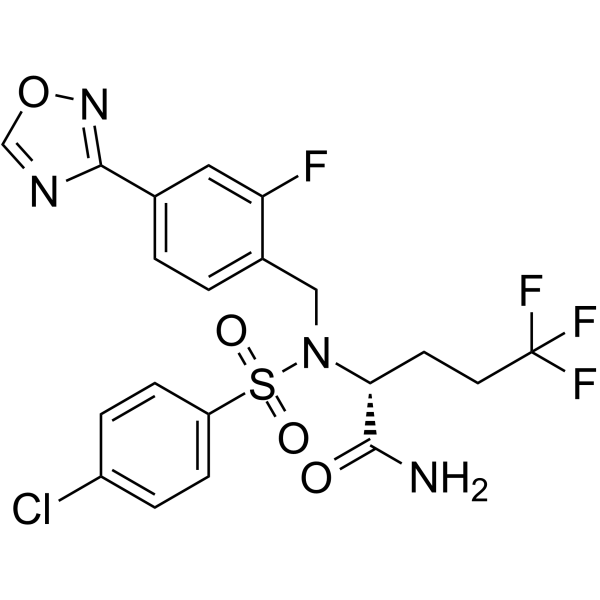
Avagacestat
Based on 2 publication(s) in Google Scholar
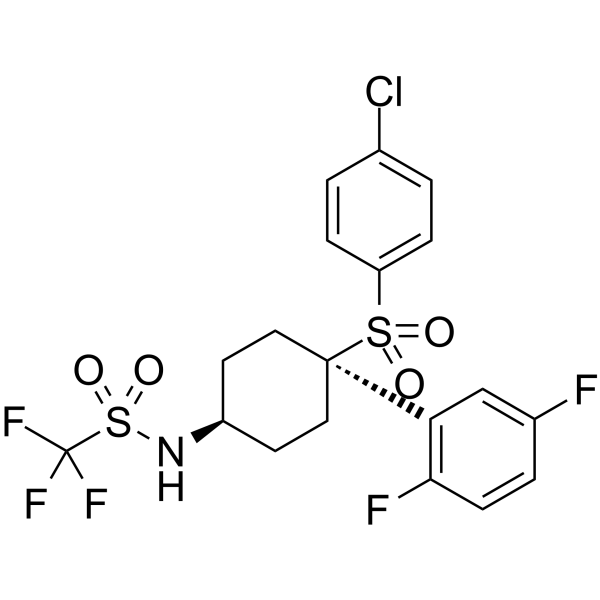
Avagacestat (BMS-708163) is a potent inhibitor of γ-secretase, with IC50s of 0.27 nM and 0.30 nM for Aβ42 and Aβ40 inhibition; Avagacestat (BMS-708163) also inhibits NICD (Notch IntraCellular Domain) with IC50 of 0.84 nM and shows weak inhibition of CYP2C19, with IC50 of 20 μM. Avagacestat can be used for Alzheimer disease research.
For research use only. We do not sell to patients.
- Purity : 99.92%
- CAS No.: 1146699-66-2
- Formula: C20H17ClF4N4O4S
- Molecular Weight:520.89
-
Storage:Powder -20°C, 3 years , 4°C, 2 years ; In solvent -80°C, 2 years , -20°C, 1 year

To place orders, for customer services and technical support, please contact: MedChemExpress USA
Tel: 609-228-6898 E-mail: [email protected] [email protected]


-
 Biological Activity
-
Chemical Information
-
Solvent & Solubility
- Protocols
- Purity & Documentation
- References
-
 Help & FAQs


-
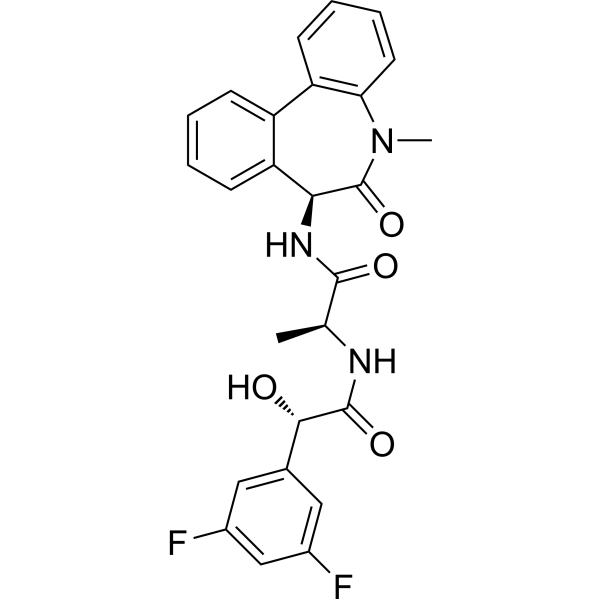
HY-50752
LY-411575γ-secretase Inhibitor -
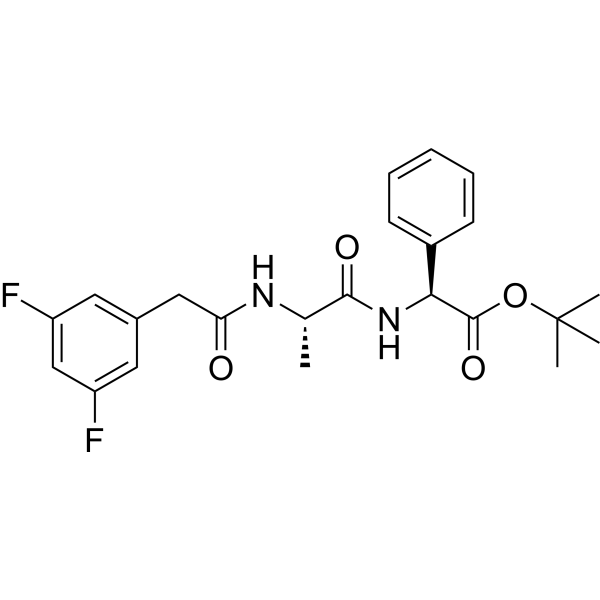
HY-13027
DAPTγ-secretase Inhibitor -
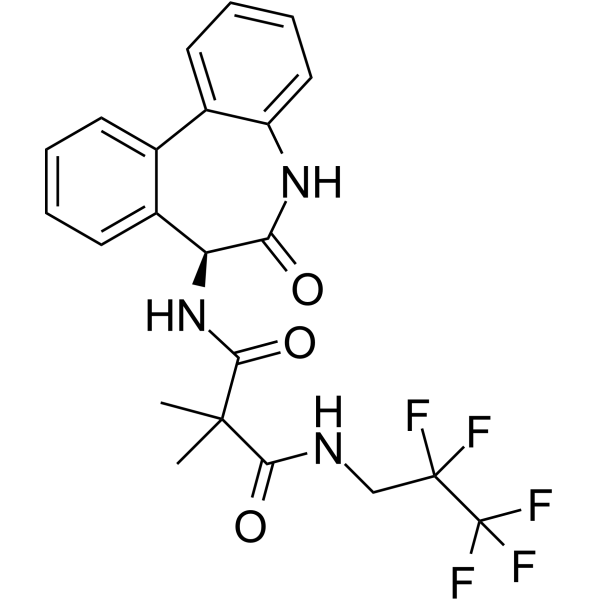
HY-11102
RO4929097γ-secretase Inhibitor -
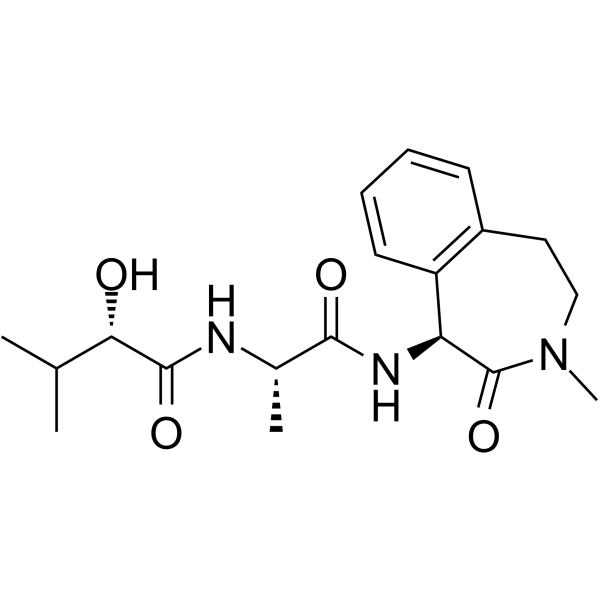
HY-10009
Semagacestatγ-secretase Inhibitor -
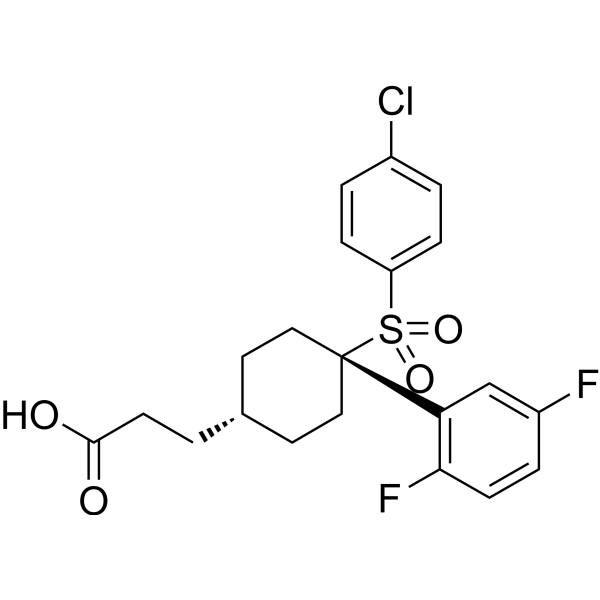
HY-10974
MK-0752 -
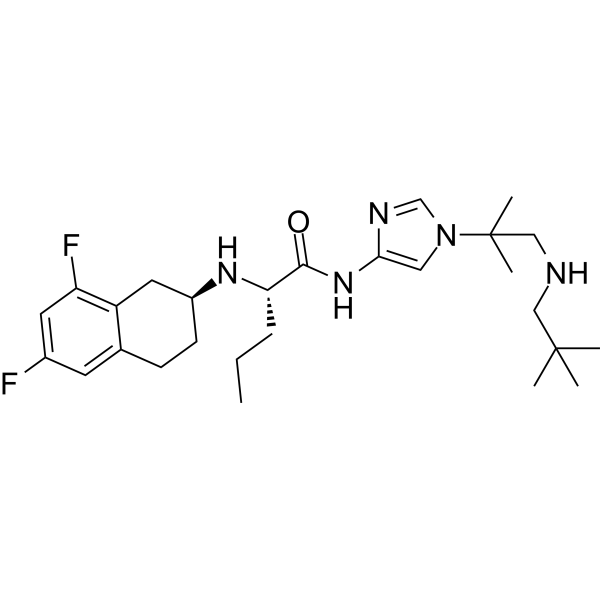
HY-15185
Nirogacestatγ-Secretase Inhibitor -
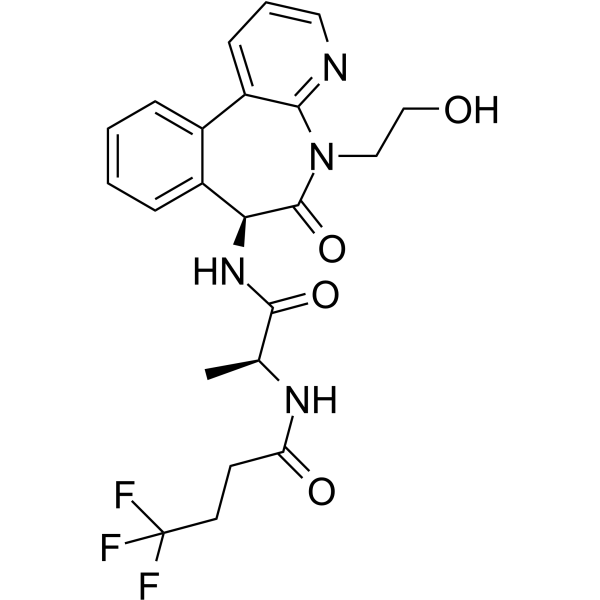
HY-12449
CrenigacestatNotch/γ-secretase Inhibitor -
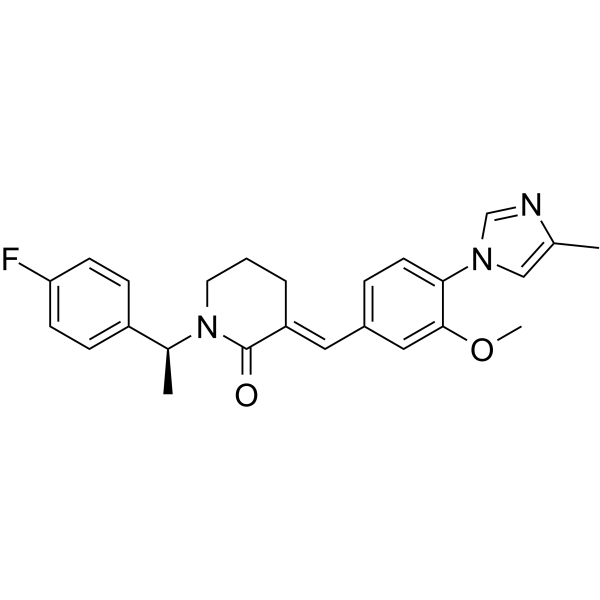
HY-10016
E 2012γ-Secretase Modulator -
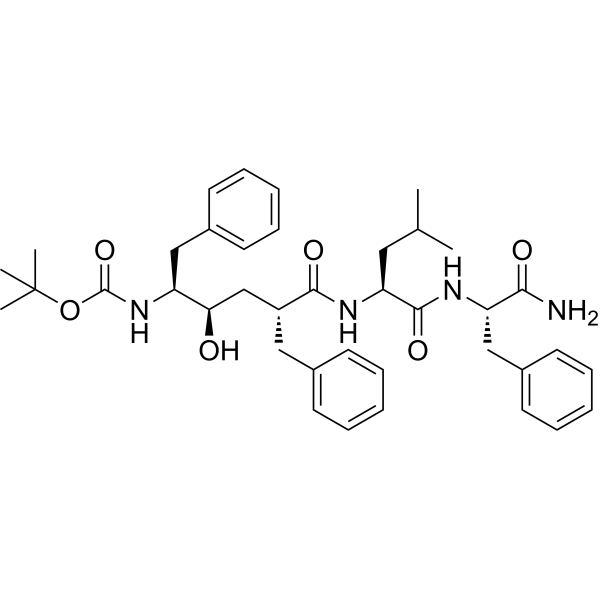
HY-19369
L-685458γ-Secretase Inhibitor -
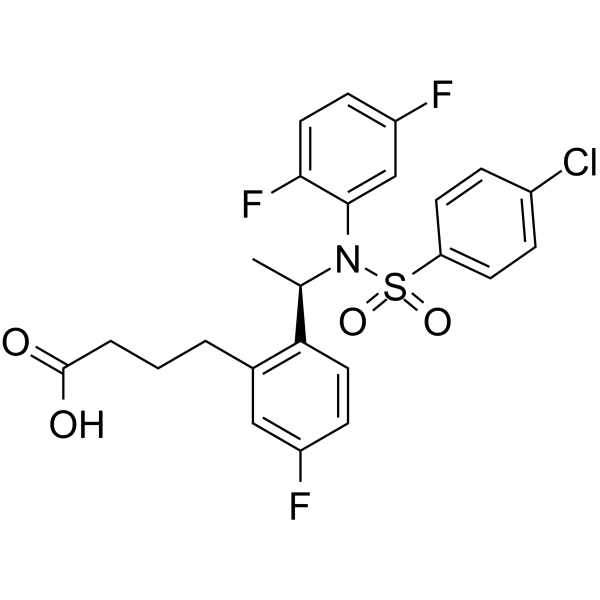
HY-50883
BMS 299897γ-secretase Inhibitor -
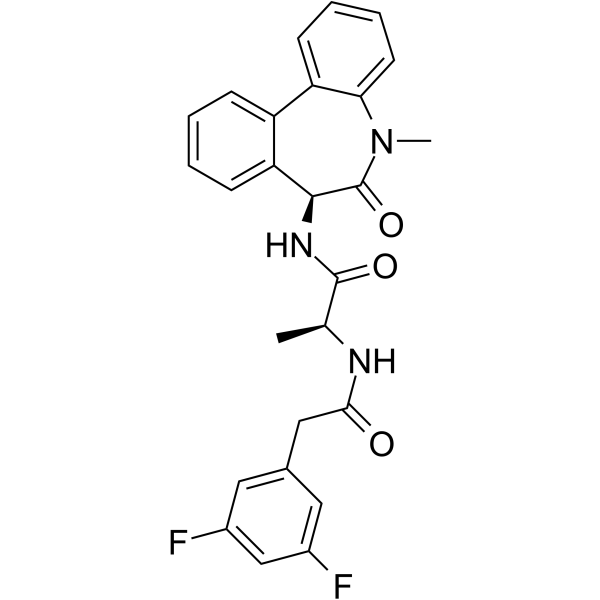
HY-13526
YO-01027γ-secretase Inhibitor -
HY-14174
MRK-560γ-Secretase Inhibitor
Publications Citing Use of MedChemExpress (MCE) Avagacestat
More

Biological Activity
Description
IC50 & Target
IC50: 0.27 nM (γ-secretase, Aβ42), 0.30 nM (γ-secretase, Aβ40), 20 μM (CYP2C19)[1], 0.84 nM (NICD)[2]
Cellular Effect
|
Cell Line

|
Type | Value | Description | References |
|---|---|---|---|---|
| CHO | ED50 |
1.2 nM
Compound: 43
|
Inhibition of gamma-secretase in CHO cells assessed expressing APPSw assessed as inhibition of amyloid beta(1 to x) secretion after overnight incubation by ELISA
Inhibition of gamma-secretase in CHO cells assessed expressing APPSw assessed as inhibition of amyloid beta(1 to x) secretion after overnight incubation by ELISA
|
[PMID: 23713656] |
| CHO | ED50 |
71 nM
Compound: 43
|
Inhibition of gamma-secretase in CHO cells assessed expressing NotchdeltaE assessed as inhibition of notch cleavage after overnight incubation by luciferase reporter gene assay
Inhibition of gamma-secretase in CHO cells assessed expressing NotchdeltaE assessed as inhibition of notch cleavage after overnight incubation by luciferase reporter gene assay
|
[PMID: 23713656] |
| CHO | IC50 |
71 nM
Compound: BMS-708163
|
Inhibition of gamma-secretase in CHO cells after overnight incubation by luciferase reporter gene assay
Inhibition of gamma-secretase in CHO cells after overnight incubation by luciferase reporter gene assay
|
[PMID: 23312944] |
| H4 | IC50 |
0.225 nM
Compound: 1, BMS-708163
|
Inhibition of gamma secretase-mediated amyloid beta42 production in human H4 cells expressing human APP swedish mutant
Inhibition of gamma secretase-mediated amyloid beta42 production in human H4 cells expressing human APP swedish mutant
|
[PMID: 22420884] |
| H4 | IC50 |
300 pM
Compound: 80 BMS-708163
|
Inhibition of human gamma secretase-mediated amyloid beta (1 to 40) production expressed in human H4 cells
Inhibition of human gamma secretase-mediated amyloid beta (1 to 40) production expressed in human H4 cells
|
[PMID: 19694467] |
| HEK293 | ED50 |
1.2 nM
Compound: BMS-708163
|
Inhibition of gamma-secretase in HEK293 cells after overnight incubation by Western blotting analysis
Inhibition of gamma-secretase in HEK293 cells after overnight incubation by Western blotting analysis
|
[PMID: 23312944] |
| IMR-32 | IC50 |
0.13 nM
Compound: BMS-708163
|
Inhibition of gamma-secretase in human IMR32 cell membrane using APP as substrate after 2 hrs by ELISA
Inhibition of gamma-secretase in human IMR32 cell membrane using APP as substrate after 2 hrs by ELISA
|
[PMID: 23312944] |
| IMR-32 | IC50 |
1.5 nM
Compound: BMS-708163
|
Inhibition of gamma-secretase in human IMR32 cell membrane using Notch as substrate after 2 hrs by ELISA
Inhibition of gamma-secretase in human IMR32 cell membrane using Notch as substrate after 2 hrs by ELISA
|
[PMID: 23312944] |
In Vitro
Avagacestat (BMS-708163) exhibits weaker potency for inhibition of Notch processing, IC50=58±23 nM, as compared to its inhibition potency for APP cleavage[1]. Avagacestat (BMS-708163) (10?μM) combined with gefitinib significantly attenuates the colony growth of PC9/AB2 cells, increases the expression of active caspase 3 and PARP and reduces the expression of Ki-67 in PC9/AB2 cells. Avagacestat (BMS-708163) induces apoptosis and enhances cell cycle arrest at the G1 phase in PC9/AB2 cells. Avagacestat (BMS-708163) treatment effectively downregulates the expression of Notch1, HES1, PI3K and Akt in PC9/AB2 cells[3].
MedChemExpress (MCE) has not independently confirmed the accuracy of these methods. They are for reference only.
In Vivo
MedChemExpress (MCE) has not independently confirmed the accuracy of these methods. They are for reference only.
Clinical Trial
| NCT Number | Sponsor | Condition | Start Date |
Phase
|
|---|---|---|---|---|
| NCT01329991 | Plexxikon| | 2011-05 | PHASE1 |


Chemical Information
-
CAS No. 1146699-66-2
-
Appearance Solid
-
Molecular Weight 520.89
-
Formula C20H17ClF4N4O4S
-
Color White to off-white
-
SMILES
O=S(N([C@@H](C(N)=O)CCC(F)(F)F)CC1=CC=C(C2=NOC=N2)C=C1F)(C3=CC=C(Cl)C=C3)=O
-
Synonyms
BMS-708163
-
Shipping
Room temperature in continental US; may vary elsewhere.
-
Storage
Powder -20°C 3 years 4°C 2 years In solvent -80°C 2 years -20°C 1 year


Publications (2)
-
Journal Impact Factor
-
Most Recent


Solvent & Solubility
In Vitro:
DMSO : ≥ 100 mg/mL (191.98 mM; Hygroscopic DMSO has a significant impact on the solubility of product, please use newly opened DMSO)
* "≥" means soluble, but saturation unknown.
Please refer to the solubility information to select the appropriate solvent. Once prepared, please aliquot and store the solution to prevent product inactivation from repeated freeze-thaw cycles.
Storage method and period of stock solution: -80°C, 2 years; -20°C, 1 year. When stored at -80°C, please use it within 2 years. When stored at -20°C, please use it within 1 year.
Please refer to the solubility information to select the appropriate solvent. Once prepared, please aliquot and store the solution to prevent product inactivation from repeated freeze-thaw cycles.
Storage method and period of stock solution: -80°C, 2 years; -20°C, 1 year. When stored at -80°C, please use it within 2 years. When stored at -20°C, please use it within 1 year.
Concentration (start) × Volume (start) = Concentration (final) × Volume (final)
In Vivo:
Select the appropriate dissolution method based on your experimental animal and administration route.
- For the following dissolution methods, please ensure to first prepare a clear stock solution using an In Vitro approach and then sequentially add co-solvents:
- To ensure reliable experimental results, the clarified stock solution can be appropriately stored based on storage conditions. As for the working solution for In Vivo experiments, it is recommended to prepare freshly and use it on the same day.
- The percentages shown for the solvents indicate their volumetric ratio in the final prepared solution. If precipitation or phase separation occurs during preparation, heat and/or sonication can be used to aid dissolution.
In Vivo Dissolution Calculator
Please enter the basic information of animal experiments:
-
-
-
-
Recommended: Prepare an additional quantity of animals to account for potential losses during experiments.
Please enter your animal formula composition:
-
%DMSO +
Recommended: Keep the proportion of DMSO in working solution below 2% if your animal is weak.
-
%+
-
+%Tween-80 + +
-
%Saline +
The co-solvents required include: DMSO, . All of co-solvents are available by MedChemExpress (MCE). , Tween 80. All of co-solvents are available by MedChemExpress (MCE).
Working solution concentration: 0.22 mg/mL
Method for preparing stock solution: mg drug dissolved in μL DMSO. Stock solution concentration: mg/mL.
1. Take μL DMSO stock solution;
2. Add μL .
μL , mix evenly;
3. Then add μL Tween 80, mix evenly;
4. Then add μL
Please ensure that the stock solution in the first step is dissolved to a clear state, and add co-solvents in sequence. You can use ultrasonic heating (ultrasonic cleaner, recommended frequency 20-40 kHz), vortexing, etc. to assist dissolution.


Purity & Documentation
-
Data Sheet (286 KB)
-
SDS (393 KB)
- English - EN (393 KB)
- Français - FR (393 KB)
- Deutsch - DE (393 KB)
- Norwegian - NO (393 KB)
- Español - ES (393 KB)
- Swedish - SV (393 KB)
- Italian - IT (393 KB)
- Korean - KR (393 KB)
- Portuguese - PT (393 KB)
-
Handling Instructions (2659 KB)
References
[1]. Gillman KW, et al. Letter Discovery and Evaluation of BMS-708163, a Potent, Selective and Orally Bioavailable γ-Secretase Inhibitor. Med Chem Lett, 2010, 1 (3), 120-124. [Content Brief]
[2]. Xie M, et al. γ Secretase inhibitor BMS-708163 reverses resistance to EGFR inhibitor via the PI3K/Akt pathway in lung cancer. J Cell Biochem. 2015 Jun;116(6):1019-27. [Content Brief]
[3]. Crump CJ, et al. BMS-708,163 targets presenilin and lacks notch-sparing activity. Biochemistry. 2012 Sep 18;51(37):7209-11. [Content Brief]
[4]. Borghys H, et al. A canine model to evaluate efficacy and safety of γ-secretase inhibitors and modulators. J Alzheimers Dis. 2012;28(4):809-22. [Content Brief]
[5]. Vladimir Coric, et al. Safety and tolerability of the γ-secretase inhibitor avagacestat in a phase 2 study of mild to moderate Alzheimer disease. Arch Neurol. 2012 Nov;69(11):1430-40. [Content Brief]


Complete Stock Solution Preparation Table
Please refer to the solubility information to select the appropriate solvent. Once prepared, please aliquot and store the solution to prevent product inactivation from repeated freeze-thaw cycles.
Storage method and period of stock solution: -80°C, 2 years; -20°C, 1 year. When stored at -80°C, please use it within 2 years. When stored at -20°C, please use it within 1 year.
| Optional Solvent | Concentration Solvent Mass | 1 mg | 5 mg | 10 mg | 25 mg |
|---|---|---|---|---|---|
| DMSO | 1 mM | 1.9198 mL | 9.5990 mL | 19.1979 mL | 47.9948 mL |
| 5 mM | 0.3840 mL | 1.9198 mL | 3.8396 mL | 9.5990 mL | |
| 10 mM | 0.1920 mL | 0.9599 mL | 1.9198 mL | 4.7995 mL | |
| 15 mM | 0.1280 mL | 0.6399 mL | 1.2799 mL | 3.1997 mL | |
| 20 mM | 0.0960 mL | 0.4799 mL | 0.9599 mL | 2.3997 mL | |
| 25 mM | 0.0768 mL | 0.3840 mL | 0.7679 mL | 1.9198 mL | |
| 30 mM | 0.0640 mL | 0.3200 mL | 0.6399 mL | 1.5998 mL | |
| 40 mM | 0.0480 mL | 0.2400 mL | 0.4799 mL | 1.1999 mL | |
| 50 mM | 0.0384 mL | 0.1920 mL | 0.3840 mL | 0.9599 mL | |
| 60 mM | 0.0320 mL | 0.1600 mL | 0.3200 mL | 0.7999 mL | |
| 80 mM | 0.0240 mL | 0.1200 mL | 0.2400 mL | 0.5999 mL | |
| 100 mM | 0.0192 mL | 0.0960 mL | 0.1920 mL | 0.4799 mL |


Avagacestat Related Classifications
HY-50845 Related Classifications
 Powered by Bioz