1. Search Result
Search Result
Results for "

Aspergillus flavus

" in MedChemExpress (MCE) Product Catalog:

31

Inhibitors & Agonists

1

Peptides

22

Natural
Products

Cat. No. Product Name Target Research Areas Chemical Structure
  • HY-Y0337A
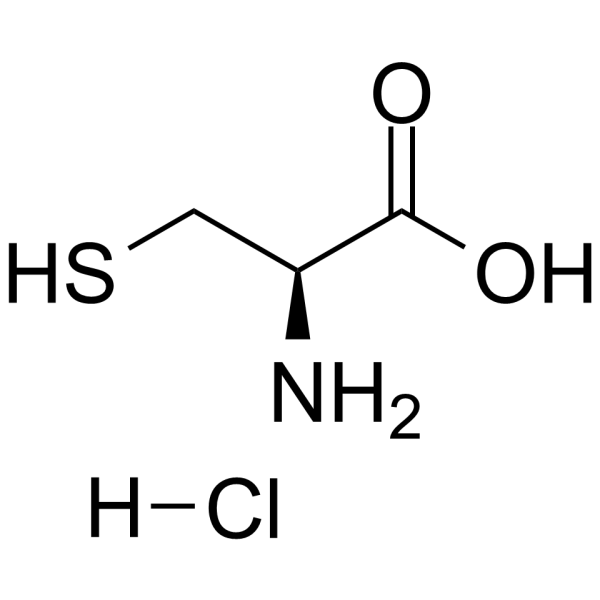
    L-Cysteine hydrochloride
    10+ Cited Publications

    Endogenous Metabolite Metabolic Disease Cancer
    L-Cysteine hydrochloride is an orally active conditionally essential amino acid, which acts as a precursor for biologically active molecules such as hydrogen sulphide (H2S), glutathione and taurine. L-Cysteine hydrochloride suppresses ghrelin and reduces appetite in rodents. L-Cysteine hydrochloride inhibits Aspergillus flavus growth and AFB synthesis by disrupting cell structure and antioxidant system balance. L-Cysteine hydrochloride enhances relaxant responses of rat aortic rings to NO and reduces responses to endothelium-derived relaxing factor (EDRF) .
    L-Cysteine hydrochloride
  • HY-P1939

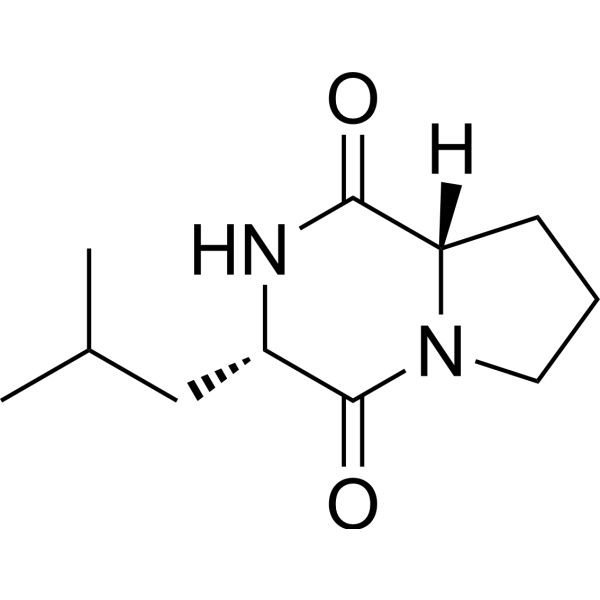
    Cyclo(L-prolyl-L-leucyl)

    Fungal Bacterial Influenza Virus Infection
    Cyclo(L-Leu-L-Pro) is a cyclic dipeptide with broad-spectrum antibacterial, antiviral and antifungal activities. Its biological activity is highly dependent on the stereoconfiguration and is widely present in microbial metabolites. Cyclo(L-Leu-L-Pro) efficiently and specifically inhibits the production of aflatoxin by Aspergillus flavus. The cis configuration of Cyclo(L-Leu-L-Pro) (cis-cyclo(L-Leu-L-Pro)) has broad-spectrum antibacterial activity against multi-drug resistant bacteria and significantly inhibits the influenza A virus H3N2 .
    Cyclo(L-Leu-L-Pro)
  • HY-B0856
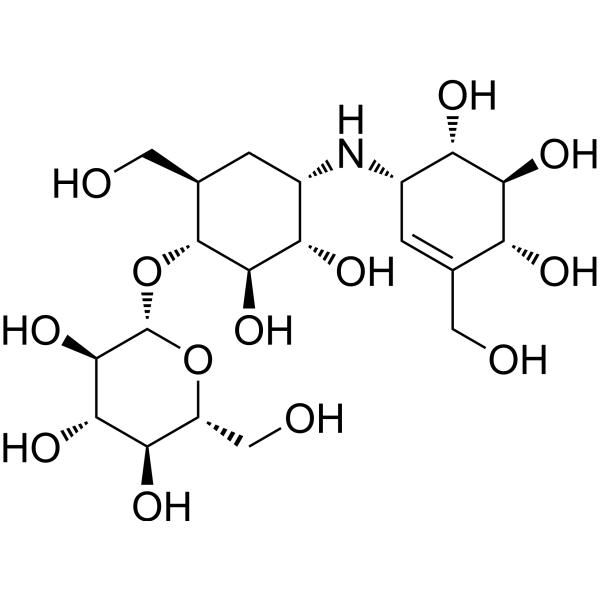
    Validamycin A
    1 Publications Verification

    Fungal Tyrosinase Antibiotic Infection
    Validamycin A, a fungicidal, is an agricultural antibiotic. Validamycin A is originally isolated from Streptomyces hygroscopicus var. limoneus. Validamycin A inhibits the growth of A. flavus, with a MIC of 1?μg/mL . Validamycin A shows potent inhibitory activity against trehalase of Rhizoctonia solani, with an IC50 of 72 μM . Validamycin A is a reversible tyrosinase inhibitor, with a Ki of 5.893 mM .
    Validamycin A
  • HY-B0614A

    Bacterial Fungal Infection
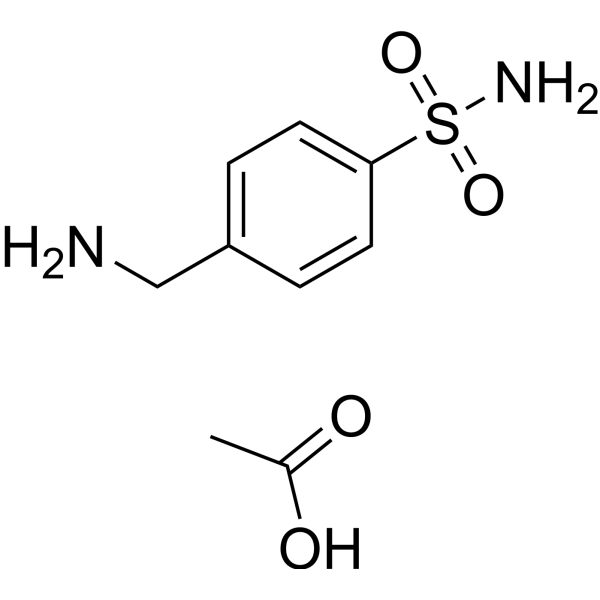
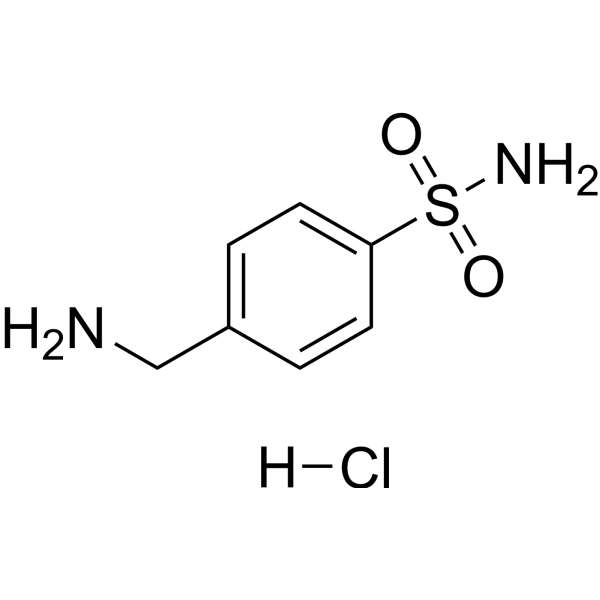
    Mafenide Acetate is a potent sulfonamide antimicrobial agent. Mafenide Acetate exhibits antibacterial activity against Staphylococcus aureus and Pseudomonas aeruginosa. Mafenide Acetate also exhibits antifungal activity against filamentous fungi (e.g., Lichtheimia and Aspergillus flavus). Mafenide Acetate can be used in the research of skin grafts on burn wounds, post-traumatic invasive fungal infections, and bacterially contaminated wounds .
    Mafenide Acetate
  • HY-N17260

    Bacterial Infection
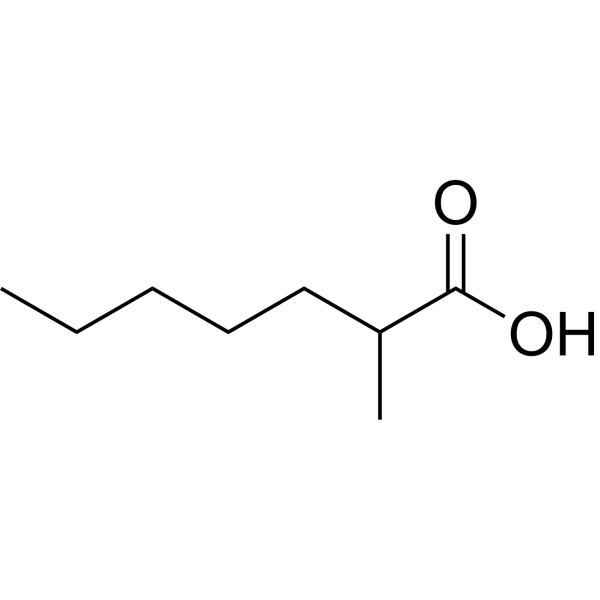
    Phellandral is an aldehyde compound that can be found in Eucalyptus camaldulensis and Thymus seravschanicus. The phellandral-containing eucalyptus essential oil exhibits significant inhibitory effects on various plant pathogenic fungi, especially on Aspergillus flavus. Phellandral, together with other oxygenated monoterpenoids, constitutes an important basis for the antibacterial activity of the essential oil .
    Phellandral
  • HY-W134163

    trans-2-Octenal

    Fungal Reactive Oxygen Species (ROS) Mitochondrial Metabolism Phosphatase Pyruvate Kinase Infection
    (E)-2-Octenal is an Antifungal agent. (E)-2-Octenal disrupts cell membrane integrity and causes ROS accumulation. (E)-2-Octenal decreases the activities of phosphofructokinase and pyruvate kinase. (E)-2-Octenal inhibits Neofusicoccum parvum growth by disrupting mitochondrial energy metabolism. (E)-2-Octenal suppresses the growth of a Prochloraz (HY-B0845)-resistant Penicillium italicum strain. (E)-2-octenal exerts a broad-spectrum and potent inhibitory effect on various fungi, including Sclerotium rolfsii, Metarhizium anisopliae sensu lato, and Aspergillus flavus, etc. (E)-2-Octenal can be used for the research of citrus blue mold and mango stem-end rot .
    (E)-2-Octenal
  • HY-116909

    Drug Metabolite Others
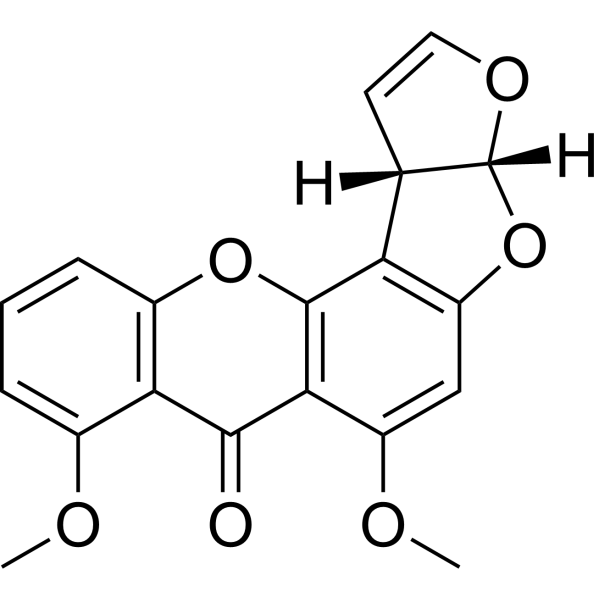
    O-Methylsterigmatocystin is a metabolite in Aspergillus flavus and Aspergillus parasiticus .
    O-Methylsterigmatocystin
  • HY-N7312

    (-)-Ditryptophenaline

    Neurokinin Receptor Endogenous Metabolite Inflammation/Immunology
    Ditryptophenaline ((-)-Ditryptophenaline) is a secondary metabolite. Ditryptophenaline can be isolated from Aspergillus flavus. Ditryptophenaline inhibits the Substance P receptor. Ditryptophenaline exhibits potential analgesic and anti-inflammatory activities .
    Ditryptophenaline
  • HY-N12056

    Fungal Infection
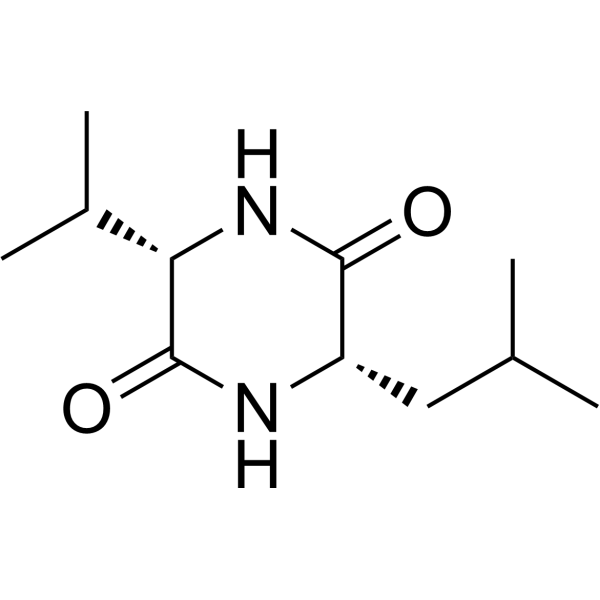
    Cyclo(L-leucyl-L-valyl) inhibits Aflatoxin production by Aspergillus parasiticus.Cyclo(L-leucyl-L-valyl) inhibits transcription of the Aflatoxin-related genes aflR, hexB, pksL1, and dmtA. .
    Cyclo(L-leucyl-L-valyl)
  • HY-108416

    Drug Intermediate Others
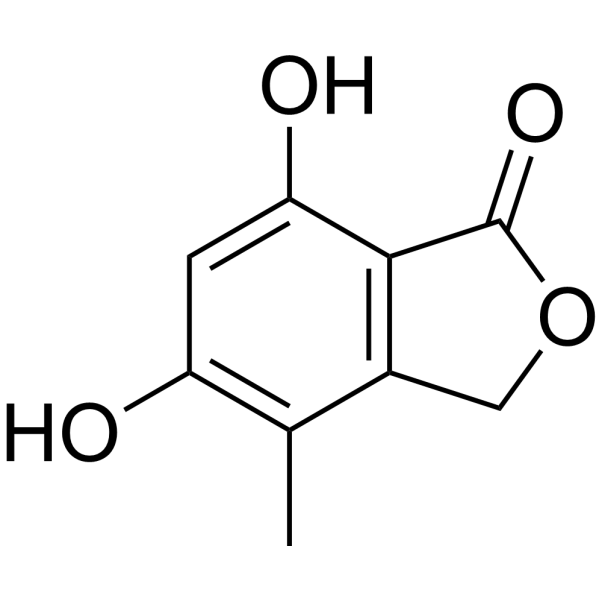
    5,7-Dihydroxy-4-methylphthalide is a key intermediate in the synthesis of Mycophenolic acid and a secondary metabolite of Aspergillus flavus .
    5,7-Dihydroxy-4-methylphthalide
  • HY-108079

    Fungal Infection
    KOS-2079 is an antifungal agent. KOS-2079 has strong inhibitory activity against Aspergillus flavus 204303 (MIC = 1.10 μg/mL) and Aspergillus fumigatus 204305 (MIC = 1.32 μg/mL). KOS-2079 is commonly used in the study of fungal infection .
    KOS-2079
  • HY-19404

    CS-758; R-120758

    Fungal Infection
    Embeconazole (CS-758; R-120758) is an antifungal agent against Candida albicans, Cryptococcus neoformans, Aspergillus fumigatus and Aspergillus flavus, with MICs of 8, 16, 63 and 250 μM, respectively .
    Embeconazole
  • HY-Y0790R

    p-Isopropylbenzaldehyde (Standard)

    α-synuclein Reference Standards Infection Neurological Disease Inflammation/Immunology Cancer
    Cuminaldehyde Standard is the analytical standard of Cuminaldehyde. This product is intended for research and analytical applications. Cuminaldehyde is the main component of Cuminum cyminum and has multiple biological activities, including anti-inflammatory, anti-cancer, anti-diabetic, anti-injury, anti-neuropathy and antibacterial effects. Cuminaldehyde is an inhibitor of aldose reductase (IC50= 0.00085 mg/mL) and α-glucosidase (IC50=0.5 mg/mL). Cuminaldehyde also inhibits the fibrillation of α-synuclein and prevents its aggregation Cuminaldehyde can induce apoptosis in colon adenocarcinoma cells by targeting topoisomerase I and II. In addition, Cuminaldehyde also exerts anti-inflammatory activity by inhibiting lipoxygenase. Cuminaldehyde has a strong inhibitory effect on the growth of Aspergillus flavus and the biosynthesis of aflatoxin B1 (AFB1). Cuminaldehyde can exert anti-injury and anti-neuropathy effects by participating in opioid receptors, L-arginine/NO/cGMP pathways and anti-inflammatory effects. Cuminaldehyde has potential application value in the research of neurodegenerative diseases, cancer, diabetes and neuropathic pain diseases .
    Cuminaldehyde (Standard)
  • HY-N10080

    Others Neurological Disease
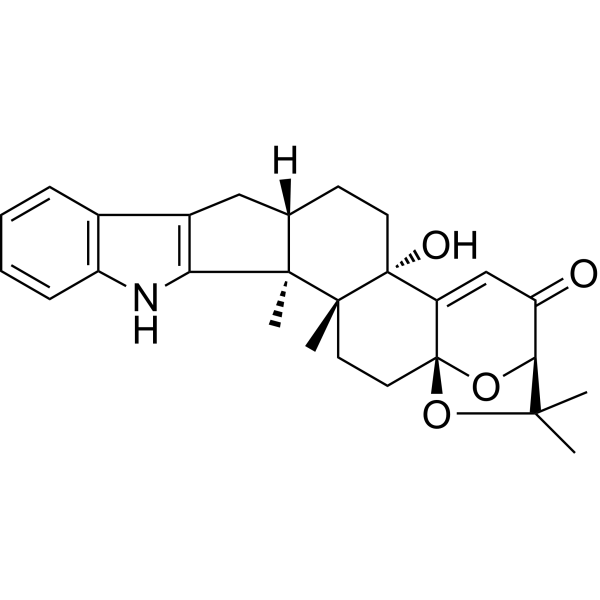
    Paspalinine is a tremorgenic metabolite that can be found in Aspergillus flavus .
    Paspalinine
  • HY-N14582

    Antibiotic Fungal Infection
    Glomosporin is a cyclic ester peptide antifungal antibiotic, and it has moderate anti-Aspergillus flavus (including Aspergillus Niger and Aspergillus Niger), yeast activity (MIC is 16 μg/mL) .
    Glomosporin
  • HY-N14509

    Fungal Infection
    Queenslandon has moderate anti-streptomyces, penicillium, Penicillium, Aspergillus fumigatus, aspergillus flavus and other fungal activities. And it has no effect on bacteria .
    Queenslandon
  • HY-133709

    Parasite Infection
    β-Aflatrem is an insecticide metabolite from the sclerotium of Aspergillus flavus that exhibits significant activity against the corn borer H. zea .
    β-Aflatrem
  • HY-N8894

    (-)-Isolariciresinol 3α-O-β-D-glucopyranoside

    Others Others
    (-)-Isolariciresinol 9'-O-glucoside ((-)-Isolariciresinol 3α-O-β-D-glucopyranoside) is a Diterpenoids product that can be isolated from From Aspergillus flavus .
    (-)-Isolariciresinol 9'-O-glucoside
  • HY-147804

    SARS-CoV Bacterial Fungal Infection
    SARS-CoV-2 3CLpro-IN-3 (Compound 3d) is a SARS CoV-2 3CLpro inhibitor with antiviral, antibacterial and antifungal activities .
    SARS-CoV-2 3CLpro-IN-3
  • HY-N15309

    Torvoside K

    Fungal Infection
    Torvoside C (Torvoside K) is a compound found in Solanum torvum with antifungal activity. The ZOIs and MIC values of Torvoside C against the tested fungi (Alternaria brassicicola, Alternaria geophila, Aspergillus flavus, etc.) range from 33.4% to 87.4% and 31.25 to 250 μg/mL, respectively. Additionally, it exhibits a dose-dependent inhibitory effect on the production of mycotoxins aflatoxin B1 and fumonisin B1, which are produced by A. flavus and F. verticillioides, respectively. Torvoside C can be used for research in the field of antifungal infection .
    Torvoside C
  • HY-B0614AR

    Reference Standards Bacterial Fungal Infection
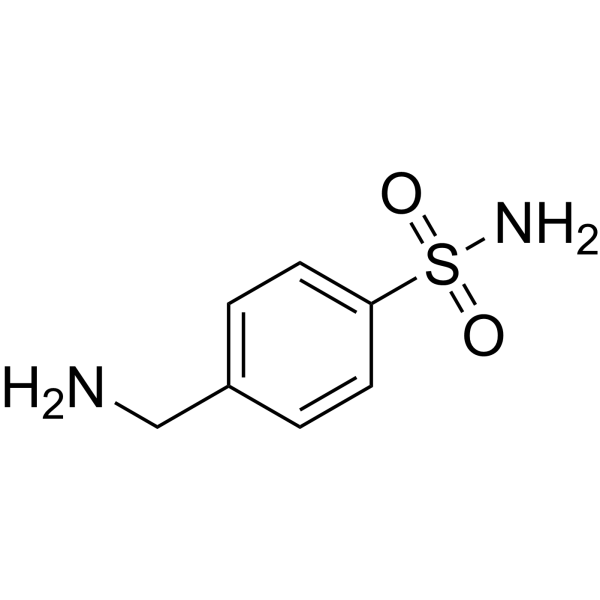
    Mafenide (Acetate) (Standard) is the analytical standard of Mafenide Acetate (HY-B0614A). This product is intended for research and analytical applications. Mafenide Acetate is a potent sulfonamide antimicrobial agent. Mafenide Acetate exhibits antibacterial activity against Staphylococcus aureus and Pseudomonas aeruginosa. Mafenide Acetate also exhibits antifungal activity against filamentous fungi (e.g., Lichtheimia and Aspergillus flavus). Mafenide Acetate can be used in the research of skin grafts on burn wounds, post-traumatic invasive fungal infections, and bacterially contaminated wounds .
    Mafenide Acetate (Standard)
  • HY-Y0337AR

    Reference Standards Endogenous Metabolite Metabolic Disease Cancer
    L-Cysteine (hydrochloride) (Standard) is the analytical standard of L-Cysteine (hydrochloride). This product is intended for research and analytical applications. L-Cysteine hydrochloride is an orally active conditionally essential amino acid, which acts as a precursor for biologically active molecules such as hydrogen sulphide (H2S), glutathione and taurine. L-Cysteine hydrochloride suppresses ghrelin and reduces appetite in rodents. L-Cysteine hydrochloride inhibits Aspergillus flavus growth and AFB synthesis by disrupting cell structure and antioxidant system balance. L-Cysteine hydrochloride enhances relaxant responses of rat aortic rings to NO and reduces responses to endothelium-derived relaxing factor (EDRF) [4].
    L-Cysteine hydrochloride (Standard)
  • HY-147805

    SARS-CoV Bacterial Fungal Infection
    SARS-CoV-2 3CLpro-IN-4 (Compound 5g) is a SARS CoV-2 3CLpro inhibitor with antiviral, antibacterial and antifungal activities .
    SARS-CoV-2 3CLpro-IN-4
  • HY-N19755

    Fungal Infection
    Clemontanoside-C is an oleanane-based triterpenoid saponin and antifungal agent found in the roots of Lepidagathis cuspidata. Clemontanoside-C acts against Aspergillus flavus, Rhizopus stolinifer, Penicillum nodatum, and Aspergillus fumigatus. Clemontanoside-C can be used for the research of fungal infections .
    Clemontanoside-C
  • HY-W017143

    Fungal Infection
    Antifungal agent 158 is an α-pyrone derivative that can be found in Trichoderma harzianum, exhibiting antifungal activity against select plant-pathogenic fungi, including Chaetomium spp., Curvularia lunata, and Aspergillus flavus. Antifungal agent 158 is non-toxic to greenhouse-grown bean, corn, and tobacco plants. Antifungal agent 158 can be used for research on Aspergillus flavus infection .
    Antifungal agent 158
  • HY-N9713

    Others Others
    Dihydroxyaflavinine (Compound Ⅲ) is an indole metabolite extracted from Aspergillus flavus .
    Dihydroxyaflavinine
  • HY-N9002

    Drug Derivative Others
    20-Hydroxyaflavinine is a natural diterpene.
    20-Hydroxyaflavinine
  • HY-W009815

    δ-Laurolactone

    Environmental Pollutants Fungal Infection
    δ-Dodecalactone can be obtained from L. plantarum AF1. δ-Dodecalactone exhibits potent antifungal activity against molds Aspergillus flavus, A. fumigatus, A. petrakii, A. ochraceus, A. nidulans, and Penicillium roqueforti. δ-Dodecalactone is a flavoring compound .
    δ-Dodecalactone
  • HY-N16443

    Endogenous Metabolite Fungal Bacterial Infection
    Sporminarin A (Compound 1), a polyketide, is a microbial secondary metabolite. Sporminarin A can be isolated from the Sporormiella minimoides. Sporminarin A has significant antifungal activity against Aspergillus flavus with an MIC50 of 25  μg/mL. Sporminarin A also has antibacterial activity against Staphylococcus aureus (ATCC 29213) and Candida albicans (ATCC 14053) .
    Sporminarin A
  • HY-N19838

    Endogenous Metabolite Fungal Infection
    Kipukasin C is an aroyl Uridine (HY-B1449) derivative found in Aspergillus versicolor. Kipukasin C shows no antifungal activity .
    Kipukasin C
  • HY-N19781

    Bacterial Infection
    Kipukasin B is an antibacterial agent. Kipukasin B exhibits activity against the Gram-positive strain Bacillus subtilis. Kipukasin B is isolated from Aspergillus versicolor obtained from Hawaii. Kipukasin B can be used in the research of Gram-positive bacterial infections .
    Kipukasin B

Inquiry Online

Your information is safe with us. * Required Fields.

Salutation


Country or Region *

Applicant Name *


Organization Name *

Department *


Email Address *


Product Name *

Cat. No.


Requested quantity *

Phone Number *


Remarks

Inquiry Online

Inquiry Information

Product Name:
Cat. No.:
Quantity:
MCE Japan Authorized Agent:

