



Cuminaldehyde (Standard)

Based on 1 Customer Validation
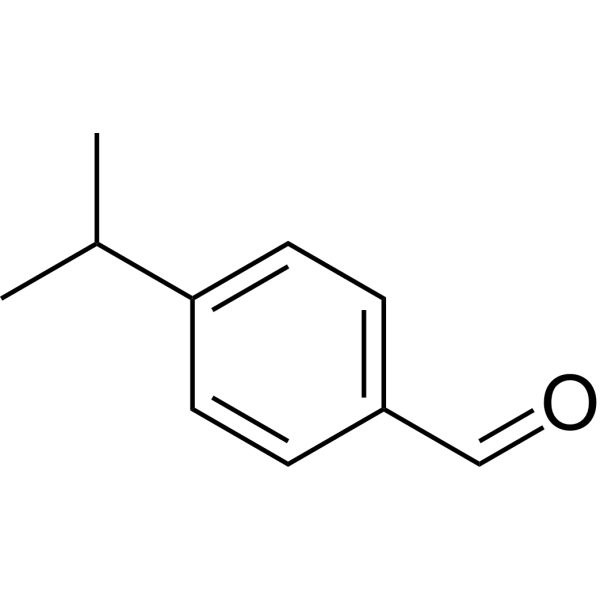
Cuminaldehyde Standard is the analytical standard of Cuminaldehyde. This product is intended for research and analytical applications. Cuminaldehyde is the main component of Cuminum cyminum and has multiple biological activities, including anti-inflammatory, anti-cancer, anti-diabetic, anti-injury, anti-neuropathy and antibacterial effects. Cuminaldehyde is an inhibitor of aldose reductase (IC50= 0.00085 mg/mL) and α-glucosidase (IC50=0.5 mg/mL). Cuminaldehyde also inhibits the fibrillation of α-synuclein and prevents its aggregation Cuminaldehyde can induce apoptosis in colon adenocarcinoma cells by targeting topoisomerase I and II. In addition, Cuminaldehyde also exerts anti-inflammatory activity by inhibiting lipoxygenase. Cuminaldehyde has a strong inhibitory effect on the growth of Aspergillus flavus and the biosynthesis of aflatoxin B1 (AFB1). Cuminaldehyde can exert anti-injury and anti-neuropathy effects by participating in opioid receptors, L-arginine/NO/cGMP pathways and anti-inflammatory effects. Cuminaldehyde has potential application value in the research of neurodegenerative diseases, cancer, diabetes and neuropathic pain diseases.
商品は「研究用試薬」です。人や動物の医療用・臨床診断用・食品用の製品ではありません。
研究用途以外に使用した場合、当社は一切の責任を負いかねます。
- 純度 : 99.92%
- CAS 番号: 122-03-2
- 分子式: C10H12O
- 分子量:148.20
-
保管条件:
Please store the product under the recommended conditions in the Certificate of Analysis.


To place orders, for customer services and technical support, please contact: MedChemExpress USA
Tel: 609-228-6898 E-mail: [email protected] [email protected]


-
 Product Information
-
化学情報
- 純度とドキュメンテーション
-
 Help & FAQs


-
HY-Y0790
CuminaldehydeAnti-inflammatory Compound -
HY-N0098
VanillinPhenolic Aldehyde -
HY-N1390
SyringaldehydeCOX-2 Inhibitor -
HY-N0098R
Vanillin (Standard) -
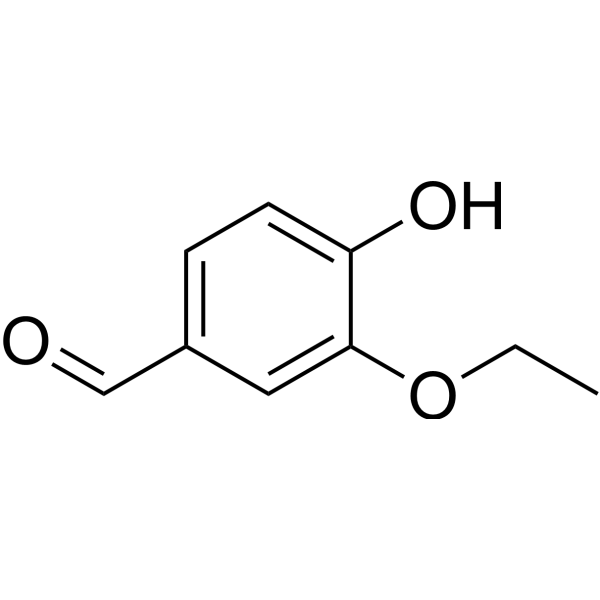
HY-B0940
EthylvanillinFlavouring Agent -
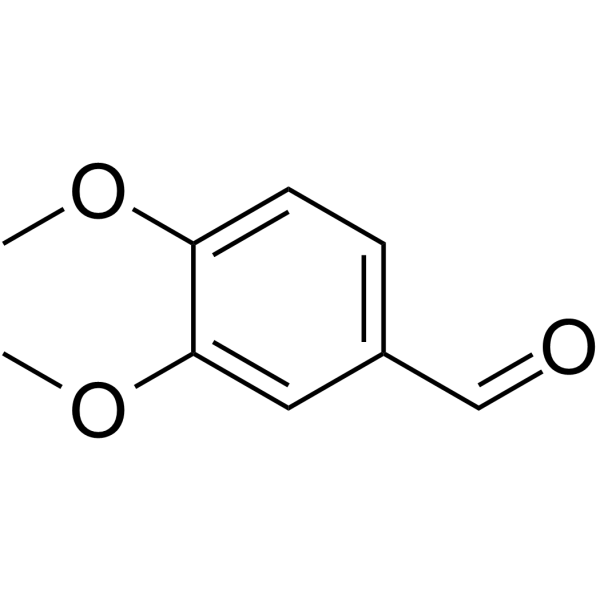
HY-N1096
VeratraldehydeAromatic Compound -
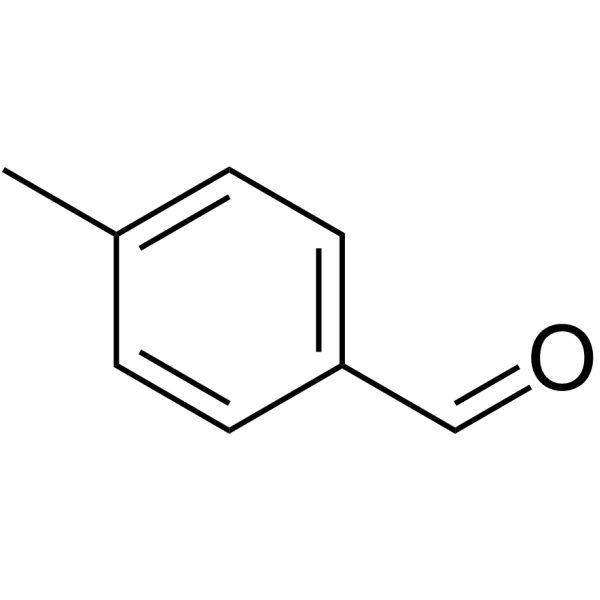
HY-W012860
p-TolualdehydeDrug Intermediate -
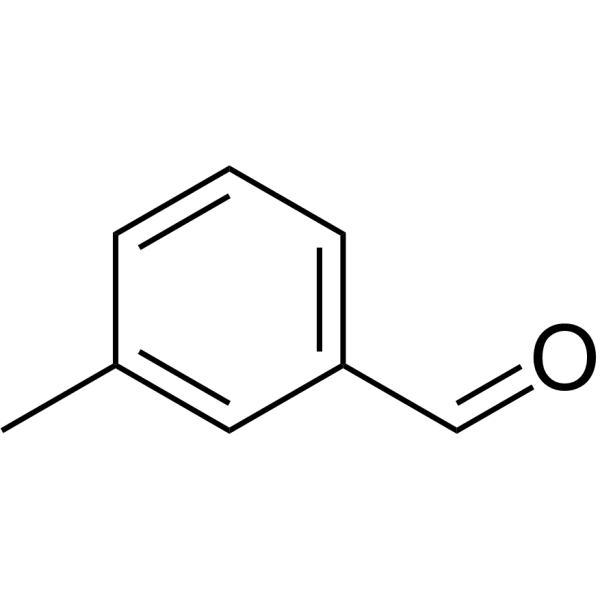
HY-78086
m-TolualdehydeNatural Product -
HY-W127398
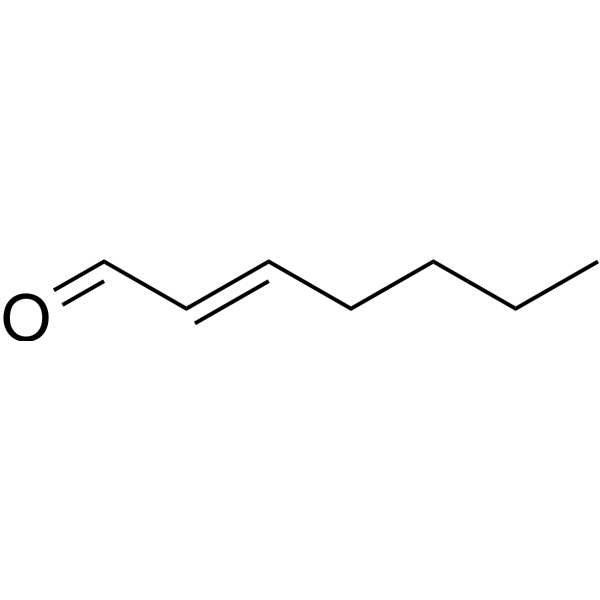
trans-2-HeptenalBiochemical Assay Reagent -
HY-B0940R
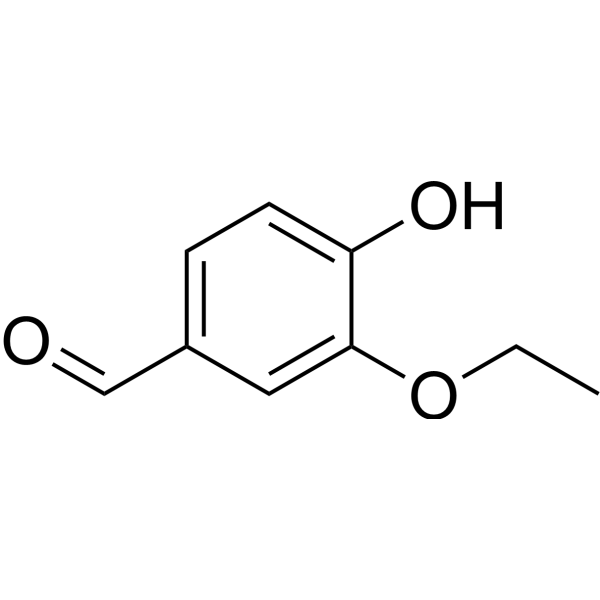
Ethylvanillin (Standard)Flavouring Agent -

HY-N1096R
Veratraldehyde (Standard)Synthesis Intermediate -

HY-N1390R
Syringaldehyde (Standard)COX-2 Inhibitor


Product Information
説明
アプリケーション
The compound is the grade of analytical standard, which is the reference standard supplied assay. It is commonly used in qualitative, quantitative and methodological research experiments in HPLC, GC and MS.


化学情報
-
CAS 番号 122-03-2
-
性状 Liquid
-
分子量 148.20
-
分子式 C10H12O
-
Color Colorless to light yellow
-
SMILES
O=CC1=CC=C(C(C)C)C=C1
-
別名
p-Isopropylbenzaldehyde (Standard)
-
Structure Classification
-
輸送条件
Room temperature in continental US; may vary elsewhere.
-
保管条件
Please store the product under the recommended conditions in the Certificate of Analysis.


純度とドキュメンテーション
-
SDS (393 KB)
- English - EN (393 KB)
- Français - FR (393 KB)
- Deutsch - DE (393 KB)
- Norwegian - NO (393 KB)
- Español - ES (393 KB)
- Swedish - SV (393 KB)
- Italian - IT (393 KB)
- Korean - KR (393 KB)
- Portuguese - PT (393 KB)
-
取扱説明書 (2659 KB)
参考文献
[1]. Morshedi D, et al. Cuminaldehyde as the Major Component of Cuminum cyminum, a Natural Aldehyde with Inhibitory Effect on Alpha-Synuclein Fibrillation and Cytotoxicity. J Food Sci. 2015 Oct;80(10):H2336-45. [Content Brief]
[2]. Tsai, et al. "Cuminaldehyde from Cinnamomum verum induces cell death through targeting topoisomerase 1 and 2 in human colorectal adenocarcinoma COLO 205 cells." Nutrients 8.6 (2016): 318. [Content Brief]
[3]. Tomy, et al. "Cuminaldehyde as a lipoxygenase inhibitor: in vitro and in silico validation." Applied biochemistry and biotechnology 174 (2014): 388-397. [Content Brief]
[4]. Wongkattiya, et al. "Antibacterial activity of cuminaldehyde on food-borne pathogens, the bioactive component of essential oil from Cuminum cyminum L. collected in Thailand." Journal of Complementary and Integrative Medicine 16.4 (2019). [Content Brief]
[6]. Koohsari, et al. "Antinociceptive and antineuropathic effects of cuminaldehyde, the major constituent of Cuminum cyminum seeds: Possible mechanisms of action." Journal of ethnopharmacology 255 (2020): 112786. [Content Brief]
[7]. Hoi-Seon Lee, et al. "Cuminaldehyde: aldose reductase and α-glucosidase inhibitor derived from Cuminum cyminum L. seeds." Journal of agricultural and food chemistry 53.7 (2005): 2446-2450. [Content Brief]

Calculators
濃度 (開始) × 体積 (開始) = 濃度 (終了) × 体積 (終了)


Cuminaldehyde (Standard) 関連分類
HY-Y0790R 関連分類
 Powered by Bioz