1. Search Result
Search Result
Results for "

BRD9 Degrader

" in MedChemExpress (MCE) Product Catalog:

44

Inhibitors & Agonists

1

Biochemical Assay Reagents

Cat. No. Product Name Target Research Areas Chemical Structure
  • HY-153367
    FHD-609
    2 Publications Verification

    PROTACs Epigenetic Reader Domain Cancer
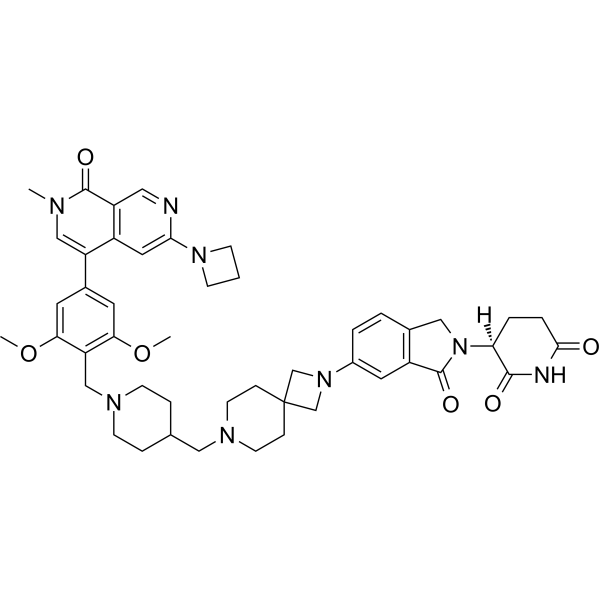
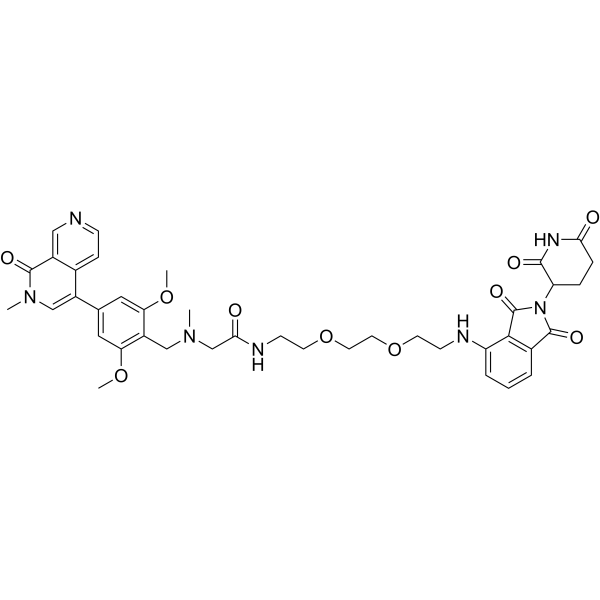
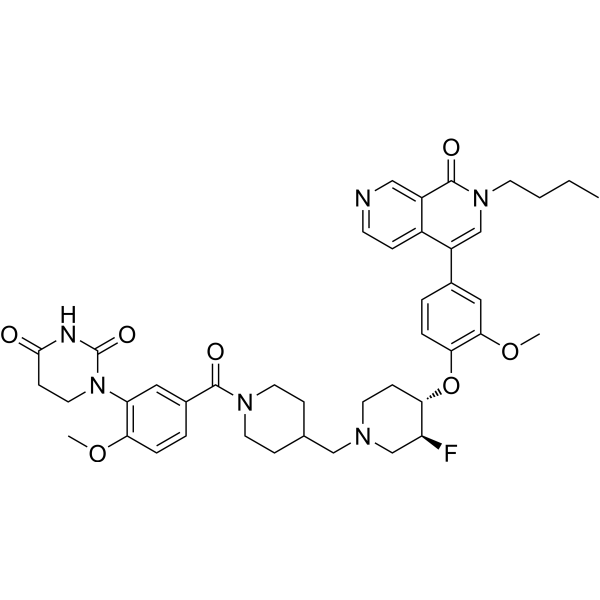
    FHD-609 is a PROTAC degrader and inhibitor of BRD9 (Bromodomain-containing protein 9). FHD-609 targets to ncBAF, can be used for research of wide range of cancers that contain a mutation in a BAF complex subunit. FHD-609 in combination with Telomelysin or INO5401, may play a role in adrenocortical carcinoma (ACC) treatment. (Blue: BRD9 ligand-6 (HY-49393), Black: linker (HY-168309); Pink: (S)-Deoxy-thalidomide-Br (HY-168308) ) .
    FHD-609
  • HY-145925B
    CFT8634
    1 Publications Verification

    PROTACs Epigenetic Reader Domain Cancer
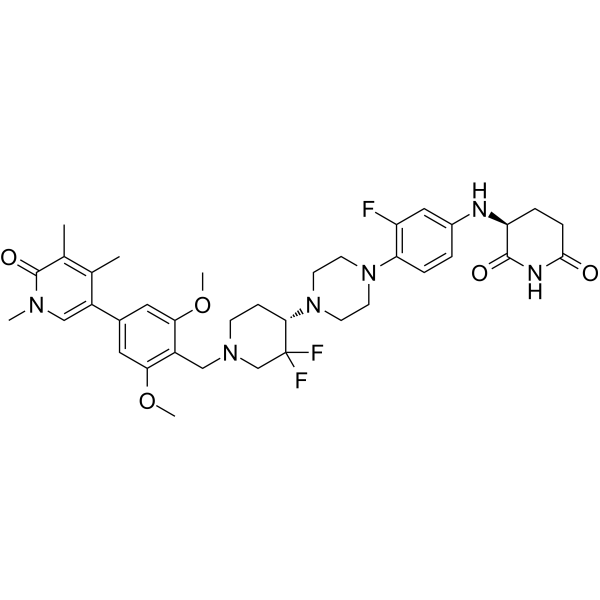
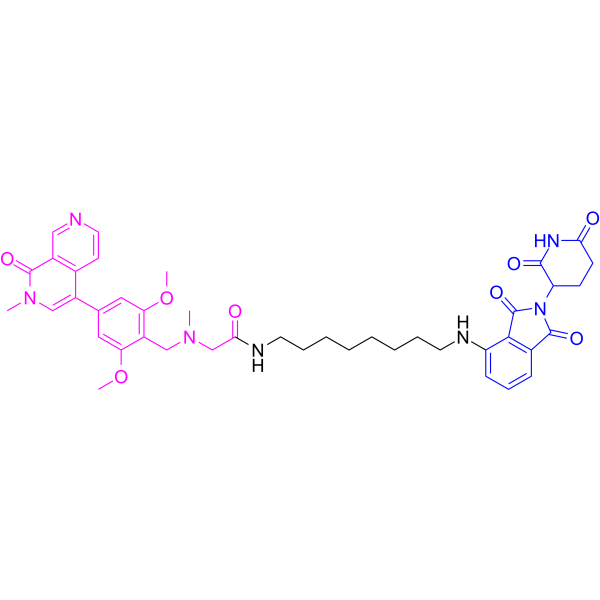
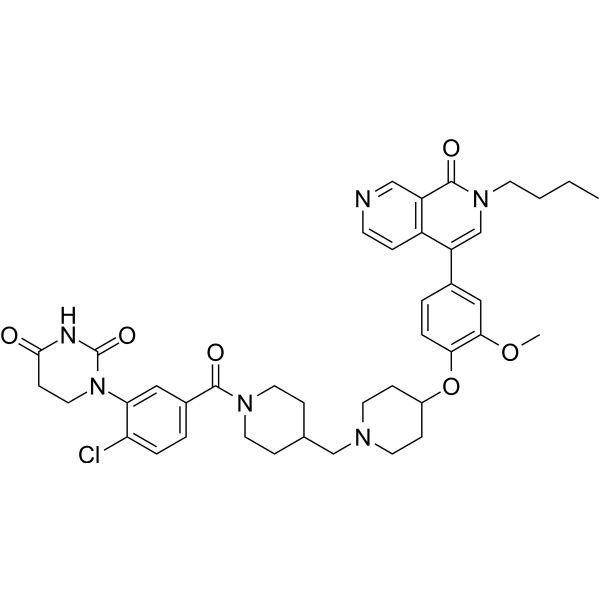
    CFT8634 is an orally bioavailable PROTAC BRD9 targeted degrader based on the E3 ubiquitin ligase CRBN mechanism. CFT8634 can be used for the study of synovial sarcoma and SMARCB1-deficient solid tumors (Pink: BRD9 ligand (HY-169988); Blue: E3 ligase ligand (HY-169989); Black: linker (HY-169991). CFT8634 is a heterobifunctional molecule that binds to BRD9 at one end and recruits CRBN at the other end, which can inhibit the growth of tumor cells that depend on BRD9. CFT8634 can be used for the study of SMARCB1-related cancers (such as synovial sarcoma and malignant rhabdoid tumor) .
    CFT8634
  • HY-103632
    PROTAC BRD9 Degrader-1
    3 Publications Verification

    PROTACs Epigenetic Reader Domain Cancer
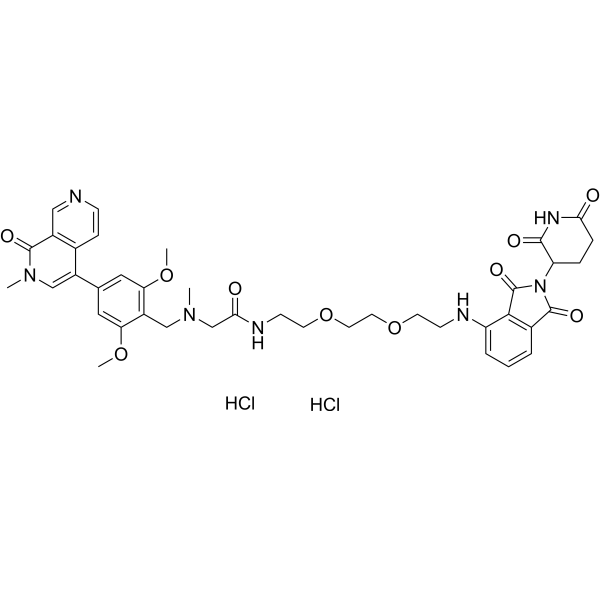
    PROTAC BRD9 Degrader-1 is a PROTAC connected by ligands for Cereblon and BRD9 (IC50=13.5 nM), which can be used as a selective probe useful for the study of BAF complex biology .
    PROTAC BRD9 Degrader-1
  • HY-114322
    VZ185
    2 Publications Verification

    PROTACs Epigenetic Reader Domain Cancer
    VZ185 is a potent, fast, and selective von Hippel-Lindau based dual degrader probe of BRD9 and BRD7 with DC50s of 4.5 and 1.8 nM, respectively. VZ185 is cytotoxic in EOL-1 and A-402 cells, with EC50s of 3 nM and 40 nM, respectively .
    VZ185
  • HY-159579

    PROTACs Epigenetic Reader Domain Cancer
    CW-3308 is an orally active BRD9 PROTAC degrader with an DC50 of 92 nM. CW-3308 forms a ternary complex with BRD9 and cereblon to mediate BRD9 degradation. CW-3308 inhibits the viability of synovial sarcoma and rhabdoid tumor cells. CW-3308 reduces BRD9 protein levels in xenograft tumor tissues and suppresses tumor growth in xenograft models. CW-3308 can be used for the research of synovial sarcoma and rhabdoid tumors .
    CW-3308
  • HY-155361

    PROTACs Epigenetic Reader Domain Cancer
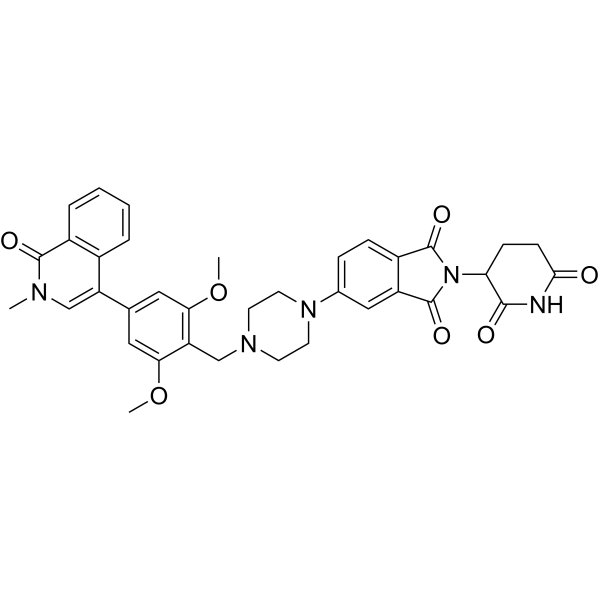
    PROTAC BRD9 Degrader-7 is an orally active, selective BRD9 PROTAC degrader (DC50 = 1.02 nM). PROTAC BRD9 Degrader-7 mediates BRD9 degradation via the ubiquitin-proteasome system. PROTAC BRD9 Degrader-7 exhibits proliferation inhibitory activity in the MV4-11 cells. PROTAC BRD9 Degrader-7 can be used in the research of acute myeloid leukemia and other related malignancies. (Pink: BI 7271: HY-123616, Blue: 5-Aminothalidomide: HY-W023573, Blue + Black: Thalidomide-5-piperazine: HY-W834174, Black: N,N'-Dimethylpiperazine: HY-W539783) .
    PROTAC BRD9 Degrader-7
  • HY-117690

    PROTACs Epigenetic Reader Domain Cancer
    dBRD9,a PROTAC, can selective degrades BRD9. dBRD9 improves the bromine domain binding profile and reduces the binding activity of the whole BET family .
    dBRD9
  • HY-172615

    Molecular Glues Epigenetic Reader Domain Cancer
    AMPTX-1 is a selective, orally active, covalent reversible BRD9 molecular glue degrader with a DC50 of 0.05 nM. AMPTX-1 selectively recruits BRD9 to the E3 ligase DCAF16. AMPTX-1 forms a ternary complex with BRD9 and a reversible covalent adduct with Cys58 on the surface of DCAF16. AMPTX-1 mediates BRD9 degradation via the proteasome and Cullin RING E3 ligase pathways. AMPTX-1 can be used in the research of solid tumors and hematological malignancies .
    AMPTX-1
  • HY-148739

    PROTACs Epigenetic Reader Domain Apoptosis Cancer
    dBRD 9-A is a selective BRD9 PROTAC degrader. dBRD 9-A induces near complete BRD9 degradation dependent on E3 ubiquitin ligase CRBN and BRD9 bromodomain engagement, and drives loss of BRD9 chromatin binding genome-wide. dBRD 9-A downregulates oncogenic SS18-SSX-driven transcriptional programs, super enhancer-associated gene expression, and SS18-SSX1 super enhancer binding, and depletes GBAF complex members GLTSCR1/1L from SS18-SSX complexes. dBRD 9-A induces cell cycle arrest and increases apoptosis in synovial sarcoma cells. dBRD 9-A can be used for the research of synovial sarcoma .
    dBRD 9-A
  • HY-145403

    PROTACs Cancer
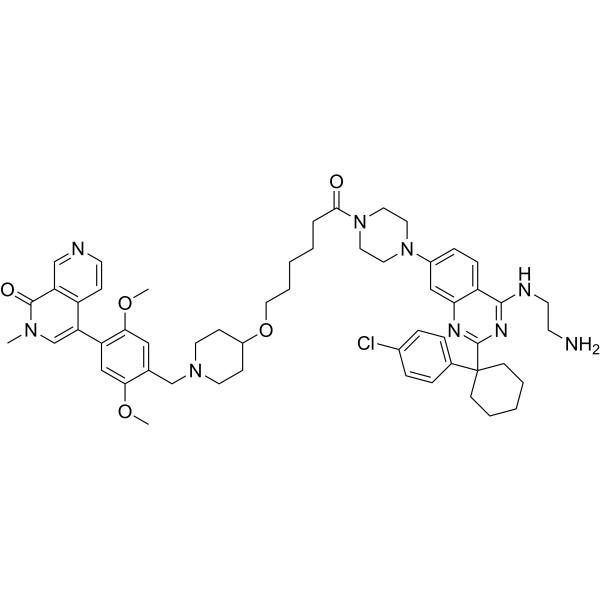
    PROTAC BRD9 Degrader-4 is a BRD9 bifunctional degrader for researching cancer.
    PROTAC BRD9 Degrader-4
  • HY-162651

    PROTACs Epigenetic Reader Domain Apoptosis Cancer
    PROTAC BRD9 Degrader-8 is a selective, orally active BRD9 PROTAC degrader with a DC50 of 16 pM.\nPROTAC BRD9 Degrader-8 induces cell cycle arrest at the G1 phase and promotes apoptosis. PROTAC BRD9 Degrader-8 can be used for research on acute myeloid leukemia and diffuse large B-cell lymphoma .
    PROTAC BRD9 Degrader-8
  • HY-156744

    PROTACs Epigenetic Reader Domain Cancer
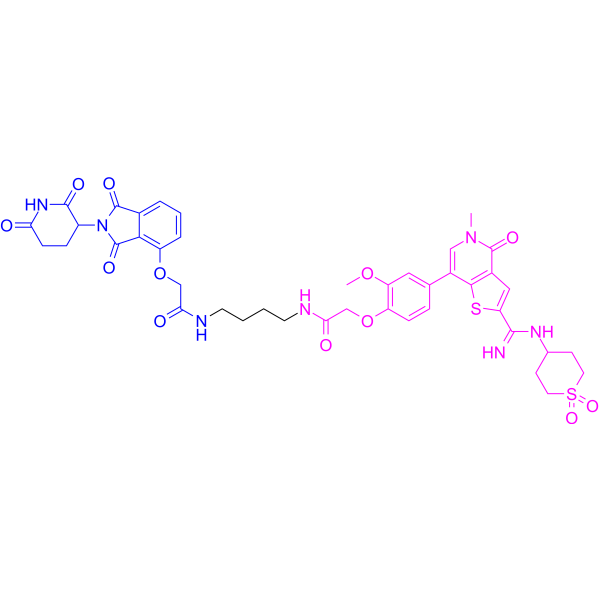
    DBr-1 is a potent BRD9 PROTAC degrader (KD: 13 nM). DBr-1 can overcome intrinsic resistance to VHL-degrader. Blue: DCAF1 binder (HY-149934), Black: linker, Pink: BRD9/BRD7 bromodomains inhibitor (HY-100352) .
    DBr-1
  • HY-W023573

    Ligands for E3 Ligase Cancer
    5-Aminothalidomide is an E3 ligase ligand used in PROTAC technology. 5-Aminothalidomide can be used to synthesize various PROTACs, such as the PROTAC BRD9 Degrader-7 (HY-155361).
    5-Aminothalidomide
  • HY-145400

    PROTACs Cancer
    PROTAC BRD9 Degrader-3 is a BRD9 bifunctional degrader for researching cancer.
    PROTAC BRD9 Degrader-3
  • HY-163811

    Molecular Glues Epigenetic Reader Domain Cancer
    BRD9 Degrader-4 (BRD9c), a bifunctional molecular glue, is a potent BRD9 degrader with a DC50 of ≤25 nM. BRD9 Degrader-4 has anti-cancer effects .
    BRD9 Degrader-4
  • HY-156401

    PROTACs Epigenetic Reader Domain Cancer
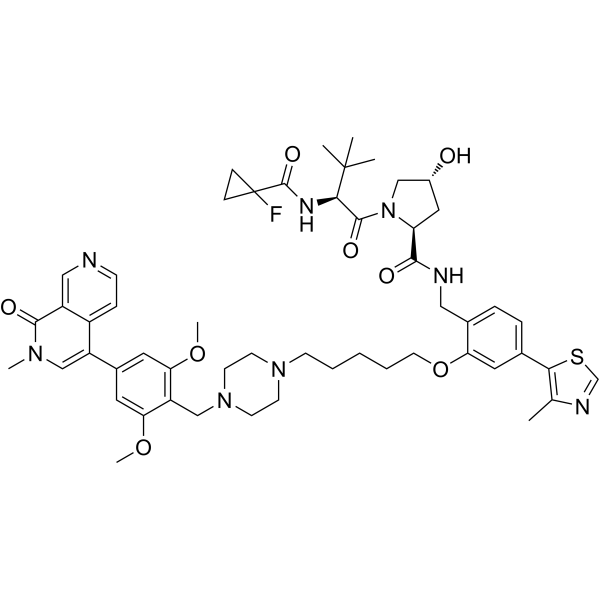
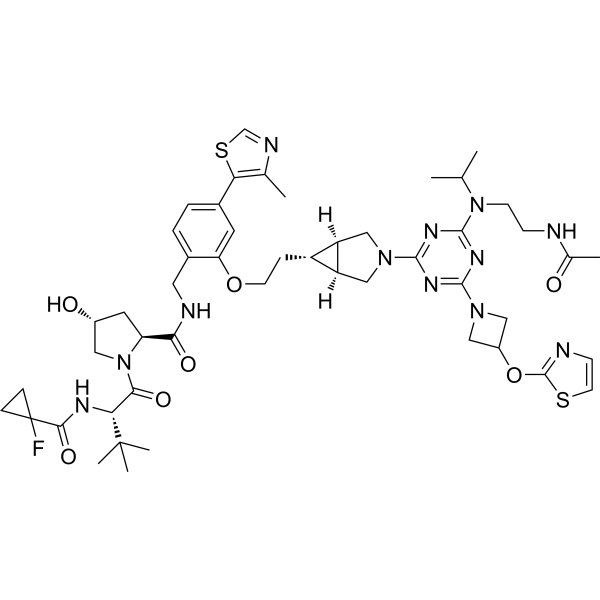
    BRD9 c-1 (Compound 13-7) is a PROTAC BRD9 degrader . BRD9 Degrader-1 has a micromolar binding affinity for BRD9 and a nanomolar affinity for the BRD9-VCB ternary complex. BRD9 Degrader-1 induces BRD9 proteasome degradation in HEK293T cells, which can be reversed by MLN4924 (HY-70062). (Blue: VH032-cyclopropane-F (HY-125905); Black: linker (HY-W763939); Pink: HY-168695) .
    BRD9 Degrader-1
  • HY-177729

    PROTACs Epigenetic Reader Domain Cancer
    PROTAC BRD9 Degrader-9 (Compound 16) is an efficient and selective targeting BRD9 PROTAC degrader. PROTAC BRD9 Degrader-9 does not cause significant cytotoxicity. PROTAC BRD9 Degrader-9 can be used for cancer research
    PROTAC BRD9 Degrader-9
  • HY-163810

    Molecular Glues Epigenetic Reader Domain Cancer
    BRD9 Degrader-3 (compound B20) is a BRD9 molecular glue, with a DC50 of <1.25 nM .
    BRD9 Degrader-3
  • HY-163809

    Molecular Glues Epigenetic Reader Domain E1/E2/E3 Enzyme Cancer
    BRD9 Degrader-2 (Compound B11) is a BRD9 degrader (DC50 ≤1.25 nM; Dmax≥75%). BRD9 Degrader-2 can be used for research of cancers .
    BRD9 Degrader-2
  • HY-145947

    PROTACs Cancer
    PROTAC BRD9 Degrader-5 is a PROTAC for targeted degradation of BRD9.
    PROTAC BRD9 Degrader-5
  • HY-145395

    PROTACs Cancer
    PROTAC BRD9 Degrader-2 is a BRD9 bifunctional degrader for researching cancer.
    PROTAC BRD9 Degrader-2
  • HY-153632

    PROTACs Epigenetic Reader Domain Cancer
    PROTAC BRD9 Degrader-6 is a potent degrader of BRD9 (IC50=0.13 nM), can be used for research of BAF complex-related disorders .
    PROTAC BRD9 Degrader-6
  • HY-178345

    ZZ7

    Molecular Glues Epigenetic Reader Domain Cancer
    ZZ7-23-022 (ZZ7) is a selective BRD9 molecule glue degrader. ZZ7-23-022 effectively degrades BRD9 in synovial sarcoma cells, but does not affect cardiomyocytes. ZZ7-23-022 can be used for the research of cancer .
    ZZ7-23-022
  • HY-W129531

    PROTAC Linkers Cancer
    N-Boc-4,4'-bipiperidine is a PROTAC linker that can be used to synthesize PROTAC BRD9 Degrader-5 (HY-145947) .
    N-Boc-4,4'-bipiperidine
  • HY-181949

    PROTACs Epigenetic Reader Domain Cancer
    PROTAC BRD9 Degrader-10 is a PROTAC degrader targeting BRD9, with an IC50 of 2.97 μM against BRD9. PROTAC BRD9 Degrader-10 induces BRD9 degradation via the ubiquitin-proteasome system by recruiting the VHL E3 ubiquitin ligase. PROTAC BRD9 Degrader-10 reduces the viability and inhibits the proliferation of myeloid leukemia cells. PROTAC BRD9 Degrader-10 is applicable for the research of acute myeloid leukemia .
    PROTAC BRD9 Degrader-10
  • HY-181951

    PROTACs Epigenetic Reader Domain Cancer
    PROTAC BRD9 Degrader-11 is a VHL-based BRD9 PROTAC degraderwith an IC50 of 0.66 μM. PROTAC BRD9 Degrader-11 induces selective, proteasome-dependent degradation of BRD9 via the ubiquitin-proteasome system. PROTAC BRD9 Degrader-11 impairs cell viability, suppresses proliferation, and arrests growth of acute myeloid leukemia cells. PROTAC BRD9 Degrader-11 can be used for the research of acute myeloid leukemia .
    PROTAC BRD9 Degrader-11
  • HY-178043

    Epigenetic Reader Domain Others
    BTR2038 is a BRD9 degrader. BTR2038 consistis of a BRD9 bromodomain ligand (Bl-7273 analoag), a linker and BTR2000 (HY-172563). BTR2038 induces targeted degradation of V5-tagged human BRD9. BTR2038 can be used for the study of biological processes and diseases associated with abnormal BRD9 protein function .
    BTR2038
  • HY-117690A

    PROTACs Epigenetic Reader Domain Cancer
    dBRD9 dihydrochloride is a selective BRD9 PROTAC degrader. dBRD9 dihydrochloride inhibits proliferation of AML cell lines .
    dBRD9 dihydrochloride
  • HY-130853

    E3 Ligase Ligand-Linker Conjugates Autophagy Apoptosis Cancer
    Thalidomide-NH-PEG2-C2-NH-Boc is a synthesized?E3 ligase ligand-linker conjugate?that incorporates the?Thalidomide?based cereblon ligand and a PEG linker used for dBRD9 (compound 6) synthesis. dBRD9 is a selective BRD9 probe PROTAC degrader for the study of BAF complex biology .
    Thalidomide-NH-PEG2-C2-NH-Boc
  • HY-168695

    Ligands for Target Protein for PROTAC Cancer
    BRD9 ligand-7 is a Ligand for Target Protein for PROTAC. CSI118 TFA can be used to synthesize BRD9 Degrader-1 (HY-156401) .
    BRD9 ligand-7
  • HY-114322A

    PROTACs Epigenetic Reader Domain Others
    cis-VZ185 is a VHL-based PROTACs degrader with the activity of degrading BRD9 and BRD7. cis-VZ185 can be optimized from suboptimal compounds by optimizing the connection mode and linker, and has efficient, rapid and selective degradation of BRD9 and its homologous protein BRD7.
    cis-VZ185
  • HY-150797

    QA-68-ZU81

    PROTACs Epigenetic Reader Domain Inflammation/Immunology Cancer
    QA-68 (QA-68-ZU81) is an effective PROTAC-class BRD9 degrader. QA-68 can inhibit cell cycle progression and cell colony formation. QA-68 has antiproliferative activity against acute myeloid leukemia (AML) cell lines . QA-68 can be formed by a target protein ligand (red part) EA-89 (HY-170314), an E3 ubiquitin ligase ligand (blue part) Lenalidomide-I (HY-131318), and a PROTAC linker (black part) Ethyne-C2-Pip-CO-Pip-Boc (HY-170315). E3 ubiquitin ligase and linker can form Lenalidomide-ethyne-C2-Pip-CO-Pip (HY-170319).
    QA-68
  • HY-W877239

    Ligands for E3 Ligase Cancer
    Pomalidomide 7'OMe is a E3 ligase ligand that can be used in the recruitment of CRBN protein. Pomalidomide 7'OMe can be connected to the BRD9 ligand (HY-107446) by a linker to synthesis of PROTAC BRD9 degrader-9 (HY-177729) .
    Pomalidomide 7'OMe
  • HY-145925C

    PROTACs Epigenetic Reader Domain Cancer
    (S,R)-CFT8634 (compound 176) is a selective and orally active PROTAC-class BRD9 protein degrader. (S,R)-CFT8634 has the potential to study BRD9-mediated diseases, including but not limited to abnormal cell proliferation. (S,R)-CFT8634 consists of a target protein ligand (red part) BRD9 ligand-5 (HY-169988), an E3 ligase ligand (blue part) CRBN ligand-11 (HY-169989), and a PROTAC linker (black part) 1-(3,3-Difluoro-4-piperidinyl)piperazine (HY-169991). E3 ligase ligand and linker can form E3 Ligase Ligand-linker Conjugate 142 (HY-169990) .
    (S,R)-CFT8634
  • HY-168694

    E3 Ligase Ligand-Linker Conjugates Cancer
    E3 Ligase Ligand-linker Conjugate 147 is a conjugate of E3 ligase ligand and PROTAC Linker, which can be used to synthesize BRD9 Degrader-1 (HY-156401) (Compound 13-7) . E3 Ligase Ligand-linker Conjugate 147 is composed of the E3 ligase ligand BRD9 ligand-7 (HY-168695) and the PROTA linker 2-((1R,5S,6s)-3-Azabicyclo[3.1.0]hexan-6-yl)ethan-1-ol (HY-W763939).
    E3 Ligase Ligand-linker Conjugate 147
  • HY-181952

    Ligands for Target Protein for PROTAC Epigenetic Reader Domain Cancer
    BRD9 ligand-11 is a BRD9 PROTAC ligand. BRD9 ligand-11 can be conjugated with E3 ligase Ligand (HY-125845) and linker to synthesize PROTAC BRD9 Degrader-11 (HY-181951). PROTAC BRD9 Degrader-11 can be used for cancer research .
    BRD9 ligand-11
  • HY-181950

    Ligands for Target Protein for PROTAC Epigenetic Reader Domain Others
    BRD9 ligand-10 is a ligand targeting BRD9. BRD9 ligand-10 can be used as a target protein ligand for the synthesis of PROTAC BRD9 Degrader-10 (HY-181949) .
    BRD9 ligand-10
  • HY-175915

    Ligands for Target Protein for PROTAC Epigenetic Reader Domain Others
    BRD9 ligand-13 (Compound 5) is a BRD9 ligand that can be used for the synthesis of PROTACs, such as PROTAC BRD9 Degrader-8 (HY-162651).
    BRD9 ligand-13
  • HY-184211

    Ligands for Target Protein for PROTAC Epigenetic Reader Domain Cancer
    BRD9 ligand-14 is a BRD9 ligand that acts as a protein-of-interest ligand for synthesis of BRD9 PROTAC degraders. BRD9 ligand-14 can be used for research in acute myeloid leukemia .
    BRD9 ligand-14
  • HY-182084

    Ligands for Target Protein for PROTAC Epigenetic Reader Domain Cancer
    BRD9 ligand-12 is a BRD9 ligand. BRD9 ligand-12 can be used as a ligand for target protein for PROTAC to develop and design degradative agents for PROTAC BRD9, such as XYD270 (HY-182082). XYD270 inhibits tumor growth in a mouse model of acute myeloid leukemia. XYD270 can be used in research related to synovial sarcoma and acute myeloid leukemia .
    BRD9 ligand-12
  • HY-W1115268

    E3 Ligase Ligand-Linker Conjugates Cancer
    E3 Ligase Ligand-linker Conjugate 231 is an E3 ligase ligand-linker conjugate. E3 Ligase Ligand-linker Conjugate 231 can be used for the synthesis of the PROTAC BRD9 Degrader-8 (HY-162651) .
    E3 Ligase Ligand-linker Conjugate 231
  • HY-182082

    PROTACs Epigenetic Reader Domain Cancer
    XYD270 is an orally active BRD9 PROTAC degrader. XYD270 inhibits the proliferation of cancer cells. XYD270 suppresses tumor growth in a mouse model of acute myeloid leukemia. XYD270 can be used in research related to synovial sarcoma and acute myeloid leukemia .
    XYD270
  • HY-107446

    Ligands for Target Protein for PROTAC Epigenetic Reader Domain Others
    BI-7273 acid, BI-7273 (HY-100351) derivative, is a BRD9 PROTAC ligand. BI-7273 acid can be conjugated with E3 ligase Ligand Thalidomide (HY-14658) and linker to synthesize BRD9 PROTAC degrader dBRD 9-A (HY-148739) .
    BI-7273 acid
  • HY-182766

    Molecular Glues Epigenetic Reader Domain Cancer
    AMX-883 a selective and orally active BRD9 molecular glue degrader that drives differentiation in acute myeloid leukaemia. AMX-883 shows selectivity over all other bromodomain containing proteins and proteome wide. AMX-883 does not employ the commonly used E3 ligases (cereblon, VHL) but instead drives degradation via DCAF16 as a targeted glue. AMX-883 can be used for the study of acute myeloid leukaemia (AML) .
    AMX-883

Inquiry Online

Your information is safe with us. * Required Fields.

Salutation


Country or Region *

Applicant Name *


Organization Name *

Department *


Email Address *


Product Name *

Cat. No.


Requested quantity *

Phone Number *


Remarks

Inquiry Online

Inquiry Information

Product Name:
Cat. No.:
Quantity:
MCE Japan Authorized Agent:

