
1. Search Result
Search Result
Results for "

CXCR4 receptor

" in MedChemExpress (MCE) Product Catalog:

32

Inhibitors & Agonists

13

Peptides

1

Inhibitory Antibodies

5

Recombinant Proteins

2

Antibodies

1

Oligonucleotides

Targets Recommended:
Cat. No. Product Name Target Research Areas Chemical Structure
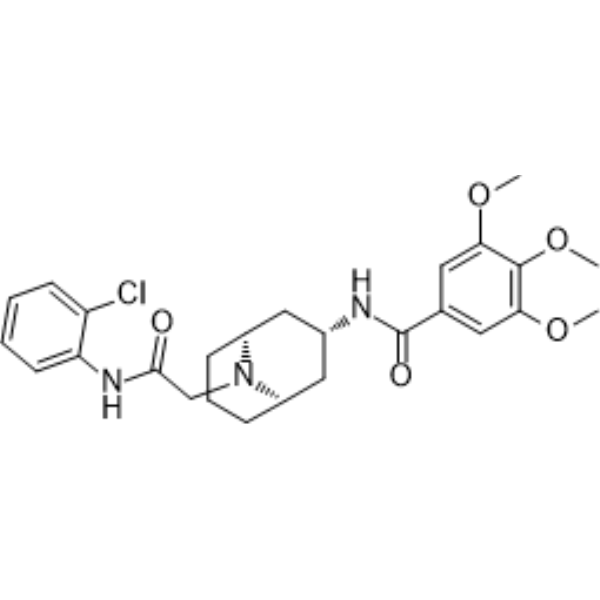
  • HY-122197
    ML339
    4 Publications Verification

    CXCR Apelin Receptor (APJ) Arrestin Cancer
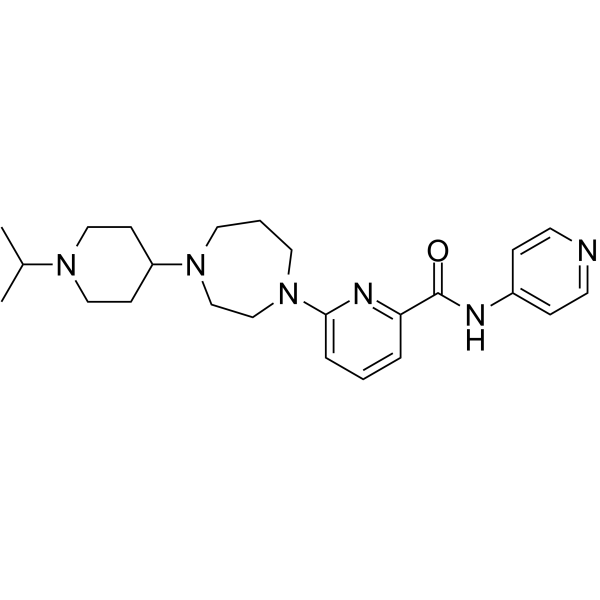
    ML339 is a selective CXCR6 antagonist with an IC50 of 140 nM. ML339 antagonizes β-arrestin recruitment and cAMP signaling pathway of human CXCR6 receptor induced by CXCL16, with IC50 of 0.3 μM and 1.4 μM, respectively. ML339 shows weaker activity against the recruitment of β-arrestin in mouse CXCR6 receptors, with an IC50 of 18 μM. ML339 has no inhibitory effect on CXCR5CXCR4CXCR6 and apelin receptor (APJ), with IC50 >79 μM. ML339 has the potential to promote the development of prostate cancer research .
    ML339
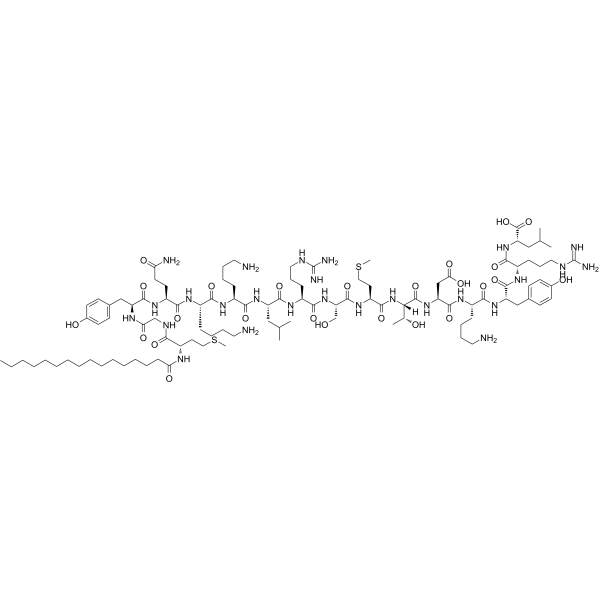
  • HY-P0172
    ATI-2341
    4 Publications Verification

    CXCR Inflammation/Immunology Endocrinology Cancer
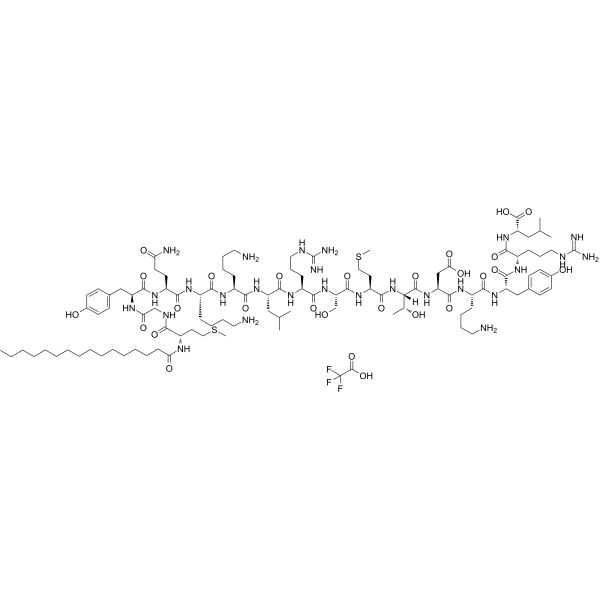
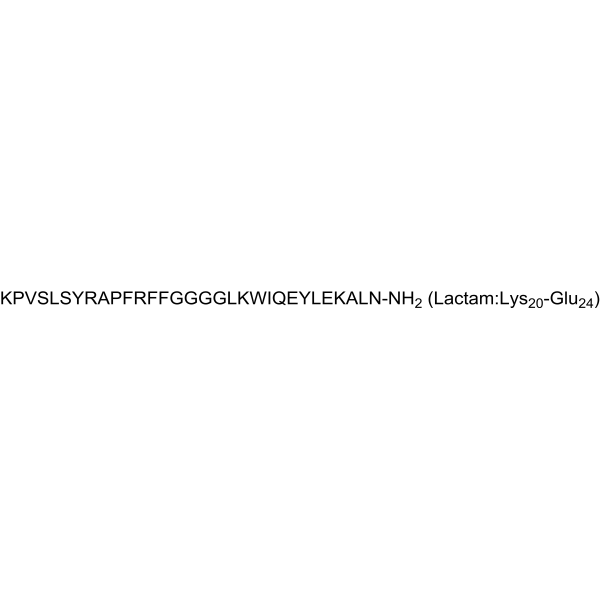
    ATI-2341 is a potent and functionally selective allosteric agonist of C-X-C chemokine receptor type 4 (CXCR4), which functions as a biased ligand, favoring Gαi activation over Gα13. ATI-2341 activates the inhibitory heterotrimeric G protein (Gi) to promote inhibition of cAMP production and induce calcium mobilization. ATI-2341 is a potent and efficacious mobilizer of bone marrow polymorphonuclear neutrophils (PMNs) and hematopoietic stem and progenitor cells (HSPCs) .
    ATI-2341
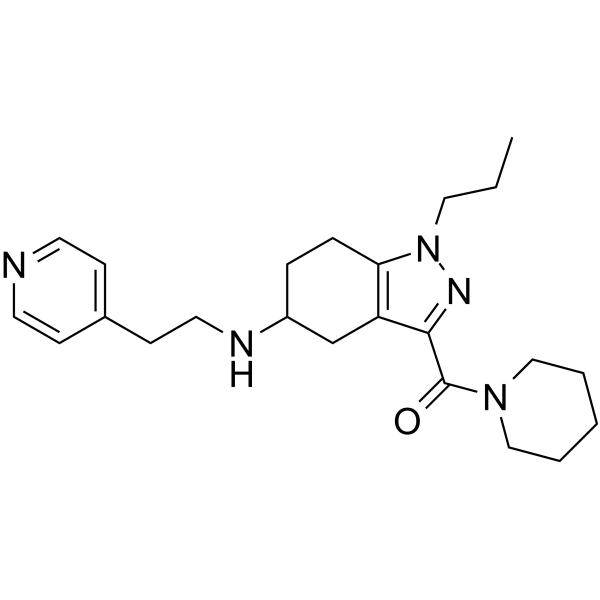
  • HY-111793
    NUCC-390
    Maximum Cited Publications
    6 Publications Verification

    CXCR Neurological Disease
    NUCC-390 is a novel and selective small-molecule CXCR4 receptor agonist. NUCC-390 induces internalization of CXCR4 receptors and acts in an opposite way of AMD3100 (HY-10046) . NUCC-390 promotes nerve recovery of function after neurodegeneration in vivo .
    NUCC-390
  • HY-P1682A
    Balixafortide TFA
    1 Publications Verification

    POL6326 TFA

    CXCR Arrestin Cancer
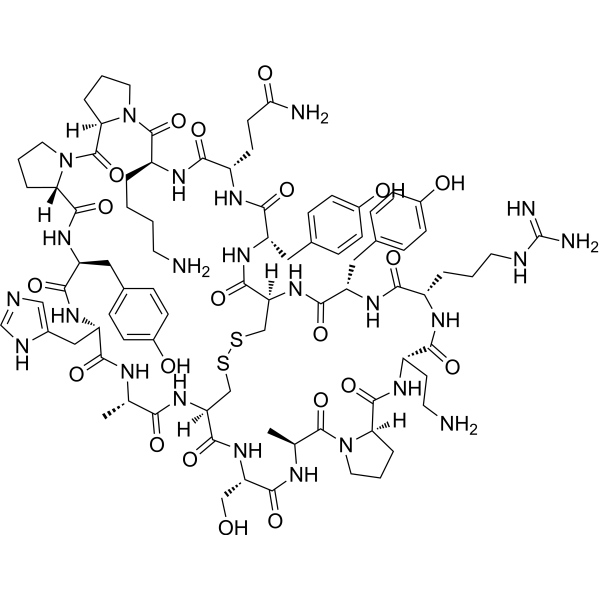
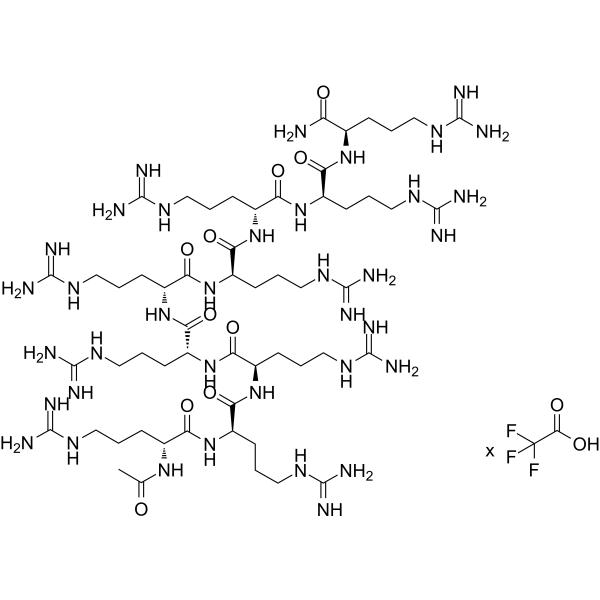
    Balixafortide TFA (POL6326 TFA) is a potent, selective, well-tolerated peptidic CXCR4 antagonist with an IC50 < 10 nM. Balixafortide TFA shows 1000-fold selective for CXCR4 than a large panel of receptors including CXCR7. Balixafortide TFA blocks β-arrestin recruitment and calcium flux with IC50s < 10 nM. Balixafortide TFA is also a potent hematopoietic stem and progenitor cell (HSPC) mobilizing agent. Anti-cancer effects .
    Balixafortide TFA
  • HY-D0976
    NF279
    1 Publications Verification

    P2X Receptor HIV NTPDase CXCR Infection
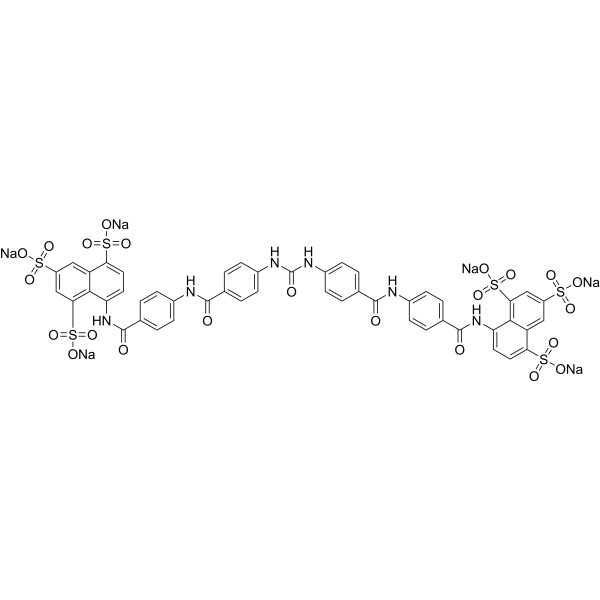
    NF279 is a selective P2X1 receptor antagonist and NTPDase inhibitor, with a P2X1 IC50 value of 19 nM. NF279 suppresses GABA-evoked currents, reduces ATP-excited respiratory activity, alters hypoglossal nerve burst parameters, and blocks CXCR4, CCR5, CXCR3, and CXCR7-mediated calcium responses. NF279 arrests HIV-1 fusion downstream of CD4 binding, inhibits R5- and X4-tropic HIV-1 strains. NF279 can be used for the research of HIV-1 infection .
    NF279
  • HY-P3612

    CXCR Inflammation/Immunology
    CTCE-0214 is a chemokine CXC receptor 4 (CXCR4) agonist, SDF-1α (stromal cell-derived factor-1α) peptide analog. CTCE-0214 shows anti-inflammatory activity, and can be used in inflammation sepsis and systemic inflammatory syndromes research .
    CTCE-0214
  • HY-P0172A
    ATI-2341 TFA
    4 Publications Verification

    CXCR Inflammation/Immunology Endocrinology Cancer
    ATI-2341 is a potent and functionally selective allosteric agonist of C-X-C chemokine receptor type 4 (CXCR4), which functions as a biased ligand, favoring Gαi activation over Gα13. ATI-2341 activates the inhibitory heterotrimeric G protein (Gi) to promote inhibition of cAMP production and induce calcium mobilization. ATI-2341 is a potent and efficacious mobilizer of bone marrow polymorphonuclear neutrophils (PMNs) and hematopoietic stem and progenitor cells (HSPCs) .
    ATI-2341 TFA
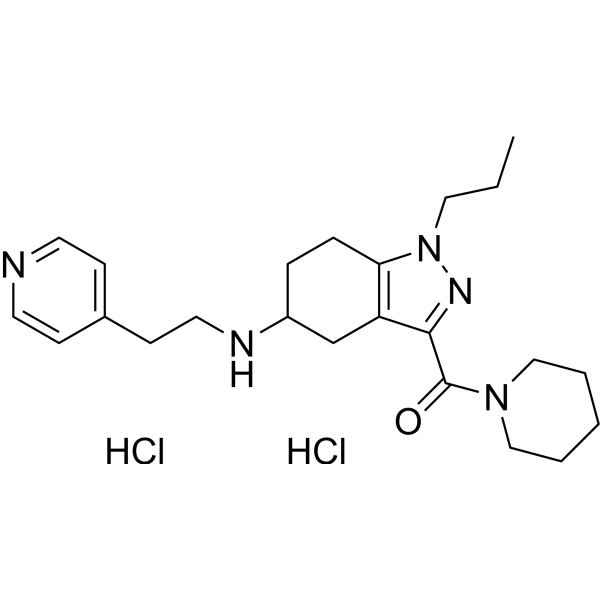
  • HY-111793A
    NUCC-390 dihydrochloride
    Maximum Cited Publications
    6 Publications Verification

    CXCR Neurological Disease
    NUCC-390 dihydrochloride is a novel and selective small-molecule CXCR4 receptor agonist. NUCC-390 dihydrochloride induces internalization of CXCR4 receptors and acts in an opposite way of AMD3100 (HY-10046) . NUCC-390 dihydrochloride promotes nerve recovery of function after neurodegeneration in vivo .
    NUCC-390 dihydrochloride
  • HY-P1682
    Balixafortide
    1 Publications Verification

    POL6326

    CXCR Arrestin Cancer
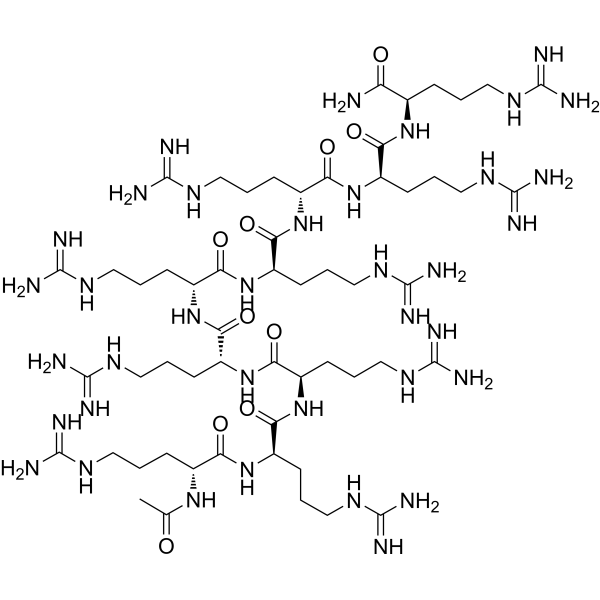
    Balixafortide (POL6326) is a potent, selective, well-tolerated peptidic CXCR4 antagonist with an IC50 < 10 nM. Balixafortide shows 1000-fold selective for CXCR4 than a large panel of receptors including CXCR7. Balixafortide blocks β-arrestin recruitment and calcium flux with IC50s < 10 nM. Balixafortide is also a potent hematopoietic stem and progenitor cell (HSPC) mobilizing agent. Anti-cancer effects .
    Balixafortide
  • HY-114244
    USL311
    1 Publications Verification

    CXCR Cancer
    USL311 is an orally active CXCR4 inhibitor. USL311 blocks the activity of the CXCR4 receptor. USL311 is applicable to research related to various cancers including breast cancer, bladder cancer, colon cancer, rectal cancer, liver cancer and glioblastoma .
    USL311
  • HY-161735

    CXCR Inflammation/Immunology
    CXCR4-IN-3 (compound XVI) is an orally active and potent inhibitor targeting the inflammation-related receptor CXCR4, with an IC50 of 3.2 nM. CXCR4-IN-3 exhibits potent antichemotactic activity, at 79.19±2.33% inhibition. CXCR4-IN-3 shows anti-inflammatory activity. CXCR4-IN-3 can be used for IBD (inflammatory bowel disease) research .
    CXCR4-IN-3
  • HY-P7061A
    ALX 40-4C Trifluoroacetate
    1 Publications Verification

    Apelin Receptor (APJ) CXCR Infection Endocrinology
    ALX 40-4C Trifluoroacetate is a small peptide inhibitor of the chemokine receptor CXCR4, inhibits SDF-1 from binding CXCR4 with a Ki of 1 μM, and suppresses the replication of X4 strains of HIV-1; ALX 40-4C Trifluoroacetate also acts as an antagonist of the APJ receptor, with an IC50 of 2.9 μM.
    ALX 40-4C Trifluoroacetate
  • HY-P10427

    CXCR Dengue Virus Neurological Disease Inflammation/Immunology Cancer
    DV1 is a CXCR4 inhibitor with anti-proteolytic properties that specifically blocks the binding of SDF-1α to its receptor. DV1 inhibits the migration of breast cancer cells and enables the targeted delivery of avidin-PLGA nanoparticles to CXCR4-expressing cancer cells. DV1 not only effectively suppresses the progression of metastatic breast cancer in mouse models, but also preferentially accumulates in brain tumor tissues rather than normal brain tissues, showing potential for inhibiting intracranial tumor metastasis. As a humoral immune stimulant, DV1 induces the production of specific IgG, neutralizing antibodies and cellular immune responses, thereby providing the host with protection against lethal challenges. DV1 has been applied to studies on CXCR4-expressing cancers, glioblastoma, dengue fever and other related diseases .
    DV1
  • HY-P10415
    EPI-X4
    1 Publications Verification

    hSA(408–423) peptide

    CXCR Infection Inflammation/Immunology Cancer
    EPI-X4 (hSA408–423 peptide) is an antagonist for C-X-C motif chemokine receptor 4 (CXCR4) with IC50 of 8.6 μM. EPI-X4 blocks the CXCL12-mediated signaling, inhibits chemokine-mediated migration and invasion of leukemia cell. EPI-X4 exhibits anti-inflammatory activity in mouse model. EPI-X4 exhibits antiviral activity against CXCR4-tropic HIV with IC50 of 8.6 μM .
    EPI-X4
  • HY-178205

    CXCR ERK Akt Cancer
    BPRCX 807 is a selective and potent CXCR4 (CXC chemokine receptor type 4) antagonist. BPRCX 807 inhibits CXCL12-mediated ERK and Akt phosphorylation. BPRCX 807 can significantly suppress primary tumor growth. BPRCX 807 can be used for the study of hepatocellular carcinoma .
    BPRCX807
  • HY-P4109

    NT21MP; V1 peptide

    CXCR Inflammation/Immunology Cancer
    vMIP-II (1-21) (NT21MP) is an inhibitor of CXCR4. vMIP-II (1-21) interacts broadly with CC and CXC chemokine receptors. vMIP-II (1-21) inhibits CXCR4 by competing with 125I-SDF-1R for binding sites (IC50=190 nM) .
    vMIP-II  (1-21)
  • HY-P10427A

    CXCR Dengue Virus Infection
    DV1 TFA is a CXCR4 inhibitor with anti-proteolytic properties that specifically blocks the binding of SDF-1α to its receptor. DV1 TFA inhibits the migration of breast cancer cells and enables the targeted delivery of avidin-PLGA nanoparticles to CXCR4-expressing cancer cells. DV1 TFA not only effectively suppresses the progression of metastatic breast cancer in mouse models, but also preferentially accumulates in brain tumor tissues rather than normal brain tissues, showing potential for inhibiting intracranial tumor metastasis. As a humoral immune stimulant, DV1 TFA induces the production of specific IgG, neutralizing antibodies and cellular immune responses, thereby providing the host with protection against lethal challenges. DV1 TFA has been applied to studies on CXCR4-expressing cancers, glioblastoma, dengue fever and other related diseases .
    DV1 TFA
  • HY-162632

    Akt CXCR Inflammation/Immunology
    Hit 14 is an inhibitor for C-X-C chemokine receptor type 4 (CXCR4) with IC50 of 254 nM. Hit 14 inhibits the migration and invasion of cell MDA-MB-231. Hit 14 inhibits the Akt phosphorylation, exhibits anti-inflammatory activity, and ameliorateds the ear swelling and damage in mouse models .
    Hit 14
  • HY-P7061

    CXCR Apelin Receptor (APJ) Infection Endocrinology
    ALX 40-4C is a small peptide inhibitor of the chemokine receptor CXCR4, inhibits SDF-1 from binding CXCR4 with a Ki of 1 μM, and suppresses the replication of X4 strains of HIV-1; ALX 40-4C Trifluoroacetate also acts as an antagonist of the APJ receptor, with an IC50 of 2.9 μM.
    ALX 40-4C
  • HY-111224

    HIV CXCR Infection
    GSK812397 is a CXCR4 antagonist with potential for the treatment of HIV infection. To evaluate the clinical potential of GSK812397, kilogram-scale agent candidates are needed. Here, an improved, scalable synthetic route for the CXCR4 antagonist GSK812397 is described. This new route has been scaled up in a 50-liter stationary facility to obtain 1.2 kg of agent substance in 20% overall yield and >99% chemical and enantiomeric purity in five steps. CXC chemokine receptor 4 (CXCR4) is a 7-transmembrane protein that functions in part as a host co-receptor for multiple strains of HIV-1. It is thought that targeting CXCR4 will help inhibit the replication of several late cytopathic viruses; therefore, CXCR4 antagonists are one of the most promising new classes of experimental anti-HIV agents. GSK812397 is a potent CXCR4 antagonist and is therefore a candidate for investigation for the treatment of HIV infection.
    GSK812397
  • HY-P4109A

    NT21MP TFA; V1 peptide TFA

    CXCR Inflammation/Immunology Cancer
    vMIP-II (1-21) (NT21MP) TFA is an inhibitor of CXCR4. vMIP-II (1-21) TFA interacts broadly with CC and CXC chemokine receptors. vMIP-II (1-21) TFA inhibits CXCR4 by competing with 125I-SDF-1R for binding sites (IC50=190 nM) .
    vMIP-II  (1-21) TFA
  • HY-123819

    CXCR Infection
    KRH-1636 is a CXC chemokine receptor (CXCR) 4 antagonist. KRH-1636 can be used in HIV-1 research .
    KRH-1636
  • HY-146413

    CXCR HIV Infection Cancer
    HF50731 (compound 21) is a potent CXCR4 antagonist. HF50731 shows strong CXCR4 binding affinity, with IC50 of 19.8 nM. HF50731 effectively inhibits calcium mobilization, cell migration, and HIV-1 infection via CXCR4 coreceptor, with IC50 values of 119.2 nM, 621.4 nM and 1.5 μM .
    HF50731
  • HY-P10429

    CXCR Infection
    RCP168 is a highly selective and affinity CXCR4 receptor antagonist (IC50=5 nM). RCP168 has a stronger ability than natural chemical factors to inhibit the entry of HIV-1 (human immunodeficiency virus type 1) into host cells via CXCR4 receptors. RCP168 inhibits HIV-1 infection by blocking viral binding sites or inducing receptor internalization. RCP168 can be used to analyze the interaction between CXCR4 receptor and other chemical factor receptors .
    RCP168
  • HY-122058

    HIV Infection
    KRH-3955 is a CXCR4 antagonist with good bioavailability and potent anti-HIV-1 activity. KRH-3955 can effectively inhibit the replication of X4 HIV-1, including clinical isolates from different donors. KRH-3955 also shows activity against recombinant X4 HIV-1 containing reverse transcriptase, protease and tyrosinase resistance mutations. KRH-3955 can inhibit the binding of SDF-1alpha to CXCR4 and calcium ion signaling through this receptor. KRH-3955 inhibits the binding of an antibody against CXCR4 to CXCR4, showing a potent antagonistic effect on CXCR4. KRH-3955 shows an oral bioavailability of 25.6% in rats and can inhibit the replication of X4 HIV-1 in vivo .
    KRH-3955
  • HY-175882

    CXCR Cancer
    SDNUM04 is a C-X-C chemokine receptor 4 (CXCR4) ligand and can be used as a tracer in tumor-targeting studies .
    SDNUM04
  • HY-167945

    HIV CXCR Infection
    AMD-3329 is a potent and selective anti-HIV-1 and HIV-2 agent, exhibiting activity by inhibiting virus replication through binding to the chemokine receptor CXCR4, which serves as a co-receptor for the entry of X4 viruses.
    AMD-3329
  • HY-164682

    HIV CXCR Infection
    AMD 3329 octahydrobromide is a potent and selective anti-HIV-1 and HIV-2 compound with activity to inhibit viral replication. AMD 3329 blocks viral invasion by binding to the chemokine receptor CXCR4. AMD 3329 exhibits EC50 values as low as 0.8 and 1.6 nM when inhibiting HIV-1 and HIV-2 replication, showing better antiviral efficacy than AMD3100. AMD 3329 significantly inhibits the binding of specific CXCR4 monoclonal antibodies and the Ca(2+) flux induced by SDF-1alpha. AMD 3329 is also able to effectively interfere with virus-induced syncytium formation, with an EC50 value of 12 nM .
    AMD 3329 octahydrobromide
  • HY-113545

    9(R)-Hydroxyoctadecadienoic acid

    Endogenous Metabolite Metabolic Disease
    9(R)-HODE is a monohydroxy fatty acid and metabolite of linoleic acid. It is formed from linoleic acid by COX and lipoxygenase (LO).9(R)-HODE induces chemotaxis, increases the levels of chemokine (C-C motif) receptor 9 (CCR9) and chemokine (C-X-C motif) receptor 4 (CXCR4), and inhibits IL-6 release in primary human monocytes. It inhibits CD3α- and CD28-induced proliferation of isolated human peripheral blood lymphocytes when used at a concentration of 25 μg/mL.
    9(R)-HODE
  • HY-177799

    CXCR Cancer
    BPRCX 714 is a CXCR4 (CXC chemokine receptor type 4) receptor antagonist. BPRCX 714 can be used for the study of hepatocellular carcinoma .
    BPRCX 714
  • HY-174725

    mRNA Inflammation/Immunology
    Human CXCR4 mRNA encodes the human C-X-C motif chemokine receptor 4 (CXCR4) protein, a CXC chemokine receptor specific for stromal cell-derived factor-1. CXCR4 acts with the CD4 protein to support HIV entry into cells.
    Human CXCR4 mRNA
  • HY-P991744

    CXCR Cancer
    Anti-Mouse CXCR4 Antibody is a monoclonal antibody that specifically recognizes murine CXCR4 (C-X-C chemokine receptor 4), also known as fusin or CD184. CXCR4 is a seven-transmembrane G protein–coupled receptor whose principal endogenous ligand is CXCL12 (stromal cell–derived factor-1α, SDF-1α) and is widely expressed in hematopoietic cells, endothelial cells, neurons, as well as embryonic and adult stem cells. The CXCR4–CXCL12 signaling axis activates multiple downstream pathways, including ERK1/2, Ras, p38 MAPK, PLC/MAPK, and SAPK/JNK, thereby regulating cell survival, proliferation, migration, and stemness maintenance. Aberrant overexpression of CXCR4 is closely associated with poor prognosis and metastasis in various cancers, with CXCR4-positive tumor cells preferentially home to CXCL12-rich tissues such as the liver, bone marrow, lung, and lymph nodes. Accordingly, CXCR4 and its CXCL12-related antagonists emerge as attractive targets for experimental anticancer therapy. Anti-Mouse CXCR4 Antibody is generated using a cell-based immunization and screening strategy and exhibits high affinity for both endogenous and exogenous murine CXCR4. Anti-Mouse CXCR4 Antibody can be used for thestudy of chronic lymphocytic leukemia and multiple myeloma .
    Anti-Mouse CXCR4 Antibody (Cx4Mab-1)

Inquiry Online

Your information is safe with us. * Required Fields.

Salutation


Country or Region *

Applicant Name *


Organization Name *

Department *


Email Address *


Product Name *

Cat. No.


Requested quantity *

Phone Number *


Remarks

Inquiry Online

Inquiry Information

Product Name:
Cat. No.:
Quantity:
MCE Japan Authorized Agent:

