



CTCE-0214

Based on 1 Customer Validation
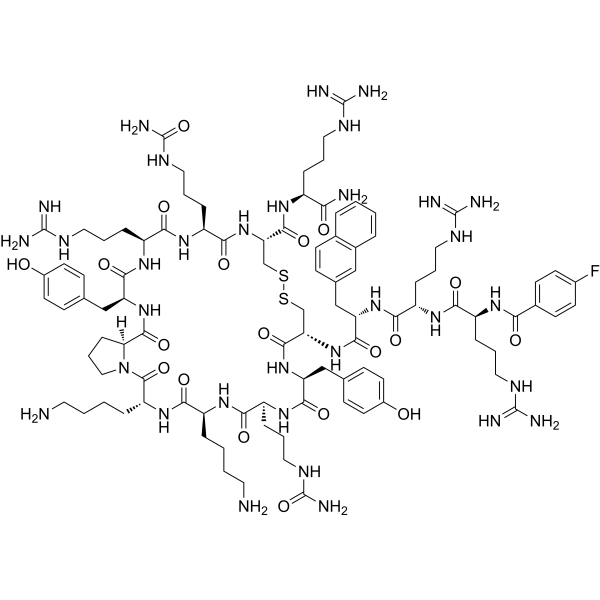
CTCE-0214 is a chemokine CXC receptor 4 (CXCR4) agonist, SDF-1α (stromal cell-derived factor-1α) peptide analog. CTCE-0214 shows anti-inflammatory activity, and can be used in inflammation sepsis and systemic inflammatory syndromes research.
연구목적의 판매만을 진행합니다. 환자를 대상으로 한 판매는 하지 않습니다.
- Purity : 99.96%
- CAS No.: 577782-52-6
- 화학식: C170H254N44O40
- 분자량:3554.11
-
보관:
Sealed storage, away from moisture and light.
Powder -80°C, 2 years , -20°C, 1 year* In solvent : -80°C, 6 months; -20°C, 1 month (sealed storage, away from moisture and light)

To place orders, for customer services and technical support, please contact: MedChemExpress USA
Tel: 609-228-6898 E-mail: [email protected] [email protected]


-
 Biological Activity
-
Chemical Information
-
용액&용해도
- Protocol
- 순도&문서
- References
-
 Help & FAQs


-
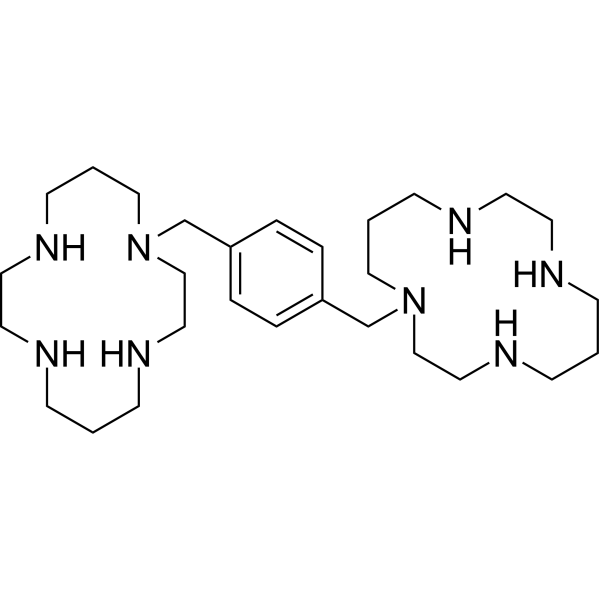
HY-10046
PlerixaforCXCR4 Antagonist -
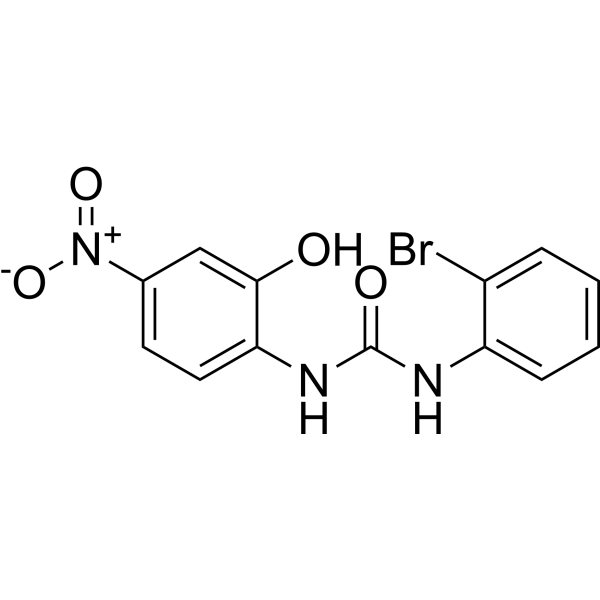
HY-16711
SB225002CXCR2 Antagonist -
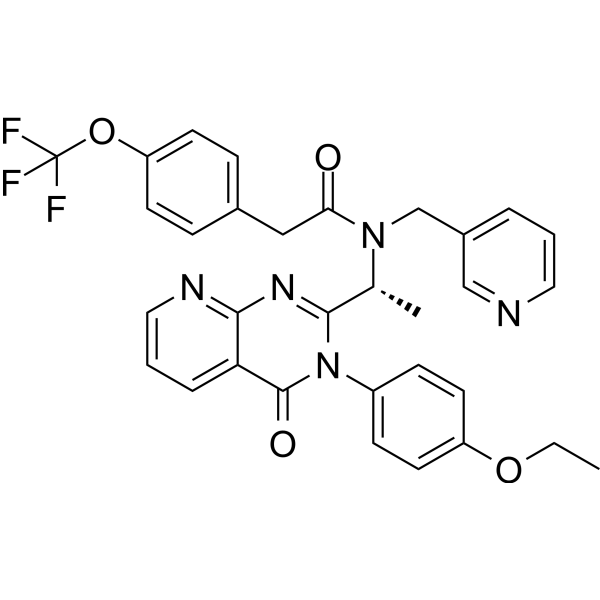
HY-15319
AMG 487CXCR3 Antagonist -
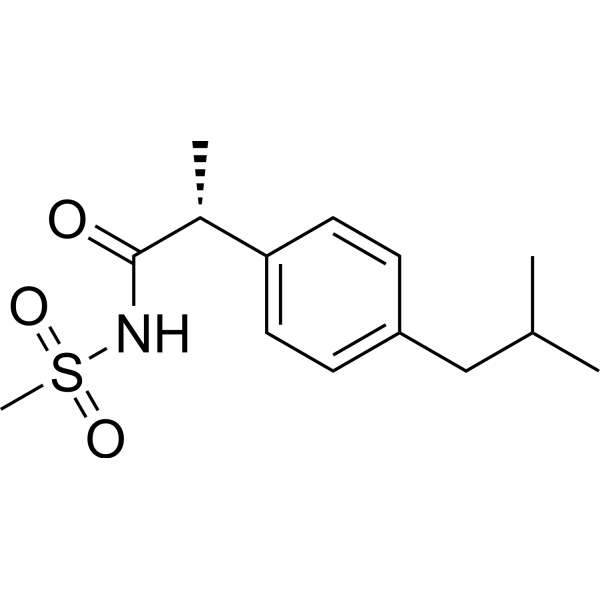
HY-15251
ReparixinCXCR1/2 Inhibitor -
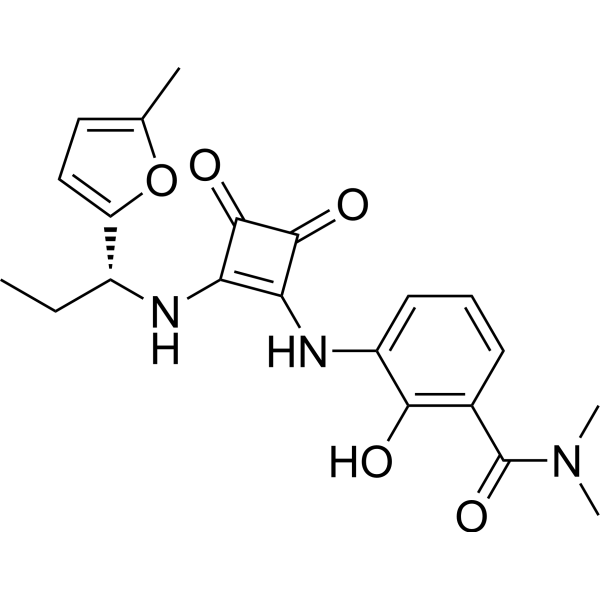
HY-10198
NavarixinCXCR1/2 Antagonist -
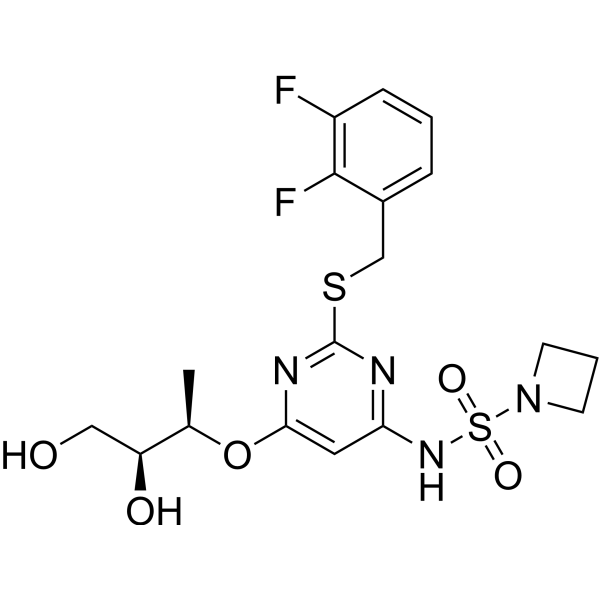
HY-19855
AZD-5069CXCR2 Antagonist -
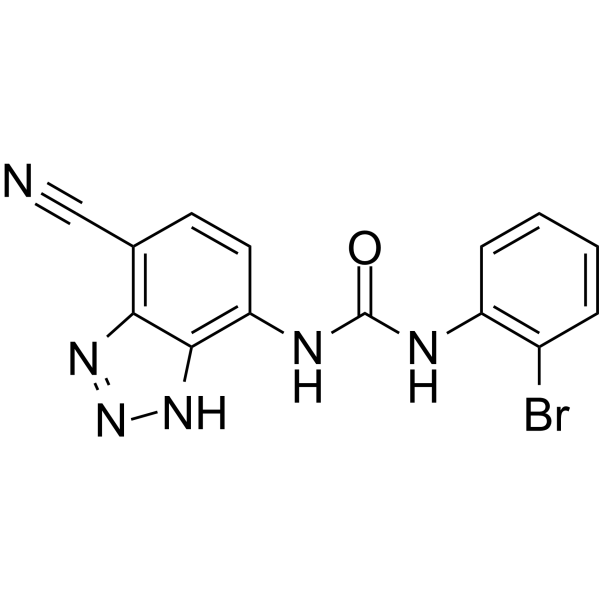
HY-50688
SB-265610CXCR2 Antagonist -
HY-15252
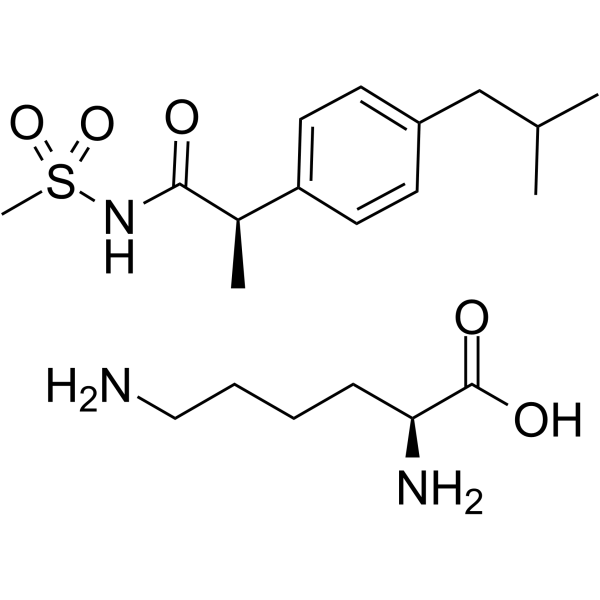
Reparixin L-lysine saltCXCR Inhibitor -
HY-119339
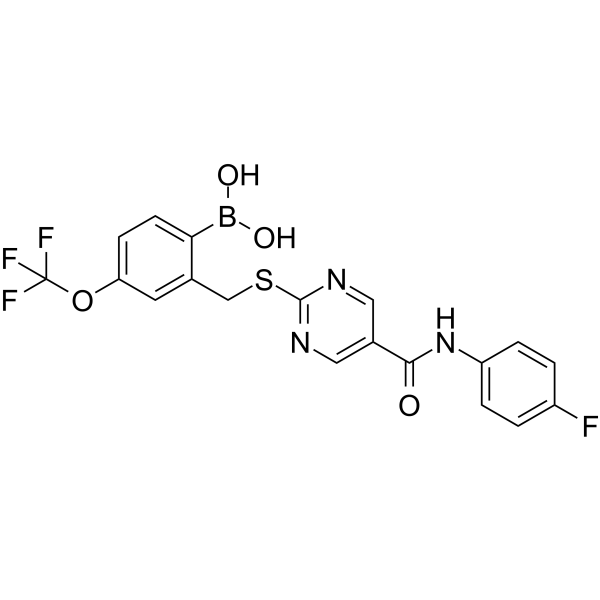
SX-682CXCR1/2 Inhibitor -
HY-10017
SCH 546738CXCR3 Antagonist -
HY-12488
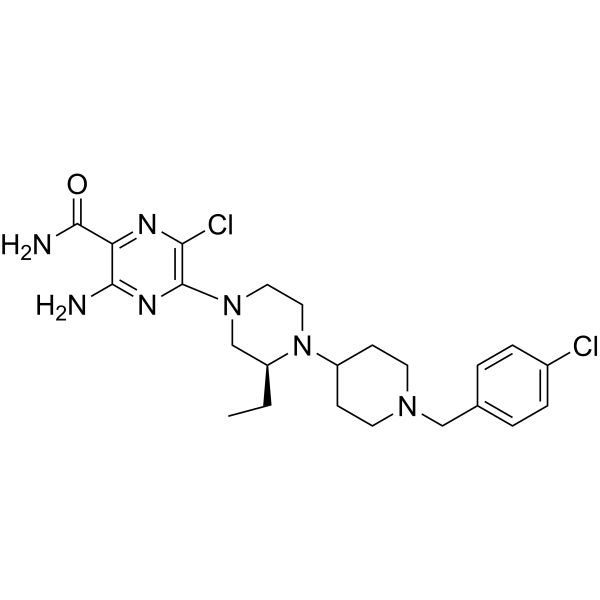
LY2510924CXCR Inhibitor -
HY-P0171
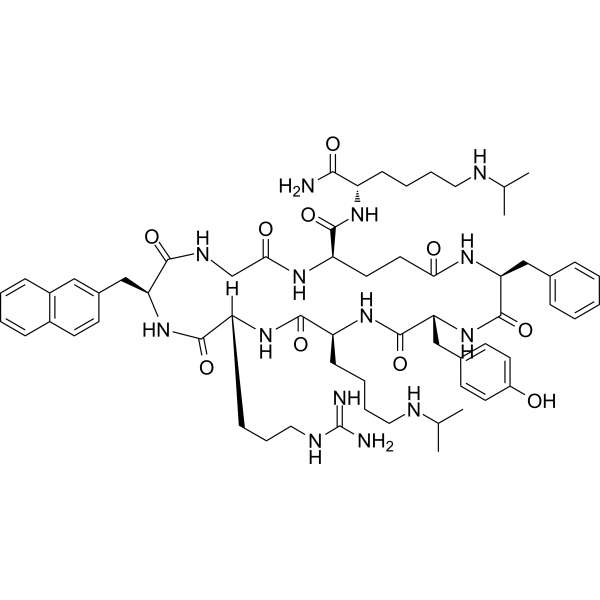
MotixafortideCXCR4 Antagonist


Biological Activity
제품 설명
IC50 & Target
[1]|
SDF-1α-CXCR4 |
In Vitro
CTCE-0214 (0.01-0.1 ng/mL; 4 d) increases the expansion of CD34+ cells subsets[3].
MedChemExpress (MCE) has not independently confirmed the accuracy of these methods. They are for reference only.
In Vivo
CTCE-0214 (intraperitoneal injection and intravenous injection; 25 mg/kg; once) decreases Zymosan-induced plasma TNF-α production[1].
MedChemExpress (MCE) has not independently confirmed the accuracy of these methods. They are for reference only.
-
Animal Model:Male CD-1 mice injected with Lipopolysaccharide[1]
-
Dosage:1, 10, or 25 mg/kg
-
Administration:Intravenous injection; 1, 10, or 25 mg/kg; once
-
Result:Decreased LPS-induced plasma TNF-α production in a dose dependent manor with a 93% reduction.
Showed no significant effect on LPS-induced plasma IL-6 and IL-10 production.
-
Animal Model:Zymosan-induced peritonitis mice model[1]
-
Dosage:25 mg/kg
-
Administration:Intraperitoneal injection and intravenous injection; 25 mg/kg; once
-
Result:Showed a significant reduction in plasma TNF-α (53 reduction, p<0.05).


Chemical Information
-
CAS No. 577782-52-6
-
Appearance Solid
-
분자량 3554.11
-
화학식 C170H254N44O40
-
Color White to off-white
-
Sequence Shortening
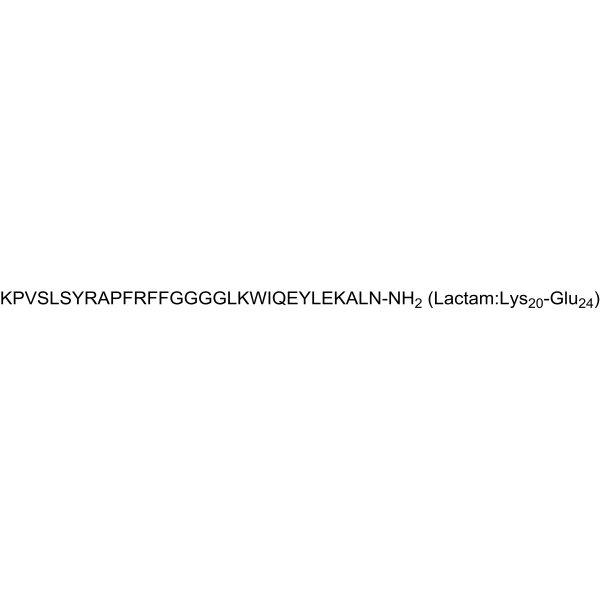
KPVSLSYRAPFRFFGGGGLKWIQEYLEKALN-NH2 (Lactam:Lys20-Glu24)
-
선적
Room temperature in continental US; may vary elsewhere.
-
보관
Sealed storage, away from moisture and light
Powder -80°C 2 years -20°C 1 year * In solvent : -80°C, 6 months; -20°C, 1 month (sealed storage, away from moisture and light)


용액&용해도
In Vitro:
DMSO : 100 mg/mL (28.14 mM; Need ultrasonic; Hygroscopic DMSO has a significant impact on the solubility of product, please use newly opened DMSO)
Please refer to the solubility information to select the appropriate solvent. Once prepared, please aliquot and store the solution to prevent product inactivation from repeated freeze-thaw cycles.
Storage method and period of stock solution: -80°C, 6 months; -20°C, 1 month (sealed storage, away from moisture and light). When stored at -80°C, please use it within 6 months. When stored at -20°C, please use it within 1 month.
Please refer to the solubility information to select the appropriate solvent. Once prepared, please aliquot and store the solution to prevent product inactivation from repeated freeze-thaw cycles.
Storage method and period of stock solution: -80°C, 6 months; -20°C, 1 month (sealed storage, away from moisture and light). When stored at -80°C, please use it within 6 months. When stored at -20°C, please use it within 1 month.
Concentration (start) × Volume (start) = Concentration (final) × Volume (final)
In Vivo:
Select the appropriate dissolution method based on your experimental animal and administration route.
- For the following dissolution methods, please ensure to first prepare a clear stock solution using an In Vitro approach and then sequentially add co-solvents:
- To ensure reliable experimental results, the clarified stock solution can be appropriately stored based on storage conditions. As for the working solution for In Vivo experiments, it is recommended to prepare freshly and use it on the same day.
- The percentages shown for the solvents indicate their volumetric ratio in the final prepared solution. If precipitation or phase separation occurs during preparation, heat and/or sonication can be used to aid dissolution.
Add each solvent one by one: 50% PEG400 50% Saline
Solubility: ≥ 25 mg/mL (7.03 mM); Clear solution
Add each solvent one by one: 10% DMSO 40% PEG300 5% Tween-80 45% Saline
Solubility: ≥ 2.5 mg/mL (0.70 mM); Clear solution
This protocol yields a clear solution of ≥ 2.5 mg/mL (saturation unknown).
Taking 1 mL working solution as an example, add 100 μL DMSO stock solution (25.0 mg/mL) to 400 μL PEG300, and mix evenly; then add 50 μL Tween-80 and mix evenly; then add 450 μL Saline to adjust the volume to 1 mL.
Preparation of Saline: Dissolve 0.9 g sodium chloride in ddH₂O and dilute to 100 mL to obtain a clear Saline solution.
In Vivo Dissolution Calculator
Please enter the basic information of animal experiments:
-
-
-
-
Recommended: Prepare an additional quantity of animals to account for potential losses during experiments.
Please enter your animal formula composition:
-
%DMSO +
Recommended: Keep the proportion of DMSO in working solution below 2% if your animal is weak.
-
%+
-
+%Tween-80 + +
-
%Saline +
The co-solvents required include: DMSO, . All of co-solvents are available by MedChemExpress (MCE). , Tween 80. All of co-solvents are available by MedChemExpress (MCE).
Working solution concentration: 0.22 mg/mL
Method for preparing stock solution: mg drug dissolved in μL DMSO. Stock solution concentration: mg/mL. * In solvent : -80°C, 6 months; -20°C, 1 month (sealed storage, away from moisture and light)
1. Take μL DMSO stock solution;
2. Add μL .
μL , mix evenly;
3. Then add μL Tween 80, mix evenly;
4. Then add μL
Please ensure that the stock solution in the first step is dissolved to a clear state, and add co-solvents in sequence. You can use ultrasonic heating (ultrasonic cleaner, recommended frequency 20-40 kHz), vortexing, etc. to assist dissolution.


순도&문서
-
Data Sheet (270 KB)
-
SDS (254 KB)
- English - EN (254 KB)
- Français - FR (254 KB)
- Deutsch - DE (254 KB)
- Norwegian - NO (254 KB)
- Español - ES (254 KB)
- Swedish - SV (254 KB)
- Italian - IT (254 KB)
- Korean - KR (254 KB)
- Portuguese - PT (254 KB)
-
Handling Instructions (2659 KB)
References
[1]. Fan H, et al. Beneficial effect of a CXCR4 agonist in murine models of systemic inflammation. Inflammation. 2012 Feb;35(1):130-7. [Content Brief]
[2]. Faber A, et al. The many facets of SDF-1alpha, CXCR4 agonists and antagonists on hematopoietic progenitor cells. J Biomed Biotechnol. 2007;2007(3):26065. [Content Brief]
[3]. Li K, et al. Small peptide analogue of SDF-1alpha supports survival of cord blood CD34+ cells in synergy with other cytokines and enhances their ex vivo expansion and engraftment into nonobese diabetic/severe combined immunodeficient mice. Stem Cells. 2006 Jan;24(1):55-64. [Content Brief]


Complete Stock Solution Preparation Table
Please refer to the solubility information to select the appropriate solvent. Once prepared, please aliquot and store the solution to prevent product inactivation from repeated freeze-thaw cycles.
Storage method and period of stock solution: -80°C, 6 months; -20°C, 1 month (sealed storage, away from moisture and light). When stored at -80°C, please use it within 6 months. When stored at -20°C, please use it within 1 month.
| Optional Solvent | Concentration Solvent Mass | 1 mg | 5 mg | 10 mg | 25 mg |
|---|---|---|---|---|---|
| DMSO | 1 mM | 0.2814 mL | 1.4068 mL | 2.8136 mL | 7.0341 mL |
| 5 mM | 0.0563 mL | 0.2814 mL | 0.5627 mL | 1.4068 mL | |
| 10 mM | 0.0281 mL | 0.1407 mL | 0.2814 mL | 0.7034 mL | |
| 15 mM | 0.0188 mL | 0.0938 mL | 0.1876 mL | 0.4689 mL | |
| 20 mM | 0.0141 mL | 0.0703 mL | 0.1407 mL | 0.3517 mL | |
| 25 mM | 0.0113 mL | 0.0563 mL | 0.1125 mL | 0.2814 mL |


CTCE-0214 Related Classifications
HY-P3612 Related Classifications
 Powered by Bioz