



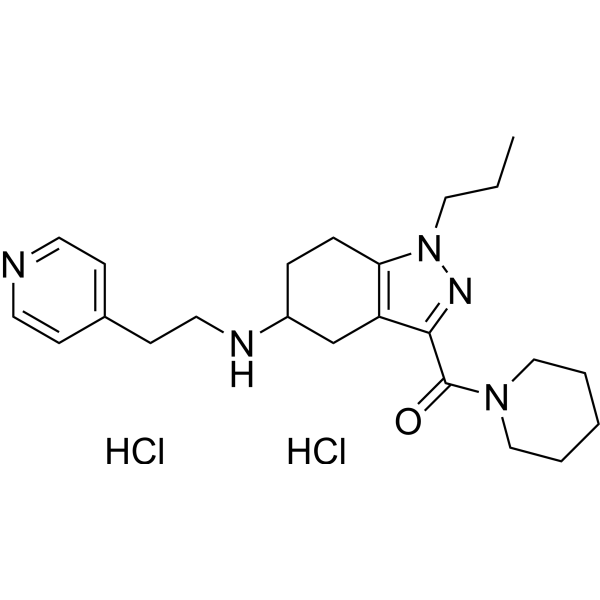
NUCC-390 dihydrochloride
Based on 6 publication(s) in Google Scholar
NUCC-390 dihydrochloride is a novel and selective small-molecule CXCR4 receptor agonist. NUCC-390 dihydrochloride induces internalization of CXCR4 receptors and acts in an opposite way of AMD3100 (HY-10046). NUCC-390 dihydrochloride promotes nerve recovery of function after neurodegeneration in vivo.
Nos produits utilisent uniquement pour la recherche. Nous ne vendons pas aux patients.
- Pureté : 98.19%
- CAS No.: 2749281-71-6
- Formule: C23H35Cl2N5O
- Masse moléculaire:468.46
-
Stockage:
4°C, stored under nitrogen
* In solvent : -80°C, 6 months; -20°C, 1 month (stored under nitrogen)

To place orders, for customer services and technical support, please contact: MedChemExpress USA
Tel: 609-228-6898 E-mail: [email protected] [email protected]


-
 Activité biologique
-
Chemical Information
-
Solvant et solubilité
- Protocole
- Pureté et documentation
- Références
-
 Help & FAQs


-
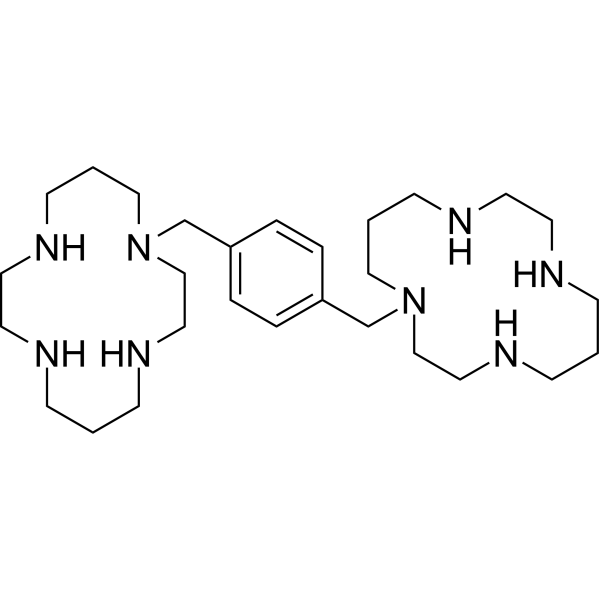
HY-10046
PlerixaforCXCR4 Antagonist -
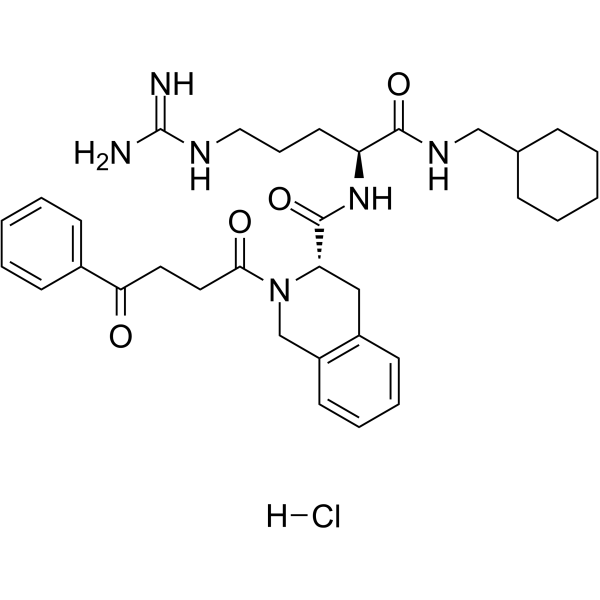
HY-111149A
PS372424 hydrochlorideCXCR3 Agonist -
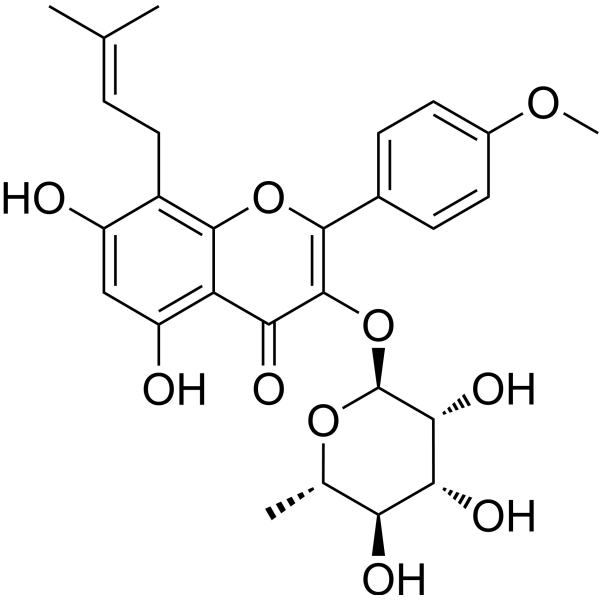
HY-N0011
Baohuoside ICXCR4 Inhibitor -
HY-50912
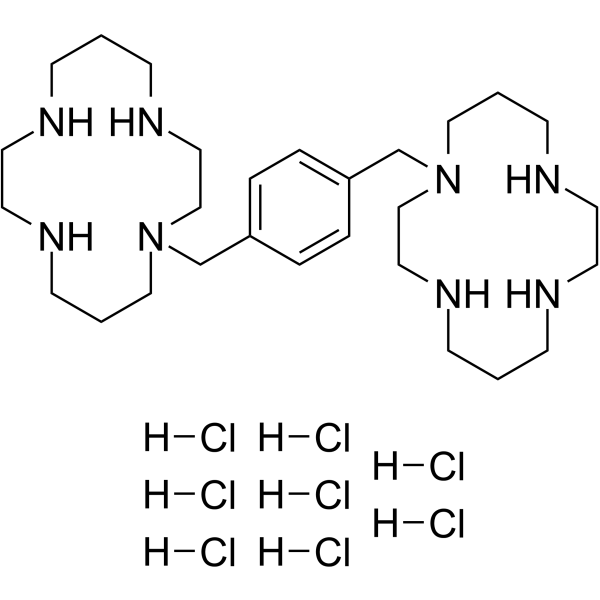
Plerixafor octahydrochlorideCXCR4 Antagonist -
HY-122197
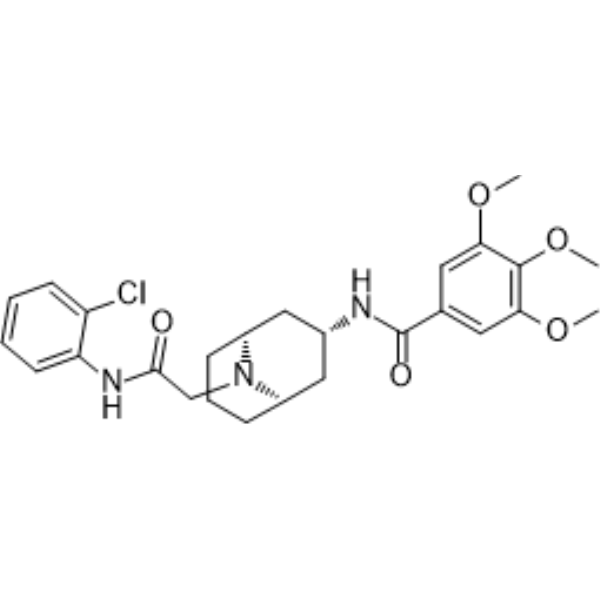
ML339CXCR6 Antagonist -
HY-B0215
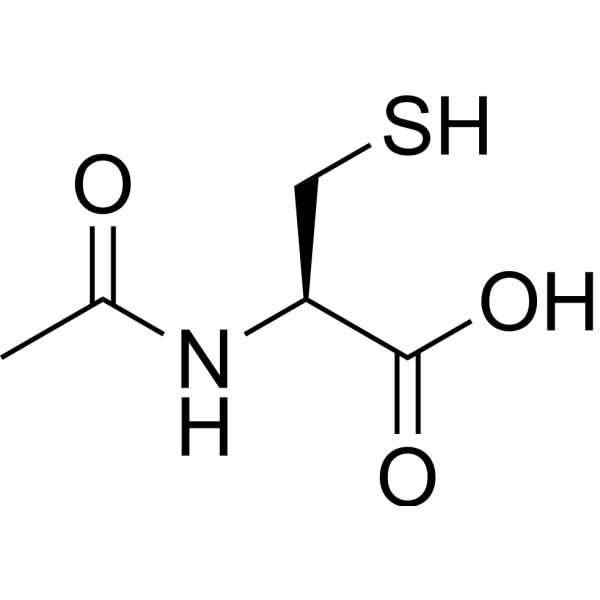
AcetylcysteineMucolytic Agent -
HY-50101A
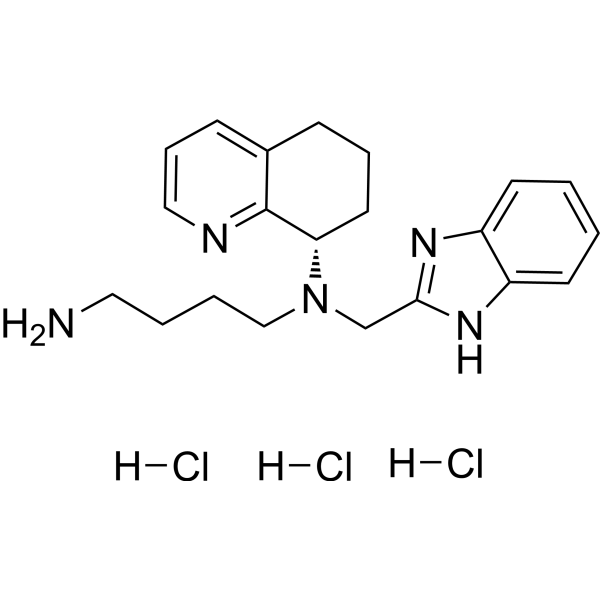
Mavorixafor trihydrochlorideCXCR4 Antagonist -
HY-19867A
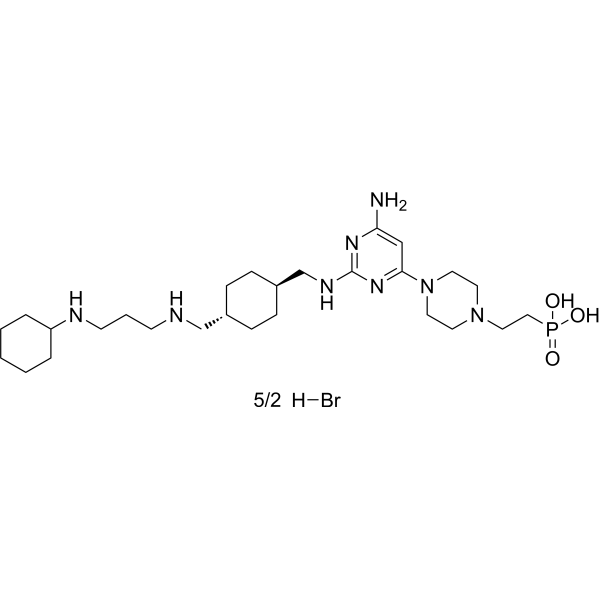
Burixafor hydrobromideCXCR4 Antagonist -
HY-15252
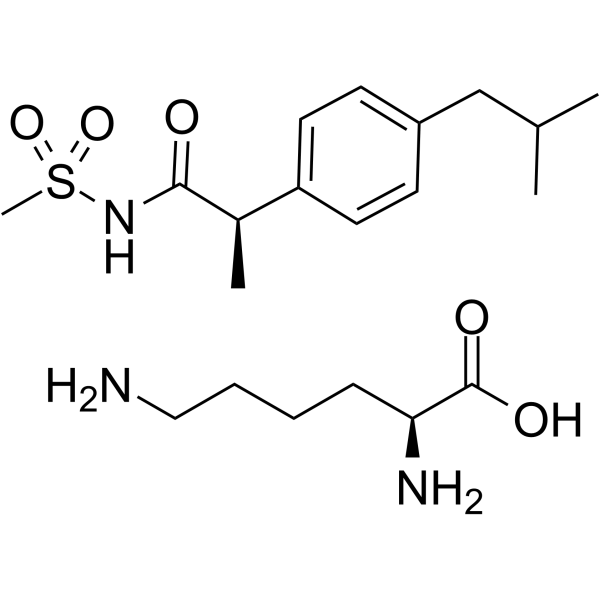
Reparixin L-lysine saltCXCR Inhibitor -
HY-P0171
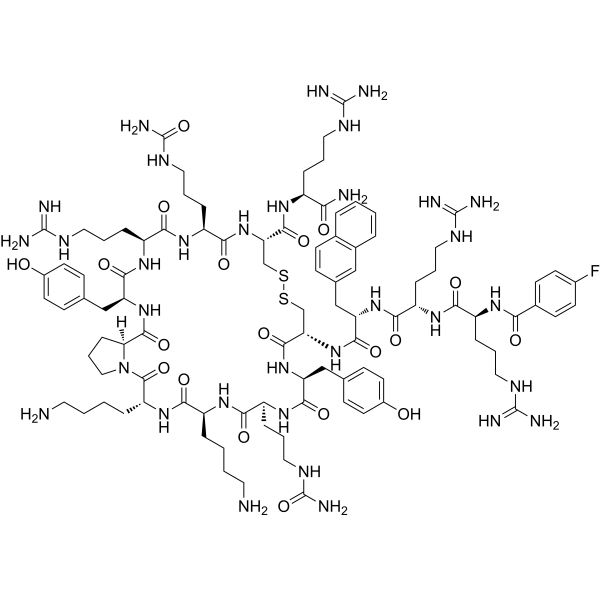
MotixafortideCXCR4 Antagonist -
HY-101458A
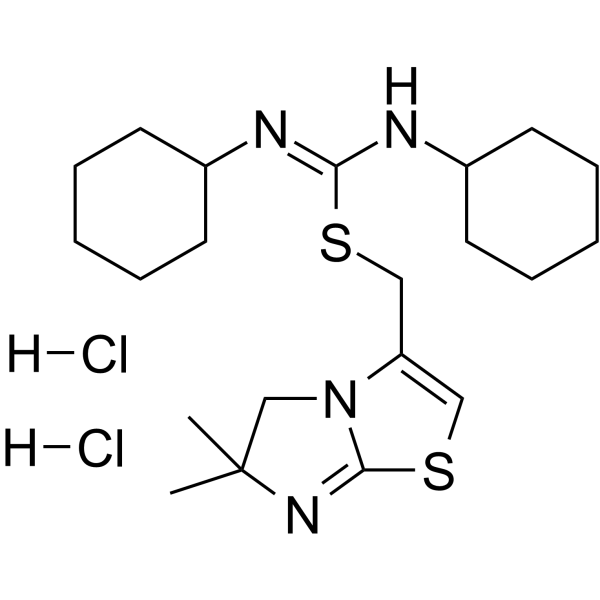
IT1t dihydrochlorideCXCR4 Antagonist -

HY-50101C
Mavorixafor hydrochlorideCXCR4 Antagonist
Publications Citing Use of MedChemExpress (MCE) NUCC-390 dihydrochloride
More- Proc Natl Acad Sci U S A. 2024 Dec 24;121(52):e2416909121. [Abstract]
- Int Immunopharmacol. 2026 Mar 1:172:116227. [Abstract]
- Int Immunopharmacol. 2025 Jan 10:144:113707. [Abstract]
- Microsc Microanal. 2025 Mar 17;31(2):ozaf011. [Abstract]
- Neurosci Res. 2023 Jun:191:38-47. [Abstract]
- Arab J Gastroenterol. 2024 Feb;25(1):28-36. [Abstract]


Activité biologique
Description
IC50 & Target
[1]|
CXCR4 |
In Vitro
NUCC-390 dihydrochloride (10 μM) produces strong (Ca)i response, but this effect can be blocked by the known potent and selective CXCR4 antagonist AMD3100[1].NUCC-390 dihydrochloride (10 μM; pre-treatment 30 mins) leads to increased levels of pERK, it has the capability of stimulating signaling activity downstream of CXCR4 receptors[1].NUCC-390 dihydrochloride (10 μM; 2 hours) can induce CXCR4 receptor internalization, and non-treated cells exhibit some diffuse expression of CXCR4-YFP throughout the cytosol and clear expression in the cell membrane in HEK cells[1].NUCC-390 dihydrochloride (0-1.25 μM; 24 hours) boosts axonal growth in cultured cerebellar granule neurons (CGNs) via CXCR4[2].
MedChemExpress (MCE) has not independently confirmed the accuracy of these methods. They are for reference only. Further protocols information, click here.
-
Cell Line:C8161 cells
-
Concentration:10 μM
-
Incubation Time:Pre-treated 30 mins
-
Result:Increased the level of pERK.
-
Cell Line:Cerebellar granule neurons (CGNs)
-
Concentration:0 μM; 0.0625 μM; 0.25 μM; 1.25 μM
-
Incubation Time:24 hours
-
Result:Stimulated axonal growth via CXCR4.
In Vivo
MedChemExpress (MCE) has not independently confirmed the accuracy of these methods. They are for reference only.
-
Animal Model:Six to eight-week-old CD1 mice[2]
-
Dosage:3.2 mg/kg
-
Administration:Hind limb injection; twice daily; 3 days
-
Result:Promoted functional and anatomical recovery of the NMJ.


Chemical Information
-
CAS No. 2749281-71-6
-
Appearance Solid
-
Masse moléculaire 468.46
-
Formule C23H35Cl2N5O
-
Color Light yellow to yellow
-
SMILES
O=C(N1CCCCC1)C2=NN(CCC)C3=C2CC(NCCC4=CC=NC=C4)CC3.Cl.Cl
-
Livraison
Room temperature in continental US; may vary elsewhere.
-
Stockage
4°C, stored under nitrogen
* In solvent : -80°C, 6 months; -20°C, 1 month (stored under nitrogen)


Publications (6)
-
Journal Impact Factor
-
Most Recent
-
Proc Natl Acad Sci U S A
CXCL12 restricts tumor growth by suppressing the Ras, ERK1/2, c-Myc, and the immune checkpoint PD-L1 pathways. [Abstract]2024 Dec 24;121(52):e2416909121. PMID: 39689179 -
Int Immunopharmacol
Astragalin alleviates neuroinflammation in LPS-injured HT22 cells and CFA mice by regulating neuronal excitability and autophagy via CXCR4-Beclin1/VPS34 axis. [Abstract]2026 Mar 1:172:116227. PMID: 41548438 -
Int Immunopharmacol
Isoferulic acid regulates CXCL12/CXCR4-mediated apoptosis and autophagy in podocyte and mice with STZ-induced diabetic nephropathy. [Abstract]2025 Jan 10:144:113707. PMID: 39616856 -
Microsc Microanal
2025 Mar 17;31(2):ozaf011. PMID: 40095909 -
Neurosci Res
CXCR4 signaling regulates repair Schwann cell infiltration into the spinal cord after spinal cord injury in mice. [Abstract]2023 Jun:191:38-47. PMID: 36592826 -
Arab J Gastroenterol
C-X-C motif chemokine receptor 4 inhibition promotes the effect of plantamajoside in hepatocellular carcinoma. [Abstract]2024 Feb;25(1):28-36. PMID: 38220479


Solvant et solubilité
In Vitro:
DMSO : 100 mg/mL (213.47 mM; Need ultrasonic; Hygroscopic DMSO has a significant impact on the solubility of product, please use newly opened DMSO)
H2O : 25 mg/mL (53.37 mM; Need ultrasonic)
Please refer to the solubility information to select the appropriate solvent. Once prepared, please aliquot and store the solution to prevent product inactivation from repeated freeze-thaw cycles.
Storage method and period of stock solution: -80°C, 6 months; -20°C, 1 month (stored under nitrogen). When stored at -80°C, please use it within 6 months. When stored at -20°C, please use it within 1 month.
* Note: If you choose water as the stock solution, please dilute it to the working solution, then filter and sterilize it with a 0.22 μm filter before use.
Please refer to the solubility information to select the appropriate solvent. Once prepared, please aliquot and store the solution to prevent product inactivation from repeated freeze-thaw cycles.
Storage method and period of stock solution: -80°C, 6 months; -20°C, 1 month (stored under nitrogen). When stored at -80°C, please use it within 6 months. When stored at -20°C, please use it within 1 month.
* Note: If you choose water as the stock solution, please dilute it to the working solution, then filter and sterilize it with a 0.22 μm filter before use.
Concentration (start) × Volume (start) = Concentration (final) × Volume (final)
In Vivo:
Select the appropriate dissolution method based on your experimental animal and administration route.
- For the following dissolution methods, please ensure to first prepare a clear stock solution using an In Vitro approach and then sequentially add co-solvents:
- To ensure reliable experimental results, the clarified stock solution can be appropriately stored based on storage conditions. As for the working solution for In Vivo experiments, it is recommended to prepare freshly and use it on the same day.
- The percentages shown for the solvents indicate their volumetric ratio in the final prepared solution. If precipitation or phase separation occurs during preparation, heat and/or sonication can be used to aid dissolution.
Add each solvent one by one: 10% DMSO 40% PEG300 5% Tween-80 45% Saline
Solubility: ≥ 2.5 mg/mL (5.34 mM); Clear solution
This protocol yields a clear solution of ≥ 2.5 mg/mL (saturation unknown).
Taking 1 mL working solution as an example, add 100 μL DMSO stock solution (25.0 mg/mL) to 400 μL PEG300, and mix evenly; then add 50 μL Tween-80 and mix evenly; then add 450 μL Saline to adjust the volume to 1 mL.
Preparation of Saline: Dissolve 0.9 g sodium chloride in ddH₂O and dilute to 100 mL to obtain a clear Saline solution.
Add each solvent one by one: 10% DMSO 90% (20% SBE-β-CD in Saline)
Solubility: ≥ 2.5 mg/mL (5.34 mM); Clear solution
This protocol yields a clear solution of ≥ 2.5 mg/mL (saturation unknown).
Taking 1 mL working solution as an example, add 100 μL DMSO stock solution (25.0 mg/mL) to 900 μL 20% SBE-β-CD in Saline, and mix evenly.
Preparation of 20% SBE-β-CD in Saline (4°C, storage for one week): 2 g SBE-β-CD powder is dissolved in 10 mL Saline, completely dissolve until clear.
For the following dissolution methods, please prepare the working solution directly:
It is recommended to prepare fresh solutions and use them promptly within a short period of time.
The percentages shown for the solvents indicate their volumetric ratio in the final prepared solution. If precipitation or phase separation occurs during preparation, heat and/or sonication can be used to aid dissolution.
Add each solvent one by one: PBS
Solubility: 20 mg/mL (42.69 mM); Clear solution; Need ultrasonic and warming and heat to 60°C
In Vivo Dissolution Calculator
Please enter the basic information of animal experiments:
-
-
-
-
Recommended: Prepare an additional quantity of animals to account for potential losses during experiments.
Working solution concentration: 0.22 mg/mL
This product has good water solubility, please refer to the measured solubility data in water/PBS/Saline for details.

Protocole
-
Neurotoxicity Study
This protocol assesses in vitro neurotoxicity by combining neuronal viability, mitochondrial/metabolic activity, neurite outgrowth, and optional neuronal network function readouts. Calcein-AM or resazurin/PrestoBlue readouts estimate viable or metabolically active cells; βIII-tubulin immunofluorescence detects neuronal morphology and neurite networks; TMRE detects mitochondrial membrane potential; and MEA recordings detect functional changes in neuronal network activity.


Pureté et documentation
-
Fiche technique (278 KB)
-
SDS (252 KB)
- English - EN (252 KB)
- Français - FR (252 KB)
- Deutsch - DE (252 KB)
- Norwegian - NO (252 KB)
- Español - ES (252 KB)
- Swedish - SV (252 KB)
- Italian - IT (252 KB)
- Korean - KR (252 KB)
- Portuguese - PT (252 KB)
-
Instruction de manipulation (2659 KB)
Références


Complete Stock Solution Preparation Table
Please refer to the solubility information to select the appropriate solvent. Once prepared, please aliquot and store the solution to prevent product inactivation from repeated freeze-thaw cycles.
Storage method and period of stock solution: -80°C, 6 months; -20°C, 1 month (stored under nitrogen). When stored at -80°C, please use it within 6 months. When stored at -20°C, please use it within 1 month.
| Optional Solvent | Concentration Solvent Mass | 1 mg | 5 mg | 10 mg | 25 mg |
|---|---|---|---|---|---|
| H2O / DMSO | 1 mM | 2.1347 mL | 10.6733 mL | 21.3465 mL | 53.3664 mL |
| 5 mM | 0.4269 mL | 2.1347 mL | 4.2693 mL | 10.6733 mL | |
| 10 mM | 0.2135 mL | 1.0673 mL | 2.1347 mL | 5.3366 mL | |
| 15 mM | 0.1423 mL | 0.7116 mL | 1.4231 mL | 3.5578 mL | |
| 20 mM | 0.1067 mL | 0.5337 mL | 1.0673 mL | 2.6683 mL | |
| 25 mM | 0.0854 mL | 0.4269 mL | 0.8539 mL | 2.1347 mL | |
| 30 mM | 0.0712 mL | 0.3558 mL | 0.7116 mL | 1.7789 mL | |
| 40 mM | 0.0534 mL | 0.2668 mL | 0.5337 mL | 1.3342 mL | |
| 50 mM | 0.0427 mL | 0.2135 mL | 0.4269 mL | 1.0673 mL | |
| DMSO | 60 mM | 0.0356 mL | 0.1779 mL | 0.3558 mL | 0.8894 mL |
| 80 mM | 0.0267 mL | 0.1334 mL | 0.2668 mL | 0.6671 mL | |
| 100 mM | 0.0213 mL | 0.1067 mL | 0.2135 mL | 0.5337 mL |
* Note: If you choose water as the stock solution, please dilute it to the working solution, then filter and sterilize it with a 0.22 μm filter before use.


NUCC-390 dihydrochloride Related Classifications
HY-111793A Related Classifications
 Powered by Bioz