



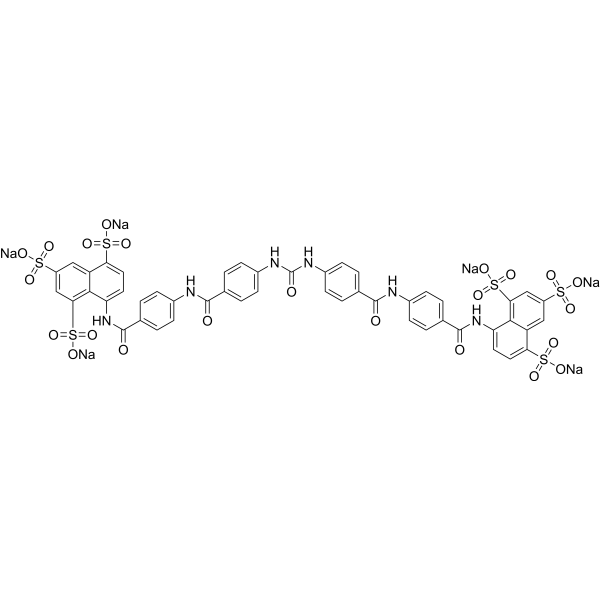
NF279
Based on 1 publication(s) in Google Scholar
NF279 is a selective P2X1 receptor antagonist and NTPDase inhibitor, with a P2X1 IC50 value of 19 nM. NF279 suppresses GABA-evoked currents, reduces ATP-excited respiratory activity, alters hypoglossal nerve burst parameters, and blocks CXCR4, CCR5, CXCR3, and CXCR7-mediated calcium responses. NF279 arrests HIV-1 fusion downstream of CD4 binding, inhibits R5- and X4-tropic HIV-1 strains. NF279 can be used for the research of HIV-1 infection.
For research use only. We do not sell to patients.
- Purity : 98.5%
- CAS No.: 202983-32-2
- Formula: C49H30N6Na6O23S6
- Molecular Weight:1401.12
-
Storage:
-20°C, sealed storage, away from moisture
* In solvent : -80°C, 6 months; -20°C, 1 month (sealed storage, away from moisture)

To place orders, for customer services and technical support, please contact: MedChemExpress USA
Tel: 609-228-6898 E-mail: [email protected] [email protected]


-
 Biological Activity
-
Chemical Information
-
Solvent & Solubility
- Protocols
- Purity & Documentation
- References
-
 Help & FAQs


-
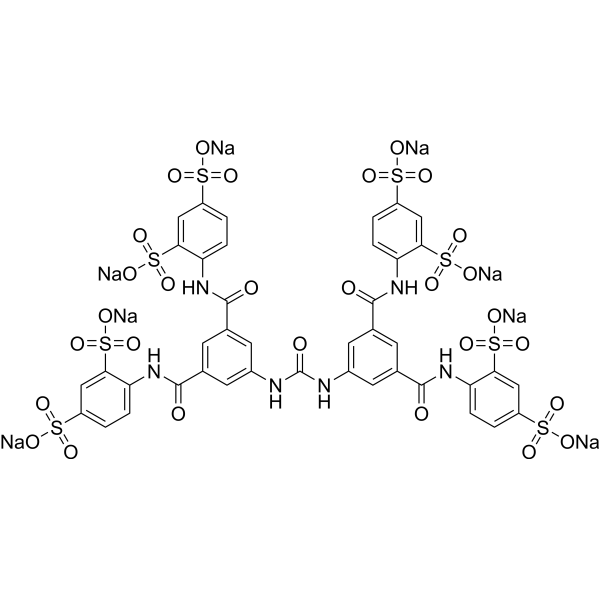
HY-112461A
NF449 octasodiumP2X1 Receptor Antagonist -
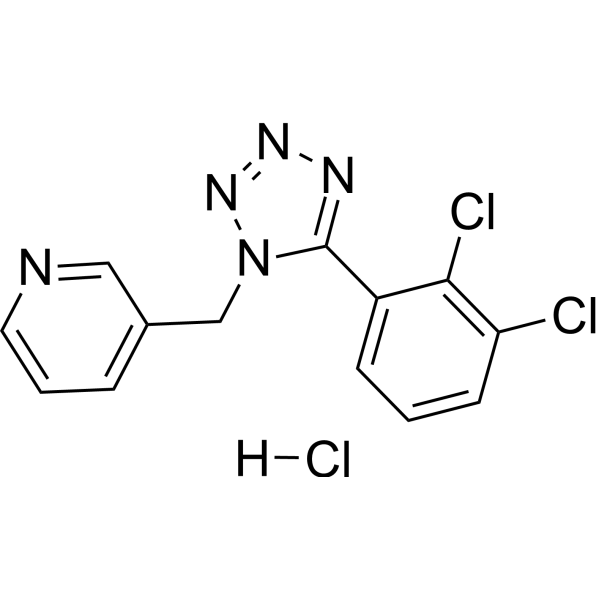
HY-15488A
A 438079 hydrochlorideP2X7 Receptor Antagonist -
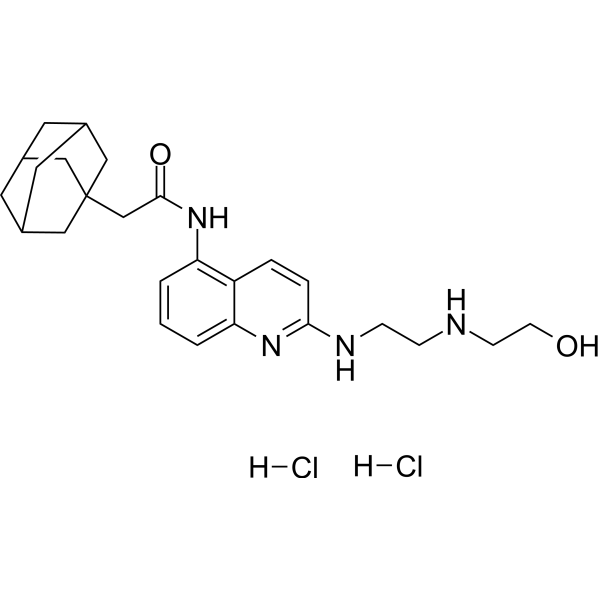
HY-108669
AZ10606120 dihydrochlorideP2X Receptor Antagonist -
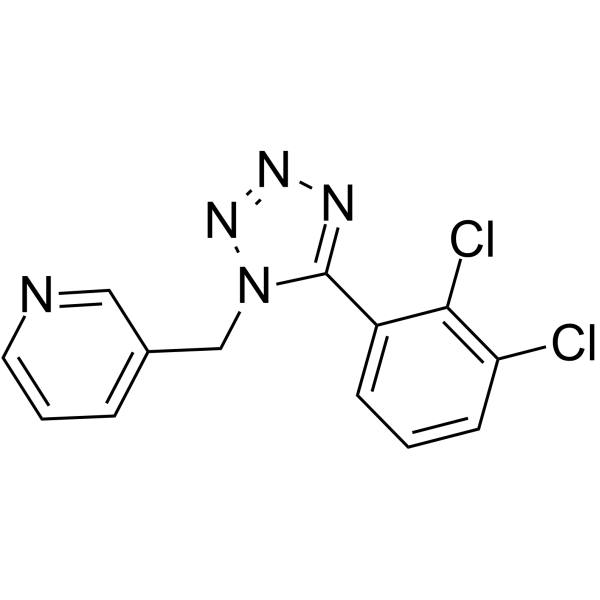
HY-15488
A 438079P2X Receptor Antagonist -
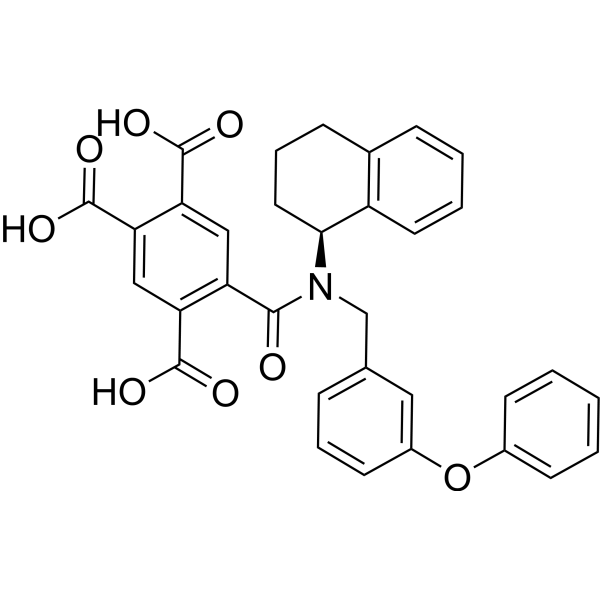
HY-15568
A-317491P2X3/P2X2/3 Antagonist -
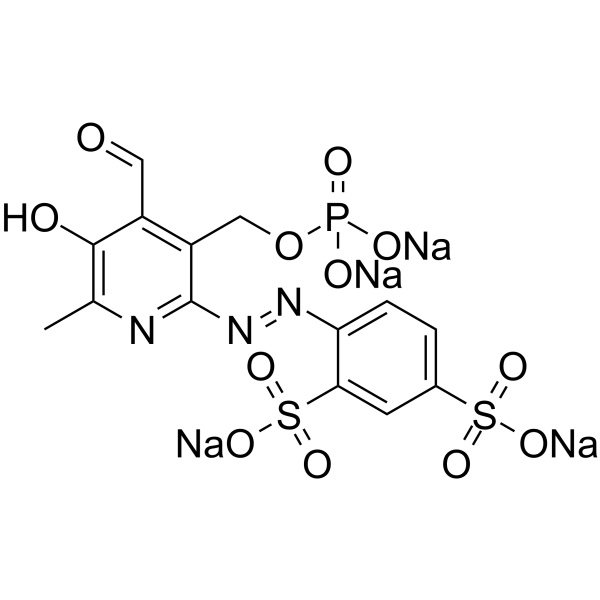
HY-101044
PPADS tetrasodiumP2X Receptor Antagonist -
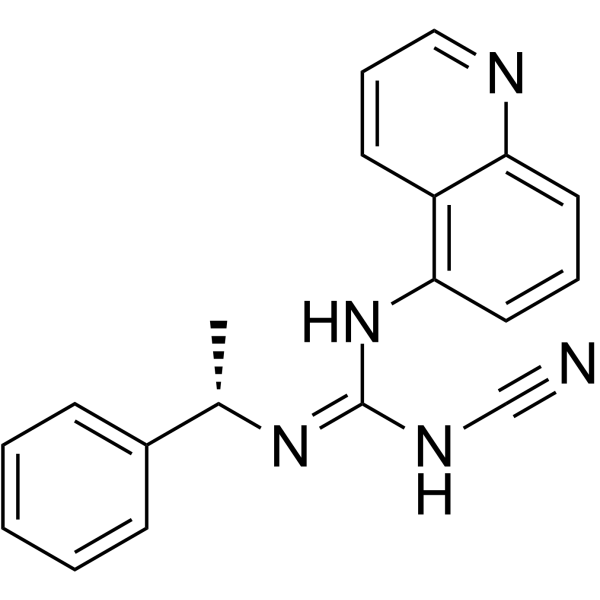
HY-100483
A-804598P2X7 Antagonist -
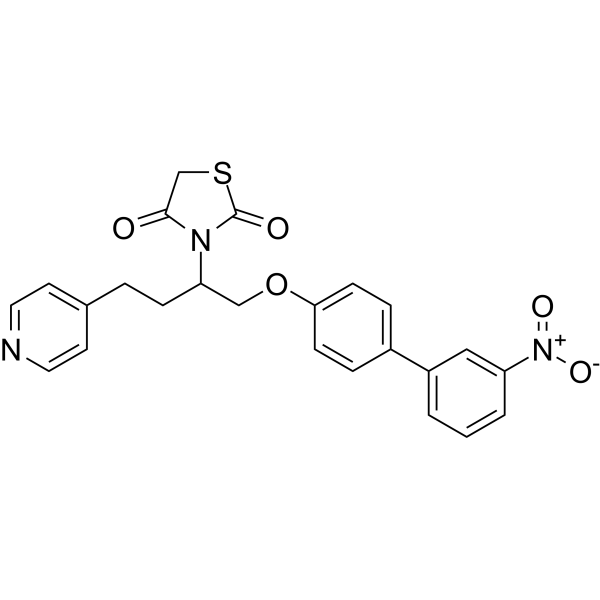
HY-108670
AZ 11645373P2X7 Receptor Antagonists -
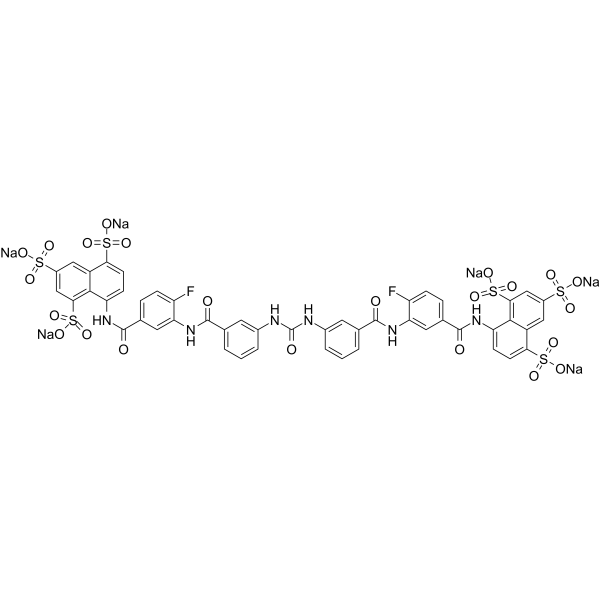
HY-108672
NF157P2Y11 Antagonist -
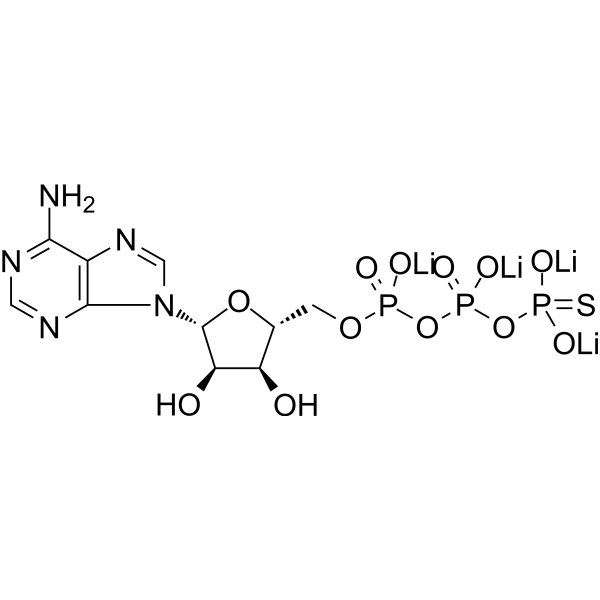
HY-108666
ATPγS tetralithium saltP2Y11 Receptor Agonist -
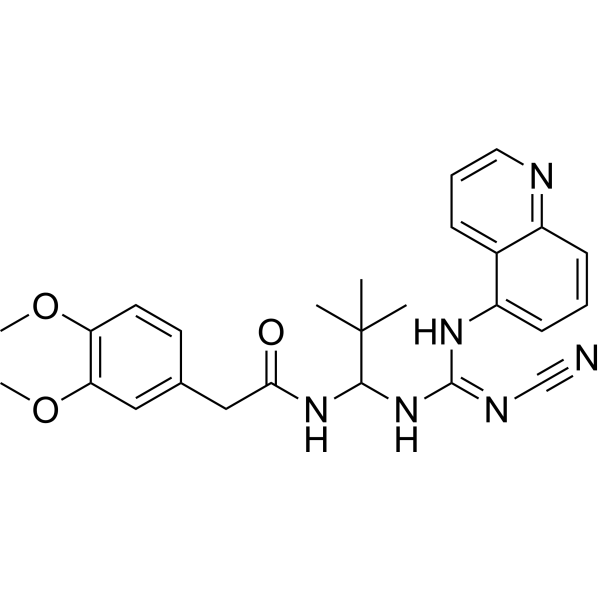
HY-50697
A-740003P2X Receptor Antagonist -
HY-101588
GefapixantP2X3 Antagonist
Publications Citing Use of MedChemExpress (MCE) NF279
MoreAll P2X Receptor Isoforms
More

Biological Activity
Description
|
NTPDase2 4.2 μM (IC50) |
NTPDase3 0.6 μM (IC50) |
p2x1 Receptor 19 nM (IC50) |
P2X2 Receptor 0.76 μM (IC50) |
P2X3 Receptor 1.62 μM (IC50) |
P2X4 Receptor >300 μM (IC50) |
HIV-1 |
CXCR4 |
In Vitro
NF279 (1-100 μM; 10 min) potently inhibits human NTPDase1, NTPDase2, NTPDase3, and NTPDase8, with the highest potency against human NTPDase3 (IC50 0.6 μM) and the lowest potency against human NTPDase8 ATPase activity (IC50 36 μM)[2].
NF279 (1-100 μM; 10 min) potently inhibits mouse NTPDase1, NTPDase2, NTPDase3, and NTPDase8, with the highest potency against mouse NTPDase2 (IC50 3.3 μM) and the lowest potency against mouse NTPDase1 ATPase activity (IC50 52 μM)[2].
NF279 (20 µM) reduces GABA-activated currents in isolated primary rat hippocampal pyramidal neurons to a mean of 61.8% of control, with a reversible inhibitory effect[3].
NF279 (3-300 nM; 10 s pre-incubation; 1-30 µM; simultaneous co-application) potently and reversibly inhibits rat P2X1 receptors expressed in Xenopus laevis oocytes, with an IC50 of 19 nM following 10 s pre-incubation, and shows reduced potency (IC50 2.02 µM) when co-applied with ATP[4].
NF279 (0.3-10 µM; 10 s pre-incubation; 10-300 µM; simultaneous co-application) reversibly inhibits rat P2X3 receptors expressed in Xenopus laevis oocytes, with an IC50 of 1.62 µM following 10 s pre-incubation, and shows greatly reduced potency (IC50 85.5 µM) when co-applied with ATP[4].
NF279 (1-10 µM; simultaneous co-application; post-activation application) acts as a reversible, competitive antagonist of rat P2X2 receptors expressed in Xenopus laevis oocytes, with an IC50 of 0.76 µM and a KB value of 0.36 µM derived from Schild analysis[4].
NF279 shows very low potency against human P2X4 receptors expressed in Xenopus laevis oocytes, with less than 50% inhibition at 300 µM and an IC50 greater than 300 µM[4].
NF279 (10-50 μM; 90 min) dose-dependently inhibits X4-tropic, R5-tropic, and dual-tropic HIV-1 fusion with TZM-bl cells without affecting cell viability or VSV-G-mediated fusion, with greater potency against HXB2 Env-mediated fusion[5].
NF279 (30 μM; 90 min) dose-dependently inhibits X4-tropic HIV-1 fusion with CEM-A cells without affecting cell viability, with lower potency than observed in TZM-bl cells[5].
NF279 (30 μM; 90 min) potently inhibits X4-tropic and R5-tropic HIV-1 fusion with TZM-bl cells[5].
NF279 (30 μM; 10 min preincubation) acts as a dual CXCR4/CCR5 antagonist by completely blocking chemokine-mediated calcium signaling in TZM-bl cells[5].
NF279 (30 μM; 10 min preincubation) blocks gp120-mediated CXCR4 activation by inhibiting calcium signaling in TZM-bl cells[5].
NF279 (30 μM; 10 min preincubation) acts as a partial CXCR4 antagonist and blocks CXCR3/CXCR7 signaling by inhibiting chemokine-mediated calcium flux in CEM-A cells[5].
NF279 (0-50 μM; 90 min) inhibits R5-tropic HIV-1 fusion with both wild-type CCR5-expressing TZM-bl cells and CCR5G163R mutant-expressing JGR.H11 cells, with greater potency against the mutant coreceptor (IC50 = 4.5 μM for JGR.H11 cells, 13.3 μM for TZM-bl cells)[5].
MedChemExpress (MCE) has not independently confirmed the accuracy of these methods. They are for reference only.


Chemical Information
-
CAS No. 202983-32-2
-
Appearance Solid
-
Molecular Weight 1401.12
-
Formula C49H30N6Na6O23S6
-
Color White to off-white
-
SMILES
O=C(NC1=CC=C(C=C1)C(NC2=CC=C(C=C2)C(NC3=CC=C(S(=O)(O[Na])=O)C4=CC(S(=O)(O[Na])=O)=CC(S(=O)(O[Na])=O)=C34)=O)=O)NC5=CC=C(C=C5)C(NC6=CC=C(C=C6)C(NC7=CC=C(S(=O)(O[Na])=O)C8=CC(S(=O)(O[Na])=O)=CC(S(=O)(O[Na])=O)=C78)=O)=O
-
Shipping
Room temperature in continental US; may vary elsewhere.
-
Storage
-20°C, sealed storage, away from moisture
* In solvent : -80°C, 6 months; -20°C, 1 month (sealed storage, away from moisture)


Publications (1)
-
Journal Impact Factor
-
Most Recent
-
iScience
M1-like macrophages regulate T cell infiltration in colorectal cancer through P2X4 receptor. [Abstract]2025 Sep 5;28(10):113517. PMID: 41031375


Solvent & Solubility
In Vitro:
H2O : 25 mg/mL (17.84 mM; Need ultrasonic and warming)
DMSO : 14.5 mg/mL (10.35 mM; Need ultrasonic and warming; Hygroscopic DMSO has a significant impact on the solubility of product, please use newly opened DMSO)
Please refer to the solubility information to select the appropriate solvent. Once prepared, please aliquot and store the solution to prevent product inactivation from repeated freeze-thaw cycles.
Storage method and period of stock solution: -80°C, 6 months; -20°C, 1 month (sealed storage, away from moisture). When stored at -80°C, please use it within 6 months. When stored at -20°C, please use it within 1 month.
* Note: If you choose water as the stock solution, please dilute it to the working solution, then filter and sterilize it with a 0.22 μm filter before use.
Please refer to the solubility information to select the appropriate solvent. Once prepared, please aliquot and store the solution to prevent product inactivation from repeated freeze-thaw cycles.
Storage method and period of stock solution: -80°C, 6 months; -20°C, 1 month (sealed storage, away from moisture). When stored at -80°C, please use it within 6 months. When stored at -20°C, please use it within 1 month.
* Note: If you choose water as the stock solution, please dilute it to the working solution, then filter and sterilize it with a 0.22 μm filter before use.
Concentration (start) × Volume (start) = Concentration (final) × Volume (final)


Purity & Documentation
-
Data Sheet (279 KB)
-
SDS (252 KB)
- English - EN (252 KB)
- Français - FR (252 KB)
- Deutsch - DE (252 KB)
- Norwegian - NO (252 KB)
- Español - ES (252 KB)
- Swedish - SV (252 KB)
- Italian - IT (252 KB)
- Korean - KR (252 KB)
- Portuguese - PT (252 KB)
-
Handling Instructions (2659 KB)
References
[2]. Munkonda MN, et al. Inhibition of human and mouse plasma membrane bound NTPDases by P2 receptor antagonists. Biochem Pharmacol. 2007;74(10):1524-1534. [Content Brief]
[4]. Rettinger J, et al. The suramin analogue NF279 is a novel and potent antagonist selective for the P2X(1) receptor. Neuropharmacology. 2000;39(11):2044-2053. [Content Brief]
[5]. Giroud C, et al. P2X1 Receptor Antagonists Inhibit HIV-1 Fusion by Blocking Virus-Coreceptor Interactions. J Virol. 2015;89(18):9368-9382. [Content Brief]
[6]. Klapperstück M, et al. Antagonism by the suramin analogue NF279 on human P2X(1) and P2X(7) receptors. Eur J Pharmacol. 2000;387(3):245-252. [Content Brief]


Complete Stock Solution Preparation Table
Please refer to the solubility information to select the appropriate solvent. Once prepared, please aliquot and store the solution to prevent product inactivation from repeated freeze-thaw cycles.
Storage method and period of stock solution: -80°C, 6 months; -20°C, 1 month (sealed storage, away from moisture). When stored at -80°C, please use it within 6 months. When stored at -20°C, please use it within 1 month.
| Optional Solvent | Concentration Solvent Mass | 1 mg | 5 mg | 10 mg | 25 mg |
|---|---|---|---|---|---|
| DMSO / H2O | 1 mM | 0.7137 mL | 3.5686 mL | 7.1371 mL | 17.8429 mL |
| 5 mM | 0.1427 mL | 0.7137 mL | 1.4274 mL | 3.5686 mL | |
| 10 mM | 0.0714 mL | 0.3569 mL | 0.7137 mL | 1.7843 mL | |
| H2O | 15 mM | 0.0476 mL | 0.2379 mL | 0.4758 mL | 1.1895 mL |
* Note: If you choose water as the stock solution, please dilute it to the working solution, then filter and sterilize it with a 0.22 μm filter before use.


NF279 Related Classifications
HY-D0976 Related Classifications
 Powered by Bioz