



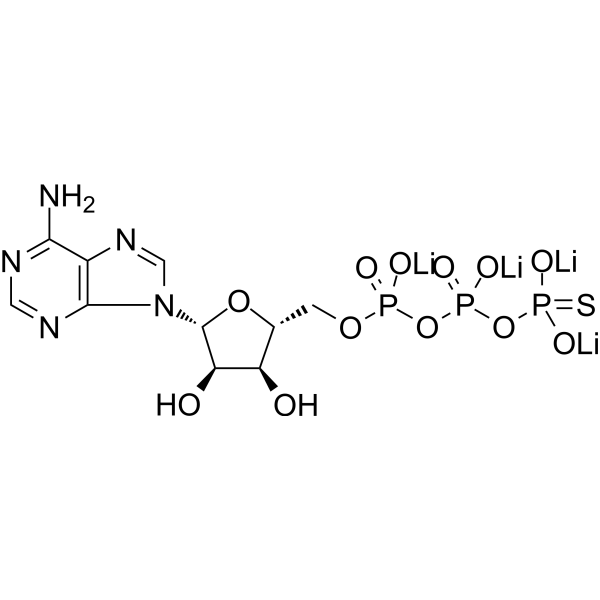
ATPγS tetralithium salt
Based on 1 publication(s) in Google Scholar
ATPγS (tetralithium salt) is a P2Y11 receptor agonist, an antioxidant and a neuroprotective agent. ATPγS (tetralithium salt) can be used as a substrate for the nucleotide hydrolysis and RNA unwinding activities of eukaryotic translation initiation factor eIF4A. ATPγS (tetralithium salt) is active in ATP hydrolysis.
For research use only. We do not sell to patients.
- CAS No.: 93839-89-5
- Formula: C10H12Li4N5O12P3S
- Molecular Weight:546.98
-
Storage:
-20°C, sealed storage, away from moisture
* The compound is unstable in solutions, freshly prepared is recommended.

To place orders, for customer services and technical support, please contact: MedChemExpress USA
Tel: 609-228-6898 E-mail: [email protected] [email protected]


-
 Biological Activity
-
Chemical Information
-
Solvent & Solubility
- Purity & Documentation
- References
-
 Help & FAQs


-

HY-118380
p-Nitrobenzyl mesylateAlkylating Reagent -
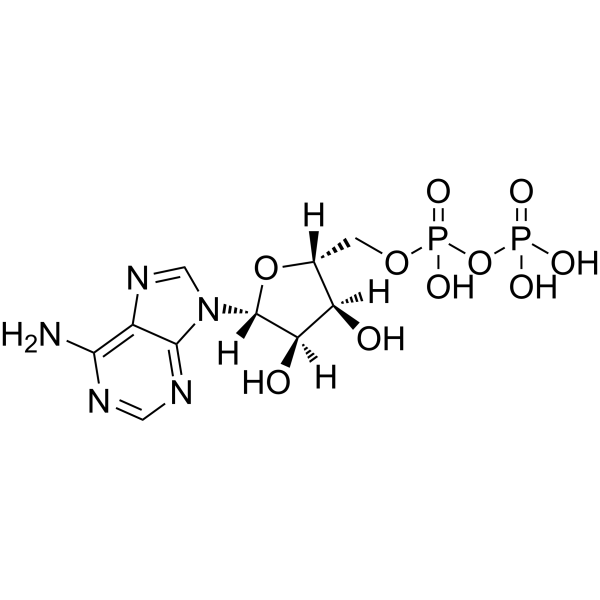
HY-W010918
Adenosine 5'-diphosphate -
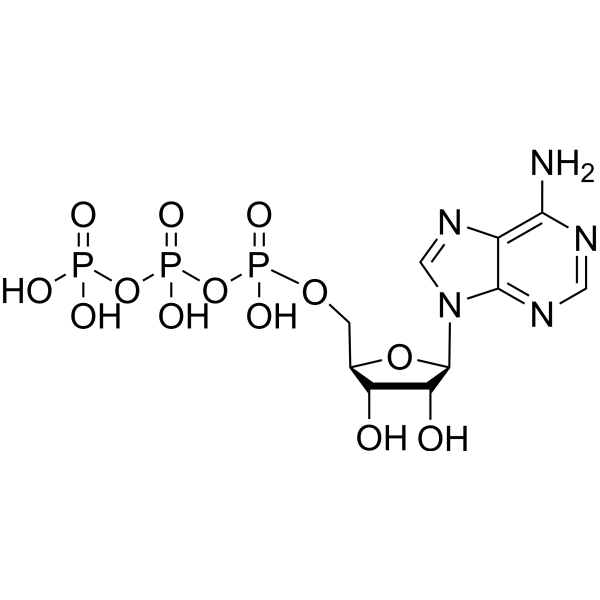
HY-B2176
ATPEndogenous Metabolite -
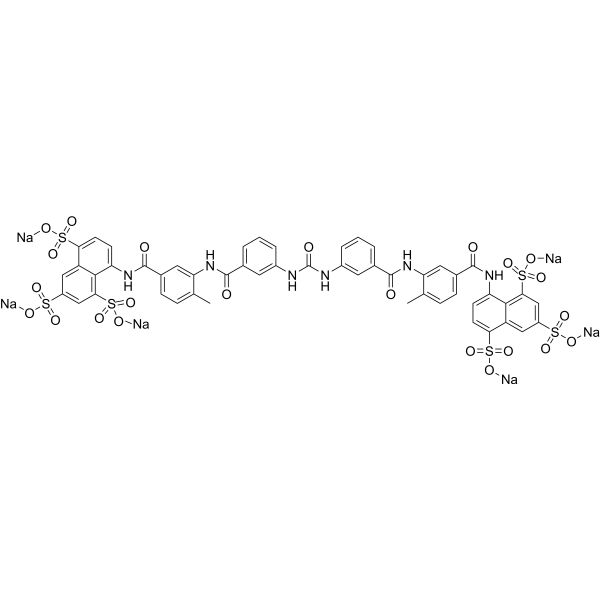
HY-B0879A
Suramin sodium saltPTPases Inhibitor -
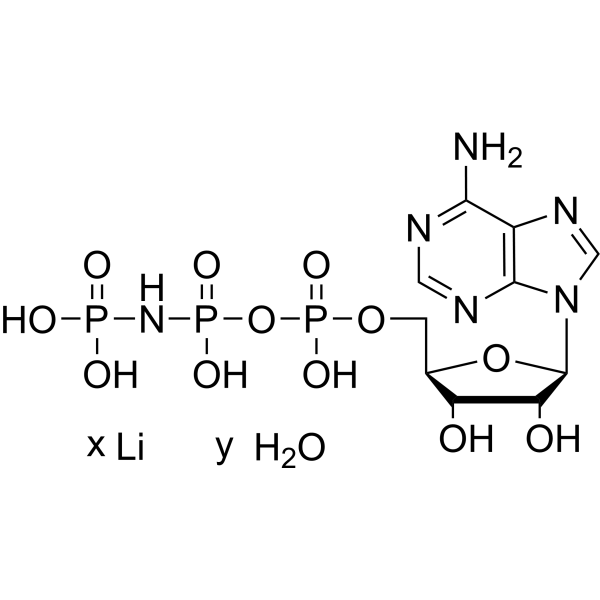
HY-130777A
AMP-PNP lithium hydrateATP Analog -
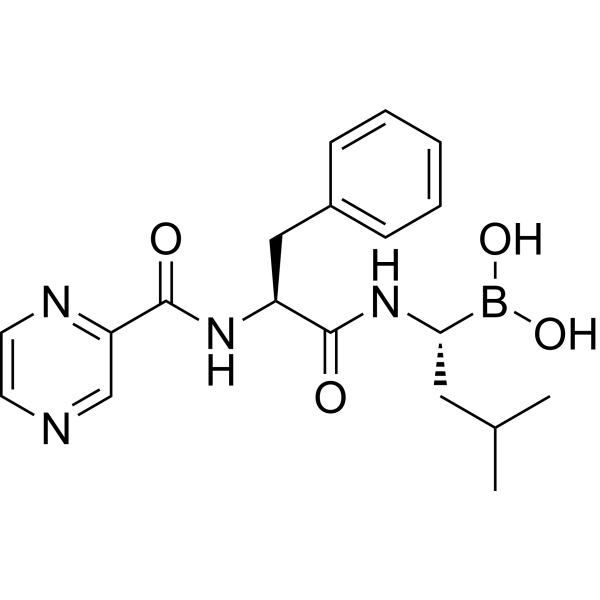
HY-10227
BortezomibProteasome Inhibitor -
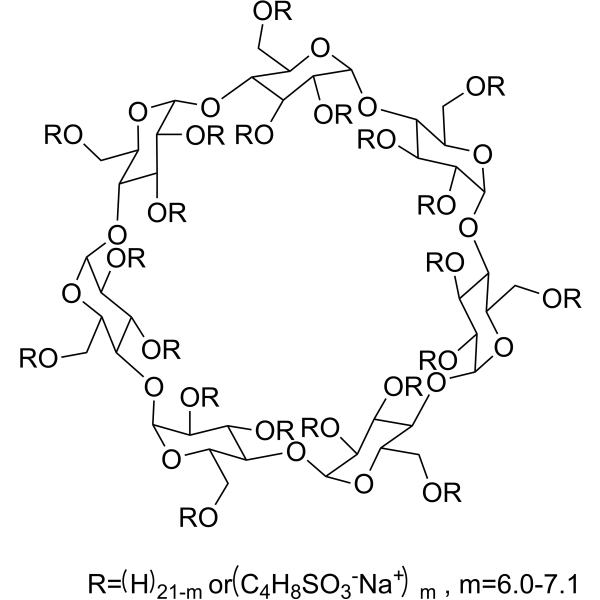
HY-17031
SBE-β-CDExcipient -
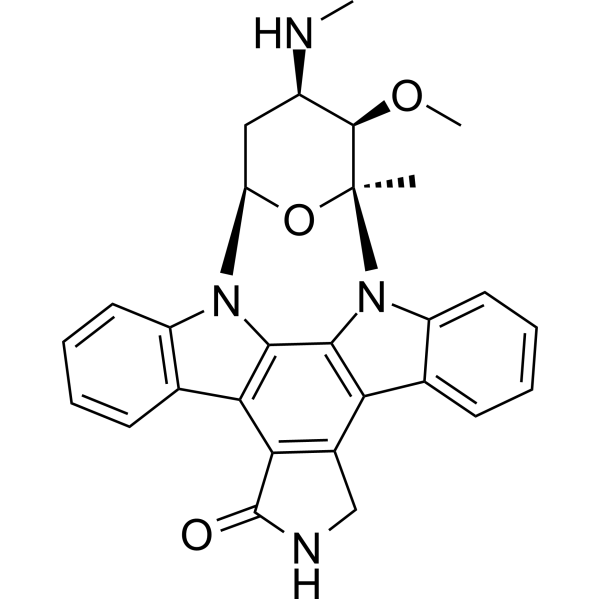
HY-15141
StaurosporinePKC/PKA Inhibitor -
HY-100558
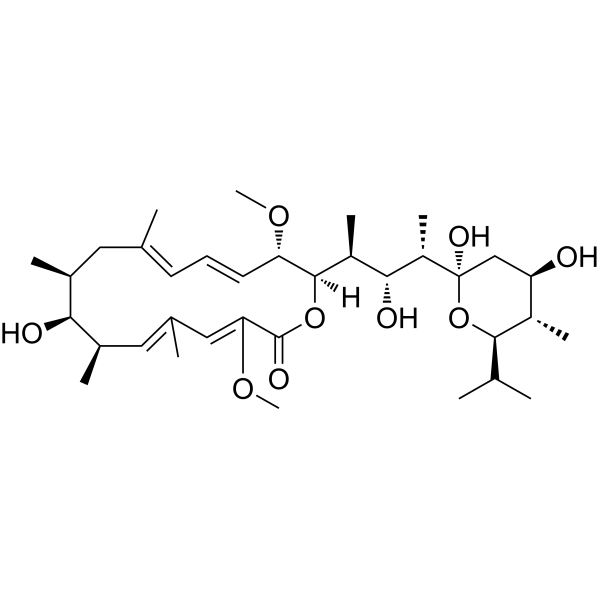
Bafilomycin A1V-ATPase Inhibitor -
HY-10071
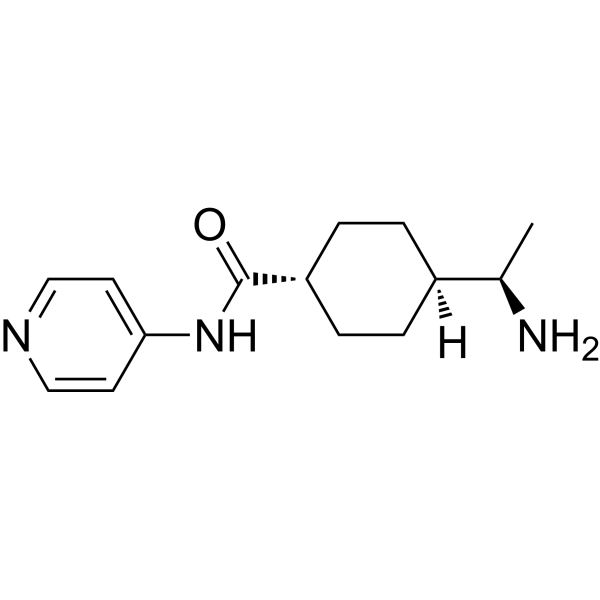
Y-27632ROCK Inhibitor -
HY-B0490
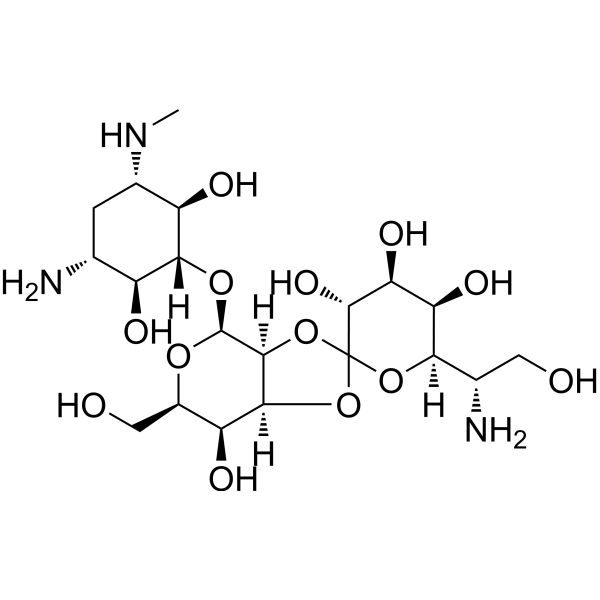
Hygromycin BAntibiotic -
HY-10583
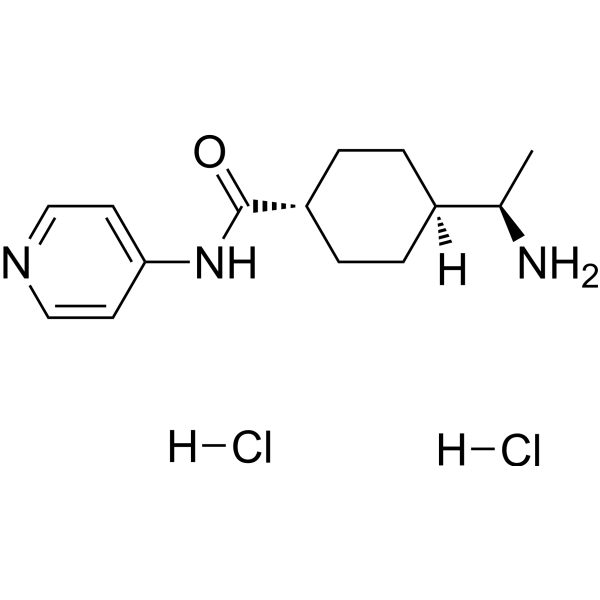
Y-27632 dihydrochlorideROCK Inhibitor
Publications Citing Use of MedChemExpress (MCE) ATPγS tetralithium salt
More Customer Validation & Images

-
WB
-
IF
-
IHC
-
In Vivo Efficacy Study
-
WB
All P2Y Receptor Isoforms
More

Biological Activity
Description
IC50 & Target
|
eIF4 |
In Vitro
ATPγS (tetralithium salt) enhances intrinsic fluorescence and induces aggregation which increases the activity of spinach Rubisco activase[1].
ATPγS (50-100 μM final blood concentration) attenuates inflammatory response with decreased accumulation of cells (48%, P < 0.01) and proteins (57%, P < 0.01) in bronchoalveolar lavage and reduces neutrophil infiltration and extravasation of Evans blue albumin dye into lung tissue[3].
MedChemExpress (MCE) has not independently confirmed the accuracy of these methods. They are for reference only. .
In Vivo
ATPγS results in a dose-dependent effect on EBA extravasation in LPS-treated mice[3].
MedChemExpress (MCE) has not independently confirmed the accuracy of these methods. They are for reference only.


Chemical Information
-
CAS No. 93839-89-5
-
Appearance Solid
-
Molecular Weight 546.98
-
Formula C10H12Li4N5O12P3S
-
Color White to light yellow
-
SMILES
O[C@H]1[C@@H](O[C@H](COP(OP(OP(O[Li])(O[Li])=S)(O[Li])=O)(O[Li])=O)[C@H]1O)N2C3=C(C(N)=NC=N3)N=C2
-
Synonyms
Adenosine-5'-O-3-thiotriphosphate tetralithium salt; Adenosine 5'-[γ-thio]triphosphate tetralithium salt
-
Shipping
Room temperature in continental US; may vary elsewhere.
-
Storage
-20°C, sealed storage, away from moisture
* The compound is unstable in solutions, freshly prepared is recommended.


Publications (1)
-
Journal Impact Factor
-
Most Recent
-
J Adv Res
Mechanosensitive ion channel Piezo1 mediates mechanical ventilation-exacerbated ARDS-associated pulmonary fibrosis. [Abstract]2023 Nov:53:175-186. PMID: 36526145
ATPγS tetralithium salt purchased from MedChemExpress. Usage Cited in: J Adv Res. 2023 Nov:53:175-186. [Abstract]
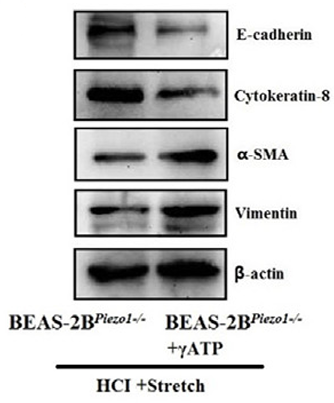
ATPγS tetralithium salt (γ-ATP; 100 μM; 48 h). The expression of E-cadherin, cytokeratin-8, vimentin and α-SMA in BEAS-2B cells was measured by Western blot analysis.
ATPγS tetralithium salt purchased from MedChemExpress. Usage Cited in: J Adv Res. 2023 Nov:53:175-186. [Abstract]
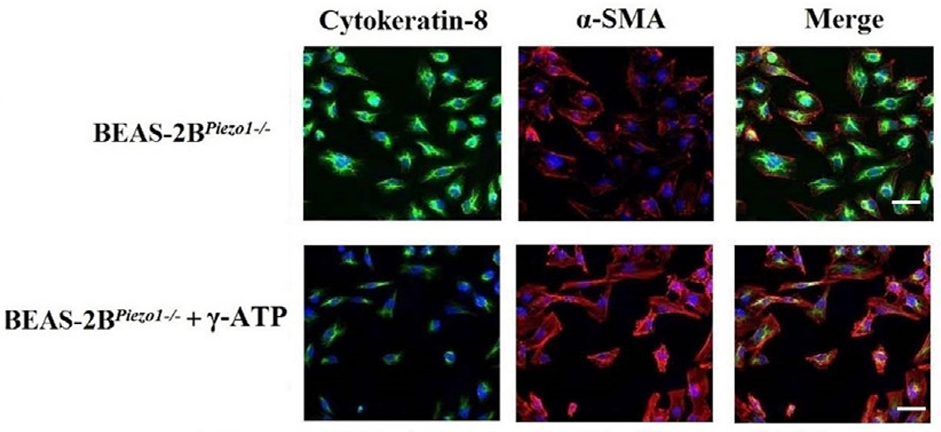
ATPγS tetralithium salt (γ-ATP; 100 μM; 48 h). The expression levels of E-cadherin, cytokeratin-8, vimentin and SMA were confirmed by cell immunostaining.
ATPγS tetralithium salt purchased from MedChemExpress. Usage Cited in: J Adv Res. 2023 Nov:53:175-186. [Abstract]
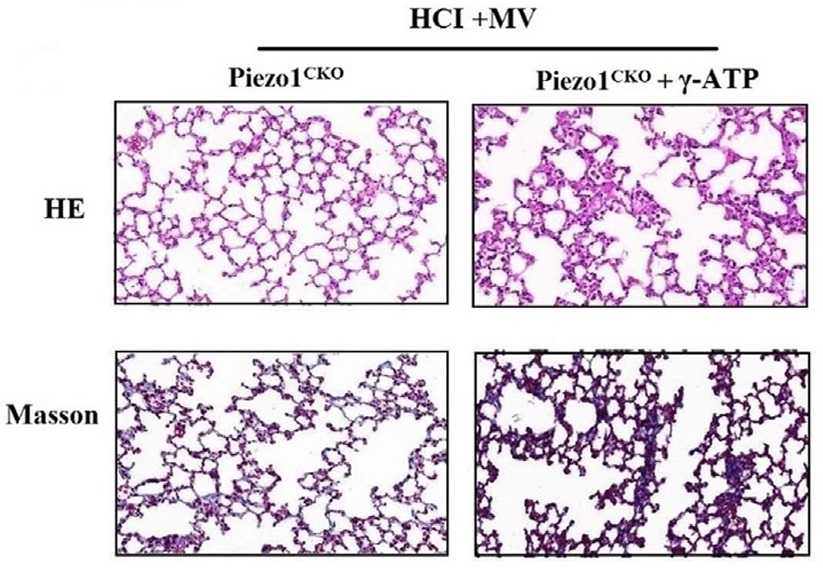
ATPγS tetralithium salt (γ-ATP; 100 μM/mouse; intratracheal instillation). The lung injury score and lung fibrosis score were determined based on lung histological analysis with HE staining and Masson’s trichrome staining.
ATPγS tetralithium salt purchased from MedChemExpress. Usage Cited in: J Adv Res. 2023 Nov:53:175-186. [Abstract]
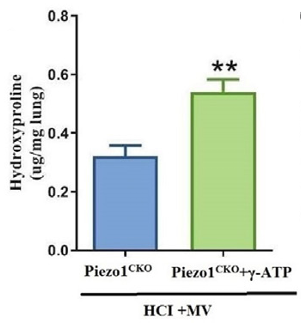
ATPγS tetralithium salt (γ-ATP; 100 μM/mouse; intratracheal instillation). Lung tissue level of hydroxyproline on day 14.
ATPγS tetralithium salt purchased from MedChemExpress. Usage Cited in: J Adv Res. 2023 Nov:53:175-186. [Abstract]
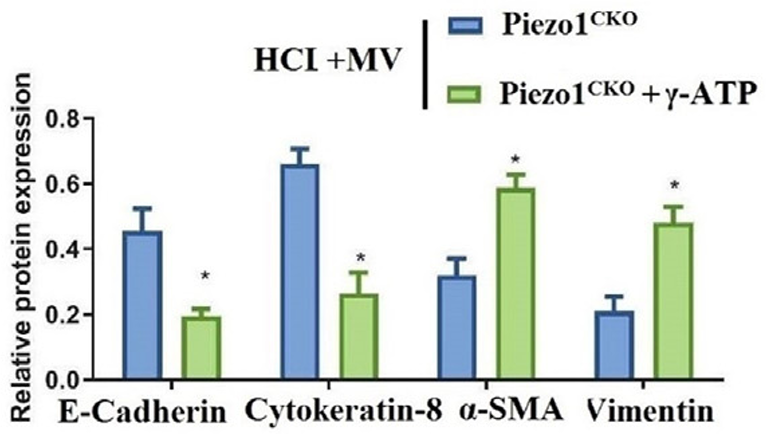
ATPγS tetralithium salt (γ-ATP; 100 μM/mouse; intratracheal instillation). The protein expression of E-cadherin, cytokeratin-8, vimentin and α-SMA was measured by Western blot analysis.


Solvent & Solubility
In Vitro:
DMSO : 100 mg/mL (182.82 mM; Need ultrasonic; Hygroscopic DMSO has a significant impact on the solubility of product, please use newly opened DMSO)
H2O : 75 mg/mL (137.12 mM; Need ultrasonic)
Please refer to the solubility information to select the appropriate solvent. The compound is unstable in solutions, freshly prepared is recommended.
* Note: If you choose water as the stock solution, please dilute it to the working solution, then filter and sterilize it with a 0.22 μm filter before use.
Please refer to the solubility information to select the appropriate solvent. The compound is unstable in solutions, freshly prepared is recommended.
* Note: If you choose water as the stock solution, please dilute it to the working solution, then filter and sterilize it with a 0.22 μm filter before use.
Concentration (start) × Volume (start) = Concentration (final) × Volume (final)
In Vivo:
Select the appropriate dissolution method based on your experimental animal and administration route.
- For the following dissolution methods, please ensure to first prepare a clear stock solution using an In Vitro approach and then sequentially add co-solvents:
- To ensure reliable experimental results, the clarified stock solution can be appropriately stored based on storage conditions. As for the working solution for In Vivo experiments, it is recommended to prepare freshly and use it on the same day.
- The percentages shown for the solvents indicate their volumetric ratio in the final prepared solution. If precipitation or phase separation occurs during preparation, heat and/or sonication can be used to aid dissolution.
Add each solvent one by one: 10% DMSO 40% PEG300 5% Tween-80 45% Saline
Solubility: ≥ 2.5 mg/mL (4.57 mM); Clear solution
This protocol yields a clear solution of ≥ 2.5 mg/mL (saturation unknown).
Taking 1 mL working solution as an example, add 100 μL DMSO stock solution (25.0 mg/mL) to 400 μL PEG300, and mix evenly; then add 50 μL Tween-80 and mix evenly; then add 450 μL Saline to adjust the volume to 1 mL.
Preparation of Saline: Dissolve 0.9 g sodium chloride in ddH₂O and dilute to 100 mL to obtain a clear Saline solution.
Add each solvent one by one: 10% DMSO 90% (20% SBE-β-CD in Saline)
Solubility: ≥ 2.5 mg/mL (4.57 mM); Clear solution
This protocol yields a clear solution of ≥ 2.5 mg/mL (saturation unknown).
Taking 1 mL working solution as an example, add 100 μL DMSO stock solution (25.0 mg/mL) to 900 μL 20% SBE-β-CD in Saline, and mix evenly.
Preparation of 20% SBE-β-CD in Saline (4°C, storage for one week): 2 g SBE-β-CD powder is dissolved in 10 mL Saline, completely dissolve until clear.
In Vivo Dissolution Calculator
Please enter the basic information of animal experiments:
-
-
-
-
Recommended: Prepare an additional quantity of animals to account for potential losses during experiments.
Working solution concentration: 0.22 mg/mL
This product has good water solubility, please refer to the measured solubility data in water/PBS/Saline for details.


Purity & Documentation
-
Data Sheet (277 KB)
-
SDS (394 KB)
- English - EN (394 KB)
- Français - FR (394 KB)
- Deutsch - DE (394 KB)
- Norwegian - NO (394 KB)
- Español - ES (394 KB)
- Swedish - SV (394 KB)
- Italian - IT (394 KB)
- Korean - KR (394 KB)
- Portuguese - PT (394 KB)
-
Handling Instructions (2659 KB)
References
[1]. Matthew L Peck, et al. Adenosine 5'-O-(3-thio)triphosphate (ATPgammaS) is a substrate for the nucleotide hydrolysis and RNA unwinding activities of eukaryotic translation initiation factor eIF4A. RNA. 2003 Oct;9(10):1180-7. [Content Brief]
[2]. Z Y Wang, et al. Mg2+ and ATP or adenosine 5'-[gamma-thio]-triphosphate (ATP gamma S) enhances intrinsic fluorescence and induces aggregation which increases the activity of spinach Rubisco activase. Biochim Biophys Acta. 1993 Sep 3;1202(1):47-55. [Content Brief]
[3]. Irina A Kolosova, et al. Protective effect of purinergic agonist ATPgammaS against acute lung injury. Am J Physiol Lung Cell Mol Physiol. 2008 Feb;294(2):L319-24. [Content Brief]
[4]. Ortal Danino, et al. ATP-γ-S-(α,β-CH2) protects against oxidative stress and amyloid beta toxicity in neuronal culture. Biochem Biophys Res Commun. 2015 May 1;460(2):446-50. [Content Brief]
[5]. J W Lee, et al. Inhibition of recA protein promoted ATP hydrolysis. 1. ATP gamma S and ADP are antagonistic inhibitors. Biochemistry. 1990 Aug 21;29(33):7666-76. [Content Brief]


Complete Stock Solution Preparation Table
Please refer to the solubility information to select the appropriate solvent. The compound is unstable in solutions, freshly prepared is recommended.
| Optional Solvent | Concentration Solvent Mass | 1 mg | 5 mg | 10 mg | 25 mg |
|---|---|---|---|---|---|
| H2O / DMSO | 1 mM | 1.8282 mL | 9.1411 mL | 18.2822 mL | 45.7055 mL |
| 5 mM | 0.3656 mL | 1.8282 mL | 3.6564 mL | 9.1411 mL | |
| 10 mM | 0.1828 mL | 0.9141 mL | 1.8282 mL | 4.5706 mL | |
| 15 mM | 0.1219 mL | 0.6094 mL | 1.2188 mL | 3.0470 mL | |
| 20 mM | 0.0914 mL | 0.4571 mL | 0.9141 mL | 2.2853 mL | |
| 25 mM | 0.0731 mL | 0.3656 mL | 0.7313 mL | 1.8282 mL | |
| 30 mM | 0.0609 mL | 0.3047 mL | 0.6094 mL | 1.5235 mL | |
| 40 mM | 0.0457 mL | 0.2285 mL | 0.4571 mL | 1.1426 mL | |
| 50 mM | 0.0366 mL | 0.1828 mL | 0.3656 mL | 0.9141 mL | |
| 60 mM | 0.0305 mL | 0.1524 mL | 0.3047 mL | 0.7618 mL | |
| 80 mM | 0.0229 mL | 0.1143 mL | 0.2285 mL | 0.5713 mL | |
| 100 mM | 0.0183 mL | 0.0914 mL | 0.1828 mL | 0.4571 mL |
* Note: If you choose water as the stock solution, please dilute it to the working solution, then filter and sterilize it with a 0.22 μm filter before use.


ATPγS tetralithium salt Related Classifications
HY-108666 Related Classifications
 Powered by Bioz