
1. Search Result
Search Result
Pathways Recommended: Stem Cell/Wnt Cell Cycle/DNA Damage
Results for "

Caco-2 intestinal cells

" in MedChemExpress (MCE) Product Catalog:

29

Inhibitors & Agonists

2

Fluorescent Dyes

2

Biochemical Assay Reagents

3

Peptides

6

Natural
Products

1

Isotope-Labeled Compounds

1

GMP Molecules

Cat. No. Product Name Target Research Areas Chemical Structure
  • HY-W011053

    Taste Receptor Apoptosis Drug Derivative Metabolic Disease
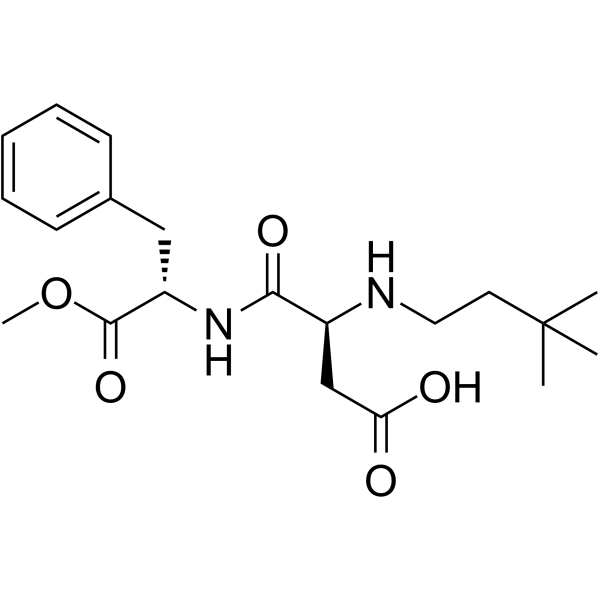
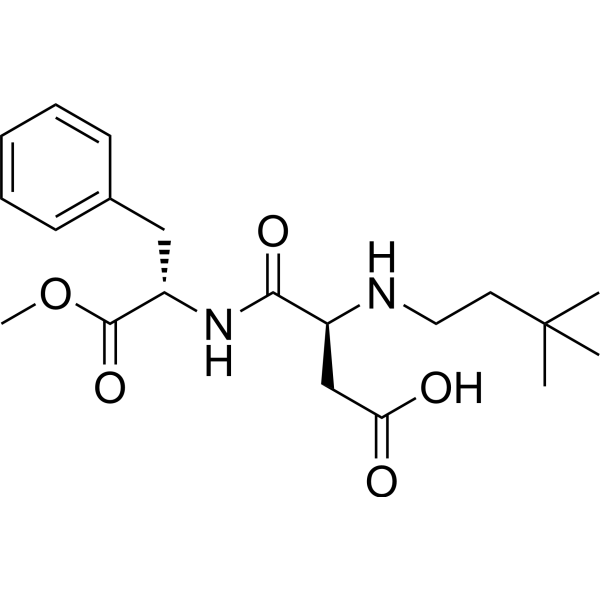
    Neotame is a derivative of Aspartame (HY-B0361) and is a flavor enhancer and low-caloric, non-nutritive, high-intensity artificial sweetener that is 7000-13,000 times sweeter than sugar. Neotame causes intestinal epithelial cell death at high concentrations. Neotame induces Apoptosis of Caco-2 cells .
    Neotame
  • HY-W127512
    5β-Cholanic acid
    1 Publications Verification

    Drug Intermediate Others
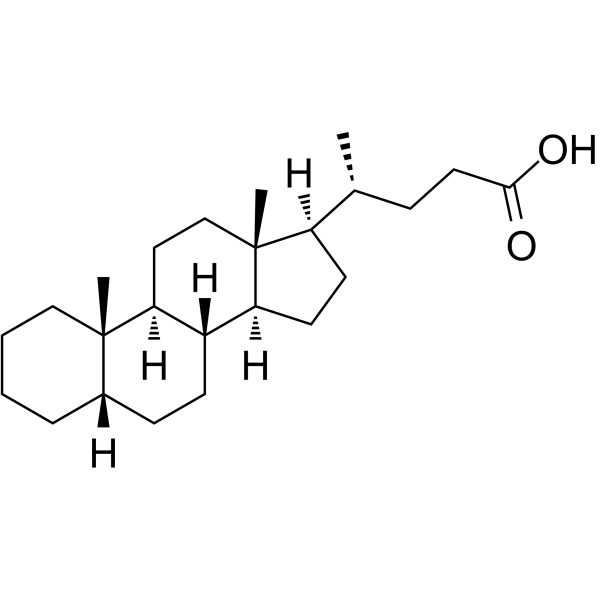
    5β-Cholanic acid is a hydrophobic modifier used to modify polymer carriers. 5β-Cholanic acid can improve the acid stability, cell penetration efficiency and drug sustained release ability of nanocarriers, and optimize the oral effectiveness of delivered molecules. 5β-Cholanic acid can covalently bind to Glycol chitosan (GC) to form a GC-CA conjugate, which optimizes the hydrophobic anchoring ability of nanoparticles and enables them to be stably adsorbed on the surface of PLGA nanoparticles. Such nanoparticles can resist dissociation in the gastric acid environment and maintain positive charge to enhance endocytic uptake by intestinal epithelial cells (such as Caco-2 cells). 5β-Cholanic acid can be used in the development of drug delivery systems .
    5β-Cholanic acid
  • HY-W009141

    Glyceryl palmitate

    P-glycoprotein IAP PI3K Akt Caspase Apoptosis Cancer
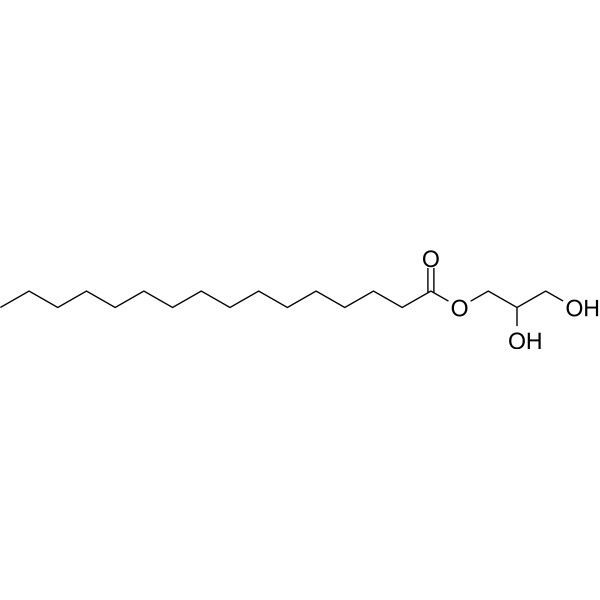
    1-Monopalmitin (Glyceryl palmitate) is an activator of the PI3K/Akt pathway and an inhibitor of P-glycoprotein (P-gp). 1-Monopalmitin can induce G2/M arrest and caspase-dependent apoptosis in cancer cells, while inhibiting IAPs protein expression. 1-Monopalmitin can increase drug accumulation by inhibiting P-gp activity in intestinal Caco-2 cells. 1-Monopalmitin has the ability to induce protective autophagy and apoptosis of lung cancer cells (IC50=50-58 μg/mL), with low toxicity to normal cells .
    1-Monopalmitin
  • HY-B0327
    Irsogladine
    3 Publications Verification

    Dicloguamine

    Phosphodiesterase (PDE) NF-κB AP-1 TRP Channel Interleukin Related Inflammation/Immunology Cancer
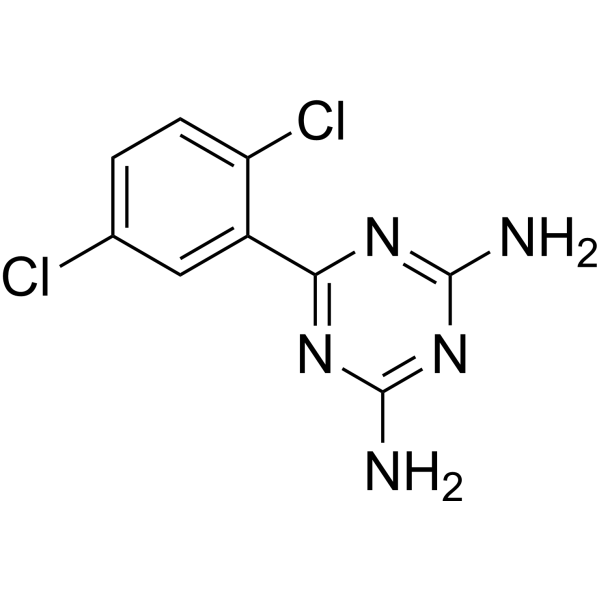
    Irsogladine (Dicloguamine) is an orally active gastric mucosal protective agent. Irsogladine inhibits breast cancer recurrence and lung metastasis in nude mice . Irsogladine inhibits the transcriptional activities of NF-κB and AP-1, suppresses the activities of PDE and PDE4 to elevate intracellular cAMP levels, and activates TRPV1 and KATP channels. Irsogladine enhances iNOS expression, NO production, and the activation of cAMP-responsive elements. Irsogladine inhibits the development and progression of intestinal polyps in Apc-mutant mice. Irsogladine alleviates oxidative stress, increases gastric mucosal blood flow, and stimulates the production of endogenous prostaglandins. Irsogladine promotes insulin secretion in MIN6 cells. Irsogladine inhibits tumor angiogenesis, cancer cell proliferation, and the production of proinflammatory cytokines. Irsogladine exerts protective effects on astrocytes in ethanol/hydrochloric acid-induced gastric ulcers in mice. Irsogladine prevents colitis in IL-10 gene-deficient mice by reducing the production of IL-12 and IL-23. Irsogladine upregulates gap junction intercellular communication in pancreatic cancer cells via the PKA pathway. Irsogladine is applicable to research related to breast cancer, intestinal polyposis, gastric ulcer, spontaneous colitis, glioma, liver cancer, and pancreatic cancer [5][6] .
    Irsogladine
  • HY-B1264
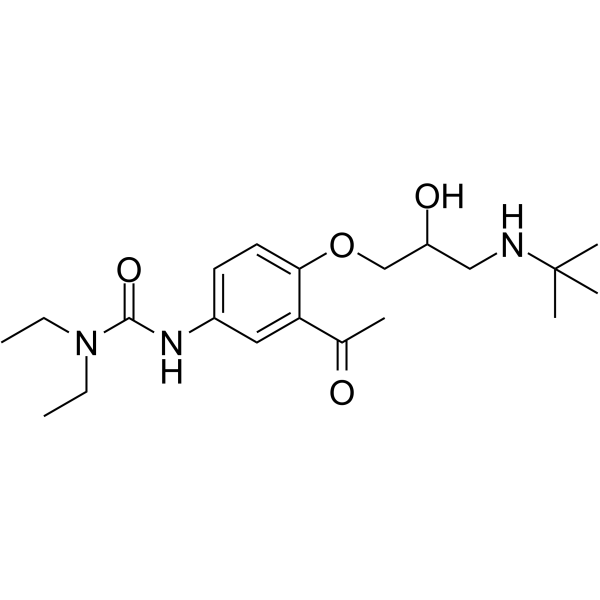
    Celiprolol hydrochloride
    1 Publications Verification

    NO Synthase Adrenergic Receptor Cardiovascular Disease
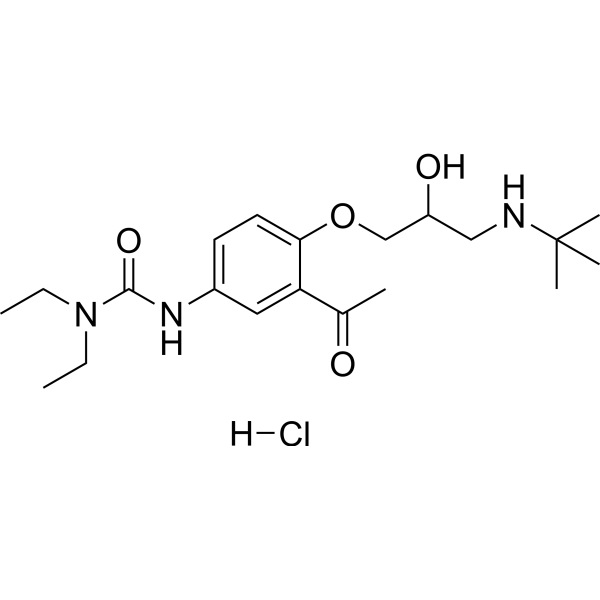
    Celiprolol (REV 5320) is a potent, cardioselective and orally active β1-andrenoceptor r antagonist with partial β2 agonist activity, with Ki values of 0.14-8.3 μM. Celiprolol has antihypertensive and antianginal activity, and can be used for the research of cardiovascular disease such as high blood pressure .
    Celiprolol hydrochloride
  • HY-138068

    Endogenous Metabolite Metabolic Disease
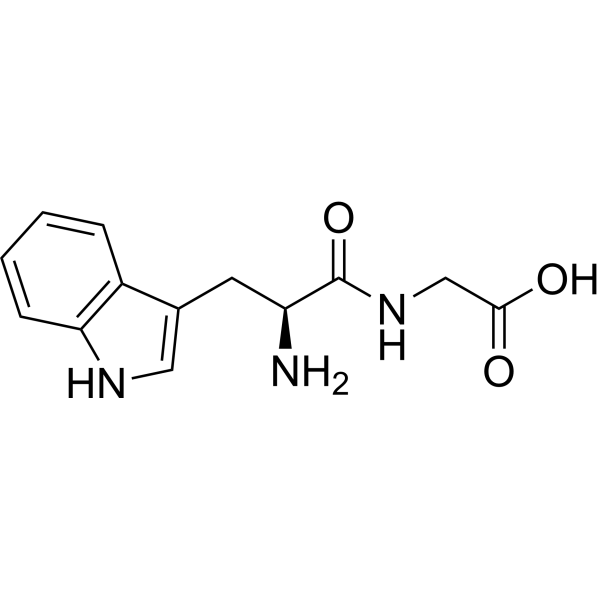
    L-Tryptophanylglycine is a dipeptide. L-Tryptophanylglycine exerts its function through competitive substrate interaction with intestinal dipeptide transporters .
    L-Tryptophanylglycine
  • HY-P3302

    Bacterial Infection
    Sialylglycopeptide is an orally active glycopeptide found in egg yolk. Sialylglycopeptide inhibits the binding of Salmonella enteritidis and Escherichia coli to intestinal cells, and protects mice from Salmonella infection. Sialylglycopeptide can be used in the research of Salmonella infection .
    Sialylglycopeptide
  • HY-148447

    Eukaryotic Initiation Factor (eIF) Cancer
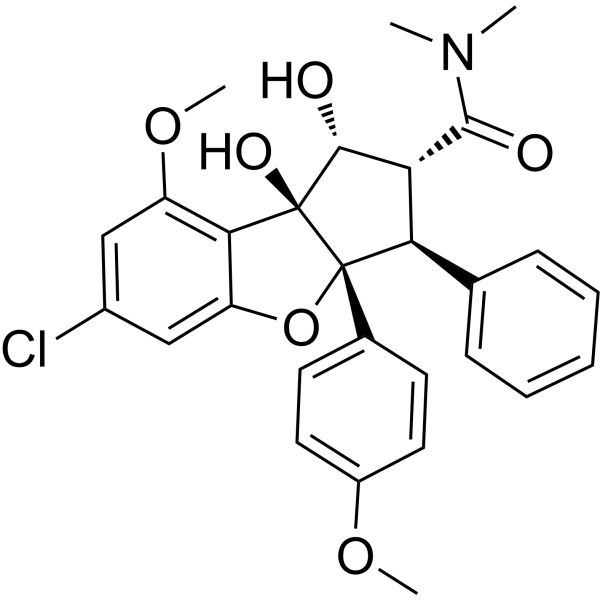
    eIF4A-IN-3, Silvestrol (HY-13251) analogue, is an eIF4A inhibitor. eIF4A-IN-3 blocks protein translation initiation by interfering with eIF4F complex assembly, preferentially inhibiting translation of mRNAs with long, highly structured 5'-untranslated regions. eIF4A-IN-3 inhibits proliferation of human breast cancer cells. eIF4A-IN-3 has moderate apical to basolateral permeability in intestinal cell monolayers and a low efflux ratio .
    eIF4A-IN-3
  • HY-170522

    HIF/HIF Prolyl-Hydroxylase Inflammation/Immunology
    ISM012-042 is an orally active PHD1 and PHD2 inhibitor with IC50 values of 1.9 and 2.5 nM, respectively. ISM012-042 (2.5 μM) can protect Caco-2 cells from DSS-induced barrier disruption. In lipopolysaccharide (LPS)-induced mouse bone marrow-derived dendritic cells (BMDC), ISM012-042 has anti-inflammatory effects and can dose-dependently reduce the expression of IL-12 subunit IL-12p35 and TNF. ISM012-042 restores intestinal barrier function and alleviates intestinal inflammation in various experimental colitis models. ISM012-042 can be used for intestinal mucosal repair and research into immune diseases .
    ISM012-042
  • HY-126584

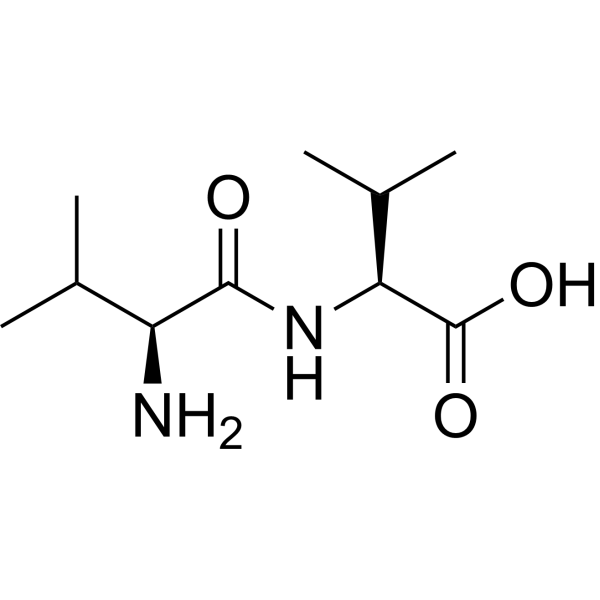
    Val-Val

    Drug Intermediate Oligopeptide Cotransporter Others
    H-Val-Val-OH (Val-Val) is a stereochemistry-dependent substrate and inhibitor of apical oligopeptide transporters. H-Val-Val-OH undergoes apical intracellular accumulation in human intestinal cells via carrier-mediated transport, and inhibits the uptake of Cephalexin (HY-B0200) through interaction with transporters. Substitution of L-valine with D-valine in H-Val-Val-OH abolishes its binding ability to apical oligopeptide transporters .
    H-Val-Val-OH
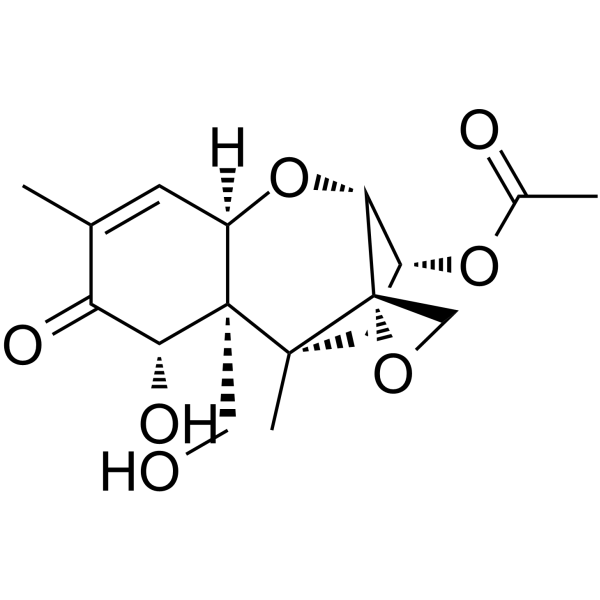
  • HY-N6685

    3-AcDON; 3-ADON

    Endogenous Metabolite Interleukin Related Infection Inflammation/Immunology
    3-Acetyldeoxynivalenol (3-AcDON; 3ADON), a trichothecene mycotoxin deoxynivalenol (DON) acetylated derivative, is a brain-penetrant Fusarium mycotoxin. 3-Acetyldeoxynivalenol induces mRNA expression and production of inflammatory chemokine IL-8 in intestinal cells .
    3-Acetyldeoxynivalenol
  • HY-W011053GL

    Taste Receptor Apoptosis Drug Derivative Metabolic Disease
    Neotame (GMP Like) is the GMP Like class Neotame (HY-W011053) that can be used as pharmaceutical excipients. Neotame is a derivative of Aspartame (HY-B0361) and is a flavor enhancer and low-caloric, non-nutritive, high-intensity artificial sweetener that is 7000-13,000 times sweeter than sugar. Neotame causes intestinal epithelial cell death at high concentrations. Neotame induces Apoptosis of Caco-2 cells .
    Neotame (GMP Like)
  • HY-119873

    REV 5320

    NO Synthase Adrenergic Receptor Cardiovascular Disease
    Celiprolol (REV 5320) is a potent, cardioselective and orally active β1-andrenoceptor r antagonist with partial β2 agonist activity, with Ki values of 0.14-8.3 μM. Celiprolol has antihypertensive and antianginal activity, and can be used for the research of cardiovascular disease such as high blood pressure .
    Celiprolol
  • HY-W011053R

    Apoptosis Drug Derivative Reference Standards Metabolic Disease
    Neotame (Standard) is the analytical standard of Neotame (HY-W011053). This product is intended for research and analytical applications. Neotame is a derivative of Aspartame (HY-B0361) and is a flavor enhancer and low-caloric, non-nutritive, high-intensity artificial sweetener that is 7000-13,000 times sweeter than sugar. Neotame causes intestinal epithelial cell death at high concentrations. Neotame induces Apoptosis of Caco-2 cells .
    Neotame (Standard)
  • HY-W010162R

    L-Alanyl-L-alanine (Standard); Ala-Ala (Standard)

    Amino Acid Derivatives Reference Standards Others
    H-Ala-Ala-OH (L-Alanyl-L-alanine; Ala-Ala) (Standard) is the analytical standard of H-Ala-Ala-OH (L-Alanyl-L-alanine; Ala-Ala). This product is intended for research and analytical applications. H-Ala-Ala-OH (L-Alanyl-L-alanine; Ala-Ala) is a nonpolar dipeptide that is absorbed by human intestinal Caco-2 cells. The transport of alanine (Ala), like proton/amino acid symport, can lead to cytoplasmic acidification .
    H-Ala-Ala-OH (Standard)
  • HY-W009141R

    Glyceryl palmitate (Standard)

    Reference Standards Apoptosis P-glycoprotein PI3K IAP Caspase Akt Cancer
    1-Monopalmitin (Glyceryl palmitate) (Standard) is the analytical standard of 1-Monopalmitin (HY-W009141). This product is intended for research and analytical applications. 1-Monopalmitin (Glyceryl palmitate) is an activator of the PI3K/Akt pathway and an inhibitor of P-glycoprotein (P-gp). 1-Monopalmitin can induce G2/M arrest and caspase-dependent apoptosis in cancer cells, while inhibiting IAPs protein expression. 1-Monopalmitin can increase drug accumulation by inhibiting P-gp activity in intestinal Caco-2 cells. 1-Monopalmitin has the ability to induce protective autophagy and apoptosis of lung cancer cells (IC50=50-58 μg/mL), with low toxicity to normal cells .
    1-Monopalmitin (Standard)
  • HY-B1264R

    Reference Standards NO Synthase Adrenergic Receptor Cardiovascular Disease
    Celiprolol (hydrochloride) (Standard) is the analytical standard of Celiprolol (hydrochloride). This product is intended for research and analytical applications. Celiprolol (REV 5320) is a potent, cardioselective and orally active β1-andrenoceptor r antagonist with partial β2 agonist activity, with Ki values of 0.14-8.3 μM. Celiprolol has antihypertensive and antianginal activity, and can be used for the research of cardiovascular disease such as high blood pressure .
    Celiprolol hydrochloride (Standard)
  • HY-W127512R

    Drug Intermediate Reference Standards Others
    5β-Cholanic acid is a hydrophobic modifier used to modify polymer carriers. 5β-Cholanic acid can improve the acid stability, cell penetration efficiency and drug sustained release ability of nanocarriers, and optimize the oral effectiveness of delivered molecules. 5β-Cholanic acid can covalently bind to Glycol chitosan (GC) to form a GC-CA conjugate, which optimizes the hydrophobic anchoring ability of nanoparticles and enables them to be stably adsorbed on the surface of PLGA nanoparticles. Such nanoparticles can resist dissociation in the gastric acid environment and maintain positive charge to enhance endocytic uptake by intestinal epithelial cells (such as Caco-2 cells). 5β-Cholanic acid can be used in the development of drug delivery systems .
    5β-Cholanic acid (Standard)
  • HY-W009141S

    Glyceryl palmitate-d31

    Isotope-Labeled Compounds P-glycoprotein PI3K Apoptosis Caspase IAP Akt Cancer
    1-Monopalmitin-d31 (Glyceryl palmitate-d31) is the deuterium labeled 1-Monopalmitin (HY-W009141). 1-Monopalmitin (Glyceryl palmitate) is an activator of the PI3K/Akt pathway and an inhibitor of P-glycoprotein (P-gp). 1-Monopalmitin can induce G2/M arrest and caspase-dependent apoptosis in cancer cells, while inhibiting IAPs protein expression. 1-Monopalmitin can increase drug accumulation by inhibiting P-gp activity in intestinal Caco-2 cells. 1-Monopalmitin has the ability to induce protective autophagy and apoptosis of lung cancer cells (IC50=50-58 μg/mL), with low toxicity to normal cells .
    1-Monopalmitin-d31
  • HY-P11740

    Angiotensin-converting Enzyme (ACE) Drug Intermediate Others
    VYPFPGPIHN is a precursor peptide of β-casomorphin (HY-P0179) and also an ACE inhibitor (IC50 = 123 μM). VYPFPGPIHN resists hydrolysis by peptidases associated with intestinal cell monolayers, maintaining structural integrity and ACE inhibitory activity. VYPFPGPIHN is not extensively taken up or transported by differentiated intestinal cell monolayers .
    VYPFPGPIHN
  • HY-W344531

    Drug Metabolite Inflammation/Immunology
    Indomethacin glucuronide is a glucuronide metabolite of Indomethacin (HY-14397) .
    Indomethacin glucuronide
  • HY-N18952

    Interleukin Related Inflammation/Immunology
    Heparin disaccharide II-S trisodium (Compound HSH-9) is a heparin-derived disaccharide. Heparin disaccharide II-S trisodium inhibits the spontaneous secretion of proinflammatory mediators IL-8 and IL-1β in intestinal epithelial cells at the post-transcriptional stage .
    Heparin disaccharide II-S trisodium
  • HY-N18954

    Interleukin Related Inflammation/Immunology
    Heparin disaccharide III-S trisodium (Compound SHH-7) is a heparin-derived disaccharide. Heparin disaccharide III-S trisodium acts as an inhibitor of spontaneous IL-8 and IL-1β secretion by intestinal epithelial cells. Heparin disaccharide III-S trisodium functions at the post-translational stage and does not reduce mRNA or intracellular mediator levels .
    Heparin disaccharide III-S trisodium
  • HY-N18953

    Interleukin Related Inflammation/Immunology
    Heparin disaccharide I-H trisodium (Compound SHS-5) is a heparin-derived disaccharide. Heparin disaccharide I-H trisodium blocks the spontaneous secretion of IL-8 and IL-1β in intestinal epithelial cells at the post-translational stage without reducing mRNA expression levels or intracellular contents. Heparin disaccharide I-H trisodium exhibits dose-dependent anti-inflammatory activity in intestinal epithelial cell models .
    Heparin disaccharide I-H trisodium
  • HY-D3210

    Fluorescent Dye Inflammation/Immunology
    DCM-KPV is a fluorescent probe targeting the human intestinal oligopeptide transporter PEPT1/SLC15A1 receptor (λex=480 nm, λem=620-670 nm). DCM-KPV specifically binds to PepT1 via its KPV domain and mediates receptor-targeted internalization, thus effectively accumulating in the cytoplasm and nucleus of cells overexpressing this receptor. DCM-KPV has the advantages of long emission wavelength, high emission efficiency, low photobleaching, and negligible cytotoxicity. DCM-KPV maintains stable fluorescence intensity under continuous illumination, exhibiting extremely high live cell compatibility. DCM-KPV can specifically accumulate at colonic inflammatory sites through the intestinal mucosa, enabling direct non-invasive visual differentiation between chronic and acute ulcerative colitis groups and the normal group .
    DCM-KPV
  • HY-183726

    Bacterial Ser/Thr Kinase Infection
    PknB-IN-3 is a Mycobacterium tuberculosis Protein kinase B (PknB) inhibitor with an IC50 of 0.06 μM. PknB-IN-3 inhibits growth of Mycobacterium tuberculosis and can be used for the research of tuberculosis .
    PknB-IN-3
  • HY-181487

    FAK Inflammation/Immunology
    FAK activator-1 is a FAK activator and mucosal healing inducer.FAK activator-1 increases FAK phosphorylation at Tyr-397, promoting FAK activation.FAK activator-1 promotes mucosal healing.FAK activator-1 can be used for the research of nsaid-associated gastrointestinal mucosal injury .
    FAK activator-1
  • HY-183370

    JAK STAT Interleukin Related Inflammation/Immunology
    JAK2/STAT3-IN-2 is an orally active JAK2/STAT3 inhibitor. JAK2/STAT3-IN-2 inhibits the phosphorylation of tyrosine residues in JAK2 and STAT3, blocks downstream signal transduction, disrupts the dimerization and nuclear translocation of STAT3, and suppresses pro-inflammatory transcriptional activity. JAK2/STAT3-IN-2 inhibits the expression of IL-17A and IL-17F, reduces immune cell infiltration, and inhibits the production of NO simultaneously. JAK2/STAT3-IN-2 exerts a protective effect in a mouse model of ulcerative colitis induced by DSS (HY-116282C). JAK2/STAT3-IN-2 can be used for the research of ulcerative colitis .
    JAK2/STAT3-IN-2
  • HY-182038

    VD/VDR TGF-beta/Smad Collagen Hippo (MST) Metabolic Disease
    TGF-β1/Smad3-IN-2 is an orally active antifibrotic agent. TGF-β1/Smad3-IN-2 has high affinity for VDR and can inhibit the TGFβ/SMAD3 signaling pathway. TGF-β1/Smad3-IN-2 inhibits hepatic stellate cell activation, reduces extracellular matrix deposition, and alleviates liver fibrosis in a bile duct ligation mouse model. TGF-β1/Smad3-IN-2 can be used for the research of liver fibrosis .
    TGF-β1/Smad3-IN-2

Inquiry Online

Your information is safe with us. * Required Fields.

Salutation


Country or Region *

Applicant Name *


Organization Name *

Department *


Email Address *


Product Name *

Cat. No.


Requested quantity *

Phone Number *


Remarks

Inquiry Online

Inquiry Information

Product Name:
Cat. No.:
Quantity:
MCE Japan Authorized Agent:

