Search Result
Results for "
DHFR+Inhibitors
" in MedChemExpress (MCE) Product Catalog:
8
Isotope-Labeled Compounds
| Cat. No. |
Product Name |
Target |
Research Areas |
Chemical Structure |
-
- HY-18062
-
Pyrimethamine
Maximum Cited Publications
13 Publications Verification
Pirimecidan; Pirimetamin; RP 4753
|
Antifolate
Parasite
|
Infection
Cancer
|
|
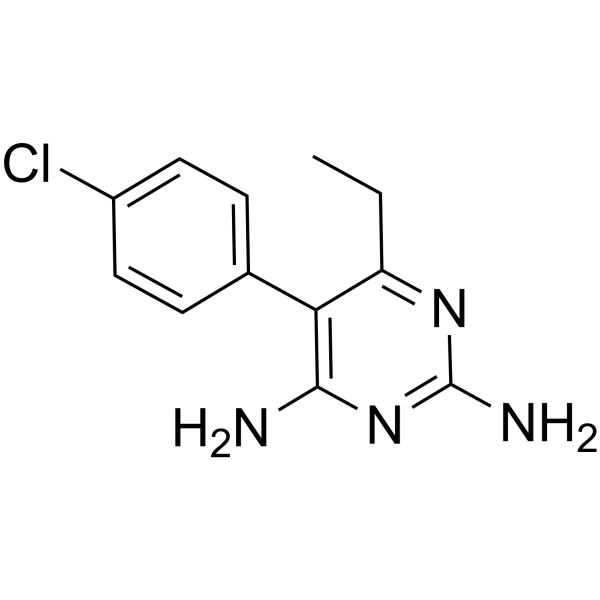
Pyrimethamine (Pirimecidan) is a potent, orally active dihydrofolate reductase (DHFR) inhibitor. Pyrimethamine is an antimalarial agent. Pyrimethamine affects the nucleoprotein metabolism of malarial parasites by interference in the folic–folinic acid systems and affects cell division by inhibiting the conversion of dihydrofolate to tetrahydrofolate .
|
-
-
- HY-10446
-
|
|
Antifolate
Apoptosis
|
Cancer
|
|
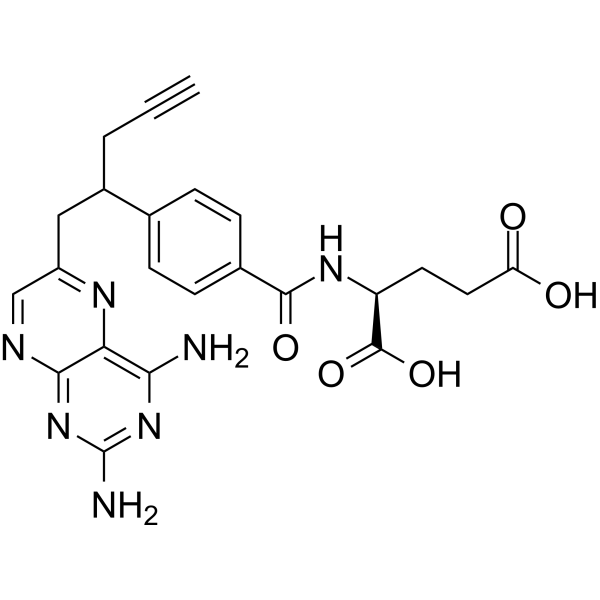
Pralatrexate is an antifolate and is a potent dihydrofolate reductasean (DHFR) inhibitor with a Ki of 13.4 pM. Pralatrexate is a substrate for folylpolyglutamate synthetase with improved cellular uptake and retention. Pralatrexate has antitumor activities and has the potential for relapsed/refractory T-cell lymphoma treatment . Pralatrexate is a click chemistry reagent, it contains an Alkyne group and can undergo copper-catalyzed azide-alkyne cycloaddition (CuAAc) with molecules containing Azide groups.
|
-
-
- HY-10373
-
|
CI-898
|
Dihydrofolate reductase (DHFR)
Antibiotic
Antifolate
Parasite
Bacterial
DNA/RNA Synthesis
|
Infection
Cancer
|
|
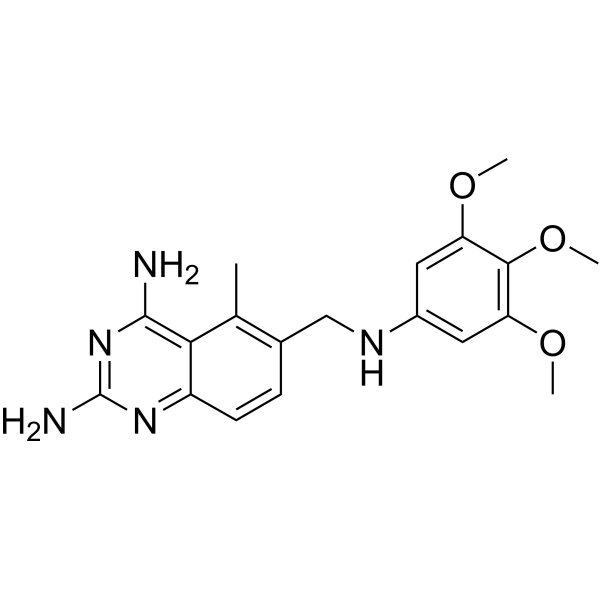
Trimetrexate (CI-898) is an antibiotic, also a potent and orally active dihydrofolate reductase (DHFR) inhibitor, reducing the production of DNA and RNA precursors and leading to cell death, with IC50 values of 4.74 nM and 1.35 nM for human DHFR and Toxoplasma gondii DHFR. Trimetrexate can also inhibit the growth of various cancer cells. Trimetrexate can be used for researching Pneumocystis carinii pneumonia (PCP) and cancer .
|
-
-
- HY-B0806
-
|
|
Parasite
Antifolate
|
Infection
|
|
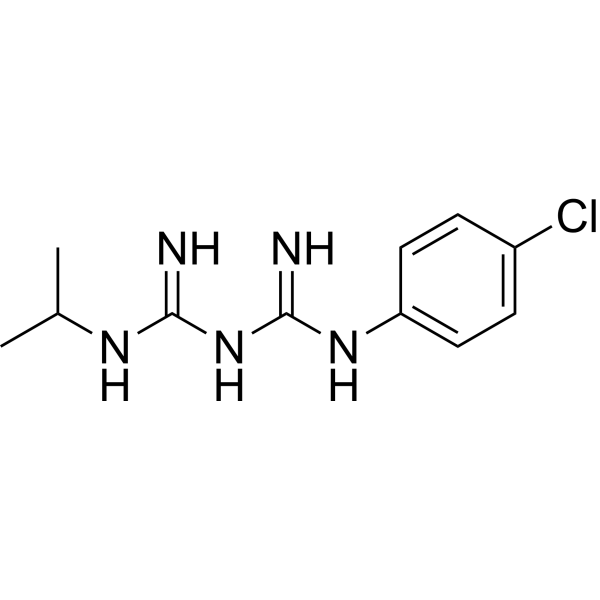
Proguanil, an antimalarial proagent, is metabolized to the active metabolite Cycloguanil (HY-12784). Proguanil is a dihydrofolate reductase (DHFR) inhibitor .
|
-
-
- HY-116387
-
WR99210
4 Publications Verification
BRL 6231 free base
|
Dihydrofolate reductase (DHFR)
Parasite
|
Infection
|
|
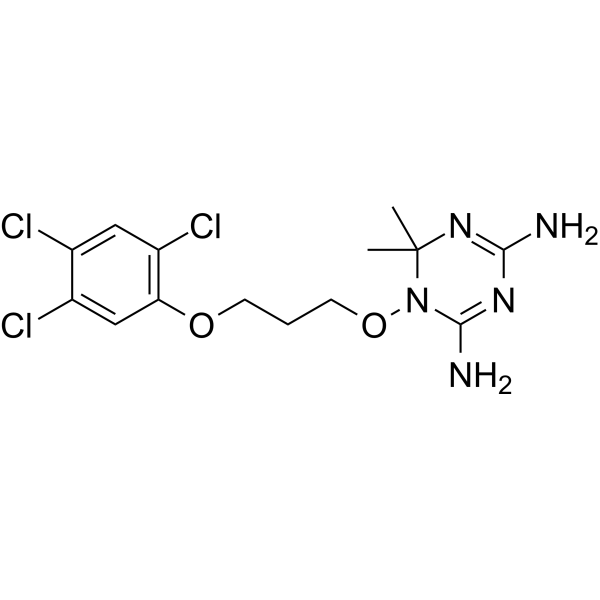
WR99210 is an orally active and low-toxicity dihydrofolate reductase (DHFR) inhibitor (IC50<0.075 nM). WR99210 shows good antiparasitic activity and is effective against P. falciparum and P. falciparum strains (including Pyrimethamine< (HY-18062)-resistant P. falciparum strains) as well as T. gondii .
|
-
-
- HY-B0806A
-
|
|
Parasite
Antifolate
|
Infection
|
|
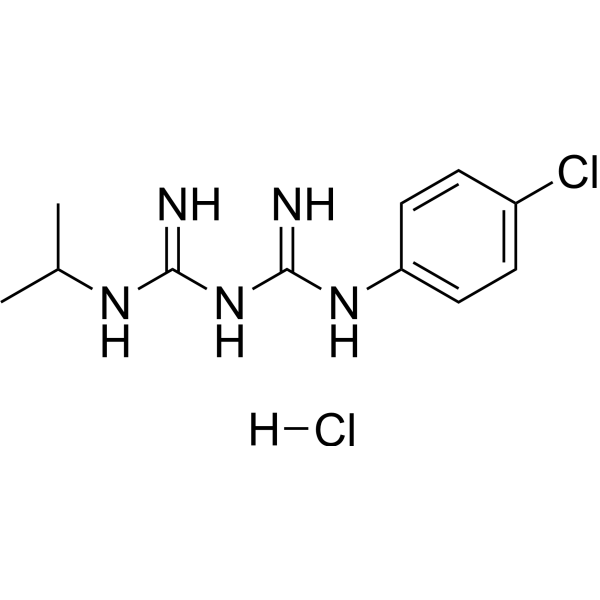
Proguanil hydrochloride, an antimalarial proagent, is metabolized to the active metabolite Cycloguanil (HY-12784). Proguanil hydrochloride is a dihydrofolate reductase (DHFR) inhibitor .
|
-
-
- HY-153007
-
|
|
Dihydrofolate reductase (DHFR)
|
Infection
|
|
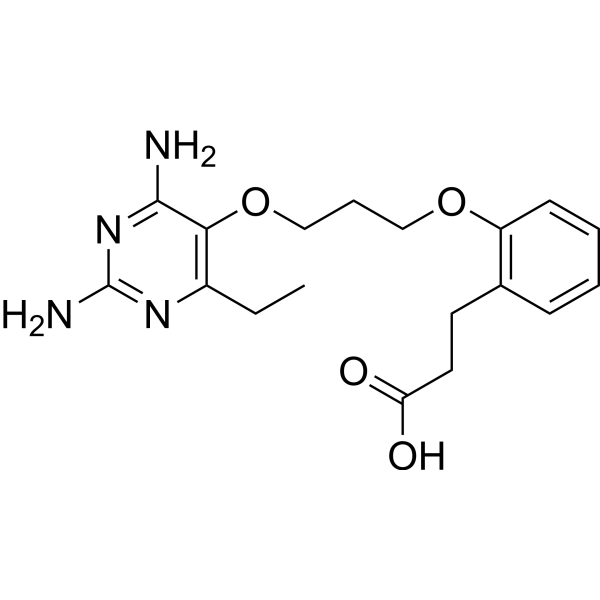
DHFR-IN-5 is a potent and orally active dihydrofolate reductase (DHFR) inhibitor with a Ki value of 0.54 nM for quadruple mutant Plasmodium falciparum DHFR. DHFR-IN-5 shows anti-malaria activity .
|
-
-
- HY-12784A
-
|
Chlorguanide triazine hydrochloride
|
Antifolate
Parasite
DNA/RNA Synthesis
STAT
|
Infection
Cancer
|
|
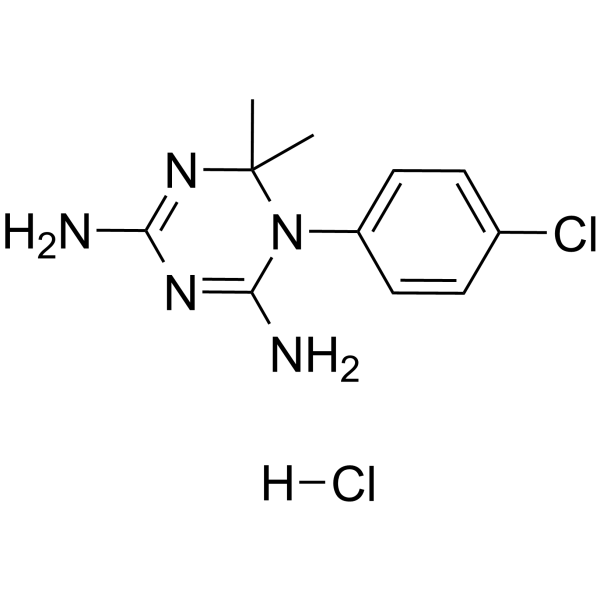
Cycloguanil (Chlorguanide triazine) hydrochloride is a dihydrofolate reductase (DHFR) inhibitor with an IC50 of 10.8 μM against human DHFR. Cycloguanil hydrochloride blocks the folate metabolic pathway, thereby affecting nucleotide synthesis and interfering with DNA replication. Cycloguanil inhibits DHFR in Plasmodium and is thus used in malaria research. Cycloguanil hydrochloride also potently inhibits DHFR in human cancer cells and blocks the transcriptional activity of STAT3, thereby exhibiting anticancer activity .
|
-
-
- HY-107033
-
-
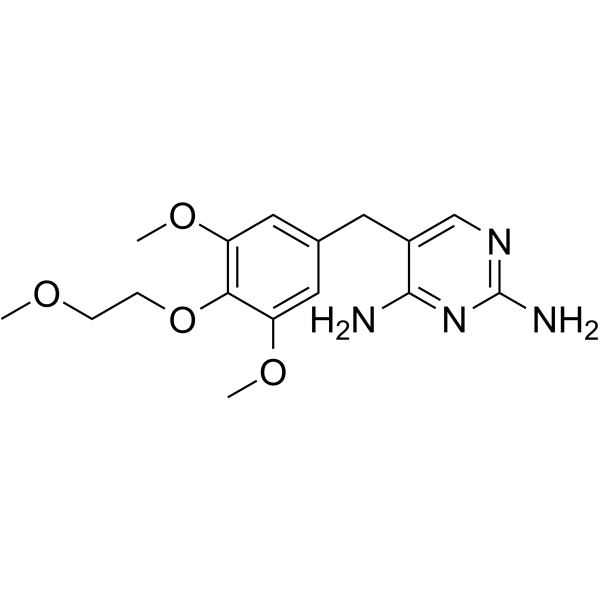
-
- HY-B1902
-
|
EGIS-5645
|
Antifolate
Bacterial
|
Infection
|
|
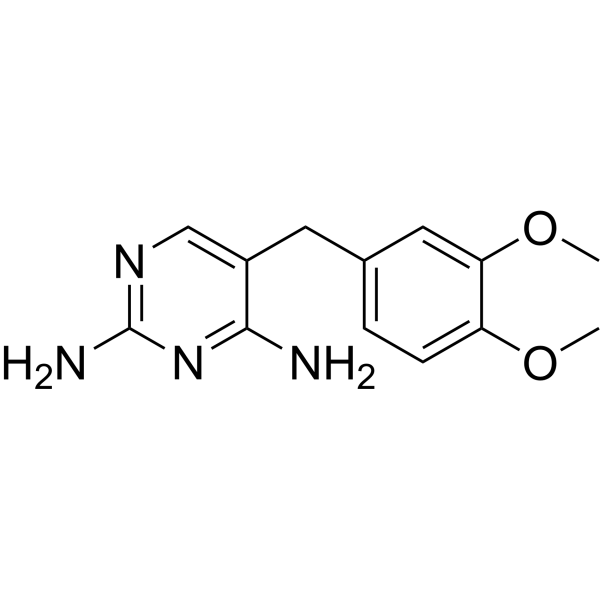
Diaveridine (EGIS-5645) is a dihydrofolate reductase (DHFR) inhibitor with a Ki of 11.5 nM for the wild type DHFR and also an antibacterial agent.
|
-
-
- HY-162475
-
-

-
- HY-W003561
-
|
|
Antifolate
Parasite
|
Infection
|
|
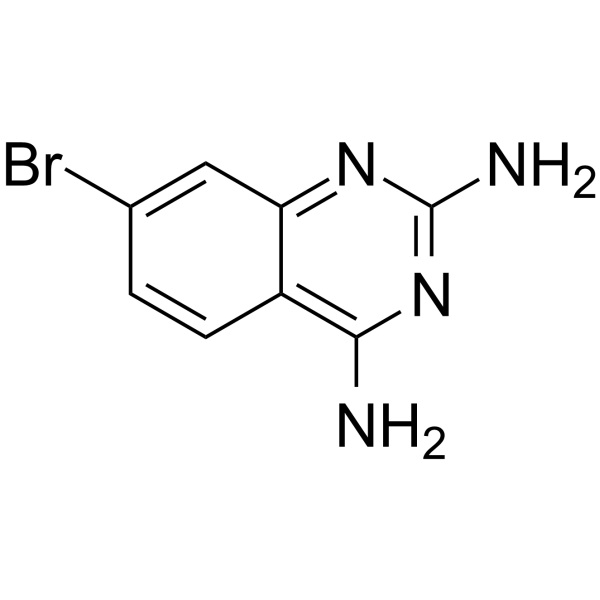
DHFR-IN-3 is a dihydrofolate reductase (DHFR) inhibitor with the IC50 values of 19 μM and 12 μM in rat liver and P. carinii DHFR, respectively .
|
-
-
- HY-106434
-
|
BW 301U; NSC 351521
|
Dihydrofolate reductase (DHFR)
|
Infection
Cancer
|
|
Piritrexim (BW 301U) is a potent dihydrofolate reductase (DHFR) inhibitor against Pneumocystis carinii and Toxoplasma gondii, with IC50 values of 0.038 and 0.011 μM, respectively. Piritrexim can be used for acquired immune deficiency syndrome (AIDS) research. Piritrexim also is an anticancer agent .
|
-

-
- HY-116387A
-
|
BRL 6231
|
Dihydrofolate reductase (DHFR)
Parasite
|
Infection
|
|
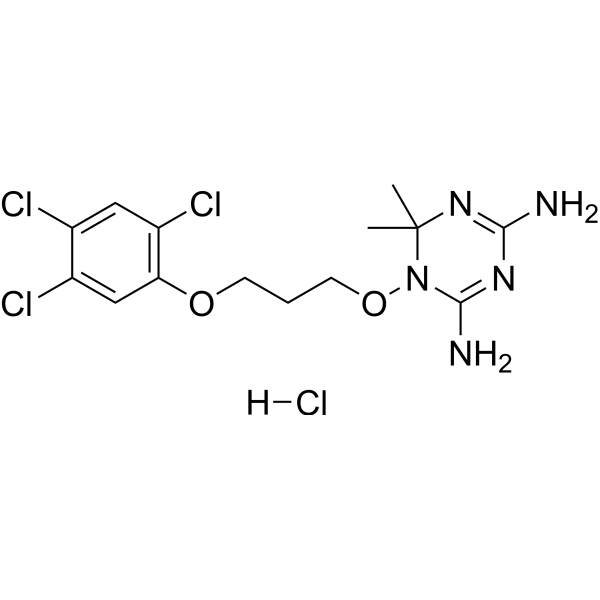
WR99210 hydrochloride is an orally active and low-toxicity dihydrofolate reductase (DHFR) inhibitor (IC50<0.075 nM). WR99210 hydrochloride shows good antiparasitic activity and is effective against P. falciparum and P. falciparum strains as well as T. gondii .
|
-
-
- HY-W587663
-
|
|
Dihydrofolate reductase (DHFR)
|
Infection
|
|
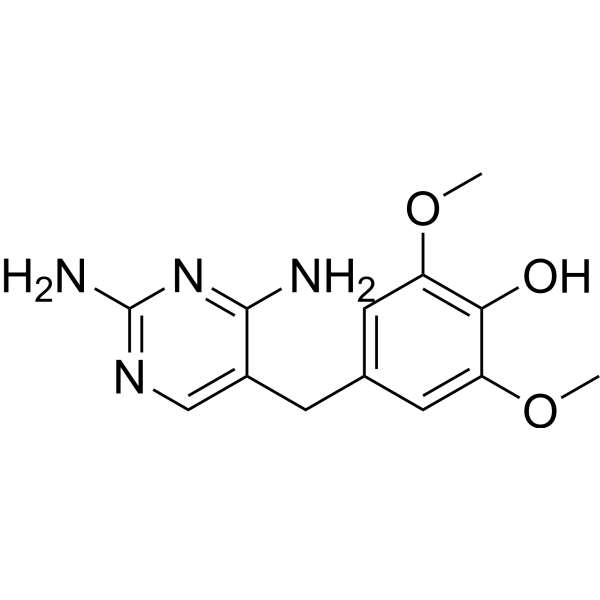
4 '-DTMP is a DHFR inhibitor with Ki of 5.1 nM (DHFR WT) and 34.3 nM (DHFR L28R), respectively. 4 '-DTMP carries a polar modification that induces additional local interactions with the enzyme. In particular, the hairpin structure on the M20 ring is related to the internal communication of the DHFR. 4 '-DTMP has potential inhibition of E.coli .
|
-
-
- HY-151159
-
|
|
Dihydrofolate reductase (DHFR)
EGFR
|
Cancer
|
|
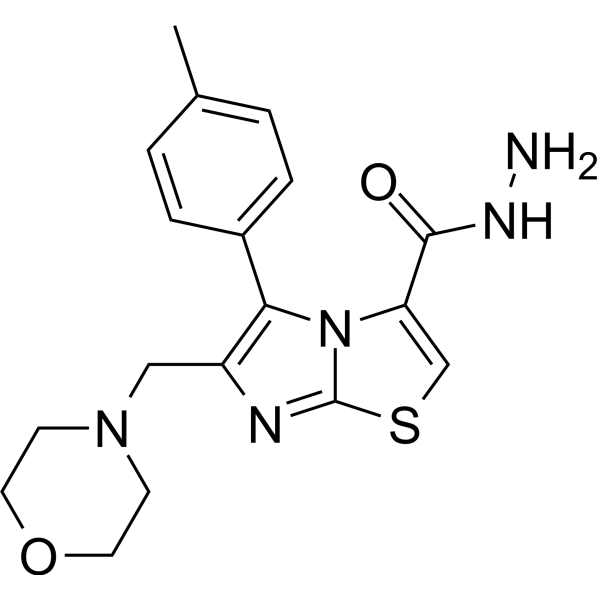
DHFR-IN-4 is a potent dihydrofolate reductase (DHFR) inhibitor with an IC50 value of 123 nM. DHFR-IN-4 also has inhibitory activity against EGFR and HER2 with IC50s of 246 nM and 357 nM, respectively. DHFR-IN-4 has remarkable broad spectrum cytotoxic potency against cancer cells .
|
-
-
- HY-18062R
-
|
Pirimecidan (Standard); Pirimetamin (Standard); RP 4753 (Standard)
|
Reference Standards
Antifolate
Parasite
|
Infection
|
|
Pyrimethamine (Standard) is the analytical standard of Pyrimethamine. This product is intended for research and analytical applications. Pyrimethamine (Pirimecidan) is a potent, orally active dihydrofolate reductase (DHFR) inhibitor. Pyrimethamine is an antimalarial agent. Pyrimethamine affects the nucleoprotein metabolism of malarial parasites by interference in the folic–folinic acid systems and affects cell division by inhibiting the conversion of dihydrofolate to tetrahydrofolate .
|
-

-
- HY-149200
-
-
-
- HY-119613
-
-

-
- HY-116039
-
|
Ro11-8958
|
Dihydrofolate reductase (DHFR)
Bacterial
|
Infection
|
|
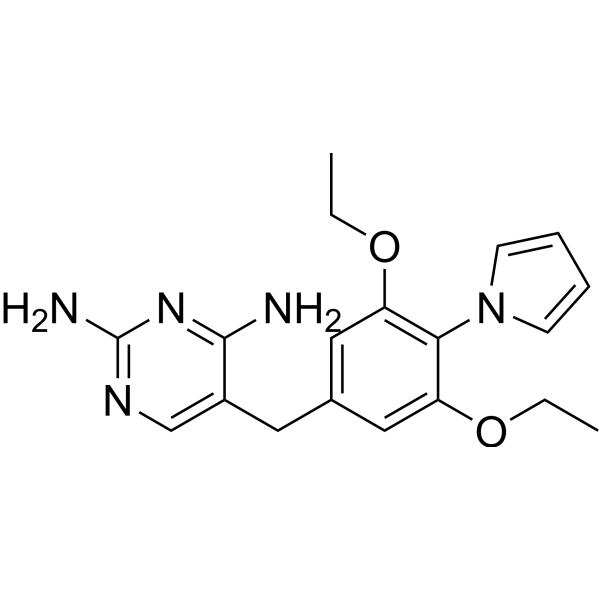
Epiroprim (Ro11-8958) is a selective dihydrofolate reductase (DHFR) inhibitor. Epiroprim displays excellent activity against staphylococci, enterococci, pneumococci, and streptococci .
|
-
-
- HY-B0806S1
-
|
|
Antifolate
Parasite
|
Infection
|
|
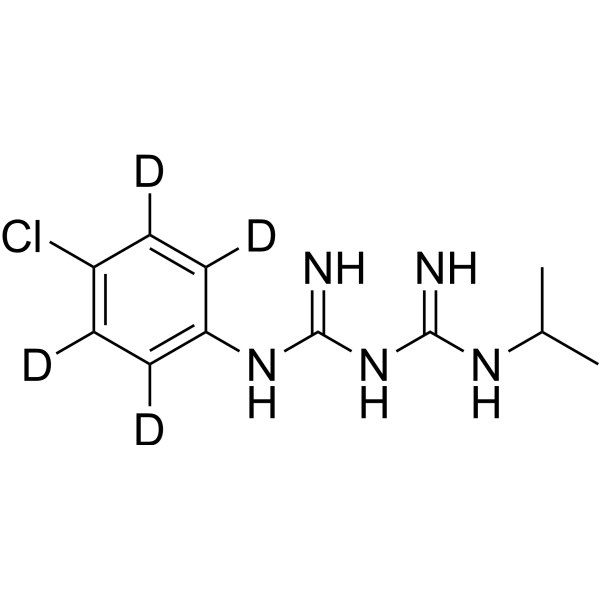
Proguanil-d4 is the deuterium labeled Proguanil . Proguanil, an antimalarial proagent, is metabolized to the active metabolite Cycloguanil (HY-12784). Proguanil is a dihydrofolate reductase (DHFR) inhibitor .
|
-
-
- HY-19095
-
|
|
Antifolate
|
Cancer
|
|
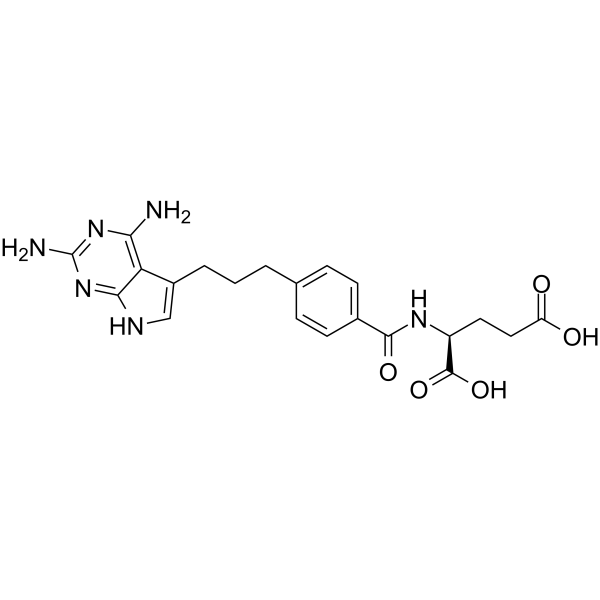
TNP-351 is an antifolate. TNP-351, a dihydrofolate reductase (DHFR) inhibitor, has potent antitumor activity against not only leukemia cells but also solid tumor cells in vitro and in vivo .
|
-
-
- HY-139743
-
|
Aditoprim
|
Antifolate
Bacterial
|
Infection
|
|
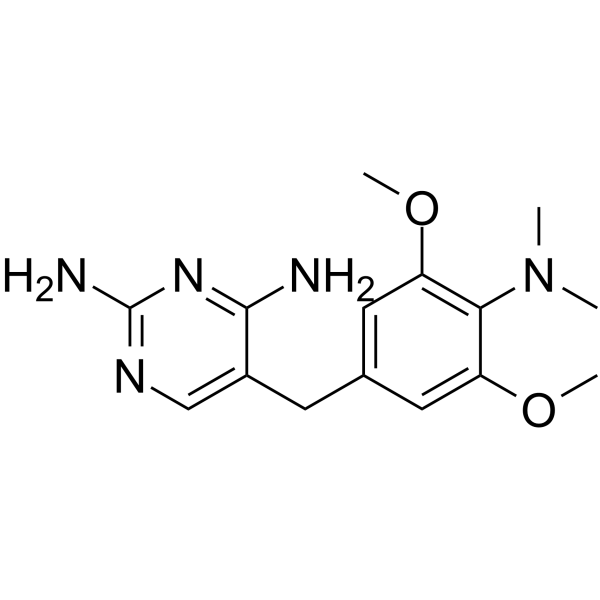
Aditoprime (Aditoprim) is a selective bacterial dihydrofolate reductase (DHFR) inhibitor with IC50s of 47 and 520 nM for E.coli and L.casei DHFR, respectively. Aditoprime inhibits the transformation of dihydrofolic acid to tetrahydrofolic acid. Aditoprime has a broad-spectrum antibacterial activity and excellent pharmacokinetics .
|
-
-
- HY-179415
-
|
|
Dihydrofolate reductase (DHFR)
Bacterial
|
Infection
|
|
DHFR-IN-24, a benzothiazole derivative, is a dihydrofolate reductase (DHFR) inhibitor. DHFR-IN-24 has intrinsic antibacterial activity against both Gram-positive and Gram-negative strains. DHFR-IN-24 synergistically combines DHFR inhibition with photodynamic therapy (PDT) for enhanced antibacterial activity against multidrug-resistant pathogens .
|
-

-
- HY-12784
-
|
Chlorguanide triazine
|
Antifolate
DNA/RNA Synthesis
STAT
Parasite
|
Infection
Cancer
|
|
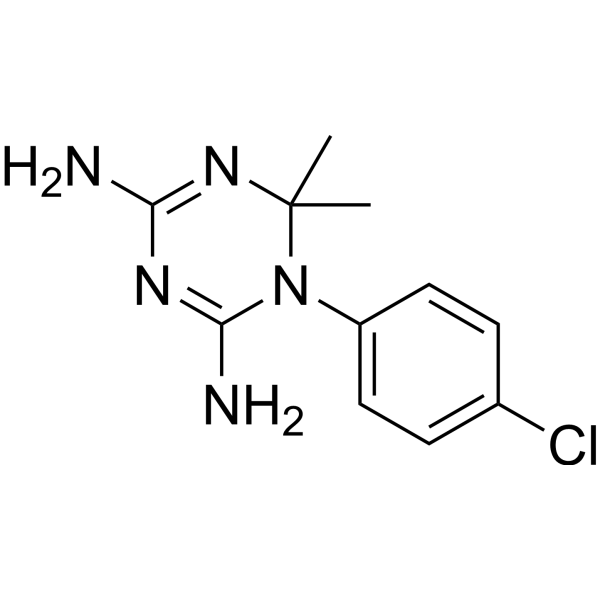
Cycloguanil (Chlorguanide triazine) is a dihydrofolate reductase (DHFR) inhibitor with an IC50 of 10.8 μM against human DHFR. Cycloguanil blocks the folate metabolic pathway, thereby affecting nucleotide synthesis and interfering with DNA replication. Cycloguanil inhibits DHFR in Plasmodium and is thus used in malaria research. Cycloguanil also potently inhibits DHFR in human cancer cells and blocks the transcriptional activity of STAT3, thereby exhibiting anticancer activity .
|
-
-
- HY-10373A
-
|
CI-898 trihydrochloride
|
Dihydrofolate reductase (DHFR)
Antibiotic
Antifolate
Parasite
Bacterial
DNA/RNA Synthesis
|
Infection
Cancer
|
|
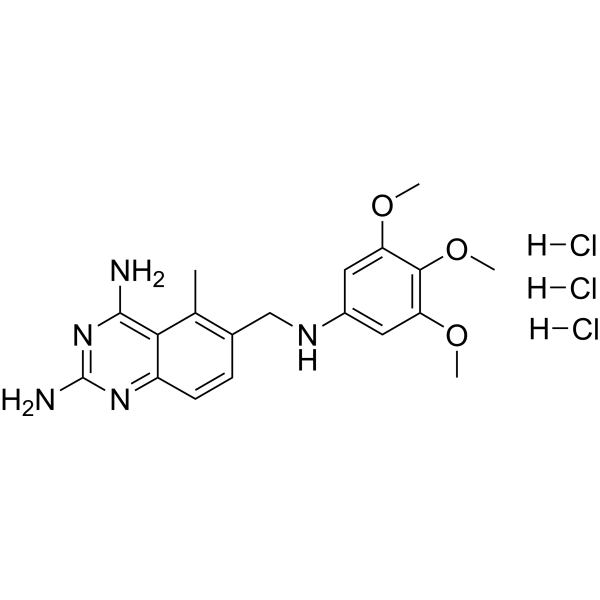
Trimetrexate (CI-898) trihydrochloride is an antibiotic, also a potent and orally active dihydrofolate reductase (DHFR) inhibitor, reducing the production of DNA and RNA precursors and leading to cell death, with IC50 values of 4.74 nM and 1.35 nM for human DHFR and Toxoplasma gondii DHFR. Trimetrexate trihydrochloride can also inhibit the growth of various cancer cells. Trimetrexate trihydrochloride can be used for researching Pneumocystis carinii pneumonia (PCP) and cancer .
|
-
-
- HY-10373B
-
|
CI-898 isethionate
|
Dihydrofolate reductase (DHFR)
Antibiotic
Antifolate
Parasite
Bacterial
DNA/RNA Synthesis
|
Infection
Cancer
|
|
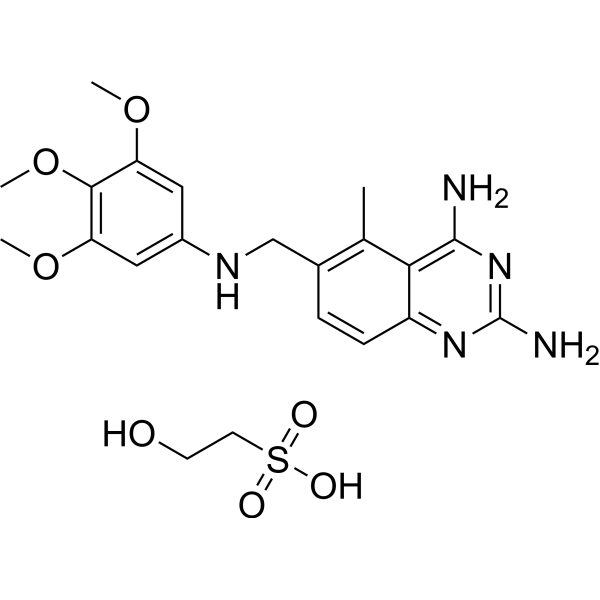
Trimetrexate (CI-898) isethionate is an antibiotic, also a potent and orally active dihydrofolate reductase (DHFR) inhibitor, reducing the production of DNA and RNA precursors and leading to cell death, with IC50 values of 4.74 nM and 1.35 nM for human DHFR and Toxoplasma gondii DHFR. Trimetrexate isethionate can also inhibit the growth of various cancer cells. Trimetrexate isethionate can be used for researching Pneumocystis carinii pneumonia (PCP) and cancer .
|
-
-
- HY-12784AR
-
|
Chlorguanide triazine hydrochloride (Standard)
|
Reference Standards
Antifolate
DNA/RNA Synthesis
STAT
Parasite
|
Infection
Cancer
|
|
Cycloguanil hydrochloride (Standard) is the analytical standard of Cycloguanil hydrochloride (HY-12784A). This product is intended for research and analytical applications. Cycloguanil hydrochloride is a dihydrofolate reductase (DHFR) inhibitor with an IC50 of 10.8 μM against human DHFR. Cycloguanil hydrochloride blocks the folate metabolic pathway, thereby affecting nucleotide synthesis and interfering with DNA replication. Cycloguanil hydrochloride inhibits DHFR in Plasmodium and is thus used in malaria research. Cycloguanil hydrochloride also potently inhibits DHFR in human cancer cells and blocks the transcriptional activity of STAT3, thereby exhibiting anticancer activity .
|
-

-
- HY-169211
-
-

-
- HY-149699
-
-
-
- HY-161063
-
-
-
- HY-107033R
-
-

-
- HY-117791
-
|
|
Antifolate
|
Cancer
|
|
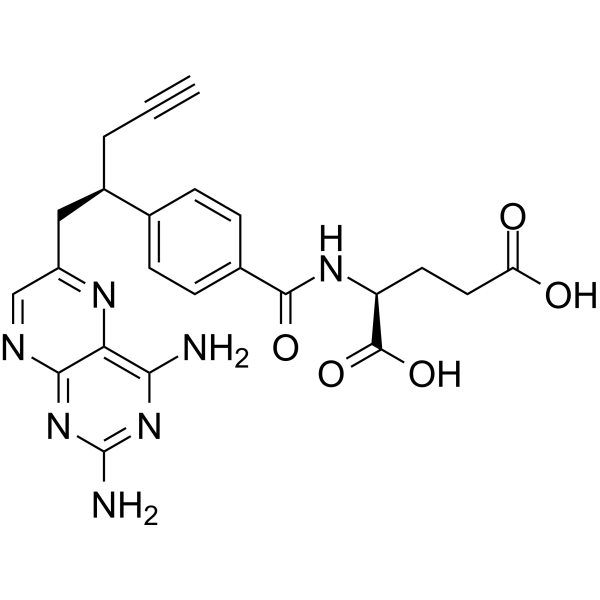
(R)-Pralatrexate is the (R)-enantiomer of Pralatrexate (HY-10446). Pralatrexate is an antifolate and is a potent dihydrofolate reductasean (DHFR) inhibitor .
|
-
-
- HY-121207
-
|
Pteroylglutamic acid
|
Antifolate
Nucleoside Antimetabolite/Analog
|
Cancer
|
|
Denopterin is a dihydrofolate reductase (DHFR) inhibitor and an antifolate agent. Denopterin is an antimetabolite that has toxic effects on cells and can be used for cancer .
|
-

-
- HY-163725
-
-

-
- HY-118251
-
|
|
Antifolate
Dihydrofolate reductase (DHFR)
|
Cancer
|
|
PD130883 is an antifolate DHFR inhibitor that directly inhibits thymidylate synthase at the 5,10-methylenetetrahydrofolate binding site, reducing the net conversion of tetrahydrofolate cofactor to dihydrofolate.
|
-

-
- HY-B0806AS
-
|
|
Isotope-Labeled Compounds
Parasite
Antifolate
|
Infection
|
|
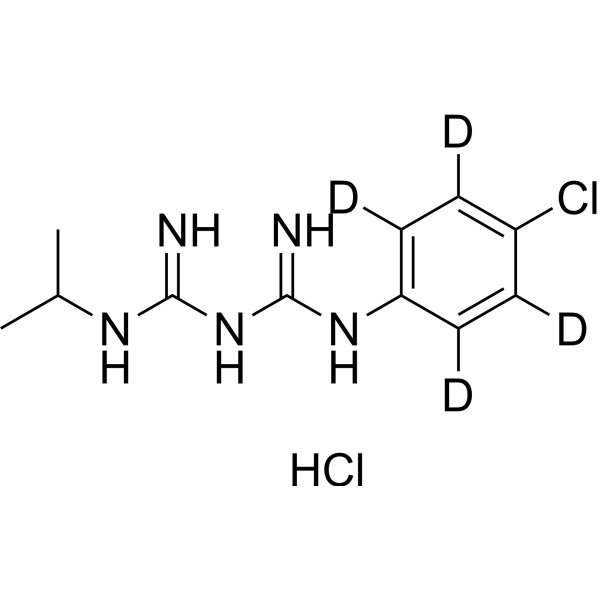
Proguanil-d4 (hydrochloride) is the deuterium labeled Proguanil hydrochloride. Proguanil hydrochloride, an antimalarial proagent, is metabolized to the active metabolite Cycloguanil (HY-12784). Proguanil hydrochloride is a dihydrofolate reductase (DHFR) inhibitor .
|
-
-
- HY-161064
-
|
|
Dihydrofolate reductase (DHFR)
|
Cancer
|
|
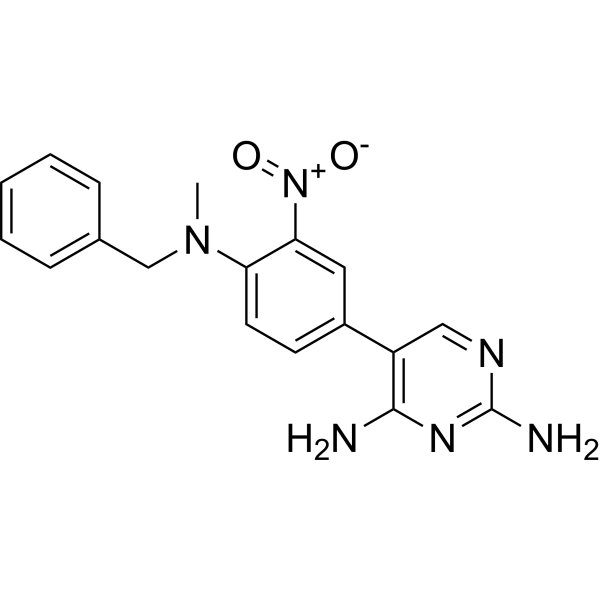
DHFR-IN-15 (compound 34) is a dihydrofolate reductase (DHFR) inhibitor with potential anticancer activity. DHFR-IN-15 effectively binds to DHFR in cells, reducing DHFR levels to 10 nM .
|
-
-
- HY-137439
-
|
VYR-006
|
Antifolate
|
Infection
|
|
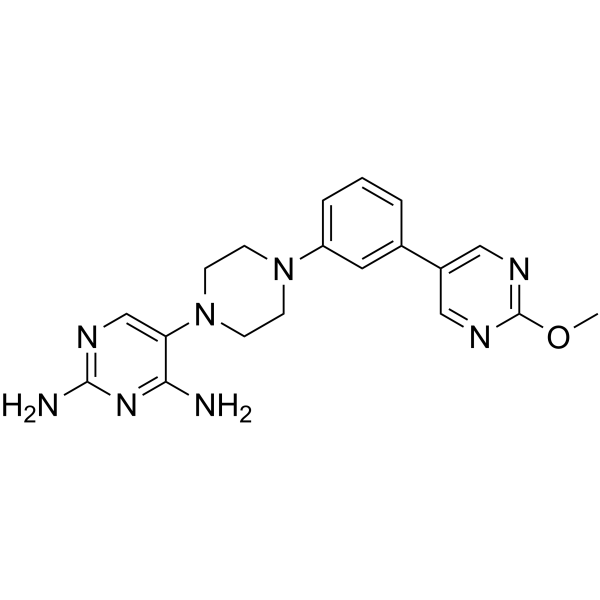
Fanotaprim is a dihydrofolate reductase (DHFR) inhibitor with IC50s of 1.57 and 308 nM for tgDHFR (Toxoplasma gondii DHFR) and hDHFR (human DHFR), respectively. Fanotaprim has the potential for the research of toxoplasmosis .
|
-
-
- HY-B1902R
-
|
EGIS-5645 (Standard)
|
Reference Standards
Antifolate
Bacterial
|
Infection
|
|
Diaveridine (Standard) is the analytical standard of Diaveridine. This product is intended for research and analytical applications. Diaveridine (EGIS-5645) is a dihydrofolate reductase (DHFR) inhibitor with a Ki of 11.5 nM for the wild type DHFR and also an antibacterial agent.
|
-

-
- HY-156412
-
|
|
Bacterial
|
Infection
|
|
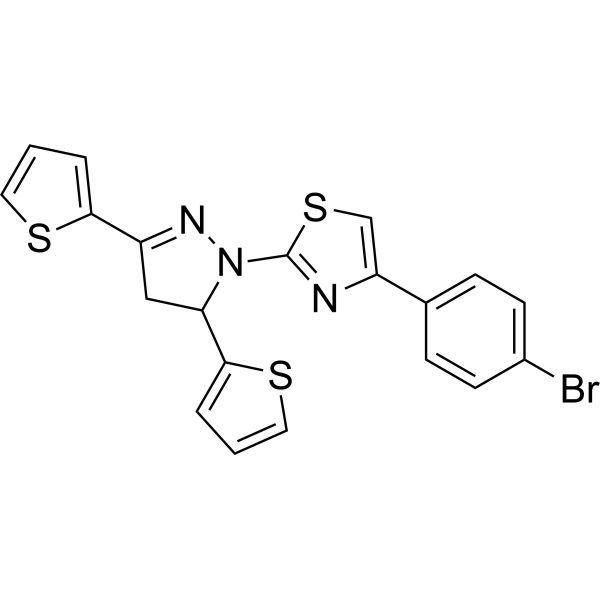
DHFR-IN-10 (compound 4c) is a potent DHFR inhibitor, with an IC50 of 4.21 μM for M. tuberculosis DHFR enzyme. DHFR-IN-10 exhibits potent antituberculosis efficiency .
|
-
-
- HY-153007A
-
|
|
Dihydrofolate reductase (DHFR)
|
Infection
|
|
DHFR-IN-5 hydrochloride is a potent and orally active dihydrofolate reductase (DHFR) inhibitor with a Ki value of 0.54 nM for quadruple mutant Plasmodium falciparum DHFR. DHFR-IN-5 hydrochloride shows anti-malaria activity .
|
-

-
- HY-111202R
-
|
TSH-888 (Standard)
|
Reference Standards
Cytochrome P450
|
Inflammation/Immunology
|
|
Proguanil (hydrochloride) (Standard) is the analytical standard of Proguanil (hydrochloride). This product is intended for research and analytical applications. Proguanil hydrochloride, an antimalarial proagent, is metabolized to the active metabolite Cycloguanil (HY-12784). Proguanil hydrochloride is a dihydrofolate reductase (DHFR) inhibitor .
|
-

-
- HY-B0806R
-
|
|
Reference Standards
Parasite
Antifolate
|
Infection
|
|
Proguanil (Standard) is the analytical standard of Proguanil. This product is intended for research and analytical applications. Proguanil, an antimalarial proagent, is metabolized to the active metabolite Cycloguanil (HY-12784). Proguanil is a dihydrofolate reductase (DHFR) inhibitor .
|
-

-
- HY-B0806AR
-
|
|
Reference Standards
Parasite
Antifolate
|
Infection
|
|
Proguanil (hydrochloride) (Standard) is the analytical standard of Proguanil (hydrochloride). This product is intended for research and analytical applications. Proguanil hydrochloride, an antimalarial proagent, is metabolized to the active metabolite Cycloguanil (HY-12784). Proguanil hydrochloride is a dihydrofolate reductase (DHFR) inhibitor .
|
-

-
- HY-B0806AS1
-
|
|
Isotope-Labeled Compounds
Parasite
Antifolate
|
Infection
|
|
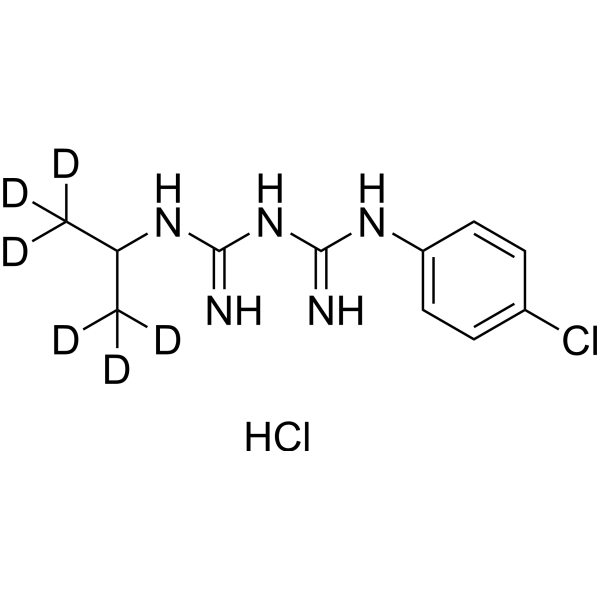
Proguanil-d6 hydrochloride is the deuterium labeled Proguanil hydrochloride (HY-B0806A). Proguanil hydrochloride, an antimalarial proagent, is metabolized to the active metabolite Cycloguanil (HY-12784). Proguanil hydrochloride is a dihydrofolate reductase (DHFR) inhibitor .
|
-
-
- HY-N10791
-
|
|
Others
|
Infection
|
|
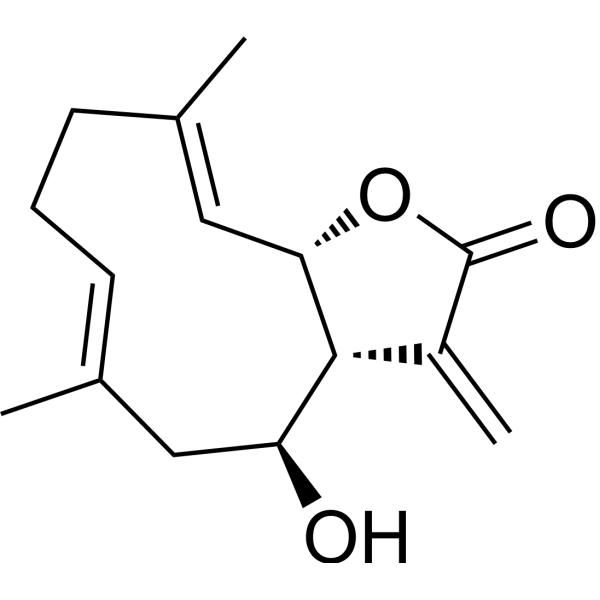
Neobritannilactone B, a sesquiterpene, can be isolated from the chloroform fraction of the I. britannica. Neobritannilactone B is cytotoxic. Other extracts of I. britannica are also Dihydrofolate reductase (DHFR) inhibitors, which inhibit Shigella dysenteriae type 1 .
|
-
-
- HY-B1902S
-
|
EGIS-5645-d6
|
Isotope-Labeled Compounds
Antifolate
Bacterial
|
Infection
|
|
Diaveridine-d6 (EGIS-5645-d6) is deuterium labeled Diaveridine. Diaveridine (EGIS-5645) is a dihydrofolate reductase (DHFR) inhibitor with a Ki of 11.5 nM for the wild type DHFR and also an antibacterial agent .
|
-

-
- HY-143408
-
|
|
Bacterial
|
Infection
|
|
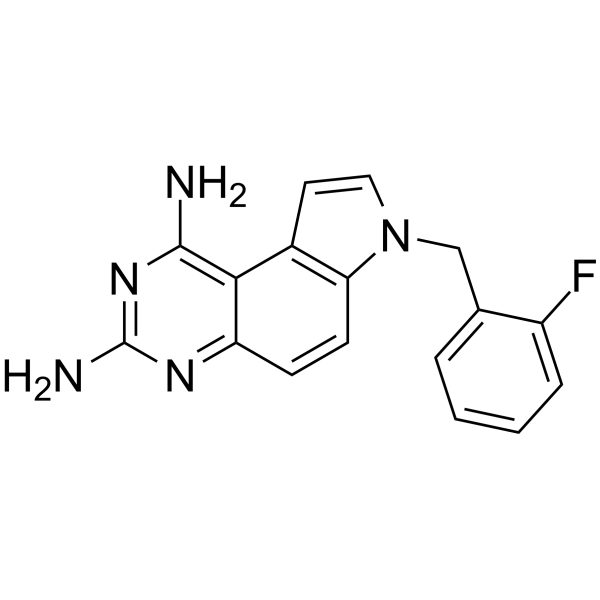
OYYF-175, an antimicrobial antifolate, is a dihydrofolate reductase (DHFR) inhibitor with an IC50 of 2.36 nM for Escherichia coli DHFR. OYYF-175 exhibits potent broad-spectrum antibacterial activities, especially against multi-drug resistant Gram-Negative-strains .
|
-
-
- HY-139743R
-
|
Aditoprim (Standard)
|
Reference Standards
Antifolate
Bacterial
|
Infection
|
|
Aditoprime (Standard) is a selective bacterial dihydrofolate reductase (DHFR) inhibitor with IC50s of 47 and 520 nM for E.coli and L.casei DHFR, respectively. Aditoprime inhibits the transformation of dihydrofolic acid to tetrahydrofolic acid. Aditoprime has a broad-spectrum antibacterial activity and excellent pharmacokinetics .
|
-

- HY-173220
-
|
|
Dihydrofolate reductase (DHFR)
Apoptosis
|
Cancer
|
DHFR-IN-23 (compound 5) is a dual DNA binders/DHFR inhibitor, with an IC50 of 0.08 μM for hDHFR. DHFR-IN-23 (compound 5) is also an apoptosis inducer. DHFR-IN-23 (compound 5) can be used for the research of ER+ breast cancer .
|
-

- HY-156122
-
|
|
Dihydrofolate reductase (DHFR)
Bacterial
|
Infection
|
|
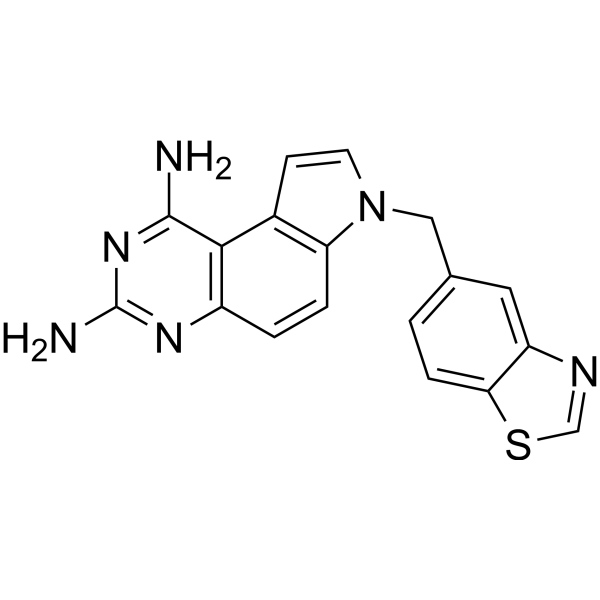
DHFR-IN-8 (compound 6r) is a dihydrofolate reductase (DHFR) inhibitor that affects purine and thymidylate biosynthesis in cell proliferation and growth. DHFR-IN-8 inhibits methicillin-resistant Staphylococcus aureus (MRSA) ATCC 43300 (IC50=15.6 ng/mL) in mouse models of systemic infection and thigh infection .
|
-
- HY-177337
-
|
N-Didesmethyl-ADP
|
Drug Metabolite
Antifolate
Bacterial
|
Infection
|
|
N-Didesmethyladitoprim is a metabolite of Aditoprime (HY-139743). Aditoprime is a selective bacterial dihydrofolate reductase (DHFR) inhibitor with IC50s of 47 and 520 nM for E.coli and L.casei DHFR , respectively. Aditoprime inhibits the transformation of dihydrofolic acid to tetrahydrofolic acid. Aditoprime has a broad-spectrum antibacterial activity and excellent pharmacokinetics .
|
-

- HY-161010
-
|
|
Dihydrofolate reductase (DHFR)
|
Infection
|
|
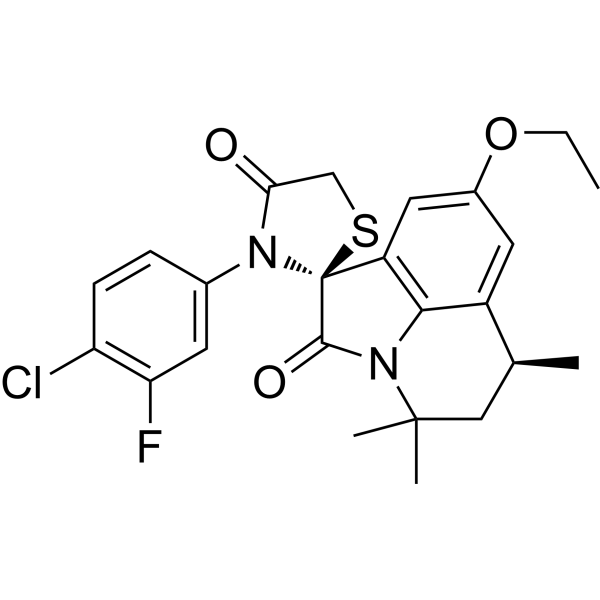
DHFR-IN-13 (Compd Hit8) is an active R. solani DHFR inhibitor with an IC50 value of 10.2 μM. DHFR-IN-13 has selectivity of inhibition against human DHFR with an IC50 value of 227.7 μM. DHFR-IN-13 also is a fungicide. DHFR-IN-13 has high antifungal activity against R. solani with EC50 value of 38.2 mg/L .
|
-
- HY-168069
-
|
|
Parasite
Dihydrofolate reductase (DHFR)
|
Infection
|
|
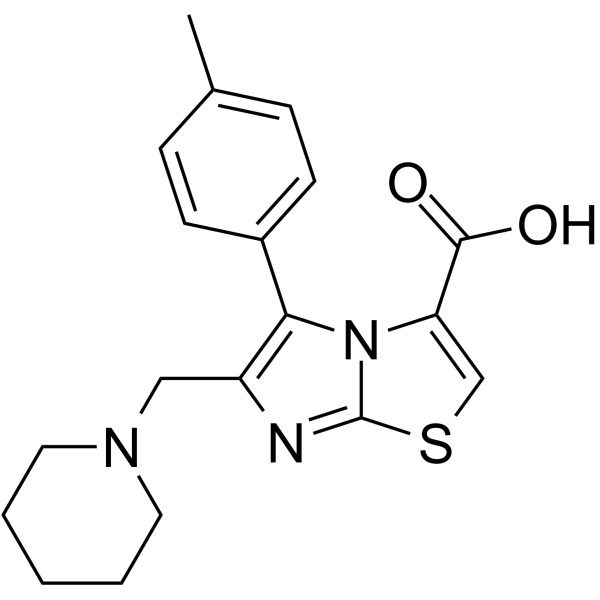
DHFR-IN-20 (Compound LA1) is a Plasmodium falciparum dihydrofolate reductase (DHFR) inhibitor, with Kis of 0.16, 0.30, 6.6 nM for PfDHFR-WT, PfDHFR-QM, HsDHFR. DHFR-IN-20 has antimalarial activities (IC50: 1.4 nM and 1.6 μM for P. falciparum carrying the wild-type (TM4/8.2) and the quadruple mutant (V1/S) PfDHFR enzyme .
|
-

- HY-151158
-
|
|
EGFR
|
Cancer
|
|
EGFR/HER2-IN-7 is a potent anticancer agent with high selectivity against MCF-7 breast cancer cells. EGFR/HER2-IN-7 is a EGFR/HER2 kinase and DHFR inhibitor, with IC50s of 0.18 μM (EGFR), 0.146 μM (HER2), respectively. EGFR/HER2-IN-7 shows moderate inhibition on DHFR (IC50=0.907 μM) .
|
-
- HY-10446R
-
|
|
Reference Standards
Antifolate
Apoptosis
|
Cancer
|
|
Pralatrexate (Standard) is the analytical standard of Pralatrexate. This product is intended for research and analytical applications. Pralatrexate is an antifolate and is a potent dihydrofolate reductasean (DHFR) inhibitor with a Ki of 13.4 pM. Pralatrexate is a substrate for folylpolyglutamate synthetase with improved cellular uptake and retention. Pralatrexate has antitumor activities and has the potential for relapsed/refractory T-cell lymphoma treatment . Pralatrexate is a click chemistry reagent, it contains an Alkyne group and can undergo copper-catalyzed azide-alkyne cycloaddition (CuAAc) with molecules containing Azide groups.
|
-

- HY-12784S
-
|
Chlorguanide triazine-d6
|
Isotope-Labeled Compounds
Antifolate
DNA/RNA Synthesis
STAT
Parasite
|
Infection
Cancer
|
|
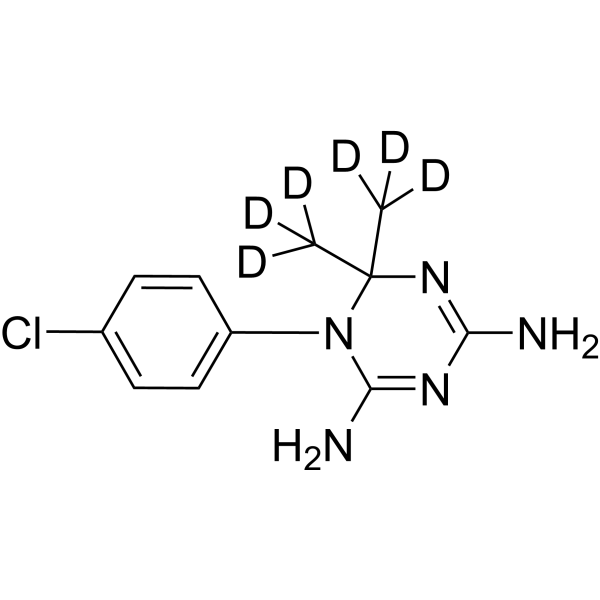
Cycloguanil-d6 (Chlorguanide triazine-d6) is the deuterium labeled Cycloguanil (HY-12784). Cycloguanil is a dihydrofolate reductase (DHFR) inhibitor with an IC50 of 10.8 μM against human DHFR. Cycloguanil blocks the folate metabolic pathway, thereby affecting nucleotide synthesis and interfering with DNA replication. Cycloguanil inhibits DHFR in Plasmodium and is thus used in malaria research. Cycloguanil also potently inhibits DHFR in human cancer cells and blocks the transcriptional activity of STAT3, thereby exhibiting anticancer activity .
|
-
- HY-12784AS
-
|
Chlorguanide triazine-d4 hydrochloride
|
Isotope-Labeled Compounds
Antifolate
DNA/RNA Synthesis
STAT
Parasite
|
Infection
Cancer
|
|
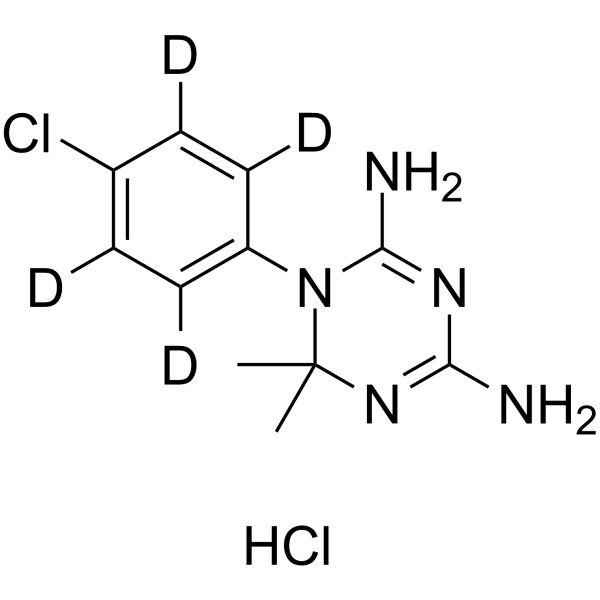
Cycloguanil-d4 (Chlorguanide triazine-d4) hydrochloride is the deuterium labeled Cycloguanil hydrochloride (HY-12784A). Cycloguanil hydrochloride is a dihydrofolate reductase (DHFR) inhibitor with an IC50 of 10.8 μM against human DHFR. Cycloguanil hydrochloride blocks the folate metabolic pathway, thereby affecting nucleotide synthesis and interfering with DNA replication. Cycloguanil hydrochloride inhibits DHFR in Plasmodium and is thus used in malaria research. Cycloguanil hydrochloride also potently inhibits DHFR in human cancer cells and blocks the transcriptional activity of STAT3, thereby exhibiting anticancer activity .
|
-
- HY-12784AS1
-
|
Chlorguanide triazine-d6 hydrochloride
|
Isotope-Labeled Compounds
Antifolate
DNA/RNA Synthesis
STAT
Parasite
|
Infection
|
|
Cycloguanil-d6 (Chlorguanide triazine-d6) hydrochloride is the deuterium labeled Cycloguanil hydrochloride (HY-12784A). Cycloguanil hydrochloride is a dihydrofolate reductase (DHFR) inhibitor with an IC50 of 10.8 μM against human DHFR. Cycloguanil hydrochloride blocks the folate metabolic pathway, thereby affecting nucleotide synthesis and interfering with DNA replication. Cycloguanil hydrochloride inhibits DHFR in Plasmodium and is thus used in malaria research. Cycloguanil hydrochloride also potently inhibits DHFR in human cancer cells and blocks the transcriptional activity of STAT3, thereby exhibiting anticancer activity .
|
-

- HY-12784S1
-
|
Chlorguanide triazine-d6 nitrate
|
Isotope-Labeled Compounds
Antifolate
DNA/RNA Synthesis
STAT
Parasite
|
Infection
Cancer
|
|
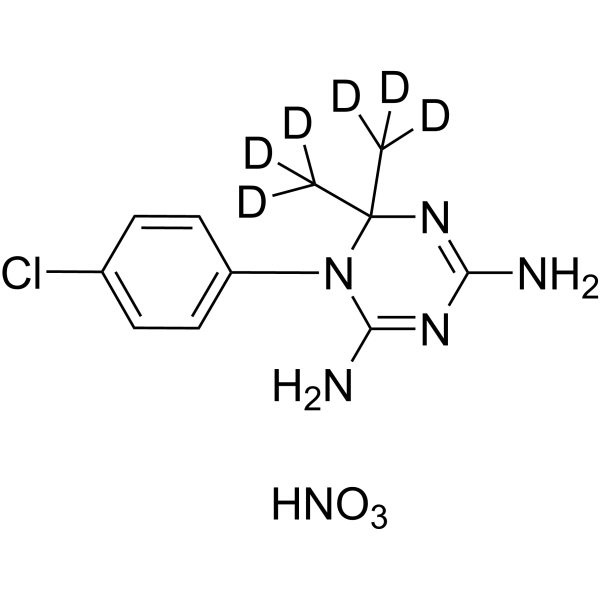
Cycloguanil-d6 (Chlorguanide triazine-d6) nitrate is the deuterium labeled Cycloguanil nitrate. Cycloguanil nitrate is a dihydrofolate reductase (DHFR) inhibitor with an IC50 of 10.8 μM against human DHFR. Cycloguanil nitrate blocks the folate metabolic pathway, thereby affecting nucleotide synthesis and interfering with DNA replication. Cycloguanil nitrate inhibits DHFR in Plasmodium and is thus used in malaria research. Cycloguanil nitrate also potently inhibits DHFR in human cancer cells and blocks the transcriptional activity of STAT3, thereby exhibiting anticancer activity .
|
-
- HY-151156
-
|
|
EGFR
Apoptosis
|
Cancer
|
|
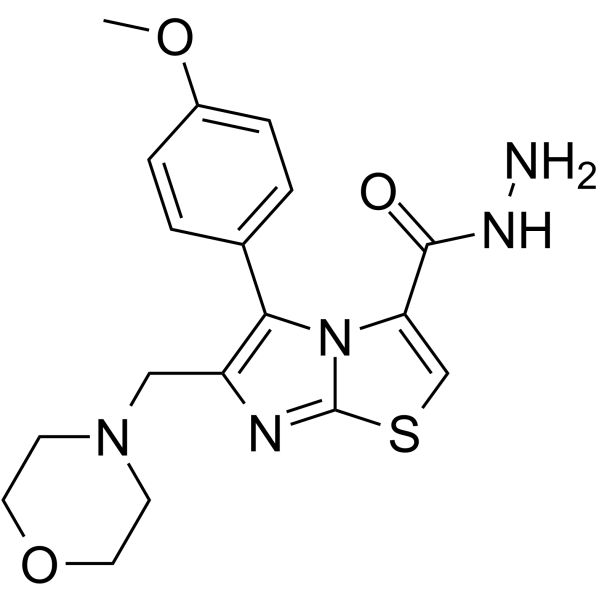
EGFR/HER2-IN-6 (compound 43) is an EGFR/HER2 and DHFR inhibitor. EGFR/HER2-IN-6 inhibits EGFR kinase, HER2 kinase and DHFR with IC50s of 0.122, 0.078 and 0.585 μM, respectively. EGFR/HER2-IN-6 shows anticancer activity against several cancer cell lines with high safety profile and selectivity indices. EGFR/HER2-IN-8 can be used for the research of cancer .
|
-
- HY-151161
-
|
|
EGFR
|
Cancer
|
|
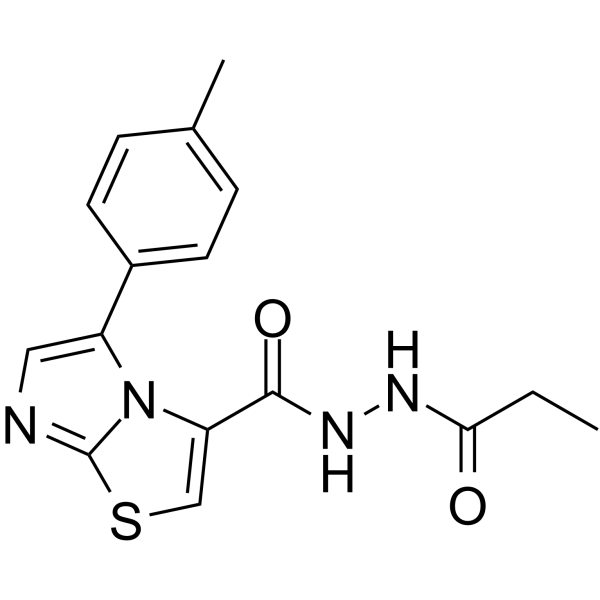
EGFR/HER2-IN-8 (compound 34) is a EGFR/HER2 and DHFR inhibitor. EGFR/HER2-IN-8 inhibits EGFR kinase, HER2 kinase and DHFR with IC50s of 0.45, 0.244 and 5.669 μM, respectively. EGFR/HER2-IN-8 shows anticancer activity against several cancer cell lines with high safety profile and selectivity indices. EGFR/HER2-IN-8 can be used for the research of cancer .
|
-
- HY-156123
-
|
|
Dihydrofolate reductase (DHFR)
Bacterial
|
Infection
Cancer
|
|
DHFR-IN-9 (compound 8A) is a dihydrofolate reductase (DHFR) inhibitor that affects purine and thymidylate biosynthesis in cell proliferation and growth. DHFR-IN-9 inhibits methicillin-resistant Staphylococcus aureus (MRSA) ATCC 43300 (IC50=0.25 μg/mL) and has anti-infective effects in mouse models of systemic infection and thigh infection caused by it (dose: 2.5 mg /kg, 5 mg/kg; ip). DHFR-IN-9 has stronger anticancer activity than paclitaxel (Y-B0015) in a mouse model of breast cancer (dose: 2.5 mg/kg; ip; once every 3 days) .
|
-
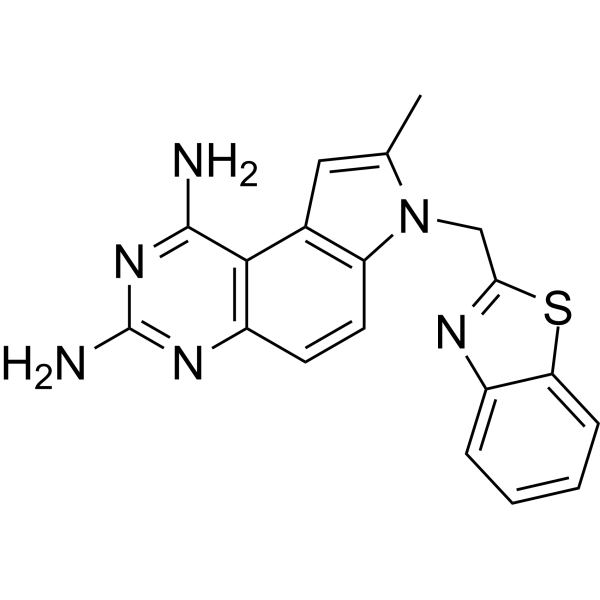
- HY-Z15986
-
-

- HY-105714
-
|
|
Dihydrofolate reductase (DHFR)
|
Endocrinology
|
|
Etoprine is a potent orally active dihydrofolate reductase (DHFR) inhibitor. Etoprine competitively inhibits testicular DHFR to disrupt tetrahydrofolate and DNA synthesis in rapidly dividing cells. Etoprine acts as an antifertility agent in male mice and reduces fecundity in male rats .
|
-

- HY-183286
-
|
|
Dihydrofolate reductase (DHFR)
Parasite
|
Infection
|
|
DHFR-IN-27 (Compound LA4) is an orally active DHFR inhibitor and antimalarial agent, with a Ki value of 1.71 nM against TgDHFR. DHFR-IN-27 reduces the parasitic load of Toxoplasma gondii in infected mice and prolongs the survival time of infected mice. DHFR-IN-27 exerts Antiparasitic effects against Toxoplasma gondii. DHFR-IN-27 can be used in the research of toxoplasmosis .
|
-

- HY-10373R
-
|
CI-898 (Standard)
|
Reference Standards
Dihydrofolate reductase (DHFR)
Antibiotic
Antifolate
Parasite
Bacterial
DNA/RNA Synthesis
|
Infection
Cancer
|
|
Trimetrexate (Standard) is the analytical standard of Trimetrexate (HY-10373). This product is intended for research and analytical applications. Trimetrexate (CI-898) is an antibiotic, also a potent and orally active dihydrofolate reductase (DHFR) inhibitor, reducing the production of DNA and RNA precursors and leading to cell death, with IC50 values of 4.74 nM and 1.35 nM for human DHFR and Toxoplasma gondii DHFR. Trimetrexate can also inhibit the growth of various cancer cells. Trimetrexate can be used for researching Pneumocystis carinii pneumonia (PCP) and cancer .
|
-

- HY-137357
-
|
NSC 305986; γ-MBMTX
|
Dihydrofolate reductase (DHFR)
|
Cancer
|
|
5-Monobutyl methotrexate (NSC 305986; γ-MBMTX) is a dihydrofolate reductase (DHFR) inhibitor and esterase substrate. 5-Monobutyl methotrexate is hydrolyzed by esterases to produce methotrexate. In rhesus monkeys, 5-Monobutyl methotrexate clears more slowly from cerebrospinal fluid than from serum, and its serum protein binding rate exceeds 99%. At the same dose rate, 5-Monobutyl methotrexate achieves cerebrospinal fluid concentrations comparable to those of Methotrexate (HY-14519), and exhibits activity against Methotrexate-resistant cells (with transport defects) that is comparable to that against sensitive parental cells. 5-Monobutyl methotrexate can be used in studies related to Methotrexate-resistant tumors .
|
-

| Cat. No. |
Product Name |
Category |
Target |
Chemical Structure |
| Cat. No. |
Product Name |
Chemical Structure |
-
- HY-B0806S1
-
|
|
|
Proguanil-d4 is the deuterium labeled Proguanil . Proguanil, an antimalarial proagent, is metabolized to the active metabolite Cycloguanil (HY-12784). Proguanil is a dihydrofolate reductase (DHFR) inhibitor .
|
-
-
- HY-B0806AS
-
|
|
|
Proguanil-d4 (hydrochloride) is the deuterium labeled Proguanil hydrochloride. Proguanil hydrochloride, an antimalarial proagent, is metabolized to the active metabolite Cycloguanil (HY-12784). Proguanil hydrochloride is a dihydrofolate reductase (DHFR) inhibitor .
|
-
-
- HY-B0806AS1
-
|
|
|
Proguanil-d6 hydrochloride is the deuterium labeled Proguanil hydrochloride (HY-B0806A). Proguanil hydrochloride, an antimalarial proagent, is metabolized to the active metabolite Cycloguanil (HY-12784). Proguanil hydrochloride is a dihydrofolate reductase (DHFR) inhibitor .
|
-
-
- HY-B1902S
-
|
|
|
Diaveridine-d6 (EGIS-5645-d6) is deuterium labeled Diaveridine. Diaveridine (EGIS-5645) is a dihydrofolate reductase (DHFR) inhibitor with a Ki of 11.5 nM for the wild type DHFR and also an antibacterial agent .
|
-
-
- HY-12784S
-
1 Publications Verification
|
|
Cycloguanil-d6 (Chlorguanide triazine-d6) is the deuterium labeled Cycloguanil (HY-12784). Cycloguanil is a dihydrofolate reductase (DHFR) inhibitor with an IC50 of 10.8 μM against human DHFR. Cycloguanil blocks the folate metabolic pathway, thereby affecting nucleotide synthesis and interfering with DNA replication. Cycloguanil inhibits DHFR in Plasmodium and is thus used in malaria research. Cycloguanil also potently inhibits DHFR in human cancer cells and blocks the transcriptional activity of STAT3, thereby exhibiting anticancer activity .
|
-
-
- HY-12784AS
-
|
|
|
Cycloguanil-d4 (Chlorguanide triazine-d4) hydrochloride is the deuterium labeled Cycloguanil hydrochloride (HY-12784A). Cycloguanil hydrochloride is a dihydrofolate reductase (DHFR) inhibitor with an IC50 of 10.8 μM against human DHFR. Cycloguanil hydrochloride blocks the folate metabolic pathway, thereby affecting nucleotide synthesis and interfering with DNA replication. Cycloguanil hydrochloride inhibits DHFR in Plasmodium and is thus used in malaria research. Cycloguanil hydrochloride also potently inhibits DHFR in human cancer cells and blocks the transcriptional activity of STAT3, thereby exhibiting anticancer activity .
|
-
-
- HY-12784AS1
-
|
|
|
Cycloguanil-d6 (Chlorguanide triazine-d6) hydrochloride is the deuterium labeled Cycloguanil hydrochloride (HY-12784A). Cycloguanil hydrochloride is a dihydrofolate reductase (DHFR) inhibitor with an IC50 of 10.8 μM against human DHFR. Cycloguanil hydrochloride blocks the folate metabolic pathway, thereby affecting nucleotide synthesis and interfering with DNA replication. Cycloguanil hydrochloride inhibits DHFR in Plasmodium and is thus used in malaria research. Cycloguanil hydrochloride also potently inhibits DHFR in human cancer cells and blocks the transcriptional activity of STAT3, thereby exhibiting anticancer activity .
|
-
-
- HY-12784S1
-
|
|
|
Cycloguanil-d6 (Chlorguanide triazine-d6) nitrate is the deuterium labeled Cycloguanil nitrate. Cycloguanil nitrate is a dihydrofolate reductase (DHFR) inhibitor with an IC50 of 10.8 μM against human DHFR. Cycloguanil nitrate blocks the folate metabolic pathway, thereby affecting nucleotide synthesis and interfering with DNA replication. Cycloguanil nitrate inhibits DHFR in Plasmodium and is thus used in malaria research. Cycloguanil nitrate also potently inhibits DHFR in human cancer cells and blocks the transcriptional activity of STAT3, thereby exhibiting anticancer activity .
|
-
| Cat. No. |
Product Name |
|
Classification |
-
- HY-10446
-
|
|
|
Alkynes
|
|
Pralatrexate is an antifolate and is a potent dihydrofolate reductasean (DHFR) inhibitor with a Ki of 13.4 pM. Pralatrexate is a substrate for folylpolyglutamate synthetase with improved cellular uptake and retention. Pralatrexate has antitumor activities and has the potential for relapsed/refractory T-cell lymphoma treatment . Pralatrexate is a click chemistry reagent, it contains an Alkyne group and can undergo copper-catalyzed azide-alkyne cycloaddition (CuAAc) with molecules containing Azide groups.
|
Your information is safe with us. * Required Fields.
Inquiry Information
- Product Name:
- Cat. No.:
- Quantity:
- MCE Japan Authorized Agent:








