



Proguanil
Based on 3 publication(s) in Google Scholar
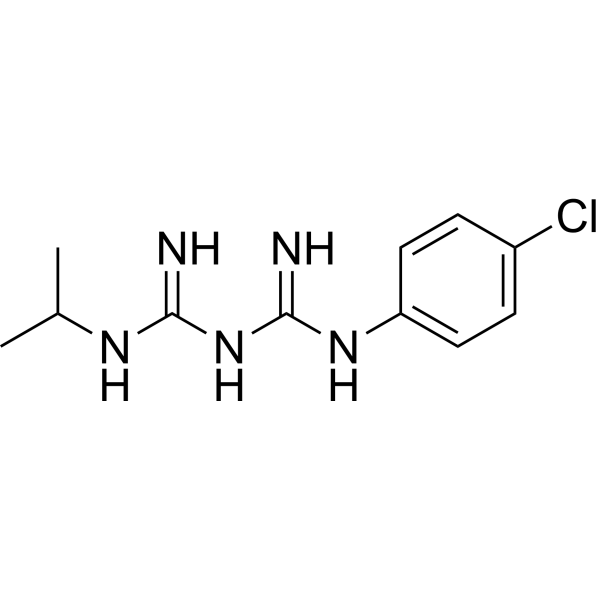
Proguanil, an antimalarial proagent, is metabolized to the active metabolite Cycloguanil (HY-12784). Proguanil is a dihydrofolate reductase (DHFR) inhibitor.
For research use only. We do not sell to patients.
- Purity : 99.84%
- CAS No.: 500-92-5
- Formula: C11H16ClN5
- Molecular Weight:253.73
-
Storage:Powder -20°C, 3 years , 4°C, 2 years ; In solvent -80°C, 2 years , -20°C, 1 year

To place orders, for customer services and technical support, please contact: MedChemExpress USA
Tel: 609-228-6898 E-mail: [email protected] [email protected]


-
 Biological Activity
-
Chemical Information
-
Solvent & Solubility
- Purity & Documentation
- References
-
 Help & FAQs


-
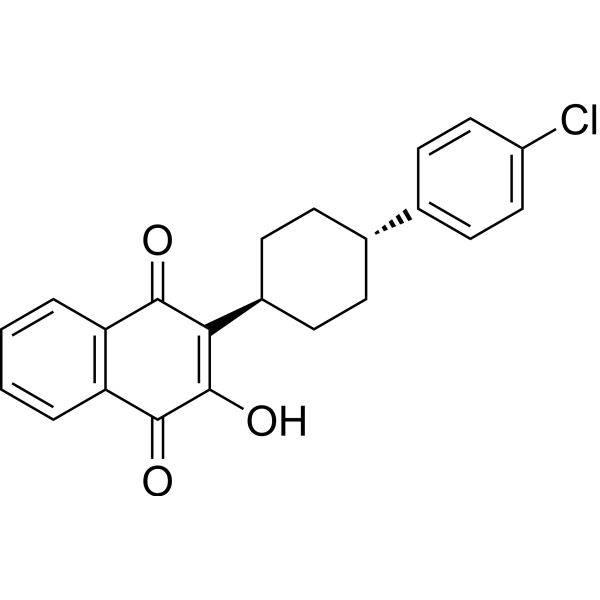
HY-13832
AtovaquoneAntimalarial Agent -
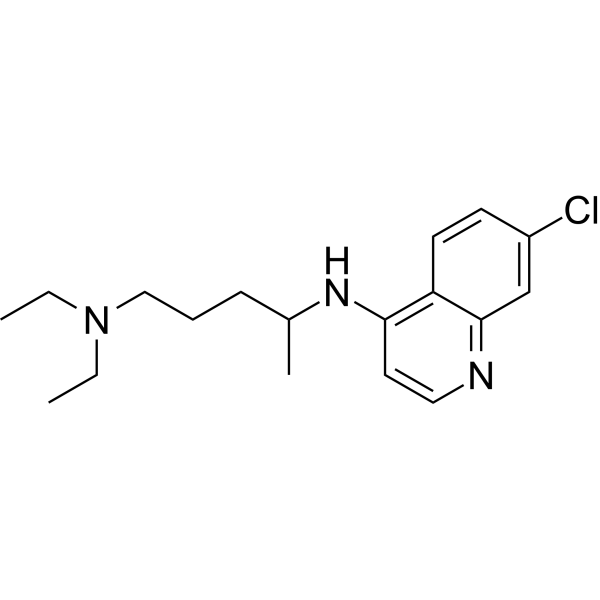
HY-17589A
ChloroquineAntimalarial Agent -
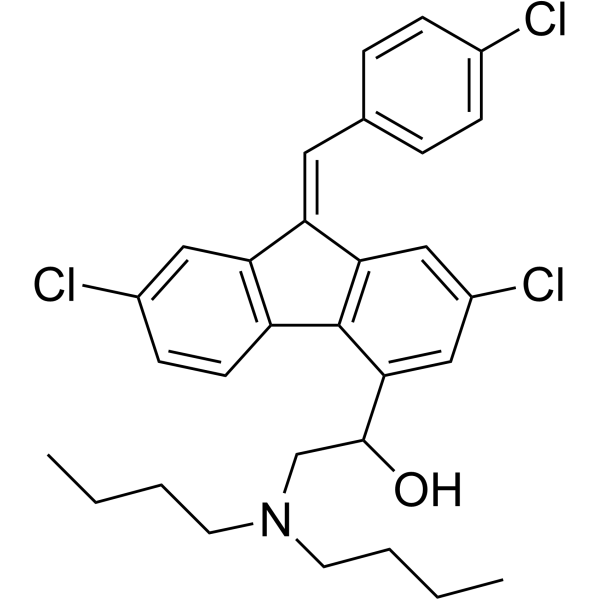
HY-B0803
LumefantrineParasite Inhibitor -
HY-17502
SimvastatinHMGCR Inhibitor -
HY-B0627
MetforminAntihyperglycemic Agent -
HY-12784A
Cycloguanil hydrochlorideDihydrofolate Reductase Inhibitor -
HY-17471A
Metformin hydrochlorideAntihyperglycemic Agent -
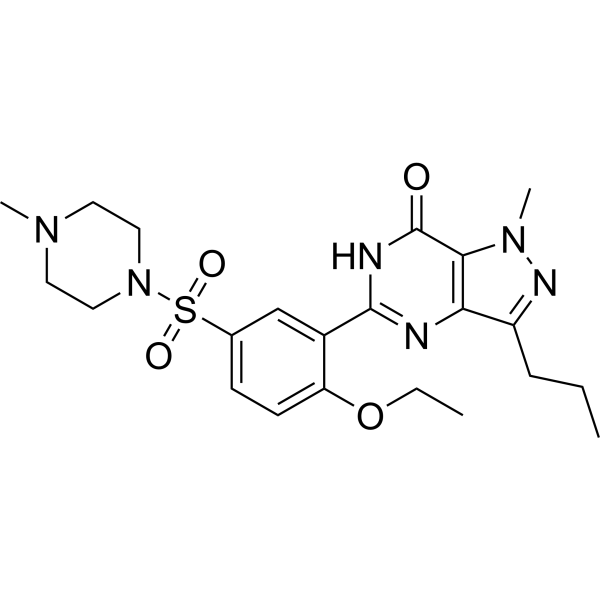
HY-15025
SildenafilPDE5 Inhibitor -
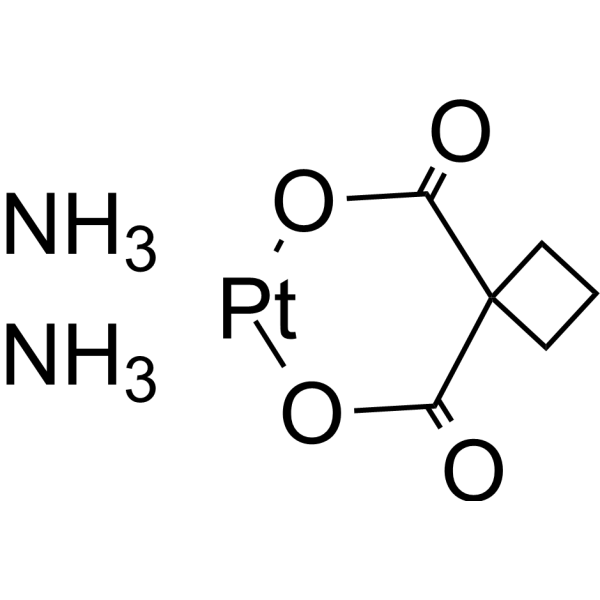
HY-17393
CarboplatinDNA Synthesis Inhibitor -
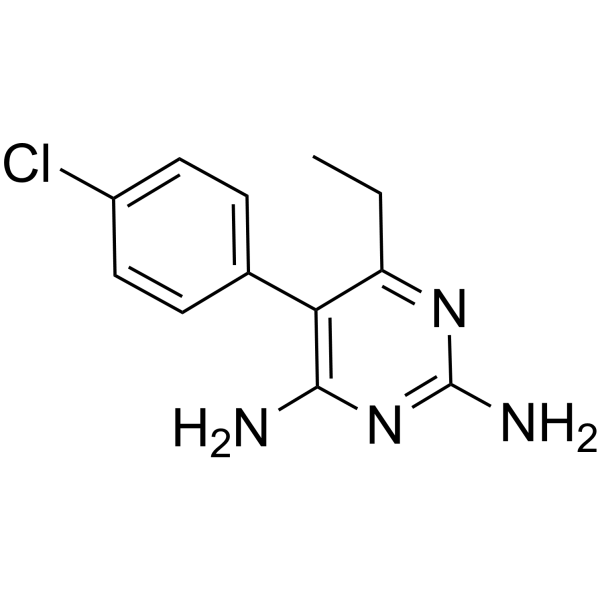
HY-18062
PyrimethamineDHFR Inhibitor -
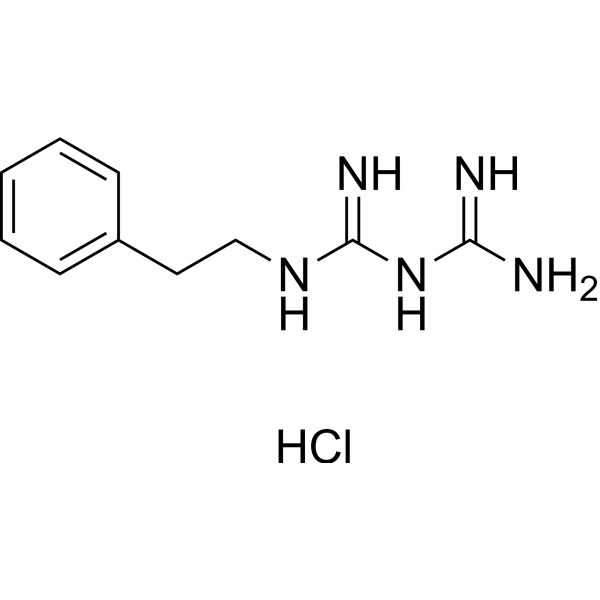
HY-16397A
Phenformin hydrochlorideAMP-activated protein kinase Activator -

HY-B0806R
Proguanil (Standard)DHFR Inhibitor
Publications Citing Use of MedChemExpress (MCE) Proguanil
MoreAll Parasite Isoforms
More

Biological Activity
Description
IC50 & Target
|
Plasmodium |
Cellular Effect
|
Cell Line

|
Type | Value | Description | References |
|---|---|---|---|---|
| A2780 | IC50 |
13 μM
Compound: Proguanil
|
Antiproliferative activity against human A2780 cells assessed as reduction in cell viability incubated for 72 hrs by MTT assay
Antiproliferative activity against human A2780 cells assessed as reduction in cell viability incubated for 72 hrs by MTT assay
|
[PMID: 31864776] |
| A549 | IC50 |
3.8 μM
Compound: Proguanil
|
Antiproliferative activity against human A549 cells assessed as reduction in cell viability incubated for 72 hrs by MTT assay
Antiproliferative activity against human A549 cells assessed as reduction in cell viability incubated for 72 hrs by MTT assay
|
[PMID: 31864776] |
| HCT-116 | IC50 |
8.4 μM
Compound: Proguanil
|
Antiproliferative activity against human HCT116 cells assessed as reduction in cell viability incubated for 72 hrs by MTT assay
Antiproliferative activity against human HCT116 cells assessed as reduction in cell viability incubated for 72 hrs by MTT assay
|
[PMID: 31864776] |
| HEK293 | EC50 |
>10000 nM
Compound: BIG22
|
Agonist activity at human TAAR1 expressed in HEK293 cells assessed as cAMP accumulation after 20 mins by BRET assay
Agonist activity at human TAAR1 expressed in HEK293 cells assessed as cAMP accumulation after 20 mins by BRET assay
|
[PMID: 27823885] |
| HeLa | EC50 |
>100 μM
Compound: 30
|
Antiviral activity against coxsackie B4 virus infected in human HeLa cells assessed as inhibition of viral-induced cytopathic effect measured after 3 to 6 days post infection by microscopic analysis
Antiviral activity against coxsackie B4 virus infected in human HeLa cells assessed as inhibition of viral-induced cytopathic effect measured after 3 to 6 days post infection by microscopic analysis
|
[PMID: 28477572] |
| HeLa | EC50 |
>100 μM
Compound: 30
|
Antiviral activity against Respiratory syncytial virus infected in human HeLa cells assessed as inhibition of viral-induced cytopathic effect measured after 3 to 6 days post infection by microscopic analysis
Antiviral activity against Respiratory syncytial virus infected in human HeLa cells assessed as inhibition of viral-induced cytopathic effect measured after 3 to 6 days post infection by microscopic analysis
|
[PMID: 28477572] |
| HeLa | EC50 |
>100 μM
Compound: 30
|
Antiviral activity against vesicular stomatitis virus infected in human HeLa cells assessed as inhibition of viral-induced cytopathic effect measured after 3 to 6 days post infection by microscopic analysis
Antiviral activity against vesicular stomatitis virus infected in human HeLa cells assessed as inhibition of viral-induced cytopathic effect measured after 3 to 6 days post infection by microscopic analysis
|
[PMID: 28477572] |
| MDCK | CC50 |
>100 μM
Compound: 30
|
Cytotoxicity against dog MDCK cells assessed as reduction in cell viability measured after 5 to 6 days by MTS assay
Cytotoxicity against dog MDCK cells assessed as reduction in cell viability measured after 5 to 6 days by MTS assay
|
[PMID: 28477572] |
| T-24 | IC50 |
18.4 μM
Compound: Proguanil
|
Antiproliferative activity against human T24 cells assessed as reduction in cell viability incubated for 72 hrs by MTT assay
Antiproliferative activity against human T24 cells assessed as reduction in cell viability incubated for 72 hrs by MTT assay
|
[PMID: 31864776] |
| UMUC3 | IC50 |
16.3 μM
Compound: Proguanil
|
Antiproliferative activity against human UM-UC-3 cells assessed as reduction in cell viability incubated for 72 hrs by MTT assay
Antiproliferative activity against human UM-UC-3 cells assessed as reduction in cell viability incubated for 72 hrs by MTT assay
|
[PMID: 31864776] |
| Vero | EC50 |
>100 μM
Compound: 30
|
Antiviral activity against Coxsackie B4 virus infected in African green monkey Vero cells assessed as inhibition of viral-induced cytopathic effect measured after 3 to 6 days post infection by microscopic analysis
Antiviral activity against Coxsackie B4 virus infected in African green monkey Vero cells assessed as inhibition of viral-induced cytopathic effect measured after 3 to 6 days post infection by microscopic analysis
|
[PMID: 28477572] |
| Vero | EC50 |
>100 μM
Compound: 30
|
Antiviral activity against para influenza 3 virus infected in African green monkey Vero cells assessed as inhibition of viral-induced cytopathic effect measured after 3 to 6 days post infection by microscopic analysis
Antiviral activity against para influenza 3 virus infected in African green monkey Vero cells assessed as inhibition of viral-induced cytopathic effect measured after 3 to 6 days post infection by microscopic analysis
|
[PMID: 28477572] |
| Vero | EC50 |
>100 μM
Compound: 30
|
Antiviral activity against Punta Toro virus infected in African green monkey Vero cells assessed as inhibition of viral-induced cytopathic effect measured after 3 to 6 days post infection by microscopic analysis
Antiviral activity against Punta Toro virus infected in African green monkey Vero cells assessed as inhibition of viral-induced cytopathic effect measured after 3 to 6 days post infection by microscopic analysis
|
[PMID: 28477572] |
| Vero | EC50 |
>100 μM
Compound: 30
|
Antiviral activity against Reovirus 1 infected in African green monkey Vero cells assessed as inhibition of viral-induced cytopathic effect measured after 3 to 6 days post infection by microscopic analysis
Antiviral activity against Reovirus 1 infected in African green monkey Vero cells assessed as inhibition of viral-induced cytopathic effect measured after 3 to 6 days post infection by microscopic analysis
|
[PMID: 28477572] |
| Vero | EC50 |
>100 μM
Compound: 30
|
Antiviral activity against Sindbis virus infected in African green monkey Vero cells assessed as inhibition of viral-induced cytopathic effect measured after 3 to 6 days post infection by microscopic analysis
Antiviral activity against Sindbis virus infected in African green monkey Vero cells assessed as inhibition of viral-induced cytopathic effect measured after 3 to 6 days post infection by microscopic analysis
|
[PMID: 28477572] |
| Vero | EC50 |
>100 μM
Compound: 30
|
Antiviral activity against Yellow fever virus infected in African green monkey Vero cells assessed as inhibition of viral-induced cytopathic effect measured after 3 to 6 days post infection by microscopic analysis
Antiviral activity against Yellow fever virus infected in African green monkey Vero cells assessed as inhibition of viral-induced cytopathic effect measured after 3 to 6 days post infection by microscopic analysis
|
[PMID: 28477572] |
In Vitro
Proguanil per se has only weak antimalarial activity in vitro (IC50=2.4-19 μM), and its effectiveness depends on the active metabolite Cycloguanil (IC50=0.5-2.5 nM). The Cycloguanil is a dihydrofolate reductase (DHFR) inhibitor. The combination of Atovaquone and Proguanil is synergistic in vitro. Both drugs also have activity against gametocytes and pre-erythrocytic (hepatic) stages of malaria parasites[1].
Proguanil acts as a biguanide rather than as its metabolite Cycloguanil (a parasite dihydrofolate reductase [DHFR] inhibitor) to enhance the Atovaquone effect. Proguanil-mediated enhancement is specific for Atovaquone, since the effects of other mitochondrial electron transport inhibitors, such as Myxothiazole and Antimycin, are not altered by inclusion of Proguanil[2].
5-HT3 receptor responses are reversibly inhibited by Proguanil, the metabolite 4-chlorophenyl-1-biguanide (CPB) and the active metabolite Cycloguanil (CG), with an IC50 of 1.81, 1.48 and 4.36 μM, respectively[3].
MedChemExpress (MCE) has not independently confirmed the accuracy of these methods. They are for reference only.
In Vivo
Serum testosterone level is significantly decreased for proguanil treatment rats[4].
Administration of Malarone (atovaquone and proguanil) to experimentally B. gibsoni infected two dogs in chronic stage and three dogs in acute stage results in decrease in parasitemia, and clinical improvements are observed[5].
MedChemExpress (MCE) has not independently confirmed the accuracy of these methods. They are for reference only.
Clinical Trial
| NCT Number | Sponsor | Condition | Start Date |
Phase
|
|---|---|---|---|---|
| NCT01329991 | Plexxikon| | 2011-05 | PHASE1 |


Chemical Information
-
CAS No. 500-92-5
-
Appearance Solid
-
Molecular Weight 253.73
-
Formula C11H16ClN5
-
Color White to off-white
-
SMILES
N=C(NC1=CC=C(Cl)C=C1)NC(NC(C)C)=N
-
Shipping
Room temperature in continental US; may vary elsewhere.
-
Storage
Powder -20°C 3 years 4°C 2 years In solvent -80°C 2 years -20°C 1 year


Publications (3)
-
Journal Impact Factor
-
Most Recent
-
Pharmaceuticals (Basel)
2024 Sep 19;17(9):1234. PMID: 39338396 -
ACS Omega
Identification of New Modulators and Inhibitors of Palmitoyl-Protein Thioesterase 1 for CLN1 Batten Disease and Cancer. [Abstract]2024 Feb 28;9(10):11870-11882. PMID: 38496939 -
Cell Signal
Proguanil inhibits proliferation and migration in glioblastoma development through targeting CSF1R receptor. [Abstract]2025 Mar:127:111550. PMID: 39662608


Solvent & Solubility
In Vitro:
DMSO : ≥ 130 mg/mL (512.36 mM; Hygroscopic DMSO has a significant impact on the solubility of product, please use newly opened DMSO)
* "≥" means soluble, but saturation unknown.
Please refer to the solubility information to select the appropriate solvent. Once prepared, please aliquot and store the solution to prevent product inactivation from repeated freeze-thaw cycles.
Storage method and period of stock solution: -80°C, 2 years; -20°C, 1 year. When stored at -80°C, please use it within 2 years. When stored at -20°C, please use it within 1 year.
Please refer to the solubility information to select the appropriate solvent. Once prepared, please aliquot and store the solution to prevent product inactivation from repeated freeze-thaw cycles.
Storage method and period of stock solution: -80°C, 2 years; -20°C, 1 year. When stored at -80°C, please use it within 2 years. When stored at -20°C, please use it within 1 year.
Concentration (start) × Volume (start) = Concentration (final) × Volume (final)
In Vivo:
Select the appropriate dissolution method based on your experimental animal and administration route.
- For the following dissolution methods, please ensure to first prepare a clear stock solution using an In Vitro approach and then sequentially add co-solvents:
- To ensure reliable experimental results, the clarified stock solution can be appropriately stored based on storage conditions. As for the working solution for In Vivo experiments, it is recommended to prepare freshly and use it on the same day.
- The percentages shown for the solvents indicate their volumetric ratio in the final prepared solution. If precipitation or phase separation occurs during preparation, heat and/or sonication can be used to aid dissolution.
Add each solvent one by one: 10% DMSO 40% PEG300 5% Tween-80 45% Saline
Solubility: ≥ 2.17 mg/mL (8.55 mM); Clear solution
This protocol yields a clear solution of ≥ 2.17 mg/mL (saturation unknown).
Taking 1 mL working solution as an example, add 100 μL DMSO stock solution (21.7 mg/mL) to 400 μL PEG300, and mix evenly; then add 50 μL Tween-80 and mix evenly; then add 450 μL Saline to adjust the volume to 1 mL.
Preparation of Saline: Dissolve 0.9 g sodium chloride in ddH₂O and dilute to 100 mL to obtain a clear Saline solution.
Add each solvent one by one: 10% DMSO 90% (20% SBE-β-CD in Saline)
Solubility: ≥ 2.17 mg/mL (8.55 mM); Clear solution
This protocol yields a clear solution of ≥ 2.17 mg/mL (saturation unknown).
Taking 1 mL working solution as an example, add 100 μL DMSO stock solution (21.7 mg/mL) to 900 μL 20% SBE-β-CD in Saline, and mix evenly.
Preparation of 20% SBE-β-CD in Saline (4°C, storage for one week): 2 g SBE-β-CD powder is dissolved in 10 mL Saline, completely dissolve until clear.
In Vivo Dissolution Calculator
Please enter the basic information of animal experiments:
-
-
-
-
Recommended: Prepare an additional quantity of animals to account for potential losses during experiments.
Please enter your animal formula composition:
-
%DMSO +
Recommended: Keep the proportion of DMSO in working solution below 2% if your animal is weak.
-
%+
-
+%Tween-80 + +
-
%Saline +
The co-solvents required include: DMSO, . All of co-solvents are available by MedChemExpress (MCE). , Tween 80. All of co-solvents are available by MedChemExpress (MCE).
Working solution concentration: 0.22 mg/mL
Method for preparing stock solution: mg drug dissolved in μL DMSO. Stock solution concentration: mg/mL.
1. Take μL DMSO stock solution;
2. Add μL .
μL , mix evenly;
3. Then add μL Tween 80, mix evenly;
4. Then add μL
Please ensure that the stock solution in the first step is dissolved to a clear state, and add co-solvents in sequence. You can use ultrasonic heating (ultrasonic cleaner, recommended frequency 20-40 kHz), vortexing, etc. to assist dissolution.


Purity & Documentation
-
Data Sheet (276 KB)
-
SDS (393 KB)
- English - EN (393 KB)
- Français - FR (393 KB)
- Deutsch - DE (393 KB)
- Norwegian - NO (393 KB)
- Español - ES (393 KB)
- Swedish - SV (393 KB)
- Italian - IT (393 KB)
- Korean - KR (393 KB)
- Portuguese - PT (393 KB)
-
Handling Instructions (2659 KB)
References
[1]. Pudney M, et al. Atovaquone and proguanil hydrochloride: a review of nonclinical studies. J Travel Med. 1999 May;6 Suppl 1:S8-12. [Content Brief]
[2]. Srivastava IK, et al. A mechanism for the synergistic antimalarial action of atovaquone and proguanil. Antimicrob Agents Chemother. 1999 Jun;43(6):1334-9. [Content Brief]
[3]. Lochner M, et al. The antimalarial drug proguanil is an antagonist at 5-HT3 receptors. J Pharmacol Exp Ther. 2014 Dec;351(3):674-84. [Content Brief]
[4]. Stephen AO, et al. Prolonged administration of proguanil induces reproductive toxicity in male rats. J Toxicol Sci. 2011 Oct;36(5):587-99. [Content Brief]
[5]. Iguchi A, et al. The in vitro interactions and in vivo efficacy of atovaquone and proguanil against Babesia gibsoni infection in dogs. Vet Parasitol. 2013 Nov 8;197(3-4):527-33. [Content Brief]


Complete Stock Solution Preparation Table
Please refer to the solubility information to select the appropriate solvent. Once prepared, please aliquot and store the solution to prevent product inactivation from repeated freeze-thaw cycles.
Storage method and period of stock solution: -80°C, 2 years; -20°C, 1 year. When stored at -80°C, please use it within 2 years. When stored at -20°C, please use it within 1 year.
| Optional Solvent | Concentration Solvent Mass | 1 mg | 5 mg | 10 mg | 25 mg |
|---|---|---|---|---|---|
| DMSO | 1 mM | 3.9412 mL | 19.7060 mL | 39.4120 mL | 98.5299 mL |
| 5 mM | 0.7882 mL | 3.9412 mL | 7.8824 mL | 19.7060 mL | |
| 10 mM | 0.3941 mL | 1.9706 mL | 3.9412 mL | 9.8530 mL | |
| 15 mM | 0.2627 mL | 1.3137 mL | 2.6275 mL | 6.5687 mL | |
| 20 mM | 0.1971 mL | 0.9853 mL | 1.9706 mL | 4.9265 mL | |
| 25 mM | 0.1576 mL | 0.7882 mL | 1.5765 mL | 3.9412 mL | |
| 30 mM | 0.1314 mL | 0.6569 mL | 1.3137 mL | 3.2843 mL | |
| 40 mM | 0.0985 mL | 0.4926 mL | 0.9853 mL | 2.4632 mL | |
| 50 mM | 0.0788 mL | 0.3941 mL | 0.7882 mL | 1.9706 mL | |
| 60 mM | 0.0657 mL | 0.3284 mL | 0.6569 mL | 1.6422 mL | |
| 80 mM | 0.0493 mL | 0.2463 mL | 0.4926 mL | 1.2316 mL | |
| 100 mM | 0.0394 mL | 0.1971 mL | 0.3941 mL | 0.9853 mL |


Proguanil Related Classifications
HY-B0806 Related Classifications
 Powered by Bioz