



Cycloguanil hydrochloride
Based on 3 publication(s) in Google Scholar
Cycloguanil (Chlorguanide triazine) hydrochloride is a dihydrofolate reductase (DHFR) inhibitor with an IC50 of 10.8 μM against human DHFR. Cycloguanil hydrochloride blocks the folate metabolic pathway, thereby affecting nucleotide synthesis and interfering with DNA replication. Cycloguanil inhibits DHFR in Plasmodium and is thus used in malaria research. Cycloguanil hydrochloride also potently inhibits DHFR in human cancer cells and blocks the transcriptional activity of STAT3, thereby exhibiting anticancer activity.
For research use only. We do not sell to patients.
- Purity : 99.93%
- CAS No.: 152-53-4
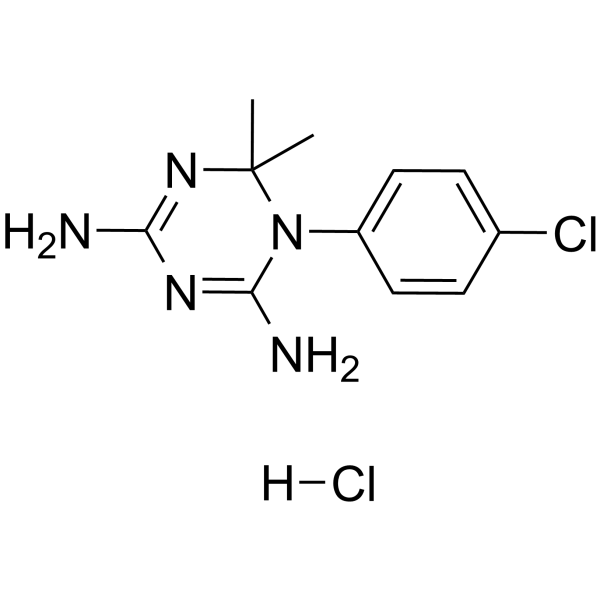
- Formula: C11H15Cl2N5
- Molecular Weight:288.18
-
Storage:
4°C, sealed storage, away from moisture
* In solvent : -80°C, 6 months; -20°C, 1 month (sealed storage, away from moisture)

To place orders, for customer services and technical support, please contact: MedChemExpress USA
Tel: 609-228-6898 E-mail: [email protected] [email protected]


-
 Biological Activity
-
Chemical Information
-
Solvent & Solubility
- Protocols
- Purity & Documentation
- References
-
 Help & FAQs


-
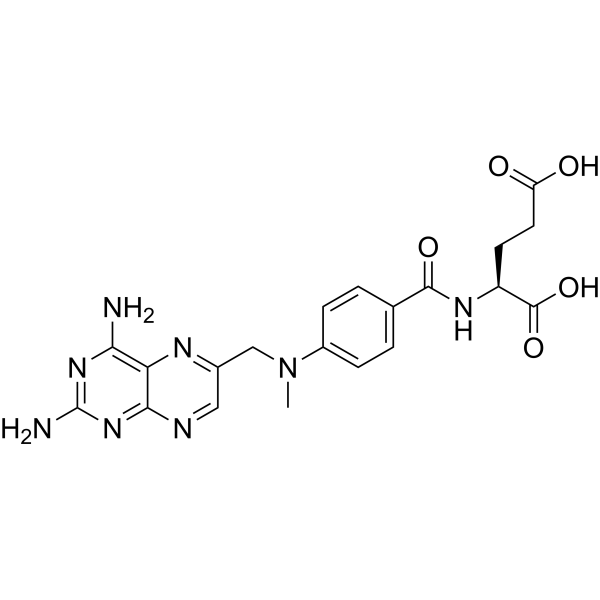
HY-14519
MethotrexateDihydrofolate Reductase Inhibitor -
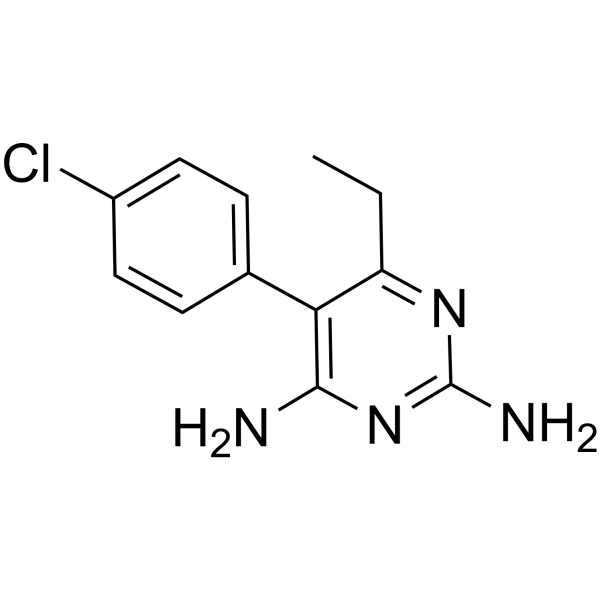
HY-18062
PyrimethamineDHFR Inhibitor -
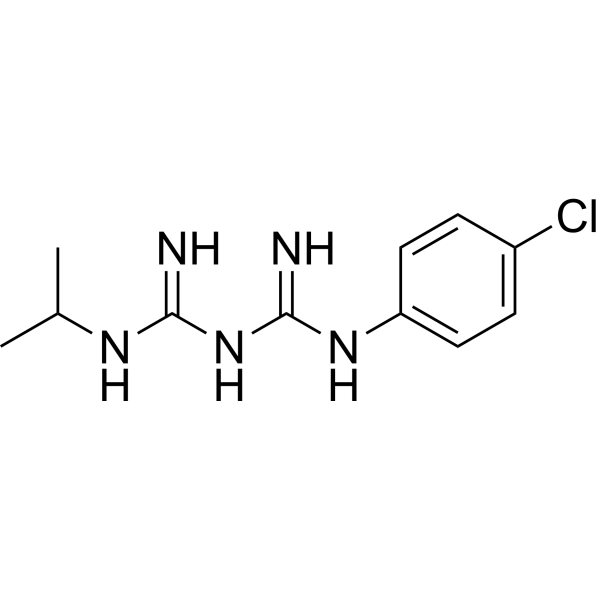
HY-B0806
ProguanilDHFR Inhibitor -
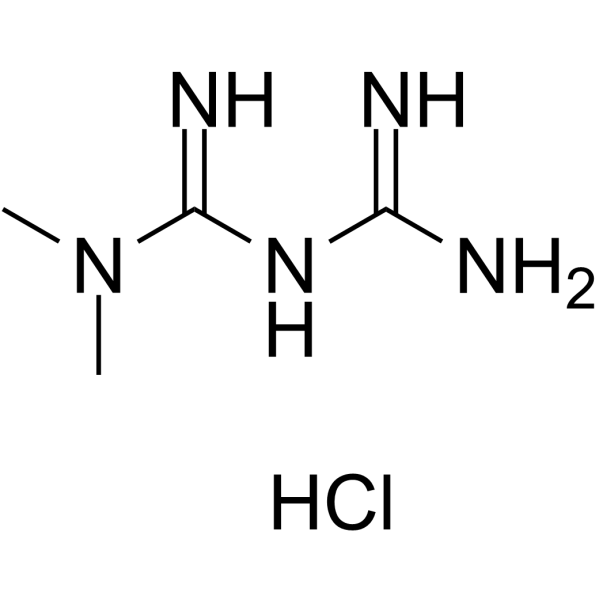
HY-17471A
Metformin hydrochlorideAntihyperglycemic Agent -
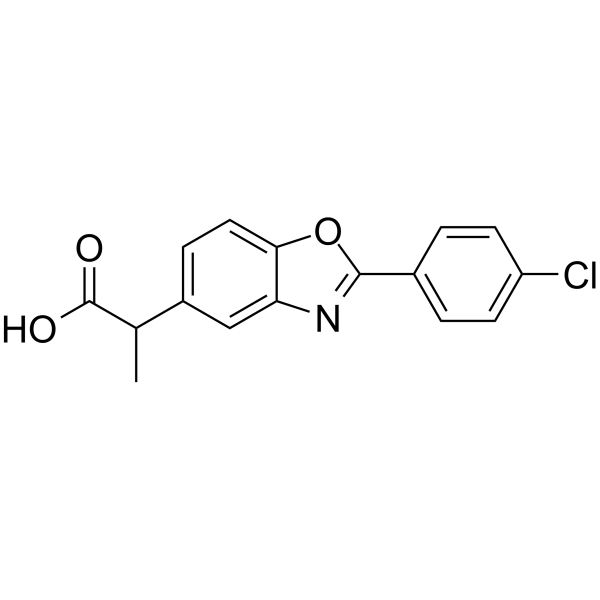
HY-13568
BenoxaprofenNonsteroidal Anti-inflammatory Agent -

HY-12784AR
Cycloguanil hydrochloride (Standard)Analytical Standard -
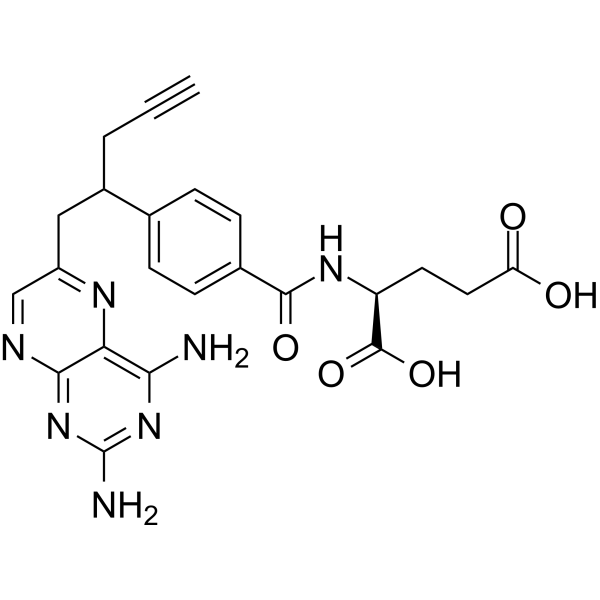
HY-10446
PralatrexateDihydrofolate Reductasean Inhibitor -
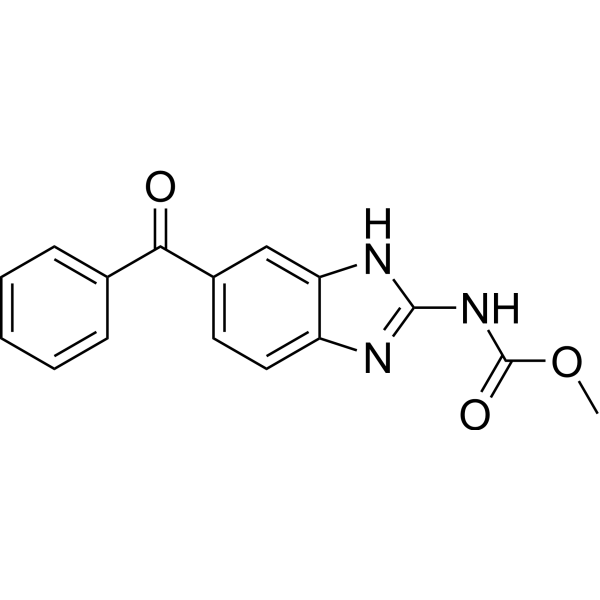
HY-17595
MebendazoleApoptosis Inducer -
HY-15310
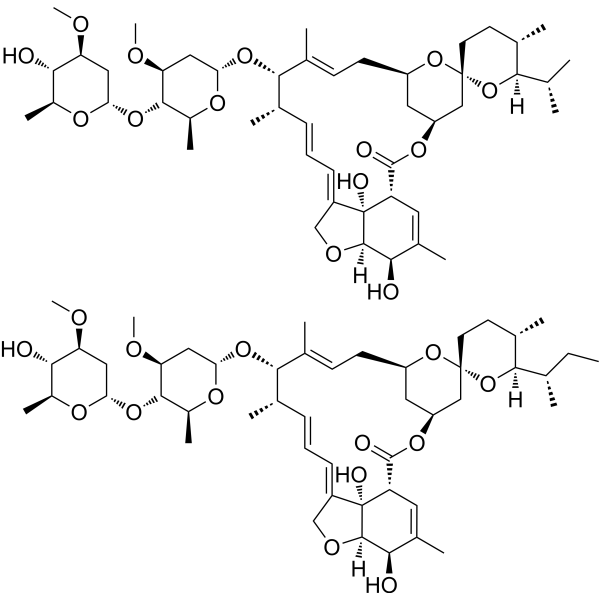
IvermectinAnti-parasite Agent -
HY-B0803
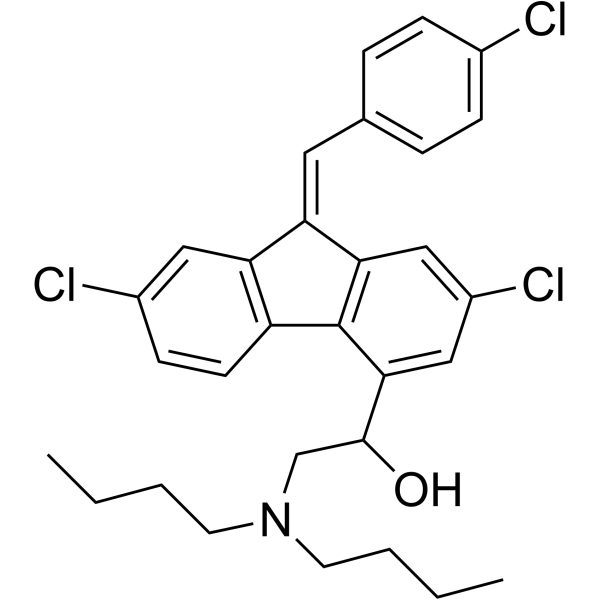
LumefantrineParasite Inhibitor -
HY-B0244
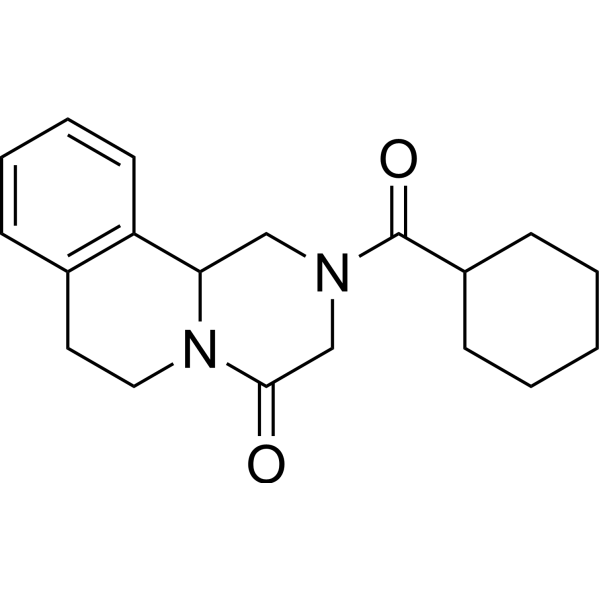
PraziquantelTrematocide -

HY-14519R
Methotrexate (Standard)Reference Standard
Publications Citing Use of MedChemExpress (MCE) Cycloguanil hydrochloride
MoreAll Parasite Isoforms
MoreAll DNA/RNA Synthesis Isoforms
More

Biological Activity
Description
IC50 & Target
|
Plasmodium |
Cellular Effect
|
Cell Line

|
Type | Value | Description | References |
|---|---|---|---|---|
| Huh-7 | CC50 |
27.36 μM
Compound: GNF-Pf-2519
|
NOVARTIS: Cytotoxicity against human hepatocellular carcinoma cell line (Huh7)
NOVARTIS: Cytotoxicity against human hepatocellular carcinoma cell line (Huh7)
|
[PMID: 18579783] |
In Vitro
Cycloguanil hydrochloride exhibits anticancer activity against the NCI-60 panel of human tumor cell lines, and shows selective activity toward the MDA-MB-468 and MCF-7 breast cancer cell lines[2].
Cycloguanil (72 h) hydrochloride induces growth arrest in MDA-MB-468, MDA-MB-231 and MCF-7 breast cancer cells, with cell viability maintained at approximately 50% of that in the vehicle control group at high concentrations, and this effect cannot be reversed by folinic acid treatment[2].
Cycloguanil (0.001-10 μM; 24 h) hydrochloride binds to DHFR in intact MDA-MB-468 breast cancer cells, resulting in a dose-dependent accumulation of DHFR protein after 24 hours of treatment[2].
Cycloguanil (10 μM; 24 h) hydrochloride disrupts folate metabolism and nucleotide homeostasis in MDA-MB-231 breast cancer cells, and supplementation with Folinic acid (HY-17556) reverses the metabolite changes induced by it, a result consistent with DHFR inhibition[2].
Cycloguanil (0.02-20 μM; 6 h) hydrochloride potently inhibits the transcriptional activity of STAT3 in U3A fibrosarcoma cells at concentrations as low as 0.02 μM, which is consistent with the downstream effects of DHFR inhibition[2].
MedChemExpress (MCE) has not independently confirmed the accuracy of these methods. They are for reference only. Further protocols information, click here.
-
Cell Line:MDA-MB-468 human breast cancer cells
-
Concentration:0.001, 0.01, 0.1, 1 and 10 μM
-
Incubation Time:24 h
-
Result:Induced a dose-dependent accumulation of DHFR protein, with increasing fold-change in DHFR levels observed across the tested concentration range.


Chemical Information
-
CAS No. 152-53-4
-
Appearance Solid
-
Molecular Weight 288.18
-
Formula C11H15Cl2N5
-
Color White to off-white
-
SMILES
NC1=NC(N)=NC(C)(N1C2=CC=C(C=C2)Cl)C.[H]Cl
-
Synonyms
Chlorguanide triazine hydrochloride
-
Shipping
Room temperature in continental US; may vary elsewhere.
-
Storage
4°C, sealed storage, away from moisture
* In solvent : -80°C, 6 months; -20°C, 1 month (sealed storage, away from moisture)


Publications (3)
-
Journal Impact Factor
-
Most Recent
-
Pharmaceuticals (Basel)
2024 Sep 19;17(9):1234. PMID: 39338396 -
Antimicrob Agents Chemother
Synergistic activity of RSL3 and Pyrimethamine to inhibit the proliferation of Plasmodium falciparum. [Abstract]2025 Aug 18:e0047125. PMID: 40823867 -


Solvent & Solubility
In Vitro:
DMSO : 62.5 mg/mL (216.88 mM; Need ultrasonic; Hygroscopic DMSO has a significant impact on the solubility of product, please use newly opened DMSO)
H2O : 25 mg/mL (86.75 mM; ultrasonic and warming and heat to 60°C)
Please refer to the solubility information to select the appropriate solvent. Once prepared, please aliquot and store the solution to prevent product inactivation from repeated freeze-thaw cycles.
Storage method and period of stock solution: -80°C, 6 months; -20°C, 1 month (sealed storage, away from moisture). When stored at -80°C, please use it within 6 months. When stored at -20°C, please use it within 1 month.
* Note: If you choose water as the stock solution, please dilute it to the working solution, then filter and sterilize it with a 0.22 μm filter before use.
Please refer to the solubility information to select the appropriate solvent. Once prepared, please aliquot and store the solution to prevent product inactivation from repeated freeze-thaw cycles.
Storage method and period of stock solution: -80°C, 6 months; -20°C, 1 month (sealed storage, away from moisture). When stored at -80°C, please use it within 6 months. When stored at -20°C, please use it within 1 month.
* Note: If you choose water as the stock solution, please dilute it to the working solution, then filter and sterilize it with a 0.22 μm filter before use.
Concentration (start) × Volume (start) = Concentration (final) × Volume (final)
In Vivo:
Select the appropriate dissolution method based on your experimental animal and administration route.
- For the following dissolution methods, please ensure to first prepare a clear stock solution using an In Vitro approach and then sequentially add co-solvents:
- To ensure reliable experimental results, the clarified stock solution can be appropriately stored based on storage conditions. As for the working solution for In Vivo experiments, it is recommended to prepare freshly and use it on the same day.
- The percentages shown for the solvents indicate their volumetric ratio in the final prepared solution. If precipitation or phase separation occurs during preparation, heat and/or sonication can be used to aid dissolution.
Add each solvent one by one: 10% DMSO 40% PEG300 5% Tween-80 45% Saline
Solubility: ≥ 2.08 mg/mL (7.22 mM); Clear solution
This protocol yields a clear solution of ≥ 2.08 mg/mL (saturation unknown).
Taking 1 mL working solution as an example, add 100 μL DMSO stock solution (20.8 mg/mL) to 400 μL PEG300, and mix evenly; then add 50 μL Tween-80 and mix evenly; then add 450 μL Saline to adjust the volume to 1 mL.
Preparation of Saline: Dissolve 0.9 g sodium chloride in ddH₂O and dilute to 100 mL to obtain a clear Saline solution.
Add each solvent one by one: 10% DMSO 90% (20% SBE-β-CD in Saline)
Solubility: ≥ 2.08 mg/mL (7.22 mM); Clear solution
This protocol yields a clear solution of ≥ 2.08 mg/mL (saturation unknown).
Taking 1 mL working solution as an example, add 100 μL DMSO stock solution (20.8 mg/mL) to 900 μL 20% SBE-β-CD in Saline, and mix evenly.
Preparation of 20% SBE-β-CD in Saline (4°C, storage for one week): 2 g SBE-β-CD powder is dissolved in 10 mL Saline, completely dissolve until clear.
In Vivo Dissolution Calculator
Please enter the basic information of animal experiments:
-
-
-
-
Recommended: Prepare an additional quantity of animals to account for potential losses during experiments.
Working solution concentration: 0.22 mg/mL
This product has good water solubility, please refer to the measured solubility data in water/PBS/Saline for details.

Protocols
-
Dual Luciferin reporter gene assay
Luciferin reporter gene assay is a reporting system to detect the activity of Firefly Luciferase using luciferin as a substrate, which is often used in the research of miRNA target gene verification and promoter transcriptive activity regulation. Dual luciferase usually refers to Firefly luciferase and Renilla luciferase.
-
Cell Cytotoxicity Assay
Cytotoxicity assays are usually based on the assessment of cell membrane damage, which can also be indirectly detected by measuring cell viability. Detection methods include MTT assay, CKK-8 assay, LDH assay and ATP assay, etc.
-
PCNA Immunodetection Proliferation Assay
PCNA immunodetection measures proliferative activity by detecting proliferating cell nuclear antigen, a nuclear protein associated with DNA polymerase δ function and DNA replication. The assay readout is the proportion of PCNA-positive nuclei among total counted cells, but PCNA labeling is not identical to BrdU labeling because PCNA can mark late G1/early S-associated replication competence and may persist beyond active DNA synthesis depending on fixation and extraction conditions.


Purity & Documentation
-
Data Sheet (275 KB)
-
SDS (393 KB)
- English - EN (393 KB)
- Français - FR (393 KB)
- Deutsch - DE (393 KB)
- Norwegian - NO (393 KB)
- Español - ES (393 KB)
- Swedish - SV (393 KB)
- Italian - IT (393 KB)
- Korean - KR (393 KB)
- Portuguese - PT (393 KB)
-
Handling Instructions (2659 KB)
References
[1]. Matthaei J, et al. OCT1 Deficiency Affects Hepatocellular Concentrations and Pharmacokinetics of Cycloguanil, the Active Metabolite of the Antimalarial Drug Proguanil. Clin Pharmacol Ther. 2019;105(1):190-200. [Content Brief]
[2]. Brown JI, et al. Cycloguanil and Analogues Potently Target DHFR in Cancer Cells to Elicit Anti-Cancer Activity. Metabolites. 2023;13(2):151. Published 2023 Jan 19. [Content Brief]


Complete Stock Solution Preparation Table
Please refer to the solubility information to select the appropriate solvent. Once prepared, please aliquot and store the solution to prevent product inactivation from repeated freeze-thaw cycles.
Storage method and period of stock solution: -80°C, 6 months; -20°C, 1 month (sealed storage, away from moisture). When stored at -80°C, please use it within 6 months. When stored at -20°C, please use it within 1 month.
| Optional Solvent | Concentration Solvent Mass | 1 mg | 5 mg | 10 mg | 25 mg |
|---|---|---|---|---|---|
| H2O / DMSO | 1 mM | 3.4701 mL | 17.3503 mL | 34.7005 mL | 86.7513 mL |
| 5 mM | 0.6940 mL | 3.4701 mL | 6.9401 mL | 17.3503 mL | |
| 10 mM | 0.3470 mL | 1.7350 mL | 3.4701 mL | 8.6751 mL | |
| 15 mM | 0.2313 mL | 1.1567 mL | 2.3134 mL | 5.7834 mL | |
| 20 mM | 0.1735 mL | 0.8675 mL | 1.7350 mL | 4.3376 mL | |
| 25 mM | 0.1388 mL | 0.6940 mL | 1.3880 mL | 3.4701 mL | |
| 30 mM | 0.1157 mL | 0.5783 mL | 1.1567 mL | 2.8917 mL | |
| 40 mM | 0.0868 mL | 0.4338 mL | 0.8675 mL | 2.1688 mL | |
| 50 mM | 0.0694 mL | 0.3470 mL | 0.6940 mL | 1.7350 mL | |
| 60 mM | 0.0578 mL | 0.2892 mL | 0.5783 mL | 1.4459 mL | |
| 80 mM | 0.0434 mL | 0.2169 mL | 0.4338 mL | 1.0844 mL | |
| DMSO | 100 mM | 0.0347 mL | 0.1735 mL | 0.3470 mL | 0.8675 mL |
* Note: If you choose water as the stock solution, please dilute it to the working solution, then filter and sterilize it with a 0.22 μm filter before use.


Cycloguanil hydrochloride Related Classifications
HY-12784A Related Classifications
 Powered by Bioz