



Trimetrexate
Based on 3 publication(s) in Google Scholar
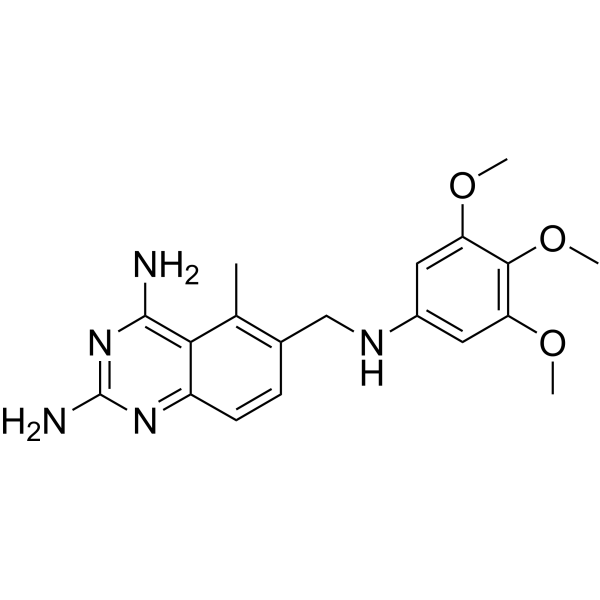
Trimetrexate (CI-898) is an antibiotic, also a potent and orally active dihydrofolate reductase (DHFR) inhibitor, reducing the production of DNA and RNA precursors and leading to cell death, with IC50 values of 4.74 nM and 1.35 nM for human DHFR and Toxoplasma gondii DHFR. Trimetrexate can also inhibit the growth of various cancer cells. Trimetrexate can be used for researching Pneumocystis carinii pneumonia (PCP) and cancer.
Nur für Forschungszwecke. Wir verkaufen nicht an Patienten.
- Reinheit : 99.60%
- CAS. Nr.: 52128-35-5
- Formel: C19H23N5O3
- Molecular Weight:369.42
-
Speicherung:Powder -20°C, 3 years , 4°C, 2 years ; In solvent -80°C, 2 years , -20°C, 1 year

To place orders, for customer services and technical support, please contact: MedChemExpress USA
Tel: 609-228-6898 E-mail: [email protected] [email protected]


-
 Biologische Aktivität
-
Chemical Information
-
Lösungsmittel & Löslichkeit
- Protokoll
- Reinheit & Dokumentation
- Verweise
-
 Help & FAQs


-
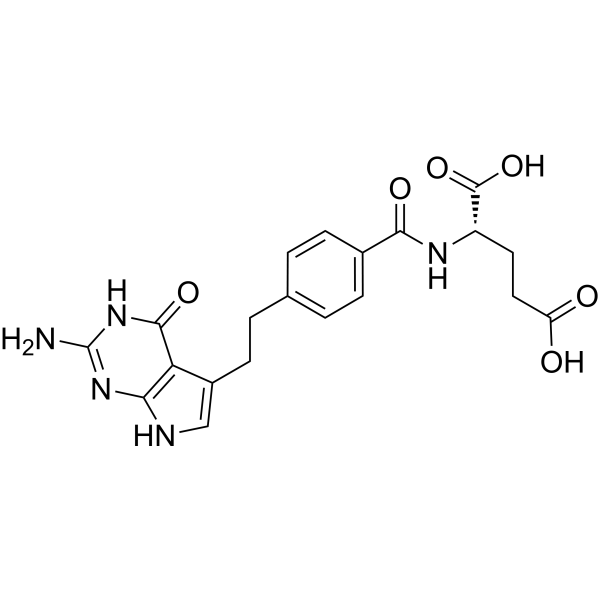
HY-10820
Pemetrexed -
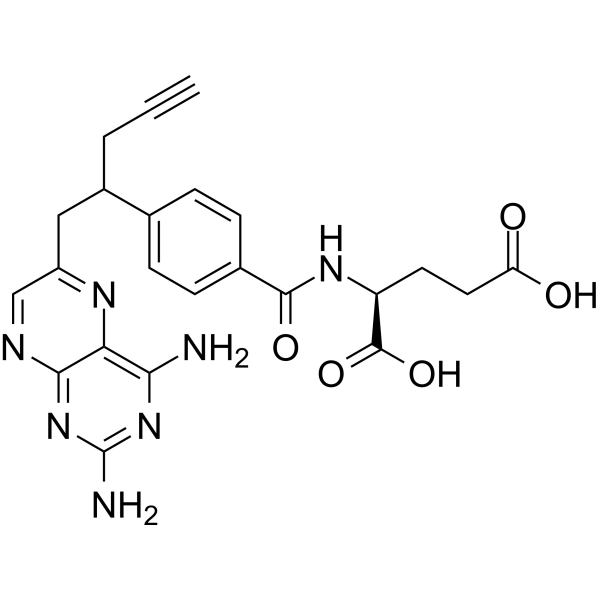
HY-10446
PralatrexateDihydrofolate Reductasean Inhibitor -
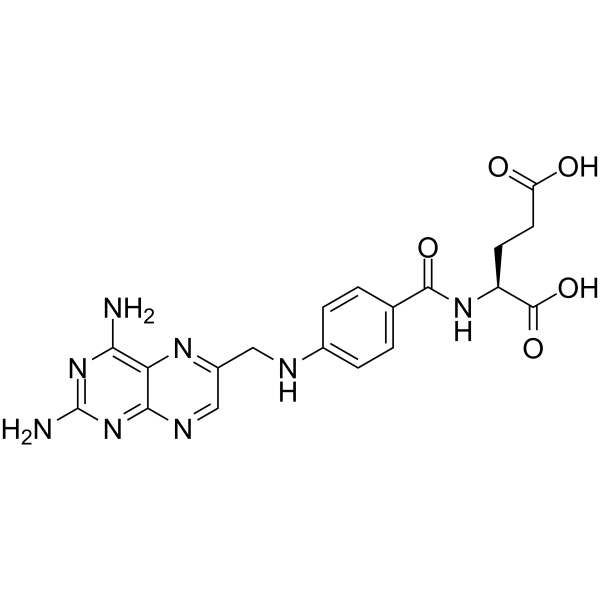
HY-14518
AminopterinFolic Acid/DHFR Antagonist -
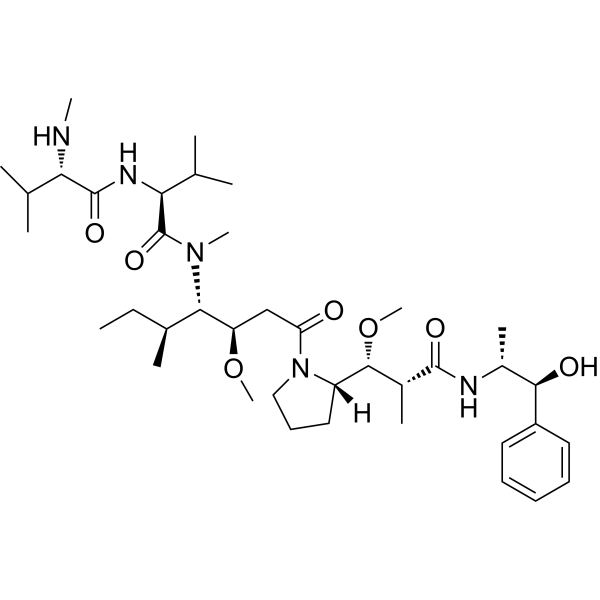
HY-15162
Monomethyl auristatin EAntimitotic Agent -
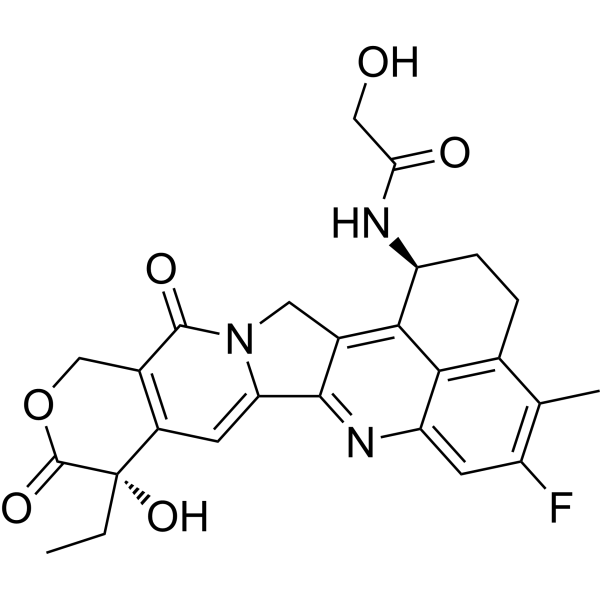
HY-13631D
DXdTopoisomerase I Inhibitor -
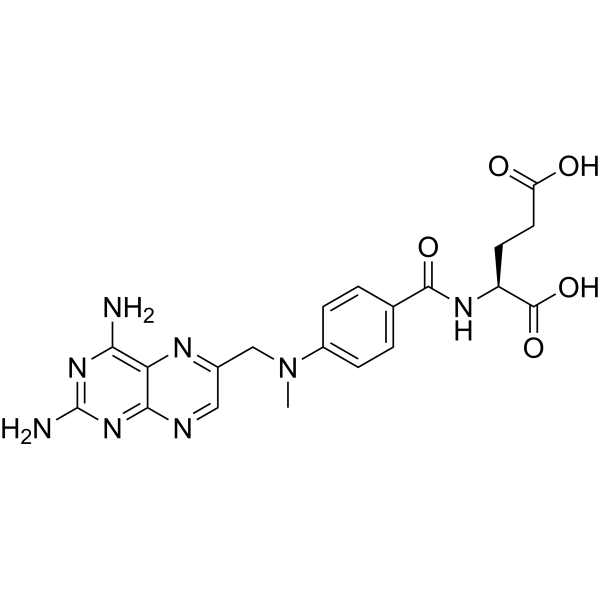
HY-14519
MethotrexateDihydrofolate Reductase Inhibitor -

HY-10373R
Trimetrexate (Standard)Reference Standard -
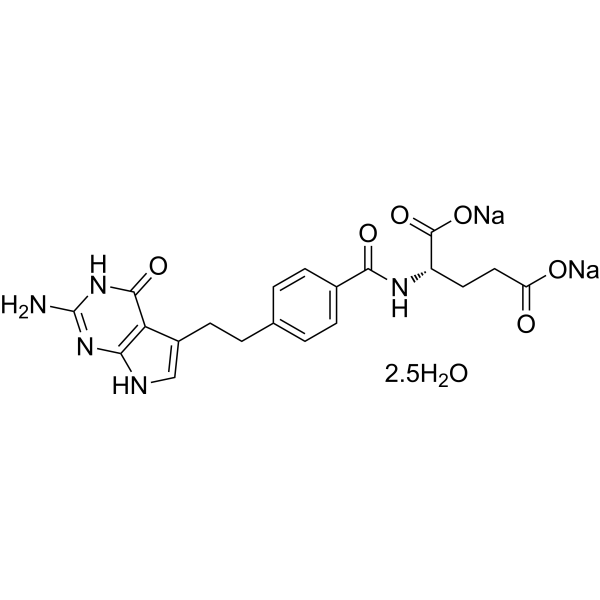
HY-13781
Pemetrexed disodium hemipenta hydrateAutophagy Inducer -
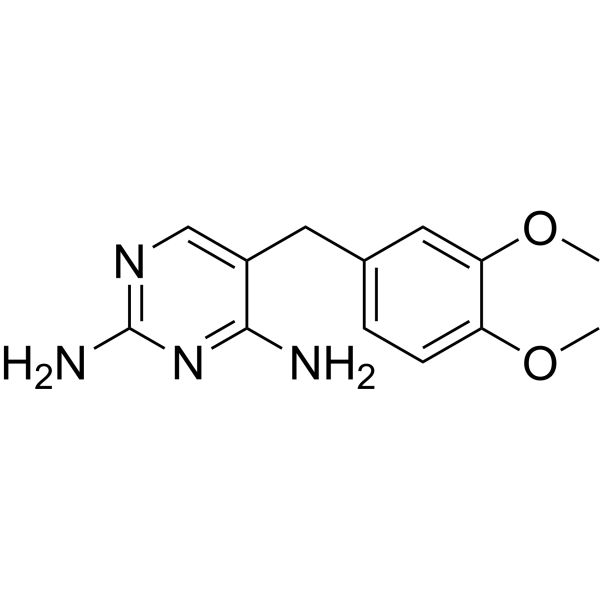
HY-B1902
DiaveridineDHFR Inhibitor -
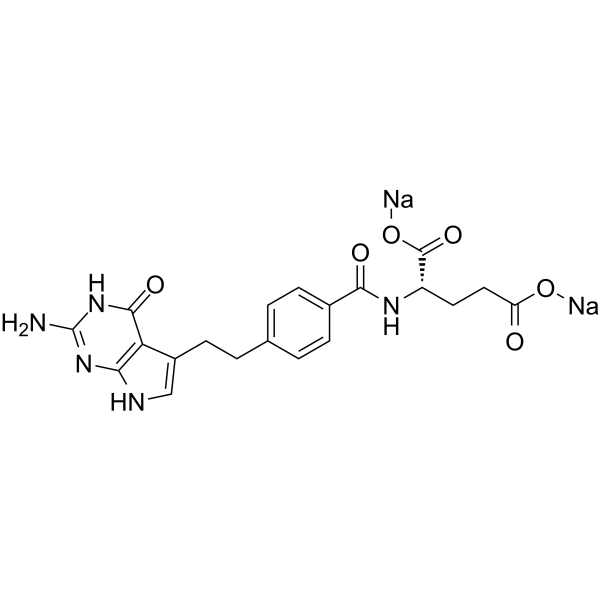
HY-10820A
Pemetrexed disodium -

HY-10820R
Pemetrexed (Standard) -
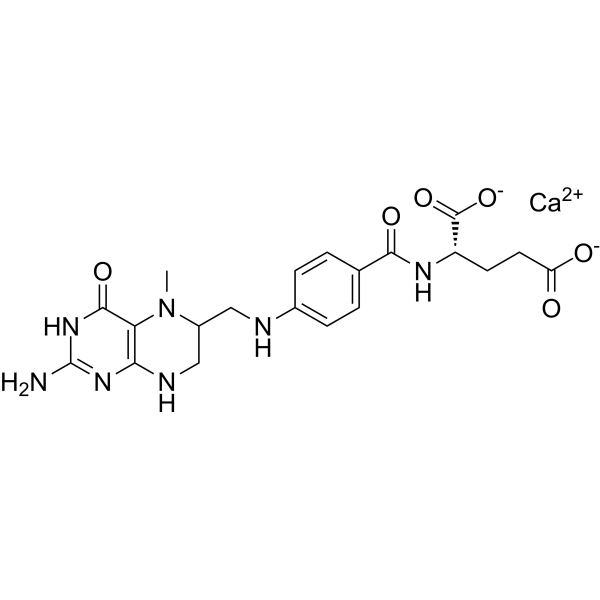
HY-17557
Calcium N5-methyltetrahydrofolateFolic Acid Supplement
Publications Citing Use of MedChemExpress (MCE) Trimetrexate
MoreAlle Antibiotic Isoform-spezifische Produkte anzeigen
MoreAlle Parasite Isoform-spezifische Produkte anzeigen
MoreAlle DNA/RNA Synthesis Isoform-spezifische Produkte anzeigen
More

Biologische Aktivität
Beschreibung
IC50 & Target
[1]|
Toxoplasma |
Cellular Effect
|
Cell Line

|
Type | Value | Description | References |
|---|---|---|---|---|
| A549 | IC50 |
5.3 nM
Compound: TMX
|
Cytotoxic activity evaluated against A549 tumor cells
Cytotoxic activity evaluated against A549 tumor cells
|
[PMID: 8632413] |
| D54 cell line | IC50 |
60 nM
Compound: TMX
|
Cytotoxic Activity was evaluated against D54 tumor cells
Cytotoxic Activity was evaluated against D54 tumor cells
|
[PMID: 8632413] |
| Daoy | IC50 |
12 nM
Compound: TMX
|
Cytotoxic activity was evaluated against Daoy tumor cells
Cytotoxic activity was evaluated against Daoy tumor cells
|
[PMID: 8632413] |
| HCT-116 | GI50 |
0.01 μM
Compound: TMX
|
Growth inhibitory activity against human HCT116 cell line
Growth inhibitory activity against human HCT116 cell line
|
[PMID: 15267250] |
| HCT-116 | GI50 |
19 μM
Compound: TMX
|
Growth inhibitory activity against human HCT116 cell line in presence of Hypoxanthine thymidine(HT)
Growth inhibitory activity against human HCT116 cell line in presence of Hypoxanthine thymidine(HT)
|
[PMID: 15267250] |
| HCT-8 | IC50 |
1.8 nM
Compound: TMX
|
Activity was evaluated against HCT-8 tumor cells
Activity was evaluated against HCT-8 tumor cells
|
[PMID: 8632413] |
| HT-29 | GI50 |
0.01 μM
Compound: TMX
|
Growth inhibitory activity against human HT-29 cell line
Growth inhibitory activity against human HT-29 cell line
|
[PMID: 15267250] |
| HT-29 | GI50 |
21 μM
Compound: TMX
|
Growth inhibitory activity against human HT-29 cell line in presence of Hypoxanthine thymidine(HT)
Growth inhibitory activity against human HT-29 cell line in presence of Hypoxanthine thymidine(HT)
|
[PMID: 15267250] |
| IGROV-1 | IC50 |
12 nM
Compound: trimetrexate
|
Antiproliferative activity against human RFC and FRalpha expressing human IGROV1 cells
Antiproliferative activity against human RFC and FRalpha expressing human IGROV1 cells
|
[PMID: 18680275] |
| IGROV-1 | IC50 |
8.6 nM
Compound: trimetrexate
|
Antiproliferative activity against human RFC and FRalpha expressing human IGROV1 cells in presence of folic acid
Antiproliferative activity against human RFC and FRalpha expressing human IGROV1 cells in presence of folic acid
|
[PMID: 18680275] |
| KB | IC50 |
155 nM
Compound: trimetrexate
|
Antiproliferative activity against human RFC and FRalpha expressing human KB cells in presence of folic acid
Antiproliferative activity against human RFC and FRalpha expressing human KB cells in presence of folic acid
|
[PMID: 18680275] |
| KB | IC50 |
58 nM
Compound: trimetrexate
|
Antiproliferative activity against human RFC and FRalpha expressing human KB cells
Antiproliferative activity against human RFC and FRalpha expressing human KB cells
|
[PMID: 18680275] |
| P388 | IC50 |
2.7 nM
Compound: TMX
|
Cytotoxic activity was evaluated against P388D1 tumor cells
Cytotoxic activity was evaluated against P388D1 tumor cells
|
[PMID: 8632413] |
| R2 | IC50 |
6.7 nM
Compound: trimetrexate
|
Antiproliferative activity against human RFC expressing Chinese hamster R2 cells
Antiproliferative activity against human RFC expressing Chinese hamster R2 cells
|
[PMID: 18680275] |
| SCC-25 | IC50 |
8 nM
Compound: 3
|
Tested for inhibitory concentration against human SCC25 cell line
Tested for inhibitory concentration against human SCC25 cell line
|
[PMID: 8035423] |
| SCC-7 | IC50 |
6.3 nM
Compound: 3
|
Tested for inhibitory concentration against SCC-VII murine squamous carcinoma cell line
Tested for inhibitory concentration against SCC-VII murine squamous carcinoma cell line
|
[PMID: 8035423] |
| U-373MG ATCC | IC50 |
9.6 nM
Compound: TMX
|
Cytotoxic activity was evaluated against U373MG tumor cells
Cytotoxic activity was evaluated against U373MG tumor cells
|
[PMID: 8632413] |
| U-87MG ATCC | IC50 |
11 nM
Compound: TMX
|
Cytotoxic activity was evaluated against U87MG tumor cells
Cytotoxic activity was evaluated against U87MG tumor cells
|
[PMID: 8632413] |
| Vero | IC50 |
16 nM
Compound: TMX
|
Cytotoxic Activity was evaluated against Vero tumor cells
Cytotoxic Activity was evaluated against Vero tumor cells
|
[PMID: 8632413] |
In Vitro
Trimetrexate (0.1 μM, 18 h) completely inhibits proliferation of toxoplasma in murine macrophages[3].
Trimetrexate (1 μM) can cross the toxoplasma cell membrane and rapidly reaches high intracellular concentrations (108 pmol/107 cells within 10 min) [3].
Trimetrexate (0.1 mM; 24 h) inhibits cell growth by 50-60% in SNU-C4 and NCI-H630 cell lines[5].
Trimetrexate (1 and 10 mM; 24 h) produces lethality and inhibits DHFR in C4 cells[5].
MedChemExpress (MCE) has not independently confirmed the accuracy of these methods. They are for reference only.
-
Cell Line:SNU-C4 and NCI-H630
-
Concentration:0.1 mM
-
Incubation Time:24 h
-
Result:Inhibited cell growth by 50-60% in both cell lines.
-
Cell Line:C4 cells
-
Concentration:1 and 10 mM
-
Incubation Time:24 h
-
Result:Produced 42% and 50% lethality at 1 and 10 mM, respectively.
In Vivo
MedChemExpress (MCE) has not independently confirmed the accuracy of these methods. They are for reference only.
-
Animal Model:Toxoplasma infected female BALB/c mice weighing about 20 g[3]
-
Dosage:180 mg/kg or 30 mg/kg
-
Administration:180 mg/kg per day orally in the drinking water or 30 mg/kg per day i.p.
-
Result:Extended the median survival of the infected mice to 10 d (p.o.) or 19 d (i.p.).
-
Animal Model:Charles River Wistar Crl(WI)BR rats weighing approximately 150 to 200 g[4]
-
Dosage:0, 1, 10, or 30 mg/kg
-
Administration:Intravenous injection, once daily for 5 consecutive days followed by a 23-day recovery period
-
Result:Showed chronic toxicity, the testicular changes persisting during the course of multiple cycles of dosing were not reversible within 21 days, but required an additional 56 days for essentially complete recovery.
Clinical Trial
| NCT Number | Sponsor | Condition | Start Date |
Phase
|
|---|---|---|---|---|
| NCT01329991 | Plexxikon| | 2011-05 | PHASE1 |


Chemical Information
-
CAS. Nr. 52128-35-5
-
Appearance Solid
-
Molecular Weight 369.42
-
Formel C19H23N5O3
-
Color Off-white to yellow
-
SMILES
NC1=C(C(C)=C2CNC3=CC(OC)=C(OC)C(OC)=C3)C(C=C2)=NC(N)=N1
-
Synonyms
CI-898
-
Versand
Room temperature in continental US; may vary elsewhere.
-
Speicherung
Powder -20°C 3 years 4°C 2 years In solvent -80°C 2 years -20°C 1 year


Publications (3)
-
Journal Impact Factor
-
Most Recent
-
Nat Commun
IQGAP3 bridges matrix stiffness with glioma stem cell maintenance and radioresistance by stabilizing SOX2. [Abstract]2026 Jun 6. PMID: 42251046 -
Sci Data
High-throughput drug screening identifies novel therapeutics for Low Grade Serous Ovarian Carcinoma. [Abstract]2024 Sep 19;11(1):1024. PMID: 39300112 -
Antimicrob Agents Chemother
Multidrug tolerance conferred by loss-of-function mutations in anti-sigma factor RshA of Mycobacterium abscessus. [Abstract]2024 Dec 5;68(12):e0105124. PMID: 39470195


Lösungsmittel & Löslichkeit
In Vitro:
DMSO : ≥ 61.5 mg/mL (166.48 mM; Hygroscopic DMSO has a significant impact on the solubility of product, please use newly opened DMSO)
* "≥" means soluble, but saturation unknown.
Please refer to the solubility information to select the appropriate solvent. Once prepared, please aliquot and store the solution to prevent product inactivation from repeated freeze-thaw cycles.
Storage method and period of stock solution: -80°C, 2 years; -20°C, 1 year. When stored at -80°C, please use it within 2 years. When stored at -20°C, please use it within 1 year.
Please refer to the solubility information to select the appropriate solvent. Once prepared, please aliquot and store the solution to prevent product inactivation from repeated freeze-thaw cycles.
Storage method and period of stock solution: -80°C, 2 years; -20°C, 1 year. When stored at -80°C, please use it within 2 years. When stored at -20°C, please use it within 1 year.
Konzentration (Stammlösung) × Volumen (Stammlösung) = Konzentration (Ziellösung) × Volumen (Ziellösung)
In Vivo:
Select the appropriate dissolution method based on your experimental animal and administration route.
- For the following dissolution methods, please ensure to first prepare a clear stock solution using an In Vitro approach and then sequentially add co-solvents:
- To ensure reliable experimental results, the clarified stock solution can be appropriately stored based on storage conditions. As for the working solution for In Vivo experiments, it is recommended to prepare freshly and use it on the same day.
- The percentages shown for the solvents indicate their volumetric ratio in the final prepared solution. If precipitation or phase separation occurs during preparation, heat and/or sonication can be used to aid dissolution.
Add each solvent one by one: 10% DMSO 40% PEG300 5% Tween-80 45% Saline
Solubility: ≥ 2.5 mg/mL (6.77 mM); Clear solution
This protocol yields a clear solution of ≥ 2.5 mg/mL (saturation unknown).
Taking 1 mL working solution as an example, add 100 μL DMSO stock solution (25.0 mg/mL) to 400 μL PEG300, and mix evenly; then add 50 μL Tween-80 and mix evenly; then add 450 μL Saline to adjust the volume to 1 mL.
Preparation of Saline: Dissolve 0.9 g sodium chloride in ddH₂O and dilute to 100 mL to obtain a clear Saline solution.
For the following dissolution methods, please prepare the working solution directly:
It is recommended to prepare fresh solutions and use them promptly within a short period of time.
The percentages shown for the solvents indicate their volumetric ratio in the final prepared solution. If precipitation or phase separation occurs during preparation, heat and/or sonication can be used to aid dissolution.
Add each solvent one by one: 50% PEG300 50% Saline
Solubility: 40 mg/mL (108.28 mM); Suspended solution; Need ultrasonic
In Vivo Dissolution Calculator
Please enter the basic information of animal experiments:
-
-
-
-
Recommended: Prepare an additional quantity of animals to account for potential losses during experiments.
Please enter your animal formula composition:
-
%DMSO +
Recommended: Keep the proportion of DMSO in working solution below 2% if your animal is weak.
-
%+
-
+%Tween-80 + +
-
%Saline +
The co-solvents required include: DMSO, . All of co-solvents are available by MedChemExpress (MCE). , Tween 80. All of co-solvents are available by MedChemExpress (MCE).
Working solution concentration: 0.22 mg/mL
Method for preparing stock solution: mg drug dissolved in μL DMSO. Stock solution concentration: mg/mL.
1. Take μL DMSO stock solution;
2. Add μL .
μL , mix evenly;
3. Then add μL Tween 80, mix evenly;
4. Then add μL
Please ensure that the stock solution in the first step is dissolved to a clear state, and add co-solvents in sequence. You can use ultrasonic heating (ultrasonic cleaner, recommended frequency 20-40 kHz), vortexing, etc. to assist dissolution.


Reinheit & Dokumentation
-
Data Sheet (278 KB)
-
SDS (393 KB)
- English - EN (393 KB)
- Français - FR (393 KB)
- Deutsch - DE (393 KB)
- Norwegian - NO (393 KB)
- Español - ES (393 KB)
- Swedish - SV (393 KB)
- Italian - IT (393 KB)
- Korean - KR (393 KB)
- Portuguese - PT (393 KB)
-
Handling Instructions (2659 KB)
Verweise
[1]. Hopper AT, et al. Discovery of Selective Toxoplasma gondii Dihydrofolate Reductase Inhibitors for the Treatment of Toxoplasmosis. J Med Chem. 2019 Feb 14;62(3):1562-1576. [Content Brief]
[2]. Fulton, B., et al. Trimetrexate. Drugs 49, 563–576 (1995). [Content Brief]
[3]. Allegra CJ, et al. Potent in vitro and in vivo antitoxoplasma activity of the lipid-soluble antifolate trimetrexate. J Clin Invest. 1987 Feb;79(2):478-82. [Content Brief]
[4]. Dethloff LA, et al. Chronic toxicity of the anticancer agent trimetrexate in rats. Fundam Appl Toxicol. 1992 Jul;19(1):6-14. [Content Brief]
[5]. Grem JL, Voeller DM, Geoffroy F, Horak E, Johnston PG, Allegra CJ. Determinants of trimetrexate lethality in human colon cancer cells. Br J Cancer. 1994 Dec;70(6):1075-84. [Content Brief]


Complete Stock Solution Preparation Table
Please refer to the solubility information to select the appropriate solvent. Once prepared, please aliquot and store the solution to prevent product inactivation from repeated freeze-thaw cycles.
Storage method and period of stock solution: -80°C, 2 years; -20°C, 1 year. When stored at -80°C, please use it within 2 years. When stored at -20°C, please use it within 1 year.
| Optional Solvent | Concentration Solvent Mass | 1 mg | 5 mg | 10 mg | 25 mg |
|---|---|---|---|---|---|
| DMSO | 1 mM | 2.7069 mL | 13.5347 mL | 27.0695 mL | 67.6736 mL |
| 5 mM | 0.5414 mL | 2.7069 mL | 5.4139 mL | 13.5347 mL | |
| 10 mM | 0.2707 mL | 1.3535 mL | 2.7069 mL | 6.7674 mL | |
| 15 mM | 0.1805 mL | 0.9023 mL | 1.8046 mL | 4.5116 mL | |
| 20 mM | 0.1353 mL | 0.6767 mL | 1.3535 mL | 3.3837 mL | |
| 25 mM | 0.1083 mL | 0.5414 mL | 1.0828 mL | 2.7069 mL | |
| 30 mM | 0.0902 mL | 0.4512 mL | 0.9023 mL | 2.2558 mL | |
| 40 mM | 0.0677 mL | 0.3384 mL | 0.6767 mL | 1.6918 mL | |
| 50 mM | 0.0541 mL | 0.2707 mL | 0.5414 mL | 1.3535 mL | |
| 60 mM | 0.0451 mL | 0.2256 mL | 0.4512 mL | 1.1279 mL | |
| 80 mM | 0.0338 mL | 0.1692 mL | 0.3384 mL | 0.8459 mL | |
| 100 mM | 0.0271 mL | 0.1353 mL | 0.2707 mL | 0.6767 mL |


Trimetrexate Related Classifications
HY-10373 Related Classifications
 Powered by Bioz