



1. Search Result
Search Result
Results for "

HIV-1 transcription

" in MedChemExpress (MCE) Product Catalog:

43

Inhibitors & Agonists

2

Fluorescent Dyes

13

Peptides

1

Natural
Products

1

Isotope-Labeled Compounds

Cat. No. 상품명 Target 연구분야 Chemical Structure
  • HY-18300
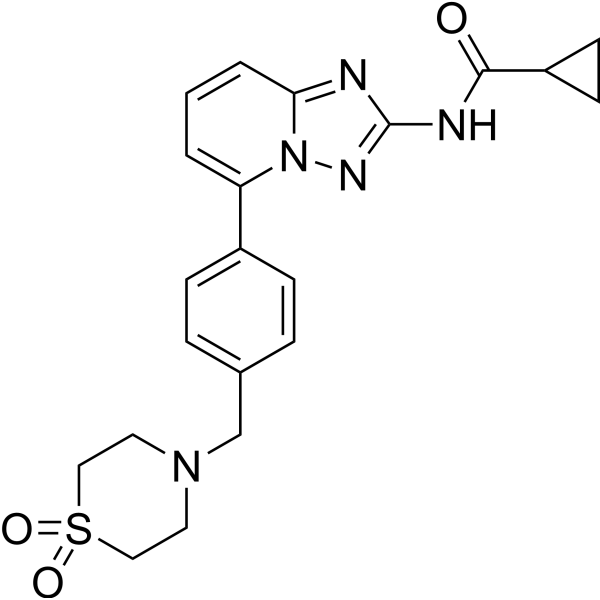
    Filgotinib
    Maximum Cited Publications
    25 Publications Verification

    GLPG0634

    JAK HIV Cancer
    Filgotinib (GLPG0634) is a selective, orally available JAK1 inhibitor with anti-inflammatory and antiviral activities. Filgotinib can effectively inhibit the activities of JAK1, JAK2, JAK3 and TYK2 with IC50 values of 10 nM, 28 nM, 810 nM and 116 nM, respectively. Filgotinib also inhibits HIV-1 driven gene transcription and reduces proliferation of HIV-1 infected cells. Filgotinib can be used in the study of rheumatoid arthritis and inflammatory bowel disease .
    Filgotinib
  • HY-P0281

    TAT(47-57); HIV-1 TAT protein (47-57)

    HIV Infection
    TAT (YGRKKRRQRRR) is derived from the transactivator of transcription (TAT) of human immunodeficiency virus-1 (HIV-1) and is a cell-penetrating peptide. TAT can increase the yields and the solubility of heterologous proteins .
    TAT
  • HY-114268
    BRD-K98645985
    3 Publications Verification

    HIV Infection
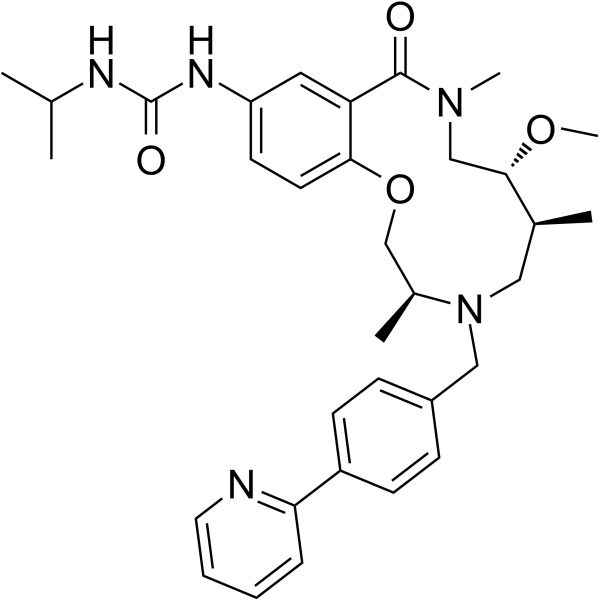
    BRD-K98645985 is a BAF (mammalian SWI/SNF) transcriptional repression inhibitor with an EC50 of ~2.37 μM. BRD-K98645985 binds ARID1A-specific BAF complexes, prevents nucleosomal positioning, and potently reverses HIV-1 latency, without T cell activation or toxicity .
    BRD-K98645985
  • HY-P0282A

    HIV Infection
    TAT peptide (TFA) is a cell penetrating peptide (GRKKRRQRRRPQ) derived from the trans-activating transcriptional activator (Tat) from HIV-1 .
    TAT peptide TFA
  • HY-B1422
    9-Aminoacridine
    4 Publications Verification

    Aminacrine

    Bacterial HIV Infection
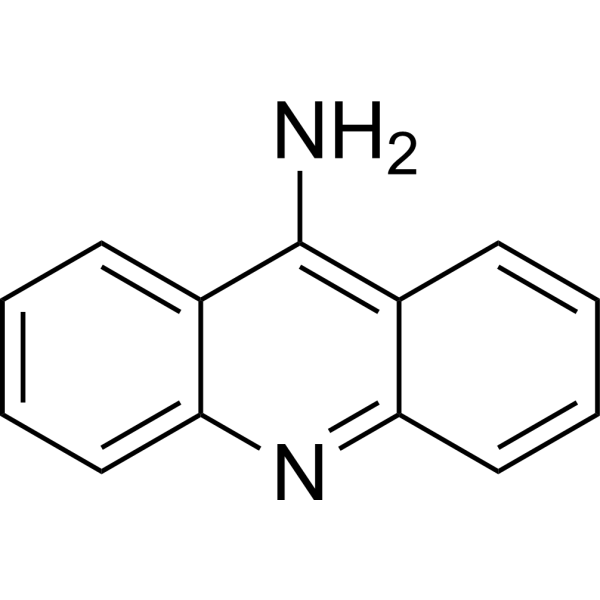
    9-Aminoacridine, a fluorescent probe, acts as an indicator of pH for quantitative determination of transmembrane pH gradients (inside acidic). 9-Aminoacridine is an antimicrobial. 9-Aminoacridine exerts its antimicrobial activity by interacting with specific bacterial DNA and disrupting the proton motive force in K. pneumoniae. 9-Aminoacridine is a HIV-1 inhibitor and inhibits HIV LTR transcription highly dependent on the presence and location of the amino moiety. 9-Aminoacridine inhibits virus replication in HIV-1 infected cell lines. 9-Aminoacridine is used as a Rifampin (RIF; HY-B0272) adjuvant for the multidrug-resistant K. pneumoniae infections .
    9-Aminoacridine
  • HY-19618
    BRD3308
    1 Publications Verification

    HDAC HIV Apoptosis Infection Metabolic Disease
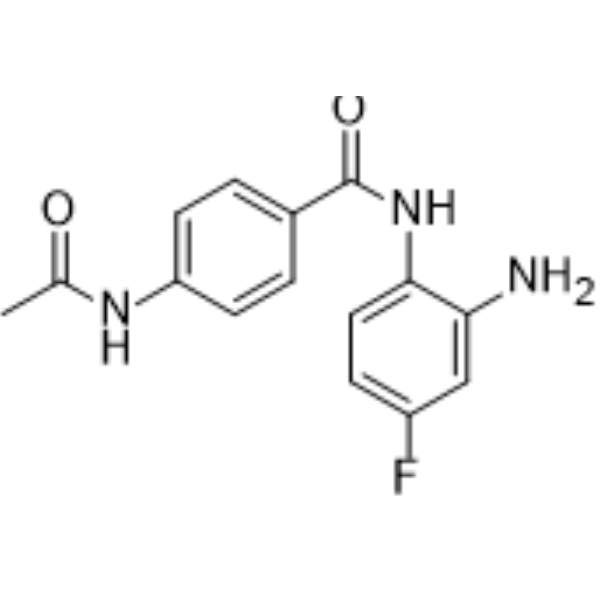
    BRD3308 is a highly selective HDAC3 inhibitor with an IC50 of 54 nM. BRD3308 is 23-fold selectivity for HDAC3 over HDAC1 (IC50 of 1.26 μM) or HDAC2 (IC50 of 1.34 μM). BRD3308 suppresses pancreatic β-cell apoptosis induced by inflammatory cytokines or glucolipotoxic stress, and increases functional insulin release. BRD3308 activates HIV-1 transcription and disrupts HIV-1 latency .
    BRD3308
  • HY-19149
    Ro24-7429
    1 Publications Verification

    HIV Apoptosis Infection Inflammation/Immunology Cancer
    Ro24-7429 is a potent and orally active HIV-1 transactivator protein Tat antagonist. Ro24-7429 is also a runt-related transcription factor 1 (RUNX1) inhibitor. Ro24-7429 has anti-HIV, antifibrotic and anti-inflammatory effects .
    Ro24-7429
  • HY-120072
    PF-3450074
    5 Publications Verification

    PF-74

    HIV Infection
    PF-3450074 (PF-74) is a specifical inhibitor of HIV-1 capsid protein (CA) and displays a broad-spectrum inhibition of HIV isolates with submicromolar potency (EC50=8-640 nM). PF-3450074 (PF-74) acts at an early stage of HIV-1 infection, inhibits viral replication by directly competing with the binding of CPSF6 and NUP153, and blocks the uncoating, assembly, and the reverse transcription steps of the viral life cycle . CPSF6: nuclear host factors cleavage and polyadenylation specific factor 6; NUP153: nucleoporin 153.
    PF-3450074
  • HY-18300A
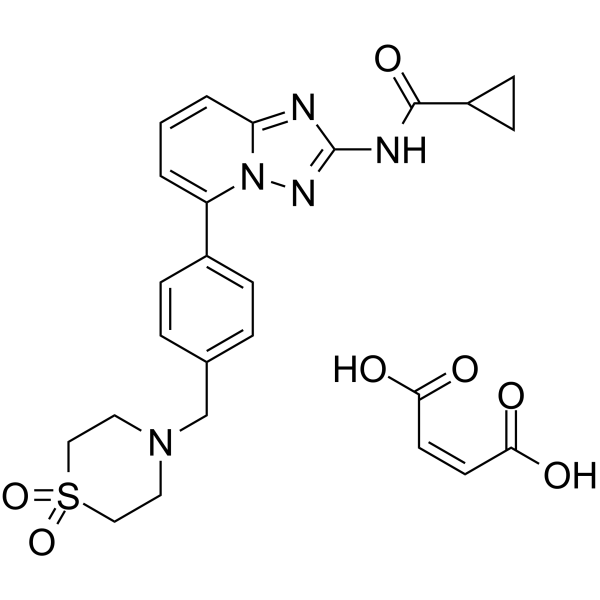
    Filgotinib maleate
    Maximum Cited Publications
    25 Publications Verification

    GLPG0634 maleate

    JAK HIV Inflammation/Immunology
    Filgotinib maleate (GLPG0634 maleate) is a selective, orally available JAK1 inhibitor with anti-inflammatory and antiviral activities. Filgotinib maleate can effectively inhibit the activities of JAK1, JAK2, JAK3 and TYK2 with IC50 values ​​of 10 nM, 28 nM, 810 nM and 116 nM, respectively. Filgotinib maleate also inhibits HIV-1 driven gene transcription and reduces proliferation of HIV-1 infected cells. Filgotinib maleate can be used in the study of rheumatoid arthritis and inflammatory bowel disease .
    Filgotinib maleate
  • HY-130514

    HIV CDK Infection
    SMAPP1 is an activator of protein phosphatase-1 (PP1). SMAPP1 increases phosphorylation of CDK9’s Ser90 and Thr186 residues, but not Ser175. SMAPP1 induces HIV-1 replication, upregulates HIV-1 transcription that led to the reactivation of latent HIV-1 provirus .
    SMAPP1
  • HY-P0282

    HIV Infection
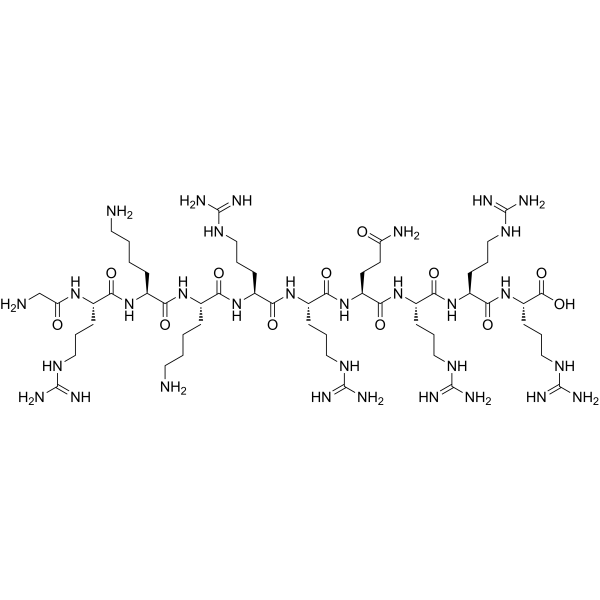
    TAT peptide is a cell penetrating peptide (GRKKRRQRRRPQ) derived from the trans-activating transcriptional activator (Tat) from HIV-1 .
    TAT peptide
  • HY-P0281A

    TAT(47-57) TFA; HIV-1 TAT protein (47-57) TFA

    HIV Infection
    TAT TFA (YGRKKRRQRRR) is derived from the transactivator of transcription (TAT) of human immunodeficiency virus (HIV-1) and is a cell-penetrating peptide. TAT can increase the yields and the solubility of heterologous proteins .
    TAT TFA
  • HY-P4125A

    HIV Fluorescent Dye Others
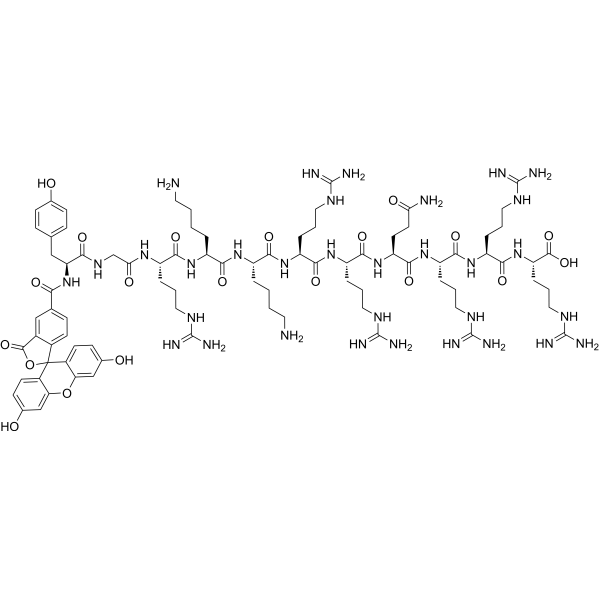
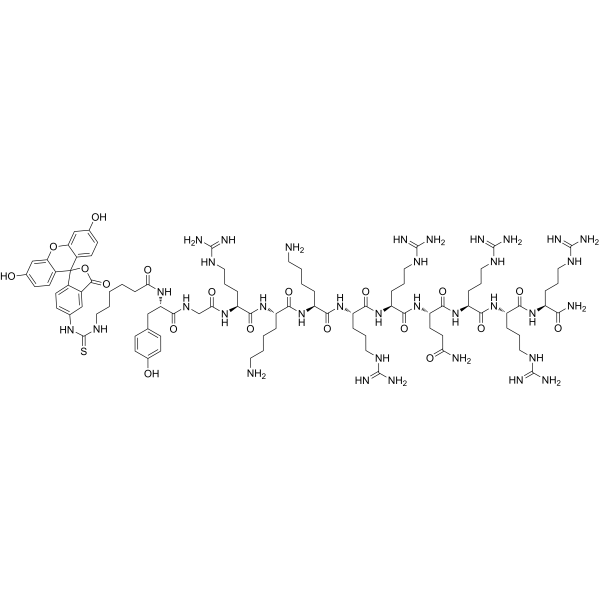
    FITC-LC-TAT (47-57) acetate is a FITC-labeled TAT peptide (HY-P0281) (λex: 493 nm, λem: 522 nm). Derived from the trans-activator of transcription (TAT) of immunodeficiency virus (HIV-1), TAT enhances the yield of heterologous proteins .
    FITC-LC-TAT (47-57) acetate
  • HY-P4122A

    HIV Others
    TAT (47-57), FAM-labeled acetate is a 5(6)-Carboxyfluorescein (HY-15940)-labeled TAT (HY-P0281). TAT (YGRKKRRQRRR) is derived from the transactivator of transcription (TAT) of human immunodeficiency virus-1 (HIV-1) and is a cell-penetrating peptide .
    TAT (47-57), FAM-labeled acetate
  • HY-P4122

    HIV Others
    TAT (47-57), FAM-labeled is a 5(6)-Carboxyfluorescein (HY-15940)-labeled TAT (HY-P0281). TAT (YGRKKRRQRRR) is derived from the transactivator of transcription (TAT) of human immunodeficiency virus-1 (HIV-1) and is a cell-penetrating peptide .
    TAT (47-57), FAM-labeled
  • HY-124644

    HIV Phosphatase Infection
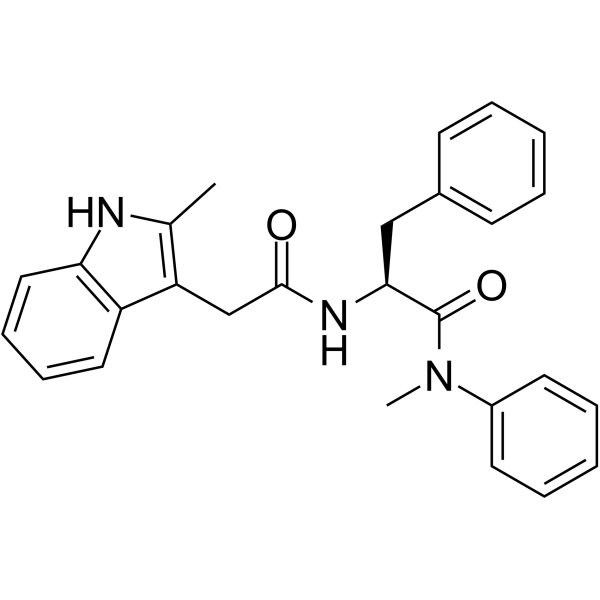
    1E7-03, a low MW tetrahydroquinoline derivative targeting protein phosphatase-1, can inhibit HIV-1 transcription .
    1E7-03
  • HY-103078

    HIV Reverse Transcriptase Infection
    I-XW-053 is a specific anti-HIV-1 capsid inhibitor (IC50=164.2 μM). By binding to the CA NTD-NTD hexamerization interface and the R173 region of CTD (Kd=66.3 μM), I-XW-053 disrupts capsid function and reduces polymerization levels. I-XW-053 effectively blocks HIV-1 uncoating, inhibits reverse transcription and early replication, and exhibits broad-spectrum activity against primary HIV-1 isolates in peripheral blood mononuclear cells. I-XW-053 can be widely used in studies related to HIV-1 infection .
    I-XW-053
  • HY-P4125

    HIV Fluorescent Dye Infection
    FITC-LC-TAT (47-57) is a FITC-labeled TAT peptide (HY-P0281) (λex: 493 nm, λem: 522 nm). Derived from the trans-activator of transcription (TAT) of human immunodeficiency virus (HIV-1), TAT enhances the yield of heterologous proteins .
    FITC-LC-TAT (47-57)
  • HY-P1575

    HIV Infection
    TAT (48-57) is a cell-permeable peptide, derived from HIV-1 transactivator of transcription (Tat) protein residue 48-57.
    TAT (48-57)
  • HY-103078A

    HIV Reverse Transcriptase Infection
    I-XW-053 sodium is a specific anti-HIV-1 capsid inhibitor (IC50=164.2 μM). By binding to the CA NTD-NTD hexamerization interface and the R173 region of CTD (Kd=66.3 μM), I-XW-053 sodium disrupts capsid function and reduces polymerization levels. I-XW-053 sodium effectively blocks HIV-1 uncoating, inhibits reverse transcription and early replication, and exhibits broad-spectrum activity against primary HIV-1 isolates in peripheral blood mononuclear cells. I-XW-053 sodium can be widely used in studies related to HIV-1 infection .
    I-XW-053 sodium
  • HY-P4101

    HIV Infection
    Cys(Npys)-TAT (47-57) is a peptide fragment of TAT peptide and it is able to interact with plasmid DNA electrostatically. Cys(Npys)-TAT (47-57) is corresponding to the transduction domain of TAT with an activated cysteine residue C. TAT is a small nuclear transcriptional activator protein encoded by HIV-1 .
    Cys(Npys)-TAT (47-57)
  • HY-162461

    Reverse Transcriptase HIV Infection
    HIV-1 inhibitor-66 is an orally active non-nucleoside reverse transcription inhibitor (NNRTI). HIV-1 inhibitor-66 shows inhibitory activity against wild-type HIV-1 reverse transcriptase with an IC50 of 40 nM .
    HIV-1 inhibitor-66
  • HY-178741

    HIV Infection
    KFA-027 is a HIV-1 inhibitor, with an IC50 of 0.398 nM. KFA-027 inhibits capsid-dependent early steps (reverse transcription, nuclear import, integration) and late-stage aberrant capsid assembly in the HIV-1 replication cycle. KFA-027 can be used for the study of multidrug-resistant HIV-1 infections .
    KFA-027
  • HY-P1575A

    HIV Infection
    TAT (48-57) (TFA) is a cell-permeable peptide, derived from HIV-1 transactivator of transcription (Tat) protein residue 48-57 .
    TAT (48-57) TFA
  • HY-P0281B

    TAT(47-57) acetate; HIV-1 TAT protein (47-57) acetate

    HIV Infection
    TAT (TAT(47-57)) acetate is derived from the transactivator of transcription (TAT) of human immunodeficiency virus-1 (HIV-1) and is a cell-penetrating peptide. TAT acetate can increase the yields and the solubility of heterologous proteins .
    TAT acetate
  • HY-18300AR

    GLPG0634 maleate (Standard)

    JAK HIV Reference Standards Inflammation/Immunology
    Filgotinib (maleate) (Standard) is the analytical standard of Filgotinib (maleate). This product is intended for research and analytical applications. Filgotinib maleate (GLPG0634 maleate) is a selective, orally available JAK1 inhibitor with anti-inflammatory and antiviral activities. Filgotinib maleate can effectively inhibit the activities of JAK1, JAK2, JAK3 and TYK2 with IC50 values ​​of 10 nM, 28 nM, 810 nM and 116 nM, respectively. Filgotinib maleate also inhibits HIV-1 driven gene transcription and reduces proliferation of HIV-1 infected cells. Filgotinib maleate can be used in the study of rheumatoid arthritis and inflammatory bowel disease .
    Filgotinib maleate (Standard)
  • HY-119337

    Ser/Thr Protease Infection
    CE-2072 is an inhibitor of serine proteases neutrophil elastase and proteinase-3. CE-2072 inhibits HIV-1 production and p24 production in response to IL-18 or NaCl in infected U1 monocytic cells, reduces virus replication in infected peripheral blood mononuclear cells and blocks infection of permissive HeLa cells. CE-2072 suppresses activation of the HIV-1-inducing transcription factor NF-kB in U1 cells. CE-2072 is promising for research of HIV-1-related disease .
    CE-2072
  • HY-146352

    HIV Infection Inflammation/Immunology
    HIV-1 inhibitor-28 (compound 14j2) is a highly potent and selective HIV-1 inhibitor with an EC50 of 58 nM for WT HIV-1 strain and an IC50 of 3.37 μM for HIV-1 WT reverse transcription (RT). HIV-1 inhibitor-28 exhibits relatively low cytotoxicity in MT-4 cells (CC50 = 38.6 μM). HIV-1 inhibitor-28 can be used for researching AIDS .
    HIV-1 inhibitor-28
  • HY-119490

    Epigenetic Reader Domain HIV Infection
    UMB-136 is a bromodomain inhibitor. UMB-136 is a promising latency-reversing agent (LRA) for HIV-1 eradication. UMB-136 reactivates HIV-1 in multiple cell models. UMB-136 enhances HIV-1 transcription and increases viral production through the release of P-TEFb .
    UMB-136
  • HY-119120

    HIV CDK Infection Inflammation/Immunology
    JTK-101 is a selective HIV inhibitor. JTK-101 selectively reduces HIV-1 mRNA synthesis by inhibiting Tat cofactors, including CDK9 and cyclin T1, thereby suppressing the transcriptional activity of HIV-1. JTK-101 may be used in the field of anti-HIV virus research .
    JTK-101
  • HY-106971

    HIV Infection
    PD 161374 is an inhibitor targeting the HIV-1 nucleocapsid protein NCp7. PD 161374 primarily acts on the early stages of viral replication, inhibiting the completion of reverse transcription without affecting viral entry or later assembly. PD 161374 remains active against HIV-1, HIV-2, SIV, and drug-resistant strains. PD 161374 can be used to study antiretroviral agents .
    PD 161374
  • HY-P10074

    ERK Inflammation/Immunology
    TAT-MEK1 is an inhibitor ofERK2, consisting of TAT and MEK1 (N-terminal), TAT (YGRKKRRQRRR) derived from human immunodeficiency (HIV-1) transcriptional trans activator (TAT), is a cell-penetrating peptide. TAT-MEK1 IC50 in vitro for ERK2 is 29 μM .
    TAT-MEK1
  • HY-19111

    TIBO-R 82150

    HIV Reverse Transcriptase Infection
    R-82150 (TIBO-R 82150) is an HIV-1 reverse transcriptase inhibitor that blocks the reverse transcription of viral RNA by binding to the non-substrate binding site of reverse transcriptase, thereby inhibiting viral replication. R-82150 does not inhibit the replication of HIV-2, other RNA viruses, and DNA viruses .
    R-82150
  • HY-B1422R

    Aminacrine (Standard)

    Reference Standards Bacterial HIV Infection
    9-Aminoacridine (Standard) is the analytical standard of 9-Aminoacridine. This product is intended for research and analytical applications. 9-Aminoacridine, a fluorescent probe, acts as an indicator of pH for quantitative determination of transmembrane pH gradients (inside acidic). 9-Aminoacridine is an antimicrobial. 9-Aminoacridine exerts its antimicrobial activity by interacting with specific bacterial DNA and disrupting the proton motive force in K. pneumoniae. 9-Aminoacridine is a HIV-1 inhibitor and inhibits HIV LTR transcription highly dependent on the presence and location of the amino moiety. 9-Aminoacridine inhibits virus replication in HIV-1 infected cell lines. 9-Aminoacridine is used as a Rifampin (RIF; HY-B0272) adjuvant for the multidrug-resistant K. pneumoniae infections .
    9-Aminoacridine (Standard)
  • HY-B1422S

    Aminacrine-13C6

    Bacterial HIV Isotope-Labeled Compounds Infection
    9-Aminoacridine-13C6 is the 13C-labeled 9-Aminoacridine(HY-B1422). 9-Aminoacridine, a fluorescent probe, acts as an indicator of pH for quantitative determination of transmembrane pH gradients (inside acidic). 9-Aminoacridine is an antimicrobial. 9-Aminoacridine exerts its antimicrobial activity by interacting with specific bacterial DNA and disrupting the proton motive force in K. pneumoniae. 9-Aminoacridine is a HIV-1 inhibitor and inhibits HIV LTR transcription highly dependent on the presence and location of the amino moiety. 9-Aminoacridine inhibits virus replication in HIV-1 infected cell lines. 9-Aminoacridine is used as a Rifampin (RIF; HY-B0272) adjuvant for the multidrug-resistant K. pneumoniae infections .
    9-Aminoacridine-13C6
  • HY-181231

    PROTACs CDK HIV DNA/RNA Synthesis Infection
    PROTAC CDK9 degrader-12 is a selective CDK9 PROTAC degrader with a DC50 of 23 nM. PROTAC CDK9 degrader-12 induces proteasome-dependent degradation of CDK9, blocks CDK9-mediated HIV-1 transcriptional elongation, and reduces HIV-1 RNA synthesis. PROTAC CDK9 degrader-12 is applicable to research related to HIV-1 infection .
    PROTAC CDK9 degrader-12
  • HY-180187

    HIV Infection
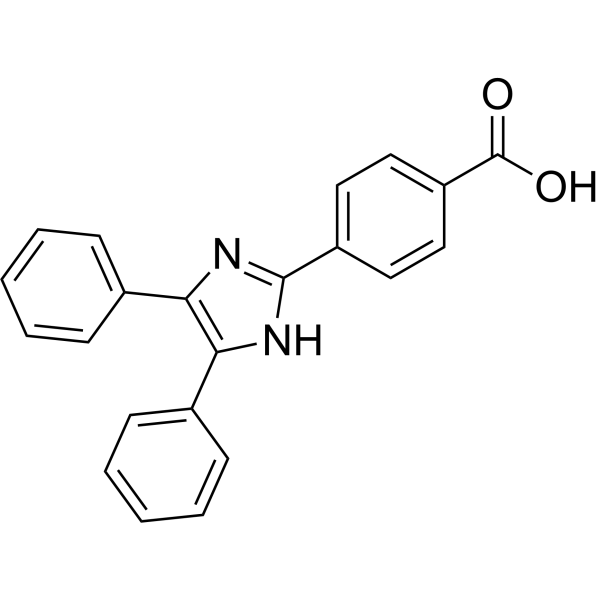
    019854-B06 is a potent inhibitor of Tat-mediated HIV-1 transcription (IC50 = 1.44 μM), exhibiting antiviral activity against HIV-1 (EC50 = 0.83 μM). 019854-B06 binds to Tat peptide (KD = 33.5 μM), but not to TAR RNA. 019854-B06 neither promotes Tat degradation nor disrupts the Tat/CycT1 complex, supporting a Tat-centric, nondegradative mechanism .
    019854-B06
  • HY-181831

    Drug Derivative HIV Epigenetic Reader Domain Infection
    XQ2 is a resveratrol (HY-16561) derivative and latency-reversing agent. XQ2 releases positive transcription elongation factor b (P-TEFb) from BRD4, thereby promoting Tat-dependent viral transcription. XQ2 reactivates latent HIV-1 via activating P-TEFb .
    XQ2
  • HY-126773

    Biochemical Assay Reagents Infection
    Dp2mT is a non-cytotoxic control compound, with an IC50 of >3 μM for HIV-1 transcription inhibition and an IC50 of >10 μM for cytotoxicity. Dp2mT does not bind to intracellular iron pools. Dp2mT does not inhibit CDK9 activity .
    Dp2mT
  • HY-103078R

    Reference Standards HIV Reverse Transcriptase Infection
    I-XW-053 (Standard) is the analytical standard of I-XW-053 (HY-103078). This product is intended for research and analytical applications. I-XW-053 is a specific anti-HIV-1 capsid inhibitor (IC50=164.2 μM). By binding to the CA NTD-NTD hexamerization interface and the R173 region of CTD (Kd=66.3 μM), I-XW-053 disrupts capsid function and reduces polymerization levels. I-XW-053 effectively blocks HIV-1 uncoating, inhibits reverse transcription and early replication, and exhibits broad-spectrum activity against primary HIV-1 isolates in peripheral blood mononuclear cells. I-XW-053 can be widely used in studies related to HIV-1 infection .
    I-XW-053 (Standard)
  • HY-182514

    HIV hnRNP Infection Cancer
    BMMP is an anti-HIV-1 agent and hnRNP M modulator. BMMP modulates hnRNP M function to suppress CD44 mRNA expression. BMMP induces abnormal uncoating of the HIV viral core at the post-entry step. BMMP suppresses migration of TGF-β-stimulated lung carcinoma cells. BMMP suppresses HIV-1 reverse transcription and replication without inhibiting virion release. BMMP exerts anti-HIV-1 activity via a mechanism distinct from CA protein-binding heterocyclic compounds. BMMP can be used for the research of human immunodeficiency virus infection and non-small cell lung cancer .
    BMMP
  • HY-181275

    Ligands for Target Protein for PROTAC CDK HIV Infection
    CDK9 ligand 4 is a CDK9 ligand. As a ligand for target protein for PROTAC (Ligands for Target Protein for PROTAC), CDK9 ligand 4 serves for the development and design of PROTAC CDK9 degraders, such as PROTAC CDK9 degrader-12 (HY-181231). CDK9 ligand 4 is applicable to the research of HIV-1 infection .
    CDK9 ligand 4
  • HY-183663

    HIV Infection
    PD-159206 is an anti-HIV agent. PD-159206 inhibits early pre-integration steps of the HIV life cycle, and delays sequential progression of reverse transcription products. PD-159206 can be used for the research of HIV infection .
    PD-159206

온라인 문의

Your information is safe with us. * Required Fields.

호칭


Country or Region *

고객명 *


회사명 *

Department *


메일주소 *


상품명 *

Cat. No.


Requested quantity *

전화번호 *


비고

온라인 문의

Inquiry Information

상품명:
Cat. No.:
수량:
MCE Japan Authorized Agent:

