1. Search Result
Search Result
Results for "

J774 macrophages

" in MedChemExpress (MCE) Product Catalog:

24

阻害剤およびアゴニスト

1

蛍光色素

2

天然物

1

オリゴヌクレオチド

製品番号 製品名 Target 研究分野 構造式
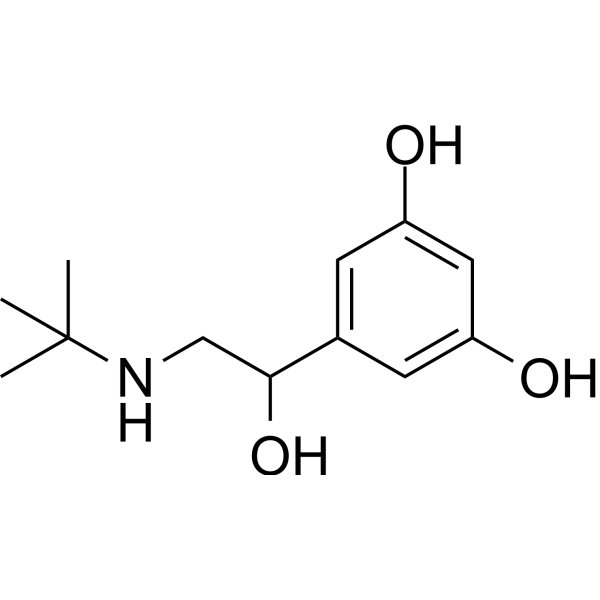
  • HY-B0802A
    Terbutaline
    1 Publications Verification

    Drug Metabolite Adrenergic Receptor Antibiotic Endocrinology
    Terbutaline is an orally active β2-adrenergic receptor agonist and an active metabolite of bambuterol . Terbutaline can be used in asthma symptom research .
    Terbutaline
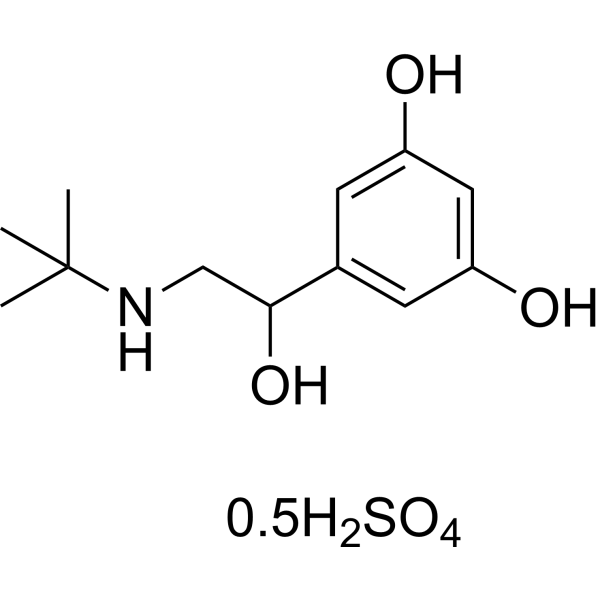
  • HY-B0802
    Terbutaline sulfate
    1 Publications Verification

    Terbutaline hemisulfate

    Adrenergic Receptor Antibiotic Endocrinology
    Terbutaline sulfate is an orally active β2-adrenergic receptor agonist and an active metabolite of bambuterol . Terbutaline sulfate can be used in asthma symptom research .
    Terbutaline sulfate
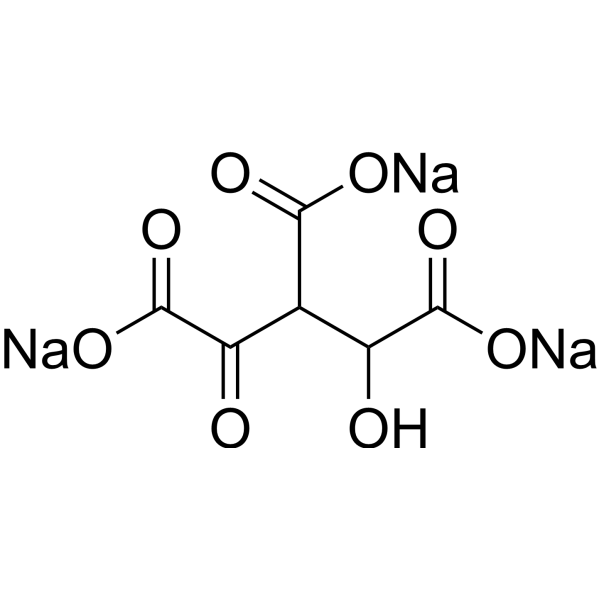
  • HY-131521

    Oxalomalate trisodium

    Isocitrate Dehydrogenase (IDH) Cancer
    Oxalomalic acid (Oxalomalate) trisodium is a aconitase and NADP-dependent isocitrate dehydrogenase inhibitor. Oxalomalic acid trisodium inhibits nitrite production and iNOS protein expression in lipopolysaccharide (HY-D1056)-activated J774 macrophages .
    Oxalomalic acid trisodium
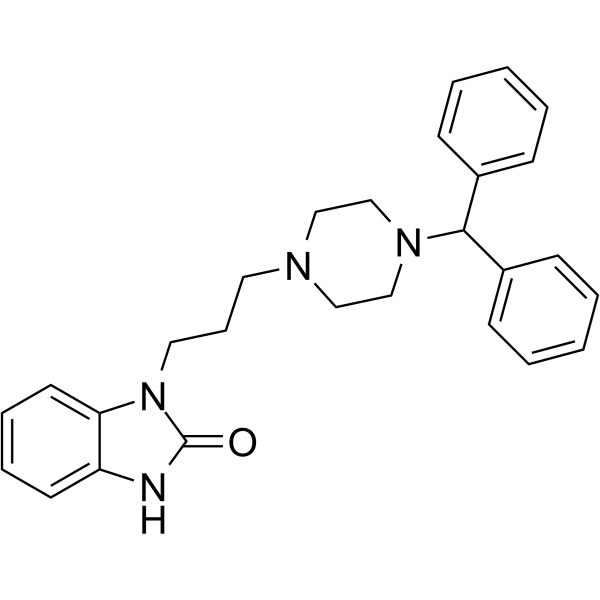
  • HY-123205

    KW-4354

    Histamine Receptor P2X Receptor 5-HT Receptor Apoptosis PERK p38 MAPK COX Inflammation/Immunology
    Oxatomide (KW-4354) is an orally active dual antagonist of the H1-histamine receptor and the P2X7 receptor, as well as an inhibitor of serotonin. Oxatomide possesses antihistaminic, antiallergic and anti-inflammatory activities. Oxatomide can be used in the research of allergic diseases .
    Oxatomide
  • HY-129959

    AlClPc

    Environmental Pollutants Parasite MOFs Infection
    Aluminum phthalocyanine chloride is a photosensitizer that effectively inhibits the parasite Leishmania amazonensis (the causative agent of cutaneous leishmaniasis) by light-mediated cytolysis. Aluminum phthalocyanine chloride causes parasite morphology and cytolysis of isolated amasilians, while higher photosensitizer concentrations and light intensities are required to induce lysis of mammalian cells. Aluminum phthalocyanine chloride lyses parasites within infected J774 macrophages and can be used to further investigate the study of leishmaniasis .
    Aluminum phthalocyanine chloride
  • HY-N7700

    G2013

    MMP COX VEGFR Toll-like Receptor (TLR) NF-κB NO Synthase Inflammation/Immunology Cancer
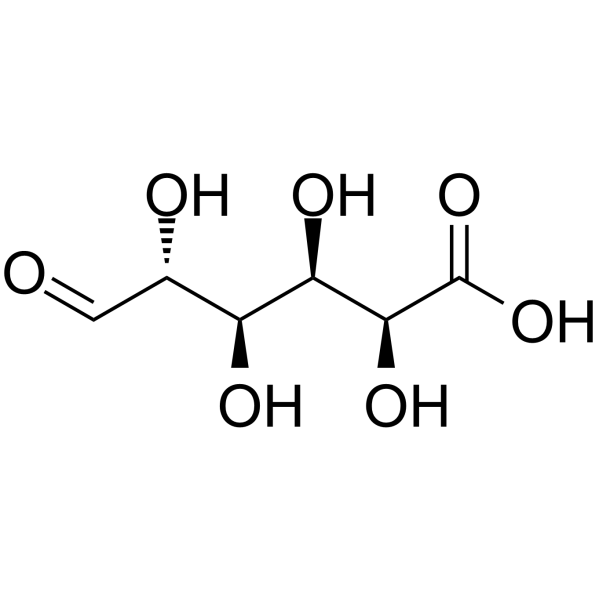
    Guluronic acid (G2013) is an orally active oxidative stress regulator and anti-inflammatory agent that exerts pharmacological effects by down-regulating various pro-inflammatory and oxidative stress-related genes (such as TLR4, NF-κB, iNOS, etc.) and inhibiting the activities of COX-2, MMPs and VEGF. Low-dose Guluronic acid up-regulates the expression of immunoregulatory genes SHIP1 and SOCS1, thereby effectively inhibiting cancer-related inflammation, tumor angiogenesis, cell adhesion and metastasis, while reducing the accumulation of immunosuppressive cells. Guluronic acid significantly prolongs the survival time of tumor-bearing hosts within a concentration range without direct cytotoxicity, demonstrating favorable safety. Guluronic acid has involved in the research of multiple sclerosis, ankylosing spondylitis, breast cancer and other inflammatory diseases .
    Guluronic acid
  • HY-N16039

    β-glucuronidase Inflammation/Immunology
    TAN-1030A is an indolocarbazole alkaloid with macrophage-activating properties. TAN-1030A induces spreading of a murine macrophage cell line, Mm 1, and augmentes the phagocytic activity, Fc gamma receptor expression and β-glucuronidase activity of murine macrophage cell lines, Mm 1 and J774A.1. TAN-1030A can activate macrophage functions in mice .
    TAN-1030A
  • HY-117432

    NOD-like Receptor (NLR) Inflammation/Immunology
    JC-171 is a selective NLRP3 inflammasome inhibitor, with an IC50 of 8.45 μM for inhibiting LPS/ATP-induced interleukin-1β (IL-1β) release from J774A.1 macrophages .
    JC-171
  • HY-B2097

    YM 175; Bisphonal

    Farnesyl Transferase Metabolic Disease
    Incadronate disodium (YM 175) is a bisphosphonate with strong inhibitory activity on bone resorption. Incadronate disodium indirectly stimulates renal 25-hydroxyvitamin D-1-hydroxylase by increasing circulating parathyroid hormone. Incadronate disodium, a cholesterol-lowering agent, is a potent inhibitor of rat liver microsomal squalene synthase (Ki=57 nM). Incadronate disodium inhibits sterol biosynthesis in mouse macrophage J774 cells (IC50=64 μM). Incadronate disodium has the potential for malignant tumors research .
    Incadronate disodium
  • HY-176779

    NO Synthase Cardiovascular Disease Neurological Disease Inflammation/Immunology
    Guanidino ethyl disulfide (GED) (Compound 23) is a NO Synthase (NOS) inhibitor with EC50s of 110, 630 and 180  μM for iNOS, eNOS and bNOS, respectivly. Guanidino ethyl disulfide effectively inhibits nitrite production in J774.2 macrophages. Guanidino ethyl disulfide can be used for circulatory shock, inflammation and neurological diseases research .
    Guanidino ethyl disulfide
  • HY-133133

    NOD-like Receptor (NLR) Interleukin Related Inflammation/Immunology
    IIIM-1270is a NLRP3 inflammasome inhibitor. IIIM-1270 inhibits IL-1β release in mouse macrophages (J774A.1 cells) (IC50 = 3.5 μM) and significantly reduced the protein expression level of mature IL-1β. IIIM-1270 can be used for the study of inflammation .
    IIIM-1270
  • HY-125416

    Antibiotic Bacterial Infection
    Streptothricin F is a bactericidal antibiotic. Streptothricin F interacts with the 30S subunit of 70S ribosome. Streptothricin F shows rapid, bactericidal activity against highly drug-resistant, carbapenem-resistant Enterobacterales (CRE) (MIC50 and MIC90: 2 and 4 μM, respectively) and Acinetobacter baumannii .
    Streptothricin F
  • HY-138056

    Microtubule/Tubulin Others
    7-Acetyl paclitaxel is a microtubule depolymerization inhibitor which inhibits calcium-induced microtubule depolymerization. 7-Acetyl paclitaxel reduces the growth of J774.2 macrophages (IC50 ~ 60 nM) and increases the levels of nitric oxide (NO) and TNF in isolated mouse peritoneal macrophages .
    7-Acetyl paclitaxel
  • HY-171905

    Liposome Others
    N-Sterol is a sterol lipid that has been used to generate lipid nanoparticles (LNPs) for delivery of mRNA in vitro and in vivo. N-Sterol LNPs are taken up in J774A.1 macrophages in a lipid composition-dependent manner via clathrin caveolae, caveolin-mediated endocytosis, micropinocytosis, or phagocytosis at different frequencies .
    N-Sterol
  • HY-133132

    NOD-like Receptor (NLR) Interleukin Related Inflammation/Immunology
    IIIM-1266 is a NLRP3 inflammasome inhibitor. IIIM-1266 inhibits IL-1β release in mouse macrophages (J774A.1 cells) (IC50 = 2.3 μM) and significantly reduced the protein expression level of mature IL-1β. IIIM-1266 can be used for the study of inflammation .
    IIIM-1266
  • HY-126489

    Parasite Infection
    Tetromycin B is a cysteine protease inhibitor with Ki values of 0.62, 1.42, 32.5, and 1.59 μM for rhodesain, falcipain-2, cathepsin L, and cathepsin B, respectively. It inhibits the growth of T. brucei in vitro (IC50=30.87 μM). Tetromycin B is also cytotoxic to HEK293T kidney cells and J774.1 macrophages (IC50s=71.77 and 20.2 μM, respectively).
    Tetromycin B
  • HY-178456

    Parasite Reactive Oxygen Species (ROS) Apoptosis Infection
    Antileishmanial agent-36 (compound 4f) is an indole-dihydropyrimidinone derivative with anti-leishmanial activity. Antileishmanial agent-36 induces reactive oxygen species (ROS)-mediated mitochondrial dysfunction and apoptosis. Antileishmanial agent-36 exhibits potent activity against L. donovani (IC50 =4.54 μM) with low cytotoxicity against J774.1 macrophage. Antileishmanial agent-36 clears the parasite burden in a visceral leishmaniasis (VL) model. Antileishmanial agent-36 can be used for VL research .
    Antileishmanial agent-36
  • HY-137575R

    Reference Standards Drug Metabolite Others
    Terbutalone (Standard) is the analytical standard of Terbutalone. This product is intended for research and analytical applications. Terbutalone is a derivative of Terbutaline (HY-B0802A). Terbutaline is an orally active β2-adrenergic receptor agonist and an active metabolite of Bambuterol (HY-17501). Terbutaline can be used in asthma symptom research .
    Terbutalone (Standard)
  • HY-137575

    Drug Metabolite Others
    Terbutalone is a derivative of Terbutaline (HY-B0802A). Terbutaline is an orally active β2-adrenergic receptor agonist and an active metabolite of Bambuterol (HY-17501). Terbutaline can be used in asthma symptom research .
    Terbutalone
  • HY-B0802AR

    Drug Metabolite Reference Standards Adrenergic Receptor Antibiotic Endocrinology
    Benactyzine hydrochloride (Standard) is the analytical standard of Benactyzine hydrochloride. This product is intended for research and analytical applications. Benactyzine hydrochloride is a competitive BChE inhibitor with a Ki of 0.01 mM. Benactyzine hydrochloride is an anticholinergic drug. Benactyzine hydrochloride has the potential for organophosphate poisoning research .
    Terbutaline (Standard)
  • HY-111248

    Nuclear Factor of activated T Cells (NFAT) c-Fms Others
    ABD-295, a biphenylsulfide derivative, is an antiresorptive agent, osteoclast inhibitor. ABD-295 has potent inhibitory effects on osteoclastic bone resorption in vitro. ABD-295 prevents ovariectomy-induced bone loss in vivo [1] .
    ABD-295
  • HY-W676872

    COX Parasite Infection Inflammation/Immunology
    Dihydroflavokawin B is a selective COX-1 inhibitor with an IC50 of 1.22 μM. Dihydroflavokawin B weakly inhibits COX-2 and 5-LOX. Dihydroflavokawin B inhibits promastigote forms of Leishmania panamensis and Leishmania braziliensis. Dihydroflavokawin B inhibits rabbit platelet aggregation induced by Arachidonic acid, platelet activating factor, and adenosine diphosphate. Dihydroflavokawin B exhibits in vitro anti-inflammatory activity. Dihydroflavokawin B can be used for the research of leishmaniasis .
    Dihydroflavokawin B
  • HY-183998

    Bacterial Infection
    Antitubercular agent-60 is an orally active antitubercular agent. Antitubercular agent-60 targets the arabinogalactan biosynthesis pathway in Mycobacterium tuberculosis. Antitubercular agent-60 can be used for the research of tuberculosis .
    Antitubercular agent-60
  • HY-111165

    HSP NF-κB ERK JNK PDGFR c-Myc DNA/RNA Synthesis Apoptosis Inflammation/Immunology Cancer
    SNX-7081 is an Hsp90 inhibitor with Ki and IC50 values of 26 nM and 44 nM, respectively. SNX-7081 blocks the nuclear translocation of NF-κB, inhibits the production of pro-inflammatory cytokines, attenuates the ERK/JNK and PDGF signaling pathways, and suppresses LPS (HY-D1056)-induced nitric oxide production. SNX-7081 inhibits DNA repair, induces G2/M cell cycle arrest, and triggers apoptosis via downregulation of MYC/nucleolin and activation of Fas. SNX-7081 can be used in research related to rheumatoid arthritis and cancer .
    SNX-7081

オンラインお問い合わせ

入力情報は安全に管理されます. 必須入力項目.

タイトル


国或いは地域 *

お名前 *


組纖名 *

デパートメント *


メールアドレス *


製品名 *

製品番号


カスタマ需要量 *

電話番号 *


必ず会社名を記載ください。個人への返信は行いません。

備考

バルクお問い合わせ

Inquiry Information

製品名:
製品番号:
数量:
MCE 日本正規代理店:

