



Terbutaline
Based on 2 publication(s) in Google Scholar
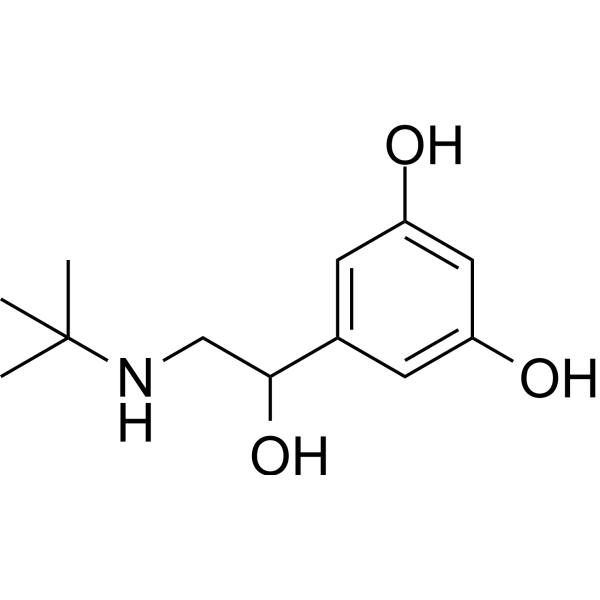
Terbutaline is an orally active β2-adrenergic receptor agonist and an active metabolite of bambuterol. Terbutaline can be used in asthma symptom research.
For research use only. We do not sell to patients.
- Purity : 99.94%
- CAS No.: 23031-25-6
- Formula: C12H19NO3
- Molecular Weight:225.28
-
Storage:Powder -20°C, 3 years , 4°C, 2 years ; In solvent -80°C, 6 months , -20°C, 1 month

To place orders, for customer services and technical support, please contact: MedChemExpress USA
Tel: 609-228-6898 E-mail: [email protected] [email protected]


-
 Biological Activity
-
Chemical Information
-
Solvent & Solubility
- Purity & Documentation
- References
-
 Help & FAQs


-
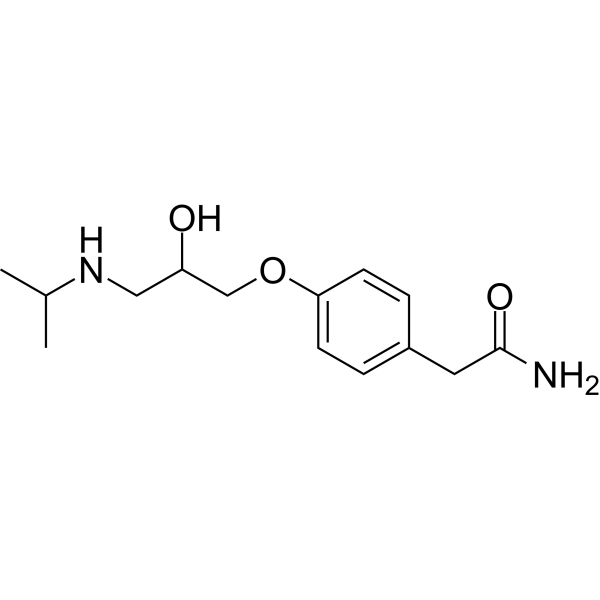
HY-17498
Atenololβ1-Adrenergic Receptor Blocker -
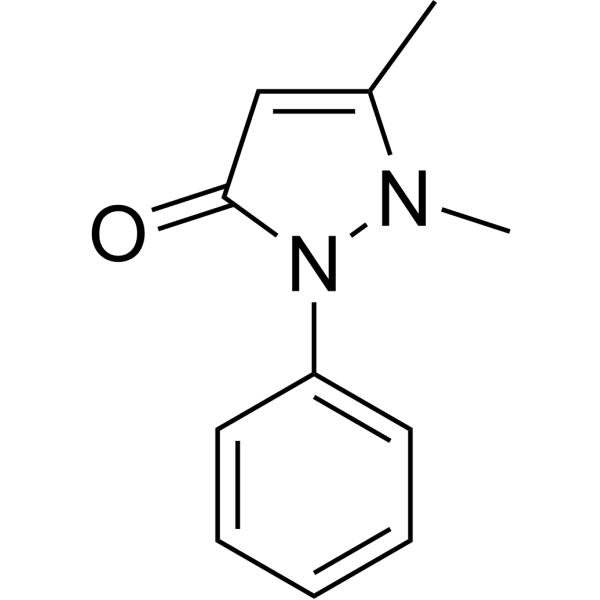
HY-B0171
AntipyrineAntipyretic/Analgesic -
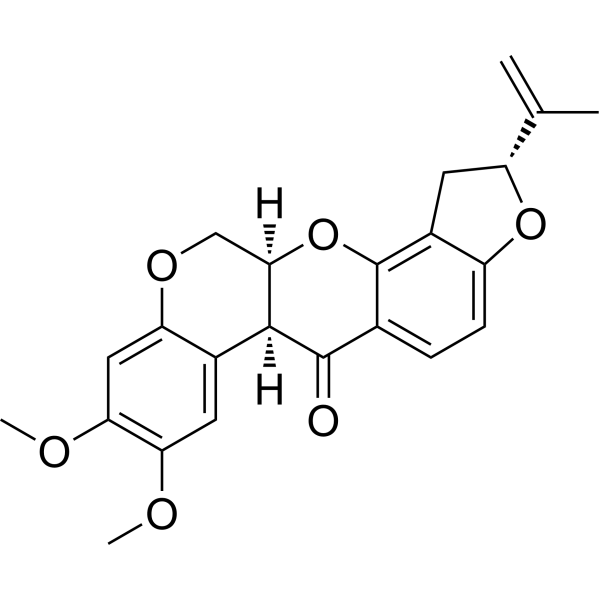
HY-B1756
RotenoneMitochondrial Complex I Inhibitor -
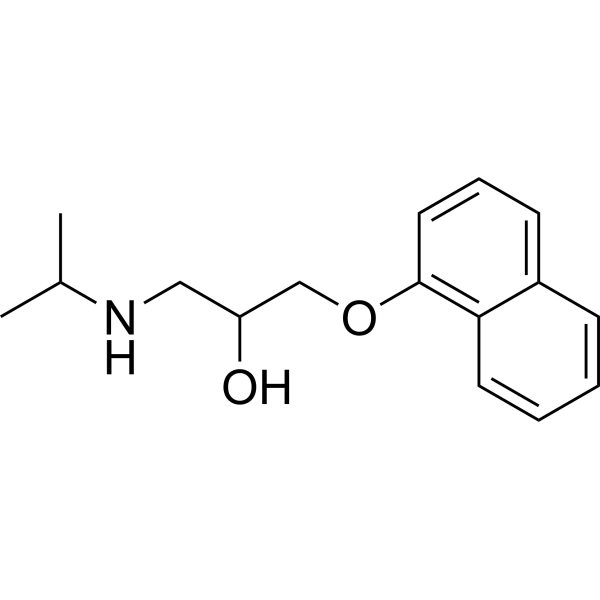
HY-B0573B
Propranololβ-Adrenoceptor Blocker -
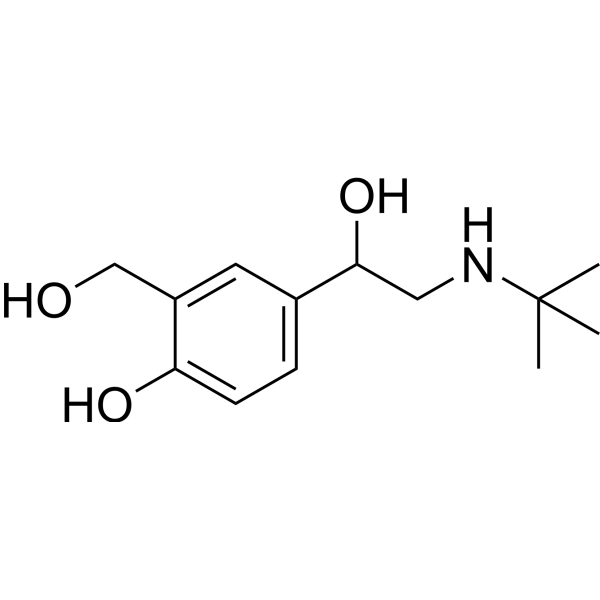
HY-B1037
SalbutamolAdrenergic Receptor Agonist -
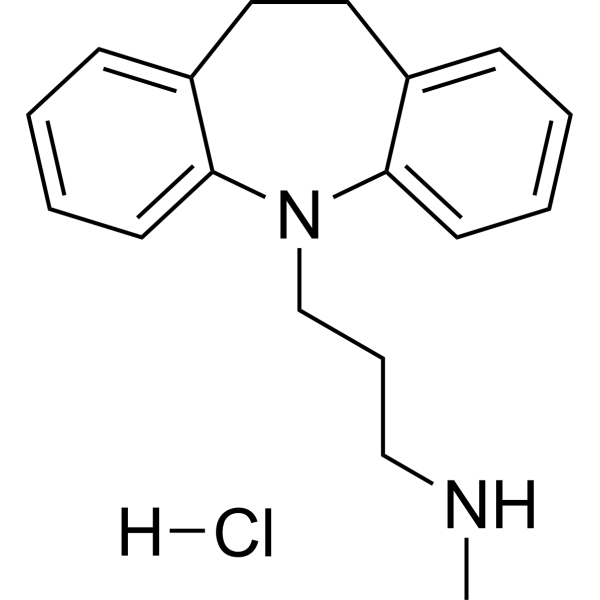
HY-B1272
Desipramine hydrochlorideSerotonin Transporter Inhibitor -
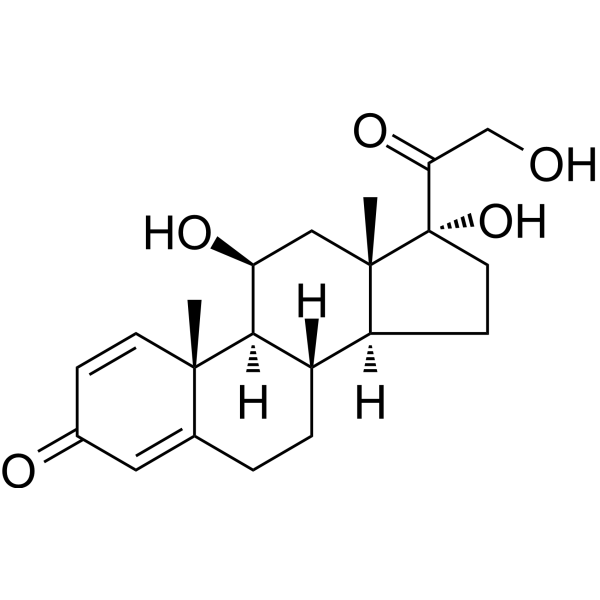
HY-17463
PrednisoloneGlucocorticoid -
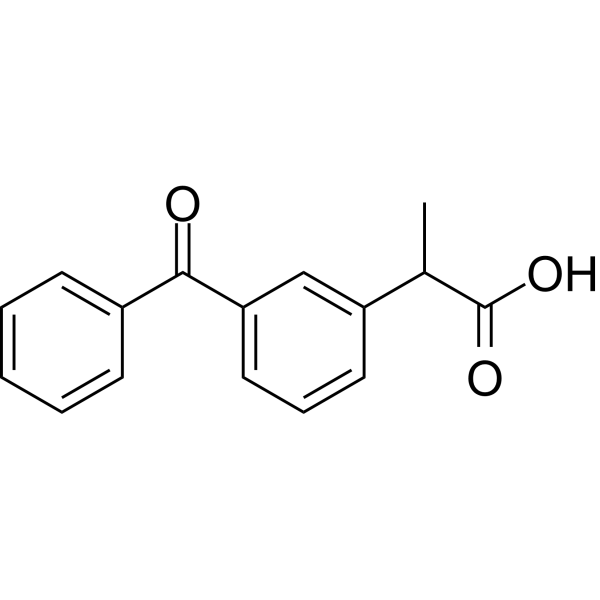
HY-B0227
KetoprofenAnti-inflammatory agent -
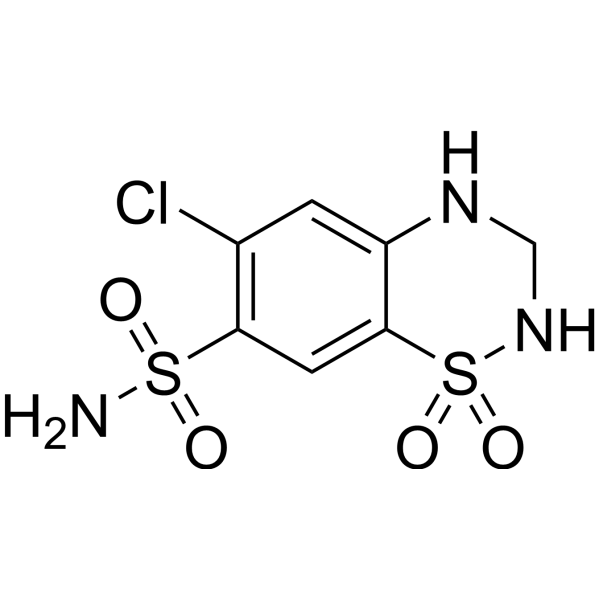
HY-B0252
HydrochlorothiazideTGF-beta/Smad Inhibitor -
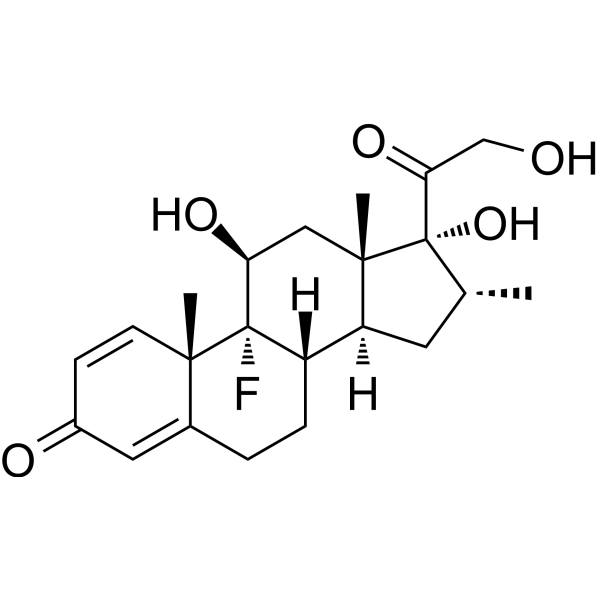
HY-14648
DexamethasoneGR Agonist -
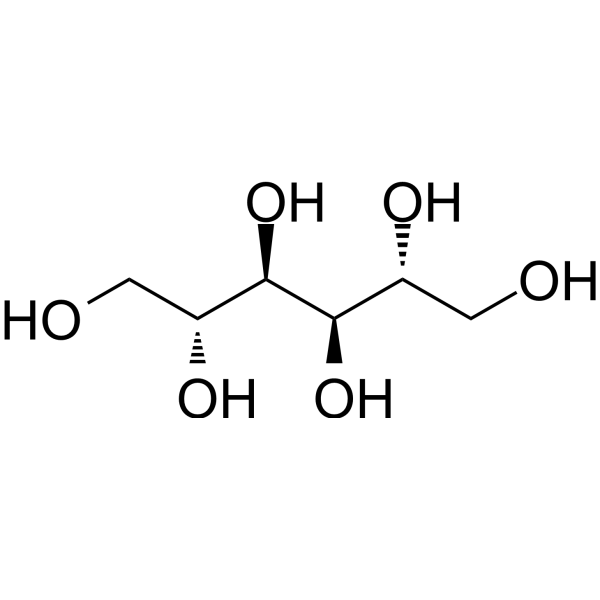
HY-N0378
D-MannitolResistant Sugar/Osmotic Diuretics -
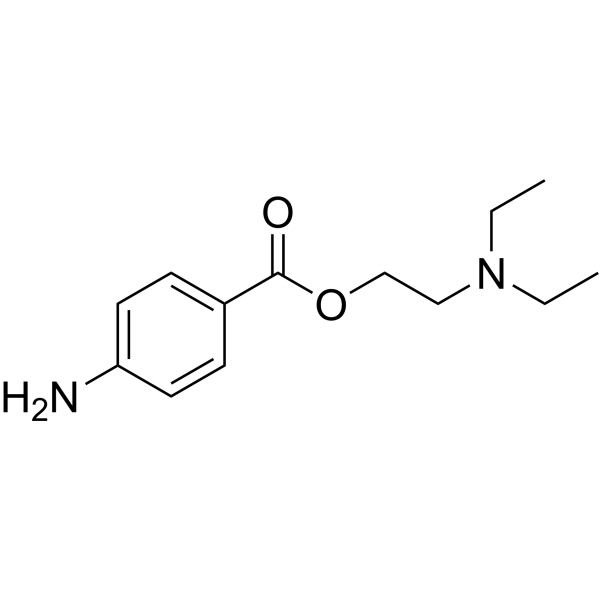
HY-B0546
ProcaineDNA Demethylation Agent
Publications Citing Use of MedChemExpress (MCE) Terbutaline
MoreAll Adrenergic Receptor Isoforms
MoreAll Antibiotic Isoforms
More

Biological Activity
Description
IC50 & Target
|
Beta-2 adrenergic receptor |
In Vitro
Terbutaline (0-10 μM, 1 hour) enhances MKP-1 expression in activated mouse macrophages[3].
MedChemExpress (MCE) has not independently confirmed the accuracy of these methods. They are for reference only.
-
Cell Line:J774 macrophages
-
Concentration:0-10 μM
-
Incubation Time:1 hour
-
Result:Enhanced MKP-1 expression in J774 macrophages in a dose-dependent manner.
-
Cell Line:J774 macrophages
-
Concentration:100 nM
-
Incubation Time:1 hour
-
Result:Reduced the phosphorylation of p38 MAPK in J774 macrophages.
In Vivo
MedChemExpress (MCE) has not independently confirmed the accuracy of these methods. They are for reference only.
-
Animal Model:Adult male ob/ob mice[4]
-
Dosage:0.5 mg/kg
-
Administration:Intraperitoneal injection; 0.5 mg/kg; twice a day; 20 days
-
Result:Reversed the mechanical allodynia in ob/ob mice.


Chemical Information
-
CAS No. 23031-25-6
-
Appearance Solid
-
Molecular Weight 225.28
-
Formula C12H19NO3
-
Color Light yellow to brown
-
SMILES
OC1=CC(C(O)CNC(C)(C)C)=CC(O)=C1
-
Shipping
Room temperature in continental US; may vary elsewhere.
-
Storage
Powder -20°C 3 years 4°C 2 years In solvent -80°C 6 months -20°C 1 month


Publications (2)
-
Journal Impact Factor
-
Most Recent
-
Aging Cell
Aerobic Exercise Attenuates Autophagy-Lysosomal Flux Deficits via β2-AR-Mediated ESCRT-III Subunit CHMP4B in Mice With Human MAPT P301L. [Abstract]2025 Jul 26:e70184. PMID: 40715737 -


Solvent & Solubility
In Vitro:
DMSO : 200 mg/mL (887.78 mM; Need ultrasonic; Hygroscopic DMSO has a significant impact on the solubility of product, please use newly opened DMSO)
Please refer to the solubility information to select the appropriate solvent. Once prepared, please aliquot and store the solution to prevent product inactivation from repeated freeze-thaw cycles.
Storage method and period of stock solution: -80°C, 6 months; -20°C, 1 month. When stored at -80°C, please use it within 6 months. When stored at -20°C, please use it within 1 month.
Please refer to the solubility information to select the appropriate solvent. Once prepared, please aliquot and store the solution to prevent product inactivation from repeated freeze-thaw cycles.
Storage method and period of stock solution: -80°C, 6 months; -20°C, 1 month. When stored at -80°C, please use it within 6 months. When stored at -20°C, please use it within 1 month.
Concentration (start) × Volume (start) = Concentration (final) × Volume (final)
In Vivo:
Select the appropriate dissolution method based on your experimental animal and administration route.
- For the following dissolution methods, please ensure to first prepare a clear stock solution using an In Vitro approach and then sequentially add co-solvents:
- To ensure reliable experimental results, the clarified stock solution can be appropriately stored based on storage conditions. As for the working solution for In Vivo experiments, it is recommended to prepare freshly and use it on the same day.
- The percentages shown for the solvents indicate their volumetric ratio in the final prepared solution. If precipitation or phase separation occurs during preparation, heat and/or sonication can be used to aid dissolution.
Add each solvent one by one: 10% DMSO 40% PEG300 5% Tween-80 45% Saline
Solubility: ≥ 5 mg/mL (22.19 mM); Clear solution
This protocol yields a clear solution of ≥ 5 mg/mL (saturation unknown).
Taking 1 mL working solution as an example, add 100 μL DMSO stock solution (50.0 mg/mL) to 400 μL PEG300, and mix evenly; then add 50 μL Tween-80 and mix evenly; then add 450 μL Saline to adjust the volume to 1 mL.
Preparation of Saline: Dissolve 0.9 g sodium chloride in ddH₂O and dilute to 100 mL to obtain a clear Saline solution.
Add each solvent one by one: 10% DMSO 90% (20% SBE-β-CD in Saline)
Solubility: ≥ 5 mg/mL (22.19 mM); Clear solution
This protocol yields a clear solution of ≥ 5 mg/mL (saturation unknown).
Taking 1 mL working solution as an example, add 100 μL DMSO stock solution (50.0 mg/mL) to 900 μL 20% SBE-β-CD in Saline, and mix evenly.
Preparation of 20% SBE-β-CD in Saline (4°C, storage for one week): 2 g SBE-β-CD powder is dissolved in 10 mL Saline, completely dissolve until clear.
In Vivo Dissolution Calculator
Please enter the basic information of animal experiments:
-
-
-
-
Recommended: Prepare an additional quantity of animals to account for potential losses during experiments.
Please enter your animal formula composition:
-
%DMSO +
Recommended: Keep the proportion of DMSO in working solution below 2% if your animal is weak.
-
%+
-
+%Tween-80 + +
-
%Saline +
The co-solvents required include: DMSO, . All of co-solvents are available by MedChemExpress (MCE). , Tween 80. All of co-solvents are available by MedChemExpress (MCE).
Working solution concentration: 0.22 mg/mL
Method for preparing stock solution: mg drug dissolved in μL DMSO. Stock solution concentration: mg/mL.
1. Take μL DMSO stock solution;
2. Add μL .
μL , mix evenly;
3. Then add μL Tween 80, mix evenly;
4. Then add μL
Please ensure that the stock solution in the first step is dissolved to a clear state, and add co-solvents in sequence. You can use ultrasonic heating (ultrasonic cleaner, recommended frequency 20-40 kHz), vortexing, etc. to assist dissolution.


Purity & Documentation
-
Data Sheet (277 KB)
-
SDS (393 KB)
- English - EN (393 KB)
- Français - FR (393 KB)
- Deutsch - DE (393 KB)
- Norwegian - NO (393 KB)
- Español - ES (393 KB)
- Swedish - SV (393 KB)
- Italian - IT (393 KB)
- Korean - KR (393 KB)
- Portuguese - PT (393 KB)
-
Handling Instructions (2659 KB)
References
[1]. Mohamed Ismail NA, et al. Nifedipine versus terbutaline for tocolysis in external cephalic version. Int J Gynaecol Obstet. 2008 Sep;102(3):263-6. [Content Brief]
[2]. Joana A Loureiro, et al. The interaction of a β2 adrenoceptor agonist drug with biomimetic cell membrane models: The case of terbutaline sulphate. Life Sci. 2021 Nov 15;285:119992. [Content Brief]
[3]. Tiina Keränen, et al. Anti-Inflammatory Effects of β2-Receptor Agonists Salbutamol and Terbutaline Are Mediated by MKP-1. PLoS One. 2016 Feb 5;11(2):e0148144. [Content Brief]
[4]. Nada Choucair-Jaafar, et al. The antiallodynic action of nortriptyline and terbutaline is mediated by β(2) adrenoceptors and δ opioid receptors in the ob/ob model of diabetic polyneuropathy. Brain Res. 2014 Feb 10;1546:18-26. [Content Brief]


Complete Stock Solution Preparation Table
Please refer to the solubility information to select the appropriate solvent. Once prepared, please aliquot and store the solution to prevent product inactivation from repeated freeze-thaw cycles.
Storage method and period of stock solution: -80°C, 6 months; -20°C, 1 month. When stored at -80°C, please use it within 6 months. When stored at -20°C, please use it within 1 month.
| Optional Solvent | Concentration Solvent Mass | 1 mg | 5 mg | 10 mg | 25 mg |
|---|---|---|---|---|---|
| DMSO | 1 mM | 4.4389 mL | 22.1946 mL | 44.3892 mL | 110.9730 mL |
| 5 mM | 0.8878 mL | 4.4389 mL | 8.8778 mL | 22.1946 mL | |
| 10 mM | 0.4439 mL | 2.2195 mL | 4.4389 mL | 11.0973 mL | |
| 15 mM | 0.2959 mL | 1.4796 mL | 2.9593 mL | 7.3982 mL | |
| 20 mM | 0.2219 mL | 1.1097 mL | 2.2195 mL | 5.5487 mL | |
| 25 mM | 0.1776 mL | 0.8878 mL | 1.7756 mL | 4.4389 mL | |
| 30 mM | 0.1480 mL | 0.7398 mL | 1.4796 mL | 3.6991 mL | |
| 40 mM | 0.1110 mL | 0.5549 mL | 1.1097 mL | 2.7743 mL | |
| 50 mM | 0.0888 mL | 0.4439 mL | 0.8878 mL | 2.2195 mL | |
| 60 mM | 0.0740 mL | 0.3699 mL | 0.7398 mL | 1.8496 mL | |
| 80 mM | 0.0555 mL | 0.2774 mL | 0.5549 mL | 1.3872 mL | |
| 100 mM | 0.0444 mL | 0.2219 mL | 0.4439 mL | 1.1097 mL |


Terbutaline Related Classifications
HY-B0802A Related Classifications
 Powered by Bioz