



Terbutaline (Standard)
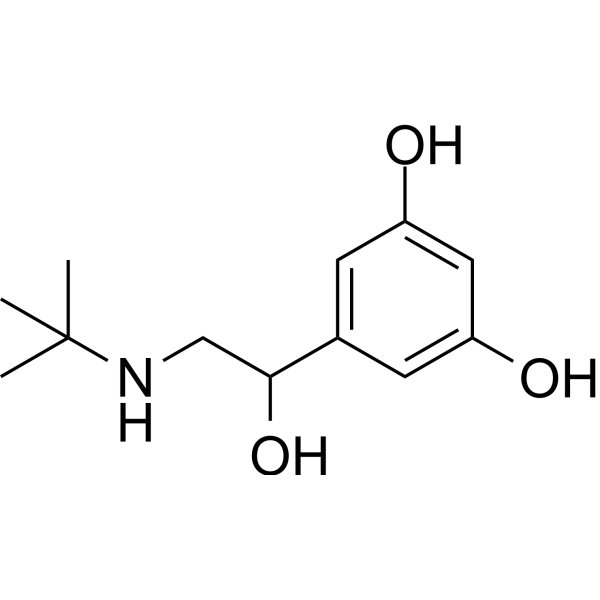
Terbutaline (Standard) is the analytical standard of Terbutaline (HY-B0802A). This product is intended for research and analytical applications. Terbutaline is an orally active β2-adrenergic receptor agonist and an active metabolite of bambuterol. Terbutaline can be used in asthma symptom research.
연구목적의 판매만을 진행합니다. 환자를 대상으로 한 판매는 하지 않습니다.
- CAS No.: 23031-25-6
- 화학식: C12H19NO3
- 분자량:225.29
-
보관:
Please store the product under the recommended conditions in the Certificate of Analysis.


To place orders, for customer services and technical support, please contact: MedChemExpress USA
Tel: 609-228-6898 E-mail: [email protected] [email protected]


-
 Product Information
-
Chemical Information
- 순도&문서
-
 Help & FAQs


-
HY-B0802A
Terbutalineβ2-Drenergic Receptor Agonist -
HY-113483
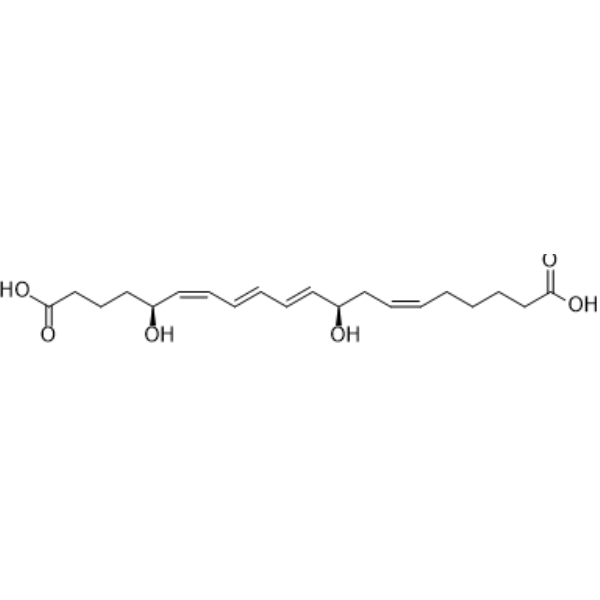
20-Carboxy-Leukotriene B4LTB4 Metabolite -

HY-130429
14,15-Leukotriene C4Leukotrienes -

HY-112621
Leukotriene A4 methyl ester -
HY-113479
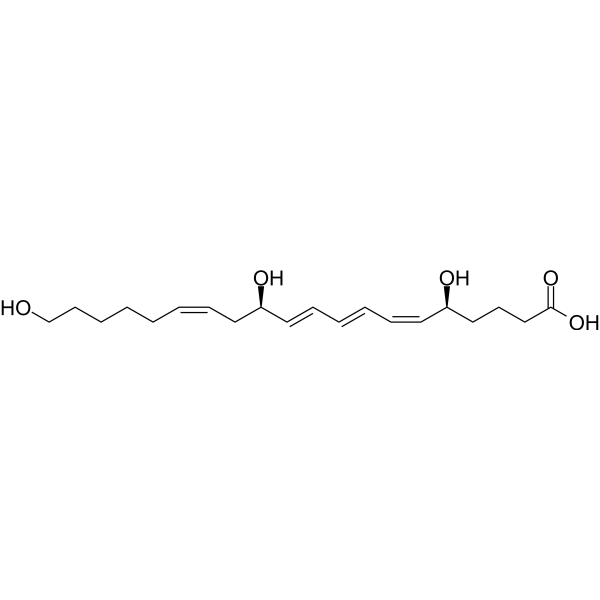
20-Hydroxy-leukotriene B4Endogenous Metabolite -
HY-19622
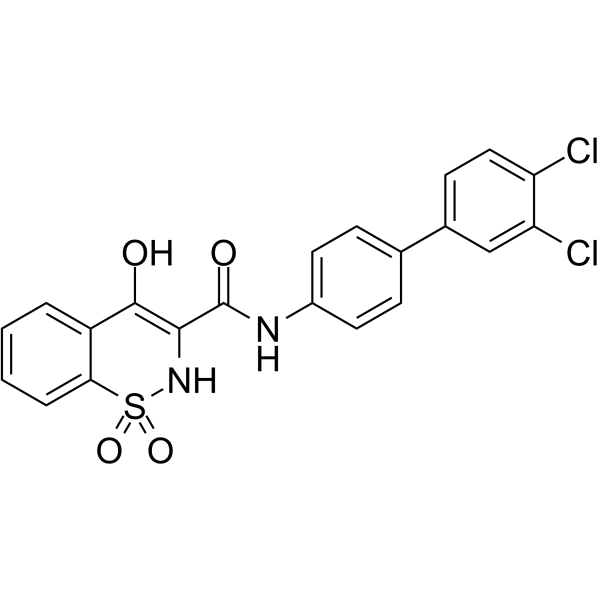
PF-9184mPGES-1 Inhibitor -
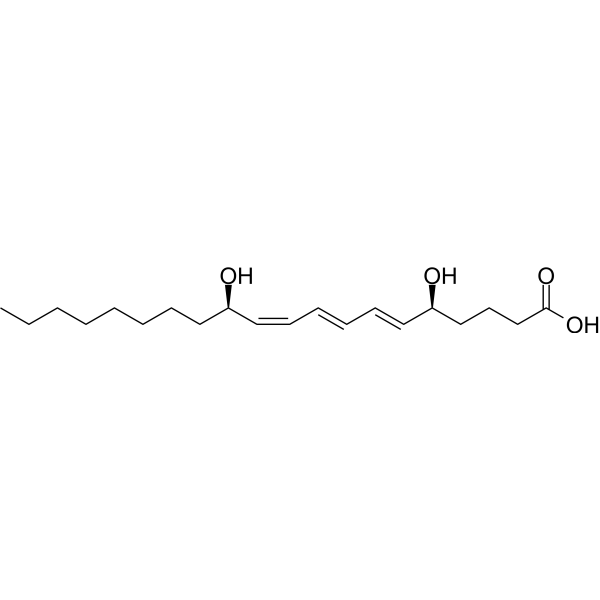
HY-130441
Leukotriene B3Hydrolase Metabolite -
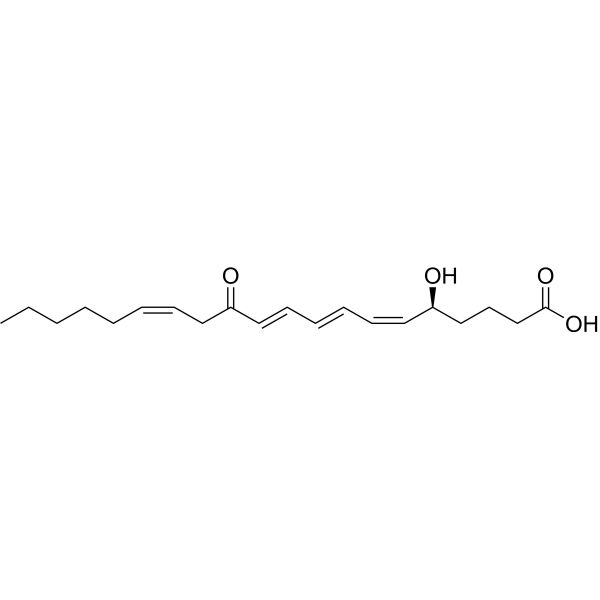
HY-130497
12-Oxo-leukotriene B4Endogenous Metabolite -

HY-115356
Eoxin E4Metabolite of 14,15-LTC4 and 14,15-LTD4 -
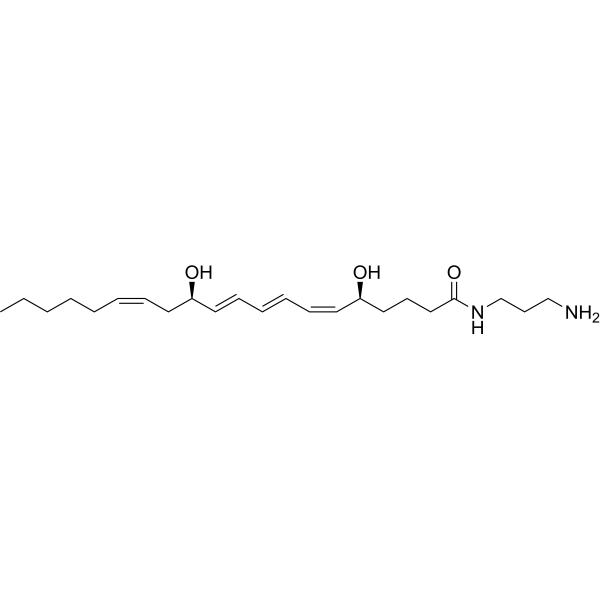
HY-W747565
Leukotriene B4-3-aminopropylamideLeukotriene -

HY-137493
14,15-Leukotriene D4Leukotriene -

HY-117514
5-LOX-IN-7LOX Inhibitor


Product Information
Information
신청
The compound is the grade of analytical standard, which is the reference standard supplied assay. It is commonly used in qualitative, quantitative and methodological research experiments in HPLC, GC and MS.


Chemical Information
-
CAS No. 23031-25-6
-
분자량 225.29
-
화학식 C12H19NO3
-
SMILES
OC1=CC(C(O)CNC(C)(C)C)=CC(O)=C1
-
선적
Room temperature in continental US; may vary elsewhere.
-
보관
Please store the product under the recommended conditions in the Certificate of Analysis.


순도&문서
References
[1]. Mohamed Ismail NA, et al. Nifedipine versus terbutaline for tocolysis in external cephalic version. Int J Gynaecol Obstet. 2008 Sep;102(3):263-6. [Content Brief]
[2]. Joana A Loureiro, et al. The interaction of a β2 adrenoceptor agonist drug with biomimetic cell membrane models: The case of terbutaline sulphate. Life Sci. 2021 Nov 15;285:119992. [Content Brief]
[3]. Tiina Keränen, et al. Anti-Inflammatory Effects of β2-Receptor Agonists Salbutamol and Terbutaline Are Mediated by MKP-1. PLoS One. 2016 Feb 5;11(2):e0148144. [Content Brief]
[4]. Nada Choucair-Jaafar, et al. The antiallodynic action of nortriptyline and terbutaline is mediated by β(2) adrenoceptors and δ opioid receptors in the ob/ob model of diabetic polyneuropathy. Brain Res. 2014 Feb 10;1546:18-26. [Content Brief]

Calculators
Concentration (start) × Volume (start) = Concentration (final) × Volume (final)


Terbutaline (Standard) Related Classifications
HY-B0802AR Related Classifications
 Powered by Bioz