1. Search Result
Search Result
Results for "

TNF-α-IN-2

" in MedChemExpress (MCE) Product Catalog:

22

Inhibitors & Agonists

2

Inhibitory Antibodies

7

Natural
Products

Cat. No. Product Name Target Research Areas Chemical Structure
  • HY-134471
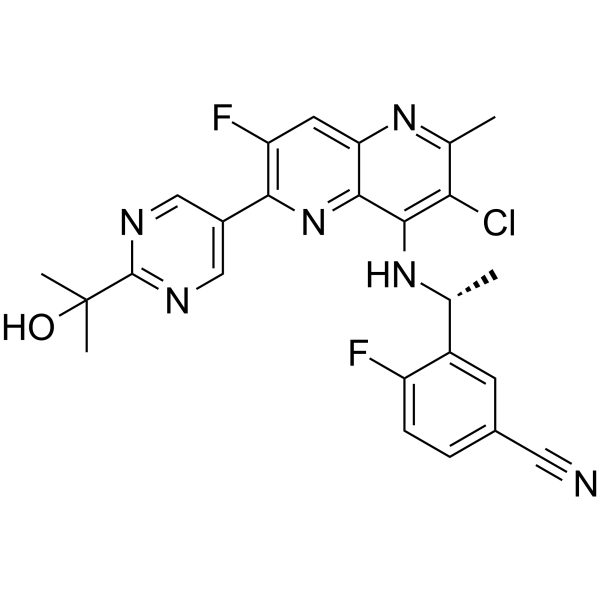
    TNF-α-IN-2
    1 Publications Verification

    TNF Receptor Inflammation/Immunology Cancer
    TNF-α-IN-2 is a potent and orally active inhibitor of tumor necrosis factor alpha (TNFα), with an IC50 of 25 nM in the HTRF assay. TNF-α-IN-2 distorts the TNFα trimer upon binding, leading to aberrant signaling when the trimer binds to TNFR1. TNF-α-IN-2 can be used for the research of rheumatoid arthritis .
    TNF-α-IN-2
  • HY-111255
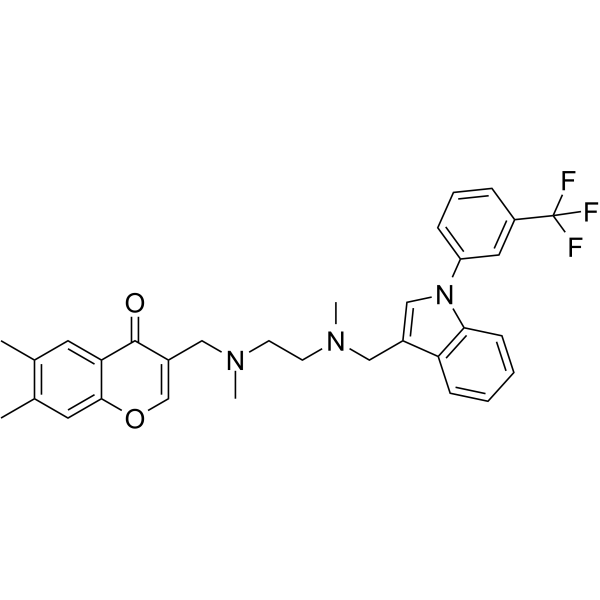
    SPD304
    5+ Cited Publications

    TNF Receptor Cancer
    SPD304 is a selective TNF-α inhibitor, which promotes dissociation of TNF trimers and therefore blocks the interaction of TNF and its receptor. SPD304 has an IC50 of 22 μM for inhibiting in vitro TNF receptor 1 (TNFR1) binding to TNF-α .
    SPD304
  • HY-P990794

    TNF Receptor Dengue Virus Infection Inflammation/Immunology Cancer
    Anti-Mouse TNF-alpha/TNFSF2 Antibody (XT3.11) is a rat-derived IgG1 antibody inhibitor, targeting to TNF-alpha/TNFSF2. Anti-Mouse TNF-alpha/TNFSF2 Antibody (XT3.11) neutralizes of TNF-alpha. Anti-Mouse TNF-alpha/TNFSF2 Antibody (XT3.11) can be used for the researches of cancer, infection and immunology, such as dengue virus and B16K1 tumor [2] .
    Anti-Mouse TNF-alpha/TNFSF2 Antibody (XT3.11)
  • HY-N6607
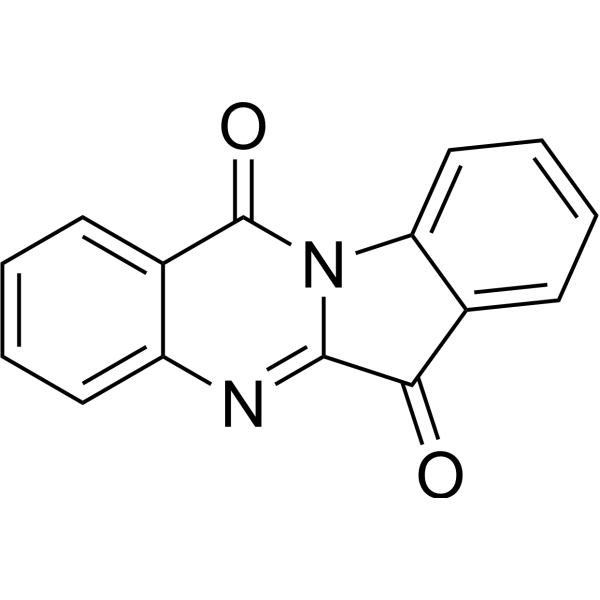
    Tryptanthrin
    5+ Cited Publications

    Leukotriene Receptor NO Synthase NF-κB COX TNF Receptor Interleukin Related Inflammation/Immunology Cancer
    Tryptanthrin is an indole quinazoline that could be an alkaloid from indigo-bearing plants. Tryptanthrin is a potent and orally active cellular Leukotriene (LT) biosynthesis inhibitor. Tryptanthrin has anticancer activity. Tryptanthrin suppresses the expression levels of NOS1, COX-2, and NF-κB and regulates the expression levels of IL-2, IL-10, and TNF-α .
    Tryptanthrin
  • HY-W040045
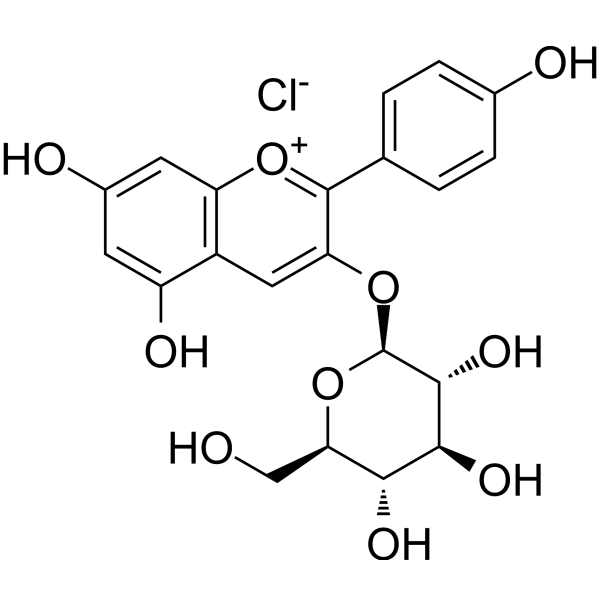
    Callistephin chloride
    1 Publications Verification

    PelargonidIN-3-O-glucoside chloride

    Reactive Oxygen Species (ROS) COX NO Synthase p38 MAPK TNF Receptor Apoptosis Neurological Disease Metabolic Disease Inflammation/Immunology Cancer
    Callistephin (Pelargonidin 3-O-glucoside) chloride is an anthocyanin. Callistephin chloride regulates the expression of inflammatory (reducing iNOS/TNF-α/COX-2) and apoptosis-related proteins by inhibiting p38 phosphorylation, and enhances the protective effect of Isoflurane (HY-A0134) on microglial cell damage. Callistephin chloride significantly reduces ROS levels, eliminates DPPH free radicals, protects retinal pigment epithelial cells, and inhibits lipid peroxidation. Callistephin chloride can alleviate glutamate excitotoxicity, reduce neuronal apoptosis, and protect cerebellar granule neurons. Callistephin chloride can inhibit the proliferation and metastasis of breast cancer cells by inducing apoptosis [2] .
    Callistephin chloride
  • HY-111255A
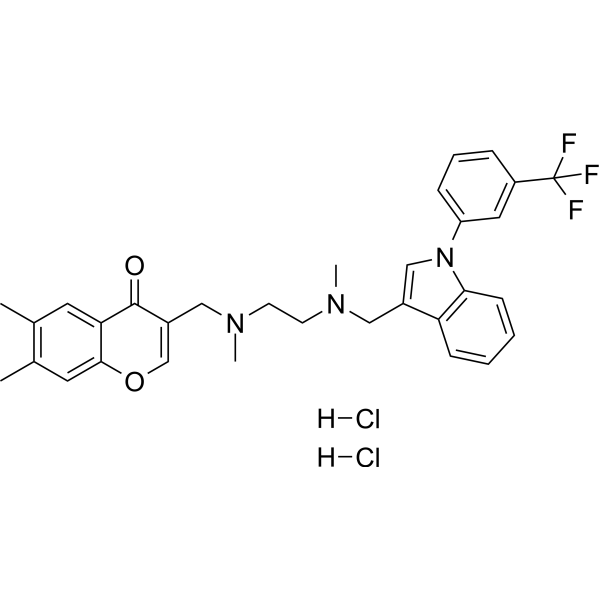
    SPD304 dihydrochloride
    5+ Cited Publications

    TNF Receptor Inflammation/Immunology Cancer
    SPD304 dihydrochloride is a selective TNF-α inhibitor, which promotes dissociation of TNF trimers and therefore blocks the interaction of TNF and its receptor. SPD304 has an IC50 of 22 μM for inhibiting in vitro TNF receptor 1 (TNFR1) binding to TNF-α .
    SPD304 dihydrochloride
  • HY-N7627

    Estrogen Receptor/ERR Toll-like Receptor (TLR) Akt MMP HSP Inflammation/Immunology
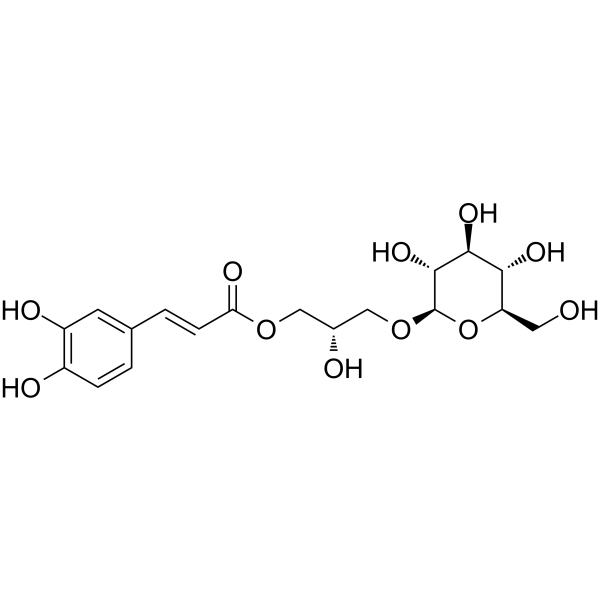
    Regaloside C is an anti-inflammatory agent and antioxidant that scavenges ABTS and DPPH free radicals. Regaloside C targets multiple molecules including TNF-α, MMP-2, ERα, AKT1, TLR4 and HSP90-α. Regaloside C is applicable to research related to inflammatory diseases [2].
    Regaloside C
  • HY-174138

    NF-κB Inflammation/Immunology
    NF-κB degrader 1 (Compound MD-1) is a NF-κB1 p105 subunit degrader. NF-κB degrader 1 shows anti-inflammatory activity (IC50 for inhibiting TNF-α is 2.02 μM, and for inhibiting NO is 5.40 μM). NF-κB degrader 1 induces p105 degradation dependent on the Cullin-RING ligase (CRL) SCFBTCP, suppressing NF-κB transcriptional activity. NF-κB degrader 1 is promising for research of inflammation-related diseases .
    NF-κB degrader 1
  • HY-121811

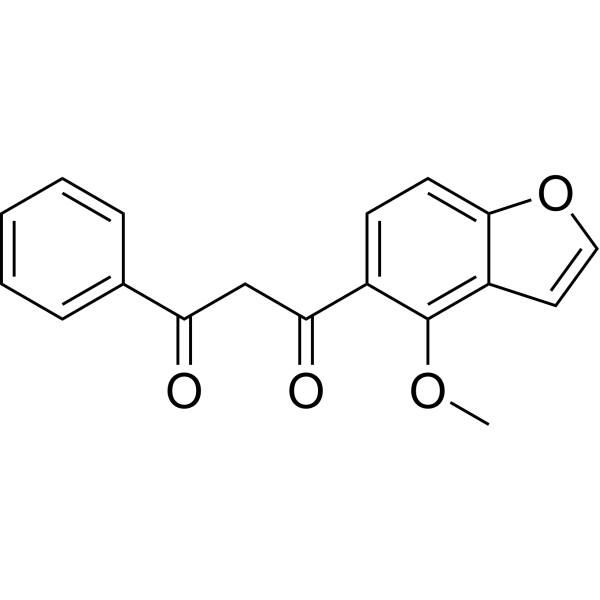
    LanceolatIN C

    Glycosidase Phosphatase Interleukin Related TNF Receptor COX Beclin1 GLUT FAK Akt mTOR p38 MAPK Keap1-Nrf2 Apoptosis Amyloid-β Tau Protein Autophagy Neurological Disease Inflammation/Immunology Cancer
    Pongamol (Lanceolatin C) is an orally active flavonoid with an IC50 of 75 μM and a Ki of 58 μM against PTPase-1B, and an IC50 of 103.5 μM against intestinal α-Glycosidase. Pongamol reduces the release of IL‑1β, TNF‑α, COX‑2 and iNOS in cells, reverses the nuclear translocation of NF‑κB, and upregulates the levels of Beclin 1 and LC3 Ⅱ/LC3 Ⅰ. Pongamol promotes glucose uptake by increasing the level of GLUT4 on the surface of skeletal muscle cells. Pongamol inhibits epithelial-mesenchymal transition by suppressing the FAK/Akt-mTOR signaling pathway. Pongamol inhibits neuronal cytotoxicity, suppresses cell apoptosis and extends the lifespan of Caenorhabditis elegans by activating the MAPKs/Nrf2 signaling pathway. Pongamol exerts hypoglycemic effects in diabetic mouse models. Pongamol exhibits antibacterial activity. Pongamol alleviates oxidative stress, neuroinflammation, deposition and excessive phosphorylation of Tau Protein, and restores autophagy function in Alzheimer's disease mouse models by inhibiting the Akt/mTOR signaling pathway. Pongamol is applicable to research related to Alzheimer's disease, type 2 diabetes, non-small cell lung cancer and postprandial hyperglycemia [2] .
    Pongamol
  • HY-N6607R

    Reference Standards Leukotriene Receptor NO Synthase NF-κB COX TNF Receptor Interleukin Related Inflammation/Immunology Cancer
    Tryptanthrin (Standard) is the analytical standard of Tryptanthrin. This product is intended for research and analytical applications. Tryptanthrin is an indole quinazoline that could be an alkaloid from indigo-bearing plants. Tryptanthrin is a potent and orally active cellular Leukotriene (LT) biosynthesis inhibitor. Tryptanthrin has anticancer activity. Tryptanthrin suppresses the expression levels of NOS1, COX-2, and NF-κB and regulates the expression levels of IL-2, IL-10, and TNF-α .
    Tryptanthrin (Standard)
  • HY-111167

    Phosphodiesterase (PDE) Interleukin Related TNF Receptor IFNAR Inflammation/Immunology
    AN-2898 is a selective PDE4 inhibitor with IC50 of 0.027 μM over other phosphodiesterase enzymes, such as PDE1A, PDE2A and PDE3A. AN-2898 also potently inhibits PDE4 subtypes (PDE4B1, PDE4A1A and PDE4D2). AN-2898 significantly inhibits the production of TNF-α, IL-2, IFN-γ, IL-5 and IL-10. AN-2898 can be used for mild to moderate atopic dermatitis (AD) and psoriasis research .
    AN-2898
  • HY-178302

    ADC Payload Others
    TNF-α agonistic 2 (Compound 009) is a toxic molecule. TNF-α agonistic 2 reduces the thickness of the right ear in mice. TNF-α agonistic 2 can be used as an ADC toxic molecule .
    TNF-α agonistic 2
  • HY-171592

    RIP kinase NOD-like Receptor (NLR) TNF Receptor Inflammation/Immunology
    RIPK2-IN-7 (Compound 10w) is an orally active, selective RIPK2 inhibitor (IC50: 0.6 nM). RIPK2-IN-7 inhibits RIPK2 kinase activity, blocks the nucleotide-binding oligomerization domain (NOD) signaling pathway, and reduces the production of inflammatory factors (such as TNFα). RIPK2-IN-7 can be used in the study of inflammatory bowel disease (IBD) .
    RIPK2-IN-7
  • HY-W040045R

    PelargonidIN-3-O-glucoside chloride (Standard)

    Reference Standards Reactive Oxygen Species (ROS) COX NO Synthase p38 MAPK Apoptosis TNF Receptor Neurological Disease Inflammation/Immunology Cancer
    Callistephin (Pelargonidin 3-O-glucoside) chloride (Standard) is the analytical standard of Callistephin chloride (HY-W040045). This product is intended for research and analytical applications. Callistephin chloride is an anthocyanin. Callistephin chloride regulates the expression of inflammatory (reducing iNOS/TNF-α/COX-2) and apoptosis-related proteins by inhibiting p38 phosphorylation, and enhances the protective effect of Isoflurane (HY-A0134) on microglial cell damage. Callistephin chloride significantly reduces ROS levels, eliminates DPPH free radicals, protects retinal pigment epithelial cells, and inhibits lipid peroxidation. Callistephin chloride can alleviate glutamate excitotoxicity, reduce neuronal apoptosis, and protect cerebellar granule neurons. Callistephin chloride can inhibit the proliferation and metastasis of breast cancer cells by inducing apoptosis.
    Callistephin chloride (Standard)
  • HY-19570A

    S-(1,2-DichlorovINyl)-L-cysteINe hydrochloride

    TNF Receptor Drug Metabolite Inflammation/Immunology
    NSC 15830 (S-(1,2-Dichlorovinyl)-L-cysteine) hydrochloride is a nephrotoxin and metabolite of trichloroethylene. NSC 15830 hydrochloride inhibits pathogen-stimulated TNF-α .
    NSC 15830 hydrochloride
  • HY-114573

    IKK Interleukin Related TNF Receptor RIP kinase Others
    TNF-α-IN-19 is an inhibitor of TNFα that can block the interaction between TNFαRI, TRADD, and RIP1, the EC50 values for TNFα, IL-1β, and IL-1β/TNFα are 2.451, 3.792 and 1.54 μM, respectively. TNF-α-IN-19 only inhibits the degradation of IκBα when cells are stimulated by TNFα and not by IL-1β .
    TNF-α-IN-19
  • HY-183288

    COX Interleukin Related TNF Receptor Inflammation/Immunology
    COX-2-IN-66 is a cyclooxygenase-2 (COX-2) inhibitor with an IC50 of 8.43 μM. COX-2-IN-66 reduces release of pro-inflammatory cytokines IL-6 and TNF-α. COX-2-IN-66 exhibits acceptable cellular tolerability, with cytokine-modulating concentrations remaining below its cytotoxic threshold. COX-2-IN-66 can be used for the research of inflammation .
    COX-2-IN-66
  • HY-119348

    NCX-701

    Interleukin Related TNF Receptor COX NO Synthase Neurological Disease Inflammation/Immunology
    Nitroparacetamol (NCX-701) is a nitric oxide (NO) donor-non-steroidal anti-inflammatory agent (NO-NSAID). Nitroparacetamol is formed by the ester linkage of Acetaminophen (HY-66005) and Nitrooxybutyroyl, aiming to combine the analgesic advantage of Acetaminophen with the organ-protective effect of nitric oxide, while expanding its anti-inflammatory activity. The analgesic spectrum of Nitroparacetamol is broader, and it is effective for painful pathological pain, and significantly reduces hepatotoxicity. Nitroparacetamol can reduce the expressions of IL-1β, TNF-α, COX-2, and iNOS.
    Nitroparacetamol
  • HY-N17317

    ITN

    Keap1-Nrf2 Heme Oxygenase (HO) JNK ERK p38 MAPK NF-κB Interleukin Related Metabolic Disease Inflammation/Immunology
    Isostrictiniin (ITN) is a polyphenolic compound isolated from Nymphaea candida. It upregulates the expression of Nrf2 and HO-1, while downregulating the expression of Keap1. Isostrictiniin reduces the phosphorylation levels of JNK, ERK1/2, p38, IκBα, and NF-κB p65. Isostrictiniin decreases the levels of pro-inflammatory mediators (IL-1β, IL-6, TNF-α, PGE2). Isostrictiniin alleviates LPS-induced acute lung injury and exerts protective effects against acute alcoholic liver injury. Additionally, isostrictiniin exhibits anti-inflammatory, antioxidant, and anti-fibrotic activities.
    Isostrictiniin
  • HY-181812

    JNK p38 MAPK Interleukin Related TNF Receptor Inflammation/Immunology
    JNK2/MKK7 PPI-IN-1 is an orally active JNK2 inhibitor with an IC50 of 0.99 μM and a Kd of 81.6 μM. JNK2/MKK7 PPI-IN-1 inhibits JNK2 kinase activity, disrupts JNK2-MKK7 protein-protein interaction, and reduces c-Jun phosphorylation. JNK2/MKK7 PPI-IN-1 inhibits LPS-induced overexpression of inflammatory cytokines IL-6 and TNF-α. JNK2/MKK7 PPI-IN-1 can be used for the research of acute lung injury .
    JNK2/MKK7 PPI-IN-1
  • HY-P992401

    EGFR CD3 PI3K Akt p38 MAPK Caspase Apoptosis IFNAR TNF Receptor Interleukin Related Cancer
    M802 is an anti-HER2/CD3 bispecific antibody, with a Kd of 0.578 nM for human HER2 and a Kd of 71.2 nM for human CD3. M802 inhibits the PI3K/AKT and MAPK signaling pathways, suppresses tumor cell proliferation, activates caspase-3, and promotes tumor cell apoptosis (apoptosis). M802 recruits and activates CD3-positive immune cells, mediates cytotoxicity against HER2-positive tumor cells, and induces immune cells to secrete IFN-γ, TNF-α, IL-2 and IL-6. M802 exhibits anti-tumor efficacy in mice with gastric cancer xenografts. M802 can be used in research related to HER2-positive breast cancer, HER2-positive gastric cancer and other cancers. The recommended isotype control is human IgG1 kappa (HY-P99001) .
    M802
  • HY-181926

    COX HDAC Microtubule/Tubulin Interleukin Related Amyloid-β Tau Protein Neurological Disease
    COX-2/HDAC6-IN-1 (Compound 11e) is a dual COX-2 and HDAC6 inhibitor, with an IC50 of 0.12 μM against HDAC6 and an IC50 of 0.66 μM against COX-2. COX-2/HDAC6-IN-1 enhances the acetylation level of α-tubulin, regulates epigenetic gene expression, and inhibits the expression of pro-inflammatory mediators (COX-2, IL-1β, IL-6 and TNF-α). COX-2/HDAC6-IN-1 promotes Amyloid-β clearance and reduces excessive phosphorylation of Tau protein. COX-2/HDAC6-IN-1 maintains neuronal morphology by stabilizing MAP2, protects synaptic integrity by regulating synapsin, and restores the expression of memory-related genes. COX-2/HDAC6-IN-1 possesses neuroprotective activity and improves learning and memory abilities in Scopolamine (HY-N0296)-induced Alzheimer's disease mouse models. COX-2/HDAC6-IN-1 is applicable to research related to Alzheimer's disease .
    COX-2/HDAC6-IN-1

Inquiry Online

Your information is safe with us. * Required Fields.

Salutation


Country or Region *

Applicant Name *


Organization Name *

Department *


Email Address *


Product Name *

Cat. No.


Requested quantity *

Phone Number *


Remarks

Inquiry Online

Inquiry Information

Product Name:
Cat. No.:
Quantity:
MCE Japan Authorized Agent:

