



SPD304
Based on 8 publication(s) in Google Scholar
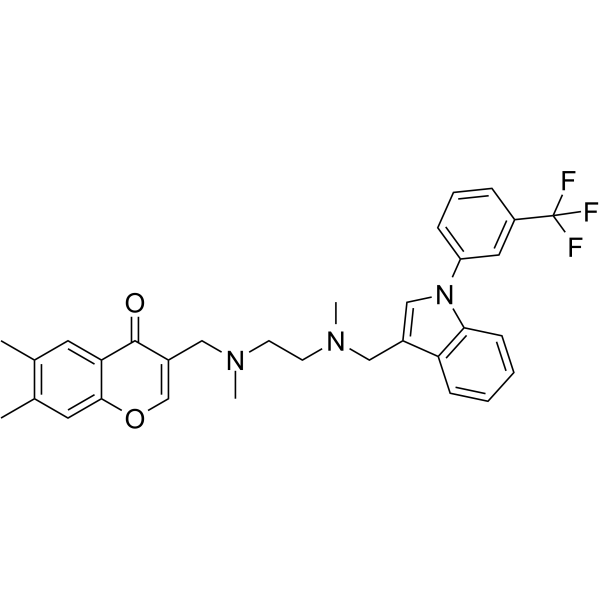
SPD304 is a selective TNF-α inhibitor, which promotes dissociation of TNF trimers and therefore blocks the interaction of TNF and its receptor. SPD304 has an IC50 of 22 μM for inhibiting in vitro TNF receptor 1 (TNFR1) binding to TNF-α.
For research use only. We do not sell to patients.
- Purity : 99.72%
- CAS No.: 869998-49-2
- Formula: C32H32F3N3O2
- Molecular Weight:547.61
-
Storage:Pure form -20°C, 3 years ; In solvent -80°C, 6 months , -20°C, 1 month

To place orders, for customer services and technical support, please contact: MedChemExpress USA
Tel: 609-228-6898 E-mail: [email protected] [email protected]


-
 Biological Activity
-
Chemical Information
-
Solvent & Solubility
- Protocols
- Purity & Documentation
- References
-
 Help & FAQs


-
HY-133122
UCB-9260TNF Signaling Inhibitor -
HY-133807
BenpyrineTNF-α Inhibitor -

HY-160412
BalinatunfibTNFR1 Inhibitor -
HY-110203
R-7050TNF Receptor Antagonist -
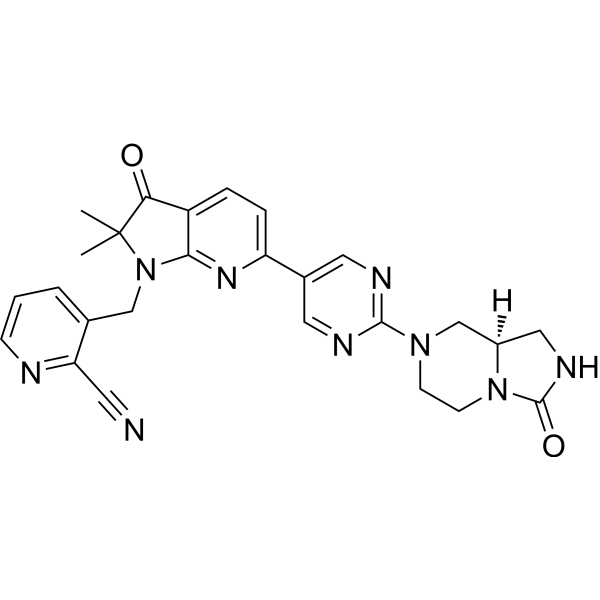
HY-142618
TNF-α-IN-6TNF Receptor Inhibitor -

HY-P9970
InfliximabTNF-α Inhibitor -
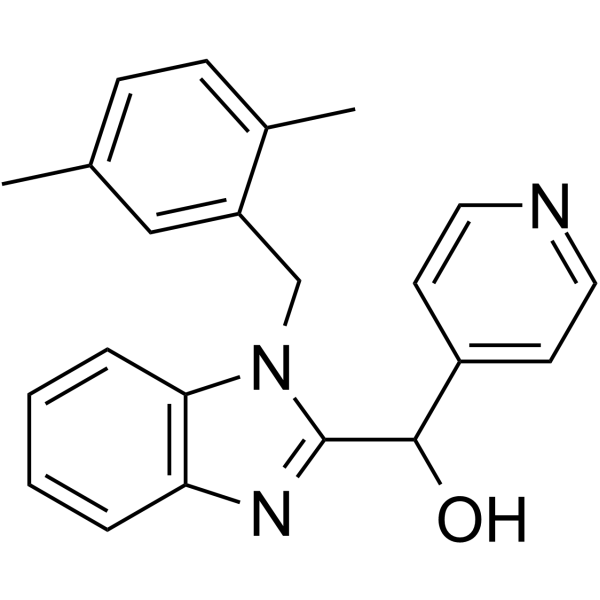
HY-147045
UCB-5307TNF Inhibitor -
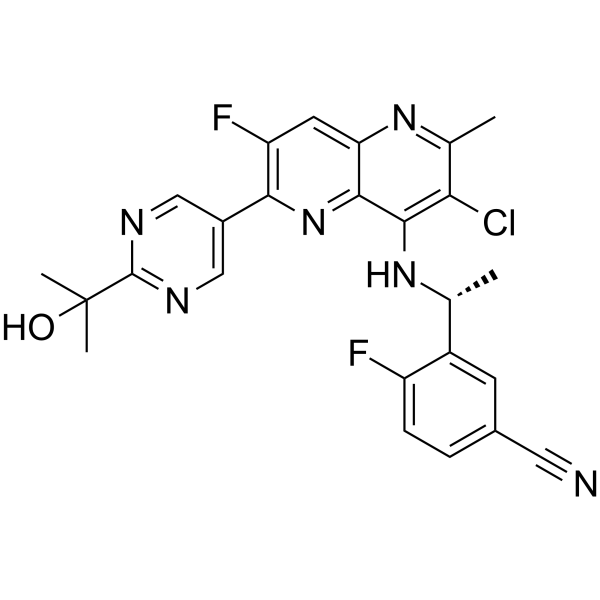
HY-134471
TNF-α-IN-2TNFα Inhibitor -

HY-P9908
AdalimumabTNF-α Inhibitor -
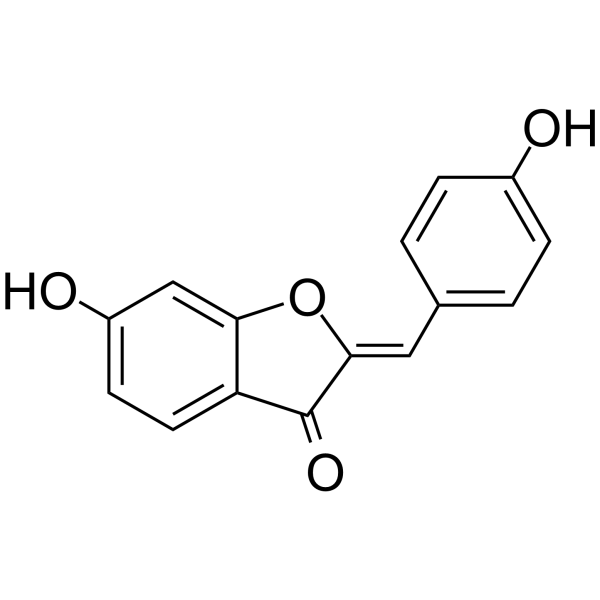
HY-102040
HispidolTNF-α Inhibitor -
HY-15760
Necrostatin-1RIPK1 Inhibitor -
HY-10984
PomalidomideImmunomodulatory Agent
Publications Citing Use of MedChemExpress (MCE) SPD304
More- J Biomed Sci. 2025 May 9;32(1):47. [Abstract]
- Cell Death Dis. 2020 Dec 11;11(12):1050. [Abstract]
- Aging Cell. 2020 Oct;19(10):e13217. [Abstract]
- CNS Neurosci Ther. 2024 May;30(5):e14749. [Abstract]
- J Cell Mol Med. 2026 May;30(9):e71169. [Abstract]
- FEBS J. 2022 May;289(10):2809-2827. [Abstract]
- Anal Bioanal Chem. 2023 Apr;415(9):1641-1655. [Abstract]
- Biochem Biophys Rep. 2025 Aug 2:43:102187. [Abstract]
 Customer Validation & Images

-
WB
-
Cell Migration/Invasion Assay
-
WB
-
Flow Cytometry
-
WB


Biological Activity
Description
IC50 & Target
IC50: 22 μM (TNFα)[1].
Cellular Effect
|
Cell Line

|
Type | Value | Description | References |
|---|---|---|---|---|
| HEK-293T | IC50 |
15 μM
Compound: SPD304
|
Inhibition of human TNFalpha induced NFkappaB activation in HEK293T cells after 6 hrs by dual-glo luciferase assay
Inhibition of human TNFalpha induced NFkappaB activation in HEK293T cells after 6 hrs by dual-glo luciferase assay
|
10.1039/C5MD00549C |
| L929 | IC50 |
5 μM
Compound: 1
|
Inhibition of human TNF assessed as reduction in TNF-induced cell death of actinomycin D activated mouse L929 cells preincubated for 30 mins followed by cell addition measured after 18 to 24 hrs by crystal violet staining based spectrophotometric analysis
Inhibition of human TNF assessed as reduction in TNF-induced cell death of actinomycin D activated mouse L929 cells preincubated for 30 mins followed by cell addition measured after 18 to 24 hrs by crystal violet staining based spectrophotometric analysis
|
10.1039/C5MD00023H |
In Vitro
SPD304 (2 μM) significantly rescues the survivability of aHSCs, reduces the production of lipid hydroxides, and increased intracellular GSH. The co-treatment of GA (75 μM) and SPD304 (2 μM), down-regulate TRADD almost 2-fold (w/o inhibitor vs. w/ inhibitor) and p RIP3 1.4 fold compared to GA alone, and promotes caspase 8 activation[4].
MedChemExpress (MCE) has not independently confirmed the accuracy of these methods. They are for reference only. Further protocols information, click here.
In Vivo
MedChemExpress (MCE) has not independently confirmed the accuracy of these methods. They are for reference only.


Chemical Information
-
CAS No. 869998-49-2
-
Appearance Oil
-
Molecular Weight 547.61
-
Formula C32H32F3N3O2
-
Color White to off-white
-
SMILES
O=C1C(CN(C)CCN(C)CC2=CN(C3=CC=CC(C(F)(F)F)=C3)C4=C2C=CC=C4)=COC5=CC(C)=C(C)C=C15
-
Shipping
Room temperature in continental US; may vary elsewhere.
-
Storage
Pure form -20°C 3 years In solvent -80°C 6 months -20°C 1 month


Publications (8)
-
Journal Impact Factor
-
Most Recent
-
J Biomed Sci
2025 May 9;32(1):47. PMID: 40346694
SPD304 purchased from MedChemExpress. Usage Cited in: J Biomed Sci. 2025 May 9;32(1):47. [Abstract]
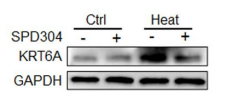
Representative western blot images showed the expression of KRT6A in HaCaT cells treated with high temperatures and with or without SPD304 (2μM).
-
Cell Death Dis
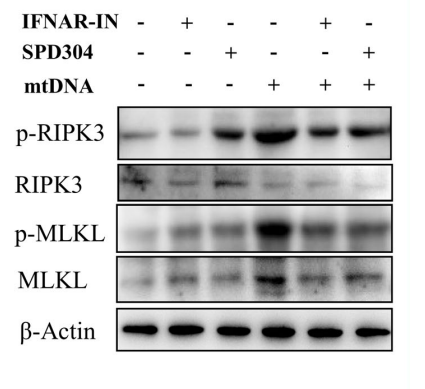
mtDNA-STING pathway promotes necroptosis-dependent enterocyte injury in intestinal ischemia reperfusion. [Abstract]2020 Dec 11;11(12):1050. PMID: 33311495
SPD304 purchased from MedChemExpress. Usage Cited in: Cell Death Dis. 2020 Dec 11;11(12):1050. [Abstract]
Primary IECs were treated with 10 μg/ml mtDNA, 1 μM IFN alpha-IFNAR-IN-1 (IFNAR-IN), or 2 μM SPD304. Western blot was used to analyze necroptosis signaling.
-
Aging Cell
Testicular Lmcd1 regulates phagocytosis by Sertoli cells through modulation of NFAT1/Txlna signaling pathway. [Abstract]2020 Oct;19(10):e13217. PMID: 32840323 -
CNS Neurosci Ther
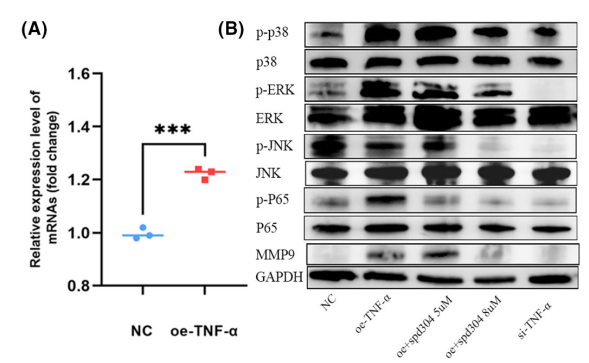
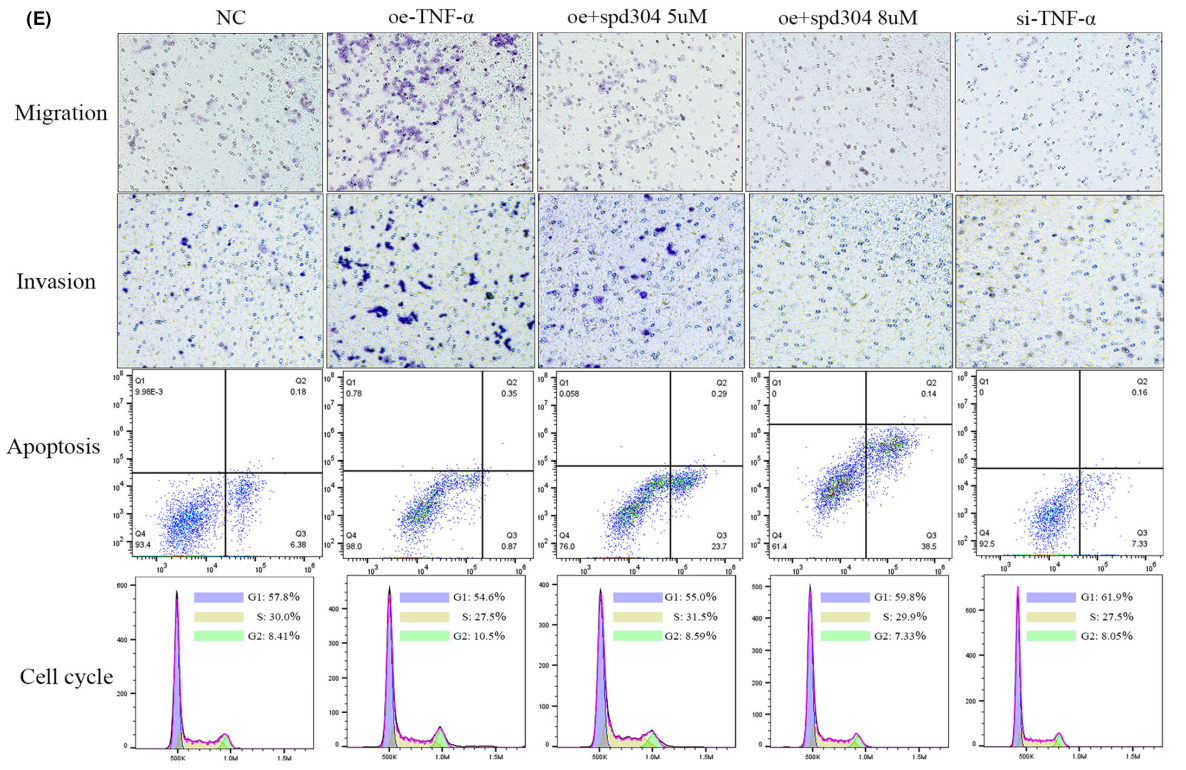
TNF-α can promote membrane invasion by activating the MAPK/MMP9 signaling pathway through autocrine in bone-invasive pituitary adenoma. [Abstract]2024 May;30(5):e14749. PMID: 38739004
SPD304 purchased from MedChemExpress. Usage Cited in: CNS Neurosci Ther. 2024 May;30(5):e14749. [Abstract]
The selective inhibitor of TNFα, SPD304 (5, 8μM), suppressed the upregulation of MAPK pathway proteins induced by TNFα.
SPD304 purchased from MedChemExpress. Usage Cited in: CNS Neurosci Ther. 2024 May;30(5):e14749. [Abstract]
Cell proliferation, migration, and invasion experiments demonstrated that TNFα overexpression promoted proliferation, migration, and invasion of GH3 cells, while SPD304 (5, 8 μM) inhibited this effect induced by TNFα.
-
J Cell Mol Med
Sialidase Neu3 Induced Sialic Acid Disorder and Promoted Vascular Endothelial Injury Through Transcription Factor SP3. [Abstract]2026 May;30(9):e71169. PMID: 42117319 -
FEBS J
TNF-α/ENO1 signaling facilitates testicular phagocytosis by directly activating Elmo1 gene expression in mouse Sertoli cells. [Abstract]2022 May;289(10):2809-2827. PMID: 34919331 -
Anal Bioanal Chem
Biosensor-based active ingredient recognition system for screening TNF-α inhibitors from lotus leaves. [Abstract]2023 Apr;415(9):1641-1655. PMID: 36719439 -
Biochem Biophys Rep
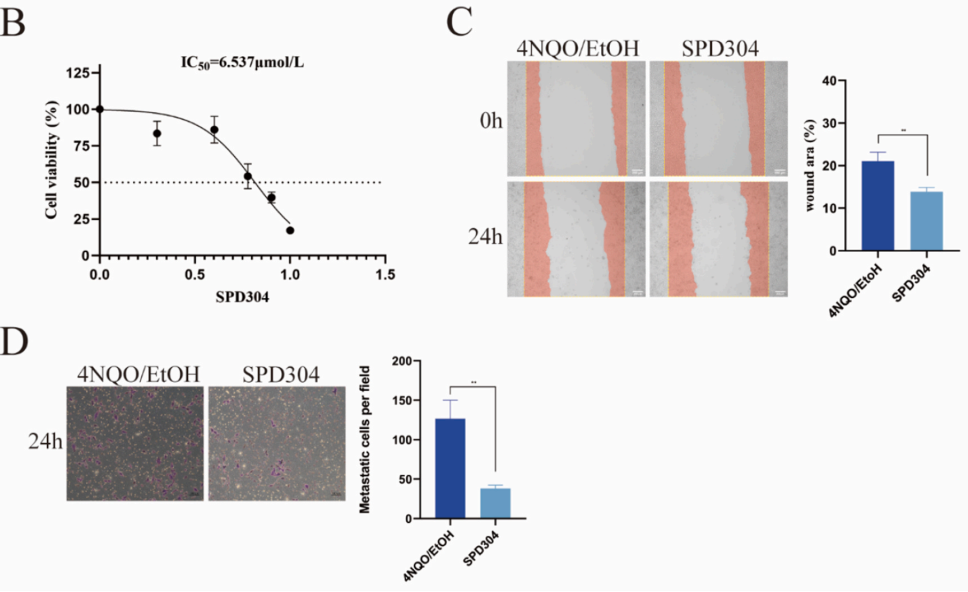
Network toxicology reveals collaborative mechanism of 4NQO and ethanol in esophageal squamous cell carcinogenesis. [Abstract]2025 Aug 2:43:102187. PMID: 40800605
SPD304 purchased from MedChemExpress. Usage Cited in: Biochem Biophys Rep. 2025 Aug 2:43:102187. [Abstract]
Consequently, we treated the 4NQO/EtOH group with 6 μM SPD304 for 24 h, observing significantly reduced migration and invasion capacities.


Solvent & Solubility
In Vitro:
DMSO : 25 mg/mL (45.65 mM; Need ultrasonic; Hygroscopic DMSO has a significant impact on the solubility of product, please use newly opened DMSO)
H2O : < 0.1 mg/mL (insoluble)
Please refer to the solubility information to select the appropriate solvent. Once prepared, please aliquot and store the solution to prevent product inactivation from repeated freeze-thaw cycles.
Storage method and period of stock solution: -80°C, 6 months; -20°C, 1 month. When stored at -80°C, please use it within 6 months. When stored at -20°C, please use it within 1 month.
Please refer to the solubility information to select the appropriate solvent. Once prepared, please aliquot and store the solution to prevent product inactivation from repeated freeze-thaw cycles.
Storage method and period of stock solution: -80°C, 6 months; -20°C, 1 month. When stored at -80°C, please use it within 6 months. When stored at -20°C, please use it within 1 month.
Concentration (start) × Volume (start) = Concentration (final) × Volume (final)
In Vivo:
Select the appropriate dissolution method based on your experimental animal and administration route.
- For the following dissolution methods, please ensure to first prepare a clear stock solution using an In Vitro approach and then sequentially add co-solvents:
- To ensure reliable experimental results, the clarified stock solution can be appropriately stored based on storage conditions. As for the working solution for In Vivo experiments, it is recommended to prepare freshly and use it on the same day.
- The percentages shown for the solvents indicate their volumetric ratio in the final prepared solution. If precipitation or phase separation occurs during preparation, heat and/or sonication can be used to aid dissolution.
Add each solvent one by one: 10% DMSO 40% PEG300 5% Tween-80 45% Saline
Solubility: ≥ 1.25 mg/mL (2.28 mM); Clear solution
This protocol yields a clear solution of ≥ 1.25 mg/mL (saturation unknown).
Taking 1 mL working solution as an example, add 100 μL DMSO stock solution (12.5 mg/mL) to 400 μL PEG300, and mix evenly; then add 50 μL Tween-80 and mix evenly; then add 450 μL Saline to adjust the volume to 1 mL.
Preparation of Saline: Dissolve 0.9 g sodium chloride in ddH₂O and dilute to 100 mL to obtain a clear Saline solution.
Add each solvent one by one: 10% DMSO 90% (20% SBE-β-CD in Saline)
Solubility: 1.25 mg/mL (2.28 mM); Suspended solution; Need ultrasonic
This protocol yields a suspended solution of 1.25 mg/mL. Suspended solution can be used for oral and intraperitoneal injection.
Taking 1 mL working solution as an example, add 100 μL DMSO stock solution (12.5 mg/mL) to 900 μL 20% SBE-β-CD in Saline, and mix evenly.
Preparation of 20% SBE-β-CD in Saline (4°C, storage for one week): 2 g SBE-β-CD powder is dissolved in 10 mL Saline, completely dissolve until clear.
In Vivo Dissolution Calculator
Please enter the basic information of animal experiments:
-
-
-
-
Recommended: Prepare an additional quantity of animals to account for potential losses during experiments.
Please enter your animal formula composition:
-
%DMSO +
Recommended: Keep the proportion of DMSO in working solution below 2% if your animal is weak.
-
%+
-
+%Tween-80 + +
-
%Saline +
The co-solvents required include: DMSO, . All of co-solvents are available by MedChemExpress (MCE). , Tween 80. All of co-solvents are available by MedChemExpress (MCE).
Working solution concentration: 0.22 mg/mL
Method for preparing stock solution: mg drug dissolved in μL DMSO. Stock solution concentration: mg/mL.
1. Take μL DMSO stock solution;
2. Add μL .
μL , mix evenly;
3. Then add μL Tween 80, mix evenly;
4. Then add μL
Please ensure that the stock solution in the first step is dissolved to a clear state, and add co-solvents in sequence. You can use ultrasonic heating (ultrasonic cleaner, recommended frequency 20-40 kHz), vortexing, etc. to assist dissolution.

Protocols
-
Cell Cytotoxicity Assay
Cytotoxicity assays are usually based on the assessment of cell membrane damage, which can also be indirectly detected by measuring cell viability. Detection methods include MTT assay, CKK-8 assay, LDH assay and ATP assay, etc.


Purity & Documentation
-
Data Sheet (274 KB)
-
SDS (252 KB)
- English - EN (252 KB)
- Français - FR (252 KB)
- Deutsch - DE (252 KB)
- Norwegian - NO (252 KB)
- Español - ES (252 KB)
- Swedish - SV (252 KB)
- Italian - IT (252 KB)
- Korean - KR (252 KB)
- Portuguese - PT (252 KB)
-
Handling Instructions (2659 KB)
References
[1]. Molly M. He, et al. Small-Molecule Inhibition of TNF-α. Science 11 Nov 2005.
[2]. Alexiou P, et al. Rationally designed less toxic SPD-304 analogs and preliminary evaluation of their TNF inhibitory effects. Arch Pharm (Weinheim). 2014 Nov;347(11):798-805. [Content Brief]
[3]. Mouhsine H, et al. Identification of an in vivo orally active dual-binding protein-protein interaction inhibitor targeting TNFα through combined in silico/in vitro/in vivo screening. Sci Rep. 2017 Jun 13;7(1):3424. [Content Brief]
[4]. Gallic acid induces necroptosis via TNF-α signaling pathway in activated hepatic stellate cells. Chang YJ, et al. PLoS One. 2015 Mar 27;10(3):e0120713. [Content Brief]


Complete Stock Solution Preparation Table
Please refer to the solubility information to select the appropriate solvent. Once prepared, please aliquot and store the solution to prevent product inactivation from repeated freeze-thaw cycles.
Storage method and period of stock solution: -80°C, 6 months; -20°C, 1 month. When stored at -80°C, please use it within 6 months. When stored at -20°C, please use it within 1 month.
| Optional Solvent | Concentration Solvent Mass | 1 mg | 5 mg | 10 mg | 25 mg |
|---|---|---|---|---|---|
| DMSO | 1 mM | 1.8261 mL | 9.1306 mL | 18.2612 mL | 45.6529 mL |
| 5 mM | 0.3652 mL | 1.8261 mL | 3.6522 mL | 9.1306 mL | |
| 10 mM | 0.1826 mL | 0.9131 mL | 1.8261 mL | 4.5653 mL | |
| 15 mM | 0.1217 mL | 0.6087 mL | 1.2174 mL | 3.0435 mL | |
| 20 mM | 0.0913 mL | 0.4565 mL | 0.9131 mL | 2.2826 mL | |
| 25 mM | 0.0730 mL | 0.3652 mL | 0.7304 mL | 1.8261 mL | |
| 30 mM | 0.0609 mL | 0.3044 mL | 0.6087 mL | 1.5218 mL | |
| 40 mM | 0.0457 mL | 0.2283 mL | 0.4565 mL | 1.1413 mL |


SPD304 Related Classifications
HY-111255 Related Classifications
 Powered by Bioz