
1. Search Result
Search Result
Results for "

Trichophyton rubrum

" in MedChemExpress (MCE) Product Catalog:

20

Inhibitors & Agonists

2

Peptides

10

Natural
Products

2

Isotope-Labeled Compounds

Cat. No. Product Name Target Research Areas Chemical Structure
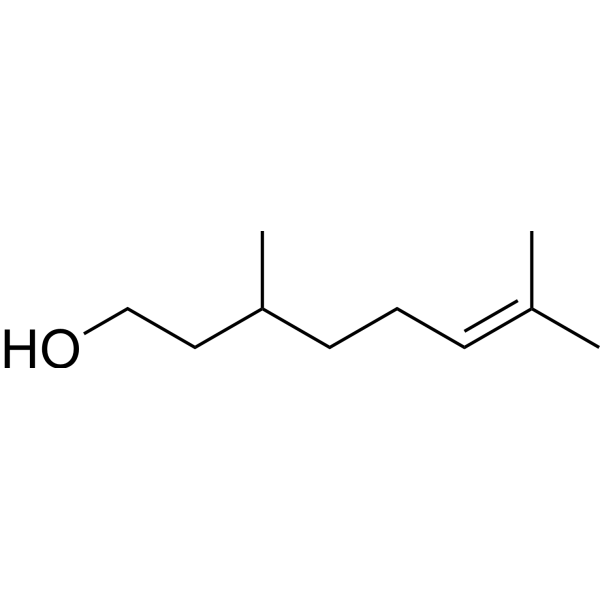
  • HY-W010201
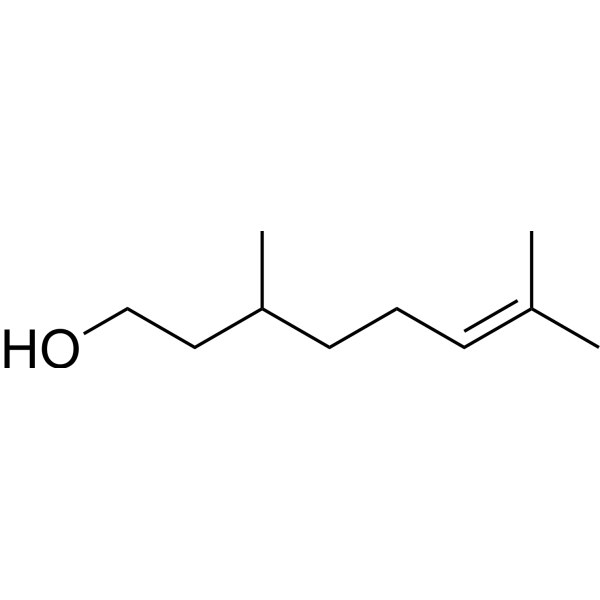
    Citronellol
    2 Publications Verification

    (±)-Citronellol; (±)-β-Citronellol

    Environmental Pollutants Necroptosis Autophagy Fungal Reactive Oxygen Species (ROS) ERK Atg8/LC3 TNF Receptor Apoptosis PI3K p62 Cardiovascular Disease Neurological Disease Cancer
    Citronellol ((±)-Citronellol) is an orally active inducer of apoptosis. Citronellol can prevent oxidative stress, mitochondrial dysfunction, and apoptosis in the SH-SY5Y cell Parkinson's disease model induced by 6-OHDA by regulating the ROS-NO, MAPK/ERK, and PI3K/Akt signaling pathways. Citronellol can induce necroptosis in human lung cancer cells through the TNF-α pathway and accumulation of ROS. Citronellol can reduce the levels of LC-3 and p62 to regulate the autophagy pathway, inhibit oxidative stress and neuroinflammation, and thus have neuroprotective effects on Parkinson's rats. Citronellol exhibits anti-fungal activity against Trichophyton rubrum by inhibiting ergosterol synthesis .
    Citronellol
  • HY-N3968

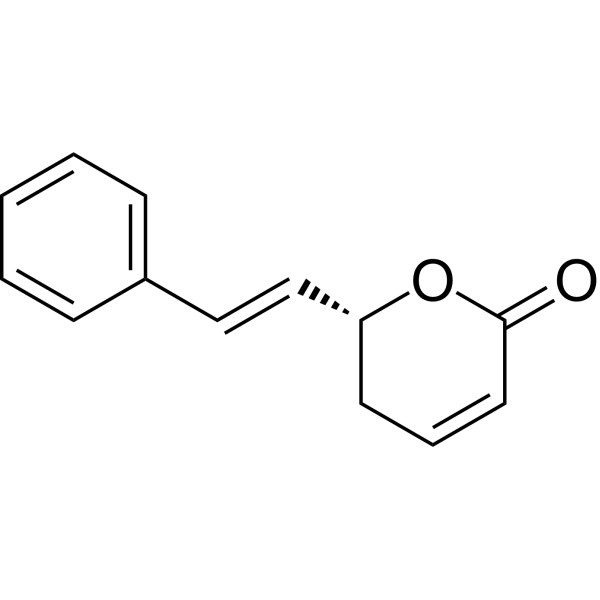
    GTN; (R)-(+)-Goniothalamin

    Apoptosis Insecticide Bacterial Fungal Reactive Oxygen Species (ROS) Infection Inflammation/Immunology Cancer
    Goniothalamin (GTN) is a styryl lactone. Goniothalamin exhibits insecticidal, anti-tumor and antibacterial activities. Goniothalamin induces cell cycle arrest and apoptosis in tumor cells. Goniothalamin acts as a larvicide against Culex quinquefasciatus larvae and as a cytotoxin against brine shrimp larvae. Goniothalamin functions as an antibacterial agent against Gram-positive and Gram-negative bacteria, and also acts as an antifungal agent against pathogens including Candida albicans, Trichophyton rubrum and Trichophyton mentagrophytes. Goniothalamin is applicable to research related to breast cancer, lymphatic filariasis, bacterial infections and fungal infections .
    Goniothalamin
  • HY-P1508

    Bactenecin, bovine

    Bacterial Fungal Antibiotic Infection
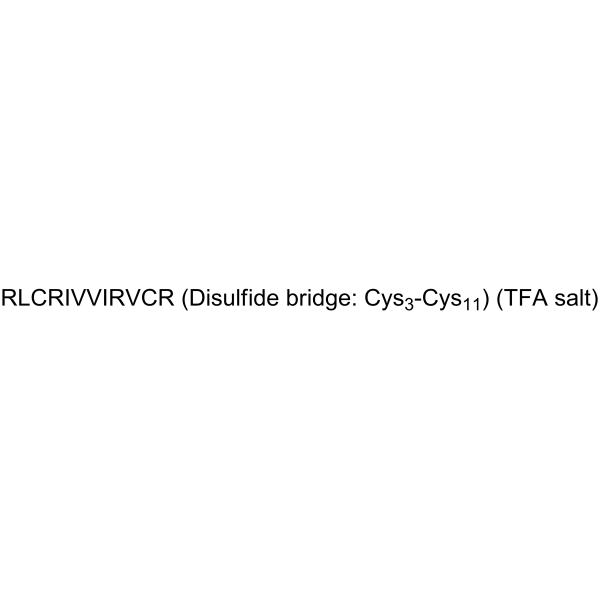
    Bactenecin (Bactenecin, bovine) is a potent 12-aa looped antimicrobial peptide isolated from bovine neutrophils. Bactenecin inhibits the growth of bacteria and yeast, and kills the fungus Trichophyton rubrum. Bactenecin increass membrane permeability, inhibits the growth and biofilm formation of B. pseudomallei .
    Bactenecin
  • HY-P1508A

    Bactenecin, bovine TFA

    Bacterial Fungal Infection
    Bactenecin TFA (Bactenecin, bovine TFA) is a potent 12-aa looped antimicrobial peptide isolated from bovine neutrophils. Bactenecin TFA inhibits the growth of bacteria and yeast, and kills the fungus Trichophyton rubrum. Bactenecin TFA increass membrane permeability, inhibits the growth and biofilm formation of B. pseudomallei .
    Bactenecin TFA
  • HY-N11079

    Fungal Infection
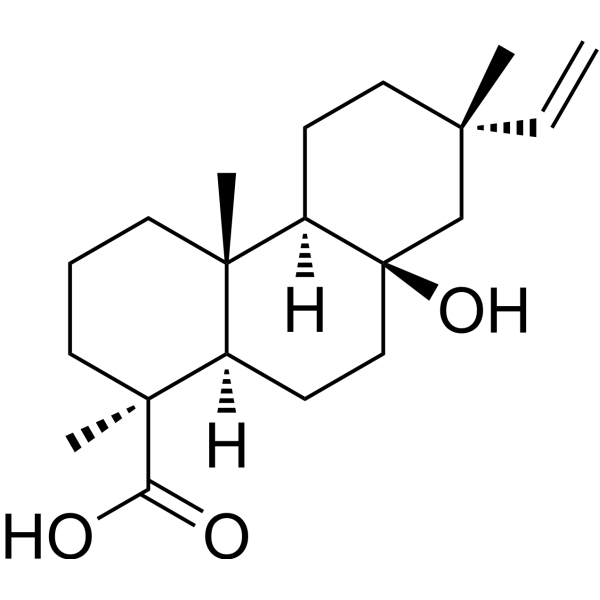
    Toonaciliatin M (compound 6) is a pmaradiene-type diterpenoid that can be isolated from Toona ciliate. Toonaciliatin M show antifungal activity against Trichophyton rubrum with an MIC value of 12.5 µg/mL .
    Toonaciliatin M
  • HY-W010201R
    Citronellol (Standard)
    2 Publications Verification

    (±)-Citronellol (Standard); (±)-β-Citronellol (Standard)

    Reactive Oxygen Species (ROS) Reference Standards ERK PI3K TNF Receptor Atg8/LC3 p62 Apoptosis Necroptosis Autophagy Fungal Cardiovascular Disease Neurological Disease Cancer
    Citronellol (Standard) is the analytical standard of Citronellol. Citronellol (Standard) is an orally active inducer of apoptosis. Citronellol (Standard) can prevent oxidative stress, mitochondrial dysfunction, and apoptosis in the SH-SY5Y cell Parkinson's disease model induced by 6-OHDA by regulating the ROS-NO, MAPK/ERK, and PI3K/Akt signaling pathways. Citronellol (Standard) can induce necroptosis in human lung cancer cells through the TNF-α pathway and accumulation of ROS. Citronellol (Standard) can reduce the levels of LC-3 and p62 to regulate the autophagy pathway, inhibit oxidative stress and neuroinflammation, and thus have neuroprotective effects on Parkinson's rats. Citronellol (Standard) exhibits anti-fungal activity against Trichophyton rubrum by inhibiting ergosterol synthesis .
    Citronellol (Standard)
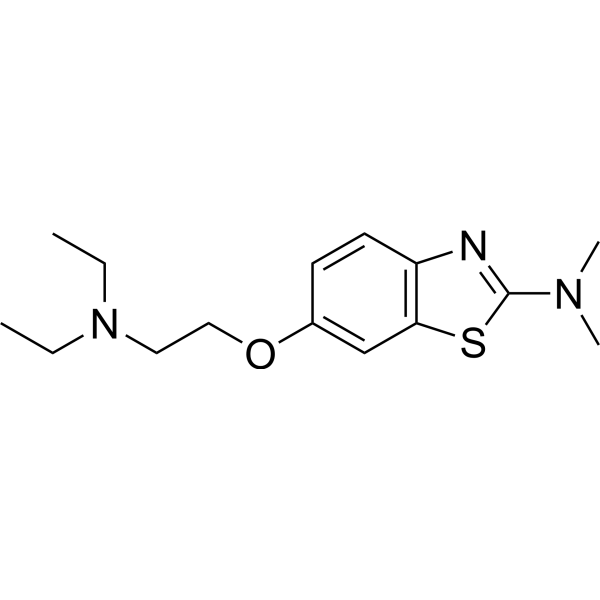
  • HY-148160

    Dimazole

    Fungal Infection
    Diamthazole (Dimazole) is an antifungal agent. Diamthazole can be used for the research of infection .
    Diamthazole
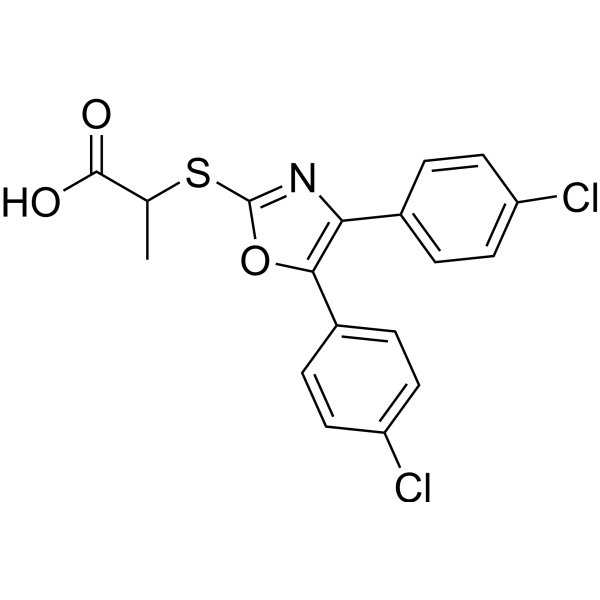
  • HY-106472

    EMD 26644

    Bacterial Infection
    Tioxaprofen is a new anti-mycotic drug against Trichophyton mentagrophytes and T. rubrum, and is a potent uncoupling agent of mitochondrial respiration .
    Tioxaprofen
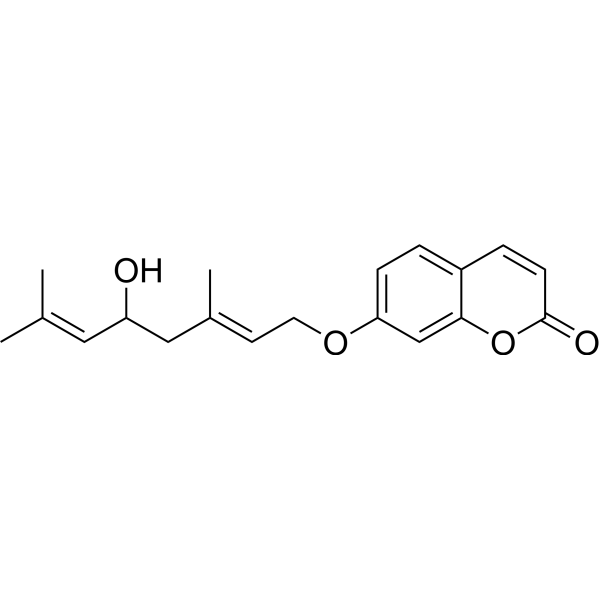
  • HY-N11434

    Fungal Infection
    Anisocoumarin H is a coumarin that exhibits antifungal activity. Anisocoumarin H shows the activities against Microsporum gypseum, Trichophyton rubrum and Trichophyton mentagrophytes with MICs of 62.5 µg/mL .
    Anisocoumarin H
  • HY-148160A

    Dimazole hydrochloride

    Fungal Infection
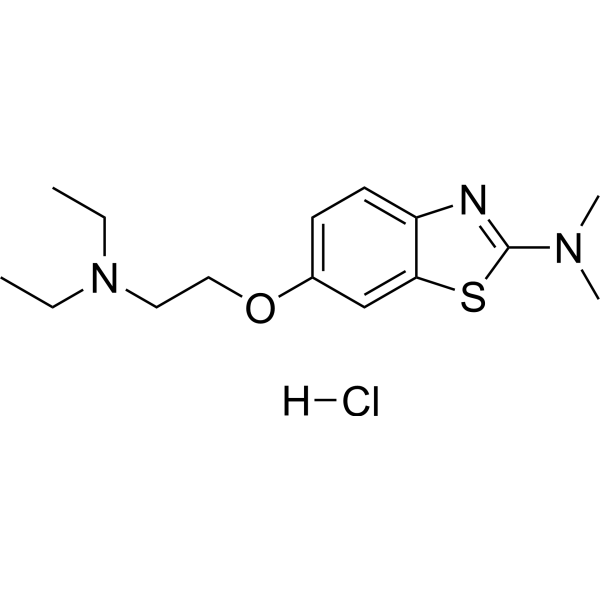
    Diamthazole (Dimazole) hydrochloride is an antifungal agent. Diamthazole hydrochloride can be used for the research of infection .
    Diamthazole hydrochloride
  • HY-147814

    Bacterial Fungal Infection
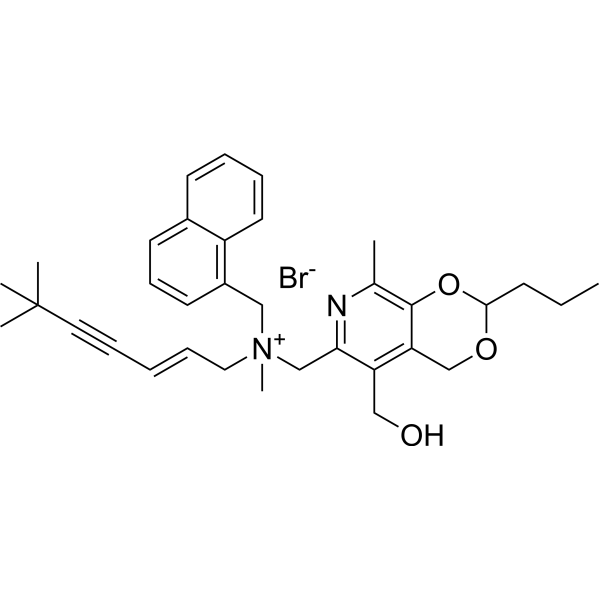
    KFU-127 (Compound 6b) is a broad spectrum topical antimicrobial capable of one-shot targeting of bacterial and fungal-bacterial biofilms. KFU-127 is considerably toxic for eukaryotic cells . KFU-127 is a click chemistry reagent, it contains an Alkyne group and can undergo copper-catalyzed azide-alkyne cycloaddition (CuAAc) with molecules containing Azide groups.
    KFU-127
  • HY-126167

    Fungal Phosphodiesterase (PDE) Infection
    Deacetylsclerotiorin is a secondary metabolite of chloramphenicol isolated from the fungus Bartalinia robillardoides strain LF550. Deacetylsclerotiorin has significant inhibitory effects on Candida albicans (IC50=24 μM), Trichophyton rubrum (IC50=2.83 μM) and Septoria tritici (IC50=7..45 μM). In addition, Deacetylsclerotiorin also exhibits inhibitory effects on the enzyme phosphodiesterase 4 (PDE4) (IC50=2.8 μM) .
    Deacetylsclerotiorin
  • HY-129432

    Fungal Phosphodiesterase (PDE) Infection
    (-)-Deacetylsclerotiorin (Compound 30) is the enantiomer of Deacetylsclerotiorin (HY-126167). Deacetylsclerotiorin is the metabolite of chloramphenicol isolated from the fungus Bartalinia robillardoides strain LF550. Deacetylsclerotiorin has significant inhibitory effects on Candida albicans (IC50=24 μM), Trichophyton rubrum (IC50=2.83 μM) and Septoria tritici (IC50=7.45 μM). In addition, Deacetylsclerotiorin also exhibits inhibitory effects on the enzyme phosphodiesterase 4 (PDE4) (IC50=2.8 μM) .
    (-)-Deacetylsclerotiorin
  • HY-W010201S

    (±)-Citronellol-d6; (±)-β-Citronellol-d6

    Reactive Oxygen Species (ROS) Isotope-Labeled Compounds Cancer
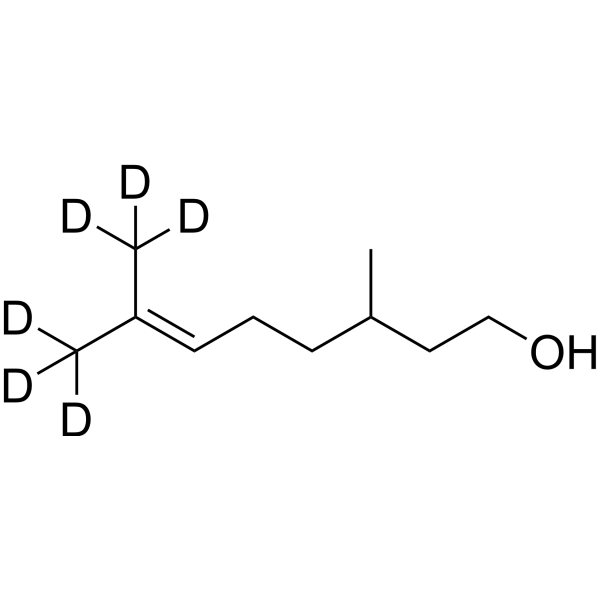
    Citronellol-d6 is deuterated labeled Citronellol (HY-W010201). Citronellol ((±)-Citronellol) is an orally active inducer of apoptosis. Citronellol can prevent oxidative stress, mitochondrial dysfunction, and apoptosis in the SH-SY5Y cell Parkinson's disease model induced by 6-OHDA by regulating the ROS-NO, MAPK/ERK, and PI3K/Akt signaling pathways. Citronellol can induce necroptosis in human lung cancer cells through the TNF-α pathway and accumulation of ROS. Citronellol can reduce the levels of LC-3 and p62 to regulate the autophagy pathway, inhibit oxidative stress and neuroinflammation, and thus have neuroprotective effects on Parkinson's rats. Citronellol exhibits anti-fungal activity against Trichophyton rubrum by inhibiting ergosterol synthesis .
    Citronellol-d6
  • HY-N19791

    NF-κB Fungal Interleukin Related Infection Cancer
    6-Methoxymellein, a phytoalexin, is a NF-κB inhibitor. 6-Methoxymellein reduces nuclear localization and DNA binding activity of NF-κB p65 and p50 subunits. 6-Methoxymellein decreases mRNA transcription and secretion of IL-6 and IL-8. 6-Methoxymellein reduces the proportion of CD44 +/CD24 breast cancer cells, decreases expression of c-Myc, Sox-2 and Oct4, inhibits proliferation and migration of breast cancer cells, and reduces mammosphere growth. 6-Methoxymellein inhibits fungal growth of Trichophyton rubrum and Botrytis cinerea, and inhibits Trichophyton rubrum biofilm formation via hyphal disintegration. 6-Methoxymellein can be used for the research of breast cancer, tinea corporis, and carrot post-harvest storage rot .
    6-Methoxymellein
  • HY-136755

    Cytochrome P450 Fungal Infection
    CYP51-IN-5 is a cytochrome P450 14α-demethylase (CYP51) inhibitor and an antifungal (fungal) agent belonging to the triazole derivative class. CYP51-IN-5 is applicable to the research of Candida albicans, Cryptococcus neoformans, Candida parapsilosis, Candida tropicalis, Trichophyton rubrum, Candida krusei and Microsporum gypseum .
    CYP51-IN-5
  • HY-W069116

    Fungal Infection
    Antifungal agent 146 (Compound 19l) is a broad-spectrum antifungal agent. Antifungal agent 146 has inhibitory effects on the main dermatophytes that cause onychomycosis (Trichophyton rubrum, Trichophyton mentagrophytes) and other fungi (Candida albicans, Cryptococcus neoformans and Aspergillus fumigatus) with MIC values of 16, 16, 64, 32, and 32 μg/mL. Antifungal agent 146 can be used for the research of infection .
    Antifungal agent 146
  • HY-N19881

    Fungal Infection
    Drimenal is a pimarane-type natural sesquiterpene with antifungal activity. Drimenal inhibits the growth of yeasts and dermatophytes. Drimenal can be used for the development of pesticide candidates and in research related to fungal infections .
    Drimenal
  • HY-N19724

    Fungal Lipoxygenase COX Infection
    Buddledin A is a 5-LOX inhibitor (IC50 = 50.4 μM) and a COX inhibitor (IC50 = 13.7 μM). Buddedin A inhibits arachidonic acid metabolism via the 5-LOX and COX pathways, suppresses fungal growth, and exerts toxic effects on fish. Buddedin A may play an ecological role in protecting plant roots and stem barks from fungal infection. Buddedin A can be used in studies related to fungal infections .
    Buddledin A
  • HY-W010201S1

    (±)-Citronelloll-d3; (±)-β-Citronelloll-d3

    Isotope-Labeled Compounds Fungal PI3K Apoptosis ERK Autophagy TNF Receptor Reactive Oxygen Species (ROS) Atg8/LC3 Necroptosis p62 Cardiovascular Disease Neurological Disease Cancer
    Citronellol-d3 ( (±)-Citronelloll-d3) is the deuterium labeled Citronellol (HY-W010201). Citronellol ((±)-Citronellol) is an orally active inducer of apoptosis. Citronellol can prevent oxidative stress, mitochondrial dysfunction, and apoptosis in the SH-SY5Y cell Parkinson's disease model induced by 6-OHDA by regulating the ROS-NO, MAPK/ERK, and PI3K/Akt signaling pathways. Citronellol can induce necroptosis in human lung cancer cells through the TNF-α pathway and accumulation of ROS. Citronellol can reduce the levels of LC-3 and p62 to regulate the autophagy pathway, inhibit oxidative stress and neuroinflammation, and thus have neuroprotective effects on Parkinson's rats. Citronellol exhibits anti-fungal activity against Trichophyton rubrum by inhibiting ergosterol synthesis .
    Citronellol-d3

Inquiry Online

Your information is safe with us. * Required Fields.

Salutation


Country or Region *

Applicant Name *


Organization Name *

Department *


Email Address *


Product Name *

Cat. No.


Requested quantity *

Phone Number *


Remarks

Inquiry Online

Inquiry Information

Product Name:
Cat. No.:
Quantity:
MCE Japan Authorized Agent:

