



Goniothalamin

Based on 1 Customer Validation
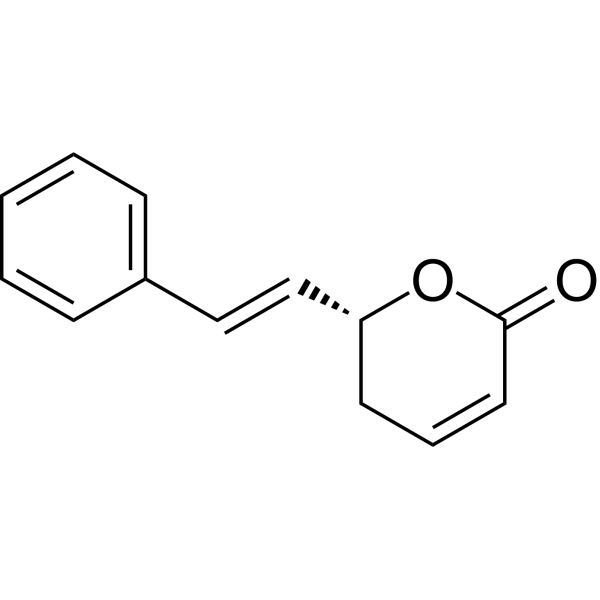
Goniothalamin (GTN) is a styryl lactone. Goniothalamin exhibits insecticidal, anti-tumor and antibacterial activities. Goniothalamin induces cell cycle arrest and apoptosis in tumor cells. Goniothalamin acts as a larvicide against Culex quinquefasciatus larvae and as a cytotoxin against brine shrimp larvae. Goniothalamin functions as an antibacterial agent against Gram-positive and Gram-negative bacteria, and also acts as an antifungal agent against pathogens including Candida albicans, Trichophyton rubrum and Trichophyton mentagrophytes. Goniothalamin is applicable to research related to breast cancer, lymphatic filariasis, bacterial infections and fungal infections.
For research use only. We do not sell to patients.
- Purity : 98.0%
- CAS No.: 17303-67-2
- Formula: C13H12O2
- Molecular Weight:200.23
-
Storage:
4°C, protect from light
* In solvent : -80°C, 6 months; -20°C, 1 month (protect from light)

To place orders, for customer services and technical support, please contact: MedChemExpress USA
Tel: 609-228-6898 E-mail: [email protected] [email protected]


-
 Biological Activity
-
Chemical Information
- Protocols
- Purity & Documentation
- References
-
 Help & FAQs




Biological Activity
Description
Cellular Effect
|
Cell Line

|
Type | Value | Description | References |
|---|---|---|---|---|
| A549 | IC50 |
5.7 μM
Compound: (R)-1
|
Antiproliferative activity against human A549 cells after 48 hrs by CellTiter-Glo luminescent cell viability assay
Antiproliferative activity against human A549 cells after 48 hrs by CellTiter-Glo luminescent cell viability assay
|
[PMID: 28214230] |
| DU-145 | IC50 |
19 μM
Compound: 1a
|
Cytotoxicity against human DU145 cells after 72 hrs by MTT assay
Cytotoxicity against human DU145 cells after 72 hrs by MTT assay
|
[PMID: 19022676] |
| HaCaT | IC50 |
28.6 μM
Compound: 1
|
Cytotoxicity against human HaCaT cells assessed as reduction in cell viability after 24 hrs by MTT reduction assay
Cytotoxicity against human HaCaT cells assessed as reduction in cell viability after 24 hrs by MTT reduction assay
|
[PMID: 25305718] |
| HBL-100 | IC50 |
20.9 μM
Compound: (R)-1
|
Antiproliferative activity against human HBL100 cells after 48 hrs by CellTiter-Glo luminescent cell viability assay
Antiproliferative activity against human HBL100 cells after 48 hrs by CellTiter-Glo luminescent cell viability assay
|
[PMID: 28214230] |
| Hep 3B2 | IC50 |
5.4 μM
Compound: 1
|
Cytotoxicity against human Hep3B cells
Cytotoxicity against human Hep3B cells
|
[PMID: 20392543] |
| Hep 3B2 | IC50 |
5.4 μM
Compound: 1
|
Cytotoxicity against human Hep3B cells assessed as growth inhibition
Cytotoxicity against human Hep3B cells assessed as growth inhibition
|
[PMID: 31306909] |
| HepG2 | IC50 |
0.625 μM
Compound: 1
|
Cytotoxicity against human HepG2 cells assessed as reduction in cell viability after 48 to 72 hrs
Cytotoxicity against human HepG2 cells assessed as reduction in cell viability after 48 to 72 hrs
|
[PMID: 31306909] |
| HepG2 | IC50 |
1.6 μM
Compound: 1
|
Cytotoxicity against human HepG2 cells after 24 hrs
Cytotoxicity against human HepG2 cells after 24 hrs
|
[PMID: 20392543] |
| HepG2 | IC50 |
1.6 μM
Compound: 1
|
Cytotoxicity against human HepG2 cells assessed as growth inhibition
Cytotoxicity against human HepG2 cells assessed as growth inhibition
|
[PMID: 31306909] |
| K562 | IC50 |
7 μM
Compound: Goniothalamin
|
Inhibition of NF-kappaB transactivation in TNF-alpha-stimulated human K562 cells preincubated for 2 hrs followed by TNF-alpha challenge measured after 6 hrs by dual luciferase reporter gene assay
Inhibition of NF-kappaB transactivation in TNF-alpha-stimulated human K562 cells preincubated for 2 hrs followed by TNF-alpha challenge measured after 6 hrs by dual luciferase reporter gene assay
|
[PMID: 24775915] |
| LNCaP | IC50 |
12 μM
Compound: 1a
|
Cytotoxicity against human LNCAP cells after 72 hrs by MTT assay
Cytotoxicity against human LNCAP cells after 72 hrs by MTT assay
|
[PMID: 19022676] |
| MCF7 | IC50 |
28 μM
Compound: 1a
|
Cytotoxicity against human MCF7 cells after 72 hrs by MTT assay
Cytotoxicity against human MCF7 cells after 72 hrs by MTT assay
|
[PMID: 19022676] |
| MCF7 | IC50 |
4.5 μM
Compound: 1
|
Cytotoxicity against human MCF7 cells after 24 hrs
Cytotoxicity against human MCF7 cells after 24 hrs
|
[PMID: 20392543] |
| MCF7 | IC50 |
55.5 μM
Compound: (R)-1
|
Antiproliferative activity against human MCF7 cells after 48 hrs by CellTiter-Glo luminescent cell viability assay
Antiproliferative activity against human MCF7 cells after 48 hrs by CellTiter-Glo luminescent cell viability assay
|
[PMID: 28214230] |
| MDA-MB-231 | IC50 |
1.46 μM
Compound: 1
|
Cytotoxicity against human MDA-MB-231 cells
Cytotoxicity against human MDA-MB-231 cells
|
[PMID: 20381347] |
| MDA-MB-231 | IC50 |
5.4 μM
Compound: 1
|
Cytotoxicity against human MDA-MB-231 cells
Cytotoxicity against human MDA-MB-231 cells
|
[PMID: 20392543] |
| P388 | IC50 |
3.8 μM
Compound: 1
|
Cytotoxicity against mouse P388 cells
Cytotoxicity against mouse P388 cells
|
[PMID: 20392543] |
| PANC-1 | IC50 |
65 μM
Compound: 1
|
Antiproliferative activity against human PANC1 cells assessed as reduction in colonies after 15 days by colony assay
Antiproliferative activity against human PANC1 cells assessed as reduction in colonies after 15 days by colony assay
|
[PMID: 25305718] |
| PANC-1 | IC50 |
65 μM
Compound: 1
|
Cytotoxicity against human PANC1 cells assessed as reduction in cell viability after 24 hrs by MTT reduction assay
Cytotoxicity against human PANC1 cells assessed as reduction in cell viability after 24 hrs by MTT reduction assay
|
[PMID: 25305718] |
| PC-3 | IC50 |
4 μM
Compound: 1a
|
Cytotoxicity against human PC3 cells after 72 hrs by MTT assay
Cytotoxicity against human PC3 cells after 72 hrs by MTT assay
|
[PMID: 19022676] |
| RAW264.7 | IC50 |
27.4 μM
Compound: 1
|
Inhibition of LPS-induced NF-kappaB activation in mouse RAW264.7 cells after 18 hrs by luciferase assay
Inhibition of LPS-induced NF-kappaB activation in mouse RAW264.7 cells after 18 hrs by luciferase assay
|
[PMID: 23735825] |
| RAW264.7 | IC50 |
34.2 μM
Compound: 1
|
Cytotoxicity against mouse RAW264.7 cells after 18 hrs by MTT assay
Cytotoxicity against mouse RAW264.7 cells after 18 hrs by MTT assay
|
[PMID: 23735825] |
| WEHI-164 | IC50 |
8.5 μM
Compound: 1
|
Cytotoxicity against mouse WEHI164 cells
Cytotoxicity against mouse WEHI164 cells
|
[PMID: 20392543] |
In Vitro
Goniothalamin (1-30 μM; 24-72 h) potently inhibits the viability of human breast cancer MDA-MB-231 cells[1].
Goniothalamin (30 μM; 0-48 h) induces G2/M phase arrest and apoptosis in human breast cancer MDA-MB-231 cells, and triggers a rapid increase in intracellular ROS levels[1].
Goniothalamin (30 μM; 0-12 h) induces the time-dependent release of cytochrome c from mitochondria to the cytosol in human breast cancer cell line MDA-MB-231[1].
Goniothalamin (30 μM; 0-6 h) induces cdc25C protein degradation in human breast cancer MDA-MB-231 cells[1].
Goniothalamin (30 μM; 18-48 h) induces late-stage mitochondrial membrane potential loss in human breast cancer MDA-MB-231 cells[1].
Goniothalamin (1-256 μg/mL; 18 h) exhibits moderate inhibitory activity against Bacillus cereus and Shigella shiga at 64 μg/mL[2].
Goniothalamin (5-80 ppm; 24 h) exhibits strong cytotoxicity against Artemia salina nauplii, with an LC50 of 5.03 ppm[2].
MedChemExpress (MCE) has not independently confirmed the accuracy of these methods. They are for reference only. Further protocols information, click here.
-
Cell Line:MDA-MB-231 human breast cancer cells
-
Concentration:1, 3, 10, 30 μM
-
Incubation Time:24 h, 48 h, 72 h
-
Result:Inhibited cell viability in a dose- and time-dependent manner.
Completely inhibited cell viability with an IC50 of 1.46 μM after 72 h.
-
Cell Line:MDA-MB-231 human breast cancer cells
-
Concentration:30 μM
-
Incubation Time:1, 3, 6 h
-
Result:Reduced the levels of cdc25C in a time-dependent manner.
In Vivo
MedChemExpress (MCE) has not independently confirmed the accuracy of these methods. They are for reference only.
-
Animal Model:mosquito larvae (first, second, third, and fourth instars)[3]
-
Dosage:10 p.p.m.; 20 p.p.m.; 40 p.p.m.; 80 p.p.m.
-
Administration:added to larval water medium; three replications per concentration
-
Result:Achieved LC50 = 12.00 p.p.m. in first instar larvae at 3 hours exposure.
Achieved LC50 = 1.87 p.p.m. in first instar larvae at 6 hours exposure.
Achieved LC50 = 0.87 p.p.m. in first instar larvae at 12 hours exposure.
Achieved LC50 = 18.74 p.p.m. in second instar larvae at 12 hours exposure.
Achieved LC50 = 13.89 p.p.m. in second instar larvae at 24 hours exposure.
Achieved LC50 = 20.31 p.p.m. in third instar larvae at 12 hours exposure.
Achieved LC50 = 18.32 p.p.m. in third instar larvae at 24 hours exposure.
Achieved LC50 = 25.95 p.p.m. in fourth instar larvae at 12 hours exposure.
Achieved LC50 = 21.52 p.p.m. in fourth instar larvae at 24 hours exposure.
Decreased LC50 values with increased exposure time across all larval instars.
Clinical Trial
| NCT Number | Sponsor | Condition | Start Date |
Phase
|
|---|---|---|---|---|
| NCT01329991 | Plexxikon| | 2011-05 | PHASE1 |


Chemical Information
-
CAS No. 17303-67-2
-
Appearance Solid
-
Molecular Weight 200.23
-
Formula C13H12O2
-
Color White to light yellow
-
SMILES
O=C1C=CC[C@H](/C=C/C2=CC=CC=C2)O1
-
Synonyms
GTN; (R)-(+)-Goniothalamin
-
Structure Classification
-
Initial Source
-
Shipping
Room temperature in continental US; may vary elsewhere.
-
Storage
4°C, protect from light
* In solvent : -80°C, 6 months; -20°C, 1 month (protect from light)

Protocols
-
Research Protocol for Infectious Diseases
Infectious-disease experiments test how pathogens interact with host barriers, innate immune receptors, inflammatory signaling, pathogen replication, and tissue injury; pattern-recognition receptors such as TLRs, RIG-I-like receptors, NOD-like receptors, and inflammasomes detect microbial molecules and activate NF-κB, interferon, and cytokine responses. The central hypothesis is that infection severity reflects the balance between pathogen burden and host response: protective inflammation restricts pathogen growth, whereas excessive or mislocalized inflammation contributes to tissue damage and disease phenotype. Unresolved questions include which host pathways are protective versus pathogenic, why some infection models fail to translate to human disease, and which combined readouts best predict clinically relevant infection outcomes.
-
Apoptosis
Apoptosis, also called programmed cell death, is generally characterized by distinct morphological characteristics.
-
TUNEL staining for apoptotic DNA fragmentation
TUNEL staining detects DNA strand breaks by using terminal deoxynucleotidyl transferase to add labeled nucleotides to exposed 3′-OH DNA termini, generating either microscopic staining in fixed cells or tissue sections, or fluorescence/cytometric signal in cell suspensions. TUNEL positivity reflects DNA fragmentation but should not be interpreted alone as definitive apoptosis, because TUNEL can also label necrotic, autolytic, mechanically damaged, or DNA-repair-associated DNA breaks.
-
Flow cytometric DNA-content cell-cycle staining
Flow cytometric DNA-content cell-cycle staining measures the fluorescence intensity of DNA-bound fluorochromes in single cells or nuclei to estimate DNA content distributions, allowing assignment of populations to G0/G1, S, and G2/M phases by DNA histogram deconvolution. Propidium iodide (PI) intercalates into DNA, and PI fluorescence is proportional to cellular DNA content when staining is performed under conditions that make DNA accessible and minimize non-DNA signal. Cells with G2/M DNA content are expected to show approximately twice the fluorescence intensity of G0/G1 cells, while S-phase cells occupy intermediate fluorescence values. PI-based DNA-content analysis can also detect cells with fractional DNA content, often reported as sub-G1, when DNA fragmentation and extraction during staining reduce retained DNA signal in apoptotic cells. DAPI is an alternative DNA fluorochrome for univariate DNA-content analysis, while bivariate approaches combining DNA content with proliferation
-
Annexin V plus membrane-impermeant dye apoptosis staining
Annexin V-based apoptosis assays rely on the detection of phosphatidylserine (PS) externalization from the inner leaflet of the plasma membrane to the outer leaflet, an early biochemical hallmark of apoptosis. Fluorescently labeled Annexin V binds PS in a calcium-dependent manner, enabling identification of early apoptotic cells by flow cytometry or fluorescence microscopy. When combined with a membrane-impermeant DNA-binding dye (e. g. , propidium iodide), this approach allows discrimination between viable (Annexin V−/dye−), early apoptotic (Annexin V+/dye−), and late apoptotic or necrotic (Annexin V+/dye+) cell populations by assessing membrane integrity and PS exposure.
-
BrdU Incorporation Assay
Bromodeoxyuridine (BrdU) incorporation assay is based on the principle that BrdU, a thymidine analog, is incorporated into newly synthesized DNA during the S phase of the cell cycle, thereby serving as a marker of DNA replication and cellular proliferation. Incorporated BrdU can be detected using anti-BrdU antibodies following DNA denaturation, enabling visualization or quantification of proliferating cells through immunochemical detection methods such as immunofluorescence or immunohistochemistry.
-
Apoptosis Solutions
Apoptosis is a regulated, generally non-lytic cell-death pathway that removes unwanted, damaged, infected, or abnormal cells through coordinated morphological changes, caspase activation, DNA fragmentation, and membrane remodeling. The intrinsic apoptosis pathway is controlled mainly by mitochondrial outer membrane permeabilization, BCL-2 family proteins, cytochrome c release, apoptosome formation, caspase-9 activation, and downstream executioner caspase-3/7 activation. The extrinsic apoptosis pathway is initiated by death receptors such as Fas, TNFR, and TRAIL receptors, which recruit adaptor proteins and activate caspase-8 before engaging executioner caspases or mitochondrial amplification through BID cleavage. Apoptosis is linked to many phenotypes, including cancer cell killing, tissue homeostasis, immune regulation, neurodegeneration, infection response, and treatment-induced cytotoxicity; unresolved questions include how apoptosis interacts with necroptosis, pyroptosis, ferroptos
-
Protocol for Cell Cycle
Cell-cycle analysis by flow cytometry measures DNA content in single cells to estimate the fraction of cells in G0/G1, S, and G2/M phases. Propidium iodide intercalates into DNA, and after RNA removal with RNase, fluorescence intensity reflects cellular DNA content: 2N cells are assigned to G0/G1, cells between 2N and 4N to S phase, and 4N cells to G2/M. DNA-content analysis alone cannot reliably separate G0 from G1 or G2 from M. Ki-67 can distinguish quiescent G0 cells from cycling cells, EdU or BrdU incorporation marks active DNA synthesis in S phase, and phospho-histone H3 staining identifies mitotic cells within the 4N population.
-
Gram Staining of Tissue Sections
Gram staining of tissue sections is a histochemical technique used to differentiate Gram-positive and Gram-negative bacteria within histological specimens based on differences in bacterial cell wall structure and dye retention, adapted from classical bacteriological Gram staining into tissue-compatible “histological Gram stain” variants. In tissue applications, modifications of the Brown-Hopps and Brown-Brenn methods are commonly used to improve differentiation of microorganisms embedded within host connective tissue and to reduce overstaining or loss of Gram-negative signal, which are known limitations of earlier approaches. The principle relies on crystal violet-iodine complex retention in Gram-positive organisms and subsequent decolorization and counterstaining steps that allow contrast visualization of Gram-negative organisms against tissue background.
-
Breast Cancer Modeling
Breast cancer is a heterogeneous cancer, and it has been distinguished into four subtypes: luminal A, luminal B, HER2-positive and basal-like. Molecular mutations, epigenetic alterations, hormone exposure and immune microenvironment are related to the progression of breast cancer.


Purity & Documentation
-
Data Sheet (272 KB)
-
SDS (393 KB)
- English - EN (393 KB)
- Français - FR (393 KB)
- Deutsch - DE (393 KB)
- Norwegian - NO (393 KB)
- Español - ES (393 KB)
- Swedish - SV (393 KB)
- Italian - IT (393 KB)
- Korean - KR (393 KB)
- Portuguese - PT (393 KB)
-
Handling Instructions (2659 KB)
References
[1]. Chen WY, et al. Goniothalamin induces cell cycle-specific apoptosis by modulating the redox status in MDA-MB-231 cells. Eur J Pharmacol. 2005;522(1-3):20-29. [Content Brief]
[2]. Mosaddik MA, et al. Cytotoxicity and antimicrobial activity of goniothalamin isolated from Bryonopsis laciniosa. Phytother Res. 2003;17(10):1155-1157. [Content Brief]

Calculators
Concentration (start) × Volume (start) = Concentration (final) × Volume (final)


Goniothalamin Related Classifications
HY-N3968 Related Classifications
 Powered by Bioz
Keywords
- Goniothalamin
- 17303-67-2
- GTN
- (R)-(+)-Goniothalamin
- Apoptosis
- Insecticide
- Bacterial
- Fungal
- Reactive Oxygen Species (ROS)
- Culex quinquefasciatus
- bacterial infections
- Candida albicans
- cdc25C
- Artemia salina
- G2/M phase cell cycle arrest
- reactive oxygen species
- MDA-MB-231 human breast cancer cells
- apoptosis
- breast cancer
- Inhibitor
- inhibitor
- inhibit