



Citronellol (Standard)

Based on 1 Customer Validation
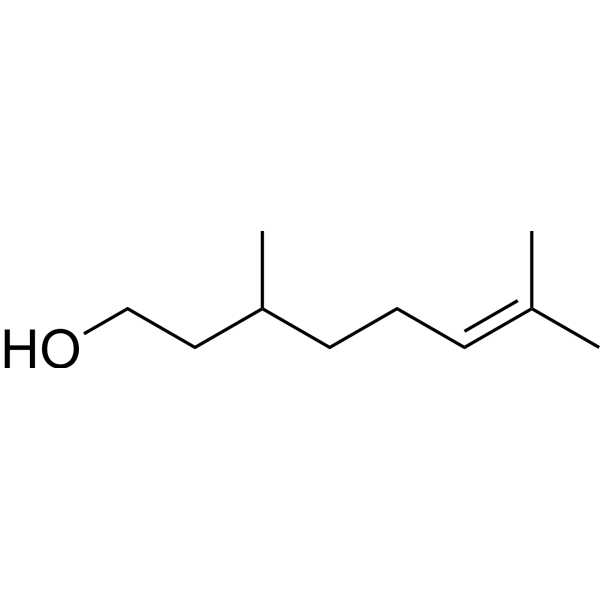
Citronellol (Standard) is the analytical standard of Citronellol. Citronellol (Standard) is an orally active inducer of apoptosis. Citronellol (Standard) can prevent oxidative stress, mitochondrial dysfunction, and apoptosis in the SH-SY5Y cell Parkinson's disease model induced by 6-OHDA by regulating the ROS-NO, MAPK/ERK, and PI3K/Akt signaling pathways. Citronellol (Standard) can induce necroptosis in human lung cancer cells through the TNF-α pathway and accumulation of ROS. Citronellol (Standard) can reduce the levels of LC-3 and p62 to regulate the autophagy pathway, inhibit oxidative stress and neuroinflammation, and thus have neuroprotective effects on Parkinson's rats. Citronellol (Standard) exhibits anti-fungal activity against Trichophyton rubrum by inhibiting ergosterol synthesis.
Para uso exclusivo en investigación. No vendemos a pacientes.
- Pureza : 97.16%
- No. CAS: 106-22-9
- Fòrmula: C10H20O
- Peso molecular:156.27
-
Almacenamiento:
Please store the product under the recommended conditions in the Certificate of Analysis.

To place orders, for customer services and technical support, please contact: MedChemExpress USA
Tel: 609-228-6898 E-mail: [email protected] [email protected]


-
 Product Information
-
Chemical Information
- Pureza y Documentación
-
 Help & FAQs


-
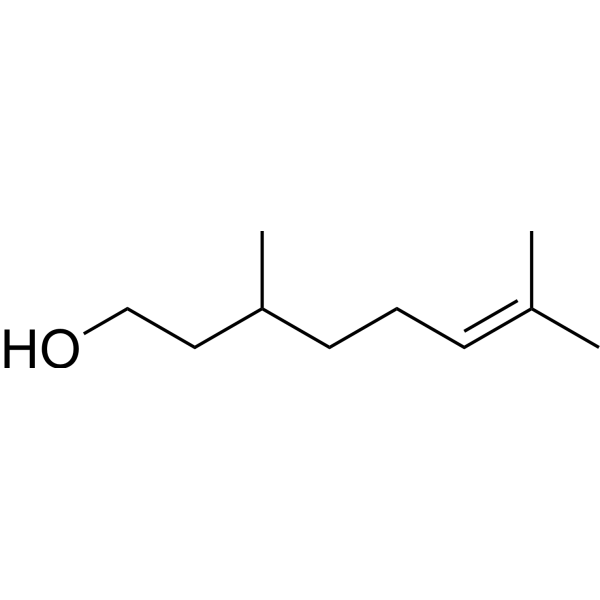
HY-W010201
CitronellolApoptosis Inducer -
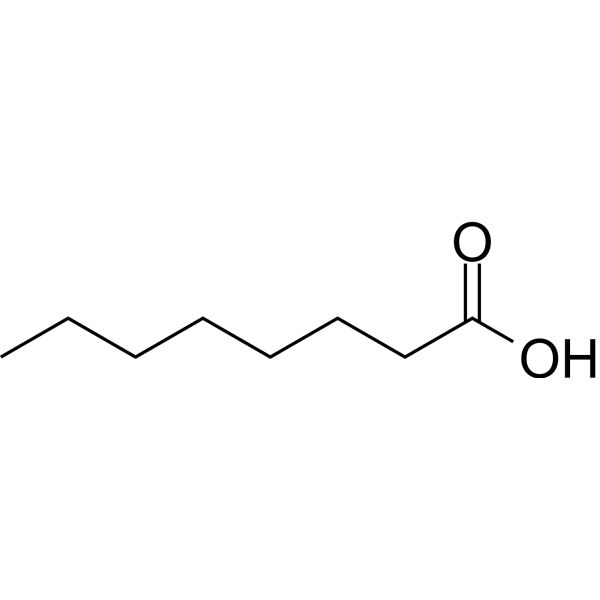
HY-41417
Octanoic acidAntibacterial Agent -
HY-W015309
Decanoic acidTyrosinase Inhibitor; Melanosome Inhibitor; mTORC1 Signaling Inhibitor -
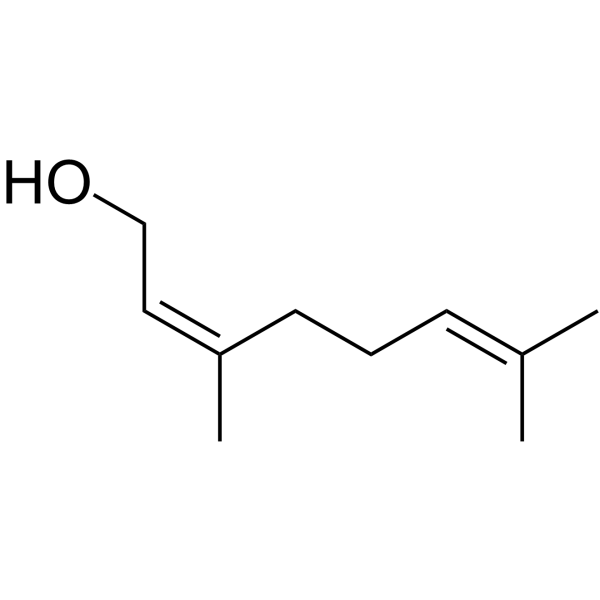
HY-N7063
NerolROS Activator -
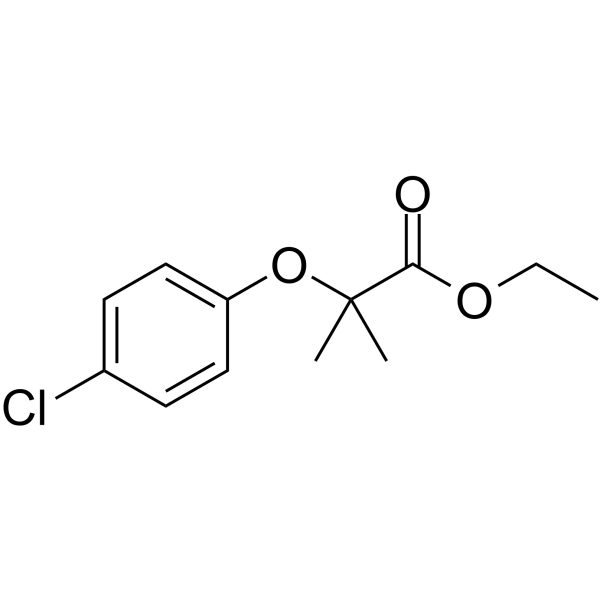
HY-B0287
ClofibratePPAR Agonist -
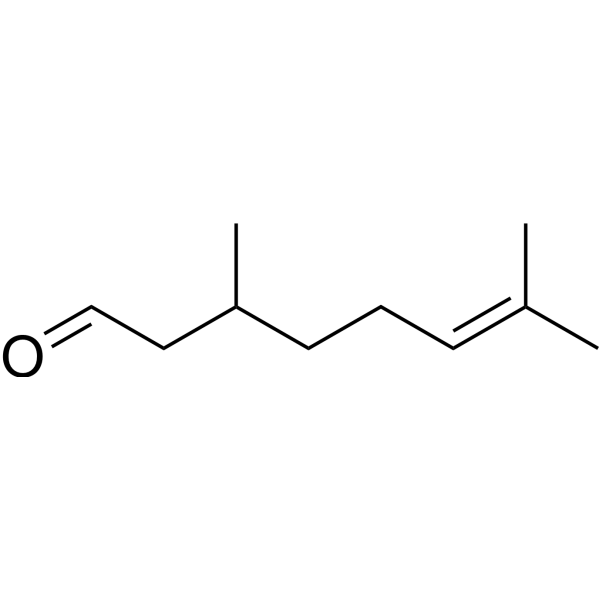
HY-N7126
CitronellalMonoterpenea -
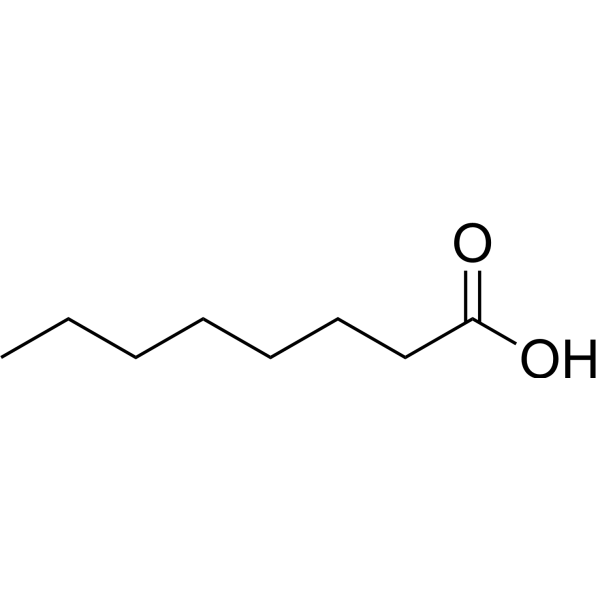
HY-41417R
Octanoic acid (Standard) -
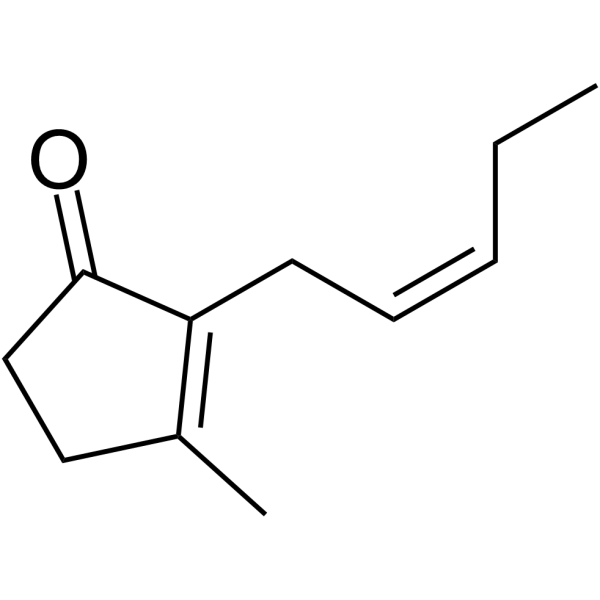
HY-N7058
cis-JasmoneNatural Product -
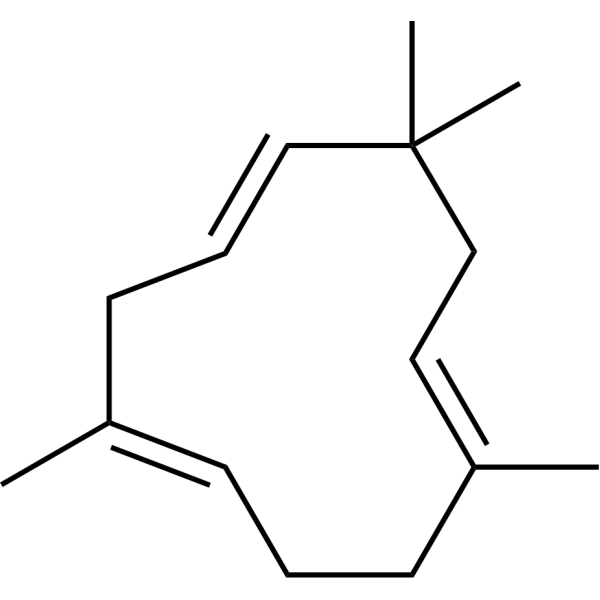
HY-N6968
α-HumuleneCOX Inhibitor -
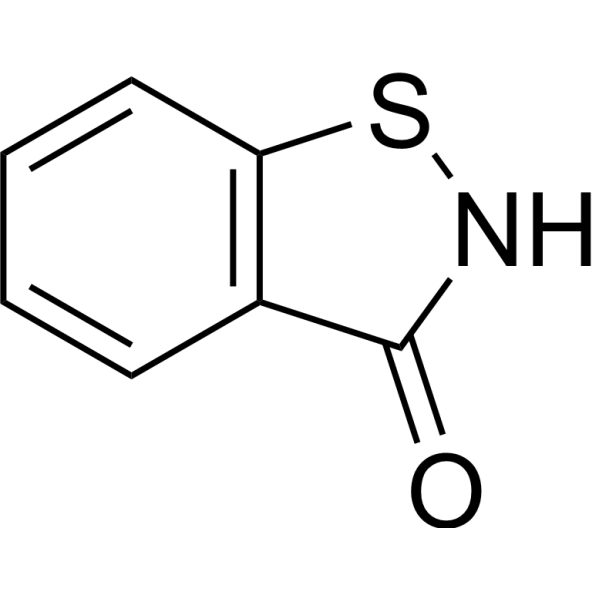
HY-W017401
BenzisothiazoloneAnti-Bacterial Agent -
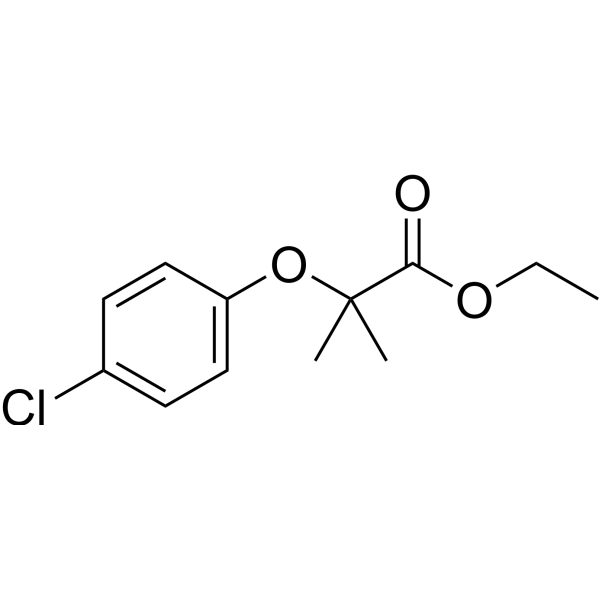
HY-B0287R
Clofibrate (Standard)


Product Information
Information
Aplicación
The compound is the grade of analytical standard, which is the reference standard supplied assay. It is commonly used in qualitative, quantitative and methodological research experiments in HPLC, GC and MS.


Chemical Information
-
No. CAS 106-22-9
-
Appearance Liquid (Density: 0.857 g/cm3)
-
Peso molecular 156.27
-
Fòrmula C10H20O
-
Color Colorless to light yellow
-
SMILES
CC(CCC=C(C)C)CCO
-
Synonyms
(±)-Citronellol (Standard); (±)-β-Citronellol (Standard)
-
Structure Classification
-
Initial Source
-
Envío
Room temperature in continental US; may vary elsewhere.
-
Almacenamiento
Please store the product under the recommended conditions in the Certificate of Analysis.


Pureza y Documentación
-
SDS (538 KB)
- English - EN (538 KB)
- Français - FR (538 KB)
- Deutsch - DE (538 KB)
- Norwegian - NO (538 KB)
- Español - ES (538 KB)
- Swedish - SV (538 KB)
- Italian - IT (538 KB)
- Korean - KR (538 KB)
- Portuguese - PT (538 KB)
-
Instrucciones de manejo (2659 KB)
Referencias
[1]. Munir S, et al. The Protective Effect of Citronellol against Doxorubicin-Induced Cardiotoxicity in Rats. Biomedicines. 2023 Oct 18;11(10):2820. [Content Brief]
[2]. Shao J, et al. Citronellol Prevents 6-OHDA-Induced Oxidative Stress, Mitochondrial Dysfunction, and Apoptosis in Parkinson Disease Model of SH-SY5Y Cells via Modulating ROS-NO, MAPK/ERK, and PI3K/Akt Signaling Pathways. Neurotox Res. 2022 Dec;40(6):2221-2237. [Content Brief]
[3]. Sahli F, et al. Autoxidized citronellol: Free radicals as potential sparkles to ignite the fragrance induced skin sensitizing pathway. Food Chem Toxicol. 2022 Aug;166:113201. [Content Brief]
[4]. Jayaraj RL, et al. Effect of citronellol on oxidative stress, neuroinflammation and autophagy pathways in an in vivo model of Parkinson's disease. Heliyon. 2022 Nov 3;8(11):e11434. [Content Brief]
[5]. Mahmood YS, et al. Protective effect of citronellol in rhabdomyolysis-induced acute kidney injury in mice. J Med Life. 2023 Jul;16(7):1057-1061. [Content Brief]
[6]. Yu WN, et al. Citronellol Induces Necroptosis of Human Lung Cancer Cells via TNF-α Pathway and Reactive Oxygen Species Accumulation. In Vivo. 2019 Jul-Aug;33(4):1193-1201. [Content Brief]
[7]. Pereira Fde O, et al. Antifungal activity of geraniol and citronellol, two monoterpenes alcohols, against Trichophyton rubrum involves inhibition of ergosterol biosynthesis. Pharm Biol. 2015 Feb;53(2):228-34. [Content Brief]

Calculators
Concentration (start) × Volume (start) = Concentration (final) × Volume (final)


Citronellol (Standard) Related Classifications
HY-W010201R Related Classifications
 Powered by Bioz