



Flavor Compound Standards

- Formula: C6H8O6
- Molecular Weight: 176.12
L-Ascorbic acid (Standard) is the analytical standard of L-Ascorbic acid. This product is intended for research and analytical applications. L-Ascorbic acid (L-Ascorbate), an electron donor, is an endogenous antioxidant agent. L-Ascorbic acid inhibits selectively Cav3.2 channels with an IC50 of 6.5 μM. L-Ascorbic acid is also a collagen deposition enhancer and an elastogenesis inhibitor. L-Ascorbic acid exhibits anti-cancer effects through the generation of reactive oxygen species (ROS) and selective damage to cancer cells.
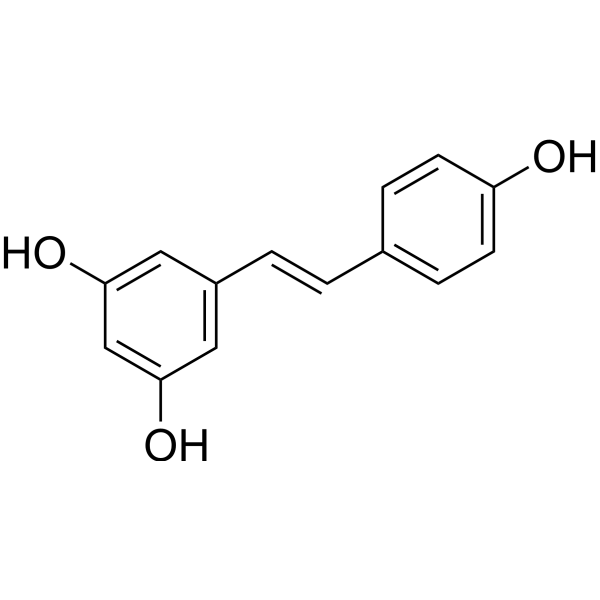
- Formula: C14H12O3
- Molecular Weight: 228.24
Resveratrol (Standard) is the analytical standard of Resveratrol. This product is intended for research and analytical applications. Resveratrol (trans-Resveratrol; SRT501), a natural polyphenolic phytoalexin that possesses anti-oxidant, anti-inflammatory, cardioprotective, and anti-cancer properties. Resveratrol (SRT 501) has a wide spectrum of targets including mTOR, JAK, β-amyloid, Adenylyl cyclase, IKKβ, DNA polymerase. Resveratrol also is a specific SIRT1 activator. Resveratrol is a potent pregnane X receptor (PXR) inhibitor. Resveratrol is an Nrf2 activator, ameliorates aging-related progressive renal injury in mice model. Resveratrol increases production of NO in endothelial cells.

- Formula: C15H10O7
- Molecular Weight: 302.24
Quercetin (Standard) is the analytical standard of Quercetin. This product is intended for research and analytical applications. Quercetin, a natural flavonoid, is a stimulator of recombinant SIRT1 and also a PI3K inhibitor with IC50 of 2.4 μM, 3.0 μM and 5.4 μM for PI3K γ, PI3K δ and PI3K β, respectively.
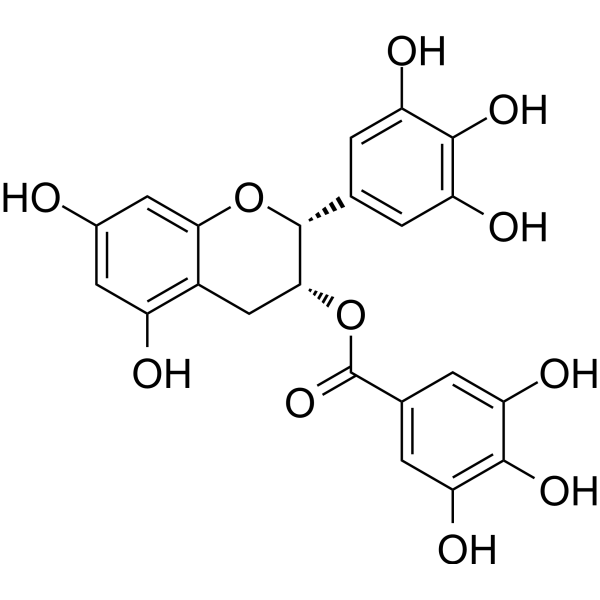
- Formula: C22H18O11
- Molecular Weight: 458.37
(-)-Epigallocatechin Gallate (Standard) is the analytical standard of (-)-Epigallocatechin Gallate. This product is intended for research and analytical applications. (-)-Epigallocatechin Gallate (EGCG) is a major polyphenol in green tea, which can inhibit cell proliferation and induce cell apoptosis. (-)-Epigallocatechin Gallate inhibits glutamate dehydrogenase 1/2 (GDH1/2, GLUD1/2) activity. (-)-Epigallocatechin Gallate has a potent anticancer, antioxidant and anti-inflammatory properties against various types of cancers such as colorectal cancer, myeloid leukemia, thyroid carcinoma.
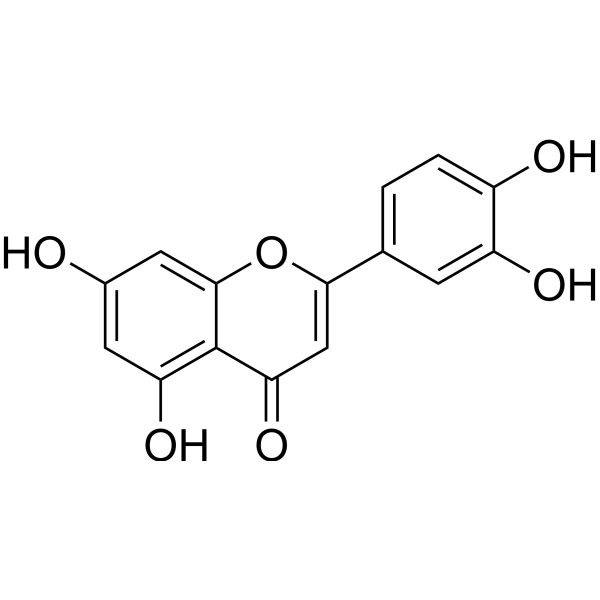
- Formula: C15H10O6
- Molecular Weight: 286.24
Luteolin (Standard) is the analytical standard of Luteolin. This product is intended for research and analytical applications. Luteolin (Luteoline), a flavanoid compound, is a potent Nrf2 inhibitor. Luteolin has anti-inflammatory, anti-cancer properties, including the induction of apoptosis and cell cycle arrest, and the inhibition of metastasis and angiogenesis, in several cancer cell lines, including human non-small lung cancer cells.
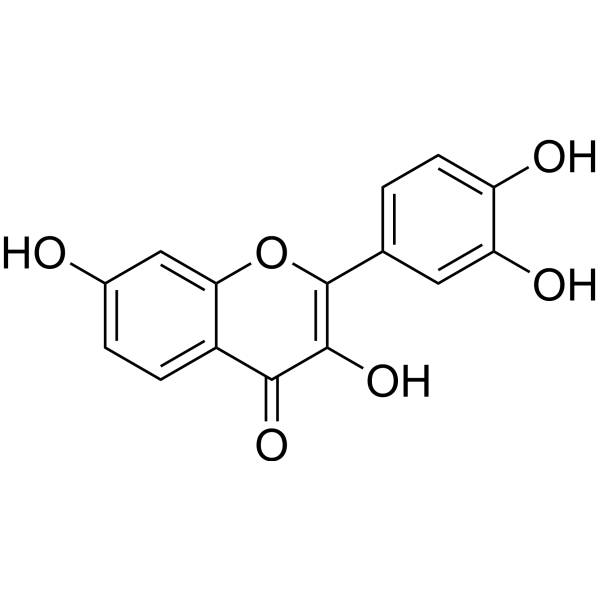
- Formula: C15H10O6
- Molecular Weight: 286.24
Fisetin (Standard) is the analytical standard of Fisetin. This product is intended for research and analytical applications. Fisetin is a natural flavonol found in many fruits and vegetables with various benefits, such as antioxidant, anticancer, neuroprotection effects.
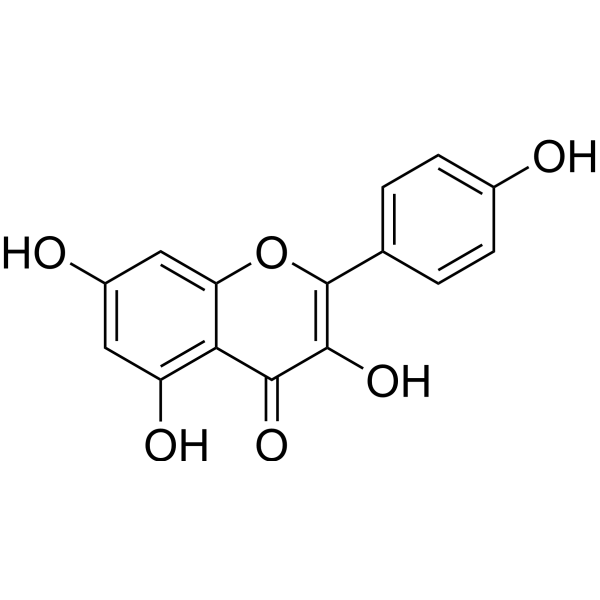
- Formula: C₁₅H₁₀O₆
- Molecular Weight: 286.24
Kaempferol (Standard) is the analytical standard of Kaempferol. This product is intended for research and analytical applications. Kaempferol (Kempferol), a flavonoid found in many edible plants, inhibits estrogen receptor α expression in breast cancer cells and induces apoptosis in glioblastoma cells and lung cancer cells by activation of MEK-MAPK. Kaempferol can be uesd for the research of breast cancer.
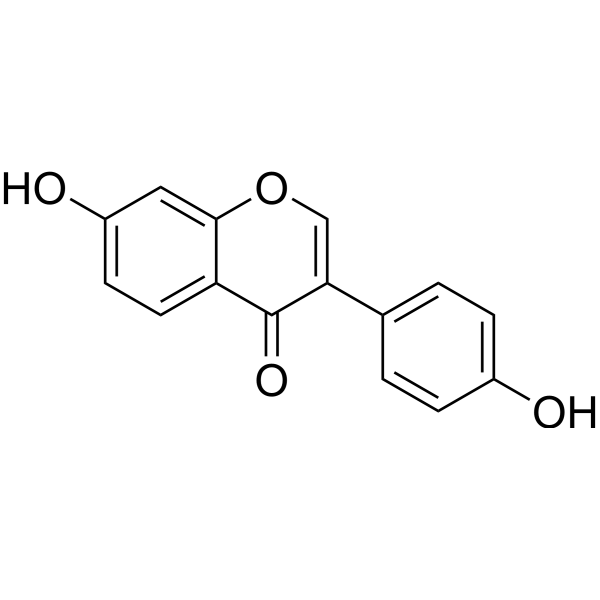

- Formula: C₆H₁₄N₄O₂
- Molecular Weight: 174.20
L-Arginine (Standard) is the analytical standard of L-Arginine. This product is intended for research and analytical applications. L-Arginine ((S)-(+)-Arginine) is the substrate for the endothelial nitric oxide synthase (eNOS) to generate NO. L-Arginine is transported into vascular smooth muscle cells by the cationic amino acid transporter family of proteins where it is metabolized to nitric oxide (NO), polyamines, or L-proline. L-Arginine is a potent vasodilator, and can be used to induce experimental acute pancreatitis.

- Formula: C3H4O3
- Molecular Weight: 88.06
Pyruvic acid (Standard) is the analytical standard of Pyruvic acid. This product is intended for research and analytical applications. Pyruvic acid is an intermediate metabolite in the metabolism of carbohydrates, proteins, and fats.

- Formula: C6H8O7
- Molecular Weight: 192.12
Citric acid (Standard) is the analytical standard of Citric acid (HY-N1428). This product is intended for research and analytical applications. Citric acid is a natural preservative and food tartness enhancer. Citric acid induces apoptosis and cell cycle arrest at G2/M phase and S phase in HaCaT cells. Citric acid cause oxidative damage of the liver by means of the decrease of antioxidative enzyme activities. Citric acid is also an acidulant, emulsifier, sequestrant and buffering agent widely used across many industries.

- Formula: C₅H₈O₃
- Molecular Weight: 116.12
3-Methyl-2-oxobutanoic acid (Standard) is the analytical standard of 3-Methyl-2-oxobutanoic acid. This product is intended for research and analytical applications. 3-Methyl-2-oxobutanoic acid is a precursor of pantothenic acid in Escherichia coli.

- Formula: C10H26N4
- Molecular Weight: 202.34
Spermine (Standard) is the analytical standard of Spermine. This product is intended for research and analytical applications. Spermine (NSC 268508) functions directly as a free radical scabenger to protect DNA from free radical attack. Spermine has antiviral effects.

- Formula: C9H11NO2
- Molecular Weight: 165.19
L-Phenylalanine (Standard) is the analytical standard of L-Phenylalanine. This product is intended for research and analytical applications. L-Phenylalanine ((S)-2-Amino-3-phenylpropionic acid) is an essential amino acid isolated from Escherichia coli. L-Phenylalanine is a α2δ subunit of voltage-dependent Ca+ channels antagonist with a Ki of 980 nM. L-phenylalanine is a competitive antagonist for the glycine- and glutamate-binding sites of N-methyl-D-aspartate receptors (NMDARs) (KB of 573 μM ) and non-NMDARs, respectively. L-Phenylalanine is widely used in the production of food flavors and pharmaceuticals.

- Formula: C2H7NO3S
- Molecular Weight: 125.15
Taurine (Standard) is the analytical standard of Taurine. This product is intended for research and analytical applications. Taurine, a sulphur-containing amino acid and an organic osmolyte involved in cell volume regulation, provides a substrate for the formation of bile salts, and plays a role in the modulation of intracellular free calcium concentration. Taurine has the ability to activate autophagy in adipocytes.

- Formula: C₉H₈O₃
- Molecular Weight: 164.16
p-Coumaric acid (Standard) is the analytical standard of p-Coumaric acid. This product is intended for research and analytical applications. p-Coumaric acid (trans-4-Hydroxycinnamic acid) is an isomer of cinnamic acid with oral activity. p-Coumaric acid inhibits cell proliferation and promotes apoptosis. p-Coumaric acid has antibacterial, anti-inflammatory, antioxidant and anti-tumor activities.

- Formula: C3H7NO2S
- Molecular Weight: 121.16
L-Cysteine (Standard) is the analytical standard of L-Cysteine. This product is intended for research and analytical applications. L-Cysteine is a conditionally essential amino acid, which acts as a precursor for biologically active molecules such as hydrogen sulphide (H2S), glutathione and taurine. L-Cysteine suppresses ghrelin and reduces appetite in rodents and humans.

- Formula: C₆H₁₀O₃
- Molecular Weight: 130.14
4-Methyl-2-oxopentanoic acid (Standard) is the analytical standard of 4-Methyl-2-oxopentanoic acid. This product is intended for research and analytical applications. 4-Methyl-2-oxopentanoic acid (α-Ketoisocaproic acid), an abnormal metabolite, is both a neurotoxin and a metabotoxin.

- Formula: C₄H₄O₄
- Molecular Weight: 116.07
Fumaric acid (Standard) is the analytical standard of Fumaric acid (HY-W015883). This product is intended for research and analytical applications. Fumaric acid is an unsaturated dicarbonic acid, an intermediate product of the citric acid cycle that provides intracellular energy in the form of ATP. Fumaric acid exerts anti-inflammatory effects by inhibiting the NF-κB signaling pathway dependent on p38 MAPK. Fumaric acid can be used in the study of pregnancy-induced hypertension.
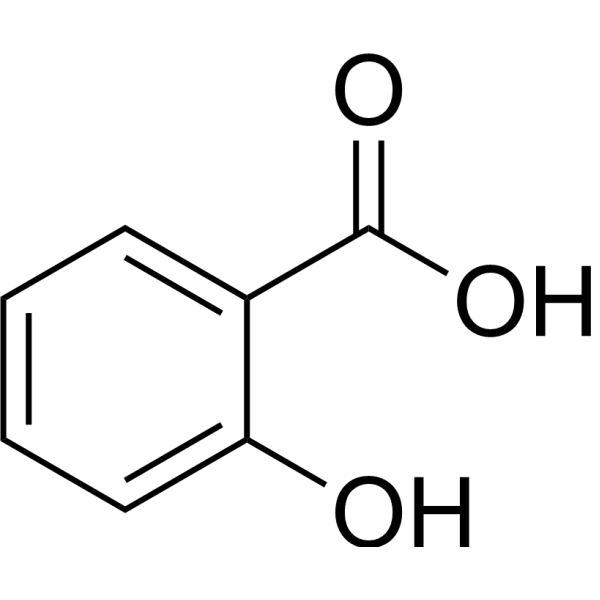
- Formula: C7H6O3
- Molecular Weight: 138.12



